Tripowin H1: Open-Back Hi-Fi Headphones Built Around a 50mm Carbon-Polymer Driver
The Tripowin H1 combines an open-back architecture with a 50mm dynamic driver using a three-layer carbon-polymer diaphragm, aiming for a spacious, balanced headphone experience at $189.

The Tripowin H1 is a full-size hi-fi headphone built around two decisions that define much of its character on paper: an open-back acoustic structure and a custom 50mm dynamic driver. Rather than presenting itself as a compact everyday headphone or a feature-heavy wireless model, the H1 focuses on traditional headphone engineering priorities: diaphragm behavior, magnetic control, airflow, tuning, and compatibility. At $189, it sits in a segment where prospective buyers often want more than basic listening convenience, but may not be looking for highly specialized or expensive reference designs. The result is a product concept that appears aimed at listeners who value spacious presentation, driver-based simplicity, and a tuning approach informed by studio and hi-fi targets.
A 50mm Dynamic Driver with a Three-Layer Diaphragm
At the center of the Tripowin H1 is a 50mm dynamic driver. Dynamic drivers remain a familiar and widely used headphone technology because they can deliver a broad frequency range from a single diaphragm assembly, avoiding the need for multi-driver crossovers inside each earcup. In the H1, the point of distinction is not simply the driver size, but the diaphragm construction: Tripowin specifies a specially developed three-layer carbon polymer membrane.
This diaphragm differs from a conventional single-layer membrane by incorporating an integrated carbon network in each of its layers. The stated purpose is to strengthen the membrane and increase surface tension. In headphone terms, those two ideas matter because the diaphragm must move rapidly and consistently while resisting unwanted flex. A stronger, more tensioned diaphragm is intended to behave with greater control as it responds to signal changes, particularly when driven by a capable magnetic system.
The H1’s driver is also described as using a powerful magnetic design matched with a rigid diaphragm. That pairing is central to the product’s engineering story. The magnet system supplies the force needed to move the diaphragm, while the diaphragm’s material and structure influence how accurately that movement tracks the electrical signal. Tripowin’s design emphasis suggests that the H1 is not relying only on cosmetic or ergonomic appeal; the acoustic transducer itself is the main feature.
Why the Open-Back Design Matters
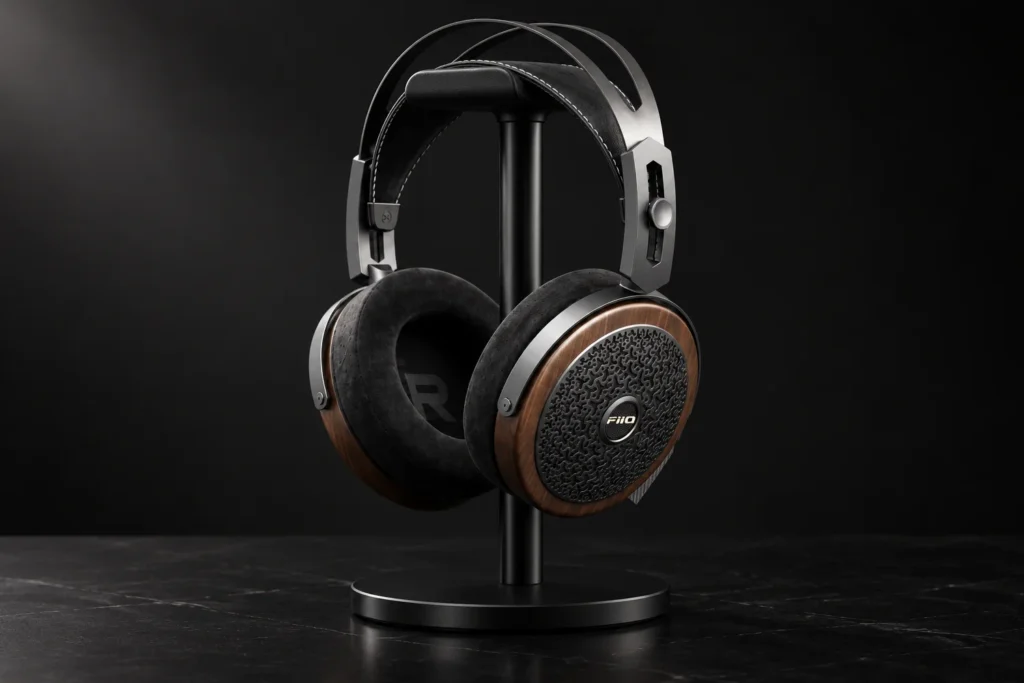
The H1 uses open-back earcups, a design choice that places it firmly in a traditional hi-fi headphone category. Open-back headphones allow airflow through the earcups and drivers rather than enclosing the rear of the driver in a sealed chamber. This approach is often chosen when a headphone is intended to prioritize spatial openness and a more speaker-like sense of presentation over maximum isolation.
Tripowin highlights the open-back structure as a way to support realistic soundstage and imaging. For a prospective owner, the appeal is straightforward: an open-back headphone can feel less acoustically confined than many closed-back alternatives, because the driver is not working against the same enclosed air volume behind it. The documented goal for the H1 is a more open and natural listening experience, supported by airflow through the earcups.
This design also aligns with the H1’s tuning ambitions. A headphone intended to sound balanced and spacious benefits from an enclosure that does not overly trap or reflect energy inside the cup. The H1’s open-back layout and custom driver are presented as complementary decisions, with the driver supplying the fundamental acoustic output and the open earcup architecture shaping how that output develops around the listener.
Tuning with a Studio-Minded Target
Tripowin states that the H1 was tuned after studying notable high-end headphones and evaluating their sound signatures, then combining that work with multiple target tuning curves. The intended result is a balanced and natural presentation that reflects recorded sound with a studio-oriented tuning philosophy. This is an important distinction: the H1 is not described primarily as a bass-enhanced lifestyle headphone or a deliberately colored novelty design. Its documented tuning goal is balance.
For prospective owners, tuning intent matters because headphone specifications alone do not explain how a product is meant to be used. A frequency range figure or impedance value gives technical context, but the tonal balance determines whether the headphone is better suited to relaxed listening, production work, analytical listening, or general hi-fi enjoyment. Tripowin’s description of the H1 points toward listeners who want a relatively even-handed presentation rather than an overtly exaggerated one.
It is also useful that the H1’s tuning is presented as the result of comparative study rather than a single arbitrary target. That does not, by itself, prove how the headphone will sound in any individual system or on any listener’s head, but it does show the design brief: Tripowin is positioning the H1 as a headphone shaped by established hi-fi and studio preferences, not merely by raw driver specifications.
Key Specifications and Practical System Matching
The published specifications for the Tripowin H1 include a 50mm dynamic driver with a three-layer polymer diaphragm, 105 dB SPL, a stated frequency range of 5Hz to 24kHz, and 32-ohm resistance. These figures help define the H1 as a modern full-size dynamic headphone with a relatively accessible impedance rating. While real-world loudness and control still depend on the connected source, a 32-ohm specification generally places less emphasis on specialized high-voltage headphone amplification than many higher-impedance designs.
The 105 dB SPL figure also suggests that the H1 is designed with practical sensitivity in mind. Prospective owners pairing headphones with desktop headphone amplifiers, USB DAC/amps, audio interfaces, or capable portable sources will naturally want to know whether a headphone is unusually demanding. The H1’s published impedance and sensitivity do not make it possible to guarantee compatibility with every device, but they do present a specification set that appears approachable for a range of conventional headphone systems.
The frequency range of 5Hz to 24kHz should be read as part of the overall specification package rather than as a standalone promise of performance. More important in daily use will be the interaction between the driver, the open-back housing, the tuning target, and the listener’s source equipment. Still, the extended stated range reinforces the idea that the H1 is designed as a full-range hi-fi headphone rather than a narrow-purpose communications or casual listening headset.
Design Choices That Support Long-Form Listening
Although the available information focuses primarily on acoustic engineering, the open-back format itself carries implications for use. The H1 is best understood as a headphone for focused listening spaces: a desk, a listening room, a home studio environment, or another setting where the listener can take advantage of an open acoustic structure. It is not being positioned as a travel-isolation product or as a compact convenience device.
That focus can be attractive. Many headphone buyers already have wireless models, earbuds, or closed-back headphones for commuting and calls. A product such as the H1 serves a different role: it is for times when the priority is listening rather than portability. The combination of a large dynamic driver, open airflow, and balanced tuning target suggests a headphone intended for album listening, workstation use, media playback, and careful engagement with recordings.
The simplicity of the concept is also part of the appeal. The H1’s documented strengths are not dependent on apps, noise-cancelling modes, microphones, or battery management. Its identity is rooted in acoustic and electro-mechanical design. For listeners who prefer a direct wired headphone chain and want the headphone itself to be the main event, that can be a compelling product direction.

Who the Tripowin H1 Is Most Suitable For
The Tripowin H1 is most suitable for listeners who are specifically interested in an open-back hi-fi headphone and who have an environment where that design makes sense. Its documented strengths point toward home listeners, desktop audio users, and enthusiasts who want a spacious presentation and a tuning approach aimed at balance and naturalness. It may also appeal to users who like the coherence of a single dynamic driver and are interested in the potential advantages of a more rigid, carbon-reinforced diaphragm structure.
The H1 also makes sense for buyers who want to explore open-back headphones without moving into much higher price territory. At $189, it is positioned as a serious but still accessible hi-fi product. The driver technology and tuning claims give it a clear identity beyond being just another full-size headphone in the category.
It will be less suitable for someone whose top priority is isolation, extreme portability, or feature integration. The available information does not position the H1 as a noise-isolating travel headphone, a wireless model, or a multifunction headset. Its value is tied to its open-back acoustic design, driver construction, and tuning philosophy. Buyers who understand that distinction are more likely to appreciate what the H1 is designed to offer.
Conclusion
The Tripowin H1 stands out through a focused set of documented design choices: a 50mm dynamic driver, a three-layer carbon-polymer diaphragm with integrated carbon networks, a powerful magnetic design, open-back earcups, and tuning shaped by studio-minded targets. Its 32-ohm resistance, 105 dB SPL rating, and $189 price place it in an approachable hi-fi space for listeners building or expanding a desktop or home headphone setup. The H1 is best suited to prospective owners who want an open-back listening experience, value balanced tuning goals, and are interested in driver engineering rather than wireless features or portability-first design.