iFi GO blu Air: A Compact Bluetooth DAC/Amp for Wired Headphones
The iFi GO blu Air is a small Bluetooth DAC and headphone amplifier designed to give wired headphones wireless convenience without abandoning dedicated audio circuitry.
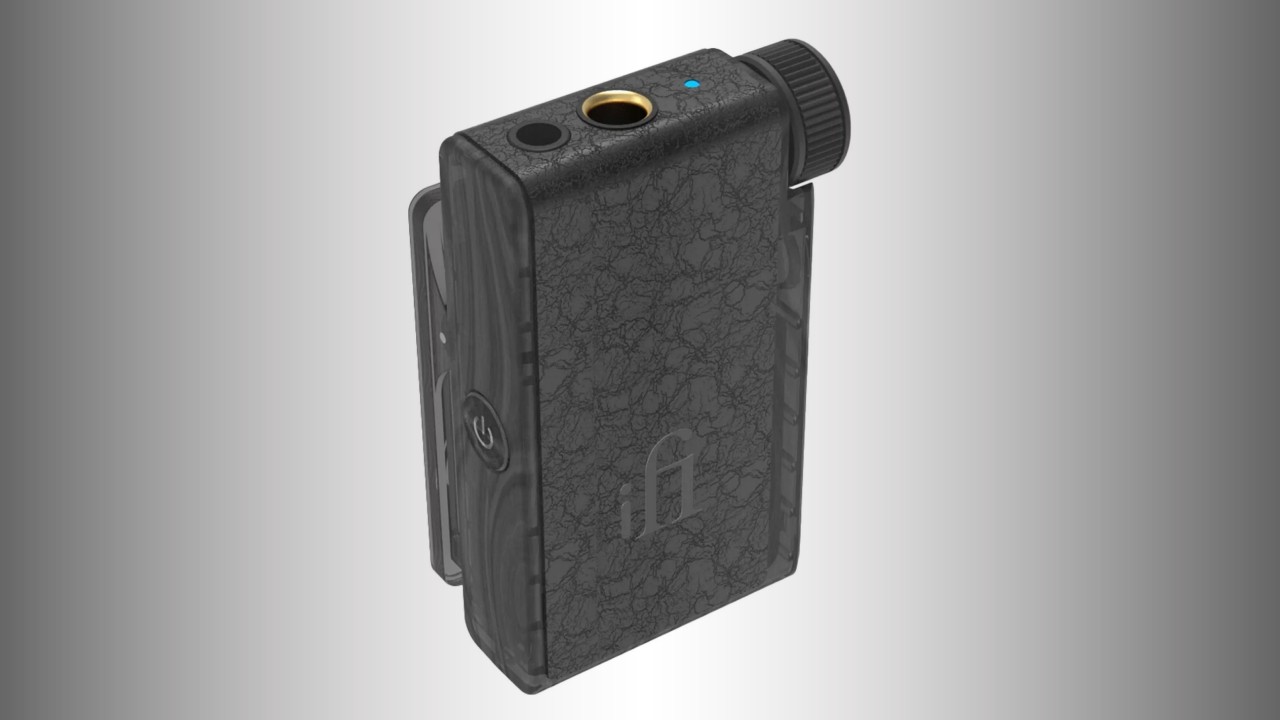
The iFi GO blu Air addresses a very specific modern listening problem: many people still own wired headphones they like, but the devices they use every day are increasingly built around wireless convenience. Rather than replacing those headphones with Bluetooth models, the GO blu Air acts as a compact bridge between the two worlds. It receives audio wirelessly over Bluetooth, converts it through an onboard DAC, amplifies it, and sends it to a pair of wired headphones through either a 4.4 mm balanced output or a 3.5 mm S-Balanced connection. At 31 grams, with a magnetic clip and a small metal body, it is designed to be worn rather than carried like a traditional desktop accessory. Its appeal lies not in trying to be a full hi-fi component, but in bringing a more audio-focused signal path, flexible headphone outputs, call handling, and everyday portability into a device small enough to attach to clothing, a belt, or a bag.
A Wireless Adapter With Dedicated Audio Hardware
The central idea behind the iFi GO blu Air is straightforward: it allows wired headphones to operate in a wireless setup while still passing the signal through dedicated DAC and amplifier stages. Inside the compact enclosure are three key sections: a Bluetooth module, a digital-to-analog converter, and a headphone amplifier. That separation matters because it positions the device as more than a basic Bluetooth receiver. It is designed as a self-contained portable audio chain for listeners who want to keep using wired in-ear monitors or full-size headphones with phones, tablets, or other Bluetooth sources.
The Bluetooth platform is based on the Qualcomm QCC5144 chipset and supports Bluetooth 5.2. Codec support includes LDAC, LHDC, aptX Adaptive, aptX HD, aptX, AAC, and SBC. That broad codec list is useful because wireless performance depends not only on the receiving device, but also on what the source device can transmit. Android users, for example, may have access to higher-bitrate options such as LDAC or aptX variants depending on the phone, while Apple device users typically rely on AAC. The GO blu Air’s codec coverage gives it a better chance of matching the capabilities of different source devices without forcing the owner into a single ecosystem.
For digital conversion, the unit uses a Cirrus Logic MasterHIFI-series DAC and supports streams up to 24-bit/96 kHz. The product information does not identify the specific DAC model, but the emphasis is on efficient high-resolution-capable conversion within a battery-powered portable design. For prospective owners, that combination is important: a pocketable wireless DAC/amp must balance audio processing capability with battery life, heat, and size. The GO blu Air is clearly designed around mobility rather than desktop-style excess.
Balanced and S-Balanced Outputs Add Practical Flexibility
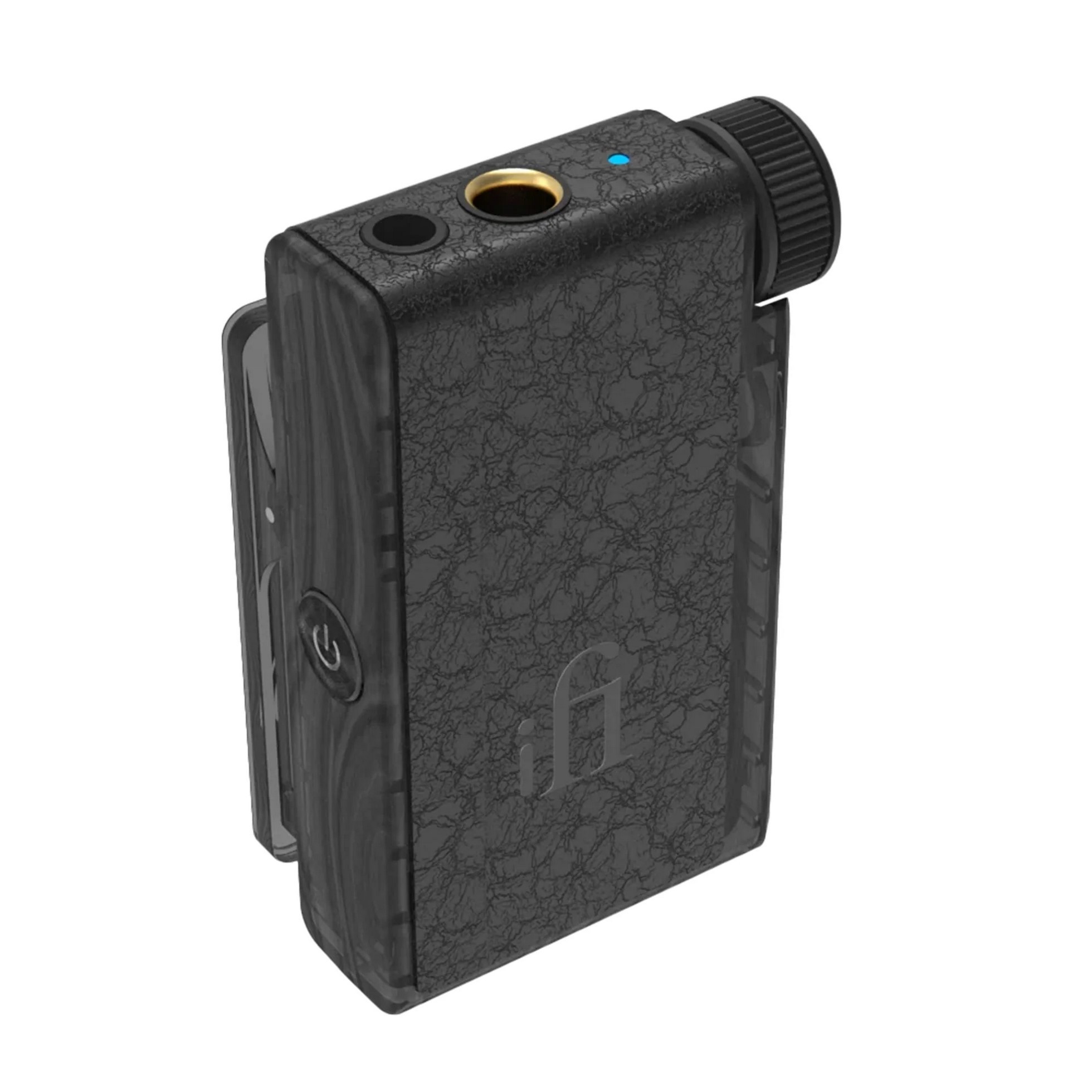
One of the more distinctive aspects of the GO blu Air is its choice of headphone outputs. It provides both a 4.4 mm balanced output and a 3.5 mm S-Balanced jack. The 4.4 mm connection is valuable for users who already own balanced headphone cables, particularly in-ear monitor users and enthusiasts who have standardized on the more robust 4.4 mm format rather than smaller balanced plugs. The published output figures for the 4.4 mm connection are at least 262 mW/2.9 V at 32 ohms and 52 mW/5.6 V at 600 ohms, which indicates that the balanced side is intended to offer meaningful drive capability from a very small device.
The 3.5 mm output remains equally important because it is the most widely used wired headphone connection. iFi’s S-Balanced implementation is intended to reduce distortion when using conventional single-ended headphones. For many owners, this will be the default output because it works with the broadest range of existing cables. The specified 3.5 mm output power is at least 165 mW/2.3 V at 32 ohms and at least 14 mW/2.9 V at 600 ohms. Combined with the stated output impedance of less than 1 ohm, the GO blu Air is positioned to work with a variety of earphones and headphones without imposing a high-output-impedance interaction on sensitive loads.
This dual-output arrangement is useful because it keeps the device from being too narrowly targeted. Someone with simple wired earbuds can use the 3.5 mm jack, while a listener with balanced-compatible IEMs or headphones can use the 4.4 mm output. In a product of this size, including both connections gives the GO blu Air a level of system flexibility that is often more meaningful in daily use than adding extra controls or rarely used features.
Sound Shaping Without a Complicated Interface
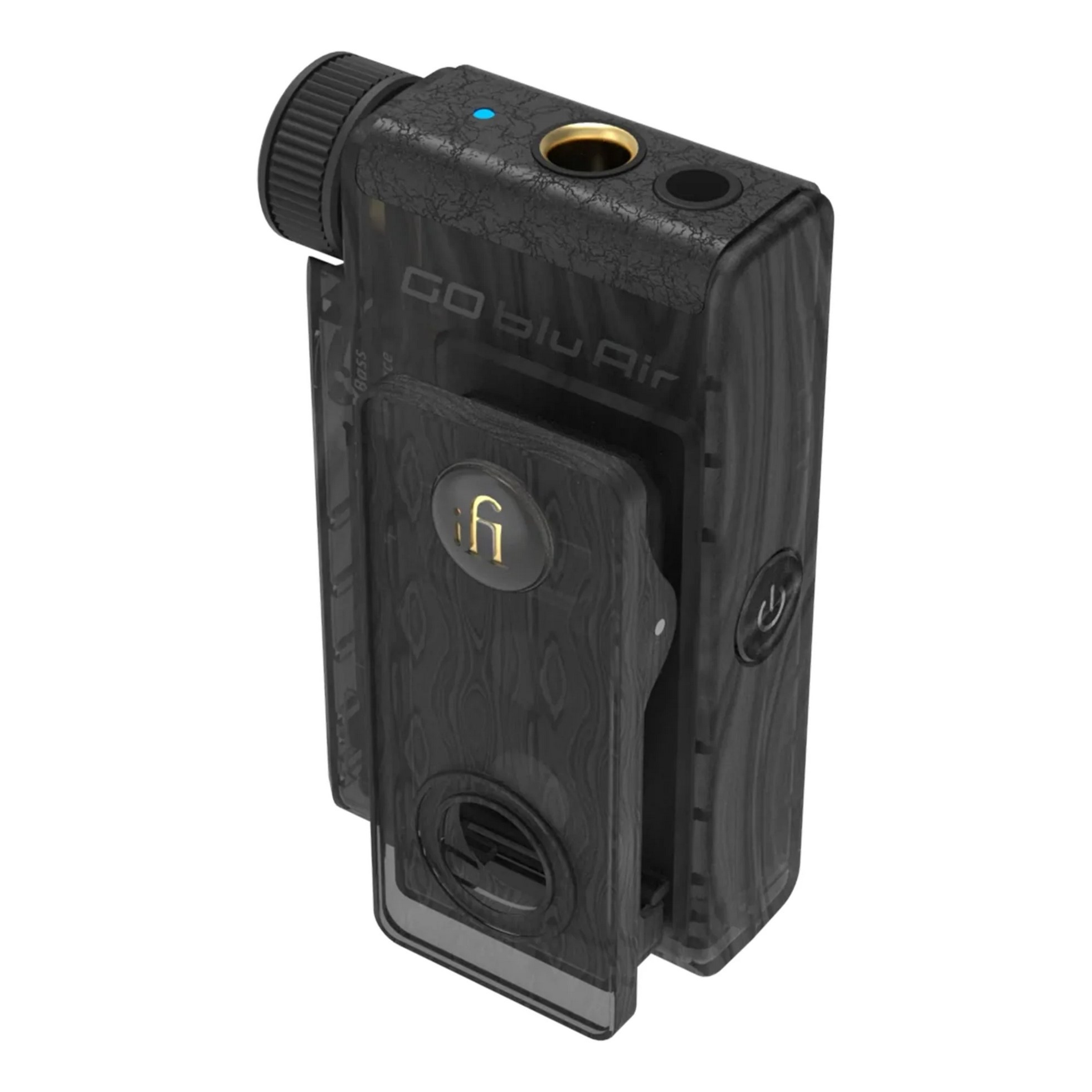
The GO blu Air includes two proprietary sound adjustment modes: XBass and XSpace. XBass is designed to add density to low frequencies, while XSpace is intended to expand the sense of space. These are not presented as room correction, EQ presets, or app-based tuning systems, but as simple onboard options for users who want quick tonal or spatial adjustment without having to change settings on the source device.
That simplicity has practical value. Portable listening conditions vary widely: a listener may be outdoors, on public transport, walking, or working at a desk. Headphones also vary in tonal balance and presentation. A compact hardware control for bass reinforcement or a more spacious presentation gives the owner a way to adapt the experience without committing to permanent EQ changes or relying on software compatibility. It also keeps the product accessible to people who do not want to manage detailed equalizer bands on a phone.
It is important to frame these modes realistically. They are convenience tools, not a guarantee that every headphone will be transformed in the same way. Their usefulness will depend on the headphone, the recording, and the listener’s preference. Still, their presence adds to the GO blu Air’s identity as a portable device designed for varied, real-world listening rather than a stripped-down receiver with no user adjustment.
Clip-On Portability and Everyday Usability
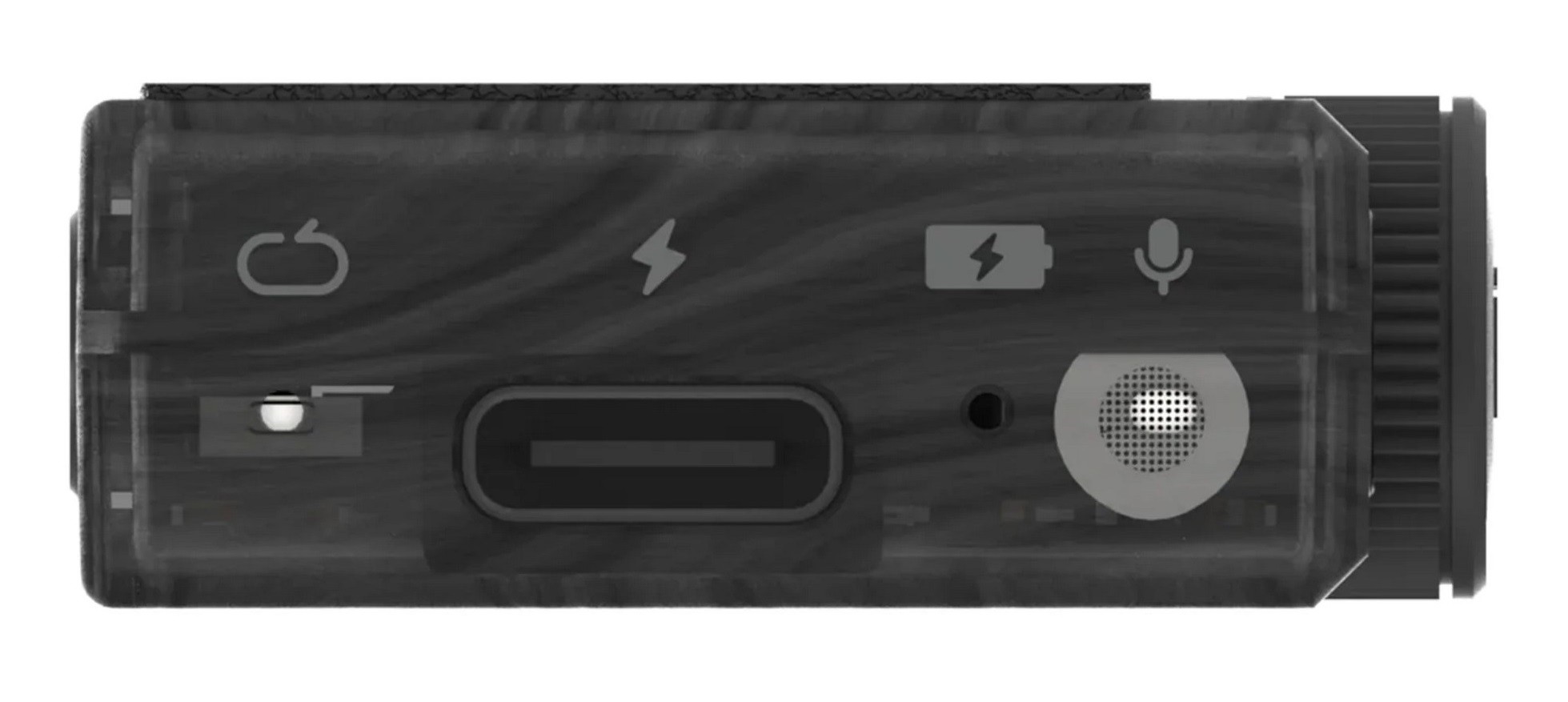
The physical design is central to the GO blu Air’s appeal. The unit measures 53.5 x 33.7 x 19.5 mm and weighs only 31 grams. It also uses a magnetic clip that allows it to attach to clothing, a belt, or a bag. This is an important design decision because a Bluetooth DAC/amp is only useful if it is easy to carry in a way that does not make the headphone cable awkward. Clipping the device near the upper body can reduce cable slack, keep controls within reach, and avoid the need to place a small component loose in a pocket.
The body is metal with an anodized coating described as scratch-resistant. For a device likely to be clipped, handled, placed in bags, and used outdoors, the choice of a metal enclosure supports the impression of a portable tool rather than a disposable accessory. The very low weight also matters. A clip-on device that pulls on clothing or feels bulky is less likely to become part of a daily routine. At 31 grams, the GO blu Air is designed to disappear into use rather than demand a dedicated carrying strategy.
The product also supports quick pairing, multipoint connection, and memory for eight devices. Multipoint is especially useful in daily life because it can allow the device to remain connected to more than one source, such as a phone and a laptop, depending on configuration and use. Device memory reduces friction for users who rotate between several sources. These details are not glamorous, but they directly affect whether a portable audio product feels convenient after the first week.
Calls, Battery Life, and Charging
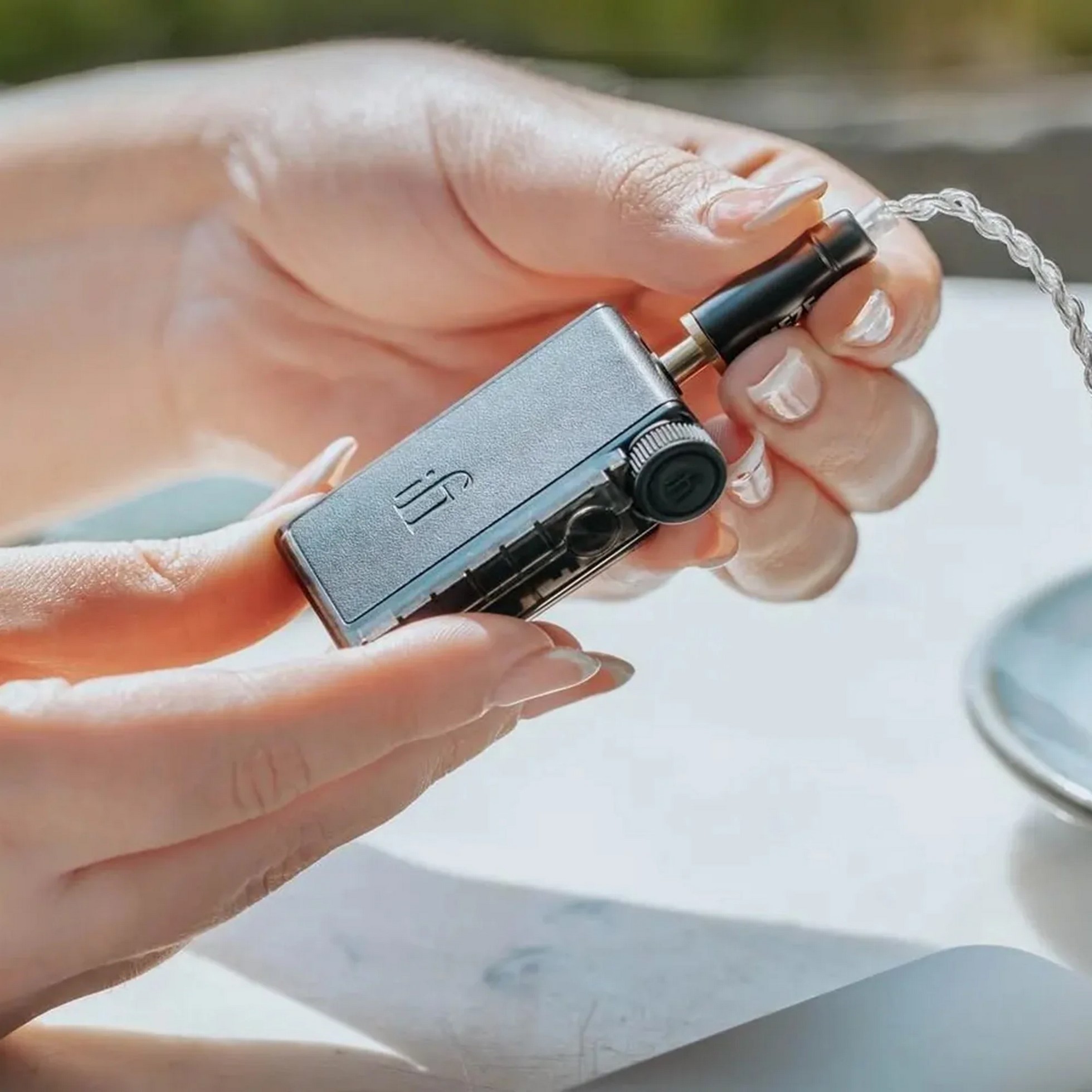
The GO blu Air is not only intended for music playback. It includes a MEMS microphone with echo and background noise suppression, making it suitable for calls when paired with a phone or computer. This matters because many wired hi-fi headphones and IEMs either lack an inline microphone or use cables that are inconvenient for modern mobile calling. By placing microphone functionality in the Bluetooth DAC/amp, iFi makes it easier to use preferred wired headphones for both listening and communication.
The battery is a 450 mAh lithium-polymer unit, with operation stated at up to 10 hours. For a small wearable DAC/amp, that figure places the product in a practical range for commuting, work sessions, travel days, or casual evening use, though actual battery life will depend on codec, volume, headphone load, and usage pattern. Charging is handled through USB-C at 5 V/1 A or higher.
Fast charging is another useful everyday feature: 15 minutes of charging is said to provide about two hours of playback. That can matter more than maximum battery life in many real situations. A device used for commuting or office listening is easy to forget on a charger; a short top-up before leaving can make the difference between using wired headphones wirelessly or abandoning the setup for the day.
Who the iFi GO blu Air Is Best Suited For
The GO blu Air is most suitable for listeners who already own wired headphones or in-ear monitors and want to use them more conveniently with modern Bluetooth sources. It is especially relevant for people whose phones no longer include headphone outputs, or who prefer not to keep a dongle physically attached to a phone while walking, commuting, or working. The inclusion of both 4.4 mm balanced and 3.5 mm S-Balanced outputs makes it appealing to users with a mix of standard and more enthusiast-oriented headphone cables.
It also fits listeners who value a compact, self-contained solution over a larger portable player or desktop DAC/amp. The clip-on design, microphone, multipoint support, and quick charging all point toward daily portability. Someone who moves between a phone, laptop, and tablet may appreciate the device memory and Bluetooth codec support, while still keeping their preferred wired headphones in use.
It may be less suitable for someone who wants a purely wired USB DAC, a large desktop amplifier, app-based parametric EQ, or a device with a display and extensive menu system. It is also not a replacement for headphones that require unusually demanding amplification beyond what a compact battery-powered unit can sensibly provide. Its strength is portable flexibility, not the feature set or scale of a stationary hi-fi component.
A Focused Position in the Portable Audio Market
At $129, the iFi GO blu Air occupies a space between simple Bluetooth adapters and more elaborate portable DAC/amps. Its documented feature set helps define that position: Bluetooth 5.2 with extensive codec support, a Cirrus Logic MasterHIFI-series DAC, balanced and S-Balanced outputs, selectable sound modes, a microphone for calls, and a wearable body. Rather than competing on a single headline feature, it brings together several practical elements that are likely to matter in everyday ownership.
The product’s design is also coherent. The lightweight enclosure supports the clip-on concept. The microphone supports mobile use. The codec list supports source flexibility. The 4.4 mm and 3.5 mm outputs support a wide range of wired headphones. The sound modes provide quick adaptation. The battery and fast charging support routine use. None of these features exists in isolation; together, they describe a device made for people who want wired-headphone audio hardware without being physically tethered to a phone or computer.
That coherence is what makes the GO blu Air interesting. It is not simply a tiny box with Bluetooth added. It is a portable audio accessory built around a realistic use case: keep the headphones you like, add wireless convenience, retain dedicated conversion and amplification, and make the whole setup light enough to wear.
Conclusion
The iFi GO blu Air’s strongest documented qualities are its compact clip-on design, broad Bluetooth codec support, dedicated Cirrus Logic DAC stage, dual headphone outputs, practical call microphone, sound-shaping modes, and useful battery behavior with USB-C fast charging. It is best suited to listeners who want to keep using wired headphones or IEMs with phones, laptops, and tablets, but prefer the freedom of a small Bluetooth DAC/amp rather than a cable running directly to the source. Its appeal is not based on excess size or complexity, but on combining portability, connection flexibility, and everyday usability in a focused $129 device.