
A digital-to-analogue converter is often treated as a simple utility box, but the source material here shows how varied the category has become.
Some models focus on classic two-channel conversion, while others add headphone amplification, preamplifier functions, Bluetooth, equalisation, modular hardware, or deliberately old-school analogue character.
The right choice depends less on chasing the longest specification sheet and more on matching architecture, inputs, outputs, and system role. A desk setup may benefit from USB power, balanced headphone output, and compact controls. A main hi-fi system may call for XLR outputs, galvanic isolation, a serious power supply, or preamp capability. Listeners who enjoy a more analogue presentation may be drawn to R2R, tube, or ladder-based designs, while others may prefer the flexibility of modern chip-based DAC platforms. The recommendations below preserve the distinct purpose of each product in the supplied source material. They are not ranked by measured performance or listening preference; instead, each entry explains where that DAC appears most convincing based on its stated design, connectivity, and functional priorities.

1. FiiO Warmer R2R
FiiO Warmer R2R DAC with tube circuitry, analogue VU meters, and RCA and XLR output support.
The FiiO Warmer R2R is aimed at listeners who want a DAC with a deliberately retro presentation and modern connection flexibility.
Its combination of a patented R2R architecture, four JJ Electronic E88CC tubes, a toroidal-transformer linear power supply, and large analogue VU meters gives it a clear identity among more conventional compact DACs.
USB support reaches PCM 32-bit/384 kHz, while RCA and XLR outputs make it adaptable for desktop systems as well as traditional hi-fi separates. The perforated rear cover around the tubes and power supply is also noted as part of the heat-dissipation design.
Best for: Tube-flavoured desktop and classic hi-fi systems
- Four JJ Electronic E88CC tubes
- Patented R2R architecture
- RCA and XLR outputs
- USB PCM support up to 32-bit/384 kHz
Verdict: A distinctive DAC for listeners who want R2R conversion, visible tube hardware, and practical analogue outputs in one compact component.
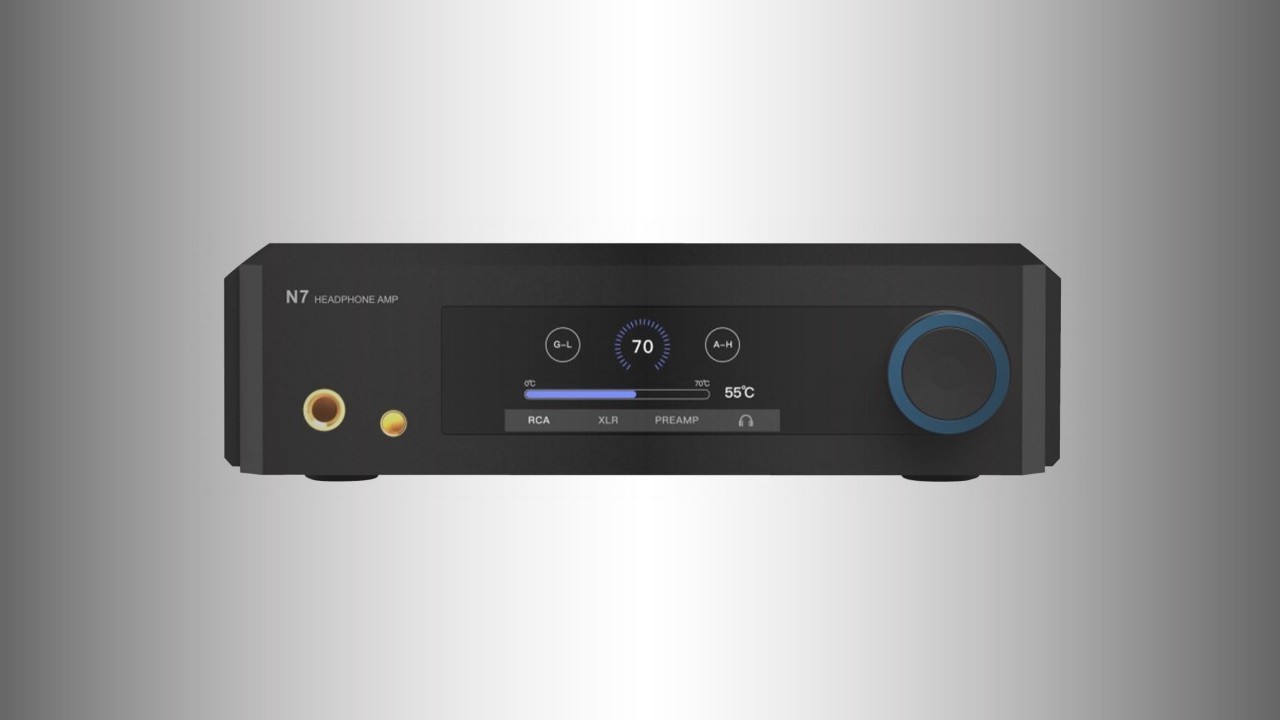
2. Aune N7 DAC Edition
Aune N7 DAC Edition combines digital conversion, balanced Class A headphone amplification, and preamplifier operation.
The Aune N7 DAC Edition is one of the more versatile products in this group because it combines a DAC, balanced Class A headphone amplifier, and preamplifier.
Its digital section uses dual Cirrus Logic CS43198 DACs with USB-C support for PCM 32-bit/384 kHz and DSD256, while the analogue section is built around discrete JFET transistors.
Aune also specifies a four-channel R2R volume control circuit for channel balance and control precision. With support for headphones from 16 to 600 ohms and both 6.35 mm and balanced 4.4 mm output power figures given in the source, it is clearly positioned for headphone users who also want preamp flexibility.
Best for: Headphone-first systems needing DAC and preamp functions
- DAC, headphone amplifier, and preamplifier functions
- Dual Cirrus Logic CS43198 DAC setup
- Discrete JFET analogue stage
- Supports headphones from 16 to 600 ohms
Verdict: A strong all-in-one choice when headphone drive, USB-C hi-res playback, and preamplifier use are all part of the same system plan.

3. SMSL D10
SMSL D10 portable USB DAC with transparent design detail and 3.5 mm and 4.4 mm headphone outputs.
The SMSL D10 is the portable choice in this selection, described as a USB DAC and headphone amplifier built around two Cirrus Logic CS43131 chips.
It supports PCM 32-bit/384 kHz and DSD256 decoding, and it provides both 3.5 mm single-ended and 4.4 mm balanced headphone outputs.
The source also highlights a transparent window, textured aluminium body, side-mounted volume button, and USB connection to computers, phones, and other devices. Its stated headphone amplifier output reaches up to 500 mW at 16 ohms and 32 ohms, making it more ambitious than a basic dongle-style DAC.
Best for: Portable USB listening with balanced headphone output
- Dual Cirrus Logic CS43131 DAC chips
- PCM 32-bit/384 kHz and DSD256 support
- 3.5 mm and 4.4 mm balanced headphone outputs
- USB connection for computers and phones
Verdict: A compact USB DAC and headphone amplifier for users who want hi-res format support and both single-ended and balanced headphone connections.

4. T+A DAC 200
T+A DAC 200 with premium midi-format design, arrow indicator, advanced conversion, and preamplifier circuitry.
The T+A DAC 200 is the most format-ambitious DAC in the supplied material, with stated support for DSD1024 and PCM 32-bit/768 kHz.
Its architecture separates PCM and DSD conversion: PCM uses a double symmetrical differential Double Differential Quadrable arrangement with four 32-bit Burr-Brown chips per channel, while DSD is handled by T+A true 1-bit DSD conversion.
The DAC also includes proprietary oversampling filter options, a NOS mode, full galvanic isolation on ultra-fast Silicon Lab digital isolators, and an in-house second-generation De-Jitter system. The Class A preamplifier section uses discrete high-voltage technology, dual-mono topology, and relay volume control, giving it a serious role in a high-end system beyond standalone DAC duties.
Best for: High-resolution digital systems needing DAC and preamp capability
- DSD1024 and PCM 32-bit/768 kHz support
- Separate PCM and DSD conversion paths
- Selectable proprietary filters plus NOS mode
- Class A preamplifier with relay volume control
Verdict: A deeply engineered DAC and preamplifier for systems where format support, isolation, clocking, and analogue-stage design are central priorities.

5. Schiit Audio Gungnir 2
Schiit Audio Gungnir 2 external DAC with multi-bit conversion, dual USB inputs, and modular internal architecture.
The Schiit Audio Gungnir 2 is built around a balanced multi-bit Multiform architecture and carries forward Schiit’s interest in modular DAC design.
It uses four DAC8812CRUZ digital-to-analogue converters, a proprietary digital filter running on Analog Devices DSP, and an optional No-Oversampling mode for users who want to bypass that filter.
Connectivity is a key strength: two USB inputs allow multiple USB sources to remain connected, and the Unison 384 input supports PCM up to 32-bit/384 kHz and DXD. The source also describes removable analogue hardware, modular input and processing boards, compatibility with Schiit’s Forkbeard remote-control interface, and firmware updates over Wi-Fi.
Best for: Multi-source systems that value modular DAC architecture
- Balanced multi-bit Multiform architecture
- Two USB inputs including Unison 384
- Selectable NOS mode
- Modular input, processing, and analogue-board design
Verdict: A flexible multi-bit DAC for users who want dual USB connectivity, filter choice, and a design built with future serviceability in mind.

6. Rotaxis Core64
Rotaxis Core64 R-2R DAC based on a timing-focused passive resistive ladder design.
The Rotaxis Core64 is presented as a deliberately unconventional R-2R DAC that avoids several common forms of digital processing.
Rotaxis describes it as a passive resistive ladder design with no feedback, no noise reduction, and no digital filters, with timing accuracy placed at the centre of the concept.
Its PulseAxis Staircase Design uses a true 24-bit resistive ladder, with each bit represented by precisely matched resistors arranged in a ring configuration that the company says is intended to reduce EMI, thermal drift, and crosstalk. The source is strongly architecture-led rather than feature-led, so this is best understood as a specialist DAC for listeners specifically interested in ladder conversion philosophy.
Best for: R-2R enthusiasts interested in minimalist conversion design
- True 24-bit resistive ladder architecture
- No feedback, noise reduction, or digital filters described
- PulseAxis ring-array resistor arrangement
- Timing-focused passive ladder concept
Verdict: A specialist ladder DAC whose appeal rests on its passive R-2R architecture and rejection of common digital-processing approaches.

7. Mytek Manhattan DAC II
Mytek Manhattan DAC II full-size USB DAC with ES9038 Pro conversion and dual front headphone outputs.
The Mytek Manhattan DAC II is described as Mytek’s most expensive and technically advanced USB DAC, built around the ESS Technologies ES9038 Pro DAC chip.
The source highlights Mytek’s own linear power supply and Femto Clock generator as central to its implementation.
It also includes two front-panel headphone outputs, allowing two pairs of regular headphones to be connected, or demanding high-end headphones through a balanced connection using an adapter to 4-pin XLR. With a substantial case and included IR remote control mentioned in the source, the Manhattan DAC II reads as a full-size component rather than a compact desktop accessory.
Best for: Full-size USB DAC systems with serious headphone use
- ESS Technologies ES9038 Pro DAC chip
- Mytek linear power supply
- Mytek Femto Clock generator
- Two front headphone outputs
Verdict: A substantial ESS-based DAC for users who want Mytek’s clocking and power-supply approach alongside front-panel headphone connectivity.

8. Neutron HiFi DAC V1
Neutron HiFi DAC V1 USB hi-res DAC with OLED display, aluminium housing, and ESS-based digital conversion.
The Neutron HiFi DAC V1 is a USB hi-res DAC that combines portable practicality with a more complete hardware platform than its compact form might suggest.
It supports PCM up to 32-bit/384 kHz and DSD256, uses an ESS Technologies DAC chip, and includes an ultra-low-noise power supply with dual master clocks.
The source also emphasises the high-contrast OLED display, Gorilla Glass 3 cover, ARM Cortex-M4 controller running Neutron HiFi firmware, and aluminium housing designed to protect internal components from external influences including electromagnetic interference. It is well suited to users who value format visibility and robust physical design in a USB DAC.
Best for: USB hi-res playback with display and rugged enclosure
- PCM 32-bit/384 kHz and DSD256 support
- ESS Technologies DAC chip
- OLED display with Gorilla Glass 3
- Aluminium housing with EMI protection described
Verdict: A compact hi-res USB DAC that pairs ESS-based conversion with useful status display and a durable aluminium build.

9. Vincent DAC-1 MK
Vincent DAC-1 MK standalone DAC with ES9038 conversion, balanced signal processing, and separated power-supply windings.
The Vincent DAC-1 MK updates Vincent’s junior DAC with improved functionality, including DSD reception through USB and support for 32-bit/384 kHz files via that input.
Optical and coaxial inputs process up to 24-bit/192 kHz digital signals, giving it useful compatibility with traditional digital sources.
Conversion is handled by an ES9038 chip, followed by balanced signal processing, and the source notes the use of WIMA and Nichicon components. Its power supply uses a transformer with dual windings, separately feeding the analogue and digital sections to reduce parasitic interference and preserve dynamics according to the supplied description.
Best for: Traditional hi-fi systems needing USB, coaxial, and optical inputs
- USB DSD support
- USB PCM support up to 32-bit/384 kHz
- Optical and coaxial inputs up to 24-bit/192 kHz
- Separate transformer windings for analogue and digital sections
Verdict: A practical standalone DAC for users who want modern USB support while keeping standard optical and coaxial digital sources in the system.

10. Topping D900
Topping D900 DAC and preamplifier with discrete PSRM architecture, Aurora UI display, broad digital inputs, and PEQ control.
The Topping D900 is a DAC and preamplifier built around Topping’s fully discrete PSRM, or Pure Reference Switching Module, architecture.
The source describes a passive resistive divider reference-voltage system, nanosecond-speed switching logic, a separately implemented preamplifier stage, and an I/V converter using low-noise op-amps and selected discrete components.
Its feature set is broad: two USB inputs, I2S-LVDS over HDMI, AES/EBU, coaxial and optical inputs, Bluetooth 5.1 with LDAC and other codecs, trigger input and output, and a colour Aurora UI display. It also includes a 10-band PEQ with detailed band adjustment and user profiles, making it the most DSP-configurable DAC in this selection.
Best for: Feature-rich high-end systems with active speakers or DSP needs
- Fully discrete PSRM architecture
- DAC and preamplifier functions
- Wide input selection including USB, I2S-LVDS, AES/EBU, coaxial, optical, and Bluetooth
- 10-band PEQ with user profiles
Verdict: A highly configurable DAC and preamplifier for users who need extensive inputs, PEQ control, and direct system-integration features.
Quick comparison
These DACs differ less by category name than by system role.
Some are compact USB and headphone devices, some are full-size preamplifier-capable components, and others are specialist conversion designs built around tubes, R2R ladders, multi-bit architecture, or discrete switching modules.
| Product | Best for | Verdict |
|---|---|---|
| FiiO Warmer R2R | Tube-flavoured desktop and classic hi-fi systems | Choose it for R2R conversion, JJ Electronic tubes, VU meters, and RCA/XLR analogue output flexibility. |
| Aune N7 DAC Edition | Headphone-first systems needing DAC and preamp functions | The most obviously headphone-centred all-in-one here, with DAC, balanced Class A headphone amplifier, and preamplifier roles. |
| SMSL D10 | Portable USB listening with balanced headphone output | A compact USB DAC/headphone amplifier with dual CS43131 chips and both 3.5 mm and 4.4 mm headphone outputs. |
| T+A DAC 200 | High-resolution digital systems needing DAC and preamp capability | The strongest format-support entry, with DSD1024, PCM 32-bit/768 kHz, galvanic isolation, filter options, and Class A preamp design. |
| Schiit Audio Gungnir 2 | Multi-source systems that value modular DAC architecture | A multi-bit DAC with two USB inputs, Unison 384, NOS mode, and modular hardware design. |
| Rotaxis Core64 | R-2R enthusiasts interested in minimalist conversion design | A specialist passive ladder DAC focused on timing and avoiding feedback, noise reduction, and digital filters. |
| Mytek Manhattan DAC II | Full-size USB DAC systems with serious headphone use | A substantial ES9038 Pro-based USB DAC with Mytek clocking, linear power supply, and dual front headphone outputs. |
| Neutron HiFi DAC V1 | USB hi-res playback with display and rugged enclosure | A compact USB DAC with ESS conversion, OLED status display, aluminium housing, and PCM/DSD hi-res support. |
| Vincent DAC-1 MK | Traditional hi-fi systems needing USB, coaxial, and optical inputs | A straightforward standalone DAC with USB DSD, 32-bit/384 kHz USB PCM, ES9038 conversion, and separated analogue/digital power windings. |
| Topping D900 | Feature-rich high-end systems with active speakers or DSP needs | A broad-feature DAC and preamplifier with discrete PSRM architecture, many inputs, Bluetooth, triggers, and 10-band PEQ. |
Frequently asked questions
Should I choose a DAC by chipset alone?
No.
The supplied products show that implementation matters: power supply design, clocking, galvanic isolation, analogue output stages, filters, volume control, and headphone amplification can be just as important as the converter chip or ladder architecture.
When does it make sense to buy a DAC with a preamplifier?
A DAC with preamplifier functions is useful when it will feed a power amplifier or active speakers directly.
The Aune N7 DAC Edition, T+A DAC 200, and Topping D900 are examples from this selection that are described with preamplifier capability.
Do I need support for very high PCM and DSD resolutions?
Only if your sources and music library use those formats.
Several models here support PCM 32-bit/384 kHz and DSD256, while the T+A DAC 200 goes much further.
For many systems, input compatibility and output matching will be more important than the highest possible format number.
What is the practical difference between compact USB DACs and full-size DACs?
Compact USB DACs such as the SMSL D10 and Neutron HiFi DAC V1 are better suited to portable or desktop use.
Full-size models such as the T+A DAC 200, Mytek Manhattan DAC II, Schiit Audio Gungnir 2, Vincent DAC-1 MK, and Topping D900 generally place more emphasis on system connectivity, power supply, preamp functions, or modular architecture.
How to Choose the Right DAC for Your System
Start with the role the DAC must play.
If it only needs to connect a phone or computer to headphones, a compact USB DAC with the right headphone outputs may be the most practical choice.
The SMSL D10 adds both 3.5 mm and 4.4 mm outputs, while the Neutron HiFi DAC V1 adds an OLED display, aluminium housing, and robust USB hi-res support. For a headphone-based desktop or listening-room setup, look beyond conversion and check amplifier capability. The Aune N7 DAC Edition is explicitly built as a DAC, balanced Class A headphone amplifier, and preamplifier, while the Mytek Manhattan DAC II offers front-panel headphone outputs and a full-size component format. If the DAC will drive active speakers or sit at the centre of a system, preamp functions become more important; the T+A DAC 200 and Topping D900 are especially relevant on that point. Architecture is the next decision. The FiiO Warmer R2R brings together R2R conversion and tube hardware for listeners drawn to a warmer, more analogue-leaning concept. The Rotaxis Core64 is even more specialist, focusing on passive ladder conversion without feedback, noise reduction, or digital filters as described by the manufacturer. The Schiit Audio Gungnir 2 takes a different route with balanced multi-bit Multiform conversion, modular hardware, dual USB inputs, and NOS mode. Finally, match inputs and outputs to the equipment you already own. XLR outputs, RCA outputs, USB-C, USB-B, coaxial, optical, AES/EBU, I2S-LVDS, Bluetooth, trigger ports, and headphone jacks are not interchangeable conveniences; they determine whether the DAC will fit cleanly into your system. The most sensible DAC is the one whose conversion approach, connection set, output stage, and control features solve your actual system needs without paying for functions you will not use.



Sound Off
0Join the discussion if you have something to add.