

The iFi ZEN Stream is not presented as an all-in-one player, integrated amplifier, or DAC replacement. Its role is more specific: it is a network bridge intended to deliver digital audio from online services, network storage, and compatible playback software to an external DAC. That focus is central to its appeal. Many hi-fi systems already include a DAC that the owner likes, whether as a standalone component or as part of an amplifier. The ZEN Stream is designed for those systems, adding network capability without requiring the rest of the digital chain to be replaced. It also stands out because iFi has positioned it as a software-friendly platform, with Linux at its core and an open SDK approach that invites digital audio enthusiasts to experiment beyond standard use cases.
A focused bridge rather than another DAC
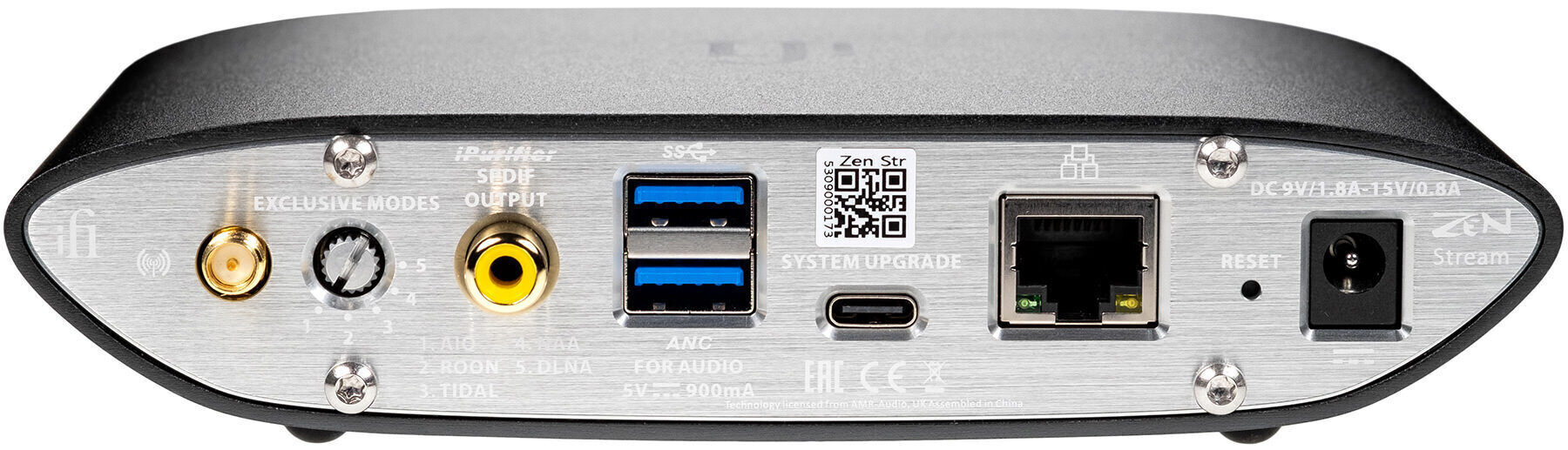
The most important design choice behind the ZEN Stream is its separation of network streaming from digital-to-analogue conversion. It receives audio over a home network and passes a digital signal to an external DAC via USB-A or S/PDIF. That makes it useful for listeners who want to modernize an existing DAC-based system rather than buy a streamer with a built-in converter they may not need.
This approach can also simplify system matching. A user can keep the tonal and functional character of their preferred DAC while changing the way music reaches it. In practical terms, the ZEN Stream is aimed at the part of the system where convenience, file access, streaming protocols, and network stability matter most, while leaving conversion duties to dedicated hardware elsewhere in the chain.
Its case design also follows the broader iFi ZEN family language, which may matter for owners who already use components from the same line. The shared visual approach gives the unit an obvious place in compact desktop or rack-adjacent systems, without turning the streamer into a large component that dominates the setup.
Network options for wired and wireless systems
The ZEN Stream connects to a router either through dual-band Wi-Fi or Gigabit Ethernet. The Wi-Fi specification includes 802.11a/b/g/n/ac, giving it compatibility with a wide range of home networks. For many users, this means the device can be placed where the audio system actually sits, even if that position is not close to the router.
The inclusion of Gigabit Ethernet is equally important. Wired networking is often preferred in hi-fi systems where consistency is valued, particularly when high-resolution files are being moved around a local network. The presence of both options gives the owner flexibility: a clean wireless installation where cabling is inconvenient, or a wired connection where the system layout permits it.
That flexibility makes the ZEN Stream relevant to more than one type of listening space. It can serve a compact desktop rig, a living-room DAC and amplifier combination, or a more traditional separates system where the digital source has simply become a networked component rather than a disc transport.

High-resolution digital output for capable DACs
On the output side, the ZEN Stream is specified to handle PCM up to 32-bit/384 kHz and DSD up to 11.2 MHz, also described as DSD256. Those figures place the device in line with the high-resolution capabilities of compatible iFi models and make it suitable for libraries that include more than basic CD-quality files.
The value of this support depends on the external DAC and the owner’s music library, but it is still a meaningful design decision. A network bridge that limits resolution can become the bottleneck in a digital system. By supporting these signal rates, the ZEN Stream is intended to pass demanding digital formats to a DAC that can make use of them, rather than forcing downsampling at the bridge stage.
The choice of USB-A and S/PDIF outputs also reflects common DAC input requirements. USB is widely used for modern high-resolution playback, while S/PDIF remains important for many standalone DACs, integrated amplifiers, and legacy digital components. The presence of both gives the ZEN Stream broader relevance across newer and established systems.
Linux-based software and an open development angle
One of the more distinctive aspects of the ZEN Stream is its software foundation. The platform is based on Linux, and iFi has presented it in a way that encourages software development, with an open SDK approach for those who want to experiment. For most owners, this may never be part of daily operation. For technically minded users, however, it is a notable invitation.
Network audio is increasingly shaped by software: protocol support, app compatibility, library handling, update behavior, and integration with playback ecosystems all influence the user experience. By using Linux and allowing developers to engage with the platform, the ZEN Stream is positioned as more than a sealed appliance. It offers room for community interest and software experimentation, at least for users with the skills and motivation to explore it.
Updates are supported over the air or via USB-C in version 3.0. That matters because a network bridge is not a static device in the same way as a traditional digital transport. Streaming services change, certification requirements evolve, and network audio features may need refinement. The ability to update the unit through network delivery or a USB-C connection gives iFi a route to maintain and expand functionality.
Streaming services, local libraries, and specialist playback
The ZEN Stream is documented with support for AirPlay out of the box, while Chromecast support is described as planned. It is also associated with Roon Bridge functionality and Roon Ready certification, again described as part of its roadmap. These are significant because different listeners organize digital music in very different ways. Some rely on phone-based casting, others on dedicated music-management software, and others on direct streaming from service apps.
Streaming from the Tidal and Spotify apps is listed as available immediately, which gives the unit relevance for mainstream subscription listening as well as more specialist hi-fi use. A proprietary Stream-iFi application for DLNA storage devices is also described as being prepared, pointing to local network libraries as another intended use case. For listeners with music stored on NAS drives or other DLNA-accessible storage, that type of support can be central to how a streamer fits into the home.
The ZEN Stream also works as a network audio adapter with Sygnalist HQPlayer, sending audio data received over the network directly to the DAC. This is a more specialized function, but an important one for users who build playback systems around HQPlayer. It reinforces the idea that the ZEN Stream is not aimed only at casual streaming convenience; it is also intended to fit into more software-defined digital audio setups.
Hardware choices beneath the compact exterior
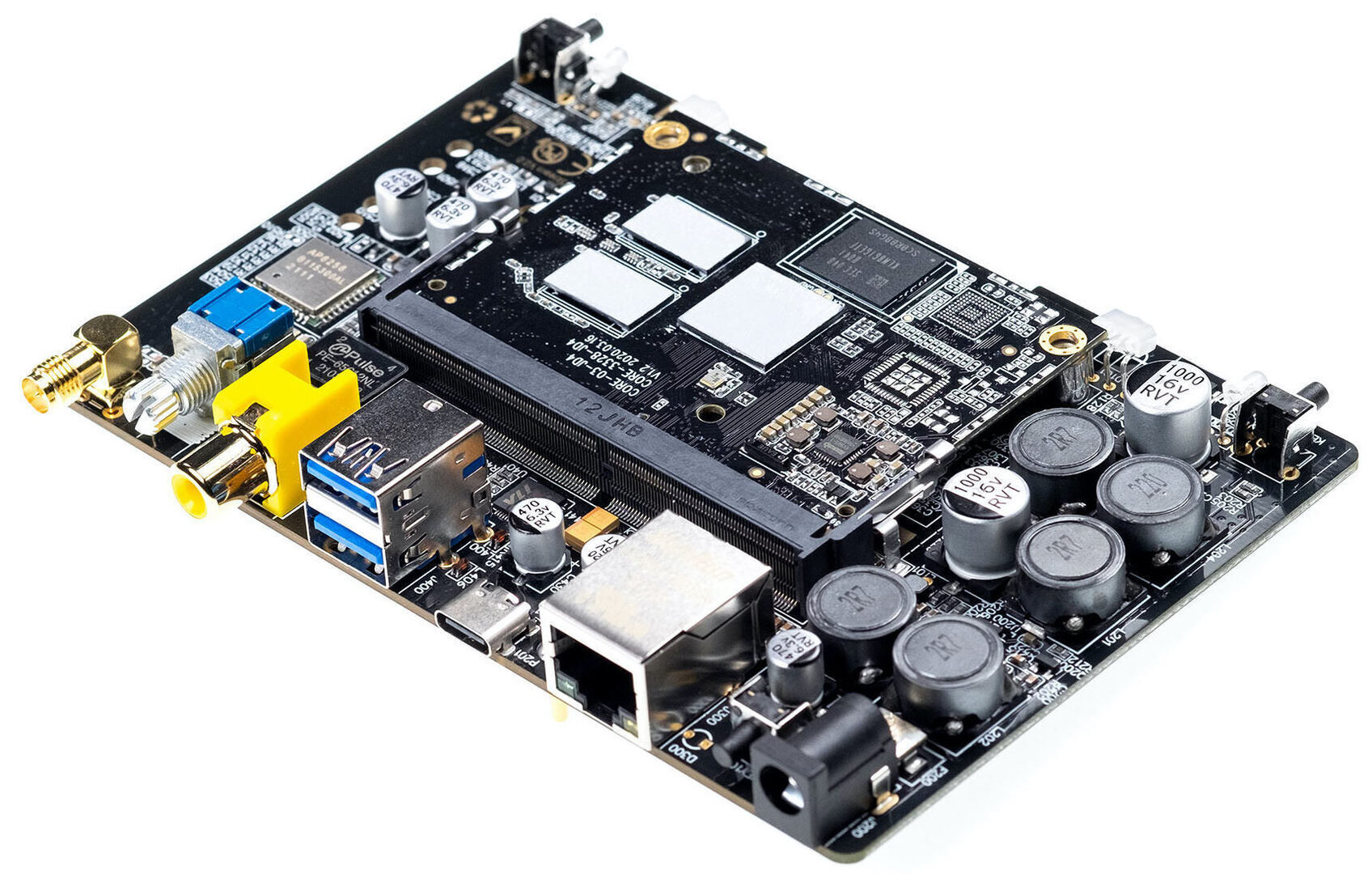
Inside the ZEN Stream is a quad-core ARM Cortex microprocessor. For a network bridge, processing capability is tied to handling software services, network audio tasks, and the coordination of supported protocols. While the device’s core job is not digital-to-analogue conversion, the processing platform is still central to how it functions as a modern streamer.
The board is also described as using surface-mount components including multilayer ceramic capacitors, along with TDK C0G inductors from Taiyo Yuden and Murata. These details show attention to the supporting electronic design rather than treating the streamer as merely a small computer in an audio case. The power supply is specified as a 1.5 MHz switching design using PSRR stabilizers with high suppression of instability, low no-load current, and low voltage drop.
For a prospective owner, these hardware notes matter because network audio devices sit at the intersection of computer engineering and hi-fi expectations. The ZEN Stream’s documented component and power-supply choices indicate that iFi has treated the bridge as a dedicated audio product, not just a generic network box with audio outputs.
Who the iFi ZEN Stream is best suited for
The ZEN Stream is most suitable for listeners who already have, or plan to buy, an external DAC and want to add network audio without replacing that DAC. It is especially relevant to systems where USB or S/PDIF digital input is available and where streaming services, local network storage, or software-based playback are becoming the main sources of music.
It should also appeal to users who value flexibility. The combination of Wi-Fi, Gigabit Ethernet, USB-A output, S/PDIF output, service-app streaming, AirPlay support, DLNA plans, Roon-related development, and HQPlayer NAA operation gives it a broad set of possible roles. Not every owner will use every function, but the variety helps the unit adapt as a system changes.
It may be less relevant for someone who wants a single-box streamer with an onboard DAC, analogue outputs, amplification, or a completely closed plug-and-play ecosystem. Its strengths are most obvious in DAC-centric systems and among owners who appreciate network audio as a configurable part of the hi-fi chain.
Conclusion
The iFi ZEN Stream’s strongest documented qualities are its clear focus, flexible digital connectivity, Linux-based platform, high-resolution signal handling, and openness to software development. By acting as a bridge between network music sources and an external DAC, it gives existing digital systems a modern streaming path without forcing a change of converter. Its wired and wireless networking, USB-A and S/PDIF outputs, AirPlay support, planned ecosystem additions, and HQPlayer NAA role make it particularly well suited to listeners who already think of their DAC as the centre of the digital chain and want a compact network component built around that idea.