



Choosing a digital-to-analog converter begins with the role it needs to perform.
Some models here are pocketable DAC and headphone amplifiers, while others combine source switching, volume control and balanced outputs for use at the center of a desktop or full-size system.
There are also specialist designs built around tubes, resistor-ladder conversion or proprietary discrete architectures. Connectivity deserves as much attention as headline format support. A headphone listener may prioritize output power, gain adjustment and jack selection, whereas an active-speaker system needs suitable line outputs and preferably preamplifier functionality. Optical, coaxial, USB, Bluetooth and proprietary digital connections each suit different sources, so the right model is the one that fits the complete signal chain. These 10 DACs illustrate the breadth of the category rather than a single hierarchy. The selection ranges from compact USB adapters to ambitious multi-chassis hardware, with each recommendation grounded in its stated design, connections and supported formats.

1. Shanling H0: Compact DAC and headphone amplifier with high-quality sound
The compact Shanling H0 provides 3.5mm and balanced 4.4mm headphone connections alongside adjustable gain.
The Shanling H0 combines digital conversion and headphone amplification in a compact device.
Its XMOS XU316 USB platform and Cirrus Logic CS43198 DAC support PCM up to 32-bit/768 kHz and DSD256, while three gain settings help adapt its output to different headphones.
Both 3.5mm and balanced 4.4mm connections are provided, and the source material also identifies compatibility with computers and game consoles. Two SGM8262-2 operational amplifiers handle amplification, with the balanced output described as having a warm, pleasing presentation.
Best for: Portable and desktop headphone listening
- Three adjustable gain levels
- 3.5mm and balanced 4.4mm outputs
- PCM up to 32-bit/768 kHz and DSD256
- Compact DAC and headphone-amplifier design
Verdict: A compact, flexible choice for listeners who want balanced and single-ended headphone outputs in one USB DAC.

2. Mytek Manhattan DAC II: Technically advanced USB DAC
The full-width Mytek Manhattan DAC II combines ES9038 Pro conversion with dual front-panel headphone outputs.
The Mytek Manhattan DAC II is a substantial USB DAC built around the ESS ES9038 Pro converter.
Mytek pairs that chip with its own linear power supply and Femto Clock implementation.
Two front-panel headphone outputs can serve two conventional pairs, while balanced headphone connection is possible through an adapter to four-pin XLR. The headphone amplifier has a declared output of 6 W and 0-ohm impedance. At 432 x 267 x 50mm and 8kg, this is full-size system hardware rather than a compact desktop accessory, and an infrared remote control is included.
Best for: Full-size high-end systems with headphone use
- ESS ES9038 Pro conversion
- Proprietary linear power supply and Femto Clock
- Two front-panel headphone outputs
- Infrared remote control included
Verdict: The Manhattan DAC II suits listeners seeking a substantial DAC with serious integrated headphone facilities and proprietary clock and power engineering.

3. The Hidizs SD2 is a compact DAC and headphone amplifier
The Hidizs SD2 packages an ESS DAC and 3.5mm headphone output into a compact USB Type-C adapter.
The Hidizs SD2 is a small USB Type-C DAC and headphone amplifier based on the ESS ES9270.
It supports PCM up to 32-bit/384 kHz and native DSD64 or DSD128, with a built-in Sabre headphone amplifier rated at 70mW per channel into 32 ohms.
Its single 3.5mm output can feed wired headphones or powered speakers. At 34.5 x 20 x 10mm, it is designed as a simple external audio device for phones, computers, tablets and compatible game consoles.
Best for: Simple USB-C listening with wired headphones
- Very compact dimensions
- USB Type-C connectivity
- PCM up to 32-bit/384 kHz
- Direct 3.5mm headphone output
Verdict: The SD2 is a straightforward option when portability, USB-C compatibility and a conventional 3.5mm output matter most.

4. xDuoo launches MH-02 Tube DAC and headphone amplifier
The xDuoo MH-02 uses two visible 6J1 tubes and offers 3.5mm, 4.4mm and 6.35mm headphone connections.
The xDuoo MH-02 takes a hybrid approach, using two 6J1 tubes in its preliminary stage and transistors operating in pure Class A at the output.
Its Cirrus Logic CS43131 DAC handles PCM up to 32-bit/768 kHz and DSD256.
A maximum output rating of 1,300mW into 32 ohms is complemented by 3.5mm, 4.4mm and 6.35mm headphone sockets. USB-C handles digital input, while rear-panel RCA connections provide analog input and output.
Best for: Desktop listeners wanting a hybrid tube design
- Hybrid tube and Class A transistor topology
- Three headphone connector formats
- 1,300mW maximum output at 32 ohms
- Analog RCA input and output
Verdict: The MH-02 stands out through its tube front end, Class A output stage and unusually broad choice of headphone sockets.

5. Fezz Audio Equinox: The first DAC in the history of the Polish company
Fezz Audio's Equinox pairs a Burr-Brown PCM1794 converter with ECC88 and 12AU7 tubes in its analog circuitry.
The Equinox is Fezz Audio's first digital-to-analog converter and was developed with input from Lukasz Fikus of Lampizator.
It uses a Burr-Brown PCM1794 converter with ECC88 and 12AU7 tubes in the analog paths.
Optical, coaxial and USB Type-C inputs are joined by RCA outputs. The absence of DSD support makes this a deliberately focused choice for systems built around compatible PCM sources. Its dedicated power supply uses a transformer from Toroidy, and the chassis is offered in eight colors.
Best for: PCM-focused systems seeking tube circuitry
- Tube-based analog paths
- Optical, coaxial and USB Type-C inputs
- Dedicated power-supply design
- Eight chassis color options
Verdict: The Equinox is a specialist tube DAC for listeners who value its analog-stage design and do not require DSD playback.

6. Accuphase DC-37: Impressive DAC with DSD Signal Processor
The Accuphase DC-37 provides HS-LINK, coaxial, optical and USB connectivity within a heavily engineered full-size chassis.
The Accuphase DC-37 is a full-size converter and digital switching hub built around the company's proprietary MDSD architecture.
Eight parallel conversion units provide direct handling of DSD streams up to 5.6MHz.
Digital sources can be connected through HS-LINK, two coaxial inputs, two optical inputs and USB. Accuphase separates the analog and digital power sections with individual transformers and filter capacitors, while the analog circuitry uses a fully balanced layout. An FPGA performs the digital and DSD processing.
Best for: High-end systems with several digital sources
- Proprietary eight-unit MDSD conversion
- Six listed digital input connections
- Separate power supplies for analog and digital sections
- Fully balanced analog circuitry
Verdict: The DC-37 is a purpose-built system DAC for users who need extensive source switching, direct DSD processing and fully balanced circuitry.
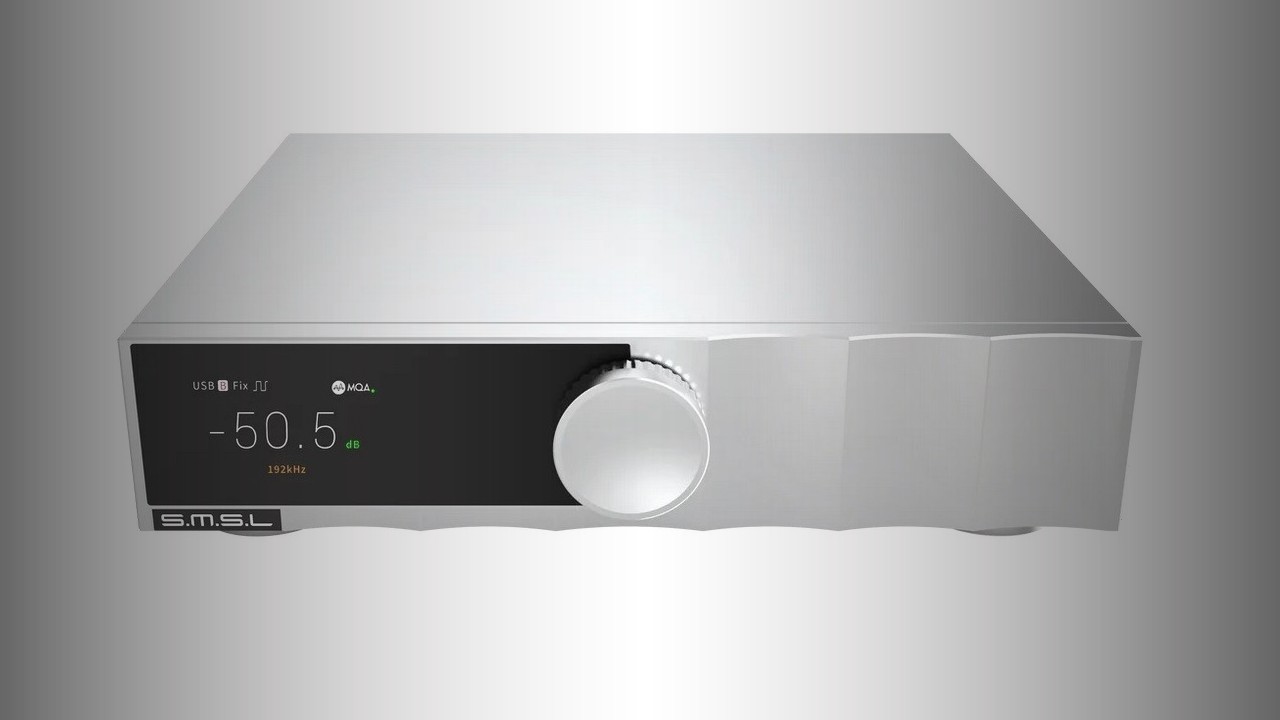
7. SMSL D200: High-End ROHM Sound, MQA Support, LDAC Bluetooth & Stunning Clarity
The SMSL D200 is a desktop DAC and preamplifier with a tempered-glass display, Bluetooth and balanced XLR outputs.
The SMSL D200 combines DAC and preamplifier functions for desktop systems.
It uses a ROHM BD34352EKV converter with SMSL's CK-03 jitter-reduction circuit and a balanced preamplifier stage based on two NJU72315 chips.
USB, optical, coaxial and Bluetooth inputs are provided, with LDAC and aptX HD available for wireless playback. The D200 supports PCM up to 32-bit/768 kHz, DSD512 and MQA decoding, while balanced XLR and unbalanced RCA outputs accommodate different amplifiers or active speakers. Its integrated display can show track information and lyrics, and an external clock input accepts a 10MHz signal.
Best for: Feature-rich desktop and active-speaker systems
- Balanced XLR and unbalanced RCA outputs
- LDAC and aptX HD Bluetooth
- DAC and preamplifier functionality
- External 10MHz clock input
Verdict: The D200 offers an unusually broad mix of wired inputs, high-quality Bluetooth codecs, balanced outputs and preamplifier control.

8. Denafrips Enyo: R2R DAC that supports high-resolution audio streams
The Denafrips Enyo uses matched R2R resistor networks and provides selectable processing modes with RCA and XLR outputs.
The Denafrips Enyo differs from chip-based converters by using a balanced R2R resistor network.
Each channel is decoded by four sets of carefully matched R2R networks, and users can select non-oversampling or oversampling operation together with slow or sharp filters.
USB-B accepts PCM up to 24-bit/1536 kHz and DSD1024, while the two coaxial and two optical inputs support PCM up to 24-bit/192 kHz and DSD64 through DoP. Both stereo RCA and balanced XLR outputs are included.
Best for: Listeners seeking an adjustable R2R DAC
- Balanced R2R conversion architecture
- Selectable NOS and oversampling modes
- Slow and sharp filter options
- RCA and balanced XLR outputs
Verdict: The Enyo is the specialist choice here for users who want resistor-ladder conversion and control over oversampling and filter behavior.

9. Topping D900: Flagship Discrete PSRM DAC & Preamplifier
The Topping D900 combines discrete PSRM conversion, preamplifier control, parametric EQ and a color front-panel display.
The Topping D900 is a DAC and preamplifier based on the company's fully discrete PSRM architecture rather than an off-the-shelf converter chip.
Its separate preamplifier stage allows direct connection to active speakers, with volume adjustment in 0.5dB steps and individual level settings for each input.
Connectivity includes USB-B, USB-C, I2S-LVDS over HDMI, AES/EBU, coaxial, optical and Bluetooth 5.1 with LDAC. A configurable 10-band parametric equalizer can store user profiles, while trigger input and output support synchronized system power control.
Best for: Active-speaker systems and users who need digital EQ
- Fully discrete proprietary DAC architecture
- Separate preamplifier stage
- Configurable 10-band parametric equalizer
- Extensive wired and wireless inputs
Verdict: The D900 is distinguished by its discrete conversion design, comprehensive connectivity and unusually detailed system-control features.
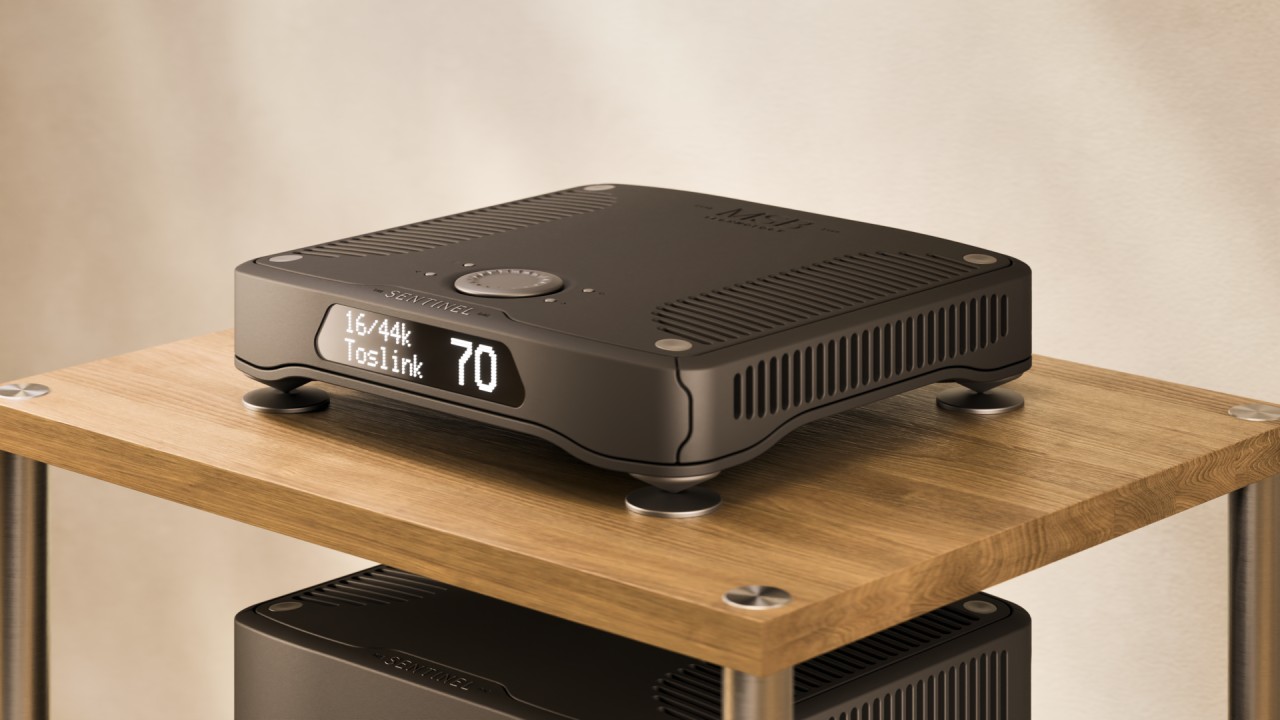
10. MSB Technology Sentinel: The World’s Most Advanced Digital-to-Analog Converter
MSB Technology's Sentinel is a three-body DAC system designed to conceal its complex internal layouts within a streamlined exterior.
The MSB Technology Sentinel is presented as a no-compromise, three-body digital-to-analog converter system.
According to the manufacturer, complex hidden three-dimensional layouts are used to improve interaction between its electronic sections while keeping the assembled system visually streamlined.
The available source information does not provide a complete input list, supported-format table, pricing or delivery details, so its practical suitability cannot yet be judged as precisely as the other DACs in this selection.
Best for: Cost-no-object systems awaiting full specification details
- Three-body system architecture
- Purpose-designed internal three-dimensional layouts
- Streamlined multi-component exterior
Verdict: The Sentinel is an ambitious multi-chassis concept, but a meaningful buying assessment requires fuller specifications, pricing and availability information.
Quick comparison
The principal differences are form factor, conversion architecture, headphone support, preamplifier facilities and connection options.
Compact models prioritize direct headphone use, while the larger designs focus on system integration, balanced output or specialist conversion methods.
| Product | Best for | Verdict |
|---|---|---|
| Shanling H0 | Portable and desktop headphone listening | Compact USB DAC and amplifier with three gain levels plus 3.5mm and balanced 4.4mm outputs. |
| Mytek Manhattan DAC II | Full-size high-end systems with headphone use | Substantial ES9038 Pro DAC with proprietary clocking, linear power and dual headphone outputs. |
| Hidizs SD2 | Simple USB-C listening with wired headphones | Pocket-sized ESS-based adapter with a direct 3.5mm output and broad source compatibility. |
| xDuoo MH-02 | Desktop listeners wanting a hybrid tube design | Hybrid tube and Class A desktop unit with three headphone socket formats and analog RCA connections. |
| Fezz Audio Equinox | PCM-focused systems seeking tube circuitry | Burr-Brown DAC with tube analog paths, three digital input types and no DSD support. |
| Accuphase DC-37 | High-end systems with several digital sources | Fully balanced system converter with proprietary MDSD processing and extensive digital source switching. |
| SMSL D200 | Feature-rich desktop and active-speaker systems | ROHM-based DAC and preamplifier with Bluetooth, balanced outputs and an external clock input. |
| Denafrips Enyo | Listeners seeking an adjustable R2R DAC | Balanced resistor-ladder converter with selectable NOS, oversampling and filter modes. |
| Topping D900 | Active-speaker systems and users who need digital EQ | Discrete DAC and preamplifier with extensive inputs, precise volume adjustment and parametric equalization. |
| MSB Technology Sentinel | Cost-no-object systems awaiting full specification details | Ambitious three-body converter whose purchasing case remains dependent on complete specifications and pricing. |
Frequently asked questions
Do I need a DAC with a built-in headphone amplifier?
Choose one if headphones will connect directly to the device.
The Shanling H0, Hidizs SD2, xDuoo MH-02 and Mytek Manhattan DAC II include headphone facilities, while line-level DACs generally require a separate headphone or integrated amplifier.
When are balanced outputs useful?
Balanced XLR line outputs are relevant when the receiving amplifier or active speakers also provide balanced inputs.
For headphones, a 4.4mm balanced socket is a separate feature and should not be confused with XLR line output.
Should format support decide which DAC I buy?
Only prioritize formats present in your library and playback chain.
High maximum PCM and DSD rates do not compensate for missing connections or unsuitable output facilities, and the Fezz Audio Equinox is specifically unsuitable if DSD playback is required.
What is the practical difference between USB, optical, coaxial and Bluetooth?
USB commonly connects computers, phones and tablets, while optical and coaxial inputs suit compatible transports, televisions and other digital sources.
Bluetooth adds wireless convenience, but codec support varies; among these models, the SMSL D200 and Topping D900 explicitly include LDAC.
How to choose the right DAC for your system
Start by mapping every source and destination in the system.
Confirm that the DAC has the USB, optical, coaxial, Bluetooth or specialist input needed by each source, then check whether its outputs match a headphone, integrated amplifier, power amplifier or active speakers.
A preamplifier function is particularly useful for direct active-speaker connection, while fixed line output may be preferable when volume is controlled elsewhere. Headphone users should compare more than raw output figures. Connector type, gain adjustment and the need for single-ended or balanced operation all affect day-to-day compatibility. The Shanling H0 emphasizes compact flexibility, the Hidizs SD2 keeps the arrangement simple, and the xDuoo MH-02 provides three physical headphone socket types. The Mytek takes the same broad function into a much larger full-size component. Conversion architecture can then refine the shortlist. The Denafrips Enyo offers R2R conversion with selectable NOS and oversampling modes, the Topping D900 uses a proprietary discrete design, and the Fezz Equinox places tubes in its analog paths. These are meaningful design differences, but they should follow basic system matching rather than replace it. Finally, treat extreme sample-rate figures and manufacturer performance language as secondary to usable connections, suitable output control and clearly documented compatibility.


Join the discussion
Share your thoughts, listening impressions or product experience.