
iFi Audio iDSD Phantom Is a Monster: DSD2048 DAC, Tubes, Streaming and Serious Power
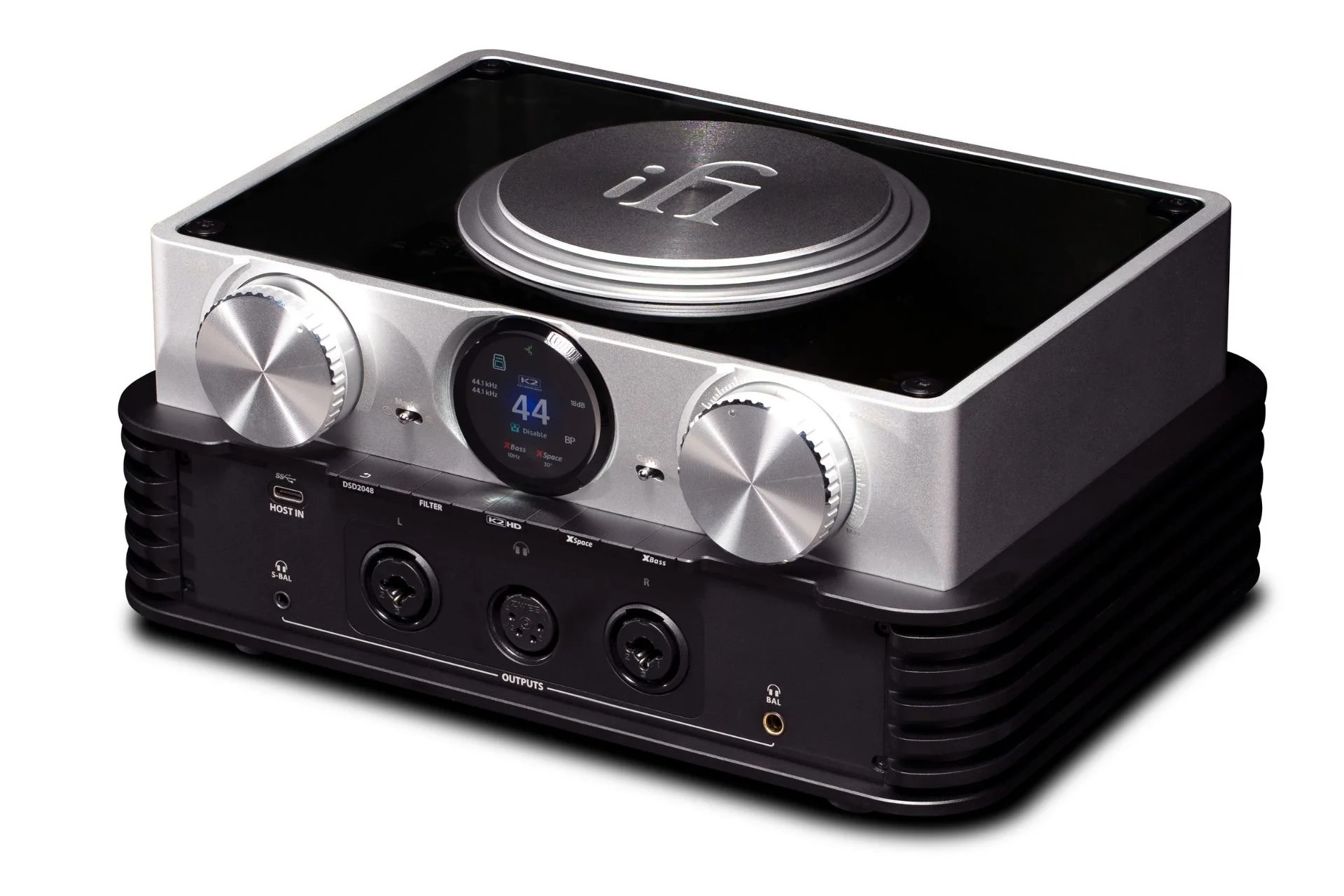
iFi Audio iDSD Phantom is a new flagship DAC, network streamer, and tube/solid-state headphone amplifier with DSD2048, Burr-Brown DACs, K2HD, XBass, XSpace, and 7.7W output. Price: €4,695.

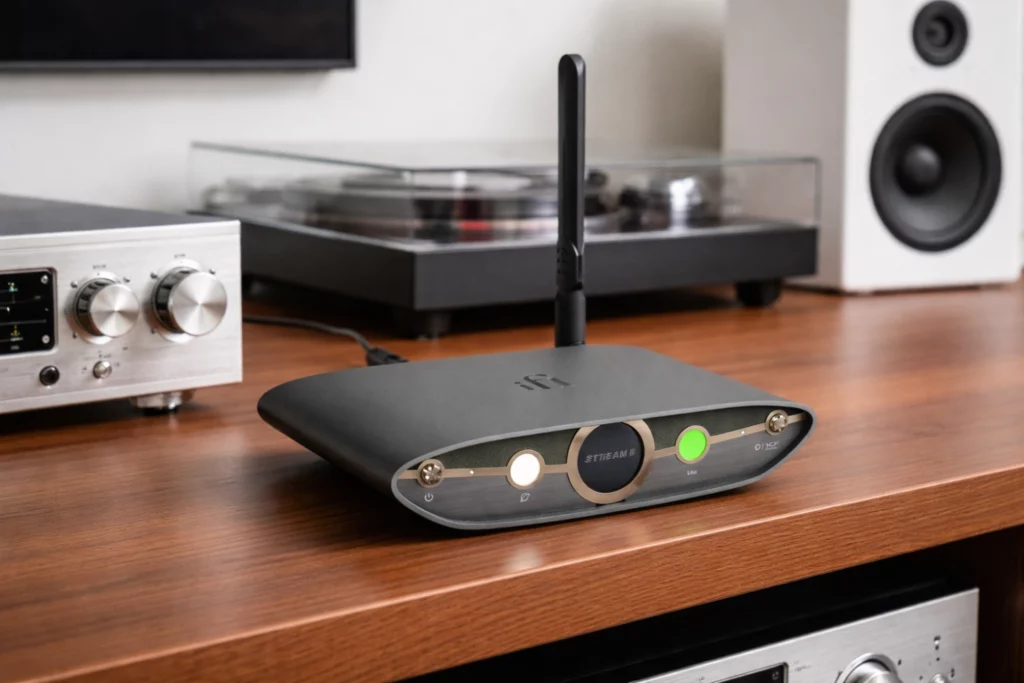
iFi Audio has launched the iDSD Phantom, a combination of a modern, high-quality digital-to-analog converter, network player, and tube-powered headphone amplifier. The iFi iDSD Phantom delivers studio-quality DSD2048 conversion, with support for 768 kHz PCM and DSD512.

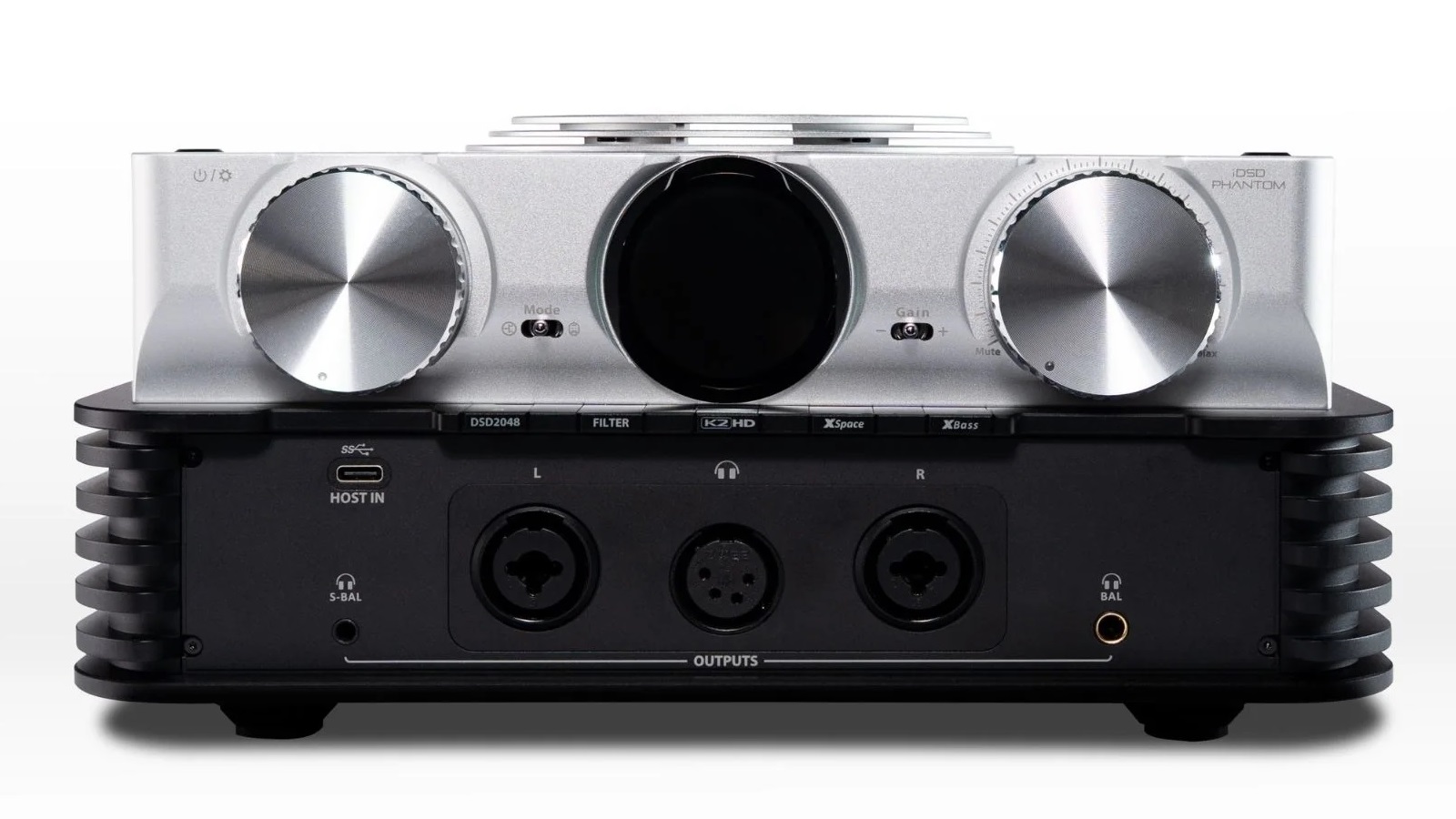
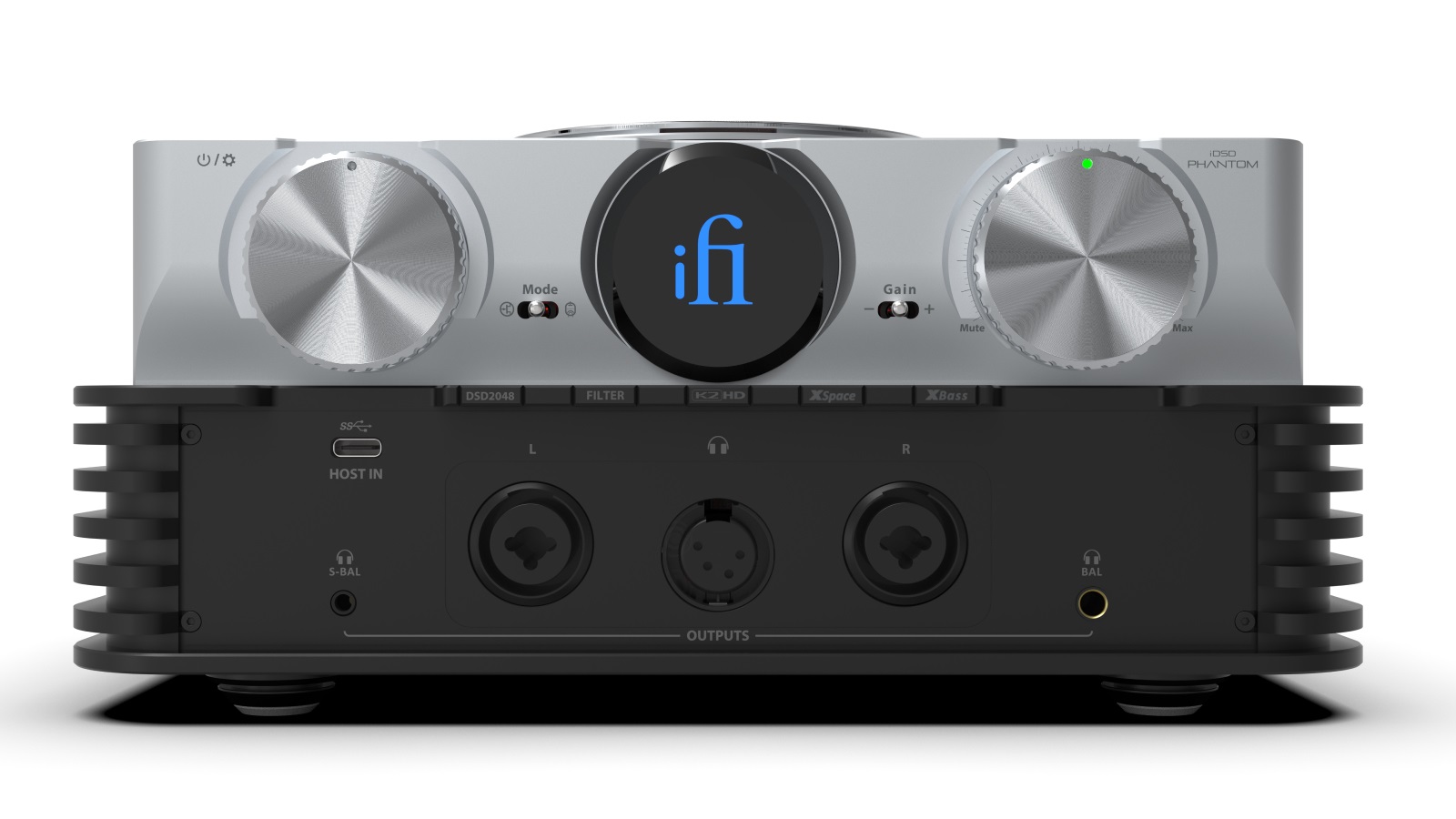
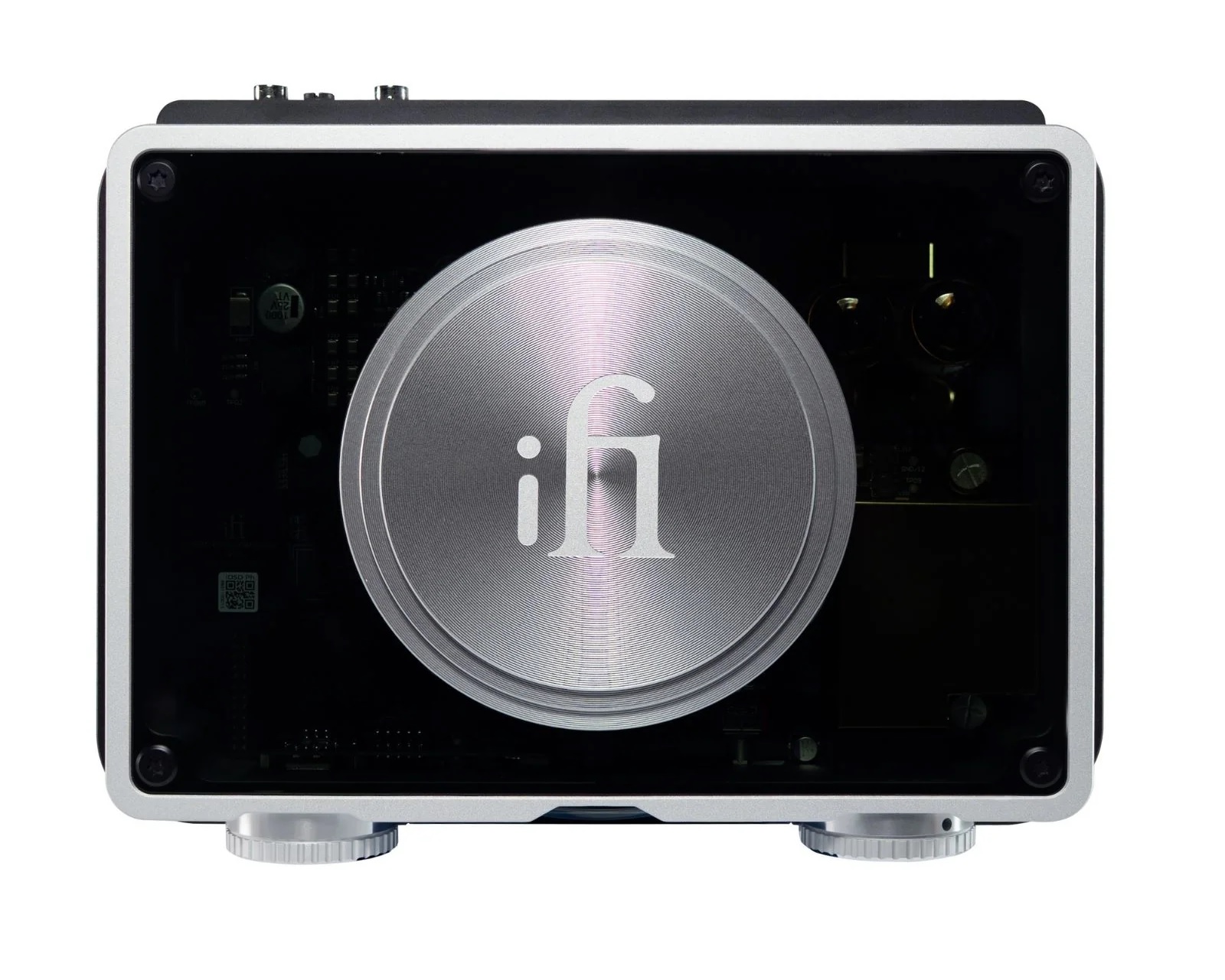
The iDSD Phantom is iFi Audio's new flagship for home use. It combines a reference-class DAC, an ultra-high-resolution network streamer, and a powerful headphone amplifier. According to its designers, the iDSD Phantom delivers the most complete listening experience yet. The iDSD Phantom features an improved streaming engine, a more precise DAC, higher output power, and more detailed user controls.
The iDSD Phantom supports Qobuz Connect, Tidal, Spotify Connect, AirPlay 2, and more. Of course, you can also browse your music collection on a NAS to play songs.
For the first time, iFi's Chrysopoeia FPGA-based Remastering Engine brings studio-quality DSD2048 conversion to the listening room. According to the designers, the iDSD Phantom uses this FPGA to apply proprietary remastering algorithms and reduce jitter, ensuring the DSD signal is clean, stable, and precisely timed before it reaches the conversion stage.
The DSD bitstream is converted directly to analog using the same delta-sigma modulator used in DSD recordings. No digital filtering or volume control is applied to DSD. Volume is controlled in the analog domain, thus preserving the signal's purity, according to the manufacturer.
Four Burr-Brown DSD1793 DAC chips operate in a custom interleaved configuration, inspired by the company's work with the legendary TDA1541A. In “Normal” mode, DSD signals are fed directly to the DAC chip, while PCM signals pass through a user-selectable digital filter. In “Remastered” mode, each DAC chip can process signals up to DSD1024, enabling native decoding for DSD512, DSD1024, or DSD2048.
iFi Audio states that DSD Remastering increases resolution and minimizes distortion thanks to the incredibly high sample rates. With DSD2048, the 1-bit stream is sampled approximately 90 million times per second. This pushes quantization noise far outside the audio band. According to iFi Audio, this results in exceptionally low in-band distortion, unlocking a level of fidelity previously reserved only for the world's most prestigious mastering studios.
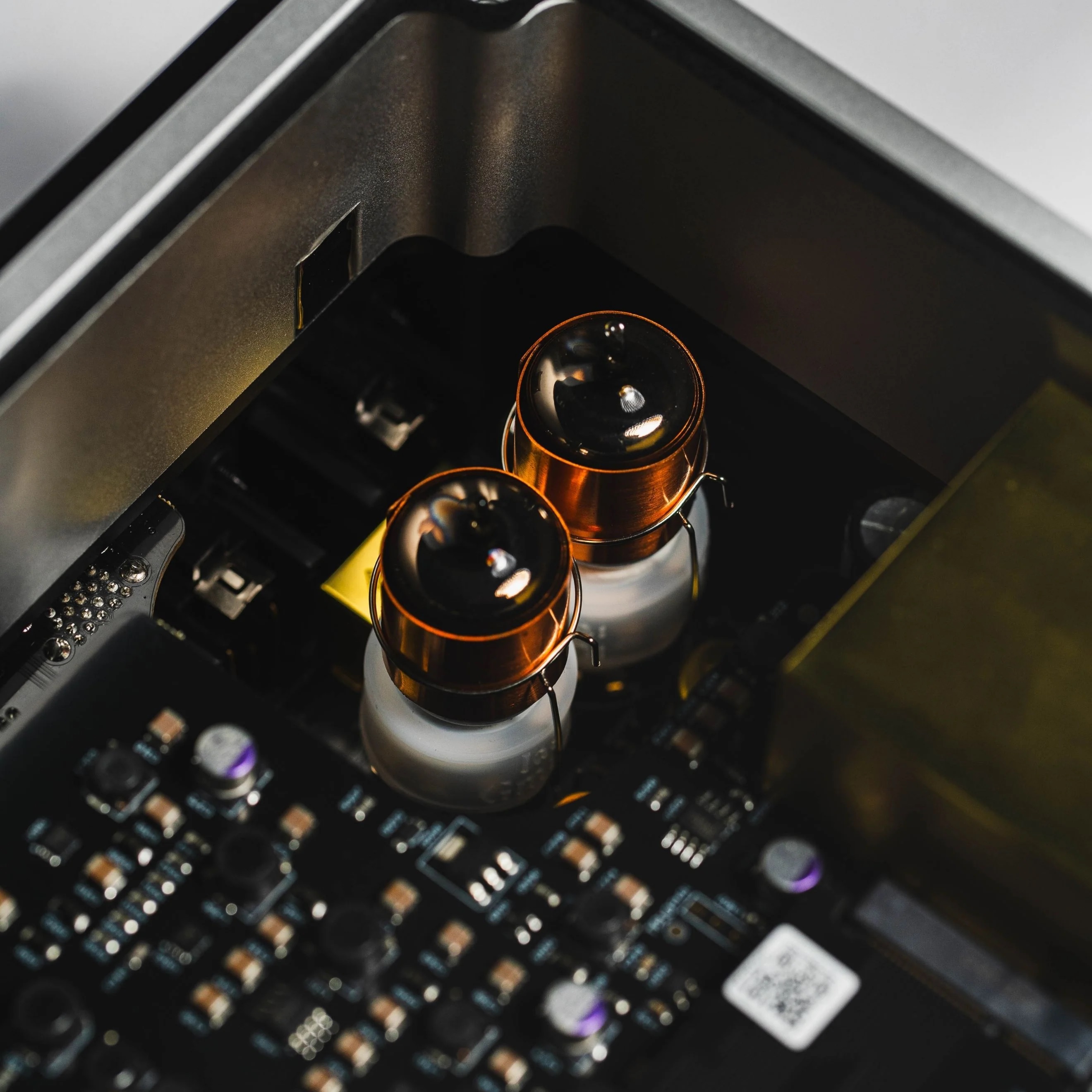
The user doesn’t have to choose between tube and solid-state, at least not at the time of purchase. A simple switch lets the listener toggle between dual-mono Solid-State mode, where discrete J-FETs ensure precision and ultra-low distortion; dual-mono Tube mode, where carefully selected NOS GE5670 tubes deliver warmth and a rich, sonorous sound; and Tube+, which boosts the second harmonic by +6 dB for a more pronounced tube character. With a manufacturer-rated peak power output of 7747 mW for headphones, the Phantom should synergistically work well with most headphones.
The iDSD Phantom continues the brand's partnership with JVCKENWOOD and utilizes K2HD technology. According to the manufacturer, this technology restores harmonic details lost during post-production or encoding. The Phantom offers a “K2” mode, which preserves the file's original resolution, and a “K2HD” mode, which optionally upscales to 192 kHz/24-bit.

XBass Pro is a fully analog, variable shelving equalizer available in 10, 20, and 40Hz options. It is ideal for restoring the impact and bass response often lost with open-back headphones, boosting low frequencies without muddying the midrange. Settings allow the listener to fine-tune this restoration to the connected headphones and personal preferences.
XSpace creates a spacious sound field and adds speaker-like depth to headphones. Crossfeed is a general term for such effects. XSpace works a little differently and is not a Bauer/Linkwitz- or Meier-enhanced crossfeed. According to the designers, it originates from research conducted by the Ministry of Radio and Television in East Berlin on the reproduction of headphones and speakers. The results distinguish and surpass all other crossfeed variations.
XSpace Pro is the brand's most advanced version of XSpace. It reproduces the spatial sound of speakers with greater detail and customization options. With 30-, 60-, and 90-degree angle settings, users can choose the most natural and lifelike sound for their setup.
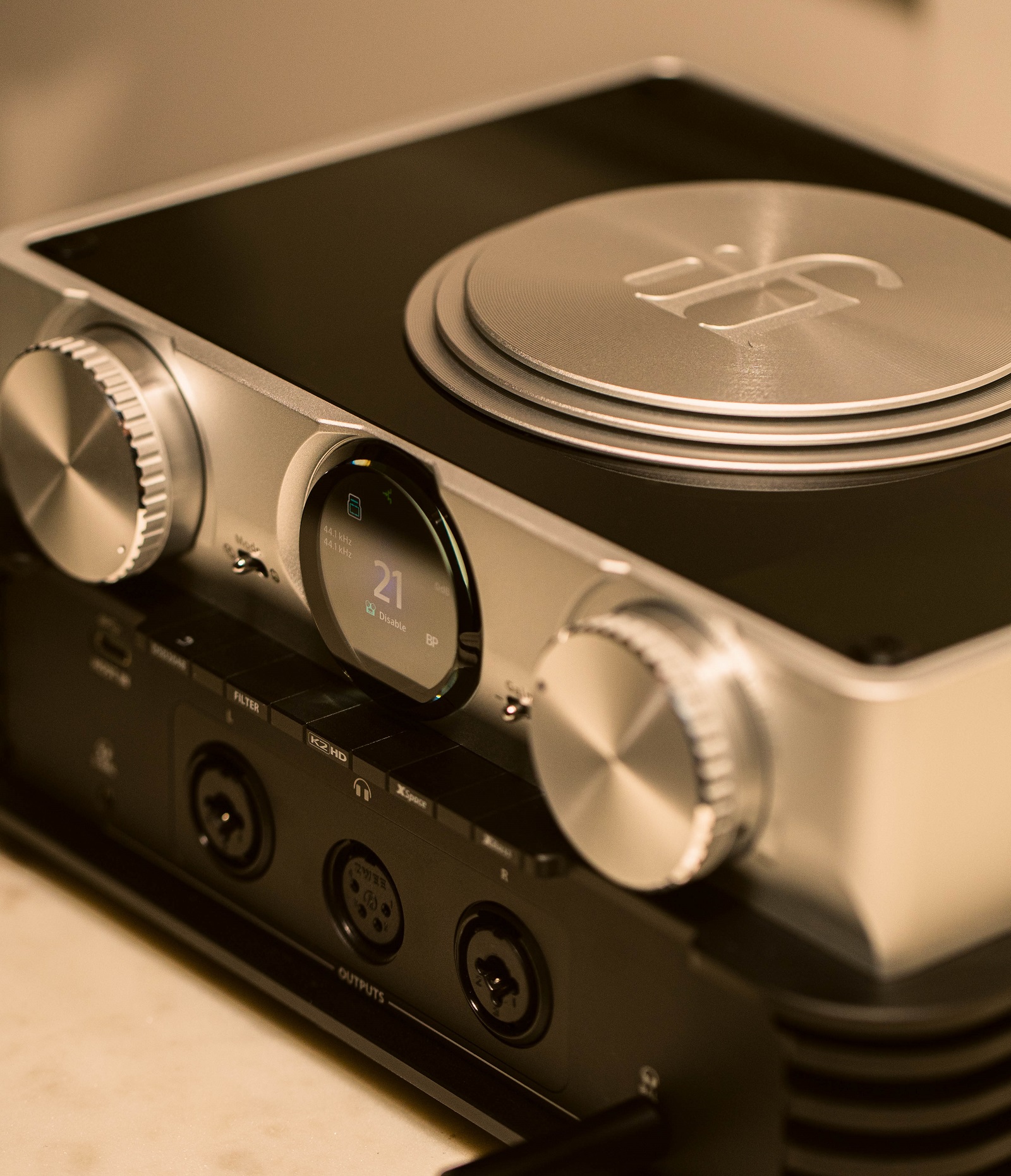
The iDSD Phantom features a series of digital filters for subtle time-domain processing. Bit-Perfect and Bit-Perfect+ offer pure reproduction, as close to the original recording as possible. GTO upsamples to 352.8/384 kHz with minimal filtering and reverb, resulting in greater density and detail. Transient Aligned offers balanced filtering, reducing high-frequency noise for a relaxed listening experience. Apodising upsamples to 705.6/768 kHz, with increased reverb, comparable to a GTO with a softer edge.
For further refinement, the Phantom iFi offers Exclusive Modes. These disable unused system processes during streaming, improving operational efficiency and reducing signal noise.
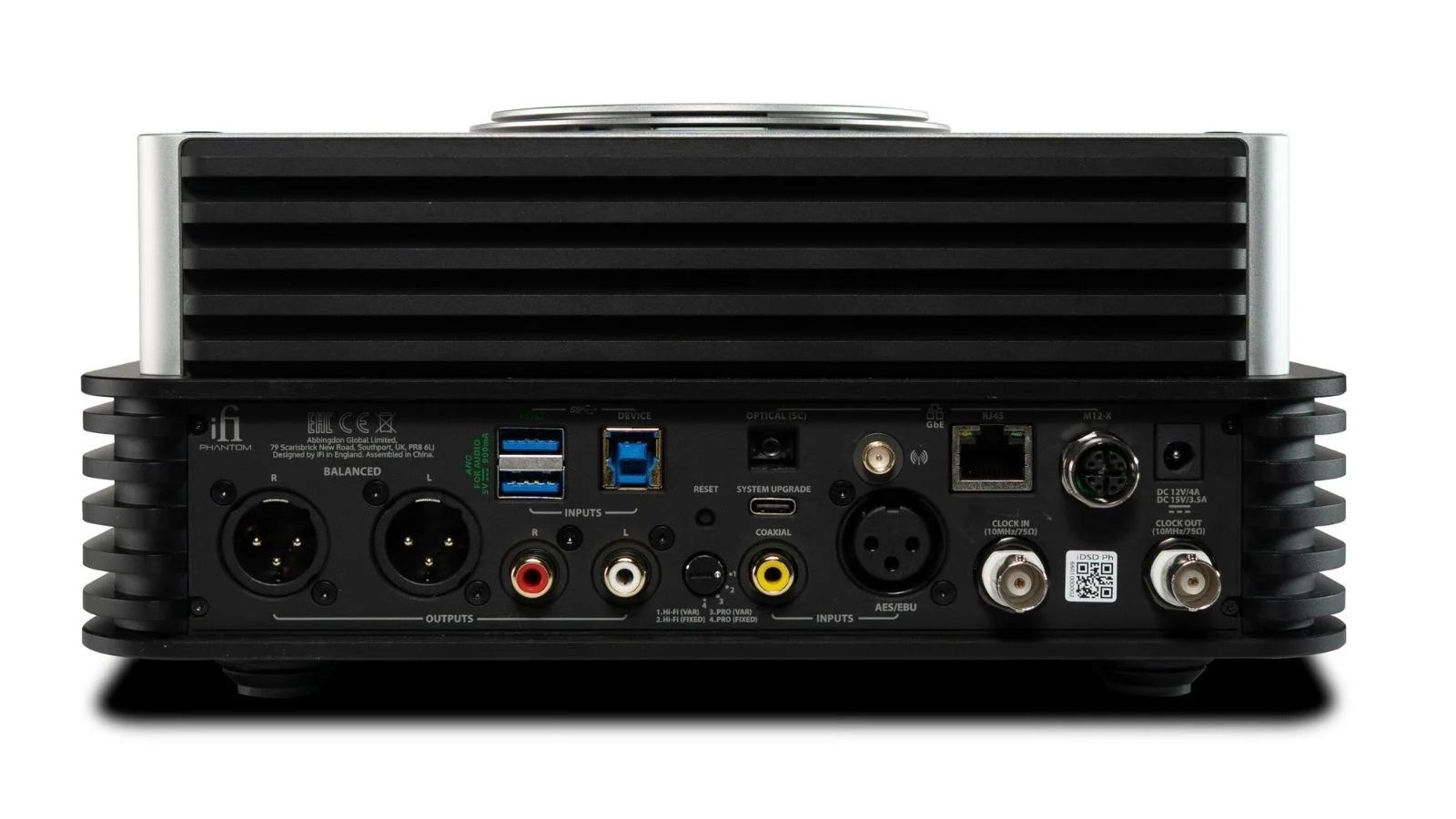
The iDSD Phantom hardware features galvanic isolation on the Ethernet, S/PDIF, and AES/EBU inputs. This separates the hardware from the sources at the circuit level, blocking electrical noise while allowing audio data to pass through unhindered.
The iFi iDSD Phantom has a suggested retail price of 4,695 euros.
















 VS
VS VS
VS VS
VS VS
VS VS
VS VS
VS VS
VS VS
VS

Comments 0
Share your experience, questions and perspective with other hi-fi enthusiasts.