
Speakers Worth Considering for Different Rooms, Systems, and Priorities
A practical, source-grounded guide to very different speaker choices, including passive floorstanders, a compact bookshelf model, an active speaker system, a subwoofer, a centre channel, and portable party speakers.
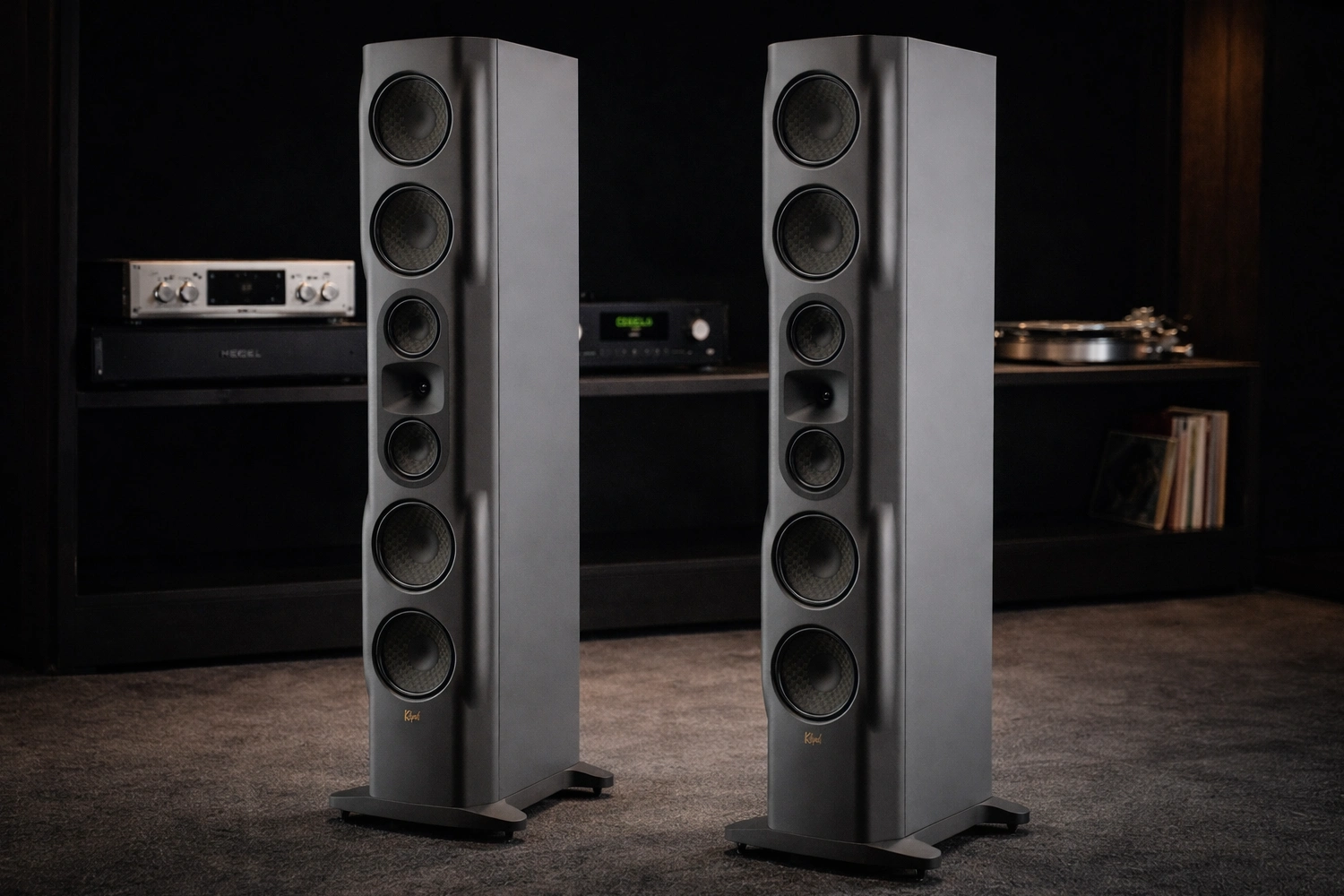
Buying speakers is less about finding a single universal winner and more about matching the design to the room, the electronics, and the way the system will be used.
The models and announcements gathered here cover very different needs: full-range floorstanders, compact bookshelf speakers, an active wireless-leaning floorstanding concept, a dedicated centre channel, a subwoofer, and portable party speakers.
The strongest choices in this list are those with clear engineering intent. Some focus on cabinet control and driver materials, such as the AudioSolutions Overture O306F and Acoustic Energy AE500. Others aim at system integration, including the Acoustic Energy AE Sub and McIntosh XCS1.5K. The Børresen and Dali entries are more ambitious, with advanced tweeter, driver, crossover, amplification, or materials approaches. Not every entry is equally ready as a straightforward buying recommendation. Klipsch’s Project Apollo coverage, for example, is a preview rather than a finished product launch with full specifications. Treated carefully, however, these articles still help define what to look for: placement flexibility, amplifier matching, cabinet construction, driver layout, connectivity, and whether the product is meant for stereo music, home cinema, or mobile entertainment.

1. AudioSolutions Overture O306F
The AudioSolutions Overture O306F is a large three-way floorstanding speaker using the brand’s double-layer Cabinet-in-a-Cabinet construction.
The AudioSolutions Overture O306F is the flagship floorstanding model in the Overture series and is presented as a substantial three-way loudspeaker.
Its Cabinet-in-a-Cabinet double-layer housing is the defining construction feature, contributing to a very heavy enclosure and a large physical footprint.
The driver layout combines a silk dome tweeter, a paper midrange driver, and two paper cone woofers, with quoted sensitivity of 91.5 dB and nominal impedance of 4 ohms. This is a speaker for listeners who have the room, amplification, and appetite for a serious floorstanding design rather than a compact all-rounder.
Best for: Large-room stereo systems built around substantial floorstanding speakers
- Flagship model in the Overture series
- Cabinet-in-a-Cabinet double-layer housing
- Three-way design with dual woofers
- Relatively high quoted sensitivity of 91.5 dB
Verdict: Choose the Overture O306F if cabinet construction, scale, and a full three-way floorstanding format matter more than compactness.

2. Acoustic Energy AE500
The Acoustic Energy AE500 bookshelf speaker uses carbon-fibre drivers and a top slot port designed to ease placement near a wall.
The Acoustic Energy AE500 is a compact bookshelf speaker with unusually serious attention paid to cabinet damping and driver materials.
Its 8-kilogram enclosure uses Resonance Suppression Composite damping technology with 18 mm wall thickness, while the top-mounted slot port is intended to make close-to-wall placement less damaging to the sound than a more conventional rear port.
The carbon-fibre tweeter and mid/bass driver are highlighted not only for appearance but also for their low mass and rigidity. A 25 mm dome tweeter sits in a cast aluminium waveguide positioned close to the mid/bass unit to support dispersion.
Best for: Smaller rooms or systems needing a refined bookshelf speaker with flexible placement
- RSC damped cabinet construction
- Top-mounted slot port helps near-wall placement
- Carbon-fibre tweeter and mid/bass driver
- Cast aluminium waveguide for the tweeter
Verdict: The AE500 is one of the most practical compact choices here because its cabinet, porting, and driver design directly address real-world placement and resonance issues.

3. Børresen C2 and Børresen C3
The Børresen C2 and C3 floorstanders use the brand’s DCC5 Neo drivers and RP94 planar ribbon tweeter.
The Børresen C2 and C3 are Danish floorstanding loudspeakers positioned between the brand’s O and X series.
The source material stresses resonance reduction, an enhanced crossover, and advanced driver technology.
Both models use the DCC5 Neo woofer/midrange driver with a neodymium magnet system, dual copper caps, and a three-layer cone structure combining an aramid honeycomb core with a carbon-fibre exterior. They also use the in-house RP94 planar ribbon tweeter, specified with 94 dB sensitivity and a very low moving mass of 0.01 grams. Bi-wiring and bi-amping support are included through the enhanced crossover system.
Best for: Listeners considering high-end floorstanders with advanced driver and crossover design
- DCC5 Neo woofer/midrange driver with neodymium magnet system
- Aramid honeycomb and carbon-fibre cone structure
- RP94 planar ribbon tweeter
- Supports bi-wiring and bi-amping
Verdict: The C2 and C3 stand out for their materials-led approach to lowering resonance and refining high-frequency reproduction.
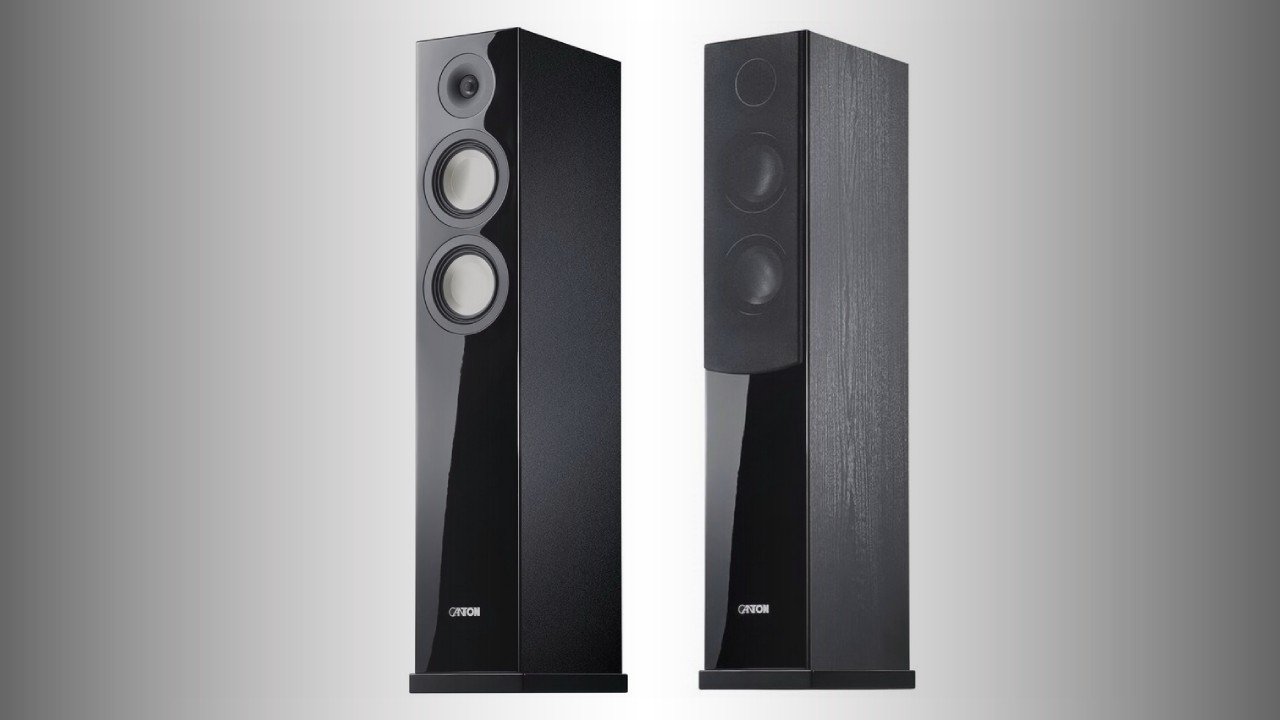
4. Canton Chrono 70
The Canton Chrono 70 keeps the Chrono series’ restrained look while adding diamond-cut aluminium rings and revised cabinet details.
The Canton Chrono 70 represents the Chrono series’ emphasis on clean industrial design and reinforced cabinet and driver mounting details.
The article highlights diamond-cut aluminium rings, an improved internal cabinet structure, a bottom bass-reflex opening, a cone splitter, and a one-piece terminal design.
Canton’s aluminium-manganese tweeter system is specified to transmit music signals up to 40,000 Hz, with an aluminium front panel acting as a waveguide for dispersion. The fabric grille is described as acoustically neutral and mounted using the Rear-Fix system for a cleaner front appearance.
Best for: Buyers who want a visually tidy floorstanding speaker with reinforced construction details
- Diamond-cut aluminium rings
- Improved internal cabinet structure
- Bottom bass-reflex opening
- Aluminium-manganese tweeter with waveguide front panel
Verdict: The Chrono 70 is best understood as a design-conscious speaker with practical cabinet and mounting refinements rather than a radical departure from the Chrono identity.

5. Acoustic Energy AE Sub
The Acoustic Energy AE Sub combines a closed cabinet, downward-firing driver, and multiple input options for easier system integration.
The Acoustic Energy AE Sub is an active subwoofer designed to extend the low-frequency performance of Acoustic Energy’s 100 and 300 Series speakers, though its connection options make it broadly adaptable.
It uses a closed enclosure, a downward-firing 12-inch long-throw driver, and a 250 watt RMS Class D amplifier.
The quoted low-frequency reach is 26 Hz at -6 dB. Practical integration is a major part of the design: stereo line-level RCA inputs, an LFE input, high-level speaker inputs, adjustable crossover from 40 Hz to 120 Hz, phase control, volume control, and automatic signal sensing are all listed in the source.
Best for: Adding low bass to stereo or home cinema systems where placement and integration matter
- Closed-box active subwoofer design
- Downward-firing 12-inch long-throw driver
- Stereo RCA, LFE, and high-level inputs
- Adjustable crossover, phase, and volume controls
Verdict: The AE Sub is a sensible system-building tool because its controls and inputs are aimed at matching many speaker setups, not just one narrow configuration.
6. Klipsch Teases Next-Gen Flagship Loudspeakers with Project Apollo
Klipsch’s Project Apollo preview points toward a future statement floorstanding loudspeaker, with full details still undisclosed.
This Klipsch item is not a finished product review or a full specification launch, so it should be treated differently from the other recommendations.
The source confirms that a new Reference Signature Series is planned above the current Reference and Reference Premiere ranges, with design cues suggesting a step up in materials and finish.
It also describes Project Apollo as a concept for a statement floorstanding loudspeaker intended to move Klipsch further into high-end territory. Because final configurations and pricing are not disclosed, the practical takeaway is to monitor the direction of Klipsch’s flagship development rather than to compare it directly with available speakers on specifications.
Best for: Klipsch followers interested in upcoming flagship and high-end loudspeaker direction
- Reference Signature Series positioned above Reference and Reference Premiere
- Project Apollo described as a statement floorstanding concept
- Design cues suggest higher-grade materials and finish
Verdict: Project Apollo is a watchlist item, not a settled buying choice, because Klipsch has not yet provided the final specifications or pricing needed for direct comparison.

7. Børresen M6
The Børresen M6 uses six M-series drivers and a proprietary ribbon tweeter, with internal Ansuz Gold Signature wiring.
The Børresen M6 is presented as a flagship loudspeaker built around six 4.5-inch M-series drivers and a proprietary ribbon tweeter in a sealed chamber.
Two of the M-series drivers handle the midrange and mid-bass region, while four provide the low-frequency foundation.
The ribbon tweeter operates from 2.5 kHz, has quoted sensitivity of 94 dB, and uses an extremely low-mass membrane listed at 0.01 grams. Internal wiring uses Ansuz Gold Signature speaker cable. The article also notes that the M6 was demonstrated in a matched system with Aavik amplification and digital components, underscoring its positioning as an extreme high-end loudspeaker rather than a casual upgrade.
Best for: Ultra-high-end systems where the loudspeakers are intended to sit within a carefully matched chain
- Six 4.5-inch M-series drivers
- Proprietary ribbon tweeter in a sealed chamber
- Tweeter sensitivity quoted at 94 dB
- Internal wiring with Ansuz Gold Signature speaker cable
Verdict: The M6 is the most uncompromising Børresen entry here, aimed at systems where advanced drivers, ribbon-tweeter speed, and premium internal wiring are central priorities.
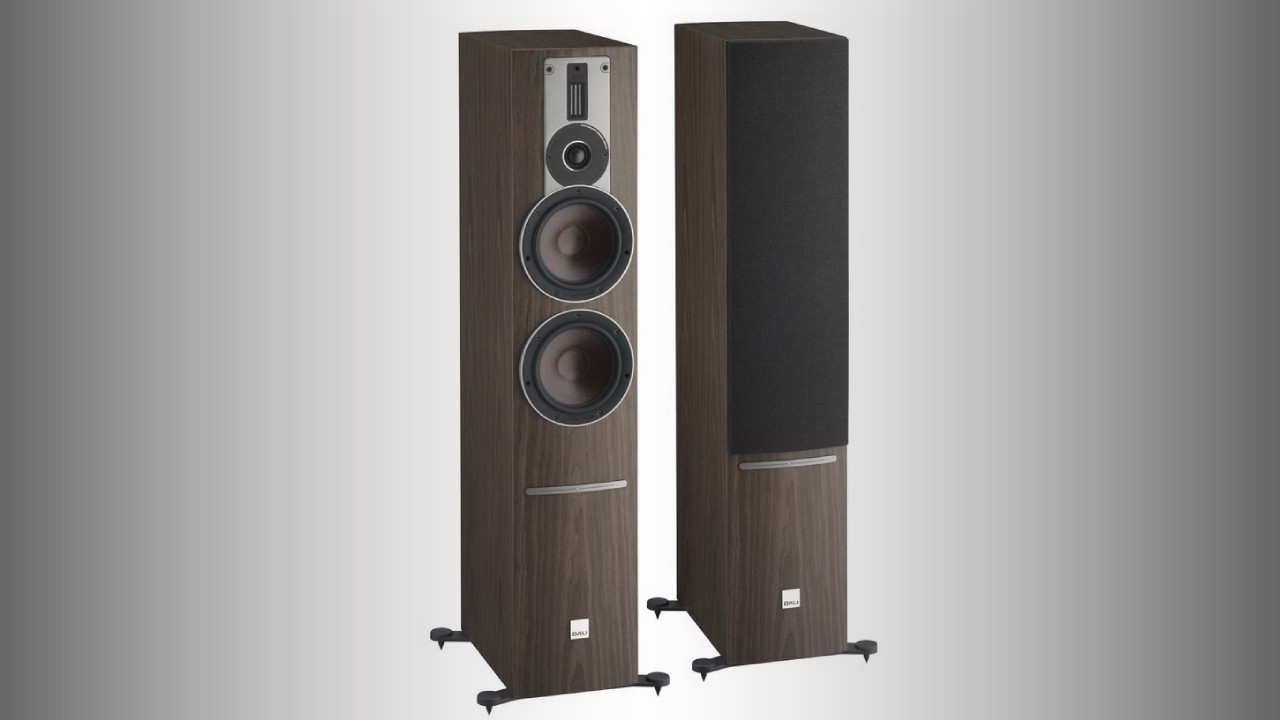
8. Dali Rubicon 6 C
The Dali Rubicon 6 C is an active floorstanding speaker using built-in Class D amplification and a hybrid crossover approach.
The Dali Rubicon 6 C is an active speaker system, with each speaker using two Class D amplifiers rated at 250 watts each.
Its crossover arrangement is hybrid: a digital active crossover is used in the low-frequency region, while a traditional analogue Rubicon filter continues to operate through the mid and high frequencies.
The drivers are based on the regular Rubicon series, including cellulose diaphragms reinforced with wood fibres for bass and mid-bass duties. Dali’s SMC magnetic material is also used, with the source describing benefits in temperature stability at high power levels and reduced distortion-related behaviour.
Best for: Listeners who want a floorstanding speaker system with built-in amplification
- Active design with two Class D amplifiers per speaker
- Hybrid crossover using digital and analogue filtering
- Wood-fibre-reinforced cellulose drivers
- Uses Dali’s SMC magnetic material
Verdict: The Rubicon 6 C is a strong fit when system simplification and active speaker engineering are more important than building a traditional amplifier-and-passive-speaker setup.

9. McIntosh XCS1.5K Center Channel Loudspeaker
The McIntosh XCS1.5K centre channel speaker uses 43 drivers and can be tilted to aim dialogue toward the listening position.
The McIntosh XCS1.5K is a dedicated centre channel loudspeaker designed to complement McIntosh’s XRT2.1K and XRT1.1K floorstanding speakers in a high-end home cinema system.
It is a very substantial 80-kilogram speaker with 43 individual drivers and a power rating of 1,500 watts.
The driver complement includes 25 19 mm tweeters, 14 63.5 mm aluminium cone midrange units, and four 200 mm long-throw carbon-fibre bass drivers in a vented cabinet. It can be tilted to one of five preset angles to aim it toward the listening position, and it includes three sets of Solid Cinch speaker binding posts for bi-amping, tri-amping, or bi-wiring arrangements.
Best for: Serious McIntosh-based home cinema systems requiring a matching centre channel
- Designed as a high-performance centre channel speaker
- 43 individual drivers
- Tiltable to five preset angles
- Binding posts support bi-amping, tri-amping, or bi-wiring
Verdict: The XCS1.5K is highly specialised, but for the intended McIntosh home cinema context its driver array, adjustability, and system matching are the point.
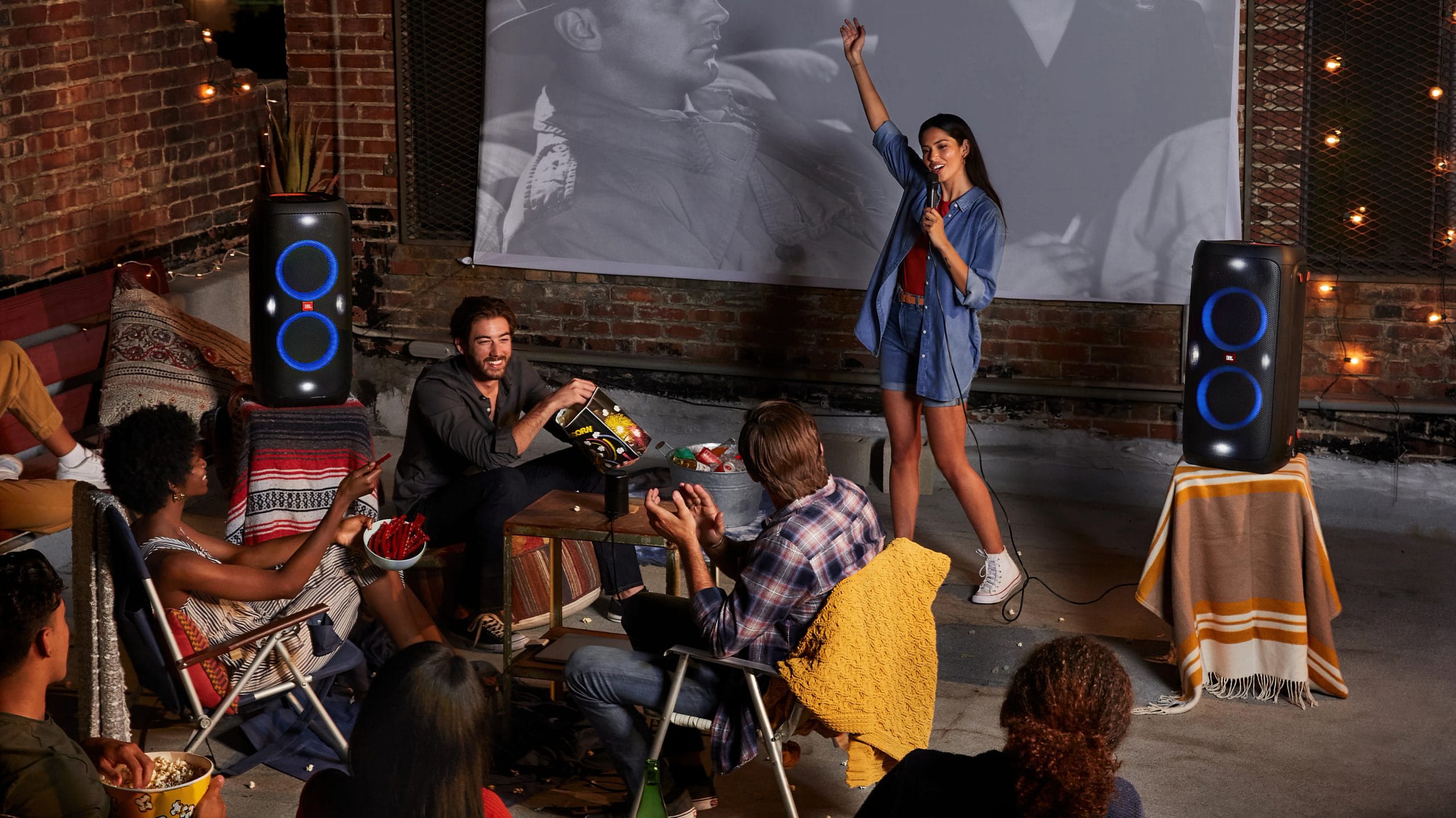
10. JBL PartyBox On-The-Go and PartyBox 310
JBL’s PartyBox speakers combine rechargeable operation, lighting effects, and karaoke-focused features for portable entertainment.
The JBL PartyBox On-The-Go and PartyBox 310 are portable party speakers rather than traditional hi-fi loudspeakers.
The article focuses on JBL’s claimed Pro Sound, built-in light shows that flash in sync with music, and rechargeable batteries for moving the party location.
The smaller PartyBox On-The-Go is described with included microphones for karaoke and a claimed amplifier power of 100 watts. This makes the PartyBox models a poor substitute for a focused stereo pair, but a relevant option where portability, lights, microphones, and social use are the priority.
Best for: Parties, karaoke, and portable entertainment rather than conventional hi-fi listening
- Rechargeable batteries for portable use
- Light show synchronized with music
- PartyBox On-The-Go includes microphones
- PartyBox On-The-Go has claimed 100 watt amplifier power
Verdict: The PartyBox models make sense for social use and mobility, but they belong in a different category from serious stereo or home cinema speakers.
Quick comparison
These products differ more by use case than by simple ranking.
The main split is between passive stereo speakers, active speakers, subwoofer support, home cinema centre-channel duties, forthcoming flagship concepts, and portable party audio.
| Product | Best for | Verdict |
|---|---|---|
| AudioSolutions Overture O306F | Large-room passive stereo systems | A substantial three-way floorstander with double-layer cabinet construction and a flagship role in the Overture range. |
| Acoustic Energy AE500 | Compact stereo systems and near-wall placement | A bookshelf speaker with cabinet damping, carbon-fibre drivers, and a top slot port aimed at practical room use. |
| Børresen C2 and Børresen C3 | High-end passive floorstanding systems | Advanced Danish floorstanders using the DCC5 Neo driver, RP94 ribbon tweeter, and bi-wire or bi-amp capable crossover. |
| Canton Chrono 70 | Design-conscious floorstanding speaker buyers | A Chrono-series speaker defined by diamond-cut aluminium rings, revised cabinet structure, and a bottom bass-reflex design. |
| Acoustic Energy AE Sub | Bass extension and system integration | A closed-box active subwoofer with flexible inputs, adjustable crossover, phase control, and a downward-firing 12-inch driver. |
| Klipsch Project Apollo and Reference Signature Series preview | Following future Klipsch flagship developments | An early look at Klipsch’s high-end direction, but not yet a fully specified buying option. |
| Børresen M6 | Ultra-high-end matched systems | A flagship loudspeaker with six M-series drivers, a proprietary ribbon tweeter, and Ansuz Gold Signature internal wiring. |
| Dali Rubicon 6 C | Active floorstanding speaker systems | An active design with built-in Class D amplification and a hybrid crossover combining digital and analogue filtering. |
| McIntosh XCS1.5K Center Channel Loudspeaker | High-end McIntosh home cinema systems | A dedicated centre speaker with 43 drivers, five-position tilt adjustment, and system matching for McIntosh XRT loudspeakers. |
| JBL PartyBox On-The-Go and PartyBox 310 | Portable parties and karaoke | Battery-powered party speakers with synchronized lighting and, for On-The-Go, included microphones. |
Frequently asked questions
Should I choose floorstanding speakers or bookshelf speakers?
Floorstanding speakers such as the AudioSolutions Overture O306F, Canton Chrono 70, Børresen C2 and C3, and Dali Rubicon 6 C suit listeners who have the space for larger cabinets and want a more physically substantial system.
A bookshelf speaker such as the Acoustic Energy AE500 is more room-friendly and, in this case, has a top slot port intended to help when placed close to a wall.
When does a subwoofer make sense with stereo speakers?
A subwoofer is useful when the main speakers need help at the lower end of the frequency range or when a system must support home cinema bass demands.
The Acoustic Energy AE Sub is specifically designed to extend bass and includes stereo line-level, LFE, and high-level inputs, plus crossover, phase, and volume controls to help match it with different speaker systems.
Are active speakers easier to build a system around?
Active speakers can reduce the need to choose a separate power amplifier because amplification is built in.
The Dali Rubicon 6 C is an example, with two Class D amplifiers in each speaker and a hybrid crossover arrangement.
That said, active speakers still need suitable source components and careful placement.
Can a party speaker replace a hi-fi speaker system?
Not if the goal is conventional stereo imaging, careful amplifier matching, or home cinema integration.
JBL’s PartyBox models are designed around portability, rechargeable batteries, synchronized lighting, and karaoke-style use, making them better suited to social entertainment than dedicated hi-fi listening.
How to make the right speaker choice
Start with the role the speaker must play.
For a main stereo system in a larger room, the passive floorstanders in this group point in different directions: the AudioSolutions Overture O306F emphasizes scale and cabinet construction, Canton’s Chrono 70 highlights refined cabinet and styling updates, and the Børresen C2 and C3 focus on advanced driver materials, resonance control, and crossover flexibility.
The Børresen M6 goes further still, but its positioning and associated system context place it in a far more specialist high-end category. For smaller spaces, the Acoustic Energy AE500 is the clearest practical compact option in the supplied material. Its cabinet damping, carbon-fibre drivers, and top-mounted slot port address everyday concerns such as resonance and near-wall placement. If the system already has speakers but lacks low-frequency reach, the Acoustic Energy AE Sub is the more relevant upgrade, especially because its input and control options are designed for integration. Home cinema buyers should separate centre-channel needs from stereo-speaker shopping. The McIntosh XCS1.5K is not a general-purpose recommendation; it is a dedicated centre speaker intended to complement specific McIntosh floorstanding models in a serious home cinema system. Likewise, JBL’s PartyBox speakers belong in a portable entertainment category, where battery operation, lights, and microphones matter more than traditional hi-fi priorities. Finally, treat preview products carefully. Klipsch’s Project Apollo and Reference Signature Series information is interesting because it signals a move toward a more luxurious and high-end loudspeaker direction, but the absence of final specifications and pricing prevents a firm buying judgment. For any speaker purchase, match the speaker type to the room, confirm whether amplification is built in or required separately, consider placement needs, and give system integration as much weight as headline driver technology.