

SteelSeries has built its reputation on gaming headsets that prioritize clarity and spatial accuracy over hype. With Arctis GameBuds, the company is essentially testing whether that same approach still holds up when the hardware is reduced to a true wireless earbud format, and whether gaming audio can be taken seriously outside over-ear designs.
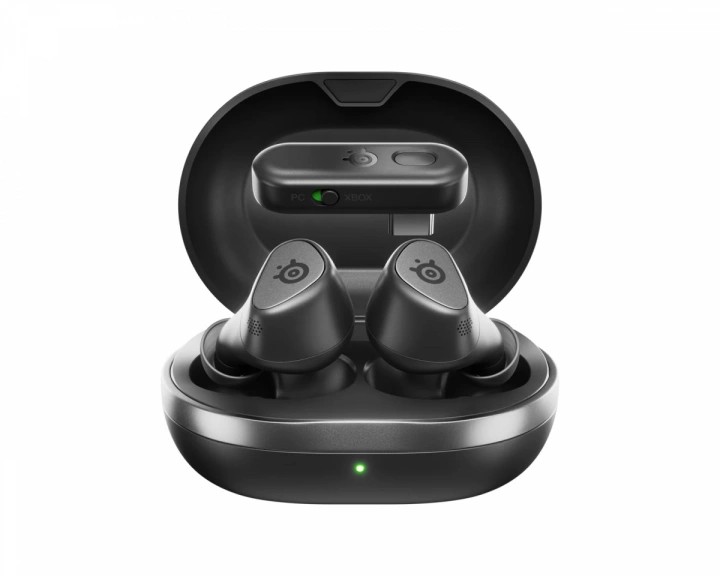
Coming from SteelSeries, the concept itself isn’t surprising. What is more interesting is how deliberately the GameBuds move away from standard Bluetooth limitations. Console gaming has long been a weak spot for earbuds, largely due to latency and compatibility issues. SteelSeries addresses this by using a dedicated low-latency 2.4 GHz wireless link via a compact USB-C dongle, allowing native support for PlayStation, Xbox, and PC, while Bluetooth remains available for mobile devices and general listening.
Performance
From a technical standpoint, the focus is clearly on stability and consistency rather than chasing extreme specifications. Spatial audio is implemented with the same processing logic found in SteelSeries’ headsets, aiming for accurate positional cues instead of exaggerated surround effects. Active noise cancellation is present, using a multi-mic hybrid system, and can be disengaged in favor of transparency mode when situational awareness matters. The overall tuning appears restrained, favoring intelligibility and balance over the typical bass-heavy gaming signature.
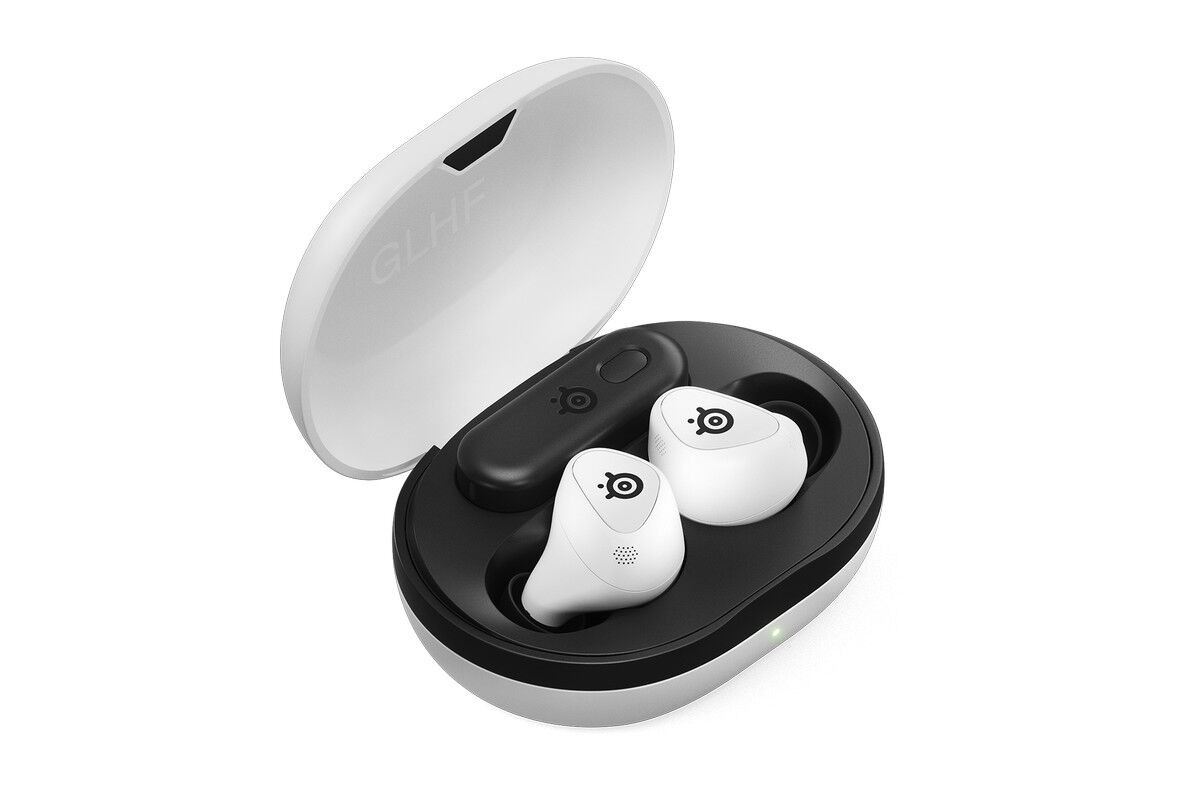
One of the more technically relevant features is the companion app’s approach to EQ. Instead of a handful of presets, SteelSeries provides a large library of game-specific profiles with parametric control, designed to be switched without interrupting the audio stream. In practice, this suggests an emphasis on repeatable, predictable sound behavior across titles rather than user experimentation for its own sake.
Battery
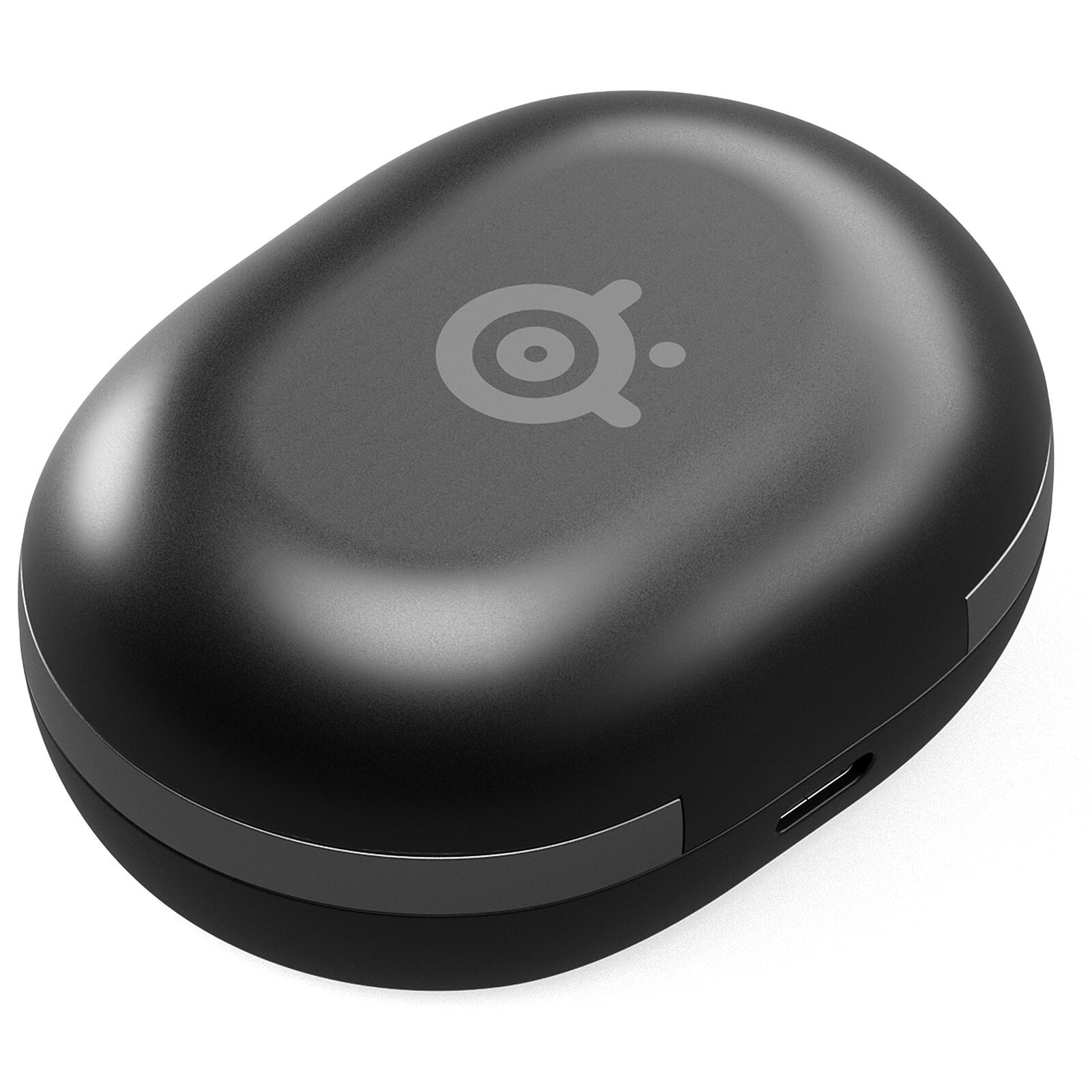
Battery performance and ergonomics are handled in a similarly pragmatic way. The earbuds are rated for extended daily use with multiple recharges from the case, support wireless charging, and are built to withstand dust and moisture. The design process, informed by large-scale ear-scan data, prioritizes long-term comfort over compactness at any cost.
Arctis GameBuds don’t try to replace high-end headsets or dedicated hi-fi headphones. Instead, they sit in a more technical middle ground: an attempt to deliver low-latency, controlled, and reasonably accurate audio in a form factor that has traditionally been compromised for gaming. Whether that balance is enough will depend on how critical users are about sound quality versus convenience—but from a design and engineering perspective, the approach is at least coherent and purposeful.
Price: $199.99




Sound Off
0Join the discussion if you have something to add.