

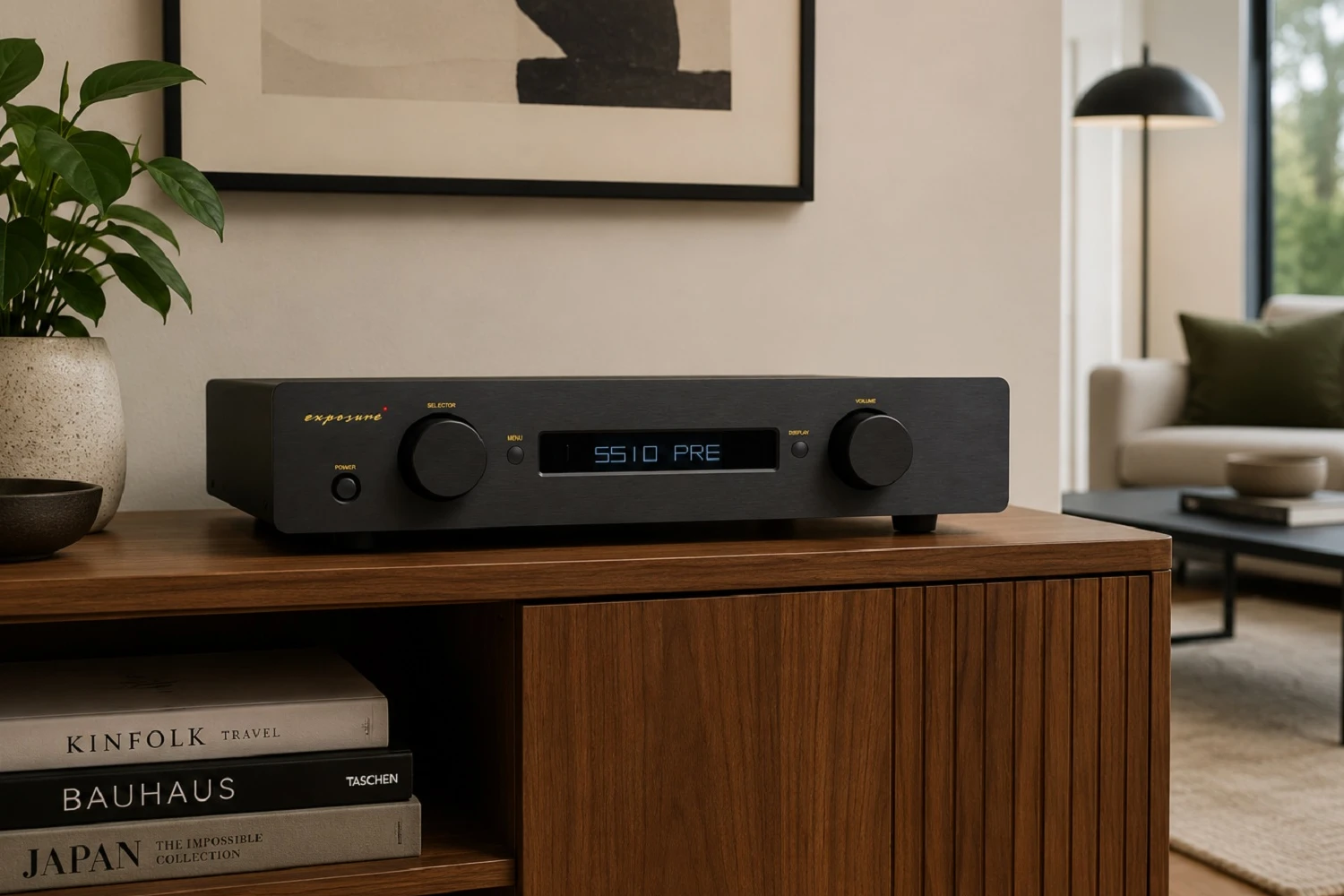
Exposure has released the 5510, a preamplifier with an understated appearance and solid technology under the hood. The 5510 can optionally be expanded with various modules to meet different requirements.
Minimalist yet comprehensive preamplifier
According to the designers, the new 5510 preamplifier from British Exposure Electronics is pleasantly free of the frills that often seem to be designed to distract from the essence. Instead of relying on a touchscreen, various (control) software, or other passing trends, the British brand claims to have produced a flagship control center for serious two-channel systems, with a firm focus on technology and ease of use.
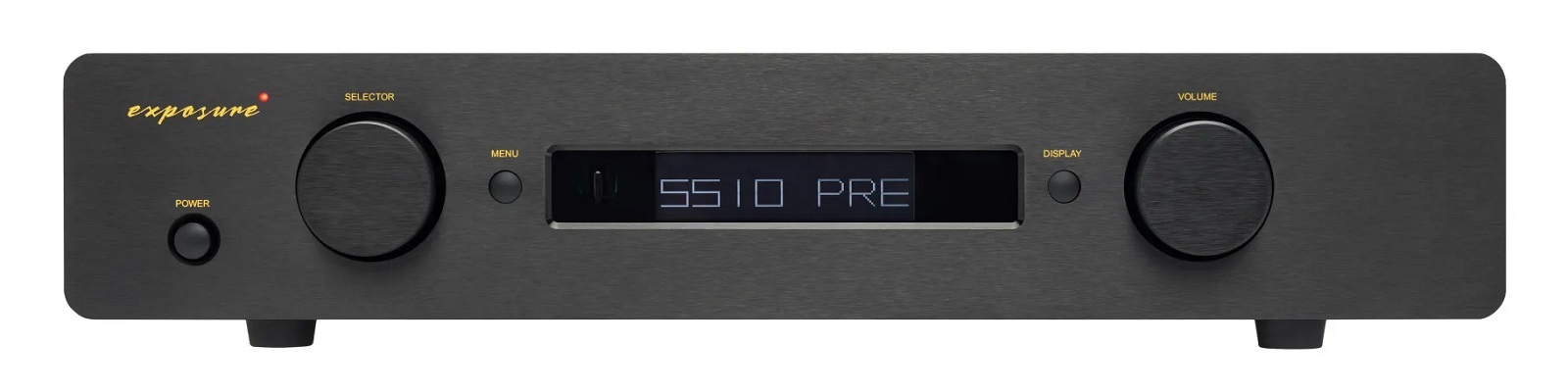
According to Exposure, the 5510 is equipped with an ultra-quiet power supply featuring a specially wound toroidal transformer and integrated hum shielding. That may not be the most attractive detail, but in practice, it is often the deciding factor. There is also a relay-controlled volume system with 99 steps, which guarantees precise channel matching and repeatable volume control, as you would expect from a device in this price range.
Extensive connection options
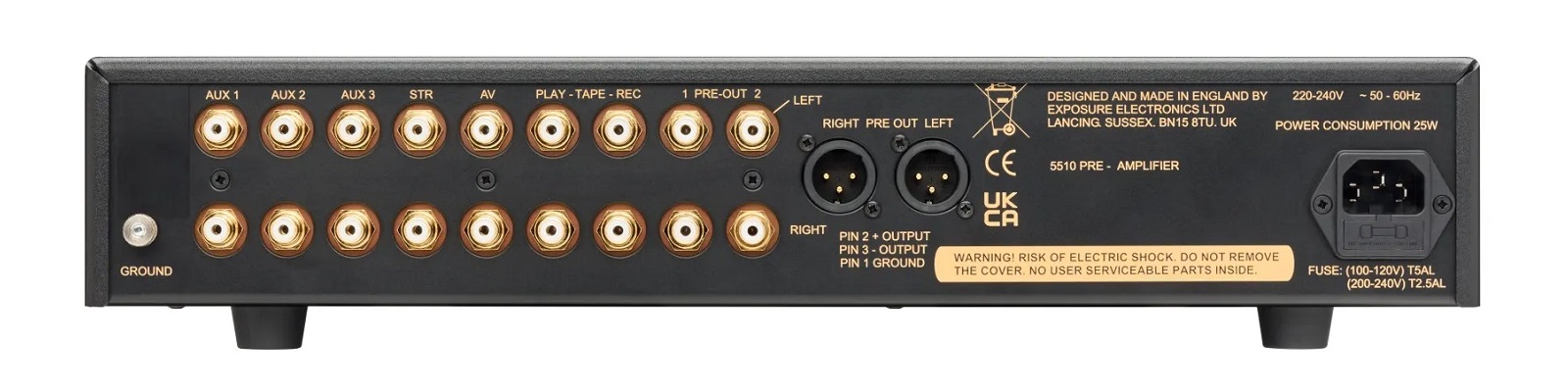
The 5510 offers six line inputs and features both balanced XLR and unbalanced RCA outputs, making the device easy to pair with a wide range of power amplifiers. In other words, it is a specification designed for practical systems, rather than to prove a philosophical stance on minimalism.
Optionally expandable with modules
Exposure has also opted for a modular approach, allowing buyers to add the features they are actually likely to use themselves.
There is a module for connecting a turntable with an MM or MC cartridge, and there is a separate module for those who wish to connect an optical cartridge from the Japanese DS Audio. The third module is a DAC module for connecting digital sources.
Exposure 5510: housing
The 5510 is housed in a robust aluminium casing designed to reduce resonance and protect sensitive circuits from electromagnetic interference. The manufacturer has not added any decorative elements, which is certainly a plus for enthusiasts of understated components rather than flashy ones.


Sound Off
0Join the discussion if you have something to add.