

Choosing speakers begins with the system and room rather than a single hierarchy of performance.
This selection covers passive bookshelf and floorstanding designs, active studio monitors, wireless stereo systems, spatial audio products and ambitious flagship loudspeakers.
Each addresses a different use case, so the most appropriate choice depends on amplification, placement, listening distance and preferred sources. Several models stand out for unusual engineering. The Seawave AM 23 combines a beryllium super tweeter with an aluminum-alloy enclosure, Genelec’s compact coaxial monitors integrate software-based calibration, and Arylic uses a wide-dispersion Heil AMT tweeter. Elsewhere, the Eltax Monitor PWR pairs high sensitivity with a large bass driver, while the Davis Acoustics STELLAR represents a cost-no-object approach to materials and cabinet construction. This is not a list of interchangeable alternatives. Some entries require a separate amplifier, whereas others incorporate amplification, streaming or room correction. The recommendations below therefore focus on the distinctions supported by the available product information rather than attempting to declare one universal winner.

1. Seawave AM 23: Bookshelf speakers with beryllium super tweeter
The Seawave AM 23 combines an aluminum-alloy cabinet with a proprietary horn and beryllium super tweeter.
The Seawave AM 23 is a passive three-way bookshelf speaker built around a 20 mm beryllium-dome super tweeter, a 50 mm horn-loaded compression tweeter and a 200 mm Eton Hexacone mid/bass driver.
Its stated frequency response extends from 32 Hz to 35 kHz, while 91 dB sensitivity and an 8-ohm rated impedance provide useful context for amplifier matching.
The enclosure is made from AC4C aluminum alloy rather than conventional wood-based panels. Seawave also uses solderless internal connections and a crossover containing proprietary ceramic resistors, Kapton inductors and Kapton-film capacitors.
Best for: Passive systems seeking unusual materials and extended treble
- Three-way design with beryllium super tweeter
- Stated 32 Hz to 35 kHz frequency response
- AC4C aluminum-alloy enclosure
- 91 dB sensitivity and 8-ohm rated impedance
Verdict: The AM 23 is a technically distinctive bookshelf design for listeners who value a three-way configuration, substantial mid/bass driver and carefully specified internal construction.

2. Genelec 8331 and 8341 coaxial monitors launched in RAW finish
Genelec’s 8331 and 8341 coaxial monitors use the unpainted RAW version of the rounded Minimal Diffraction Enclosure.
Genelec’s 8331 and 8341 are ultra-compact, active three-way coaxial monitors from the Smart Active Monitoring family.
Their Minimal Diffraction Enclosure is shaped to reduce edge diffraction, while integration with Genelec Loudspeaker Manager software allows compatible Genelec monitoring systems to be calibrated and controlled.
The RAW treatment leaves the aluminum enclosure unpainted, reducing finishing steps while giving each monitor an industrial appearance. These are especially relevant to desktop, nearfield and studio installations where compact dimensions and system calibration matter more than traditional furniture-style cabinetry.
Best for: Compact studios and calibrated nearfield systems
- Ultra-compact active three-way construction
- Coaxial point-source configuration
- GLM calibration and system control
- Unpainted RAW aluminum finish
Verdict: The 8331 and 8341 combine compact coaxial monitoring with Genelec’s software-led approach to room integration and control.
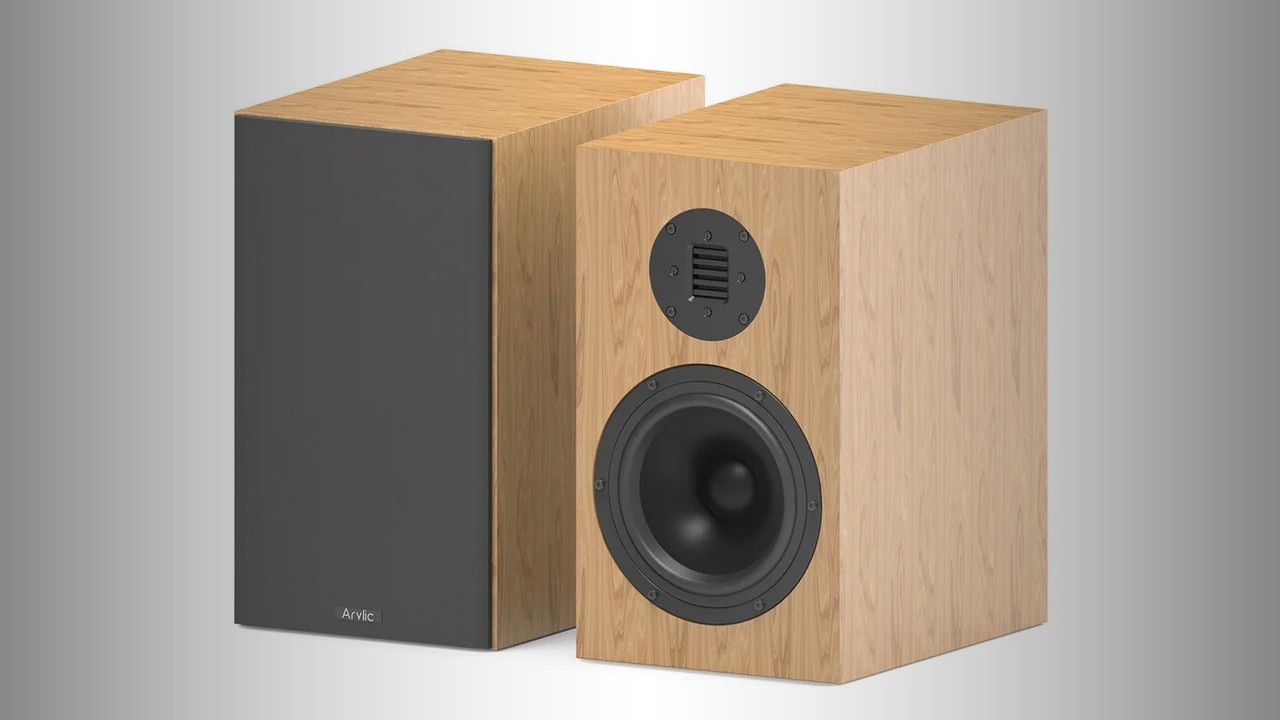
3. Arylic BK501/651: 2-Way Bookshelf Speakers Boasting High-End Heil AMT Tweeter
The Arylic BK501 and BK651 pair a Heil AMT tweeter with a fiberglass-cone mid/bass driver in compact MDF cabinets.
The passive Arylic BK501 and BK651 are two-way bookshelf speakers offered with 5-inch and 6.5-inch mid/bass drivers respectively.
Both use a Heil AMT tweeter with a Kapton ribbon membrane, a stated upper reach of 40 kHz and broad 180-degree dispersion.
The fiberglass-cone mid/bass driver has a ventilated structure, while the MDF enclosure uses panels between 15 and 18 mm thick to control vibration and resonance. Their compact format makes them adaptable to stereo and film systems in rooms where floorstanding speakers would be inconvenient.
Best for: Compact passive stereo and film systems
- Heil AMT tweeter with Kapton membrane
- Stated high-frequency extension to 40 kHz
- Choice of 5-inch or 6.5-inch mid/bass driver
- Compact MDF enclosure
Verdict: The BK501 and BK651 offer two cabinet and driver sizes around the same wide-dispersion AMT-based design.

4. Eltax Monitor PWR – Floor standing speakers in vintage design
The walnut-finished Eltax Monitor PWR places twin horn-mounted tweeters and a midrange driver above its 15-inch woofer.
The Eltax Monitor PWR is a large floorstanding speaker whose vintage-inspired layout includes two one-inch horn-mounted tweeters, a 6-inch cellulose midrange driver and a 15-inch cellulose bass driver.
Twin front-facing bass-reflex ports give owners more placement flexibility than a rear-ported arrangement.
Eltax specifies a 30 Hz to 22 kHz operating range, 8-ohm nominal impedance and 96 dB sensitivity. That combination of high sensitivity and manageable impedance is presented as suitable for low-powered tube amplifiers. The internally braced MDF cabinet is finished in walnut veneer.
Best for: High-sensitivity systems and low-powered tube amplifiers
- High stated sensitivity of 96 dB
- Large 15-inch cellulose bass driver
- Front-facing bass-reflex ports
- 8-ohm nominal impedance
Verdict: The Monitor PWR is the choice here for listeners who want high sensitivity, a large woofer and unapologetically vintage proportions.
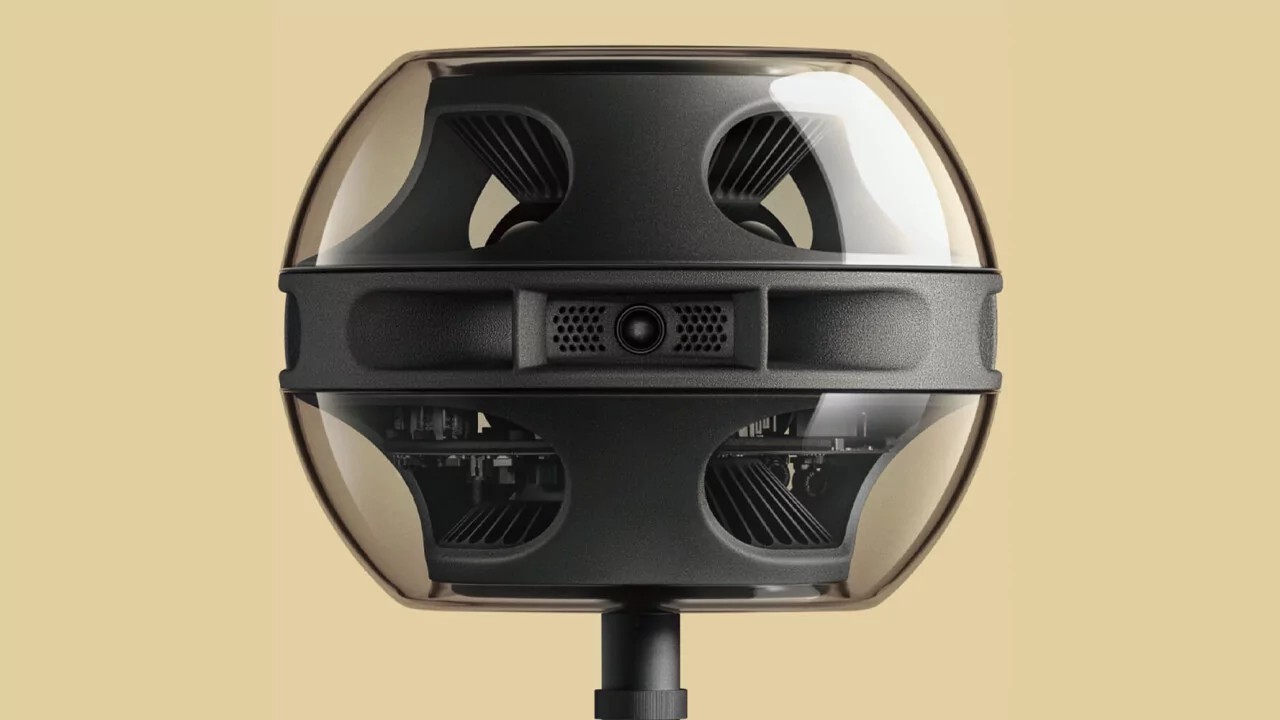
5. Cell Alpha: Futuristic speaker from former Apple designer
The spherical Cell Alpha surrounds its enclosure with three tweeters and places compensated woofers above and below.
Syng’s Cell Alpha approaches domestic audio as an omnidirectional spatial system rather than a conventional forward-firing speaker.
Its spherical enclosure contains opposed compensated woofers and three tweeters arranged around its circumference.
Built-in microphones automatically adjust the presentation to account for the room, while beamforming directs sound to create a spatial field. The company describes this approach as triphonic sound, with additional control available through an application. A three-speaker arrangement is intended to expand the immersive effect, although the individual Cell Alpha is itself designed for consistent sound around the room.
Best for: Design-led rooms and spatial audio installations
- Omnidirectional speaker arrangement
- Built-in microphone-based room adjustment
- Beamforming for spatial sound
- Application-based control
Verdict: Cell Alpha is a distinctive alternative to conventional stereo for listeners prioritizing omnidirectional coverage, room correction and controllable spatial presentation.

6. Davis Acoustics Launches STELLAR Flagship Speakers
The Davis Acoustics STELLAR is a large flagship loudspeaker built around advanced driver materials and a proprietary cabinet structure.
STELLAR is Davis Acoustics’ flagship loudspeaker and was developed without the usual budget constraints.
Its engineering draws on carbon fiber, Kevlar and aramid fiber for the drivers, together with the company’s TiCoNAl magnetic motor.
Davis Acoustics also specifies dedicated internal cabling and a proprietary cabinet incorporating specialized internal elements and a distinctive front panel. The available information positions STELLAR as an uncompromising statement model rather than a broadly accessible system, making it most relevant to buyers considering ambitious full-scale loudspeakers and premium construction.
Best for: No-compromise flagship systems
- Flagship cost-no-object design
- Carbon fiber, Kevlar and aramid-fiber driver materials
- Proprietary TiCoNAl magnetic motor
- Specialized cabinet and internal wiring
Verdict: STELLAR represents Davis Acoustics’ most ambitious application of advanced driver materials, magnetic-motor technology and proprietary cabinet construction.

7. Electrocompaniet Tana SL-2 & L-2: Compact classics from Norway
Electrocompaniet’s compact Tana SL-2 can be joined by the matching L-2 speaker to create a wireless stereo configuration.
The Tana SL-2 is a compact wireless speaker with a 150-watt Class AB amplifier, support for major streaming platforms, Bluetooth and Apple AirPlay 2.
It can operate alone or connect to a Tana L-2 to form a stereo pair, with the Sira L-1 subwoofer available for systems requiring additional support in larger spaces.
Wireless communication between the speakers supports signals up to 24-bit/96 kHz. Two digital inputs accommodate external sources. Initial setup requires the LAN connection before everyday control moves to the iOS or Android application, an installation detail prospective owners should account for.
Best for: Compact streaming systems that can grow into stereo
- 150-watt Class AB amplification in the Tana SL-2
- Expandable from a single speaker to stereo
- Broad streaming and wireless support
- Two digital inputs for external sources
Verdict: The Tana SL-2 and L-2 provide a flexible route from a self-contained streaming speaker to a wireless stereo system, provided the wired initial setup is acceptable.

8. Klipsch RP-5000F II: A pleasant surprise
The Klipsch RP-5000F II uses a Tractrix horn above two 5.25-inch copper-colored Cerametallic mid/bass drivers.
The RP-5000F II is the smaller floorstanding model in Klipsch’s Reference Premiere range.
It retains the principal design features of the larger models, including a one-inch titanium-dome tweeter loaded into a 90-by-90-degree Tractrix horn and two 5.25-inch Cerametallic mid/bass drivers.
The source assessment found that the floorstanders in the range differed mainly in size, maximum power and low-frequency reach, and identified the RP-5000F II as offering the most interesting price-to-quality balance of the three. It is therefore the range’s focused option for buyers who do not require the scale of the larger models.
Best for: Reference Premiere buyers seeking the smaller floorstander
- Compact floorstanding format
- One-inch titanium-dome tweeter
- 90-by-90-degree Tractrix horn
- Dual 5.25-inch Cerametallic drivers
Verdict: The RP-5000F II preserves the range’s core horn-loaded design in a smaller floorstanding cabinet with a favorable position in the lineup.

9. Penaudio Suomi: Exclusive bookshelf speakers from Finland
Penaudio’s Suomi bookshelf speaker features a diamond-dome SEAS Excel tweeter and a cabinet wrapped in distinctive Karelian birch veneer.
Penaudio describes the Suomi as its finest two-way bookshelf speaker, designed for smaller spaces where larger models may not fit.
A specially developed SEAS Excel tweeter uses a diamond dome, combining low moving mass with high rigidity and operating to a stated 50 kHz.
The enclosure applies Penaudio’s refined damping construction, while Karelian birch veneer gives each cabinet the distinctive natural grain associated with the material. Suomi also serves as the bookshelf counterpart to the larger Karelia and Karelietta models, placing it within the company’s premium speaker family rather than as a conventional entry-level compact.
Best for: Premium passive systems in smaller rooms
- SEAS Excel diamond-dome tweeter
- Stated tweeter operation to 50 kHz
- Proprietary enclosure-damping construction
- Karelian birch veneer
Verdict: The Suomi concentrates Penaudio’s premium driver, cabinet-damping and woodworking choices into a two-way bookshelf format.

10. Bang & Olufsen and Riva launch Riva Edition speakers
The Beosound A5 Riva Edition combines navy-blue aluminum with a handmade mahogany-and-maple grille and aquamarine handle details.
The Riva Edition collection applies a nautical material palette to Bang & Olufsen’s existing Beosound A5 and Beosound 2 speakers.
Mahogany, maple and aluminum connect the designs to Riva’s marine craftsmanship.
The portable Beosound A5 version uses navy-blue aluminum, a handmade mahogany-and-maple wooden grille and an aluminum handle with aquamarine details. It also provides 360-degree sound dispersion. The collection is primarily distinguished by its finish and collaborative craftsmanship, so it makes the most sense for buyers already drawn to these Bang & Olufsen models who want their speaker to function as a prominent design object.
Best for: Design-conscious buyers seeking a nautical B&O edition
- Choice of Beosound A5 and Beosound 2 forms
- Mahogany, maple and aluminum detailing
- Portable Beosound A5 format
- 360-degree dispersion from the Beosound A5
Verdict: The Riva Editions turn two established Bang & Olufsen speakers into materially distinctive pieces centered on Danish and Italian craftsmanship.
Quick comparison
These products serve substantially different roles, from passive speakers requiring separate amplification to complete wireless systems and calibrated active monitors.
The comparison focuses on each model’s clearest supported distinction rather than treating unlike formats as direct competitors.
| Product | Best for | Verdict |
|---|---|---|
| Seawave AM 23 | Passive systems seeking unusual materials and extended treble | A three-way aluminum bookshelf speaker distinguished by its beryllium super tweeter and 200 mm mid/bass driver. |
| Genelec 8331 and 8341 | Compact studios and calibrated nearfield systems | Ultra-compact active coaxial monitors with GLM calibration and an unpainted aluminum finish. |
| Arylic BK501/BK651 | Compact passive stereo and film systems | Two bookshelf sizes built around a wide-dispersion Heil AMT tweeter and fiberglass mid/bass driver. |
| Eltax Monitor PWR 1959 | High-sensitivity systems and low-powered tube amplifiers | A vintage-inspired floorstander with 96 dB stated sensitivity, front ports and a 15-inch woofer. |
| Cell Alpha | Design-led rooms and spatial audio installations | An omnidirectional speaker using microphones, room adjustment and beamforming to shape a spatial sound field. |
| Davis Acoustics STELLAR | No-compromise flagship systems | A flagship design combining advanced cone materials, a proprietary magnetic motor and specialized cabinet construction. |
| Electrocompaniet Tana SL-2 & L-2 | Compact streaming systems that can grow into stereo | A wireless platform that can begin with the amplified SL-2 and expand to a two-speaker configuration. |
| Klipsch RP-5000F II | Reference Premiere buyers seeking the smaller floorstander | A compact floorstander with a titanium tweeter, Tractrix horn and dual 5.25-inch Cerametallic drivers. |
| Penaudio Suomi | Premium passive systems in smaller rooms | A premium two-way bookshelf design pairing a diamond tweeter with a damped Karelian birch cabinet. |
| Bang & Olufsen Beosound Riva Collection | Design-conscious buyers seeking a nautical B&O edition | Special editions of the Beosound A5 and Beosound 2 defined by marine-inspired colors, woods and metalwork. |
Frequently asked questions
Should I choose passive, active or wireless speakers?
Choose passive speakers if you already own or want to select a separate amplifier.
Active monitors such as the Genelec models include amplification and add calibration, while wireless systems such as the Electrocompaniet Tana range combine amplification with streaming and application control.
Check source connections and setup requirements before deciding.
How should room size influence speaker choice?
Compact bookshelf speakers and nearfield monitors are easier to accommodate where listening distance and floor space are limited.
Larger floorstanders such as the Eltax, with its 15-inch woofer, demand more physical space.
A compact speaker can still require careful placement, stands and suitable distance from walls.
Do front-facing bass-reflex ports make placement easier?
They can reduce some of the practical constraints associated with rear-facing ports, particularly when a speaker must sit closer to a wall.
The Eltax Monitor PWR 1959 uses twin front ports for this reason, but room boundaries will still affect bass and placement should be adjusted by listening.
Does treble extension above the audible range guarantee better sound?
No.
Figures such as 35 kHz, 40 kHz or 50 kHz describe stated extension, not overall sound quality.
Driver integration, crossover design, cabinet behavior, room acoustics and placement remain important. Treat extended response as one design characteristic rather than a standalone verdict.
How to choose the right speaker for your system
Begin by separating complete systems from speakers that need supporting electronics.
The Seawave, Arylic, Eltax, Klipsch, Penaudio and Davis Acoustics models are passive choices, so amplifier compatibility matters.
Genelec’s monitors include amplification and software calibration, while Electrocompaniet and Cell Alpha place wireless operation, control and room interaction closer to the center of the experience. The Bang & Olufsen Riva Editions add a particularly strong emphasis on materials and visual design. Next, consider scale and placement. Bookshelf speakers save floor space but normally perform most predictably on appropriate stands. Floorstanders remove the need for stands yet occupy more visual and physical space. Front-facing ports, as used by the Eltax, can simplify positioning, but no port arrangement eliminates the room’s influence on bass. For desktop or nearfield use, the compact dimensions and calibration facilities of Genelec’s coaxial monitors are more relevant than the output priorities of a large domestic floorstander. Amplifier matching is essential with passive speakers. Sensitivity and impedance provide a useful starting point: the Eltax combines 96 dB stated sensitivity with an 8-ohm nominal impedance and is specifically presented for use with low-powered tube amplifiers, while the Seawave is rated at 91 dB and 8 ohms. Comparable electrical information is not supplied for every passive model here, so consult the full manufacturer requirements before pairing equipment. Finally, avoid selecting speakers from one specification in isolation. Ultrasonic extension, driver materials and cabinet construction can explain engineering intent, but they do not replace consideration of room size, listening distance, system compatibility and preferred operation. A compact streaming system, calibrated studio monitor and large passive floorstander solve different problems; the strongest purchase is the one whose format fits the way the system will actually be used.

Join the discussion
Share your thoughts, listening impressions or product experience.