



The Fosi Audio BT20A MAX is aimed at one of the most practical corners of modern hi-fi: listeners who want a compact amplifier that can serve more than one role. It is small enough for a desk, straightforward enough for everyday use, and equipped to anchor a simple living-room speaker system with a subwoofer. Rather than treating wireless playback, analog inputs, and bass management as separate priorities, the BT20A MAX brings them together in a focused 2.1 amplifier design. Its appeal lies not in complexity, but in how many useful system-building choices are packed into a small chassis.
A small amplifier with a serious system brief
Compact Class-D amplifiers have become popular because they solve a real space problem. Many listeners no longer want a full rack of components for a desktop, bedroom, office, or secondary living-room setup. The BT20A MAX follows that compact-amplifier logic, but it is not just a minimal two-channel box with Bluetooth added as a convenience feature. Its design is centered on the idea that a modern compact amplifier should drive passive speakers, accept multiple sources, handle wireless playback, and integrate a subwoofer in a controlled way.
At the core of the amplifier is a Class-D power stage based on the Texas Instruments TPA3255 module. Fosi Audio quotes peak output of up to 300 watts per channel, a figure that places the BT20A MAX in the high-output category for a compact amplifier of this type. As always with amplifier power figures, the usefulness depends on the wider system context, including speaker load, power supply behavior, room size, and listening demands. Still, the presence of this platform signals that the BT20A MAX is intended for more than quiet background listening.
Class-D amplification is also central to the product’s practicality. The technology allows relatively high output from a small enclosure while helping to manage heat and power consumption. That matters in the environments where this amplifier is likely to live: on a desk beside a computer monitor, on a shelf under a television, or in a compact cabinet where a traditional full-width amplifier might be inconvenient. The product’s value proposition is tied to doing useful work without demanding much physical space.

Why the 2.1 architecture matters
One of the more distinctive aspects of the BT20A MAX is its attention to 2.1 system use. Many compact amplifiers include some form of subwoofer output, but the implementation can feel secondary. Here, the subwoofer role is part of the product’s identity. The amplifier includes speaker terminals for passive left and right speakers, a dedicated subwoofer output, and a switchable high-pass filter set at 80 Hz.
That 80 Hz high-pass filter is an important design choice. In a typical small-speaker system, bookshelf or desktop speakers can be asked to reproduce low bass they are not ideally suited to handle. By filtering bass below the crossover region away from the main speakers and directing low-frequency duties to a subwoofer, the system can be arranged so that each speaker element works within a more appropriate range. For a prospective owner, this may mean easier integration of compact speakers in a room or on a desk, especially where low-end extension is desired without moving to physically larger main speakers.
The switchable nature of the filter also adds flexibility. Not every setup requires the same approach. Some users may prefer to run their main speakers full range, depending on the speakers, room, and subwoofer configuration. Others may benefit from relieving small speakers of deep-bass work. The BT20A MAX accommodates both approaches, giving the owner a choice rather than forcing a single bass-management path.

Tone controls without locking the user into them
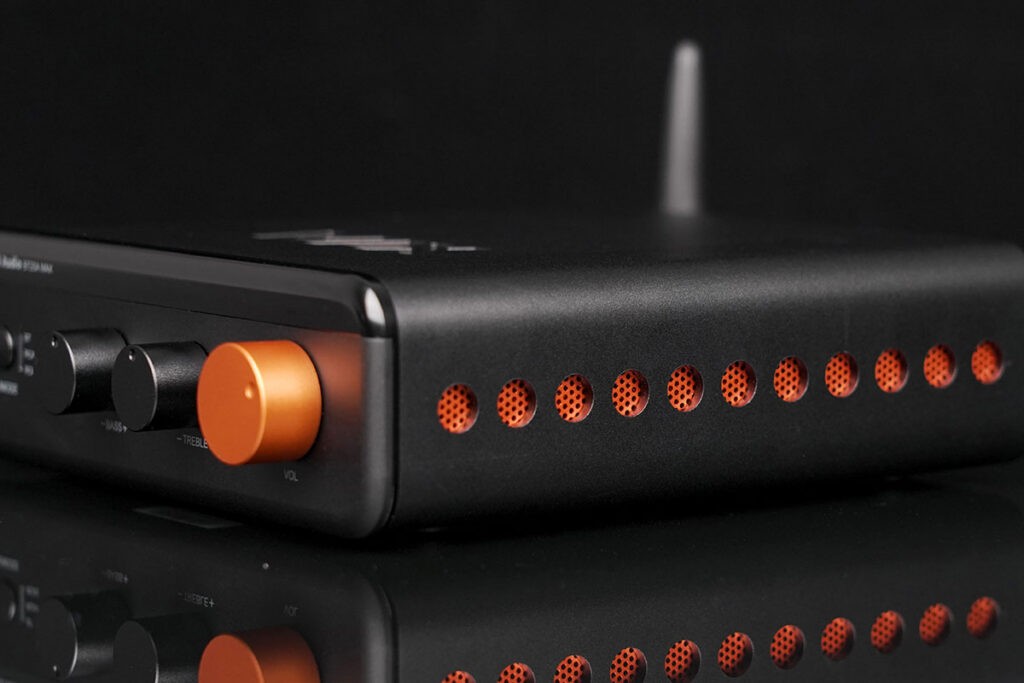
The inclusion of bass and treble controls reinforces the amplifier’s practical character. Tone controls can be useful in real rooms, where speaker placement, desktop reflections, wall proximity, and listening distance all influence tonal balance. A small pair of speakers on a desk may behave differently from the same speakers on stands in a living room. Being able to make simple adjustments from the amplifier can help adapt the system to the space and the listener’s preferences.
At the same time, Fosi Audio has included the ability to fully bypass those controls. That is a sensible detail because not every owner wants active tone shaping in the signal path. Some will prefer the shortest or simplest route through the amplifier when their speakers and room already work well together. The BT20A MAX therefore does not treat tone controls as mandatory processing; it presents them as tools that can be used or removed from the path as needed.
This balance is important because the amplifier is likely to be used by different types of listeners. One person may want quick adjustment for movies, games, and background streaming. Another may want a cleaner, more traditional two-channel signal route. The ability to serve both preferences is part of the product’s broader flexibility.

Connectivity for both traditional and wireless sources
The BT20A MAX provides two pairs of RCA inputs for analog sources. That keeps the amplifier compatible with familiar hi-fi components and everyday devices that output line-level analog audio. Depending on the rest of the system, those inputs could accommodate sources such as a DAC, streamer, preamplified turntable, CD player, or television audio output, provided the connected device supplies the appropriate analog signal.
Wireless playback is handled by a Qualcomm QCC3095 Bluetooth platform. The codec list is notably broad for a compact integrated amplifier, with support for aptX, aptX HD, aptX Adaptive, aptX Lossless, and LDAC in addition to basic Bluetooth operation. This matters because Bluetooth is no longer only a convenience feature for casual listening. Many people use phones, tablets, and laptops as their primary music sources, and codec support can influence the quality, latency behavior, and compatibility of the wireless connection.
The presence of advanced Bluetooth codecs does not eliminate the importance of source compatibility; both sending device and receiving device need to support the relevant codec for it to be used. Even so, the BT20A MAX is clearly designed for a world in which wireless streaming is central rather than incidental. For users who want a compact speaker system without adding a separate streamer or Bluetooth receiver, that integrated approach keeps the setup simpler.
Everyday control and integration details
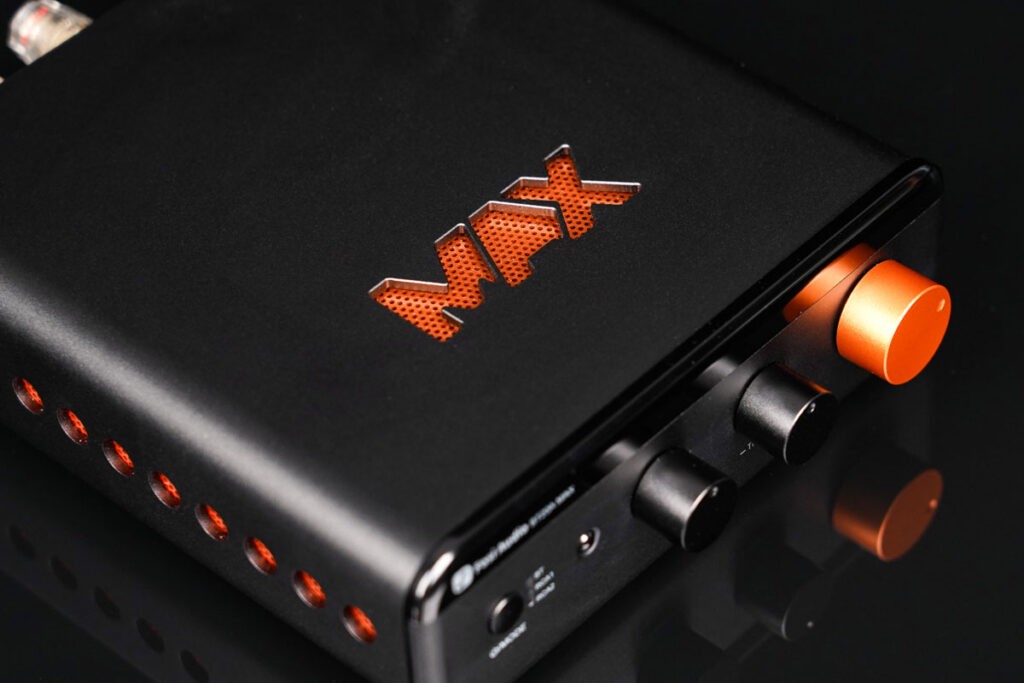
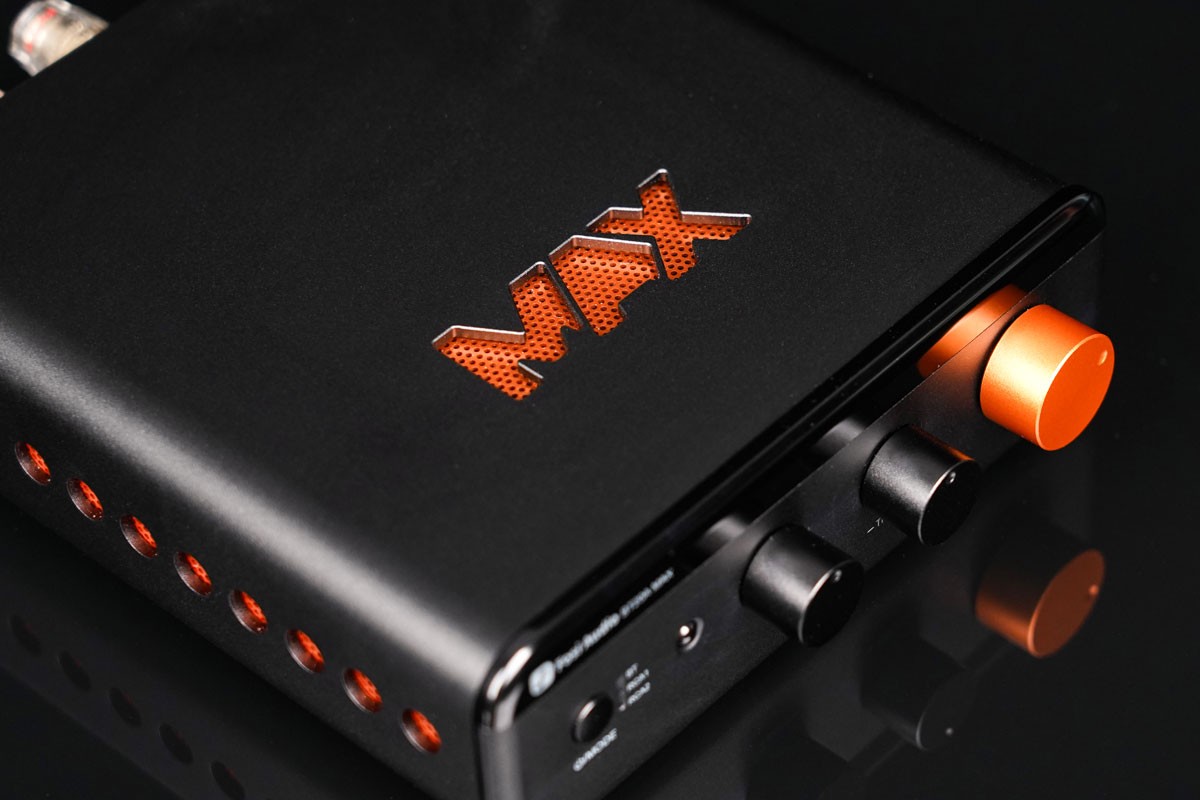
A compact amplifier can have excellent specifications and still be frustrating if daily operation is awkward. The BT20A MAX takes a tactile approach with a motorized analog volume potentiometer. This is a useful hybrid idea: the volume control remains physically intuitive on the front panel, while also being adjustable from the included remote. For a desktop listener, the knob may be within easy reach. For a sofa-based system, remote operation becomes much more important.
The amplifier also includes a 12-volt trigger, a feature more commonly associated with component-based systems. This allows the BT20A MAX to be incorporated into setups where power-on and power-off behavior is coordinated with other equipment. For owners building a cleaner or more automated system, that small connection can make the amplifier easier to live with, especially if it is placed out of immediate reach.
Fosi Audio has also addressed thermal behavior with active cooling and a newly developed fan that the company says remains quiet even during long listening sessions. Active cooling can be a practical trade-off in small high-output amplifiers, where the chassis has limited surface area for passive heat dissipation. The key design goal is to maintain reliability under load without turning cooling noise into an everyday distraction. The source information does not provide independent noise measurements, but the inclusion of a dedicated cooling strategy shows that sustained operation was part of the design brief.
System matching and placement possibilities
The BT20A MAX is most naturally suited to passive speaker systems where space efficiency is important. On a desk, it could drive a pair of compact bookshelf speakers while leaving room for a computer, display, or work equipment. In a living room, it could function as the central amplifier for a straightforward stereo or 2.1 setup, especially where a full-size integrated amplifier would feel oversized.
Its subwoofer facilities make it particularly relevant for users who want smaller main speakers but do not want to give up the option of deeper bass. The dedicated subwoofer output and switchable high-pass filter provide more structure than simply adding bass reinforcement without control. That is valuable in rooms where speaker size, furniture layout, or neighbor considerations make system planning more complicated.
The analog inputs also make the amplifier more adaptable than a wireless-only product. Owners are not limited to Bluetooth streaming, and the two RCA input pairs provide room for more than one wired source. This is useful for systems that evolve over time: a listener may begin with a phone over Bluetooth and later add a DAC, disc player, or other line-level component.
Who the Fosi Audio BT20A MAX is most suitable for
The BT20A MAX will make the most sense for listeners who want a compact, capable amplifier for passive speakers and who value both wired and wireless convenience. It is especially well aligned with desktop users, apartment listeners, and anyone building a clean 2.1 system around bookshelf speakers and a subwoofer. The combination of advanced Bluetooth codec support, RCA inputs, remote control, and bass-management features gives it a broad practical range.
It is also suitable for users who prefer simple operation over app-heavy complexity. The amplifier’s core controls are familiar: volume, tone adjustment, input selection, and remote operation. The design does not appear to be aimed at replacing a network streamer, AV receiver, or feature-heavy home-theater hub. Instead, it focuses on the essentials of two-channel and 2.1 listening in a compact form.
Prospective owners should also consider whether the feature set matches their system priorities. Those who need HDMI connectivity, room correction, built-in streaming services, phono equalization, or multi-channel surround processing will need additional equipment or a different type of product. The BT20A MAX is most compelling when judged as a compact amplifier for passive speakers with thoughtful subwoofer integration and flexible source handling, not as an all-purpose AV control center.
Conclusion
The Fosi Audio BT20A MAX stands out for the way it combines several practical modern audio needs in one compact amplifier: a Class-D power stage based on the Texas Instruments TPA3255 module, true 2.1 system thinking, a dedicated subwoofer output, a switchable 80 Hz high-pass filter, bypassable tone controls, two analog RCA inputs, broad Bluetooth codec support, remote volume operation, and a 12-volt trigger for system integration. Its strongest documented qualities are flexibility, small-system practicality, and attention to subwoofer use. It is best suited to listeners building a desktop, office, apartment, or compact living-room system who want passive speakers, optional subwoofer support, and convenient wireless playback without moving to a large component stack.


Join the discussion
Share your thoughts, listening impressions or product experience.