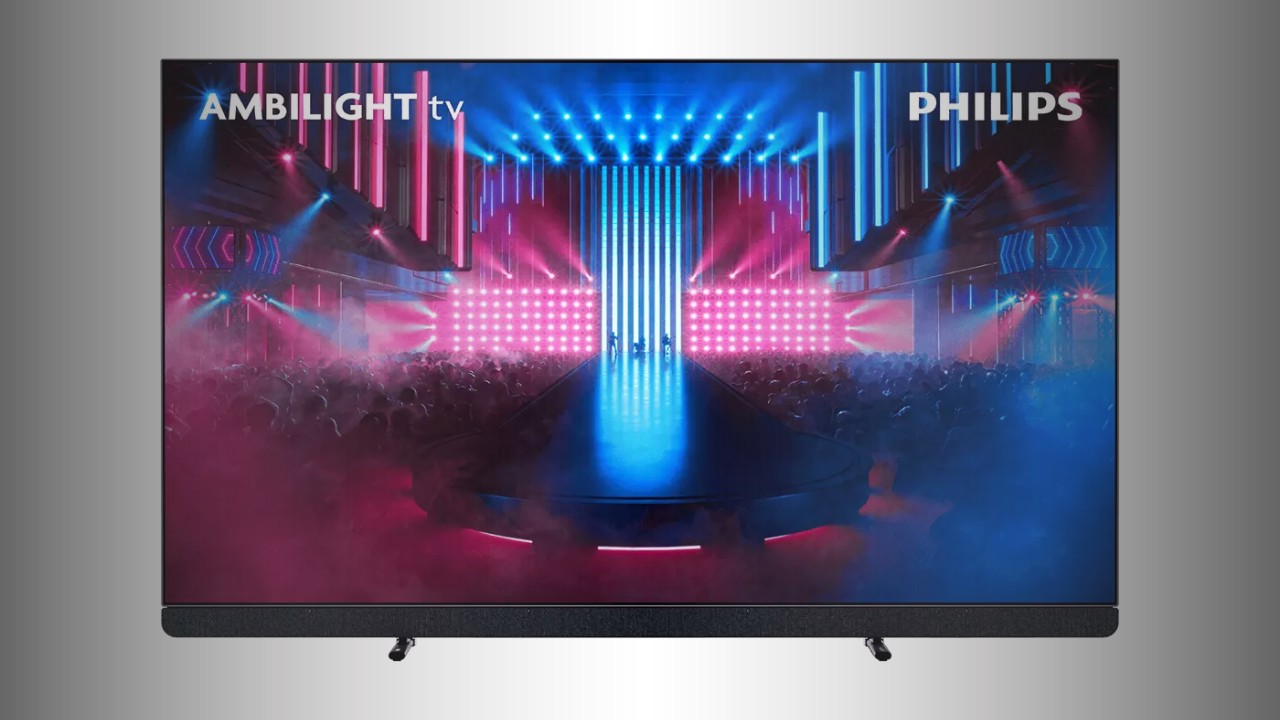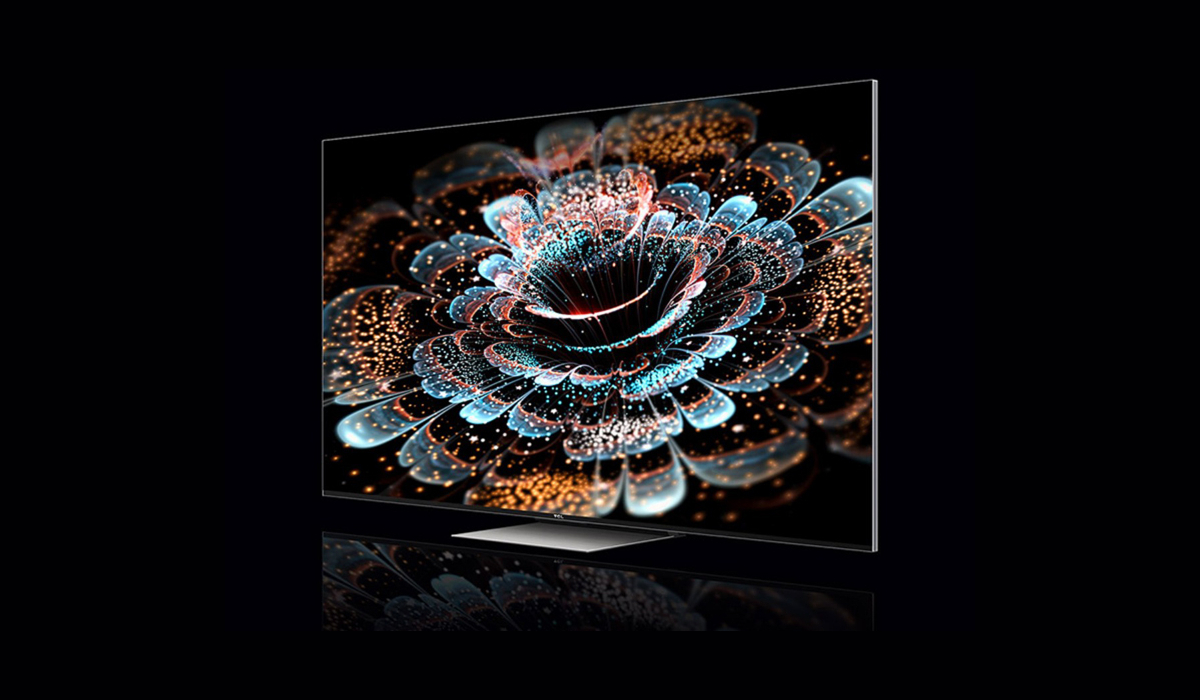
Choosing a TV is less about chasing a single headline feature and more about matching panel type, backlighting, connectivity, calibration options, screen size, and software to the way the set will actually be used.
The source material here spans full model previews, display-technology explainers, calibration tools, HDMI guidance, and one clearly tentative retailer listing, so the recommendations below distinguish between products to consider and information that helps frame a smarter purchase.
Several themes run through the selection. OLED and QD-OLED discussions focus on panel structure and brightness potential, Mini LED and QNED coverage highlights the importance of backlighting, and the gaming-oriented entries point to refresh rate, VRR, and HDMI capability as practical differentiators. Samsung’s calibration material also underlines a point that often gets overlooked: a capable panel still benefits from accurate setup. This is an evergreen Stereoindex buying guide rather than a price-led ranking. Where the source is manufacturer-stated, retailer-listed, or explicitly uncertain, that is made clear. The goal is to help readers decide which TV stories deserve attention, which models fit particular needs, and where caution is warranted.
1. What’s the difference between Samsung and TVs?
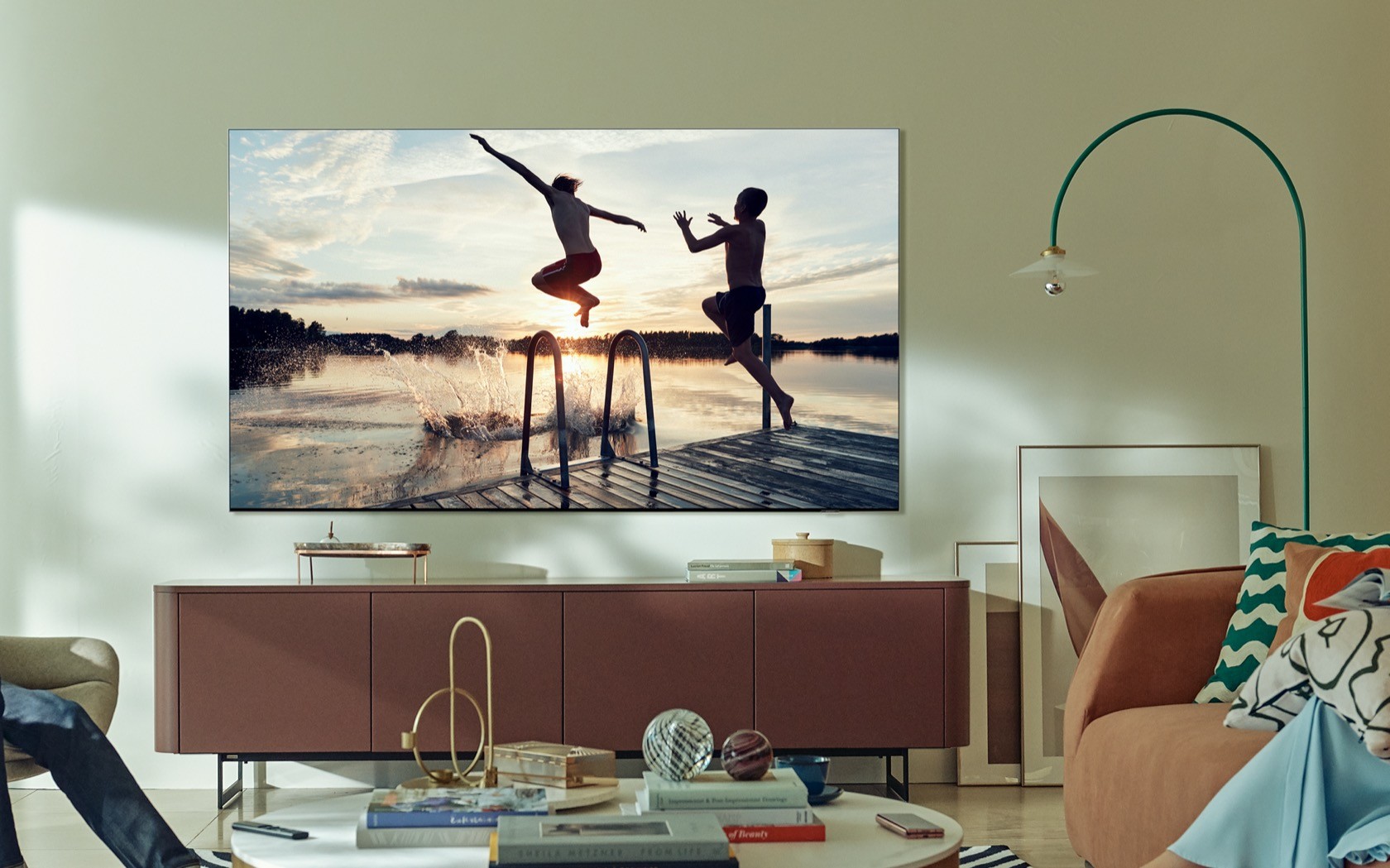
Samsung Neo QLED lineup information focusing on calibration and brightness differences.
This Samsung lineup explainer is most useful as a guide to the company’s Neo QLED hierarchy rather than as a review of one model.
It highlights manufacturer-stated factory calibration for the QN90A, QN95A, QN800A, and QN900A series, and it outlines claimed peak-brightness differences across flagship 4K and 8K models.
The source also includes an important caveat: the calibration quality had not yet been independently checked because the models were not available for verification at the time of writing.
Best for: Comparing Samsung Neo QLED ranges
- Factory calibration stated for flagship Neo QLED series
- Clear brightness hierarchy across QN models
- Useful context for comparing Samsung 4K and 8K tiers
Verdict: A helpful Samsung TV hierarchy guide, provided its manufacturer-stated claims are treated as starting points rather than verified test results.
2. Samsung Q80A: Powerful 4K processor with awesome AI functions
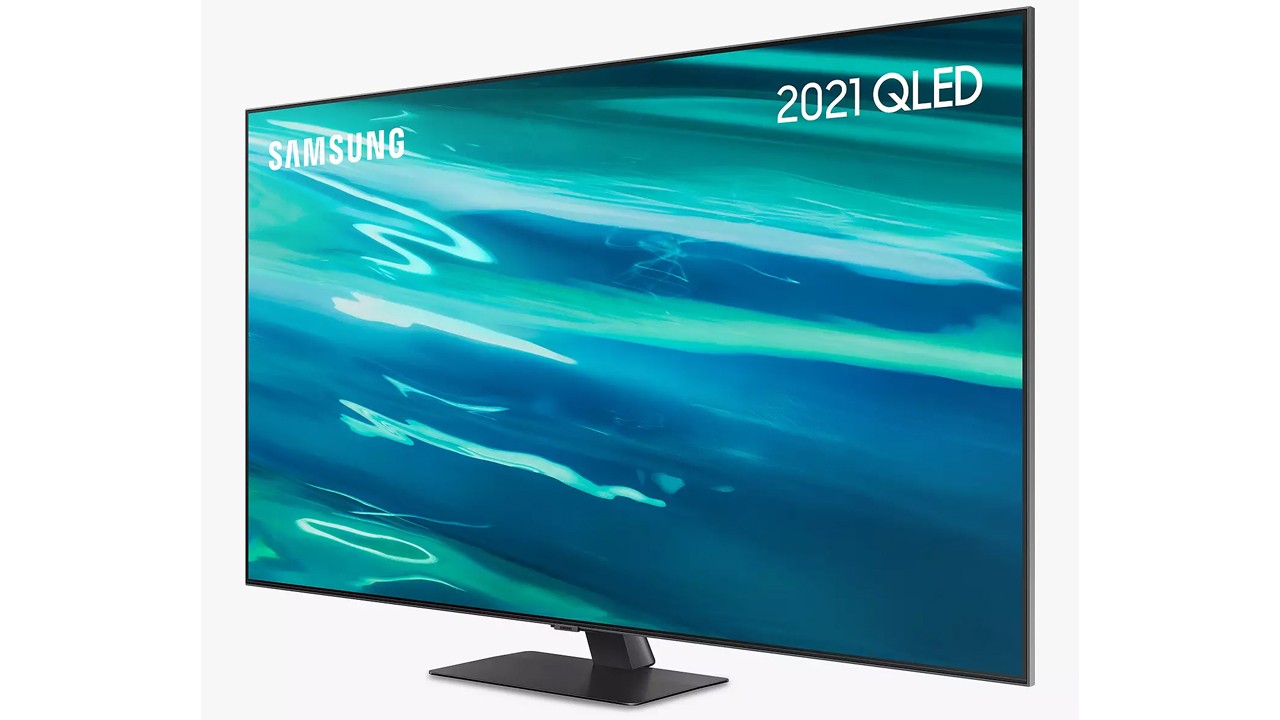
Samsung Q80A shown as a large 75-inch QLED TV with slim bezels and a central stand.
The Samsung Q80A is presented as a large 75-inch 4K QLED option that brings many of Samsung’s panel and processing ideas without moving into the brand’s more expensive models.
The source points to Direct Full Array backlighting, a narrow-bezel design, a high screen-to-front-area ratio, and a stand that leaves space for a soundbar.
It is a living-room-focused set, and the stated dimensions and weight make placement planning important.
Best for: Large-screen QLED living rooms
- 75-inch 4K QLED panel
- Direct Full Array backlighting
- Narrow 0.9 cm bezels
- Stand leaves room for a soundbar
Verdict: A strong candidate for buyers who want a substantial Samsung QLED with full-array backlighting and a compact-looking front design.

3. LG QNED80: Impressive entry-level TV
LG QNED80 with a thin side-lit body and widely spaced legs.
The LG QNED80 sits at the entry point of LG’s QNED range, positioned above NanoCell models and below more advanced OLED options.
The source makes the key trade-off clear: unlike higher QNED models described with Mini LED backlighting, this set uses conventional side lighting, which helps reduce cost and keep the chassis thin but limits real contrast gains and black depth.
That makes it a sensible QNED entry point, not a substitute for stronger local-dimming designs.
Best for: QNED features on a tighter budget
- Entry-level access to LG QNED range
- Thin 4.4 cm body stated without cable clips
- Decent plastic-case build noted
- Lower-cost approach than Mini LED QNED models
Verdict: A practical QNED starting point for buyers who value thin design and panel positioning more than deep blacks.
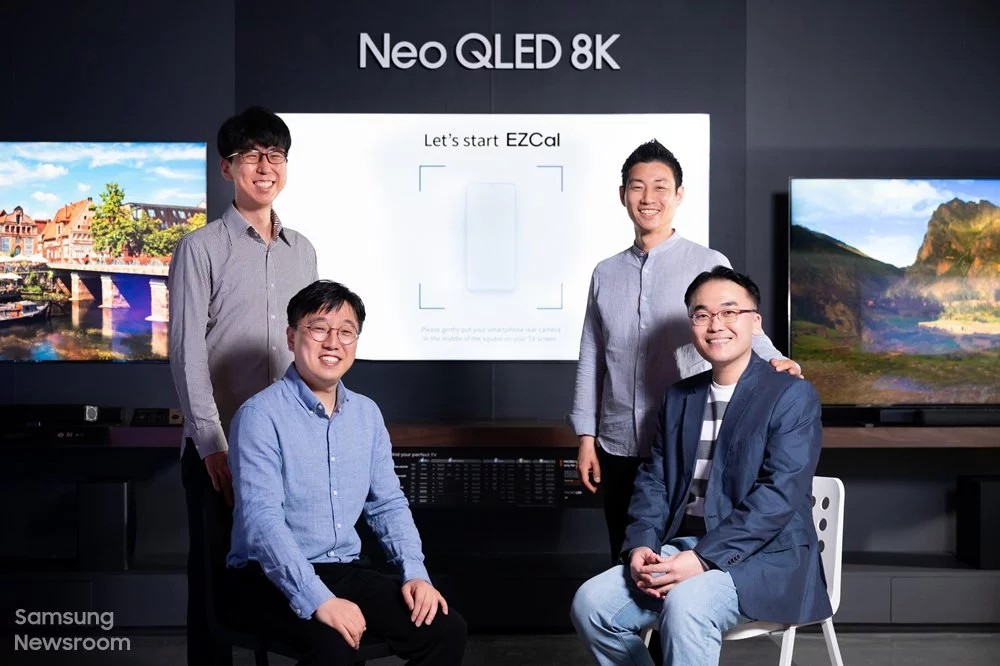
4. Samsung EZCal: Mobile app that makes it easy to calibrate your Samsung QLED TV
Samsung EZCal uses a phone-based workflow to simplify QLED picture calibration.
Samsung EZCal is not a TV model, but it is relevant to anyone buying a compatible Samsung QLED set and caring about picture accuracy.
The source explains that professional calibration normally requires a dark room, optical equipment, a computer, software, and specialist knowledge.
EZCal aims to simplify that process through a smartphone camera, built-in TV pattern generation, and an algorithm that converts camera RGB data into XYZ coordinate data based on CIE standards.
Best for: Samsung QLED owners who want easier calibration
- Simplifies the TV calibration process
- Uses a smartphone camera
- Pattern generation is built into the TV
- Designed for ordinary users rather than specialists
Verdict: A useful setup feature to consider if picture calibration matters but professional equipment is not practical.

5. LG Display going all in on OLED EX
OLED EX panel technology is presented as a brighter evolution of conventional OLED displays.
This technology update matters because many TV brands use LG Display OLED panels, including LG Electronics, Sony, Panasonic, Philips, Hisense, and Vizio.
OLED EX is described by its developers as one third brighter than conventional OLED displays, which is especially relevant for HDR video and viewing in strong ambient light.
The source also warns against assuming every OLED TV immediately uses the newer panel type, since stock, production timing, and budget ranges can vary.
Best for: Understanding OLED panel choices
- Developer-stated brightness gain over conventional OLED
- Relevant to HDR viewing
- Used across OLED panels supplied to many brands
- Clear counterpoint to Samsung Display QD-OLED
Verdict: An important OLED buying context piece, especially for readers comparing panel generations and brightness claims.
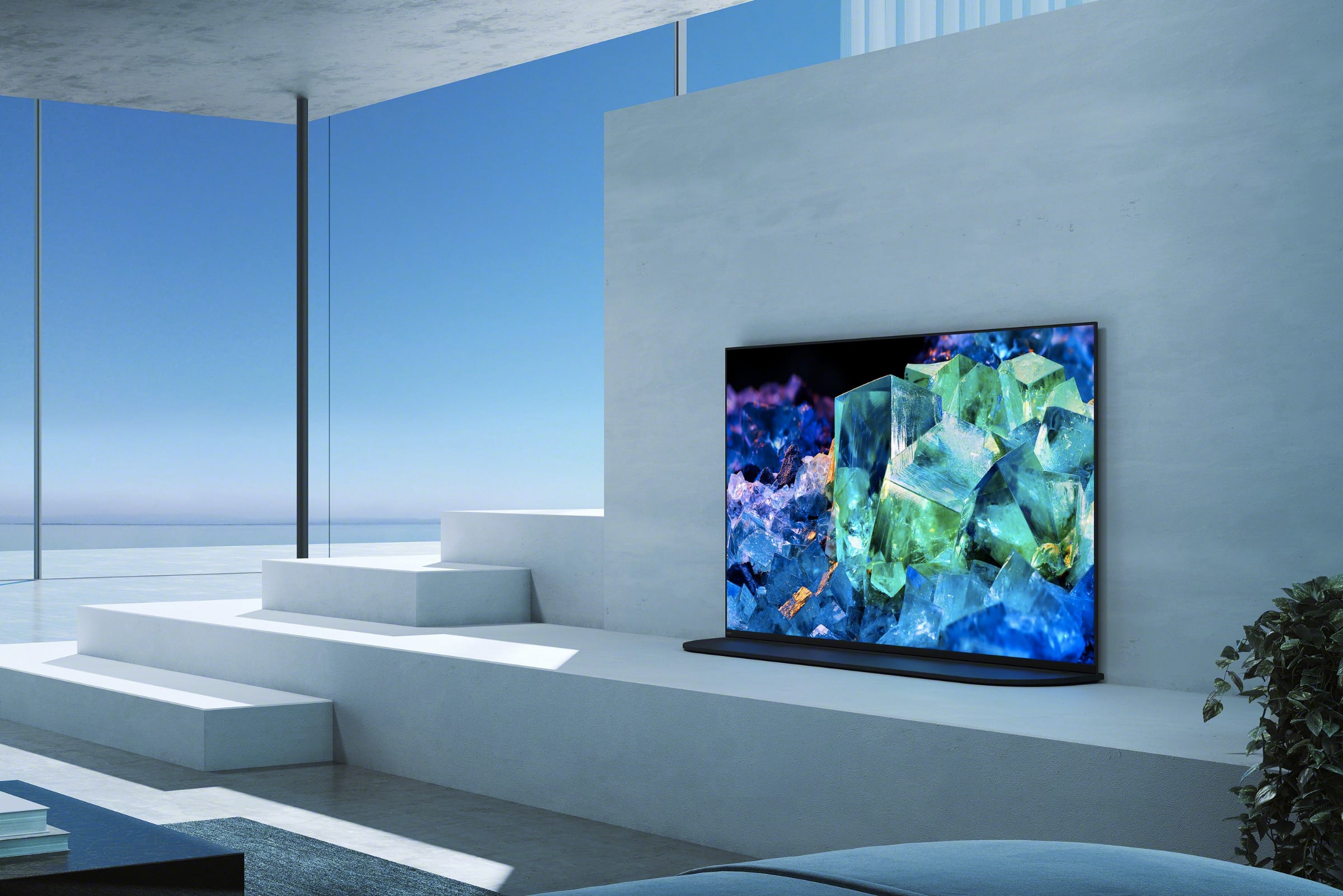
6. Sony A80K: Is this the TV you should buy in?
Sony A80K OLED range positioned below the QD-OLED A95K while adding a 77-inch option.
The Sony A80K is framed as a Bravia OLED series available in 55-, 65-, and 77-inch screen sizes, using a WOLED panel from LG Display rather than the Samsung Display QD-OLED panel found in Sony’s higher A95K series.
The source highlights Sony’s updated XR Cognitive Processor Phase 2, with manufacturer claims around richer color shading, saturation adjustment, foreground object handling, and a depth effect intended to feel more natural.
Its appeal rests on Sony processing paired with an established WOLED panel structure.
Best for: Sony OLED buyers who do not need QD-OLED
- WOLED panel from LG Display
- 55-, 65-, and 77-inch sizes stated
- Updated XR Cognitive Processor Phase 2
- Foreground-focused processing claims
Verdict: A well-positioned Sony OLED option for buyers prioritizing the brand’s processing approach with a conventional WOLED panel.

7. Is Samsung’s next-generation QD-OLED TV coming out?
A retailer listing raised questions about an unconfirmed Samsung QD-OLED TV.
This is the most tentative entry in the guide and should be treated as watchlist material rather than a firm recommendation.
The source discusses a retailer listing for a Samsung QD-OLED QS95B in 140 cm and 165 cm sizes, with DCI-P3 and BT. color-standard coverage, Tizen, and four HDMI 2.1 ports listed.
However, the article notes that other specifications, price, and delivery information were not disclosed, and it flags spelling errors and the modest listing page as reasons for skepticism.
Best for: Tracking unconfirmed Samsung QD-OLED information
- Listed as a Samsung QD-OLED TV
- Tizen platform listed
- Four HDMI 2.1 ports listed
- DCI-P3 and BT. coverage listed
Verdict: Interesting for QD-OLED watchers, but too uncertain to treat as a normal buying recommendation.
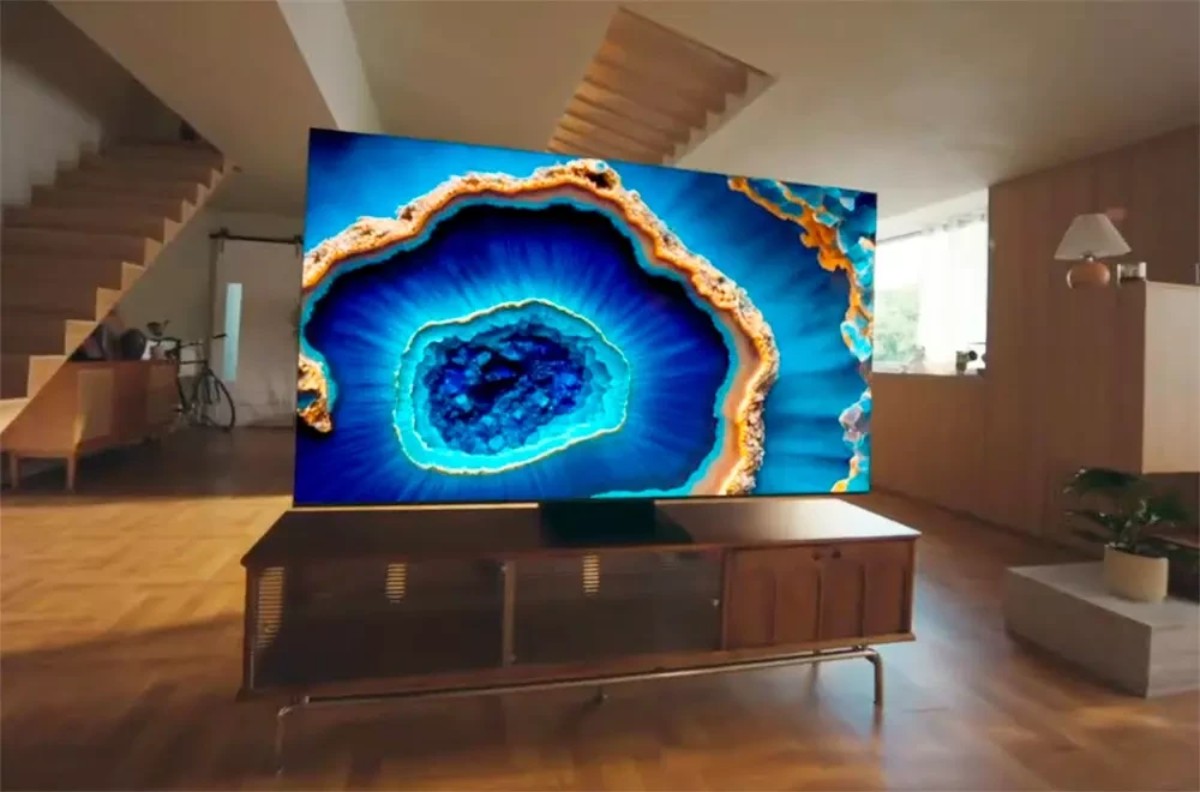
8. TCL unveils C805K 100-inch Mini LED TV
TCL C805K series combines Mini LED backlighting, Quantum Dot color, and large-screen sizing.
TCL’s C805K series is the clearest large-screen Mini LED entry in the supplied material.
The source describes a 98-inch model with Mini LED backlighting and a Quantum Dot layer, while also noting that the range spans several smaller screen sizes.
Gaming and streaming are central to the specification list, with 144 Hz refresh rate support, VRR, Game Master Pro 2.0, and Google TV support for major streaming services mentioned.
Best for: Big-screen Mini LED gaming and streaming
- Mini LED backlighting with Quantum Dot layer
- 144 Hz refresh rate support
- VRR and Game Master Pro 2.0
- Google TV streaming support
Verdict: A feature-rich Mini LED option for buyers who want a very large screen with gaming and Google TV features clearly listed.

9. HDMI 2.2 and its differences from HDMI 2.1
HDMI 2.2 is presented as a higher-bandwidth successor to HDMI 2.1 for future video formats.
HDMI 2.2 is a connection-standard explainer rather than a TV recommendation, but it is useful for anyone thinking beyond immediate source devices.
The source describes the specification as an incremental HDMI update with support for resolutions up to 12K at 60 frames per second with 12-bit color, RGB 4:4:4, a maximum data rate of 96 Gbps, Fixed Rate Link communication, and Latency Indication Protocol for improved audio-video synchronization.
For current TV shopping, it provides context alongside HDMI 2.1 features such as 4K at 120 Hz support in gaming-focused sets.
Best for: Future connection planning
- Up to 12K at 60 frames per second specified
- 96 Gbps maximum data rate
- Latency Indication Protocol for sync
- Single-cable digital audio and video focus
Verdict: Useful background for future-proofing discussions, while HDMI 2.1 remains the practical checkpoint for many current 4K gaming setups.
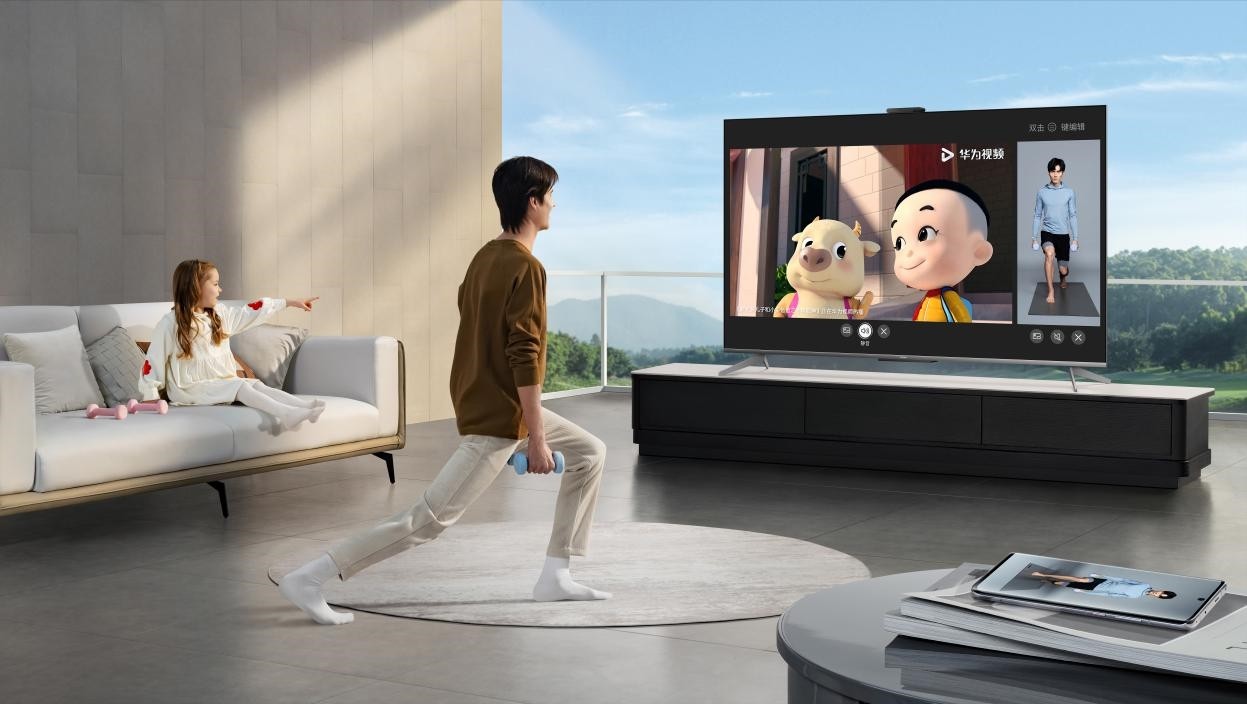
10. Huawei launches Smart Screen S3 Pro 86-inch smart TV
Huawei Smart Screen S3 Pro pairs an 86-inch 4K panel with HDMI 2.1 gaming connectivity.
The Huawei Smart Screen S3 Pro is a large 86-inch 4K smart TV with a stated 3840 x 2160 resolution and a 120 Hz refresh rate, plus support for signals up to 240 Hz.
The source highlights three HDMI 2.1 ports with 48 Gbps bandwidth that can accept 4K at 120 Hz signals, making console compatibility a major part of the pitch.
Its AI processor is also described as recognizing image type, audience faces, and posture in real time to improve gesture and voice control, with HarmonyOS handling the smart-TV platform.
Best for: Large-screen gaming features in the Huawei ecosystem
- 86-inch 4K display
- 120 Hz refresh rate stated
- Three HDMI 2.1 ports at 48 Gbps
- AI-assisted gesture and voice control
Verdict: A large-format smart TV with strong stated HDMI and control features, especially relevant where Huawei’s platform is supported.
Quick comparison
The entries differ in purpose as much as in technology.
Some are TV models, some are panel or connectivity explainers, and one is explicitly uncertain.
The comparison below keeps those distinctions visible so buyers can separate product choices from background guidance.
| Product | Best for | Verdict |
|---|---|---|
| What’s the difference between Samsung and TVs? | Comparing Samsung Neo QLED ranges | Best used to understand Samsung factory-calibration and brightness claims across QN series models. |
| Samsung Q80A: Powerful 4K processor with awesome AI functions | Large-screen QLED living rooms | A 75-inch 4K QLED option with Direct Full Array backlighting and slim-bezel design details. |
| LG QNED80: Impressive entry-level TV | QNED features on a tighter budget | An entry-level QNED set whose side lighting keeps it thin but limits black-depth ambitions. |
| Samsung EZCal: Mobile app that makes it easy to calibrate your Samsung QLED TV | Samsung QLED owners who want easier calibration | A setup tool rather than a TV, useful for simplifying picture calibration. |
| LG Display going all in on OLED EX | Understanding OLED panel choices | A panel-technology guide centered on developer-stated brightness gains for OLED EX. |
| Sony A80K: Is this the TV you should buy in? | Sony OLED buyers who do not need QD-OLED | A WOLED Sony OLED range differentiated from the A95K by panel structure and screen-size mix. |
| Is Samsung’s next-generation QD-OLED TV coming out? | Tracking unconfirmed Samsung QD-OLED information | An intriguing but skeptical listing report, not a firm recommendation. |
| TCL unveils C805K 100-inch Mini LED TV | Big-screen Mini LED gaming and streaming | A Mini LED and Quantum Dot series with 144 Hz, VRR, Game Master Pro 2.0, and Google TV support. |
| HDMI 2.2 and its differences from HDMI 2.1 | Future connection planning | A standards explainer that helps frame HDMI bandwidth and synchronization improvements. |
| Huawei launches Smart Screen S3 Pro 86-inch smart TV | Large-screen gaming features in the Huawei ecosystem | An 86-inch 4K smart TV with 120 Hz refresh, three 48 Gbps HDMI 2.1 ports, and HarmonyOS. |
Frequently asked questions
Should I choose OLED, QD-OLED, Mini LED, or QNED?
Use the supplied material to identify the trade-offs.
Sony A80K uses WOLED, Samsung’s reported QS95B listing concerns QD-OLED, TCL C805K uses Mini LED with Quantum Dot, and LG QNED80 is an entry-level QNED model with side lighting rather than Mini LED.
If black depth and panel type are priorities, look carefully at whether the set is OLED, QD-OLED, Mini LED, or side-lit QNED rather than relying on the range name alone.
What HDMI features matter most for gaming?
For current 4K gaming, the most practical checks in the source material are HDMI 2.1, 4K at 120 Hz signal support, VRR, and high refresh-rate support where listed.
Huawei’s Smart Screen S3 Pro specifies three 48 Gbps HDMI 2.1 ports for 4K at 120 Hz, while TCL C805K lists 144 Hz, VRR, and Game Master Pro 2.0.
HDMI 2.2 is more about future bandwidth planning than an immediate requirement for most 4K setups.
Does TV calibration really matter?
It can.
Samsung’s Neo QLED lineup article emphasizes factory calibration on several flagship series, while Samsung EZCal explains how a phone-based app can simplify a process that normally requires specialist tools and knowledge.
Calibration is especially relevant if accurate color and tonal balance matter, but manufacturer claims should still be treated differently from independent measurements.
How should I think about very large TV sizes?
Large screens require more than just budget planning.
The Samsung Q80A source gives dimensions and weight for a 75-inch set, TCL C805K spans up to a very large Mini LED model, and Huawei’s Smart Screen S3 Pro is an 86-inch TV.
Check stand design, wall-mount suitability, soundbar clearance, room distance, delivery access, and whether the screen size is supported by the features you actually need.
How to choose from this TV shortlist
Start with the display technology, then narrow by use case.
For OLED buyers, the Sony A80K is the clearest model-focused entry here, while the OLED EX article is valuable background for understanding panel brightness claims across multiple brands.
If QD-OLED is the interest, the Samsung QS95B report should remain on the watchlist only, because the source itself flags missing details and reasons for skepticism. For bright-room LED alternatives and gaming-oriented living-room setups, the TCL C805K stands out in the supplied material because its Mini LED, Quantum Dot, 144 Hz, VRR, Game Master Pro 2.0, and Google TV support are all clearly listed. LG QNED80 is a different kind of proposition: it brings entry-level QNED positioning and a thin build, but the source is clear that its side lighting limits contrast improvement compared with Mini LED approaches. Samsung Q80A sits as a large 75-inch QLED option with Direct Full Array backlighting and useful design notes for soundbar placement and wall mounting. Connectivity should not be an afterthought. If modern consoles are central to the purchase, look for HDMI 2.1, 4K at 120 Hz signal handling, VRR, and enough suitable ports for the system. Huawei’s Smart Screen S3 Pro is notable in the source for three 48 Gbps HDMI 2.1 inputs, while HDMI 2.2 is best read as future-facing context rather than a reason to ignore strong current HDMI 2.1 implementations. Finally, be realistic about setup. Factory calibration, simplified tools such as Samsung EZCal, and careful picture adjustment can affect the end result. Also consider placement, stand width, wall mounting, operating system, streaming support, and availability in your region. The strongest choice is the one whose panel type, connection set, size, and setup path match the room and source devices, not the one with the longest specification sheet.