A useful TV shortlist is not only a ranking of screens.
The category now spans OLED cinema sets, QD-Mini LED giants, smart TV platforms, gaming features, integrated audio systems, video-calling ideas, and even miniature novelty sets.
The strongest choice depends less on a single headline specification and more on how the display, interface, size, and feature set fit the room and the viewer. This editorial guide keeps the original source order and treats each entry for what it is: a product review, a platform development, a market update, or a feature-focused TV story. Some are direct buying candidates, while others are included because they explain where the TV market and smart TV experience are heading. The recommendations below stay close to the supplied material. Where a source highlights limits, those limits are included; where it only gives market context, the verdict is framed as guidance rather than a product endorsement.
1. Samsung OLED TV based panel from LG is not coming this year
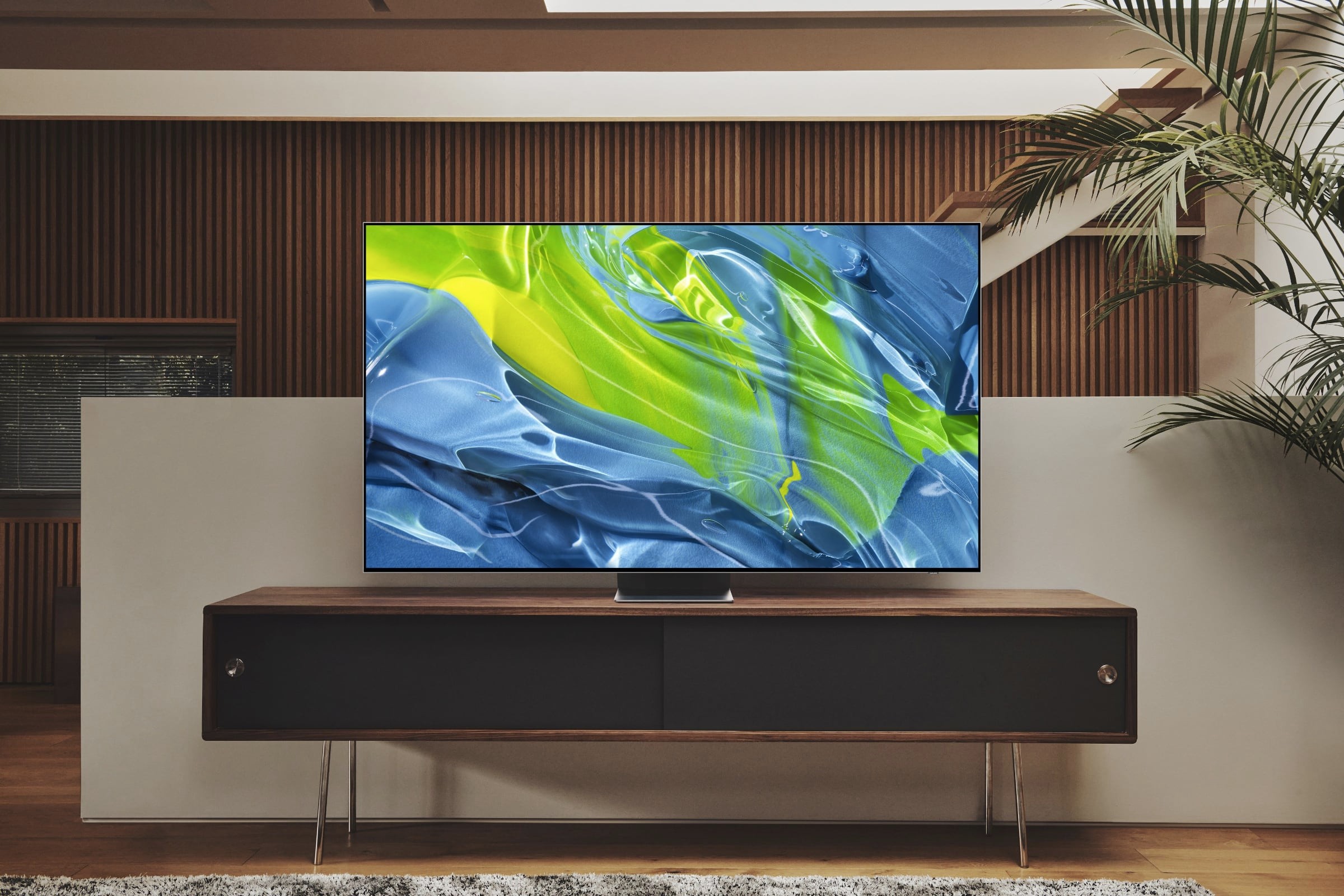
Samsung’s OLED strategy remains a key topic for buyers comparing QD-OLED branding with classic W-OLED panel technology.
This entry is most useful as OLED market context rather than as a product recommendation.
The source explains the distinction between Samsung’s QD-OLED naming and classic W-OLED panel technology, then reports that Samsung is not expected to rush into TVs using LG Display W-OLED panels under the current market conditions.
For buyers, the practical takeaway is that a Samsung-branded W-OLED option should not be treated as an imminent alternative when comparing current OLED choices.
Best for: OLED market context
- Clarifies QD-OLED and W-OLED terminology
- Explains why a Samsung W-OLED TV is delayed
- Useful context for OLED shoppers
Verdict: A helpful background piece for buyers trying to understand why Samsung’s OLED lineup does not simply mirror LG’s W-OLED approach.
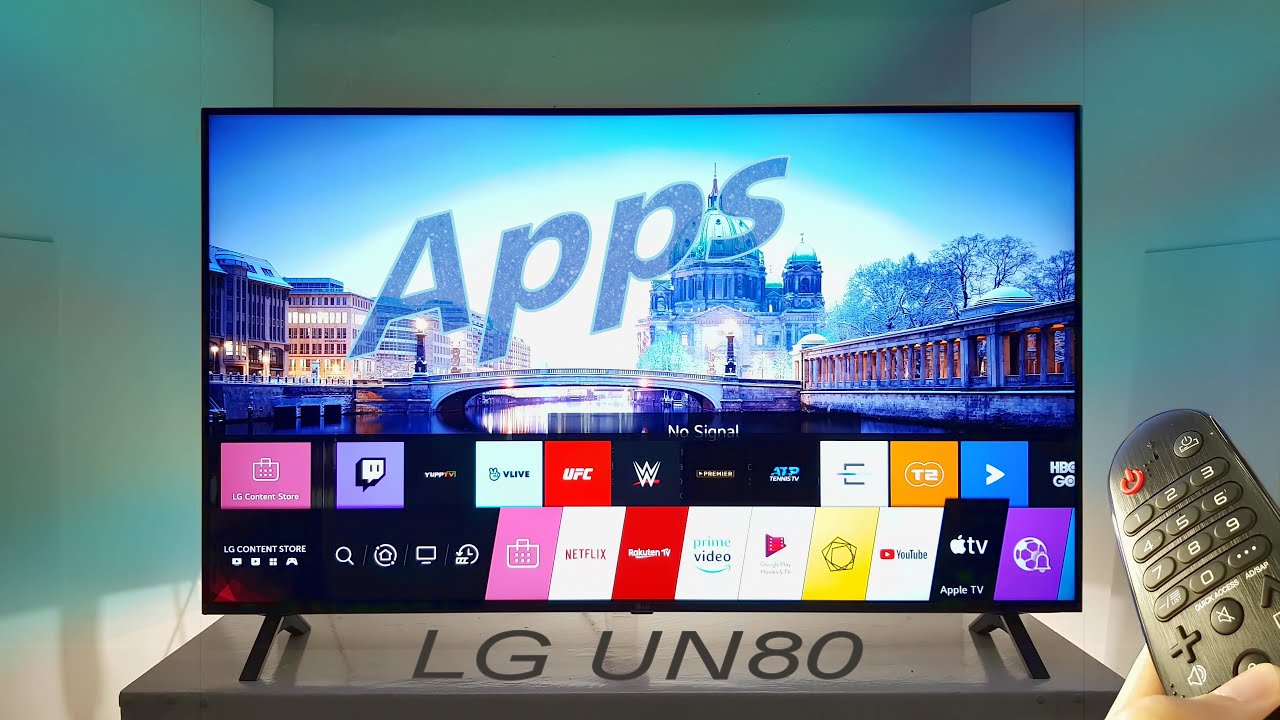
2. LG Electronics develops media and entertainment platform Smart TV webOS
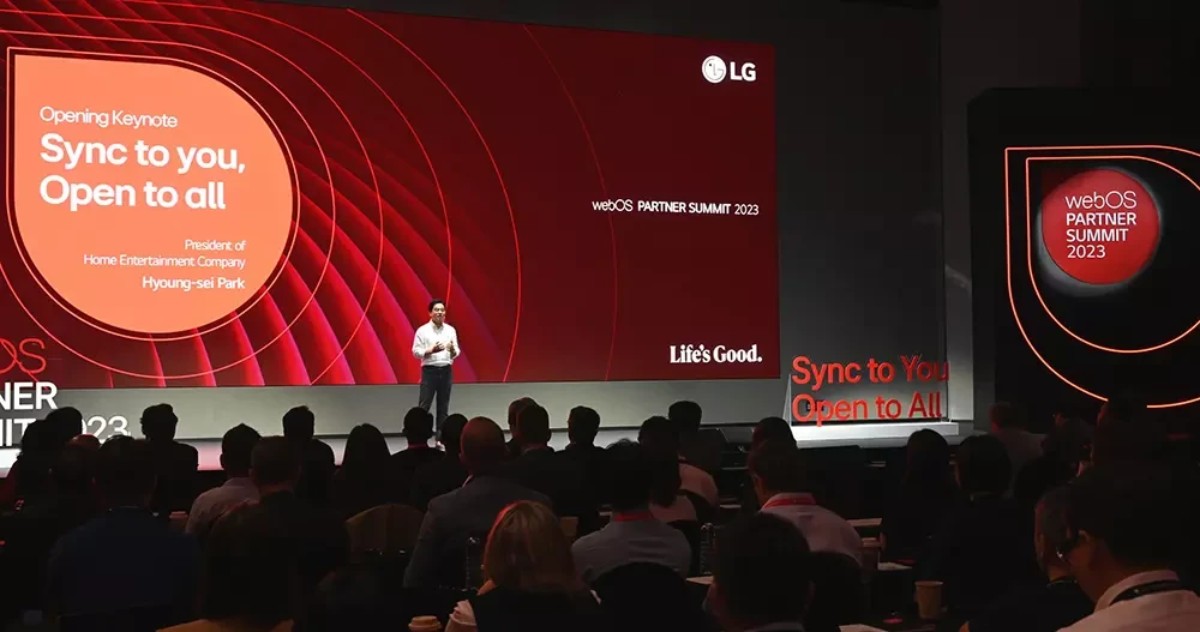
LG’s webOS platform is being developed as a wider entertainment ecosystem across TVs and other display categories.
LG’s webOS story matters because the smart TV interface is now a central part of the ownership experience.
The source describes LG’s plan to turn webOS into a broader media and entertainment platform with curated content, services, and support beyond LG OLED and LG QNED TVs.
Its expansion to third-party TV brands, projectors, professional displays, and in-vehicle infotainment shows that webOS is being positioned as a larger ecosystem rather than a feature limited to one TV line.
Best for: Smart TV ecosystem shoppers
- Broad smart TV ecosystem
- Curated content and services focus
- Supports third-party TV brands
- Expanding beyond televisions
Verdict: webOS is a strong consideration for buyers who care as much about the interface and content experience as the panel itself.

3. TinyTV 2 and TinyTV Mini are the smallest TVs ever made
TinyTV 2 and TinyTV Mini shrink the television idea into collectible miniature screens with built-in playback.
TinyTV 2 and TinyTV Mini are not living-room replacements; they are miniature, playful screens with functional video playback.
TinyTV 2 uses a 1-inch IPS screen with 216 x 135 resolution and 8 GB of memory, while the still smaller TinyTV Mini uses a 0.6-inch square OLED screen with 64 x 64 resolution.
Both support stored video playback, channel-style switching that resumes from the previous position, USB-C charging and file transfer, a tiny speaker, physical knobs, and a small remote.
Best for: Novelty collectors and desk displays
- Extremely compact design
- Stored video playback
- Resume-style channel switching
- USB-C charging and transfers
Verdict: TinyTV 2 and TinyTV Mini are charming micro-screens for collectors, not substitutes for a practical home TV.
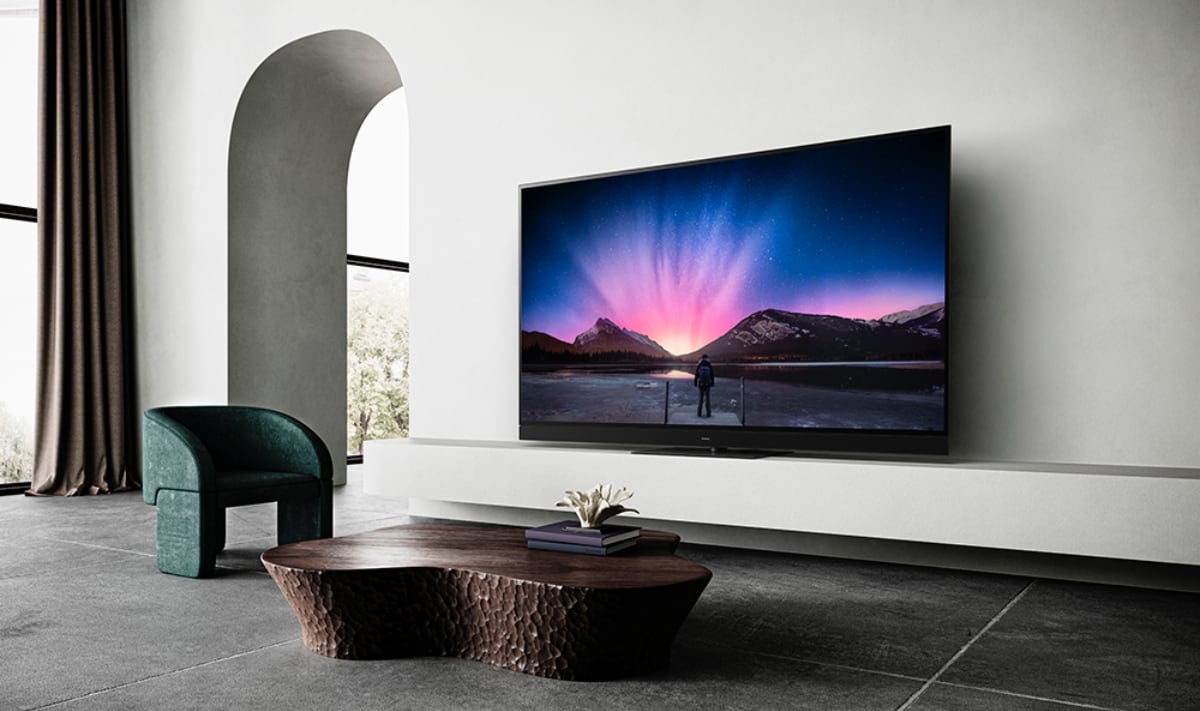
4. Panasonic LZ2000: High-end quality with superb color accuracy
Panasonic’s LZ2000 pairs a high-end OLED panel with a more substantial audio system than many slim televisions.
The Panasonic LZ2000 is presented as a high-end 4K OLED TV built around Master OLED Pro panels, with the source emphasizing color accuracy, cinema appeal, and a stronger focus on gaming.
It includes an automatic low-latency mode to reduce input lag, plus variable refresh rate and ALLM support on HDMI 2.1 ports from launch.
The design is described as sleek and discreet from the front, while the thicker profile is attributed to a Technics audio system with a bottom soundbar and rear speakers.
Best for: Cinema-focused OLED buyers who also game
- Master OLED Pro panel focus
- Superb color accuracy emphasis
- Automatic low-latency mode
- Integrated Technics audio system
Verdict: The LZ2000 stands out as a premium OLED choice for viewers who want color-focused picture quality, gaming features, and a serious integrated sound system.
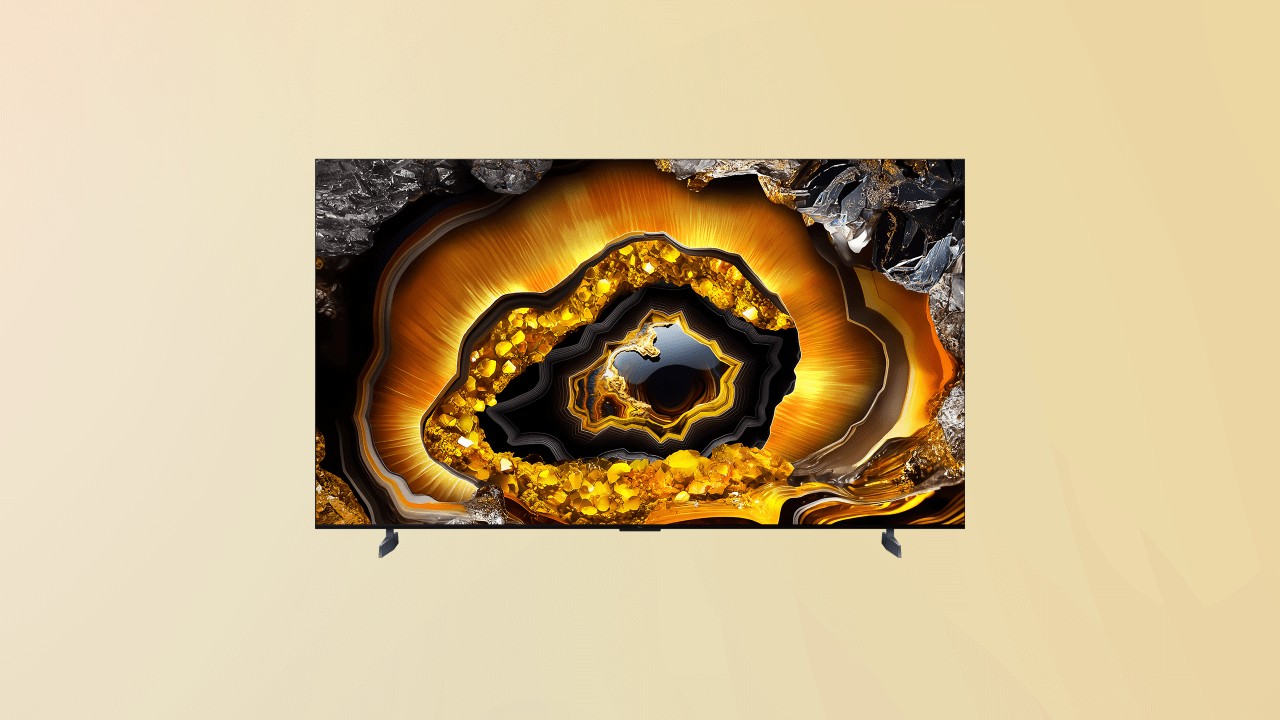
5. TCL X955: Top-level performance at a low price
TCL’s X955 targets the premium large-screen segment with QD-Mini LED backlighting and extensive local dimming.
The TCL X955 is framed as a premium QD-Mini LED family built for very large-screen viewing.
The source highlights 85-inch, 98-inch, and 115-inch sizes, a Full Array local dimming VA panel with more than 5,000 local dimming zones, 5,000 nits of brightness, and support for major standards.
Its design is described as typical TCL rather than showy, with satisfactory construction using metal and plastic.
Best for: Large-screen Mini LED value seekers
- Very large screen options
- QD-Mini LED technology
- More than 5,000 local dimming zones
- 5,000-nit brightness claim
Verdict: The X955 is the supplied material’s clearest big-screen performance play, especially for buyers prioritizing scale and Mini LED brightness.
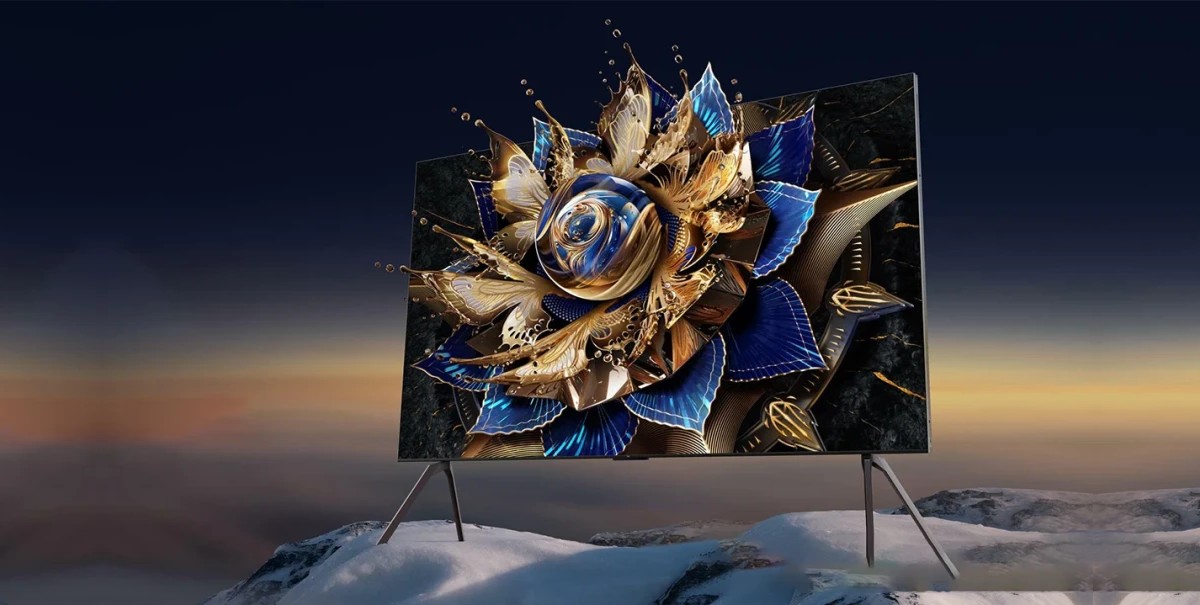
6. TCL X11G Max: 115-inch QD-Mini LED TV unveiled
The TCL X11G Max is presented as a 115-inch QD-Mini LED television with very dense local dimming.
The TCL X11G Max pushes the size argument even further with a 115-inch screen for the Chinese market.
Its QD-Mini LED design combines quantum dots with miniature LED backlighting and more than 20,000 local dimming zones, alongside claimed 5,000-nit brightness, up to a 7,000:1 native contrast ratio, TCL LingYao M2 processing, a TXR Mini LED co-processor, and a 1 ms response time.
The source also notes an Onkyo 6.2.2 speaker system.
Best for: Maximum-screen enthusiasts
- 115-inch screen size
- More than 20,000 local dimming zones
- 5,000-nit brightness claim
- Onkyo 6.2.2 speaker system
Verdict: The X11G Max is a statement-scale QD-Mini LED model for buyers who put screen size and dense local dimming above all else.

7. 5 useful Google TV features you didn’t know about
Google TV brings watchlists, app-wide content discovery, and casual gaming features into the smart TV interface.
Google TV earns its place here as a platform recommendation rather than a hardware pick.
The source highlights a simple interface, control by remote or mobile app, a Watch Later list that helps improve recommendations, catalog-wide content discovery across streaming services, and gaming on the TV without a console.
Bluetooth controller support is also noted for games that benefit from physical controls.
Best for: Platform-first TV buyers
- Remote and mobile app control
- Watch Later improves recommendations
- Searches across supported apps
- Bluetooth controller gaming support
Verdict: Google TV is worth prioritizing if content discovery, watchlists, app-wide recommendations, and casual gaming are central to how you use a television.
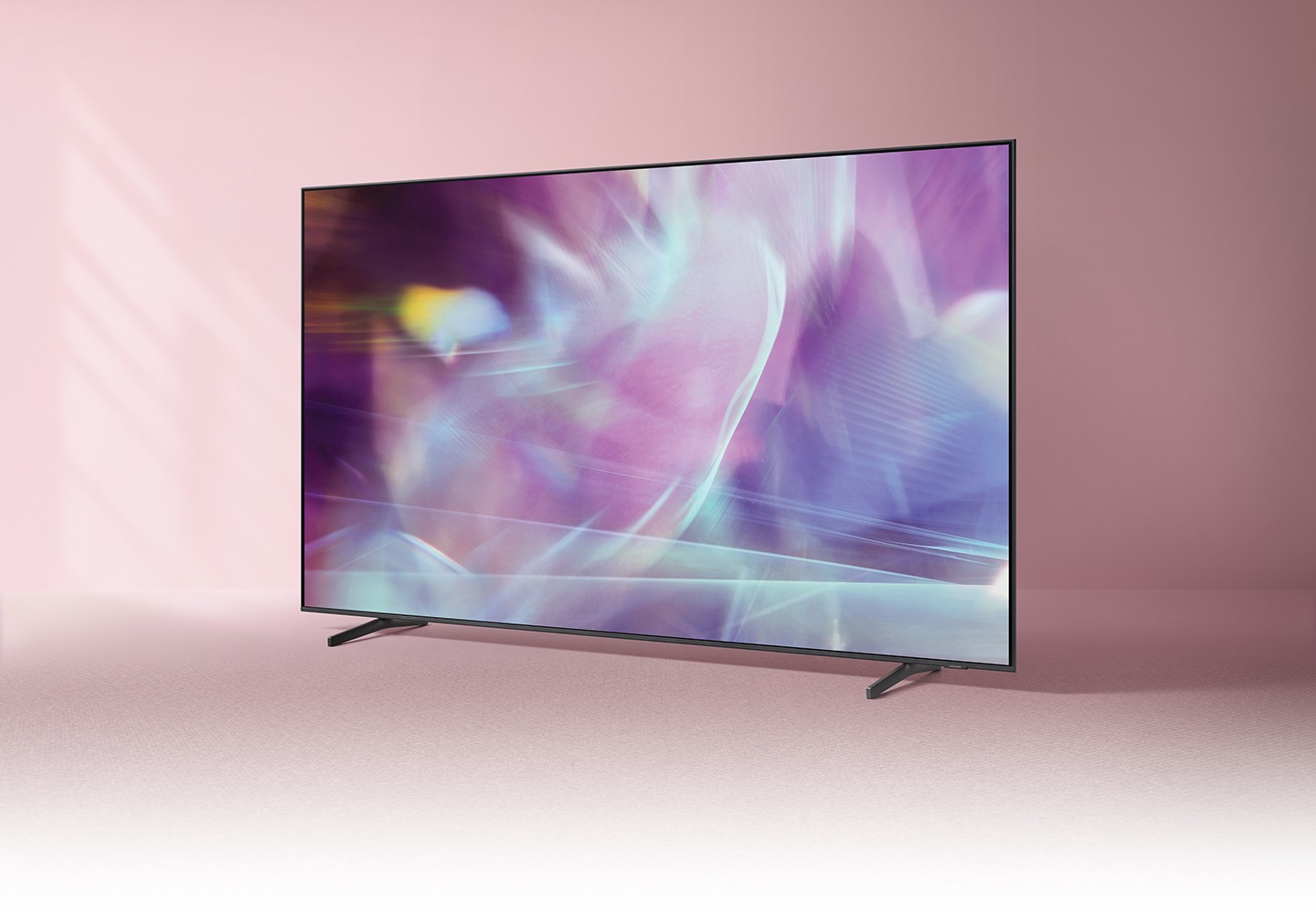
8. Samsung Q67A: Delivers excellent and vivid images
Samsung’s Q67A sits in the entry-level QLED range with vivid images and low input lag, but with clear gaming and dimming limits.
The Samsung Q67A is described as an entry-level QLED series with 4K HDR capability and vivid image quality.
The source notes improvements in color gamut and gradient handling compared with the preceding variant, while also saying the contrast ratio is lower than earlier related models.
It can display deep blacks in a darkened room and has low input lag, but buyers should note the 50/60 Hz refresh-rate limitation, lack of variable refresh rate support, and absence of local dimming.
Best for: Entry-level QLED shoppers
- 4K QLED presentation
- Vivid image emphasis
- Deep blacks in dark rooms
- Low input lag
Verdict: The Q67A is a sensible QLED option for vivid everyday viewing and low-lag play, provided you do not need VRR, local dimming, or a higher refresh-rate panel.
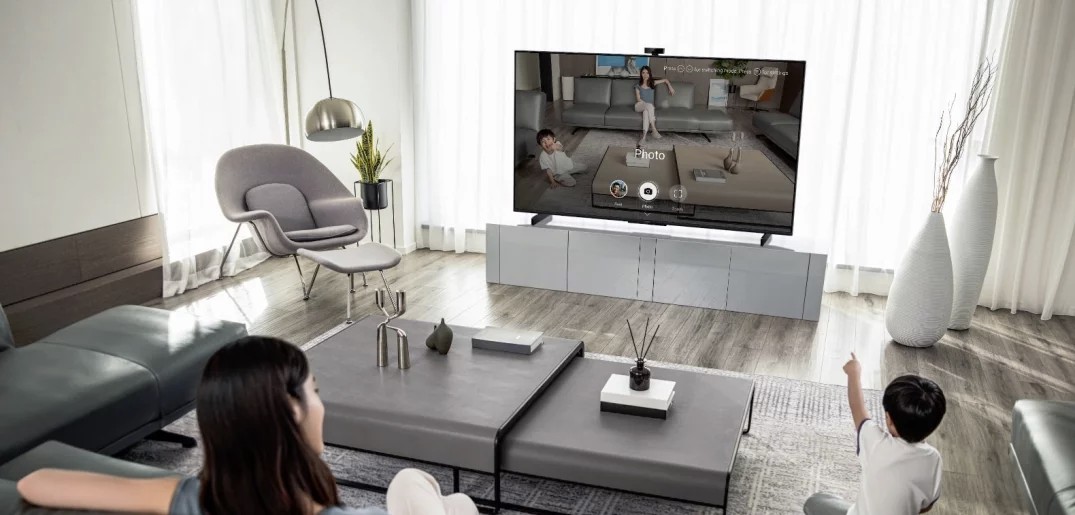
9. Huawei launches Vision S TV in Europe
Huawei Vision S combines a 120 Hz screen with video-calling hardware, voice microphones, and Harmony OS.
Huawei Vision S is positioned as a middle-segment smart TV offered in 55-inch and 65-inch versions.
The source lists a 120 Hz refresh rate, a 13-megapixel camera for video calling, six built-in microphones for voice control, and a 40-watt audio system using Huawei Histen technology with a focus on realism and dialogue clarity.
It runs on Harmony OS and includes HDMI 2.0 connections, Bluetooth, and Wi-Fi.
Best for: Video-calling and voice-control users
- 55-inch and 65-inch options
- 120 Hz refresh rate
- Built-in camera and microphones
- 40-watt Huawei Histen audio
Verdict: Vision S is most interesting for buyers who want a mid-segment TV with built-in communication features and a 120 Hz panel.
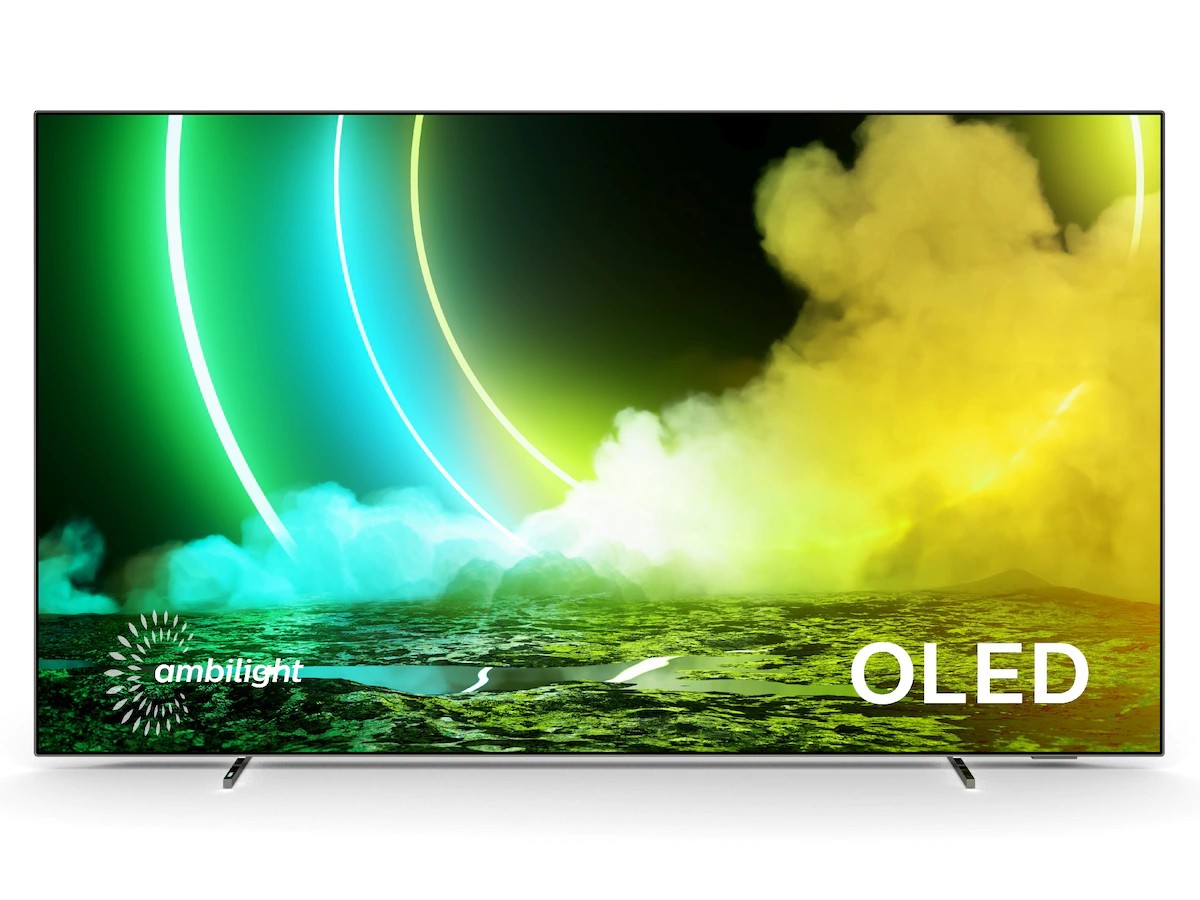
10. Philips OLED 705: Crystal clear images combined with impressive ambilight
Philips OLED 705 pairs OLED picture ambitions with Ambilight and a slim-bezel black chassis.
The Philips OLED 705 is presented as an OLED TV aimed at buyers who want strong image quality and Ambilight atmosphere.
The source highlights a 55-inch version with a black chassis, thin bezels, and a design that should adapt easily to different spaces.
It frames OLED as a strong route to impressive picture quality while also noting that the review considers less favorable aspects, so it should be compared carefully rather than treated as an automatic choice.
Best for: OLED buyers who want Ambilight
- OLED picture-quality focus
- Ambilight feature
- Thin-bezel front design
- Adaptable 55-inch size
Verdict: The OLED 705 is a characterful OLED option for viewers drawn to Philips’ Ambilight experience and slim-front design.
Quick comparison
The entries separate into four practical groups: OLED picture specialists, large-format QD-Mini LED models, smart TV platform stories, and niche or market-context items.
Use the comparison below to decide which ones deserve deeper attention for your own room and viewing habits.
| Product | Best for | Verdict |
|---|---|---|
| Samsung W-OLED market update | OLED market context | Useful for understanding why a Samsung TV using LG W-OLED panels should not be assumed to be available immediately. |
| LG webOS smart TV platform | Smart TV ecosystem shoppers | Best considered when interface, curated content, services, and cross-brand platform reach are important. |
| TinyTV 2 and TinyTV Mini | Novelty collectors and miniature displays | Fun and functional as tiny stored-video players, but not practical substitutes for a home television. |
| Panasonic LZ2000 | Premium OLED cinema and gaming use | A high-end OLED option with color-accuracy emphasis, gaming support, and a substantial Technics audio design. |
| TCL X955 | Large QD-Mini LED viewing | A strong large-screen candidate where size, brightness claims, and many dimming zones are the priorities. |
| TCL X11G Max | Ultra-large statement screens | The most extreme size-focused entry, with a 115-inch panel and more than 20,000 local dimming zones. |
| Google TV features | Content discovery and casual smart TV use | A platform choice for watchlists, app-wide recommendations, mobile control, and TV-based gaming. |
| Samsung Q67A | Entry-level QLED viewing | Good for vivid images and low input lag, with clear limits around refresh rate, VRR, and local dimming. |
| Huawei Vision S | Video calls, voice control, and mid-segment smart TV use | Notable for its 120 Hz refresh rate, built-in camera, microphones, and Harmony OS platform. |
| Philips OLED 705 | OLED viewing with Ambilight | Appealing if you want OLED picture quality and Philips’ Ambilight presentation in a slim-bezel design. |
Frequently asked questions
Should I choose OLED or QD-Mini LED?
Choose OLED if the priority is the kind of picture-focused viewing represented by the Panasonic LZ2000 and Philips OLED 705, especially when color accuracy, cinematic presentation, or Ambilight matter.
Choose QD-Mini LED if you want the very large screen sizes, high brightness claims, and extensive local dimming highlighted by the TCL X955 and TCL X11G Max.
What matters most for gaming on a TV?
Look for low input lag, refresh-rate capability, and gaming features such as VRR and ALLM when available.
The Panasonic LZ2000 is described with automatic low-latency mode, VRR, ALLM, and HDMI 2.1 support, while the Samsung Q67A has low input lag but is limited to 50/60 Hz, lacks VRR, and has no local dimming.
How important is the smart TV platform?
It can be very important if streaming discovery, recommendations, watchlists, and device control shape your daily use.
LG’s webOS is being developed as a broader media and entertainment ecosystem, while Google TV is highlighted for Watch Later, cross-app content discovery, mobile app control, and casual games.
Are built-in speakers and cameras worth considering?
They are worth considering when you want a cleaner setup or use the TV for communication.
The Panasonic LZ2000 includes a substantial Technics audio system, the TCL X11G Max lists an Onkyo 6.2.2 speaker system, and Huawei Vision S adds a camera, microphones, and a 40-watt audio system for video calls, voice control, and dialogue-focused sound.
How to Choose the Right TV From This Shortlist
Start with the role the TV will play.
For a dedicated movie screen, the OLED-focused entries are the most natural places to begin: Panasonic LZ2000 for a premium OLED approach with gaming and integrated audio in the mix, and Philips OLED 705 if Ambilight is part of the appeal.
If screen size and brightness are more important than OLED thinness, the TCL X955 and TCL X11G Max shift the conversation toward very large QD-Mini LED panels with extensive local dimming. Next, weigh gaming needs honestly. A low-lag TV can be enough for casual play, but features such as VRR, ALLM, HDMI 2.1 support, and higher refresh-rate capability matter if you use modern gaming hardware or care about motion flexibility. The source material makes a clear distinction between models with advanced gaming support, such as the Panasonic LZ2000, and models with useful but more limited gaming credentials, such as the Samsung Q67A. Do not ignore software. A technically capable panel can feel frustrating if the interface, apps, and recommendations do not suit the household. LG webOS and Google TV appear here because the platform layer has become part of the buying decision, not an afterthought. Huawei Vision S also shows how smart TV features can extend into video calling and voice control. Finally, treat novelty and market-news entries appropriately. TinyTV 2 and TinyTV Mini are delightful miniature screens for fun use cases, not main TVs. The Samsung W-OLED update is valuable because it helps set expectations around panel technology and availability. The best choice is the one whose strengths match your room, viewing distance, content habits, gaming needs, and tolerance for extra devices such as soundbars, streamers, or cameras.