



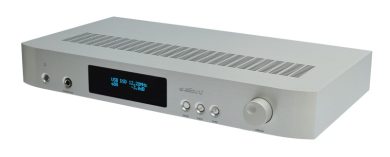
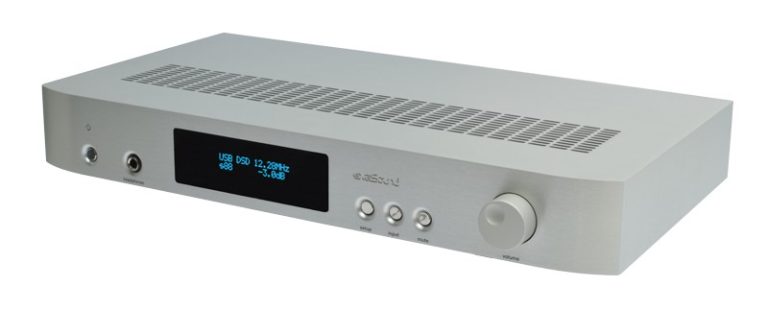
The exaSound S88 Streaming DAC is built around a clear idea: combine high-resolution digital conversion, network streaming, multichannel playback, and system-control features in one full-size component. Rather than presenting itself as a simple USB DAC or a streamer with a basic converter section, the S88 is designed as a more comprehensive digital hub for listeners whose systems may involve stereo, headphones, or as many as eight channels of playback. Its appeal lies in that breadth. The documented feature set covers Roon-Ready operation, Tidal Connect support, proprietary asynchronous USB streaming, native DSD playback, DXD and high-rate PCM support, configurable digital filters, balanced and single-ended I/V stages, volume control, headphone amplification, updates, diagnostics, and upgradable output stages. For a prospective owner, those details matter because they point to a component intended not only for high-resolution playback today, but also for system flexibility over time.
Eight-channel architecture with stereo flexibility
One of the S88’s most distinctive traits is its eight-channel architecture. Many high-end DACs focus exclusively on two-channel playback, while multichannel products often live in the home-theater world with a different set of priorities. The S88 occupies a more specialized position: it is an eight-channel streaming DAC intended for demanding digital audio systems, yet it also supports stereo use in a meaningful way.
For listeners working with multichannel DSD, active loudspeaker configurations, computer-audio playback, or other setups where more than two output channels are required, the eight-channel design is a major part of the product’s identity. The S88 is specified to play native DSD files up to eight-channel DSD256, along with DXD at 352.8kHz and PCM up to 384kHz. In stereo mode, it also supports DSD files and DSD512 streams. That distinction is useful: the product is not limited to one narrow playback format, and its capabilities shift depending on whether the system is being used in multichannel or stereo operation.
The practical benefit is adaptability. A user may begin with a two-channel system and still value the broader architecture for future expansion, or they may already have a multichannel music library that demands a DAC designed for that purpose. The S88’s format support is especially relevant for owners who have invested in high-resolution libraries and want a playback path that accommodates DSD, DXD, and PCM without reducing the product to a single-use converter.

A streaming DAC rather than a DAC with streaming added
The S88 is described as a Roon-Ready streamer, which positions it as a network-aware component for modern library management and playback. Roon-Ready status is important for users who have built their listening around Roon’s interface, metadata handling, and multi-room ecosystem. Instead of relying only on a computer connection, the S88 can operate as a streaming endpoint in a Roon-based system.
The addition of Tidal Connect support broadens that role. With Tidal Connect, Tidal apps on iOS, Android, macOS, and Windows can stream directly to the S88 Mark II. For many users, this is a more straightforward way to listen: browsing and control remain inside the familiar Tidal app, while playback is directed to the audio component. That can be especially useful in households where not every listener wants to use a specialist playback interface.
This combination of Roon-Ready operation and Tidal Connect gives the S88 two widely used streaming paths. One is oriented toward structured libraries and advanced music management; the other is oriented toward direct app-based streaming. The result is a product that can suit different listening habits without forcing every use case through the same control method.

Digital signal handling and low-jitter design priorities
The S88 includes proprietary asynchronous USB streaming, ASIO and Core Audio drivers, and an FPGA core intended to achieve a 32-bit, low-jitter, bit-perfect signal path. These are not incidental details. In a DAC aimed at high-resolution playback, digital input handling is a core part of the design because the incoming signal must be transferred, processed, and converted with precision.
Asynchronous USB streaming allows the DAC side of the system to take a more controlled role in timing rather than simply following the clocking behavior of a connected computer. ASIO support is relevant for Windows-based playback environments where low-level audio access and bit-perfect delivery are often desired. Core Audio support addresses macOS integration. The FPGA core adds another layer of dedicated signal-management hardware, supporting the product’s stated goal of a low-jitter, bit-perfect path.
For prospective owners, the value is not merely in seeing high numbers on a specification list. It is in knowing that the S88 is designed to function with serious computer-audio sources and high-resolution playback software. Users who store music locally, stream from a server, or use software capable of native DSD and high-rate PCM playback will want the DAC’s input architecture to be treated as a central design concern, not an afterthought.

Output-stage design, isolation, and volume control
The S88 incorporates self-contained balanced and single-ended I/V stages. In a DAC, the current-to-voltage conversion and analog output stages are critical parts of the signal chain because they sit between the digital conversion process and the downstream amplifier or preamplifier. The inclusion of both balanced and single-ended stages gives system builders more connection options depending on the rest of their equipment.
Balanced outputs can be valuable in systems with compatible preamplifiers, amplifiers, or active speakers, particularly where longer cable runs or noise rejection are considerations. Single-ended outputs remain widely useful because many integrated amplifiers, preamps, headphone amplifiers, and legacy components use RCA connections. By supporting both approaches, the S88 is better positioned to fit into a range of existing systems.
The S88 also uses proprietary exaSound three-way isolation. The source material does not detail the exact implementation, so it is best understood here as a documented design feature aimed at separating sensitive parts of the signal path. In digital audio components, isolation strategies may matter because streaming, USB, processing, and analog output circuits must coexist inside one chassis. A carefully considered isolation scheme can be an important part of making an all-in-one digital component viable.
Maximum resolution volume control is another important feature. It suggests that the S88 can play a more central control role in a system rather than serving only as a fixed-output source. For users connecting directly to amplifiers or active speakers, integrated volume control can reduce system complexity. It also makes the S88 more flexible in desktop, studio-adjacent, and multichannel environments where traditional stereo preamplifiers may not provide the required channel handling.

Headphone listening and everyday usability
The S88 includes a high-performance headphone amplifier, adding another use case beyond loudspeaker playback. That matters because a digital front end of this type may be used in systems where headphone listening is not secondary. A built-in headphone amplifier can simplify the signal chain for private listening and reduce the need for an additional box, especially in systems where space, cabling, or input switching would otherwise become complicated.
Usability also extends to software and support functions. The manufacturer has promised ease of control, remote diagnostic functions, online updates, upgradable output stages, and other support. These features are especially relevant for a component whose appeal depends partly on streaming services, computer interfaces, and evolving playback methods. Online updates can help keep a networked product current, while remote diagnostics may simplify troubleshooting if configuration or compatibility questions arise.
Upgradable output stages are also notable because they suggest a hardware path beyond ordinary firmware maintenance. The source material does not specify upgrade options, so it would be premature to assume what changes are possible. Still, the presence of an upgrade concept is meaningful for buyers who prefer components that are not completely static once purchased.
Configurable filters and input compatibility
The S88 includes audio optimization settings that allow manual selection of PCM reconstruction filters and roll-off filters. For many listeners, these settings are attractive because they provide controlled adjustment without altering the fundamental role of the DAC. Reconstruction and roll-off filters are part of digital-to-analog conversion behavior, and giving the user access to them acknowledges that different systems, recordings, and preferences may benefit from different settings.
The product also includes settings for SPDIF and optical TOSLINK inputs designed to ensure compatibility with consumer devices that exhibit high jitter while maintaining audio purity. This is an important practical feature. Not every source component feeding a DAC will be an audiophile server or carefully configured computer. Televisions, disc players, streamers, and other consumer devices may use SPDIF or optical outputs, and their clocking behavior can vary.
By addressing high-jitter consumer sources through input settings, the S88 becomes easier to integrate into real systems. It is not limited to idealized conditions or a single preferred input. That flexibility supports its role as a digital hub, particularly in systems where multiple sources must coexist.
Who the exaSound S88 is best suited for
The S88 is most suitable for listeners who want a serious digital center for a system that may extend beyond conventional two-channel playback. Its eight-channel capability makes it especially relevant for multichannel music enthusiasts, users with DSD libraries, and system builders exploring active or multi-output configurations. Its stereo DSD512 support also keeps it relevant for two-channel listeners who prioritize high-resolution file playback.
It is also a strong conceptual fit for users who want both network streaming and computer-audio support. Roon users, Tidal listeners, and people who rely on USB playback from Windows or macOS systems all have documented pathways into the product. The inclusion of ASIO, Core Audio, Tidal Connect, and Roon-Ready operation means the S88 is not tied to a single platform or one narrow workflow.
The S88 may be less appropriate for buyers who need only a simple two-input stereo DAC or who have no interest in high-resolution formats, multichannel playback, streaming integration, or configuration options. Its strengths are most meaningful when the owner can use its breadth: multiple formats, multiple inputs, multiple channels, network control, and advanced digital handling. For a minimalist analog-oriented system, those capabilities may be more than necessary. For a digital-first system, they are central to the product’s purpose.
Conclusion
The exaSound S88 Streaming DAC stands out through documented versatility rather than a single headline feature. It combines an eight-channel 32-bit DAC platform, Roon-Ready streaming, Tidal Connect support, proprietary asynchronous USB, ASIO and Core Audio drivers, FPGA-based signal handling, extensive DSD, DXD, and PCM support, configurable filters, balanced and single-ended output-stage design, volume control, headphone amplification, and support-oriented features such as online updates and remote diagnostics. Its strongest appeal is for listeners building a high-resolution digital system that may involve stereo today, multichannel tomorrow, or both in parallel. For owners who value format flexibility, network playback, and a DAC architecture designed to serve as the center of a modern digital system, the S88 presents a carefully specified and unusually adaptable option.


Join the discussion
Share your thoughts, listening impressions or product experience.