

The headphone category now spans very different priorities: complex wired in-ear monitors built around multi-driver crossovers, wireless planar models with dedicated DAC stages, true wireless earbuds focused on calls and noise control, and full-size designs that put driver engineering first.
The most useful recommendation is not simply the most elaborate product, but the one whose design choices match how and where you listen.
This guide focuses on the supplied models as distinct propositions rather than forcing them into a single hierarchy of sound quality. Some are clearly aimed at wired in-ear enthusiasts who value driver architecture, cable choice, and fit. Others make more sense for wireless convenience, active noise cancelling, codec support, or full-size home listening. Where the source material gives precise details, those details are included. Where it does not, the recommendation stays deliberately restrained. The result is an evergreen shortlist that highlights why each headphone is worth attention without turning specifications into unsupported promises.
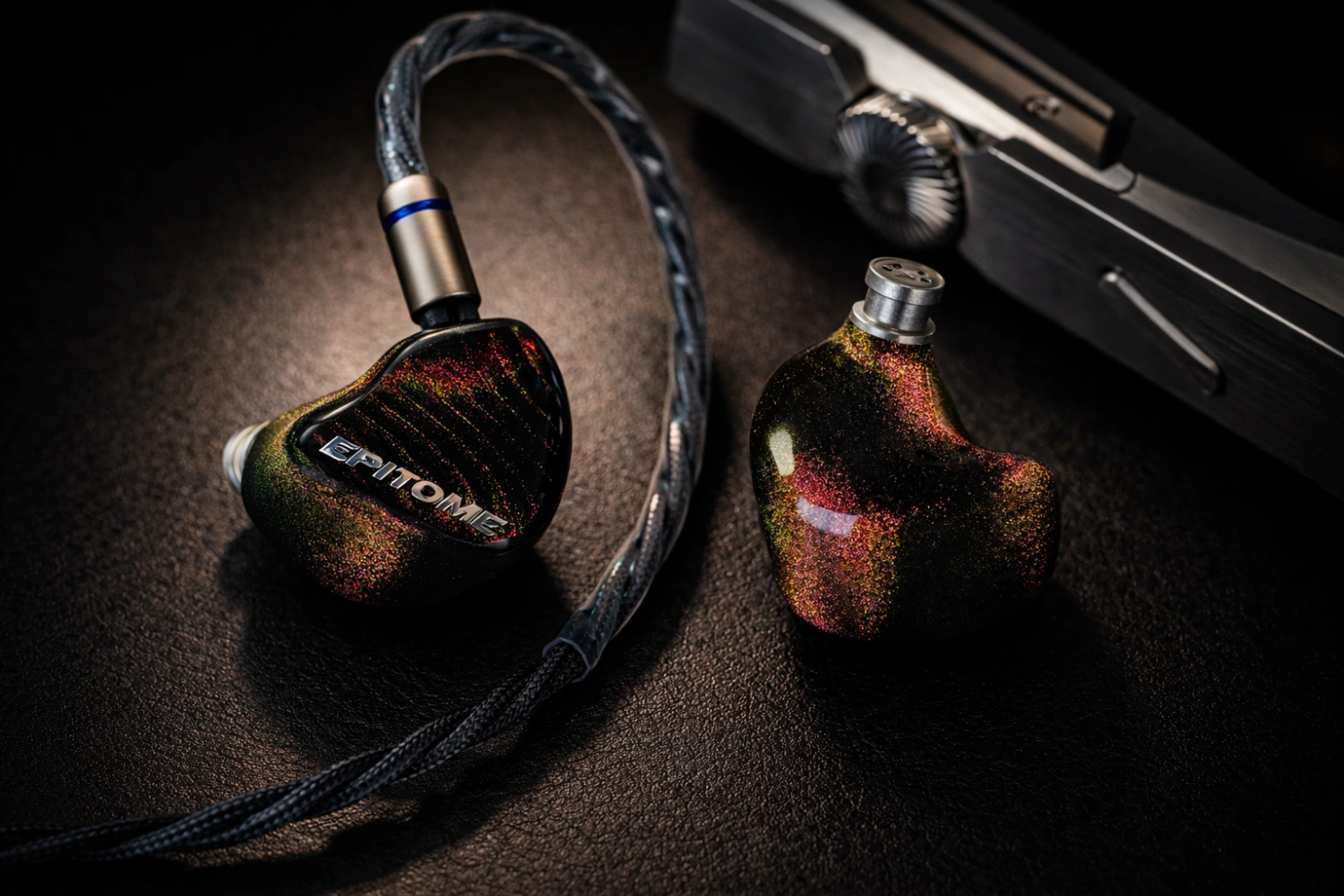
1. iBasso Epitome: High-End In-Ear Monitor with 20 Drivers and Litz Cable
The iBasso Epitome uses 3D-printed shells with layered faceplates and a 20-driver internal layout.
The iBasso Epitome is the most technically ambitious wired in-ear monitor in this selection, built around 20 drivers per earpiece and a five-way crossover.
Its hybrid arrangement combines eight electrostatic drivers and twelve balanced armatures, with specific driver groups assigned to ultra-high frequencies, highs, mids, upper mids, and low end.
That makes it a serious choice for listeners interested in separation and control through driver specialization rather than a simple single-driver approach. The physical design is also carefully considered. The 3D-printed housings use a layered faceplate with a subtle iridescent effect, while each shell weighs 6.2 grams despite the dense internal hardware. A standard 0.78 mm 2-pin connector adds practical cable flexibility for a high-end IEM.
Best for: Wired IEM enthusiasts who want a complex multi-driver design
- 20-driver-per-ear hybrid configuration
- Five-way crossover with dedicated frequency roles
- Relatively lightweight 6.2-gram earpieces
- Standard 0.78 mm 2-pin connector
Verdict: The iBasso Epitome stands out for listeners drawn to a highly structured, driver-rich in-ear monitor with practical cable compatibility.

2. Shanling AE10: In-ear headphones with 10 armature drivers
The Shanling AE10 combines resin molding, carbon outer panels, and a ten-driver balanced-armature configuration.
The Shanling AE10 takes a pure balanced-armature route, using ten BA drivers per side from SONION, Knowles, and proprietary Shanling development.
A six-band crossover with fourth-order LRC filters manages the driver array, giving the AE10 a clearly engineered identity among wired in-ear monitors.
Its construction balances visual flair with comfort-focused details. Resin vacuum molding is paired with carbon outer panels, while the starry-night-style finish gives the earpieces a distinctive look. Despite the ten-driver layout, each earphone weighs 5.3 grams and is described as ergonomically designed for extended listening. The included accessory set is also substantial, with a C5 carry case, protective cover, ear tips, and an 18-core high-purity monocrystalline copper cable using standard 0.78 mm connectors.
Best for: Listeners who want a premium all-BA wired IEM with strong accessory support
- Ten balanced armature drivers per side
- Six-band crossover with fourth-order LRC filters
- Light 5.3-gram earpieces
- Extensive accessory package
Verdict: The Shanling AE10 is a refined all-armature option for buyers who value driver density, low weight, and a well-equipped package.

3. HiFiMAN Ananda-BT R2R: Upgraded planar magnetic wireless headphones
The HiFiMAN Ananda-BT R2R pairs planar magnetic drivers with Bluetooth connectivity and an integrated R2R DAC stage.
The HiFiMAN Ananda-BT R2R is a wireless planar magnetic headphone with an unusually hi-fi-oriented digital stage.
It updates the original Ananda-BT concept with HiFiMAN’s Hymalaya R2R DAC, a thinner nanometer driver membrane, and an invisible magnetic grille intended to let sound waves pass without interference, diffraction, or turbulence.
Wireless support is also clearly specified. Bluetooth 5.1 is joined by aptX, aptX HD, and LDAC compatibility, positioning the Ananda-BT R2R for listeners who want planar magnetic headphones without being tied to a cable. The R2R ladder resistor network, integrated with an FPGA chip, is described as minimizing electrical interference while supporting a warm, detailed tonal presentation.
Best for: Wireless listeners who want planar magnetic architecture and advanced codec support
- Planar magnetic wireless design
- Hymalaya R2R DAC stage
- Bluetooth 5.1 with aptX, aptX HD, and LDAC
- Invisible magnetic grille design
Verdict: The HiFiMAN Ananda-BT R2R is the wireless choice here for those prioritizing planar design and a dedicated R2R conversion approach.

4. Momentum True Wireless 4: Exceptional flagship earbuds
The Momentum True Wireless 4 is presented as Sennheiser’s flagship true wireless earbud with updated Bluetooth support.
The Sennheiser Momentum True Wireless 4 represents Sennheiser’s flagship true wireless line in this selection.
The supplied material frames it as an in-depth introduction rather than a long-term comparative test, but it does identify a notable technical update: Bluetooth 5.4 support, including LC3 codec support and Auracast.
As a true wireless model, its appeal is different from the wired IEMs and full-size headphones here. The packaging is described as compact and meticulous, while the product sits in a category where everyday usability, wireless features, and small-form convenience matter as much as driver count or cable construction.
Best for: Listeners who want compact flagship true wireless earbuds with newer Bluetooth features
- Flagship true wireless positioning
- Bluetooth 5.4 support
- LC3 codec support
- Auracast support
Verdict: The Momentum True Wireless 4 is the practical Sennheiser option for buyers focused on modern true wireless functionality rather than wired specialization.

5. Shozy P10: 1DD+1PLR in-ear headphones launched
The Shozy P10 uses stabilized wood panels and a compact shell built around a planar-plus-dynamic driver arrangement.
The Shozy P10 is a wired in-ear monitor built around a hybrid Planar plus dynamic-driver concept.
The source describes the compound driver as combining planar speed and dynamic-driver strengths, with stated goals of fast transient response, low distortion, and a wide sound range.
Its published specifications include 105 dB sensitivity, a 20 Hz to 20,000 Hz frequency range, and a 0.78 mm 2-pin connector. Design is a major part of the P10’s identity. Stabilized wood panels give each earpiece a jewel-like appearance, while the compact pebble-like form factor and triple ventilation are described as supporting comfort. It is also one of the few items here with a source-stated price, making it easier to place in the wired IEM landscape.
Best for: Wired IEM buyers interested in a compact hybrid planar-dynamic design
- Hybrid planar and dynamic driver design
- Stabilized wood faceplates
- Compact pebble-like form factor
- Standard 0.78 mm 2-pin connector
Verdict: The Shozy P10 is a distinctive wired in-ear option that combines hybrid driver engineering with a wood-accented shell design.

6. Sivga Audio SV021: Audiophile headphones
The Sivga Audio SV021 is presented as a budget-friendly full-size headphone from a less mainstream hi-fi brand.
The Sivga Audio SV021 is included as a full-size headphone from a brand presented as less widely known but familiar to the reviewer.
The source positions the SV021 as the brand’s most budget-friendly full-size headphone and frames the article around whether it can compete with models from more familiar manufacturers.
The available source excerpt gives more context than specification. It notes the black carbon-fiber-style box and the absence of typical promotional stickers, but does not provide driver type, impedance, sensitivity, or detailed sonic findings. For that reason, the SV021 is best treated here as a value-oriented full-size alternative rather than a spec-led recommendation.
Best for: Buyers considering a less mainstream full-size headphone at the budget end of a brand lineup
- Full-size headphone format
- Budget-friendly within Sivga’s lineup
- Presented as an alternative to better-known brands
- Packaging avoids overt hi-res-style sticker clutter
Verdict: The Sivga Audio SV021 is the cautious value pick here, notable mainly for its full-size format and budget-oriented positioning in the supplied material.
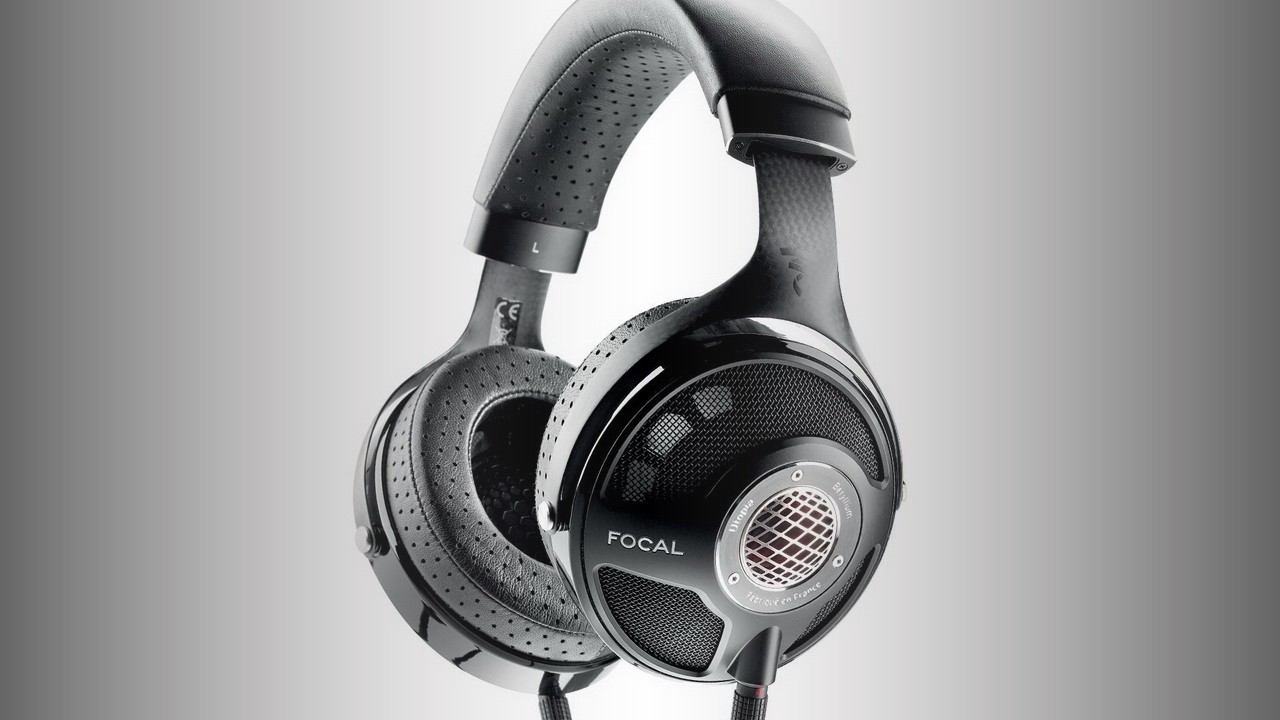
7. Focal Utopia: Headphone technology reinvented
The Focal Utopia is presented through its open dynamic-driver technology and precision-focused construction approach.
The Focal Utopia entry is centered on driver technology rather than lifestyle features.
The source describes Focal’s work on an improved dynamic headphone driver and emphasizes the company’s effort to create what it calls a completely open headphone speaker.
The key idea is not a change in the basic dynamic-driver principle, but progress through materials, production methods, light weight, and geometric accuracy. That makes the Utopia the most engineering-focused full-size headphone in this guide. It is presented as the result of extensive experimentation in driver construction, aimed at addressing limitations of conventional headphone speakers. The source does not provide everyday usability details, so the recommendation rests on its driver-development story.
Best for: Listeners interested in full-size headphones built around advanced dynamic-driver engineering
- Improved dynamic driver approach
- Completely open headphone speaker concept
- Emphasis on lightweight, accurate parts
- Strong focus on materials and production technology
Verdict: The Focal Utopia is the technology-led full-size choice, defined by Focal’s open dynamic-driver development rather than convenience features.

8. BQEYZ WIND: Hybrid in-ear headphones with bone conduction
The BQEYZ WIND combines aluminum housings with a hybrid acoustic system using bone conduction and a dynamic driver.
The BQEYZ WIND brings a different kind of hybrid design to the in-ear category by combining a 12 mm bone-conduction emitter with a 10 mm dynamic driver using a liquid crystal polymer diaphragm and dual neodymium magnet system.
The source highlights the bone-conduction element as enabling physically tangible low-frequency pressure transmission.
Its hardware package is clearly defined. The aluminum alloy housings are available in bright blue or silver, and the earphones come with four types of ear pads plus a detachable silver-plated monocrystalline copper cable. Connector choices include 2.5 mm, 3.5 mm, and 4.4 mm plug options, while stated specifications include 113 dB sensitivity and 38-ohm nominal resistance.
Best for: IEM listeners curious about bone-conduction-assisted hybrid designs
- 12 mm bone-conduction emitter
- 10 mm liquid crystal polymer dynamic driver
- Aluminum alloy housings
- 2.5 mm, 3.5 mm, and 4.4 mm cable options
Verdict: The BQEYZ WIND is the most distinctive wired IEM here for those specifically interested in bone conduction alongside a conventional dynamic driver.

9. Technics EAH-AZ100: Wireless in-ear headphones according to Technics
The Technics EAH-AZ100 true wireless earbuds use magnetic fluid drivers, multiple microphones, and adaptive noise cancelling.
The Technics EAH-AZ100 is a true wireless in-ear model built around three major supplied features: a newly developed magnetic fluid driver, Voice Focus AI for calls, and Adaptive Noise Cancelling.
The driver is described as aiming for low vibration, low distortion, and high-resolution audio, while the communications system uses an AI noise-reduction chip and three microphones in each earbud.
For daily use, the EAH-AZ100 looks especially relevant to people who split listening time between music, calls, and noisy environments. Voice Focus AI is designed to reduce disruptive background sounds and improve the caller’s voice, while Adaptive Noise Cancelling assesses the surroundings, noise level, and ear shape to adjust cancellation. The source specifically mentions reducing low- and mid-range sounds, including human voices.
Best for: True wireless users who prioritize calls, noise control, and everyday adaptability
- Magnetic fluid driver technology
- Voice Focus AI for call clarity
- Three microphones in each earbud
- Adaptive Noise Cancelling
Verdict: The Technics EAH-AZ100 is the strongest fit here for users who need true wireless earbuds with call-focused processing and adaptive noise reduction.

10. Nothing Headphone (a): 135-Hour Battery, LDAC Hi-Res Audio and Hybrid ANC for a Surprisingly Audiophile-Grade Wireless Experience
The Nothing Headphone (a) combines over-ear wireless design, colorful styling, LDAC support, and hybrid active noise cancelling.
The Nothing Headphone (a) is a wireless over-ear headphone aimed at a younger, style-conscious audience, with colorful details and a bass-focused sound signature according to the supplied material.
It weighs 310 grams and uses 40 mm titanium-coated drivers, with manufacturer-stated support across a claimed 20 Hz to 40,000 Hz frequency range.
Its headline practical advantage is battery life. The source states approximately 130 hours with ANC off, alongside Bluetooth 5.4, LDAC support for streaming up to 32-bit/96 kHz, and active noise cancelling with standard, transparency, and hybrid adaptive modes. The hybrid ANC setting is described as adapting in real time to the environment and headphone fit, using four microphones and offering up to 40 dB of depth reduction according to the report.
Best for: Wireless over-ear buyers who want long battery life, LDAC support, and ANC
- Approximately 130 hours with ANC off
- Bluetooth 5.4 with LDAC support
- Hybrid adaptive ANC with transparency mode
- 40 mm titanium-coated drivers
Verdict: The Nothing Headphone (a) is the practical wireless over-ear pick for long listening time, modern codec support, and adaptable noise cancelling.
Quick comparison
The models below are easier to compare by use case than by rank.
The wired in-ear monitors differ mainly in driver architecture and cable approach, while the wireless models separate themselves through Bluetooth features, noise cancelling, call processing, or battery life.
The full-size headphones are split between value positioning, driver technology, and wireless convenience.
| Product | Best for | Verdict |
|---|---|---|
| iBasso Epitome | Complex wired IEM architecture | A 20-driver-per-ear hybrid monitor with a five-way crossover and lightweight printed shells. |
| Shanling AE10 | All-BA wired IEM design | A ten-balanced-armature earphone with a six-band crossover, light shells, and a generous accessory package. |
| HiFiMAN Ananda-BT R2R | Wireless planar listening | A planar magnetic Bluetooth headphone with an R2R DAC stage and support for aptX, aptX HD, and LDAC. |
| Sennheiser Momentum True Wireless 4 | Compact flagship true wireless use | A Sennheiser true wireless earbud focused on updated Bluetooth 5.4 features, including LC3 and Auracast support. |
| Shozy P10 | Hybrid planar-dynamic IEMs | A compact wired in-ear model pairing a planar element with a dynamic driver and stabilized wood styling. |
| Sivga Audio SV021 | Budget-oriented full-size headphones | A full-size model presented as Sivga’s most budget-friendly headphone, with limited specification detail in the supplied source. |
| Focal Utopia | Dynamic-driver engineering | A full-size headphone entry defined by Focal’s work on a completely open dynamic headphone speaker concept. |
| BQEYZ WIND | Bone-conduction hybrid IEMs | A wired in-ear headphone combining a 12 mm bone-conduction emitter with a 10 mm dynamic driver. |
| Technics EAH-AZ100 | Calls and adaptive noise control | A true wireless earbud with magnetic fluid drivers, Voice Focus AI, three microphones per bud, and adaptive noise cancelling. |
| Nothing Headphone (a) | Long-battery wireless over-ears | A wireless over-ear headphone with very long stated battery life, LDAC support, and hybrid adaptive ANC. |
Frequently asked questions
Should I choose wired in-ear monitors or wireless headphones?
Choose wired in-ear monitors if you value cable replaceability, specialized driver layouts, and a compact listening setup that does not depend on batteries.
The iBasso Epitome, Shanling AE10, Shozy P10, and BQEYZ WIND all emphasize wired acoustic design.
Wireless models such as the HiFiMAN Ananda-BT R2R, Momentum True Wireless 4, Technics EAH-AZ100, and Nothing Headphone (a) make more sense when Bluetooth convenience, ANC, calls, or portability are central.
Does a higher driver count automatically mean better headphones?
No.
A high driver count can allow more specialized frequency handling, as seen in the iBasso Epitome and Shanling AE10, but implementation matters.
Crossovers, shell design, fit, and tuning are all part of the result. A simpler hybrid design such as the Shozy P10 or BQEYZ WIND may be more appealing if its driver concept better matches your priorities.
What should I look for in true wireless earbuds?
For true wireless earbuds, check Bluetooth features, call technology, noise cancelling, and fit before focusing only on driver claims.
The Momentum True Wireless 4 highlights Bluetooth 5.4, LC3, and Auracast support, while the Technics EAH-AZ100 emphasizes Voice Focus AI, three microphones per earbud, and Adaptive Noise Cancelling.
Why do connector and cable details matter for wired IEMs?
A standard detachable connector can make long-term ownership more flexible because cables can be changed or replaced.
The iBasso Epitome, Shanling AE10, and Shozy P10 all use standard 0.78 mm 2-pin connections in the supplied material.
The BQEYZ WIND is also supplied with detachable cable options using different plug terminations.
How to Choose the Right Headphones from This Shortlist
Start with format.
If you want the most compact wired route and already have a suitable source, the in-ear monitors are the natural first stop.
The iBasso Epitome is the most elaborate driver design, the Shanling AE10 is the all-balanced-armature alternative with a strong accessory set, the Shozy P10 offers a planar-plus-dynamic hybrid approach, and the BQEYZ WIND is the specialist choice for anyone interested in bone conduction added to an IEM. If wireless use is essential, separate convenience needs from acoustic curiosity. The HiFiMAN Ananda-BT R2R is the wireless planar model with an integrated R2R DAC stage and high-quality codec support. The Sennheiser Momentum True Wireless 4 is the compact true wireless option centered on updated Bluetooth features. The Technics EAH-AZ100 is the better fit when calls and adaptive noise cancelling are central. The Nothing Headphone (a) is the over-ear wireless option for long stated battery life, LDAC support, and hybrid ANC. For full-size listening without relying on Bluetooth, the choice depends on how much the source material matters to you. The Focal Utopia entry is grounded in advanced dynamic-driver engineering and an open speaker concept, while the Sivga Audio SV021 is presented more cautiously as a budget-friendly full-size model from a less mainstream brand. Because the supplied detail on the Sivga is limited, it is better viewed as a value-oriented candidate than a fully specified technical recommendation. Finally, treat specifications as a way to narrow the field, not as a guarantee. Driver count, codec support, ANC depth, and frequency range can all be useful, but fit, intended use, source compatibility, and the type of listening you actually do should decide the purchase. A technically dense wired IEM, a call-focused true wireless earbud, and a long-battery over-ear headphone solve different problems; the best choice is the one aligned with yours.



Join the discussion
Share your thoughts, listening impressions or product experience.