Cambridge Audio ALVA MC: A High-Output Moving Coil Cartridge with Practical System Appeal
The Cambridge Audio ALVA MC brings together moving coil architecture, a 2.0 mV high-output design, 47 kOhm loading, an elliptical stylus, and a non-resonant polymer body for turntable owners seeking MC principles without unusually demanding phono-stage requirements.
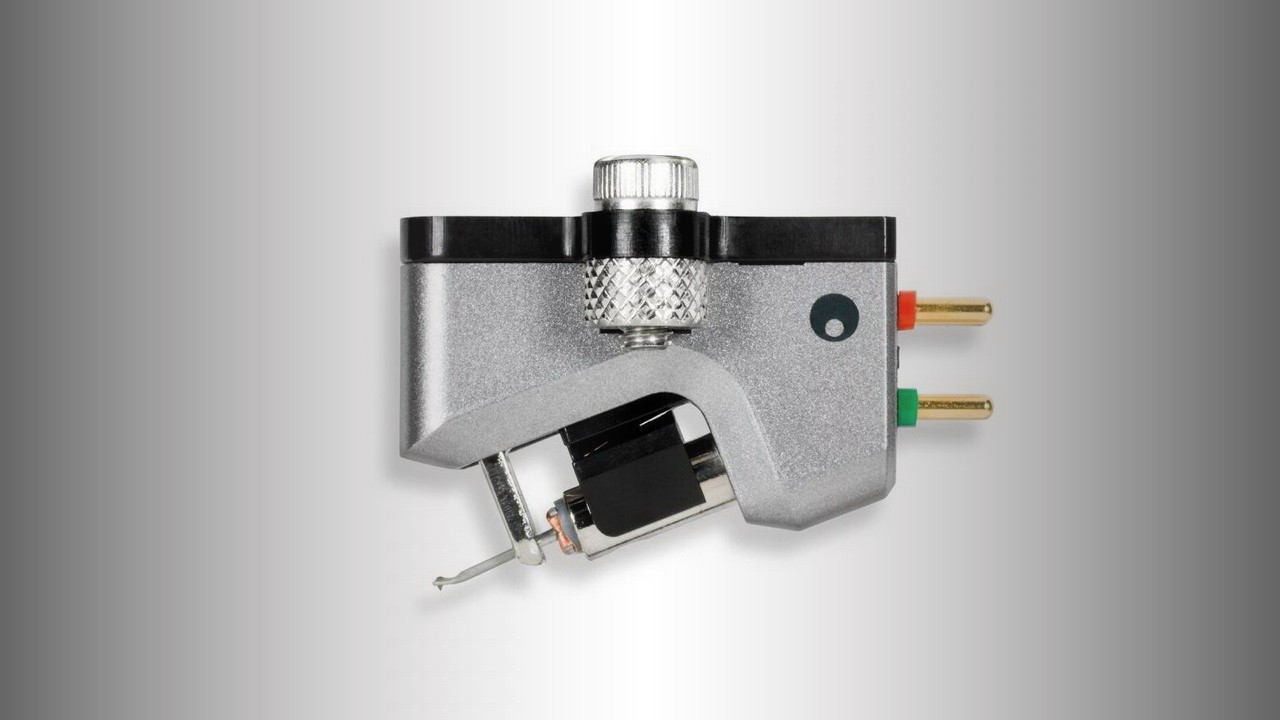
The Cambridge Audio ALVA MC is an interesting cartridge because it sits in a useful middle ground. It is a moving coil design, but it does not ask the owner to treat it like a conventional low-output MC cartridge. With a stated 2.0 mV output at 1 kHz, 5 cm/sec and a recommended 47 kOhm phono input impedance, it is intended to be easier to integrate with phono stages that accommodate high-output cartridges, including the familiar loading standard associated with many moving magnet designs. That makes the ALVA MC less about exotic complication and more about applying moving coil principles in a format that can fit a wider range of serious vinyl systems. Its role as standard equipment on Cambridge Audio’s ALVA TT also gives it a clear design context, but its standard screw mounting means it is not limited to that turntable alone.
A moving coil cartridge with a more approachable output
Moving coil cartridges are often associated with low output levels and the need for dedicated MC gain and loading. The ALVA MC takes a different route. Its documented output voltage of 2.0 mV is high for an MC design and is described as comparable to the level provided by many MM cartridges. For a prospective owner, that matters because cartridge output has a direct impact on phono-stage matching. A very low-output cartridge can demand more gain and more careful noise management; a higher-output design can be more straightforward to accommodate.
The recommended input impedance of 47 kOhm is equally significant. This is the standard value used by many MM phono inputs, and it gives the ALVA MC a familiar electrical target. Owners still need to confirm compatibility with their own phono stage, tonearm, and setup, but the combination of moving coil construction and MM-like loading expectations is one of the cartridge’s most practical documented strengths. It is designed to offer some of the conceptual appeal of an MC cartridge without forcing the entire system into a narrow low-output MC configuration.

Designed for serious turntables, not only for the ALVA TT
Cambridge Audio positions the ALVA MC for installation on high-end turntables, and it is supplied as standard equipment with the company’s ALVA TT. The cartridge’s lunar gray finish is specifically noted for its visual compatibility with that turntable, which is a small but worthwhile design detail: a cartridge is a functional component, but on a modern deck it is also visible, and finish consistency helps the whole player look intentional rather than assembled from unrelated parts.
At the same time, the ALVA MC is not presented as a proprietary accessory. It uses standard screw mounting for installation on most tonearm headshells. That gives it broader relevance for vinyl listeners who may be upgrading an existing turntable rather than buying a complete Cambridge Audio system. Standard mounting does not remove the need for correct alignment, tracking force adjustment, and cartridge setup, but it does mean the physical design follows widely used tonearm conventions. This is important in the cartridge category, where practical fit can be just as important as the generator principle.

Non-resonant body and exposed aluminum cantilever
The cartridge body is described as a non-resonant polymer housing. In a phono cartridge, mechanical behavior is central to performance because the stylus and cantilever are responding to extremely small groove movements. Unwanted vibration or resonance can interfere with how accurately those movements are transferred through the generator system. Cambridge Audio’s use of a non-resonant housing is therefore a relevant design choice, not simply a cosmetic one.
The ALVA MC also uses a lightweight aluminum cantilever mounted openly in the pickup. This gives the cartridge a distinctive appearance, but the design has a functional explanation as well: the open arrangement is stated to help reduce unwanted vibrations and resonances. The trade-off is that the exposed cantilever and stylus assembly require particularly careful handling. That is not unusual for a cartridge, but it is worth emphasizing here because the ALVA MC’s open presentation makes the delicate parts visually prominent. Owners should approach installation, cleaning, and record cueing with appropriate care.

Elliptical diamond stylus for confident record tracking
The stylus is a diamond with a precise elliptical profile. An elliptical stylus is shaped to follow the groove more closely than a basic spherical profile, and Cambridge Audio specifies it here for confident tracking and a wide range of reproducible frequencies across different records. The cartridge’s documented frequency range is 30 Hz to 20 kHz at -1 dB, and its recommended tracking force is 2.0 g.
These figures help define how the cartridge is intended to be used. The 2.0 g tracking force is a clear setup reference for the owner or installer, while the stated frequency range indicates the cartridge’s designed playback bandwidth. As always with vinyl playback, the final result depends on correct alignment, tonearm compatibility, record condition, phono-stage matching, and careful setup. Still, the combination of elliptical diamond stylus, aluminum cantilever, and specified tracking force gives the ALVA MC a well-documented technical foundation rather than leaving its purpose vague.

A small design detail with brand context
One of the more unusual details is the 68-degree cut angle at the lower part of the cartridge body. Cambridge Audio links this to the company’s founding year, 1968, and its more recent 50th anniversary. This is not a performance specification, but it does show that the cartridge was designed with more attention than a generic body shape might suggest. In a category where many products can look purely utilitarian, this kind of detail helps the ALVA MC feel integrated into the company’s broader design language.
The same applies to the lunar gray exterior. A cartridge does not need a distinctive finish to play records, but it can still benefit from thoughtful industrial design, especially when fitted to a visually minimal turntable such as the ALVA TT. The ALVA MC’s appearance is clean and purposeful, while the exposed cantilever and angular body give it enough character to avoid looking anonymous.
Phono-stage matching and system flexibility
The ALVA MC’s high-output moving coil format is its most system-friendly feature. Because its recommended impedance is 47 kOhm and its output is 2.0 mV, it can be considered by users whose phono stages support high-level MM or MC cartridges. This broadens the range of possible setups compared with low-output MC cartridges that typically require more specialized gain and loading arrangements.
That flexibility may be especially useful for turntable owners who want to explore an MC cartridge without rebuilding the rest of the analog front end around it. The owner still needs a suitable tonearm, careful installation, and a compatible phono input, but the electrical requirements are deliberately approachable. In practical terms, the ALVA MC is a cartridge for systems where convenience and cartridge quality are both priorities, rather than one that demands an enthusiast-only phono chain.
Who the Cambridge Audio ALVA MC is most suitable for
The ALVA MC is best suited to vinyl listeners who own a capable turntable and want a moving coil cartridge with simpler matching requirements than many low-output MC models. It will naturally appeal to owners of the Cambridge Audio ALVA TT, where it matches the turntable visually and is part of the original equipment package. It is also relevant for users of other compatible turntables thanks to its standard screw mounting.
It may be less appropriate for anyone looking for a rugged, casual-use cartridge, because the open cantilever arrangement calls for careful handling. It is also not the right choice for someone who wants to avoid cartridge setup altogether unless it is being installed by a dealer or experienced technician. The strongest audience is the listener who values a well-specified cartridge, has or plans to use a suitable phono stage, and wants a design that balances moving coil architecture with practical everyday integration.
Conclusion
The Cambridge Audio ALVA MC stands out through a sensible combination of moving coil design, high 2.0 mV output, 47 kOhm loading, elliptical diamond stylus, aluminum cantilever, and non-resonant polymer housing. Its standard mounting expands its usefulness beyond the ALVA TT, while its lunar gray finish and 68-degree body detail show attention to visual integration as well as function. For prospective owners, its strongest documented quality is not any single specification, but the way its specifications work together: it offers a route into a high-output MC cartridge without the more demanding system requirements often associated with low-output moving coil designs. It is most attractive for careful vinyl users with serious turntables who want MC principles, practical phono-stage matching, and a cartridge that has been designed as a coherent part of a modern analog system.