KAEI TAP-1: A Flexible Headphone Amplifier for Desk and Battery Use
The KAEI TAP-1 is built around an unusually flexible idea: a headphone amplifier that can operate on battery power for movable listening, then connect to an external linear power supply for a more permanent desktop role.

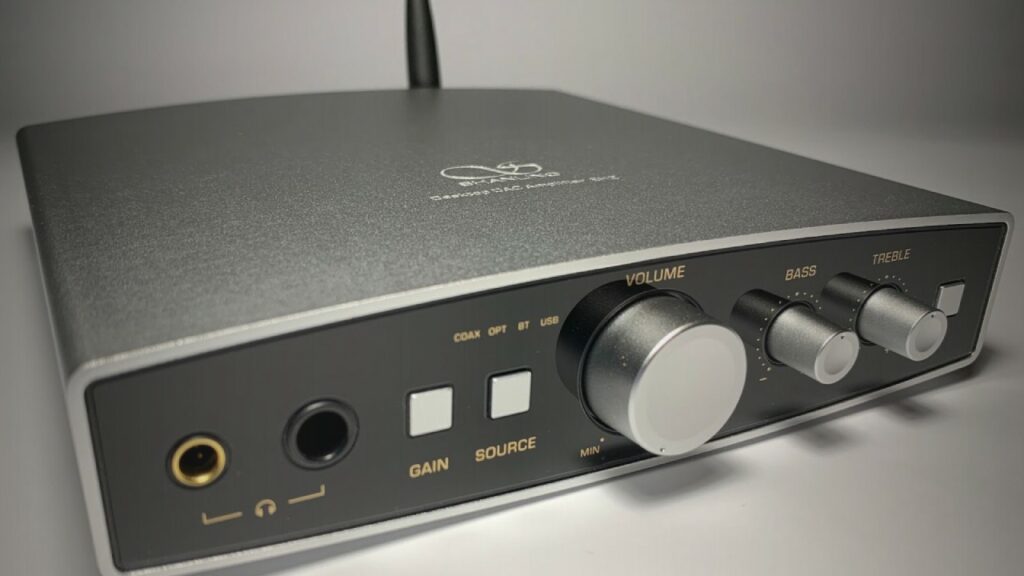
The KAEI TAP-1 is presented as a high-end headphone amplifier aimed at audiophiles who want more than a simple volume booster. Its defining appeal is flexibility: it can work as a battery-powered amplifier for portable or transportable listening, but it is also designed to become a more conventional desktop amplifier when partnered with its independent linear power supply. That dual identity is supported by balanced and single-ended connections, replaceable op-amps, separated internal circuit boards, and a hybrid amplification architecture described as tube preamp, op-amp, and discrete post-stage. Rather than focusing on one use case, the TAP-1 appears intended for listeners who move between desktop, bedside, and mobile-source systems while still wanting a serious headphone-driving platform.
A component-focused design approach
One of the most distinctive aspects of the KAEI TAP-1 is the attention given to its internal parts selection. The amplifier is described as using hi-fi-grade components in key positions, including American RA non-inductive resistors, Vishay resistors, Philips resistors, WIMA capacitors, and additional parts from names such as Omron, Philips, and Siemens. Component lists do not, by themselves, determine how a product performs, but they do reveal something about the intended design level and the priorities behind the circuit.
paragraphs are invalid duplicate? Need fix.
Need valid JSON
Oops

Conclusion
The KAEI TAP-1 is most compelling as a flexible headphone amplifier for listeners who want battery operation, desktop expansion, balanced and single-ended connectivity, and some room for tuning through op-amp changes. Its separated power and amplifier boards, external linear power option, MUSES02 op-amps, and broad headphone impedance support make it a product aimed at enthusiasts building a more adaptable personal listening system rather than a minimal plug-and-play accessory.