Fosi Audio BT20A PRO: Compact Bluetooth Class D Amplifier with Practical Control
The Fosi Audio BT20A PRO is a small stereo Class D amplifier built around the TI TPA3255 chip, combining RCA and Bluetooth 5.0 inputs with speaker outputs, a 3.5mm pre-out, and front-panel bass and treble controls.

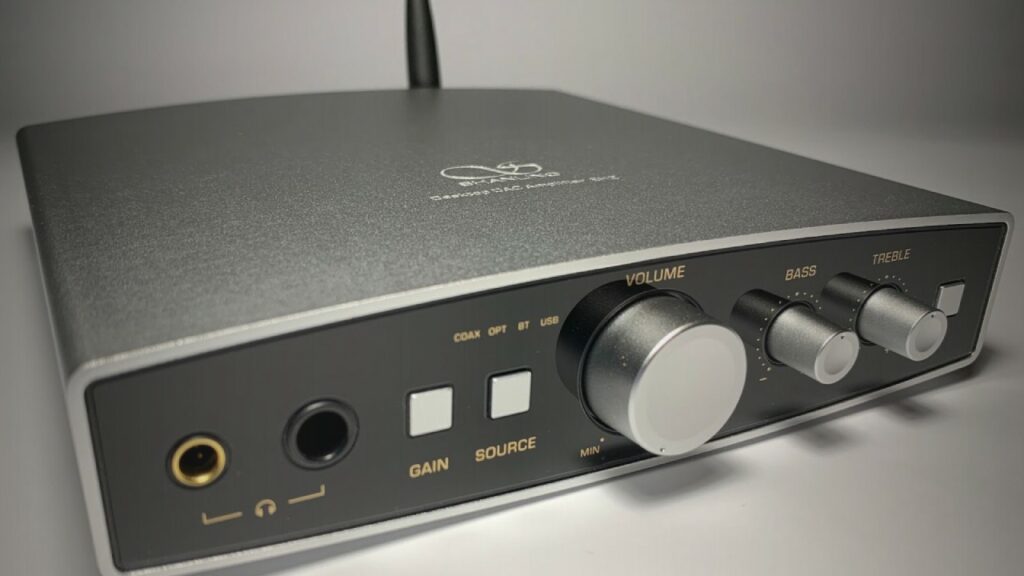
The Fosi Audio BT20A PRO is aimed at listeners who want a compact stereo amplifier that keeps the system simple without reducing it to a sealed black box. Its appeal lies in a practical mix of features: wired RCA input for conventional sources, Bluetooth 5.0 for wireless playback, speaker terminals for passive loudspeakers, a 3.5mm pre-out for system expansion, and physical tone controls for tailoring the result to a room or speaker setup. At just 166 x 105 x 35 mm and 547 g, it is clearly designed for desktops, secondary systems, small-room installations, and minimalist two-channel setups where space and convenience matter.
A small amplifier with a direct purpose
The BT20A PRO follows a familiar but useful formula: a compact Class D stereo amplifier with just enough connectivity to cover the most common listening needs. Rather than trying to serve as a network player, DAC, multiroom hub, or home theater receiver, it focuses on taking either an analog line-level source or a Bluetooth stream and driving a pair of passive speakers.
That narrow focus is part of its strength. For many prospective owners, the problem is not a lack of advanced features but a lack of a neat, affordable, easily placed amplifier that can sit on a desk, shelf, or sideboard. With its low 35 mm height and modest footprint, the BT20A PRO can be integrated into places where a full-width integrated amplifier would be inconvenient. Its 547 g net weight also suggests a product meant to be moved or repositioned easily, whether for a desktop audio system, workshop setup, compact living-room rig, or bedroom listening space.
The color listed as wet asphalt gives the amplifier a subdued appearance rather than a decorative one. That suits the product’s role: it is meant to disappear into a system visually while remaining accessible enough for everyday control.
TI TPA3255 amplification in a compact chassis
At the center of the BT20A PRO is Texas Instruments’ TPA3255 amplification IC, a Class D chip used in a variety of compact high-output amplifier designs. The documented power ratings show the importance of power supply voltage and distortion level in understanding what the unit can deliver. With a 48 V supply, the amplifier is rated at 2 x 225 W into 4 ohms at 1% THD, and 2 x 300 W into 4 ohms at 10% THD. With a 32 V supply, the corresponding ratings are 2 x 110 W into 4 ohms at 1% THD and 2 x 135 W into 4 ohms at 10% THD.
These figures are useful because they provide context rather than a single headline number. They indicate that the amplifier’s output capability depends on the supply voltage used, with the accepted DC supply range specified as 24 V to 48 V and an AC adapter included. Prospective owners should read the ratings accordingly, especially if they are matching the BT20A PRO with speakers of different sensitivity or listening in larger rooms.
The accepted speaker impedance range is 2 to 8 ohms, which gives the amplifier flexibility with a wide range of passive loudspeakers. The stated frequency response is 20 Hz to 20 kHz within ±1.2 dB, total harmonic distortion is listed at 0.005%, and signal-to-noise ratio is specified at ≥108 dB. These are specification points, not listening impressions, but they help define the BT20A PRO as a modern compact amplifier designed to provide full-range stereo amplification from a very small enclosure.

RCA and Bluetooth 5.0 keep source connection simple
The BT20A PRO’s input section is deliberately straightforward: one stereo RCA input and Bluetooth 5.0. The RCA input is the obvious choice for a conventional line-level source such as a DAC, streamer with analog outputs, CD player, phono stage, or small preamplifier. It gives the amplifier a familiar role in a two-channel system built around separate components.
Bluetooth 5.0 adds the convenience many compact systems need. It allows a phone, tablet, or computer to send audio wirelessly without requiring an additional receiver. The listed Bluetooth codecs are AAC and SBC, which cover common device compatibility. This is especially useful in casual listening environments where different people may want to connect quickly without learning a more complex app-based ecosystem.
A small but meaningful usability feature is the ability to delete Bluetooth pairing history by holding the volume button for a long time. That matters more than it may first appear. Bluetooth systems can become cluttered with old pairings, especially in shared homes, offices, classrooms, studios, or temporary setups. Being able to clear pairing history directly from the amplifier helps keep wireless use manageable without requiring a screen or complicated menu structure.
Tone controls add useful system adjustment
One of the BT20A PRO’s most practical features is its front-panel tone control arrangement for bass and treble. The controls include a midpoint, allowing the user to make adjustments around a neutral setting. This gives the amplifier a hands-on form of system tuning that is increasingly absent from minimalist modern audio components.
Tone controls are not a substitute for correct speaker placement or room treatment, but they can be useful in everyday systems. A desktop installation may place speakers close to a wall or directly on a work surface, increasing perceived bass. A small pair of speakers in a larger room may benefit from a modest bass adjustment. A bright or heavily furnished room may invite treble changes. Physical controls make these adjustments immediate and reversible, without requiring software, hidden settings, or external equalization.
For prospective owners, this feature is especially relevant because compact amplifiers are often used in imperfect spaces. The BT20A PRO seems designed with that reality in mind: not every listener can place speakers ideally, and not every room behaves predictably. The ability to tailor bass and treble from the front panel makes the amplifier easier to adapt to real-world use.

Speaker outputs and pre-out expand system possibilities
The main output is via speaker terminals, described as clad speaker terminals. This allows the BT20A PRO to drive passive loudspeakers directly, which is the core function of the product. A listener can pair it with a set of bookshelf speakers and a source, and have a complete compact stereo system with minimal cabling.
The inclusion of a 3.5mm pre-out adds another layer of flexibility. A pre-out can be useful when connecting to additional equipment that accepts a line-level signal, depending on the rest of the system. In compact systems, this may allow easier integration with another powered component or downstream device, provided the gain structure and connectivity are appropriate. The key point is that the BT20A PRO is not limited solely to speaker terminals; it offers a path for expansion beyond a basic passive-speaker connection.
That small output jack reinforces the product’s practical design language. It is not an elaborate control center, but it provides enough routing flexibility to serve more than one type of setup. For listeners who like to experiment with compact audio systems, that can be an important advantage.
Why the compact Class D format matters
Class D amplification is particularly well suited to products like the BT20A PRO because it enables a high output specification in a small, efficient package. The result is an amplifier that can sit in spaces where traditional amplifier chassis sizes are not realistic. This matters for modern listening habits, which often include nearfield desktops, media consoles, small apartments, and multipurpose rooms.
The BT20A PRO’s dimensions make it easy to place close to a computer, under a monitor stand, beside a turntable system’s phono stage, or near a wireless source. Because it accepts both wired and wireless input, it can support a more permanent source over RCA while also remaining accessible for quick Bluetooth playback.
Its simplicity may also reduce friction for users who do not want a feature-heavy receiver. There are fewer decisions to make: choose RCA or Bluetooth, adjust volume, and optionally tailor bass or treble. That kind of immediacy is a real design value in a product intended for everyday use.

Who the Fosi Audio BT20A PRO is most suitable for
The BT20A PRO is best suited to listeners who want a compact, uncomplicated amplifier for passive speakers and who value both wired and wireless source options. It makes particular sense for desktop audio, small-room stereo, office listening, secondary systems, and simple living-space installations where a full-sized integrated amplifier would be too large or too complex.
It is also a sensible fit for users who want physical control. The front-panel volume, bass, and treble adjustments provide direct access to the most commonly used functions. Anyone who dislikes relying entirely on apps or menus may appreciate that straightforward approach.
The product is less suitable for buyers who need extensive digital inputs, HDMI switching, network streaming, phono input, headphone amplification, or multi-zone features, none of which are documented for this model. It is also not intended to replace a full-featured AV receiver. Its identity is more focused: a small stereo amplifier with RCA, Bluetooth 5.0, speaker outputs, and pre-out functionality.
Conclusion
The Fosi Audio BT20A PRO stands out through a practical combination of compact size, Class D amplification built around the TI TPA3255 chip, Bluetooth 5.0 convenience, conventional RCA input, speaker-terminal output, 3.5mm pre-out flexibility, and front-panel bass and treble controls. Its strongest documented qualities are not complexity or luxury, but usability, adaptability, and a space-efficient form factor. For listeners building a simple passive-speaker system for a desk, small room, office, or secondary listening area, the BT20A PRO offers a focused set of features that addresses the essentials without unnecessary complication.