Choosing a television is no longer just a question of screen size.
Reflections, panel technology, smart platforms, gaming features, stand design and audio limitations can all affect whether a TV feels satisfying in daily use.
This guide brings together the supplied Stereoindex TV coverage as an evergreen shortlist of products, technologies and buying advice. Some entries are specific TV models, while others are practical articles that help separate useful features from marketing noise, especially around OLED, 4K, 8K, cloud gaming and built-in sound.

1. Vanta Black reduces reflections in OLED and QD OLED TVs
An OLED TV panel viewed in a bright room, illustrating why anti-reflective coatings matter.
This article is most useful for buyers attracted to OLED picture quality but worried about glare.
It explains how Vanta Black anti-glare coating is intended to reduce reflections on premium OLED TVs with MLA panels, while also noting that QD-OLED anti-reflective coatings have improved.
The key takeaway is simple: if your room is bright or has visible light sources opposite the screen, reflection handling deserves as much attention as brightness and contrast.
Best for: OLED buyers with bright rooms
- Targets a known OLED reflection issue
- Relevant to premium MLA OLED TVs
- Also notes QD-OLED anti-glare improvements
- Helpful for bright-room shoppers
Verdict: A valuable reminder that anti-glare performance can be a decisive TV feature, not just a showroom footnote.
2. Analysts warn of possible shortage of OLED TVs
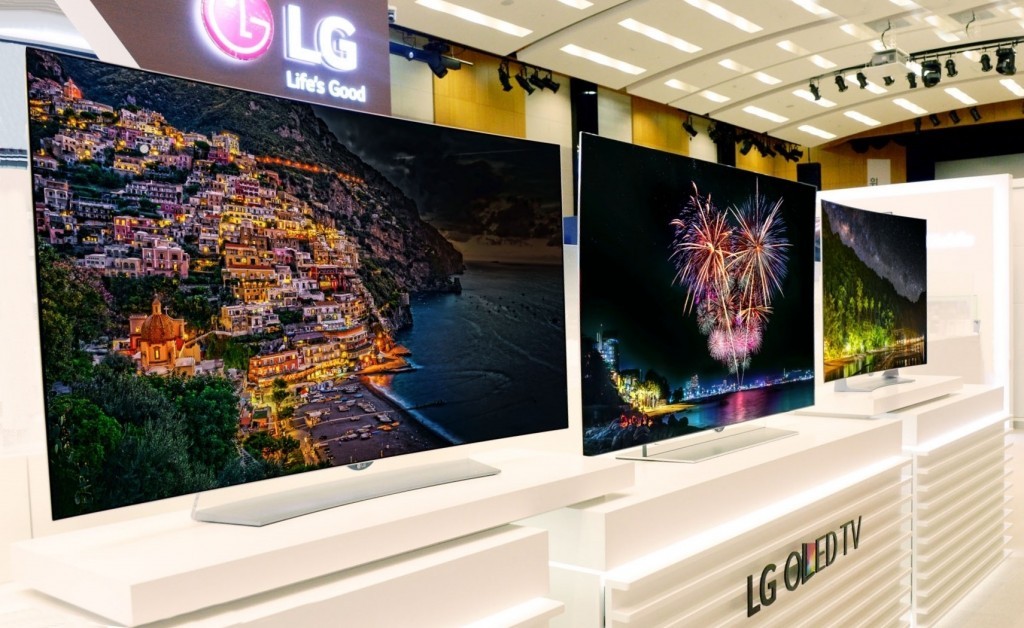
A premium OLED TV display, representing a segment that can be affected by component supply constraints.
This piece is not a product recommendation, but it is useful context for anyone set on an OLED TV.
It explains how microprocessor supply pressure could affect OLED availability, with only a small number of suppliers serving this part of the display market.
The practical lesson is to be flexible: if a preferred OLED model is unavailable, a comparable size, panel type or alternative technology may be worth considering rather than waiting indefinitely.
Best for: OLED shoppers tracking availability
- Explains OLED supply vulnerability
- Highlights the role of display processors
- Useful context for availability issues
Verdict: A practical background read for understanding why desirable OLED TVs may not always be easy to find.
3. Philips PUS7906: Affordable TV with a bundle of options
Philips PUS7906 shown as a wall-friendly television with slim-looking front bezels.
The Philips PUS7906 is presented as an affordable mid-range option with a well-equipped feature set.
The source notes that its design is not the strongest part, with some exposed thickness, but also points to relatively thin front bezels and a size that can suit medium rooms.
Wall mounting is suggested as a way to improve its appearance and make the most of the usable screen area.
Best for: Budget-conscious medium-room setups
- Affordable feature set
- Relatively thin front bezels
- Suitable for medium-sized rooms
- Wall mounting improves presentation
Verdict: The Philips PUS7906 reads as a sensible value TV if features matter more than slim cabinet styling.

4. Top 6 mistakes people make when buying a new TV
A TV specification screen, representing the need to look beyond headline resolution claims.
This buying-advice article is especially useful because it challenges the idea that bigger numbers automatically make a better purchase.
Its discussion of 8K versus 4K focuses on the limited availability of native 8K content and the difficulty of seeing a meaningful difference when content is heavily compressed.
For most buyers, that reinforces the value of judging a TV by real viewing conditions, not just headline specifications.
Best for: First-stage TV research
- Questions unnecessary 8K upgrades
- Emphasizes content availability
- Warns against specification-led buying
- Useful before comparing models
Verdict: A helpful guardrail against paying for features that may not improve everyday viewing.
5. What TV to choose in? Top 8 most modern TVs this year
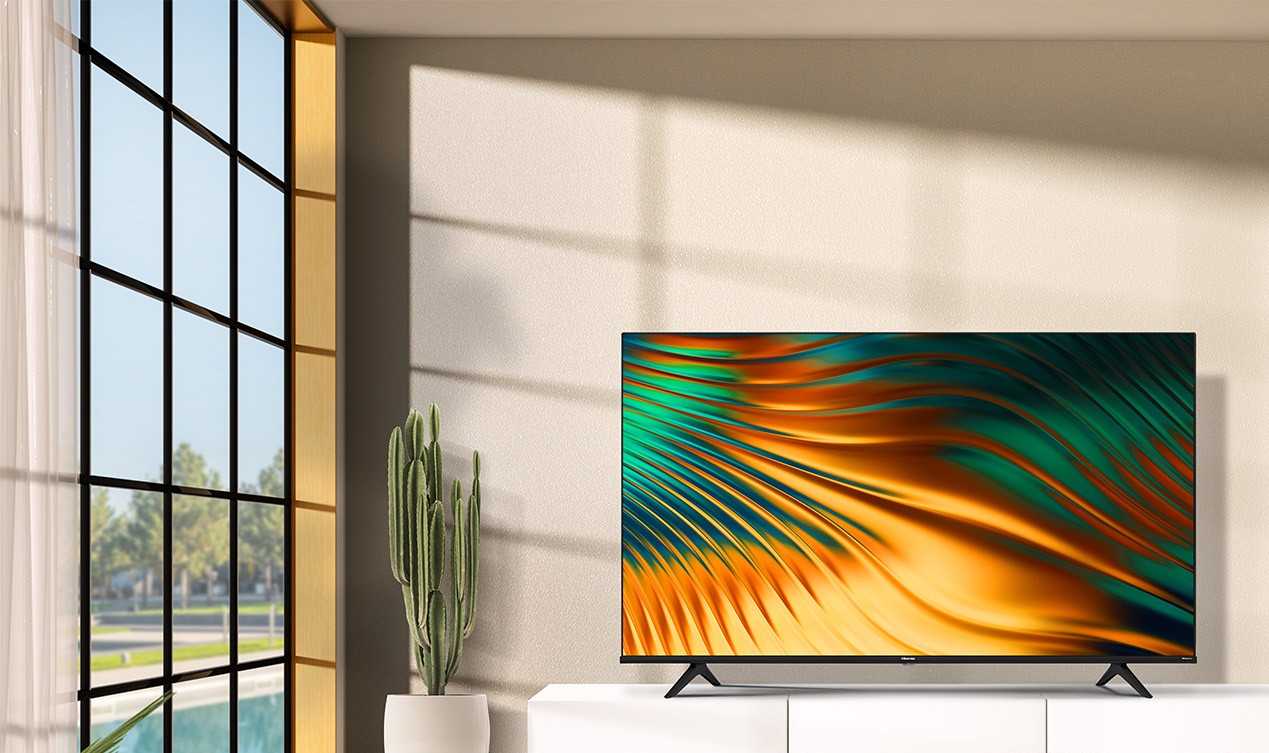
A selection of modern televisions in different sizes, reflecting the range of budget and mid-range choices.
This roundup is useful as a broad view of current TV choices, but the supplied material supports only a limited slice of its model coverage.
It identifies the Hisense A6H as an economical 4K IPS option available across a wide range of sizes, with Google TV and support for Dolby Vision and HDR, while noting that the lack of an extended color palette limits those HDR formats.
It also introduces the TCL 5 Series/S555 QLED as a budget QLED option, though the excerpt provides fewer details.
Best for: Comparing budget and modern TV options
- Includes economical TV options
- Hisense A6H offers many screen sizes
- Google TV app support is noted
- Flags HDR limitations on the A6H
Verdict: A useful overview for value shoppers, provided the individual model details are checked carefully before buying.
6. Toshiba M550: Top class TV at an affordable price
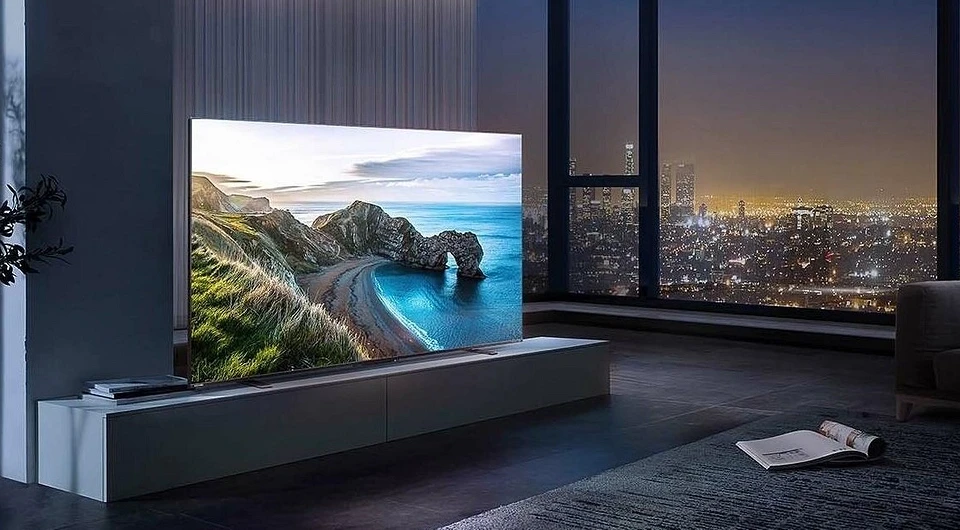
Toshiba M550 on its T-shaped stand, showing the low space beneath the screen.
The Toshiba M550 is framed as a relatively affordable TV line with many modern image and sound enhancement technologies.
The article emphasizes thin bezels and a stand design with T-shaped legs, while warning that the low clearance below the screen may make soundbar placement difficult.
That detail matters: a TV can be visually tidy yet still complicate an audio upgrade.
Best for: Value buyers who want a polished feature set
- Modern image and sound enhancement features are noted
- Thin bezels
- Distinctive T-shaped legs
- Acceptable cost positioning
Verdict: The Toshiba M550 looks appealing on features and styling, but soundbar clearance should be checked before purchase.
7. Hisense AE7200F: Perfect affordable entry-level 4K TV
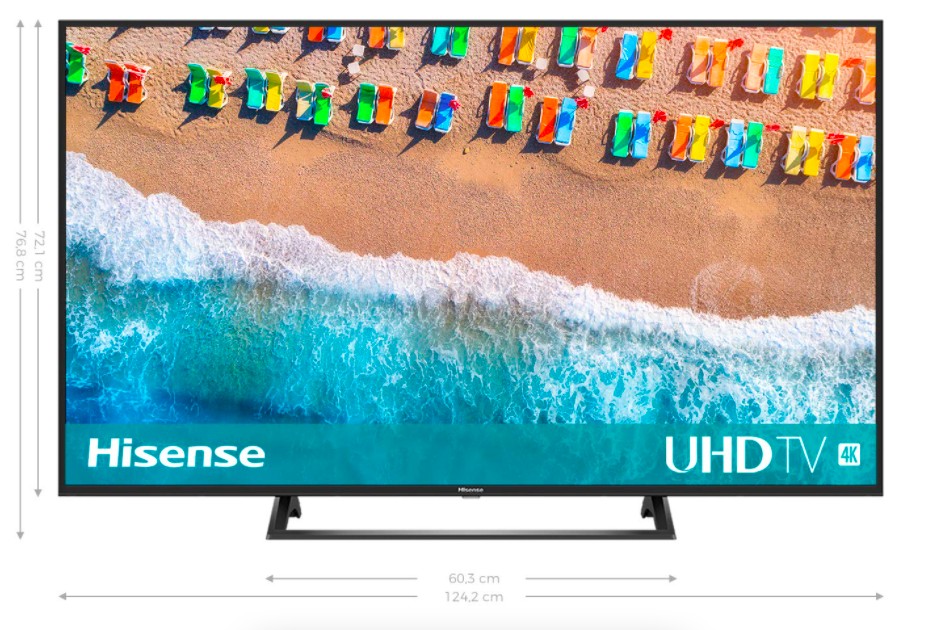
Hisense AE7200F entry-level 4K TV with a simple stand and understated design.
The Hisense AE7200F is described as an affordable entry-level 4K TV with the basic features expected by buyers moving into 4K.
The supplied review focuses on the 50-inch AE7200F as a representative model and notes that the AE7200F and A7300F labels may refer to the same model depending on sales channel.
Its design is described as simple, which fits its entry-level positioning.
Best for: First 4K TV buyers on a budget
- Affordable 4K entry point
- Covers core basic features
- Simple design
- Useful labeling clarification
Verdict: The Hisense AE7200F is best viewed as a straightforward, low-cost path into 4K rather than a style-led premium choice.
8. Hisense UXKQ: An excellent choice for a home entertainment TV
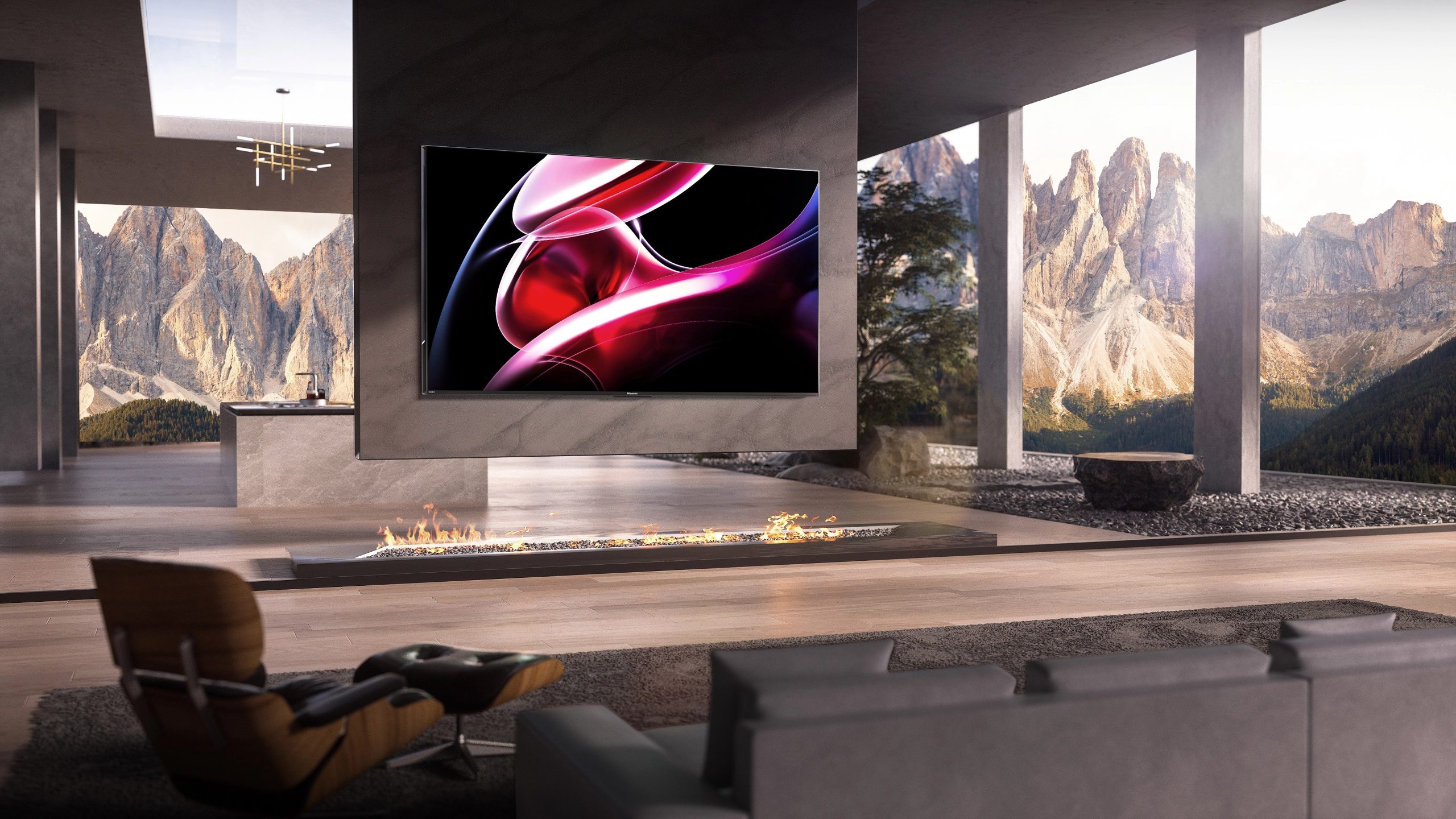
Hisense UXKQ Mini-LED TV with side-mounted speakers and adjustable feet for setup flexibility.
The Hisense UXKQ is presented as a flagship 4K Mini-LED HDR model with multiple dimming zones and high peak brightness.
The article notes a premium design, a body that is thick for a high-end TV, side-mounted speakers and adjustable feet.
Those feet are important for real installations because the source says most soundbars can fit in front without blocking the screen, although placement depends on the leg position.
Best for: Home entertainment rooms needing brightness
- Mini-LED 4K HDR design
- Multiple dimming zones
- Excellent peak brightness is noted
- Adjustable feet aid soundbar placement
Verdict: The Hisense UXKQ stands out for a bright Mini-LED approach and more flexible soundbar placement than many TVs allow.

9. TV sound quality does not keep up with picture quality
A slim premium TV paired with external audio, underscoring the limits of built-in television sound.
This article is essential reading for anyone who assumes a premium picture automatically brings premium sound.
It uses LG OLED TVs as an example of a market where visual performance, smart features and gaming performance are major attractions, while built-in sound remains harder to differentiate.
The broader buying lesson is clear: evaluate TV audio separately and leave room in the setup for an external sound solution if needed.
Best for: Buyers who care about TV sound
- Highlights the gap between picture and sound
- Relevant to premium OLED buyers
- Connects TV design to audio expectations
- Encourages separate audio evaluation
Verdict: A useful corrective for picture-first shopping, especially when a soundbar or speaker system may be part of the plan.

10. Samsung launches Gaming Hub, a collection of cloud gaming services for smart TVs
Samsung smart TV interface showing a gaming hub concept for cloud gaming and entertainment apps.
Samsung Gaming Hub is described as a digital hub that gathers cloud gaming and streaming services on select Samsung smart TVs and smart monitors.
The supplied material names Xbox xCloud, NVIDIA GeForce Now, Google Stadia, Utomik, YouTube, Spotify and Twitch, with Amazon Luna expected to join.
It also notes faster signal decoding and optimized buffering management on newer supported Samsung devices, making this most relevant to buyers who want gaming access without relying only on a console.
Best for: Cloud gaming on a smart TV
- Unifies several cloud gaming services
- Includes video and music apps
- Available on select Samsung TVs and monitors
- Optimized buffering and decoding are noted
Verdict: Samsung Gaming Hub is a meaningful smart-TV feature for gaming-focused buyers, provided the TV model and region are supported.
Quick comparison
The supplied articles cover a mix of specific TVs, display technologies and practical buying guidance.
The clearest distinction is not simply premium versus budget, but whether the issue is picture quality, room suitability, availability, sound, gaming or avoiding unnecessary specifications.
| Product | Best for | Verdict |
|---|---|---|
| Vanta Black reduces reflections in OLED and QD OLED TVs | Reducing glare concerns on premium OLED-style displays | Most relevant when room lighting and screen reflections are likely to affect viewing. |
| Analysts warn of possible shortage of OLED TVs | Understanding OLED availability risks | Useful context for shoppers who may need flexibility if a preferred OLED model is hard to find. |
| Philips PUS7906: Affordable TV with a bundle of options | Affordable mid-range TV buyers | A value-focused option where features and wall placement matter more than ultra-slim styling. |
| Top 6 mistakes people make when buying a new TV | Avoiding poor purchase decisions | Strongest for reminding buyers that content, room use and real benefits matter more than headline specifications. |
| What TV to choose in? Top 8 most modern TVs this year | Surveying budget and modern TV options | Helpful as a broad starting point, especially for economical models such as the Hisense A6H. |
| Toshiba M550: Top class TV at an affordable price | Feature-rich value TV setups | Promising on features and bezels, with soundbar clearance as the practical caveat. |
| Hisense AE7200F: Perfect affordable entry-level 4K TV | Low-cost 4K entry | A straightforward choice for buyers who want core 4K features without premium ambitions. |
| Hisense UXKQ: An excellent choice for a home entertainment TV | Bright Mini-LED home entertainment | The strongest supplied model for brightness-focused viewing and flexible front soundbar placement. |
| TV sound quality does not keep up with picture quality | Planning TV audio properly | Important guidance for anyone buying a slim or premium TV and expecting strong built-in sound. |
| Samsung launches Gaming Hub, a collection of cloud gaming services for smart TVs | Cloud gaming through a smart TV | A useful platform feature for supported Samsung owners who want consolidated game streaming access. |
Frequently asked questions
Should I choose 8K instead of 4K for a new TV?
The supplied buying-advice article argues that 8K is difficult to justify for many buyers because native 8K content remains limited and compressed online video can make the difference hard to see.
A strong 4K TV is often the more practical choice unless you have a specific reason to prioritize 8K.
Do OLED TVs handle bright rooms well?
OLED picture quality can be excellent, but reflections are a real consideration.
The Vanta Black article highlights anti-glare coating for premium MLA OLED TVs and notes improved QD-OLED anti-reflective coatings, so buyers in bright rooms should compare reflection handling before choosing.
Is built-in TV sound enough?
It depends on expectations, but the supplied sound article warns that TV audio has not advanced at the same pace as picture quality.
If dialogue clarity, music impact or home-cinema sound matters, check the TV’s audio performance separately and make sure the stand design leaves room for a soundbar if you plan to add one.
What practical setup details are easy to miss?
Stand clearance and leg position can matter as much as the screen specification.
The Toshiba M550 article notes low space under the screen that may complicate soundbar placement, while the Hisense UXKQ article highlights adjustable feet that can help accommodate most soundbars in front.
How to choose the TV that fits your room
Start with the room rather than the specification sheet.
In a bright space, reflection handling can be as important as panel type, which makes anti-glare developments such as Vanta Black relevant to OLED shoppers.
In a darker entertainment room, contrast, dimming and peak brightness become more central, which is where a Mini-LED model such as the Hisense UXKQ may be worth attention. Be cautious with resolution-led upgrades. The supplied buying-advice article makes a strong practical case for not overvaluing 8K when the content ecosystem is limited. For many homes, a well-chosen 4K TV with the right size, smart platform and room fit will be more rewarding than chasing a specification that rarely shows its full value. Do not leave audio until the end. Several supplied articles point to the reality that TV sound and TV picture are not improving at the same pace, and stand design can affect whether a soundbar fits neatly. If sound matters, check clearance, leg position and whether external audio is part of the plan before settling on a model. For value buyers, the Philips PUS7906, Toshiba M550 and Hisense AE7200F coverage points toward sensible budget or mid-range choices with different trade-offs in styling, feature depth and simplicity. For gamers, Samsung Gaming Hub shows how smart-TV platforms can become part of the decision, but only when model and regional support line up with the services you actually use.