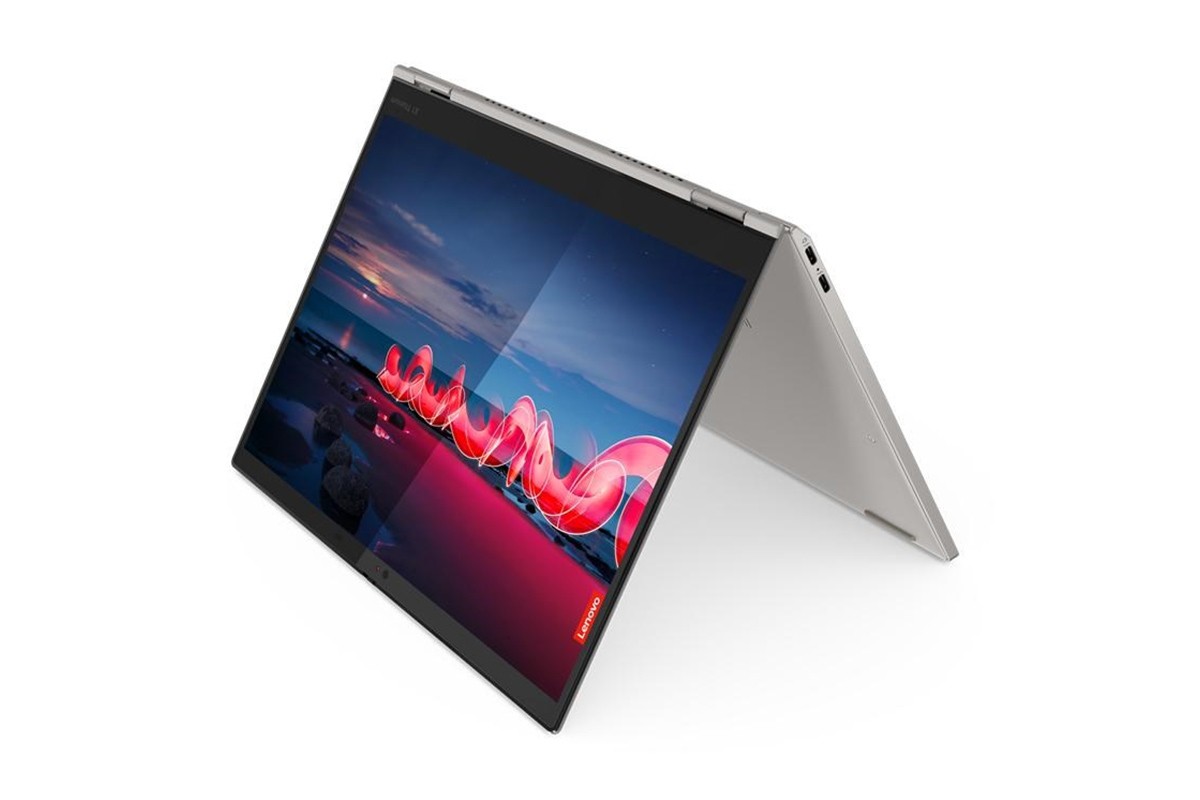
A phone or tablet is often the most-used source in a modern listening chain.
Even before it reaches a pair of headphones, a DAC, a Bluetooth speaker or a car system, the device has to be pleasant to hold, quick enough to browse and stream without friction, and able to keep its screen and battery going through daily use.
1. Black Shark 5: Gaming smartphone at an affordable price
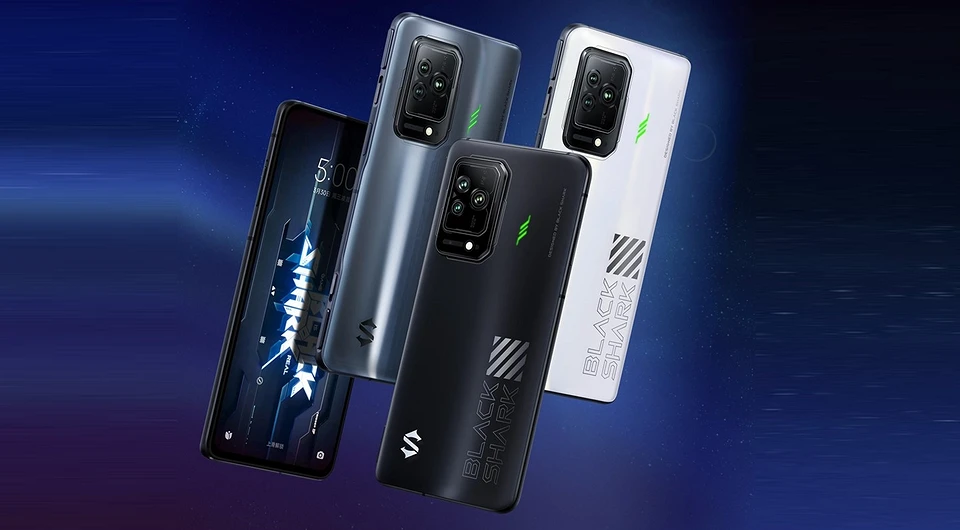
Black Shark 5 with a fast AMOLED screen, high refresh rate and magnetic shoulder controls.
The Black Shark 5 stands out as a performance-minded phone with an accessible positioning in the gaming category.
Its 6.67-inch Full HD+ AMOLED display supports a 144 Hz refresh rate and HDR10, while the Snapdragon 870 platform gives it stronger foundations than a basic handset.
The 4650 mAh battery and 120 W fast charging are practical advantages for users who spend long sessions watching, playing or streaming. The Magnetic Shoulder 2.0 retractable keys are a distinctive gaming feature carried over from the higher model.
Best for: Mobile gamers who want strong hardware without moving to the Pro model
- 6.67-inch Full HD+ AMOLED display
- 144 Hz refresh rate with HDR10 support
- Snapdragon 870 platform
- 120 W fast charging
Verdict: A compelling gaming-focused phone when display speed, charging and physical shoulder controls matter more than flagship status.
2. Infinix unveils the GT 10 Pro with a transparent panel and backlight
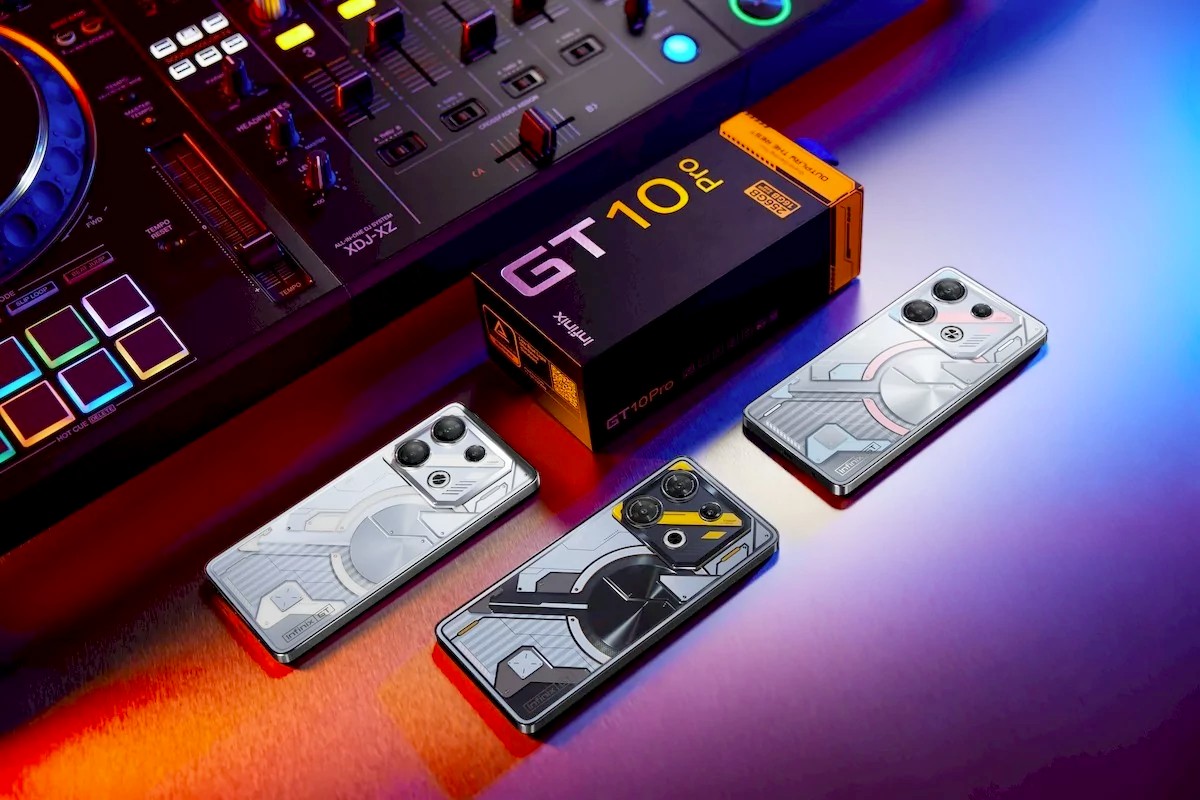
Infinix GT 10 Pro showing its transparent-style back panel and LED lighting.
The Infinix GT 10 Pro is the most design-forward device in this selection.
Its transparent-style rear panel and integrated LED backlight give it a visual identity that differs from conventional smartphone finishes, while the light version adds photochromic elements that change under sunlight.
The source positions it as a gaming smartphone rather than a flagship, but notes that the MediaTek Dimensity 8050 is intended to handle modern games without obvious difficulty. For buyers who care about the look of their mobile device as much as its performance brief, this is the standout.
Best for: Users who want a gaming phone with a distinctive exterior design
- Transparent-style rear panel
- Integrated LED backlight
- Photochromic rear elements on the light version
- MediaTek Dimensity 8050 platform
Verdict: A personality-led gaming smartphone that pairs an attention-grabbing rear panel with a capable mid-range performance platform.
3. Redmi announced its first Turbo smartphone
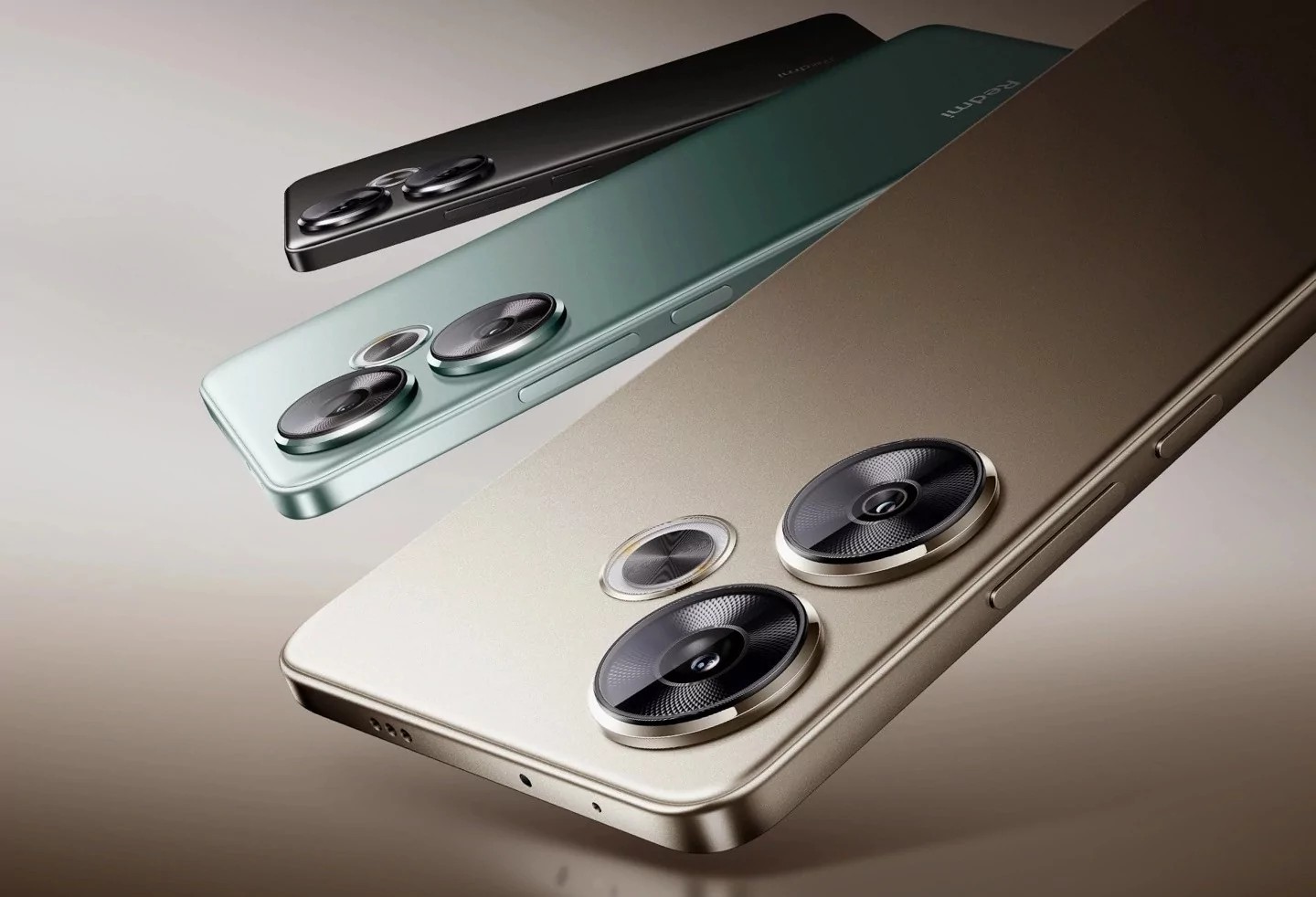
Redmi Turbo 3 with flat edges, a slim profile and a simple dual-camera rear layout.
The Redmi Turbo 3 introduces a new Redmi line positioned between the K and Note families, with performance as its main emphasis.
The Snapdragon 8s Gen 3 chipset is the key detail: the source describes it as less powerful than Snapdragon 8 Gen 3 but stronger than Snapdragon 8 Gen 2.
Design details are restrained, with flat edges, a thin body and a dual rear camera layout. This is one to note for users who want high-end-adjacent speed without moving into Redmi’s top hardware series.
Best for: Performance-focused buyers considering a sub-flagship Redmi device
- New performance-focused Redmi Turbo line
- Snapdragon 8s Gen 3 chipset
- Thin body with flat edges
- Fast wired charging support
Verdict: Redmi Turbo 3 is positioned as a speed-first sub-flagship that sits below the K series but above more mainstream Note models.
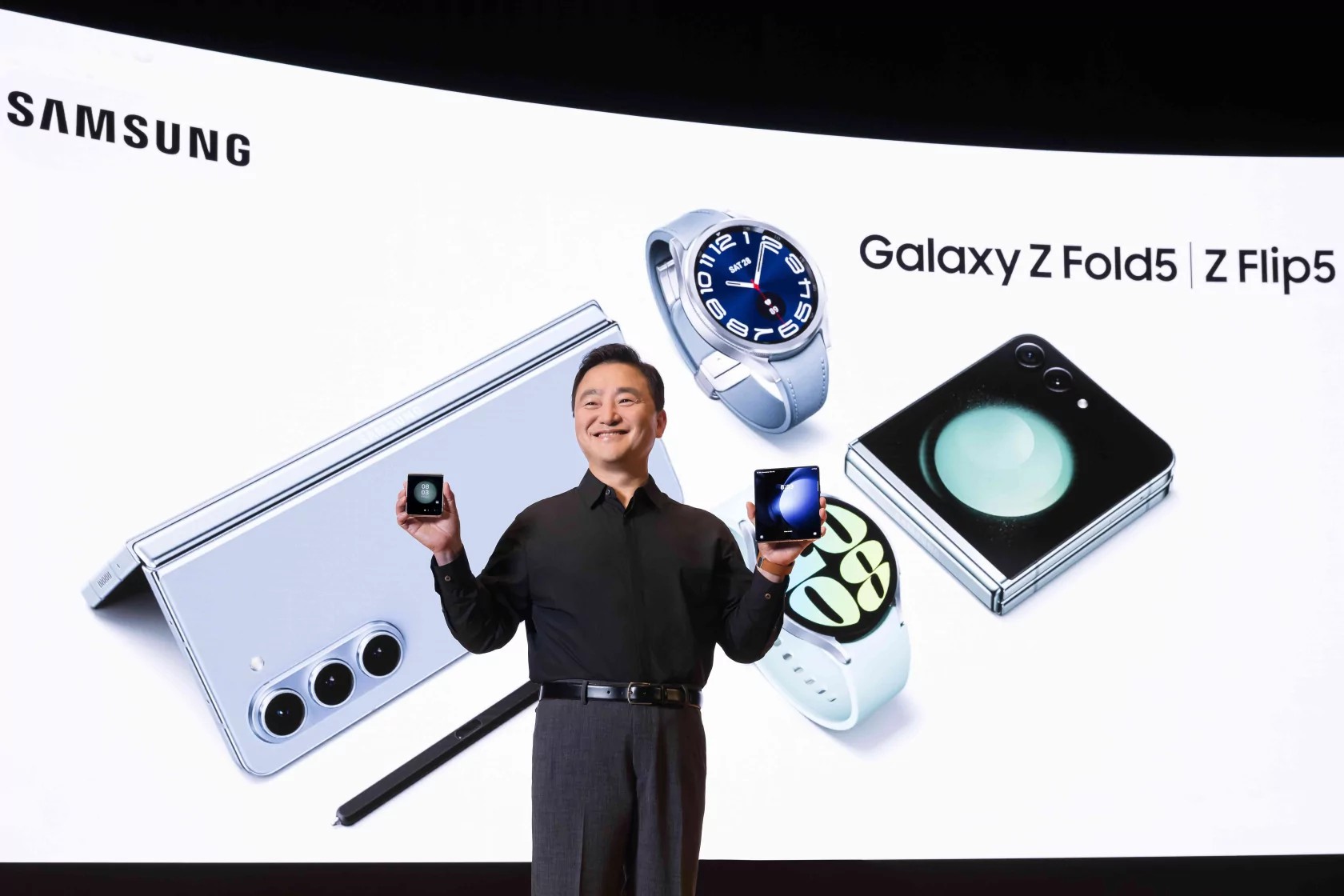
4. Galaxy Unpacked recap: Foldable smartphones, water-resistant tablets and super smartwatches
Samsung’s mobile lineup includes foldable phones, Galaxy Tab S9 tablets and Galaxy Watch 6 models.
This Samsung recap is broader than a single phone, but it matters for mobile media users because it covers foldables, tablets and smartwatches together.
The Galaxy Z Fold 5 receives the clearest hardware explanation in the source: it is thinner when open and closed than the previous model cited there, with a redesigned hinge that removes the gap between the two halves and lowers weight to 253 grams.
The same event also included Galaxy Z Flip 5, Galaxy Tab S9 tablets and Galaxy Watch 6 models, giving Samsung users a complete mobile ecosystem to consider. For reading, video, note-taking and device continuity, the foldable and tablet angle is the most relevant.
Best for: Samsung users comparing foldables, tablets and watches as one ecosystem
- Galaxy Z Fold 5 has a redesigned hinge
- Gap between Fold halves is removed
- Galaxy Z Fold 5 weight reduced to 253 grams
- Event also covered Tab S9 tablets and Watch 6 models
Verdict: The strongest buying signal here is Samsung’s refinement of the foldable format, especially the thinner, lighter Galaxy Z Fold 5.
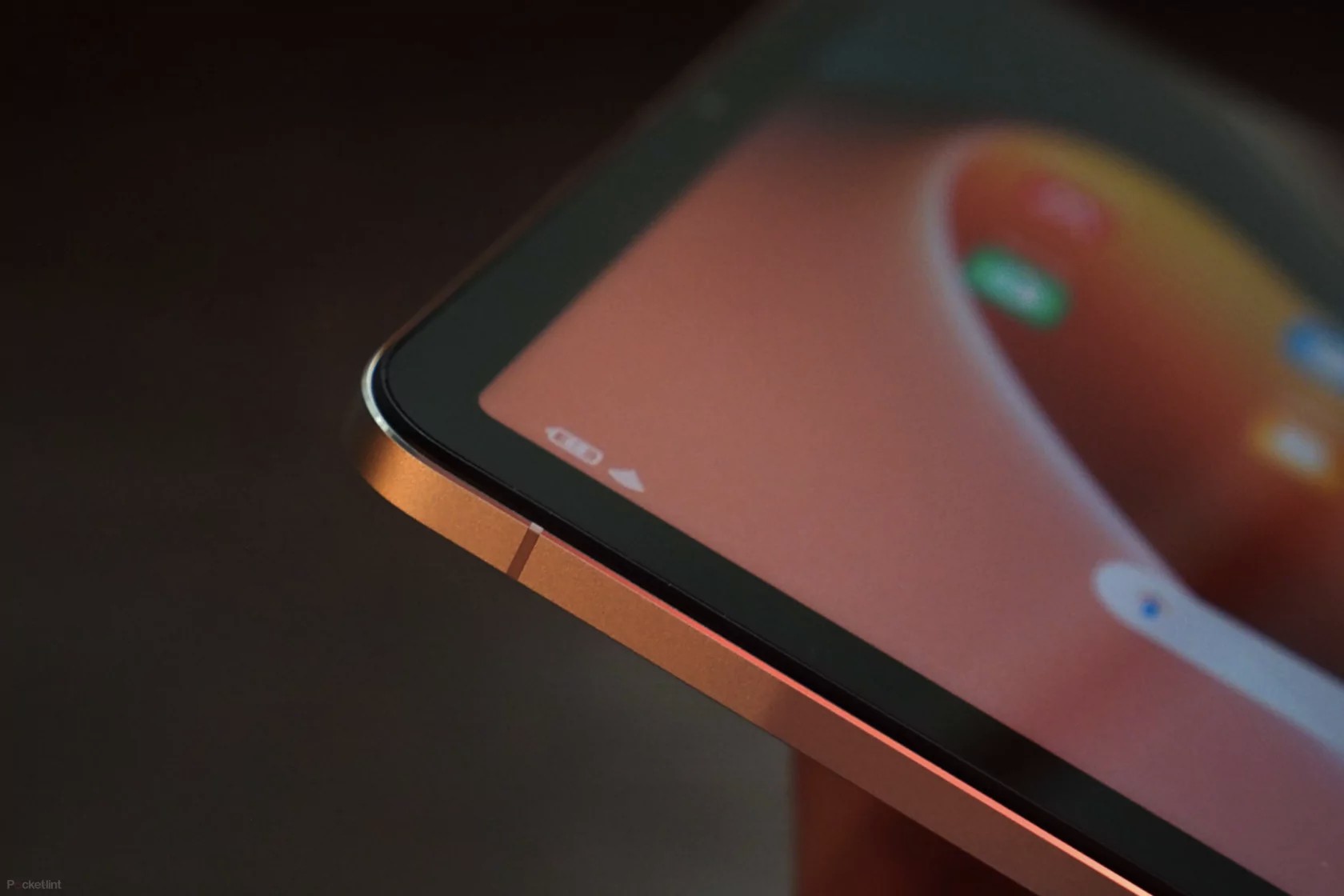
5. Xiaomi accidentally exposed the first Redmi tablet
Redmi Pad shown in Mint Green, with additional Graphite Gray and Moonlight Silver finishes reported.
The first Redmi Pad is presented through leaks and an accidentally published image, so it should be treated as an early look rather than a finished buying verdict.
The reported specification set is still useful: an 11.2-inch 2K LCD, a 7800 mAh battery, 22.5 W fast charging and MIUI Pad 13 are all mentioned.
The source also points to Mint Green, Graphite Gray and Moonlight Silver finishes, plus 3 GB or 4 GB RAM configurations paired with 64 GB of storage. For casual media use, the large display and battery are the headline details.
Best for: Tablet buyers seeking a large-screen Redmi option for casual media use
- 11.2-inch 2K LCD reported
- 7800 mAh battery reported
- 22.5 W fast charging reported
- Three color options indicated
Verdict: Redmi Pad looks like a practical large-screen option on paper, though the source is based on leaks and an accidental image rather than a full launch brief.

6. Vivo re-released the three-year-old Vivo Y11 with a new design and Helio P35 on board
Vivo Y11 in a refreshed design with a large battery, headphone jack and expandable storage.
The refreshed Vivo Y11 is an entry-level phone with straightforward priorities: a 6.51-inch HD+ IPS LCD, 90 Hz refresh rate, Helio P35 processor and a 5000 mAh battery.
It also includes expandable storage support up to 1 TB, a 3.5 mm headphone jack and basic 4G connectivity.
The microUSB port and 10 W charging keep it firmly in budget territory, but the headphone jack and large battery are still relevant for simple music playback and everyday mobile tasks.
Best for: Budget users who still want wired headphones and expandable storage
- 5000 mAh battery
- 3.5 mm headphone jack
- microSD support up to 1 TB
- 90 Hz IPS LCD
Verdict: Vivo Y11 is a modest, practical handset whose strongest everyday advantages are battery capacity, storage expansion and the headphone jack.
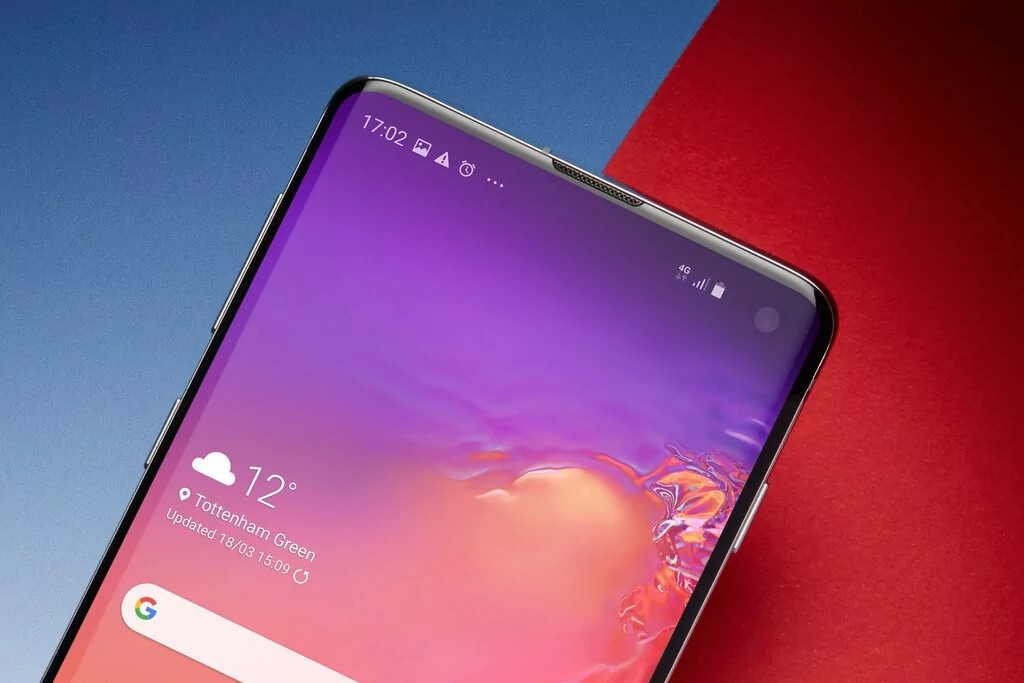
7. Samsung has announced a truly bezel-less display for smartphones
Samsung’s bezel-less display concept aims for a full-screen front with no visible frame.
Samsung’s bezel-less display announcement is a technology watch item rather than a phone recommendation.
The All Around Full Screen concept is described as removing visible frames through 3D lamination and edge brightness control, effectively creating a waterfall-style screen with beveled edges.
Samsung is also improving Under Panel Camera technology, with the new panel said to increase light transmittance by 50 percent. For mobile media, the appeal is obvious: a more seamless edge-to-edge viewing surface, provided the technology reaches consumer devices in a form that suits real use.
Best for: Readers tracking the next step in smartphone display design
- All Around Full Screen concept removes visible frames
- Uses 3D lamination techniques
- Includes edge brightness control
- Under Panel Camera light transmittance increased by 50 percent
Verdict: This is not a buying pick yet, but it is an important display development for anyone who values uninterrupted mobile viewing.

8. Steve Wozniak: “iPhone 13 is no different from iPhone 12”
iPhone 13 and iPhone 12 are discussed as closely related devices with limited visible differences.
This article is less a product brief than a useful reminder about upgrade discipline.
Steve Wozniak’s point is that he did not notice a meaningful difference between iPhone 13 and iPhone 12 in his own use, while also noting that iOS works well on those and older models.
The source acknowledges differences in chips, camera sensor placement and sensors, but frames the external similarity as substantial. For buyers, the lesson is simple: if the phone you own already feels good in hand and runs the software you need, a small annual-style hardware step may not transform everyday listening, messaging or media use.
Best for: iPhone owners deciding whether an incremental upgrade is worthwhile
- Highlights the importance of real-world upgrade value
- Notes iOS works well across multiple iPhone generations
- Emphasizes device size as a practical preference
- Acknowledges only limited visible differences
Verdict: The strongest takeaway is to upgrade for a clear personal need, not simply because a newer iPhone exists.
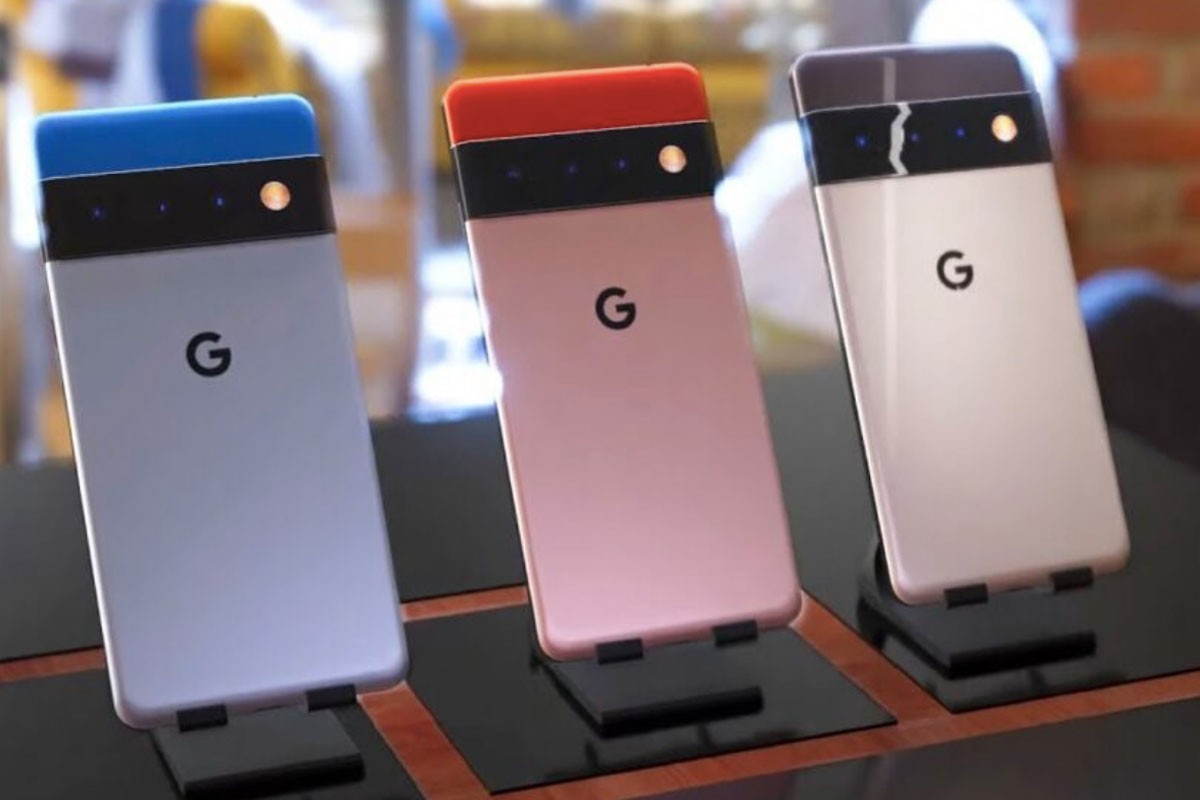
9. Google Pixel 6 and Pixel 6 Pro up for public viewing in New York
Google Pixel 6 and Pixel 6 Pro displayed behind glass, showing their design and colors.
The Pixel 6 and Pixel 6 Pro article focuses on early public display rather than hands-on use.
Visitors could see the devices behind glass, evaluate the design and look at the color options, but could not hold them.
The source highlights the unusual design and mentions a rumor that at least the Pixel 6 Pro would receive Samsung’s E5 screen. For buyers, the useful point is that design, color and ergonomics are not the same thing: a phone can look appealing, but handling still matters before choosing it as a daily mobile source.
Best for: Pixel followers assessing design before purchase decisions
- Unusual design can be viewed directly
- Color options are visible in person
- Pixel 6 Pro screen detail is noted as a rumor
- Useful reminder to separate looks from hands-on feel
Verdict: The article is valuable as a design preview, but it does not provide enough hands-on evidence for a complete buying judgment.
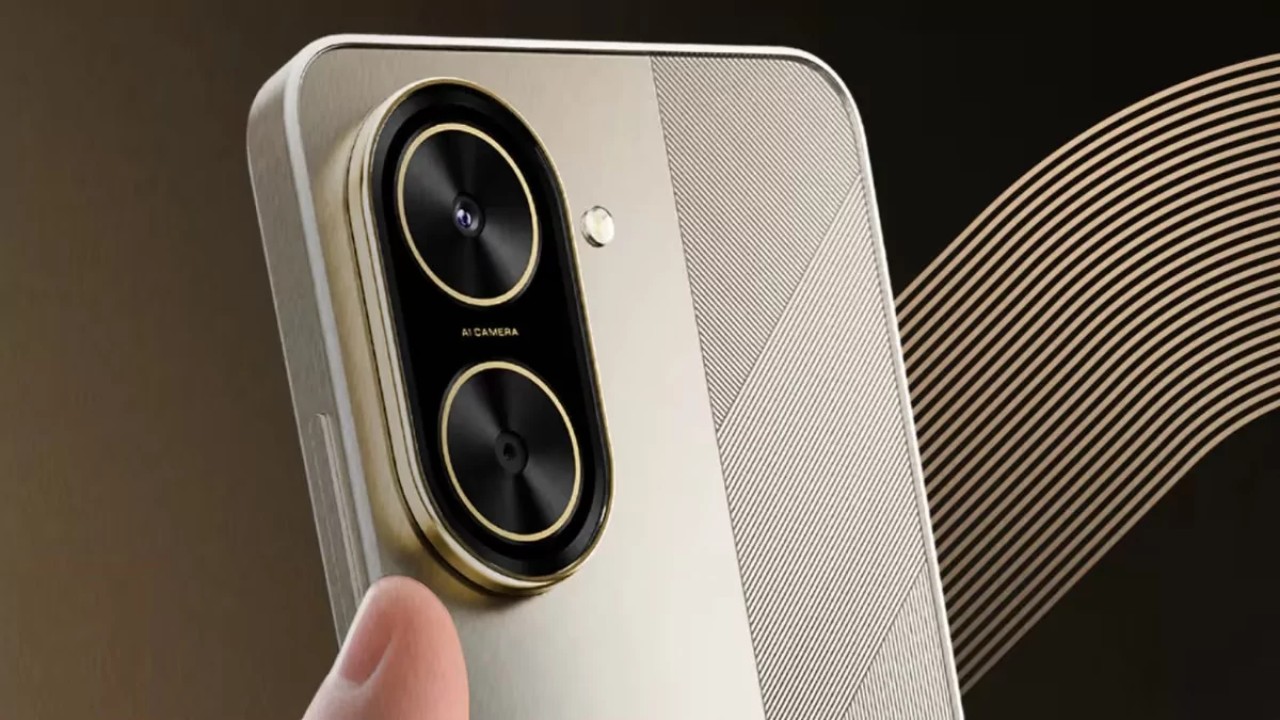
10. POCO Unveils Ultra-Budget C71 Smartphone with 120Hz Display and 5200mAh Battery
POCO C71 with a large 120 Hz display, 5200 mAh battery and three color options.
The POCO C71 is the clearest entry-level value play in the source set.
It combines a large 6.88-inch IPS display with a 120 Hz refresh rate, a 5200 mAh battery and HyperOS based on Android 15.
It also keeps practical features such as microSD expansion, a side-mounted fingerprint scanner, IP52 splash resistance and a 3.5 mm headphone jack. POCO’s stated software support is unusually relevant in this price class, with two Android updates and four years of security patches promised in the source.
Best for: Budget buyers who want a large smooth screen and long software support
- 6.88-inch 120 Hz IPS display
- 5200 mAh battery
- 3.5 mm headphone jack
- Two Android updates and four years of security patches promised
Verdict: POCO C71 looks unusually well specified for an ultra-budget phone, especially if display size, battery life and update policy are priorities.
Quick comparison
These items do not all compete directly.
Some are retail-oriented phones, one is a tablet leak, one is a display technology preview, and two are perspective pieces on upcoming or incremental devices.
The most useful comparison is therefore by role: gaming performance, budget practicality, ecosystem breadth, display innovation or upgrade caution.
| Product | Best for | Verdict |
|---|---|---|
| Black Shark 5 | Affordable gaming performance with a fast AMOLED display | Choose it if shoulder controls, 144 Hz refresh and 120 W charging are central to your mobile use. |
| Infinix GT 10 Pro | A gaming phone with a visually distinctive back panel | Choose it for design personality backed by a Dimensity 8050 platform rather than for flagship positioning. |
| Redmi Turbo 3 | Sub-flagship performance within Redmi’s lineup | Consider it if the Snapdragon 8s Gen 3 and Redmi’s performance-focused Turbo positioning are the main draw. |
| Galaxy Z Fold 5, Galaxy Z Flip 5, Galaxy Tab S9 and Galaxy Watch 6 recap | Samsung ecosystem shoppers comparing several device types | Most relevant for buyers weighing foldables, tablets and wearables together, especially the refined Galaxy Z Fold 5. |
| Redmi Pad | Large-screen tablet use based on early reported specifications | Worth watching if the reported 11.2-inch 2K LCD and 7800 mAh battery match your media priorities. |
| Vivo Y11 | Basic phone use with wired headphones and expandable storage | A budget-minded choice where the 3.5 mm jack, large battery and microSD support matter more than fast charging. |
| Samsung All Around Full Screen display concept | Display technology watchers | Not a product pick yet, but a useful signpost for future edge-to-edge smartphone screens. |
| iPhone 13 and iPhone 12 upgrade perspective | iPhone users questioning incremental upgrades | Use it as a reminder to judge upgrades by noticeable everyday benefit, not by model number alone. |
| Google Pixel 6 and Pixel 6 Pro design preview | Pixel buyers interested in design and color options | Helpful for visual assessment, but not a substitute for holding and testing the phone. |
| POCO C71 | Ultra-budget buyers wanting a large smooth display and long support window | A practical entry-level option with a 120 Hz display, 5200 mAh battery, headphone jack and stated update commitment. |
Frequently asked questions
Which phone here is the most suitable for mobile gaming?
Black Shark 5 is the most explicitly gaming-focused option, with a 144 Hz AMOLED display, Snapdragon 870 processor, 120 W charging and Magnetic Shoulder 2.0 keys.
Infinix GT 10 Pro and Redmi Turbo 3 are also performance-oriented, but the supplied material gives Black Shark 5 the clearest gaming hardware description.
Which models are most relevant for music listeners who still use wired headphones?
Vivo Y11 and POCO C71 both include a 3.5 mm headphone jack, making them the most relevant choices in the supplied material for simple wired listening without an adapter.
The source does not provide audio quality measurements, so the recommendation is limited to connectivity convenience.
Should I prioritize a high refresh rate display for music and media use?
A high refresh rate does not directly improve sound, but it can make scrolling, gaming and general interface use feel smoother.
Black Shark 5 offers 144 Hz, while Vivo Y11 and POCO C71 are listed with 90 Hz and 120 Hz screens respectively.
For mainly audio-only use, battery capacity, storage and headphone connectivity may matter more.
Are all of these devices ready-to-buy recommendations?
No.
Black Shark 5, Infinix GT 10 Pro, Vivo Y11 and POCO C71 are presented as concrete product stories, while Redmi Pad is based on leaks and an accidental image, Samsung’s bezel-less display is a technology preview, and the iPhone and Pixel pieces are perspective or design-preview articles.
Treat each item according to the strength of the supplied information.
How to choose the right mobile device for music and media
Start with your real use, not the spec sheet.
If the phone will be your everyday music source, a 3.5 mm headphone jack can be more immediately useful than a headline processor.
In this group, Vivo Y11 and POCO C71 are the clearest wired-headphone options, and both also support expandable storage, which can help if you keep local music or video files. For gaming and visually rich media, the display and charging story becomes more important. Black Shark 5 offers the strongest supported gaming package here thanks to its AMOLED panel, 144 Hz refresh rate, Snapdragon 870 processor, 120 W charging and shoulder keys. Infinix GT 10 Pro brings a more expressive transparent-style design with LED lighting, while Redmi Turbo 3 is positioned around sub-flagship performance with Snapdragon 8s Gen 3. If you want a larger canvas, separate confirmed products from early information. The Redmi Pad details are promising for casual viewing because of the reported 11.2-inch 2K LCD and 7800 mAh battery, but the source is leak-based. Samsung’s Galaxy recap is stronger for ecosystem comparison, especially if a foldable phone, tablet and smartwatch might all be part of your mobile routine. Finally, be cautious with upgrades. The iPhone article is a useful reminder that newer does not always mean meaningfully better in daily use, especially when software remains smooth on older models. The Pixel display story also shows why seeing a phone is not the same as testing it. Before choosing any mobile device, weigh screen size, battery, charging, headphone needs, storage expansion and software support against how you actually listen, watch and play.