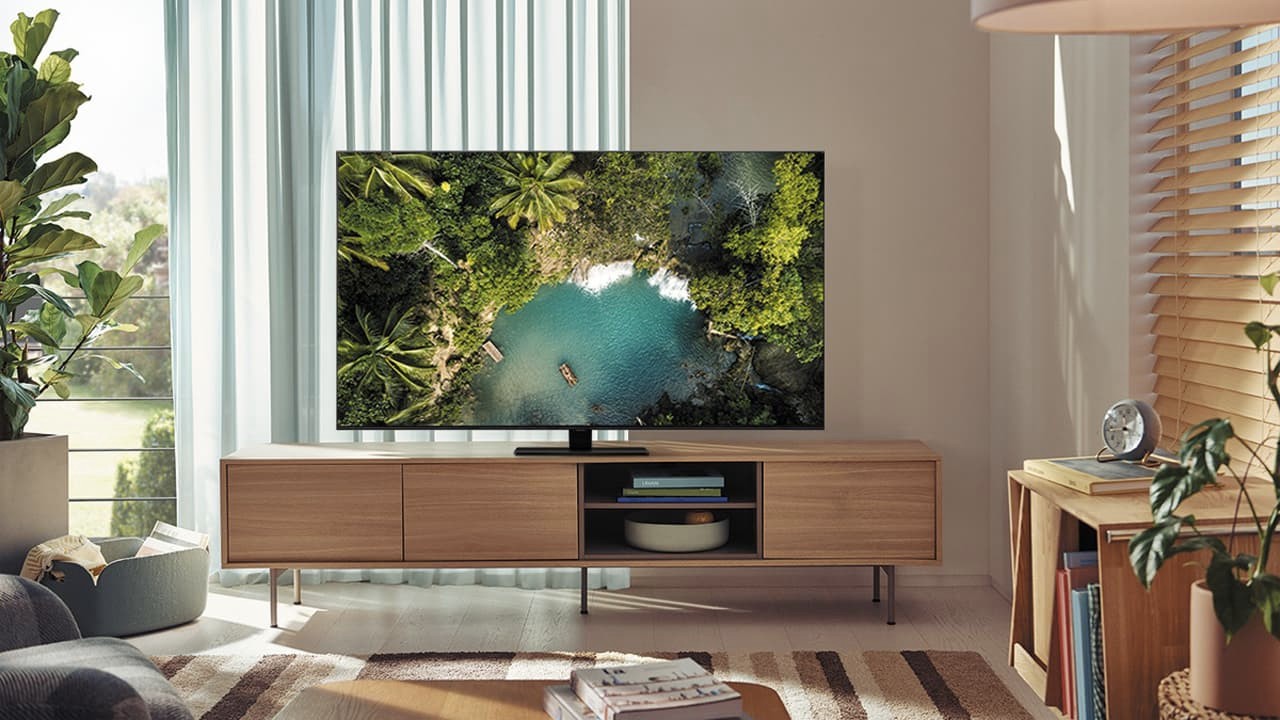
A good TV shortlist should not treat every screen as interchangeable.
The models and ranges gathered here cover very different priorities: affordable Android TV, entry-level 4K, quantum-dot colour, Mini-LED contrast, OLED cinema performance, and console-ready gaming features.
This selection is based strictly on the supplied Stereoindex source articles, so it focuses on what is actually documented: panel approach, smart TV platform, gaming support, connectivity, design notes, and the positioning of each model or range. Where a product is described as entry-level, affordable, flagship, or gaming-focused, that context is retained rather than stretched into unsupported performance claims. The result is an evergreen guide for readers who want to compare TV options by use case rather than by hype. Some entries are individual models, while others are TV ranges or brand-lineup stories; each has been framed around the practical reason it may belong on a buyer’s research list.

1. TCL will only sell 4K TVs in Europe
TCL’s European lineup direction centres on 4K TVs, with Mini-LED, quantum-dot technology and gaming models playing prominent roles.
TCL’s European TV strategy is notable because it shifts emphasis away from flagship 8K sets and toward a broader 4K lineup.
The source describes a simplified S and Q series structure, with TCL redoubling its efforts around 4K models based on Mini-LED and quantum-dot technologies.
Gaming models are also identified as likely sales headliners, making this less a single-TV recommendation and more a useful guide to where TCL’s European range is heading.
Best for: Buyers tracking TCL’s European 4K direction
- Clearer S and Q series structure
- Stronger focus on 4K TVs in Europe
- Mini-LED and quantum-dot models highlighted
- Gaming models positioned prominently
Verdict: A useful reference point for anyone considering TCL and wanting to understand why its European range is being steered toward 4K rather than 8K.
2. Blaupunkt 65UN265: Affordable Android TV
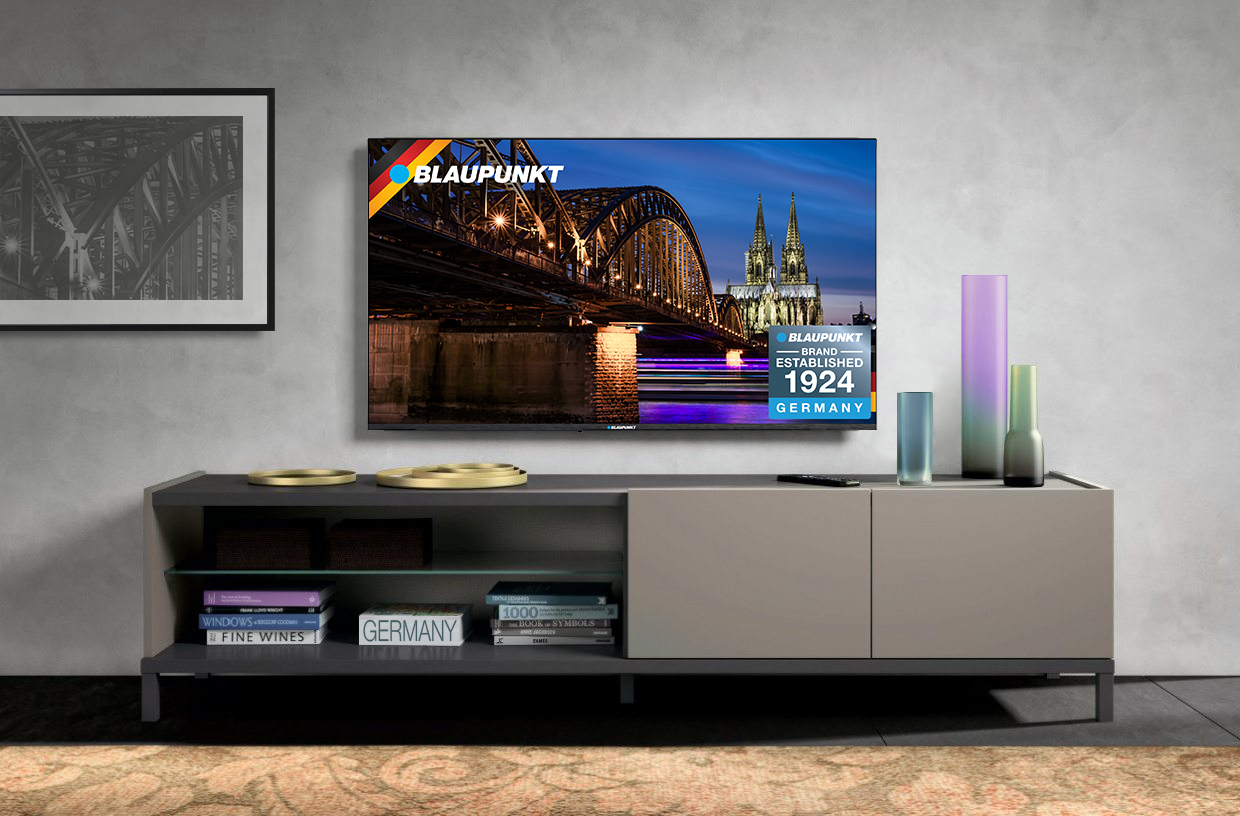
The Blaupunkt 65UN265 combines a conventional slim-bezel front with a wide selection of rear and side-facing connections.
The Blaupunkt 65UN265 is presented as a typical modern affordable Android TV with practical connectivity and a straightforward physical design.
Its slim-looking front frame, small legs and familiar black finish are paired with a fairly complete socket layout, including four HDMI 2.0 inputs, USB ports, Ethernet, optical audio, headphone output, antenna connections and legacy video inputs.
The appeal here is not luxury construction, but everyday usability and broad device compatibility at a budget-conscious level.
Best for: Budget buyers needing broad connectivity
- Affordable Android TV positioning
- Four HDMI 2.0 inputs
- USB, Ethernet and optical audio included
- Headphone and antenna connections provided
Verdict: The Blaupunkt 65UN265 stands out as a practical large-screen Android TV choice where inputs and everyday flexibility matter more than premium design flourishes.
3. Samsung QN85D: Affordable Neo QLED TV
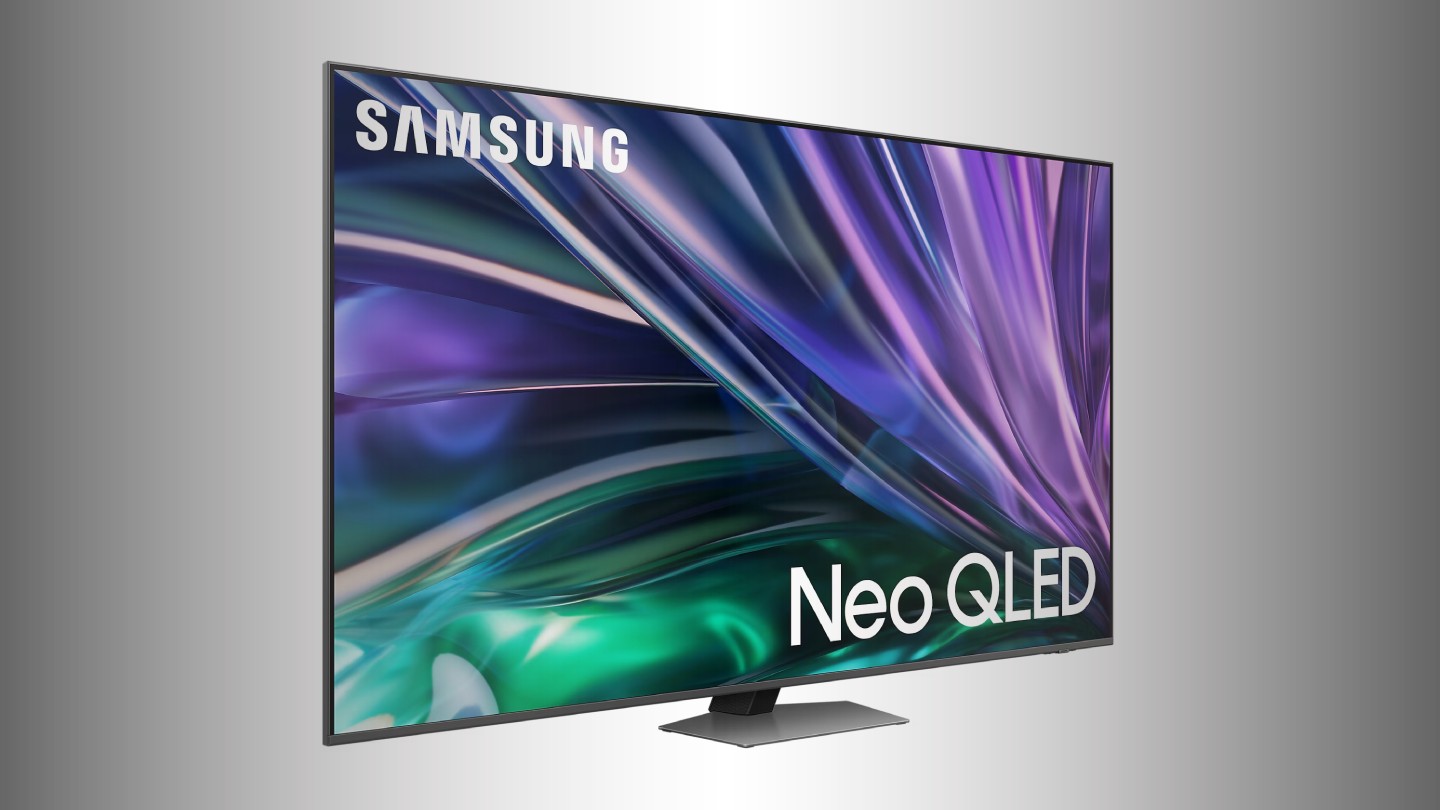
Samsung’s QN85D uses a central hexagonal stand and Mini-LED Neo QLED display technology in sizes from 55 inches to 85 inches.
The Samsung QN85D sits as an entry-level, mid-range model within Samsung’s Neo QLED family and is distinguished from standard QLED sets by Mini-LED backlighting.
The source notes VA-type panels with a special coating intended to enhance viewing angles, plus a screen-size spread from 55 inches to 85 inches.
Its centrally positioned hexagonal stand, textured rear finish and port placement are also highlighted, giving it a practical design for stand use or close wall placement.
Best for: Samsung buyers wanting Mini-LED without moving to the higher tier
- Mini-LED backlighting
- Neo QLED positioning below QN90D
- 55-inch to 85-inch size range
- Ports arranged for close wall placement
Verdict: The QN85D is the Samsung option to shortlist when Mini-LED Neo QLED technology is the priority but the step-up QN90D is more than required.
4. Panasonic JZ2000 – New 8K OLED flagship TV
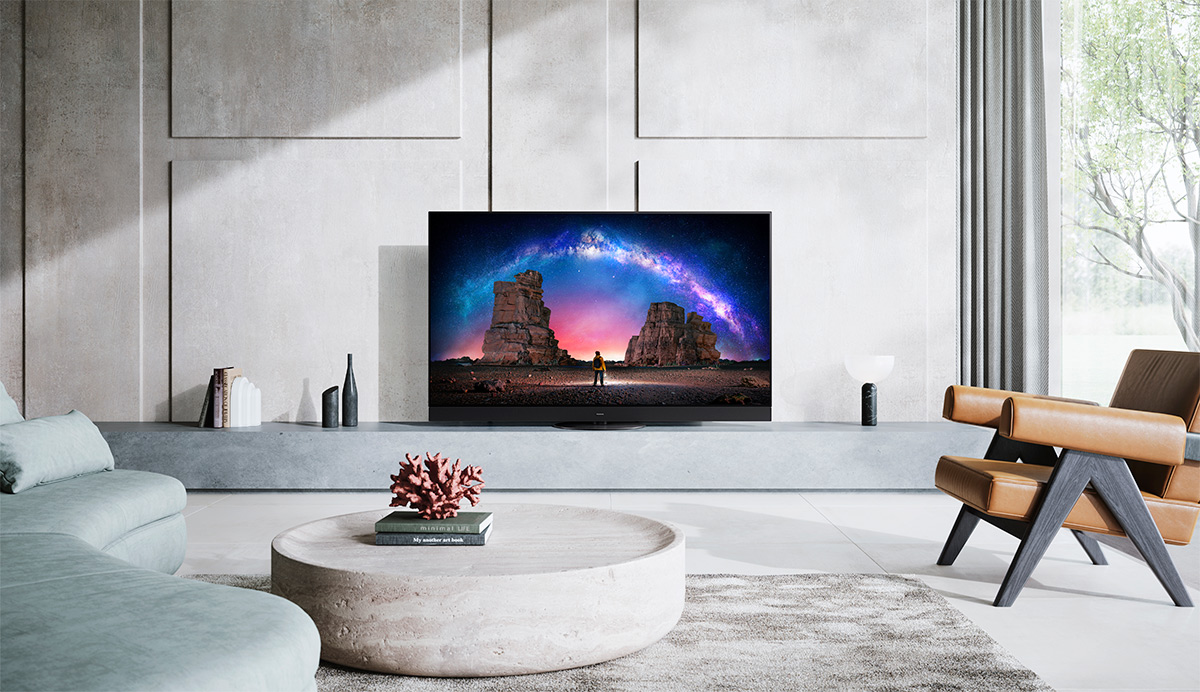
The Panasonic JZ2000 pairs an enhanced OLED panel with expanded speaker placement and automatic picture and sound optimisation.
The Panasonic JZ2000 is described as a flagship OLED TV range aimed at viewers who care about movie presentation and immersive sound.
The source highlights colour settings associated with Hollywood colourists, an enhanced OLED panel for higher peak and average brightness, and a speaker system that adds side-firing units to vertically directed speakers.
It also includes HDMI 2.1 features such as variable refresh rate and high frame rate support, making it relevant for both films and gaming.
Best for: Film-focused viewers who also want gaming features
- Flagship OLED positioning
- Colour tuning associated with Hollywood colourists
- HDMI 2.1 with VRR and HFR support
- Vertical and side speaker arrangement
Verdict: The JZ2000 is the most cinema-oriented entry here, combining Panasonic’s OLED emphasis with advanced sound and HDMI 2.1 gaming support.
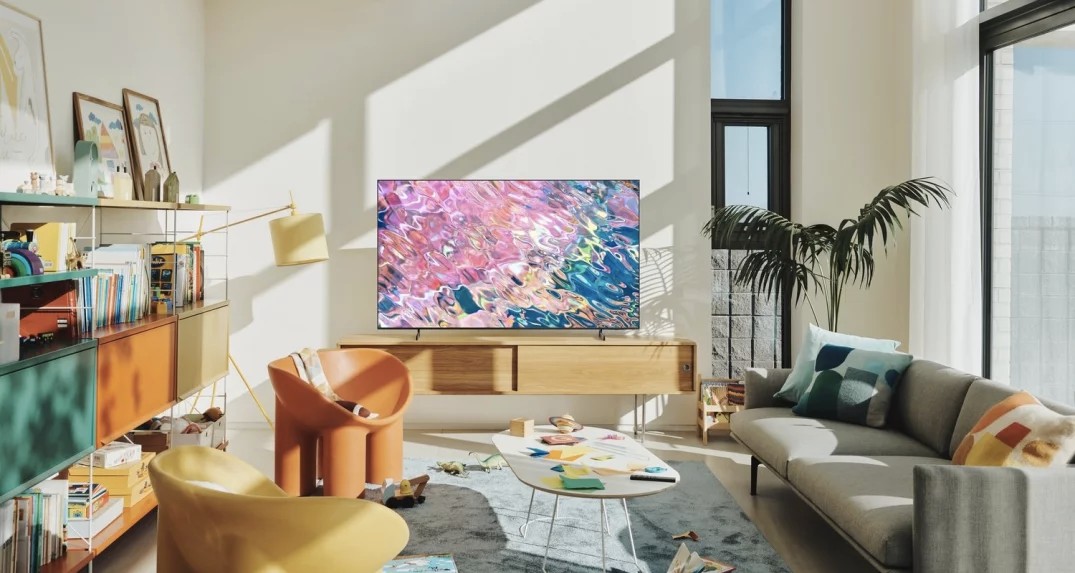
5. Q60B is Samsung’s most affordable QLED TV
Samsung’s Q60B brings QLED branding and quantum-dot technology to the brand’s most affordable QLED tier.
The Samsung Q60B is positioned as the most affordable model in Samsung’s QLED range.
The source makes clear that it has simpler specifications than higher models, including a 60 Hz refresh rate, edge-type backlight without local dimming, a Quantum 4K Lite processor and a basic 20 W audio system.
Its strengths are the use of quantum-dot technology, eARC and ALLM over HDMI 2.0, though the lack of VRR is an important limitation for serious gaming buyers to note.
Best for: Samsung QLED buyers on a tighter budget
- Most affordable Samsung QLED positioning
- Quantum-dot technology
- HDMI 2.0 with eARC
- ALLM support
Verdict: The Q60B is a sensible Samsung QLED entry point if quantum-dot colour matters more than higher-end gaming or local dimming features.
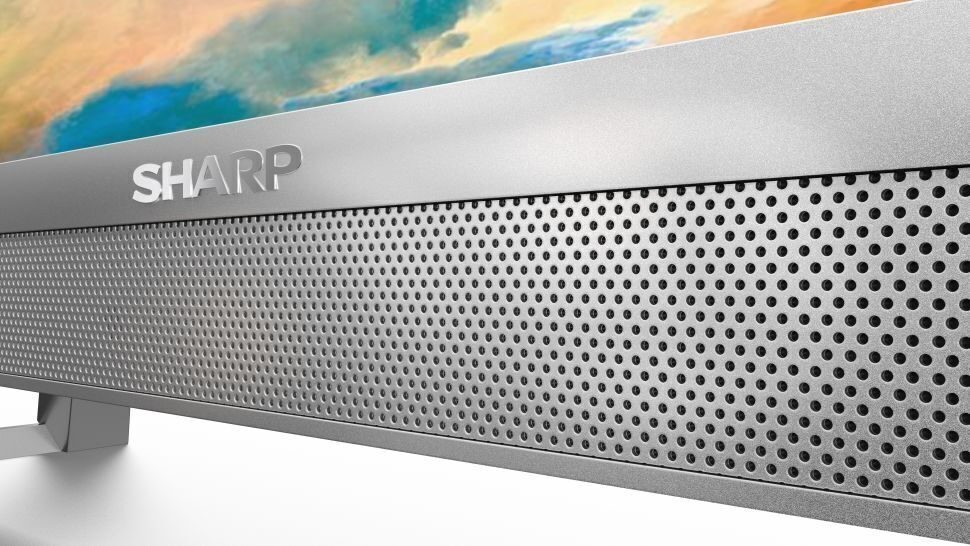
6. Sharp launches first quantum dot TV for Europe
Sharp’s EQ series introduces quantum-dot technology to the brand’s European TV lineup while adding HDMI 2.1 gaming features.
Sharp’s EQ series marks the brand’s first quantum-dot TV range for Europe and is described as a flagship line for most markets.
The source notes that the models remain edge-lit and top out at 4K resolution, but they bring a substantial gaming and audio update for Sharp: HDMI 2.1 ports with ALLM, VRR and 4K120 support, plus Harman Kardon audio with Dolby Atmos and DTS:X decoding and passthrough over HDMI.
Android TV provides the smart TV platform.
Best for: Sharp loyalists wanting quantum dots and gaming support
- Sharp’s first European quantum-dot TV range
- HDMI 2.1 with ALLM and VRR
- 4K120 support
- Harman Kardon audio with Dolby Atmos and DTS:X
Verdict: Sharp’s EQ series is most compelling for buyers who want the brand’s quantum-dot upgrade alongside HDMI 2.1 gaming features and expanded audio codec support.
7. LG UT91: Great Entry-Level 4K TV
The LG UT91 uses a central stand, thin bezels on three sides and LG’s webOS smart interface for everyday streaming use.
The LG UT91, also known as the LG UT9100, is LG’s entry-level 4K model above the UT8100 and below the NanoCell and QNED ranges.
The source describes it as a basic TV that lacks many advanced features from higher-end LG models, including VRR, Dolby Vision and HDR10+.
Even so, it includes LG’s α5 AI Processor Gen7 for audio and video upscaling, the Magic Remote, and the webOS smart interface with the usual streaming apps.
Best for: LG buyers seeking a simple 4K smart TV
- Entry-level LG 4K positioning
- α5 AI Processor Gen7
- LG Magic Remote included
- webOS smart interface
Verdict: The UT91 is the straightforward LG choice for everyday 4K viewing when advanced HDR formats and higher-refresh gaming features are not required.
8. LG QNED 87: Delivers incredible images at a decent price
The LG QNED 87 uses Mini-LED backlighting with Quantum Dot and Nanocell technologies, supported by a sturdy crescent-shaped stand.
The LG QNED 87 combines Quantum Dot and Nanocell technologies with a Mini-LED backlight system.
The source explains that smaller backlight LEDs allow for more lighting zones and precise local dimming, improving contrast and reducing light spread around bright objects.
Its design is described as simple rather than glamorous, with an icy silver finish, thin bezels, a sturdy crescent-shaped stand and a broad selection of ports arranged sideways or downward for wall mounting.
Best for: LG buyers wanting Mini-LED QNED performance
- Quantum Dot and Nanocell combination
- Mini-LED backlighting
- Precise local dimming described
- Ports arranged for wall-mount practicality
Verdict: The QNED 87 is the LG range to consider when Mini-LED local dimming and QNED panel technology are more important than the thinnest possible cabinet.
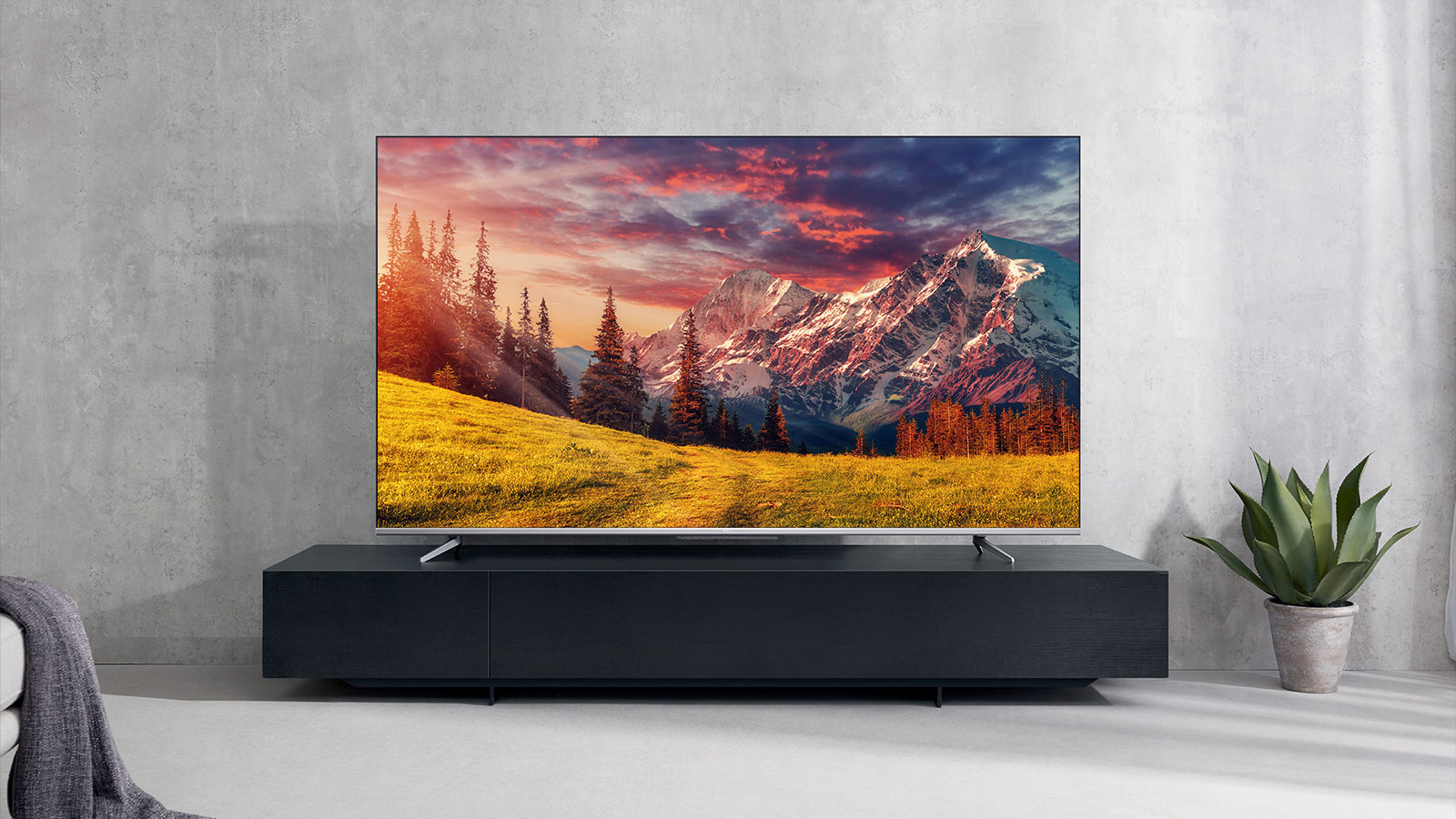
9. TCL P717: Captivating 4K TV with a minimalistic design
The TCL P717 uses a minimalist bezel design intended to keep attention on the 4K screen.
The TCL P717 is presented as an inexpensive 4K UHD TV with a strong emphasis on minimalist design.
The source describes a screen-focused look with reduced visual distraction from the bezel, plus Android 9 Pie as the operating system.
It is also clear about one trade-off: unlike some related TCL models, the P717 series does not include Dolby Vision support.
Best for: Value-focused buyers wanting a clean-looking TCL 4K TV
- 4K UHD TV positioning
- Minimalist design focus
- Android TV platform
- Inexpensive 4K category context
Verdict: The TCL P717 is worth considering as a simple, design-conscious 4K Android TV, provided Dolby Vision is not on the must-have list.
10. Sony X90L is the perfect PlayStation 5 TV
The Sony X90L is positioned for PlayStation 5 use, with 4K resolution, 120 Hz support and two HDMI 2.1 connectors.
The Sony X90L is explicitly framed around PlayStation 5 use.
The source lists 3840 x 2160 resolution, 120 Hz refresh support and two HDMI 2.1 connectors, with automatic detection and image-setting adjustment when a PlayStation 5 is connected.
It is also described as usable with other game consoles thanks to advanced game-mode tools, making it the clearest console-focused recommendation in this selection.
Best for: PlayStation 5 owners and console gamers
- Designed primarily for PlayStation 5 use
- 120 Hz refresh support
- Two HDMI 2.1 connectors
- Automatic PS5 image-setting adjustment
Verdict: The X90L is the most directly gaming-focused Sony option here, especially for PlayStation 5 owners who want console-aware setup features.
Quick comparison
These ten entries differ less by headline size and more by technology, platform and intended use.
The clearest distinctions are Mini-LED versus standard QLED or entry-level 4K, Android TV versus webOS, and whether the set or range is aimed at gaming, cinema, affordability or broad connectivity.
| Product | Best for | Verdict |
|---|---|---|
| TCL will only sell 4K TVs in Europe | Understanding TCL’s European 4K range direction | Most useful as a buying-context entry for shoppers comparing TCL’s S and Q series approach. |
| Blaupunkt 65UN265: Affordable Android TV | Affordable Android TV with many input options | A practical choice to research when connectivity and value are the main concerns. |
| Samsung QN85D: Affordable Neo QLED TV | Entry-level Samsung Neo QLED with Mini-LED | A step into Samsung’s Mini-LED range without moving to the higher QN90D tier. |
| Panasonic JZ2000 – New 8K OLED flagship TV | OLED movie viewing with expanded speaker design | The cinema-led option in this group, also equipped with HDMI 2.1 gaming features. |
| Q60B is Samsung’s most affordable QLED TV | Lower-cost Samsung QLED ownership | A QLED entry point with quantum dots, eARC and ALLM, but without VRR or local dimming. |
| Sharp launches first quantum dot TV for Europe | Quantum-dot Sharp TV with HDMI 2.1 gaming modes | Sharp’s EQ series adds quantum dots, Android TV, 4K120 gaming support and broader audio codec handling. |
| LG UT91: Great Entry-Level 4K TV | Simple LG 4K smart TV use | A basic LG model with webOS, Magic Remote and α5 processing, but without VRR, Dolby Vision or HDR10+. |
| LG QNED 87: Delivers incredible images at a decent price | LG QNED with Mini-LED local dimming | A stronger LG display-technology option than entry-level 4K, with a thicker, heavier design trade-off. |
| TCL P717: Captivating 4K TV with a minimalistic design | Minimalist 4K Android TV on a value brief | A clean-looking TCL 4K option for buyers who can live without Dolby Vision. |
| Sony X90L is the perfect PlayStation 5 TV | PlayStation 5 and console gaming | The clearest gaming-first entry thanks to 120 Hz support, two HDMI 2.1 ports and PS5 auto-adjustment. |
Frequently asked questions
Should I choose Mini-LED, QLED, QNED or OLED?
Use the supplied models as a guide to priorities.
Mini-LED entries such as Samsung QN85D and LG QNED 87 focus on backlight control and local dimming.
Samsung Q60B and Sharp EQ use quantum-dot approaches at different feature levels. Panasonic JZ2000 is the OLED-oriented cinema choice in this selection. LG UT91 and TCL P717 are more straightforward 4K smart TV options.
Which TVs here are most relevant for gaming?
Sony X90L is the most directly console-focused option because it is described around PlayStation 5 use, 120 Hz support, two HDMI 2.1 connectors and automatic PS5 image-setting adjustment.
Sharp EQ is also relevant with HDMI 2.1, ALLM, VRR and 4K120 support.
Panasonic JZ2000 includes HDMI 2.1 with VRR and HFR, while Samsung Q60B has ALLM but no VRR.
Do all affordable 4K TVs support the same HDR and gaming features?
No.
The LG UT91 is described as lacking Dolby Vision, HDR10+ and VRR, while the TCL P717 also lacks Dolby Vision.
Samsung Q60B has eARC and ALLM but no VRR. If those features matter, check the exact model specification rather than assuming every 4K TV includes them.
How important is the smart TV platform?
It matters if you want a familiar app interface and remote experience.
Blaupunkt 65UN265, Sharp EQ and TCL P717 are Android TV-based in the source material, while LG UT91 uses webOS and includes the Magic Remote.
Platform preference should sit alongside picture technology, HDMI features and room placement needs.
How to choose from this TV shortlist
Start with your main use.
For PlayStation 5 or console gaming, the Sony X90L is the clearest match in the supplied material, while Sharp EQ and Panasonic JZ2000 also offer notable HDMI 2.1 gaming features.
If you want Samsung Mini-LED without stepping higher in the range, QN85D is the relevant Neo QLED entry; if you want the most affordable Samsung QLED positioning, Q60B is the simpler alternative, with the important caveat that it lacks VRR and local dimming. For LG buyers, the choice is more about ambition. UT91 is the basic 4K smart TV with webOS, Magic Remote and α5 processing, but it omits several advanced features. QNED 87 moves into Quantum Dot, Nanocell and Mini-LED territory with local dimming, while accepting a thicker and heavier design. Panasonic JZ2000 is the cinema-led OLED entry, supported by its colour-tuning story, enhanced OLED panel and expanded speaker layout. Value-focused shoppers should not overlook the practical entries. Blaupunkt 65UN265 makes sense when affordable Android TV and generous connectivity are key. TCL P717 is a minimalist 4K Android TV to consider if Dolby Vision is not essential. The TCL European lineup article is different from the others, but it is useful context: it shows why TCL’s European emphasis is shifting toward 4K, Mini-LED, quantum dots and gaming-oriented models. The safest buying approach is to separate must-have features from nice-to-have extras before comparing prices. If you need 120 Hz, VRR, Dolby Vision, Mini-LED local dimming, a specific smart platform or wall-friendly port placement, confirm that the exact model and screen size you are considering includes it. The best fit is not the TV with the longest feature list; it is the one whose documented strengths match how and where you will actually watch.