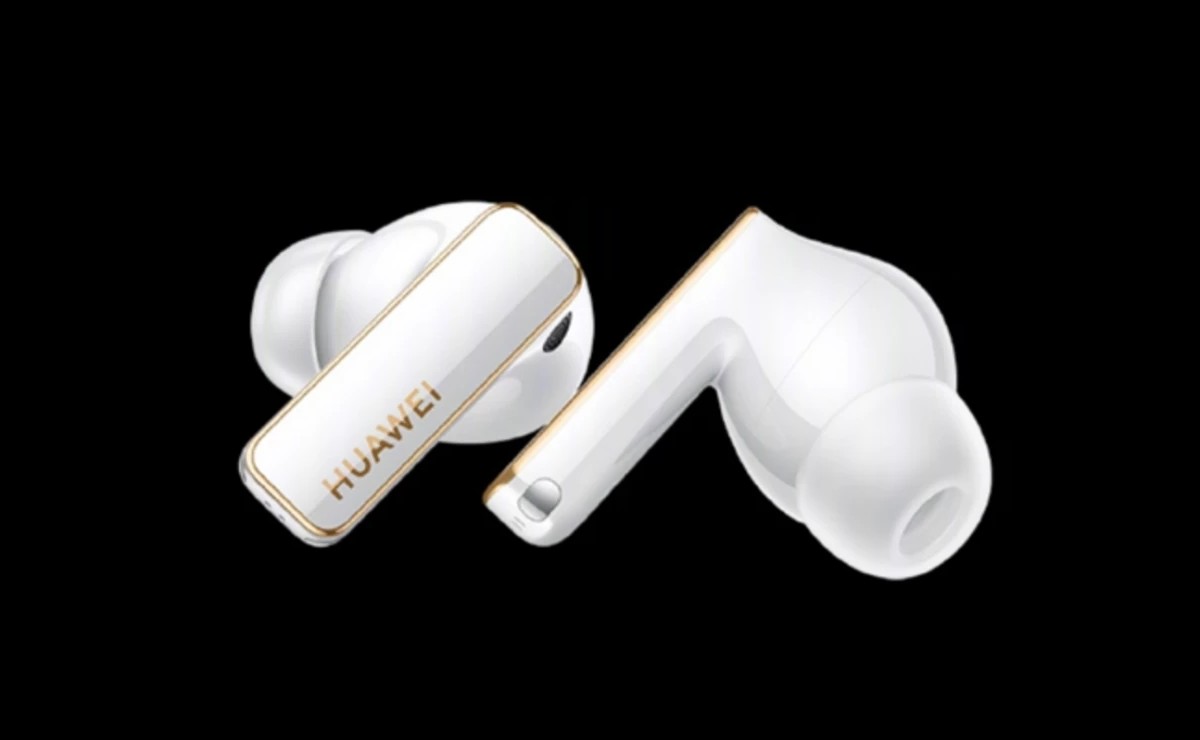
The Huawei FreeBuds Pro 2+ occupy an unusual space in the true wireless earbud category. Rather than focusing only on music playback, calling, or noise cancellation, they add a health-oriented dimension: the ability to measure the user’s pulse rate and temperature. That makes them noteworthy not simply as another set of premium-style TWS earbuds, but as an example of how everyday listening devices are starting to overlap with wearable health technology.
For prospective owners, the attraction is not just one feature in isolation. The FreeBuds Pro 2+ combine several documented elements that matter in daily use: an acoustic system developed with Devialet, a hybrid driver arrangement, high-resolution Bluetooth codec support, active noise cancellation rated for up to 47 dB of noise reduction, and biometric monitoring that can operate continuously or on demand. Taken together, these choices suggest a product designed for people who want their earbuds to do more than provide background audio.
A True Wireless Earbud With Wearable-Style Health Functions
The defining feature of the Huawei FreeBuds Pro 2+ is their ability to measure both pulse rate and user temperature. Huawei describes the model as the first fully wireless headphone capable of measuring these two indicators. Heart-rate measurement can be carried out continuously or triggered on demand, giving the feature more flexibility than a single occasional reading.
For users who already rely on wearable devices to track basic physiological data, this kind of integration is potentially useful because earbuds are often worn during commuting, working, exercising, and calls. The ear is also a stable wearing position for a device that needs physical contact with the body. While the source information does not position the FreeBuds Pro 2+ as a medical device, Huawei states that heart-rate measurement accuracy is 95 percent compared with traditional methods.
The practical appeal is convenience. A listener can use one compact device for audio playback, noise reduction, and basic monitoring rather than switching between multiple accessories. For some buyers, this may be the most distinctive reason to consider the FreeBuds Pro 2+: health-sensing capability is not common in true wireless earbuds, especially when combined with a specification set aimed at serious everyday listening.
Acoustics Developed With Devialet
The acoustic part of the FreeBuds Pro 2+ was developed jointly with French audio company Devialet. That collaboration is significant because it indicates that Huawei has not treated the model merely as a sensor platform with audio added as an afterthought. Instead, the earbuds include a dedicated acoustic architecture intended to support high-quality playback within the space constraints of a true wireless design.
The driver system uses both an armature driver and an 11 mm dynamic driver. This hybrid approach is common in compact earphones where different driver types can be assigned complementary roles. An armature driver is often used where precision and compactness are priorities, while a dynamic driver is well suited to moving air and supporting low-frequency output. The source material does not specify the crossover arrangement or exact division of labor between the drivers, so it is best to view the design as an engineering choice aimed at broadening the capabilities of the small enclosure.
The 11 mm dynamic driver uses a magnetic system with four magnets, a design said to increase output by 30 percent. In practical terms, stronger motor structures can help a small driver operate more effectively, particularly where a true wireless earbud must balance diaphragm movement, battery life, enclosure volume, and processing demands. The stated lower limit of the headphone frequency range is 14 Hz, a specification that underlines Huawei’s emphasis on extended low-frequency capability within the FreeBuds Pro 2+ design.
High-Resolution Bluetooth Codec Support
Wireless codec support is one of the more important technical details in modern true wireless earbuds, particularly for listeners using compatible phones or music services. The Huawei FreeBuds Pro 2+ support both L2HC and LDAC codecs, allowing transmission of a high-definition signal at 960 to 990 kb/s according to the supplied information.
This matters because Bluetooth audio quality is influenced not only by the earbud drivers, but also by the way audio data is encoded and transmitted from the source device. Higher-bitrate codecs can preserve more information than basic Bluetooth options when used with compatible equipment and suitable source material. For a user with a device that supports LDAC or Huawei’s L2HC, the FreeBuds Pro 2+ provide a route to higher-data-rate wireless listening than conventional low-bitrate connections.
Compatibility remains an important practical consideration. Codec benefits depend on the smartphone, tablet, or player being able to transmit using the same codec, and on the user selecting appropriate settings where required. Still, the inclusion of both LDAC and L2HC gives the FreeBuds Pro 2+ a broader technical foundation for listeners who care about the signal path before the audio reaches the drivers.

Active Noise Cancellation With Multiple Modes
The FreeBuds Pro 2+ include an active noise cancellation system rated to reduce extraneous noise by up to 47 dB. Noise cancellation is one of the most useful features in true wireless earbuds because it affects how and where the product can be used: public transport, offices, city streets, aircraft cabins, and shared domestic spaces all present different kinds of background noise.
The presence of several operating modes is also important. A single fixed ANC setting can be too aggressive in some environments and insufficient in others. Multiple modes allow the earbuds to be adapted to different listening situations, whether the goal is reducing steady low-frequency noise, managing a moderately loud workspace, or preserving more awareness when full isolation is not desirable.
The documented 47 dB figure should be understood as a manufacturer-stated capability rather than a universal result in every situation. ANC performance depends on fit, ear shape, noise type, and selected mode. Even so, the inclusion of a multi-mode system positions the FreeBuds Pro 2+ as a daily-use product, not just a pair of earbuds for occasional music playback.
Why the Design Combination Is Distinctive
What makes the Huawei FreeBuds Pro 2+ distinctive is not simply that they include many features, but that the feature mix crosses categories. They are true wireless earbuds with advanced codec support, a hybrid acoustic platform, active noise cancellation, and built-in biometric measurement. Many products focus on one of those areas. The FreeBuds Pro 2+ attempt to bring them into one compact device.
That matters for usability. A commuter might value ANC and high-bitrate codec support. A fitness-oriented user might care about pulse monitoring. A frequent caller or office worker might appreciate earbuds that can remain in place through long periods of daily wear while offering both audio and basic health tracking. The FreeBuds Pro 2+ are designed around the idea that earbuds can be part of a broader personal technology ecosystem rather than a single-purpose listening accessory.
The collaboration with Devialet and the inclusion of LDAC and L2HC also help separate the product from basic health-gadget positioning. Huawei appears to be targeting users who still expect a serious audio feature set, even if the headline novelty is temperature and pulse measurement.
Who the Huawei FreeBuds Pro 2+ Are Most Suitable For
The FreeBuds Pro 2+ are most suitable for users who want a single pair of true wireless earbuds to cover several roles: music listening, travel or office noise reduction, high-resolution Bluetooth playback with compatible devices, and basic health-related monitoring. They are especially relevant to people already invested in Huawei devices or other equipment that can take advantage of L2HC or LDAC codec support.
They may also appeal to listeners who are curious about wearable-style features but prefer not to wear a separate watch or band at all times. The option to measure heart rate continuously or on demand adds flexibility for users who want occasional checks as well as longer tracking sessions.
They are less clearly aimed at buyers who only need simple, inexpensive earbuds for casual listening, or at users who do not expect to use the health-sensing functions. Likewise, anyone considering them specifically for biometric tracking should keep in mind that the available information states manufacturer-claimed accuracy but does not provide independent validation or medical positioning. As with any sensor-equipped consumer device, expectations should be practical rather than clinical.

Market Position and Availability Context
The Huawei FreeBuds Pro 2+ went on sale in the Chinese market. The supplied information lists the launch price in yuan, but no official USD price is provided here, so it is more useful to focus on the product’s positioning than on direct price discussion.
Within the broader true wireless category, the FreeBuds Pro 2+ sit at the intersection of premium convenience features and experimental wearable integration. Their specification set suggests a product intended for buyers who pay attention to more than brand recognition or battery-case design. The combination of hybrid drivers, Devialet involvement, high-bitrate codec support, multi-mode ANC, and body-sensing functions gives the earbuds a defined identity in a crowded market.
Conclusion
The Huawei FreeBuds Pro 2+ are compelling because they combine several documented strengths in one true wireless design: pulse and temperature measurement, continuous or on-demand heart-rate tracking, Devialet-developed acoustics, a hybrid armature and 11 mm dynamic driver system, LDAC and L2HC codec support, and active noise cancellation rated at up to 47 dB. Their strongest appeal is to users who want earbuds that function as both a capable wireless audio device and a convenient personal technology accessory. For listeners with compatible source devices, an interest in high-resolution Bluetooth transmission, and a practical use for integrated health sensing, the FreeBuds Pro 2+ offer a notably distinctive feature set without losing sight of core everyday earbud functions.