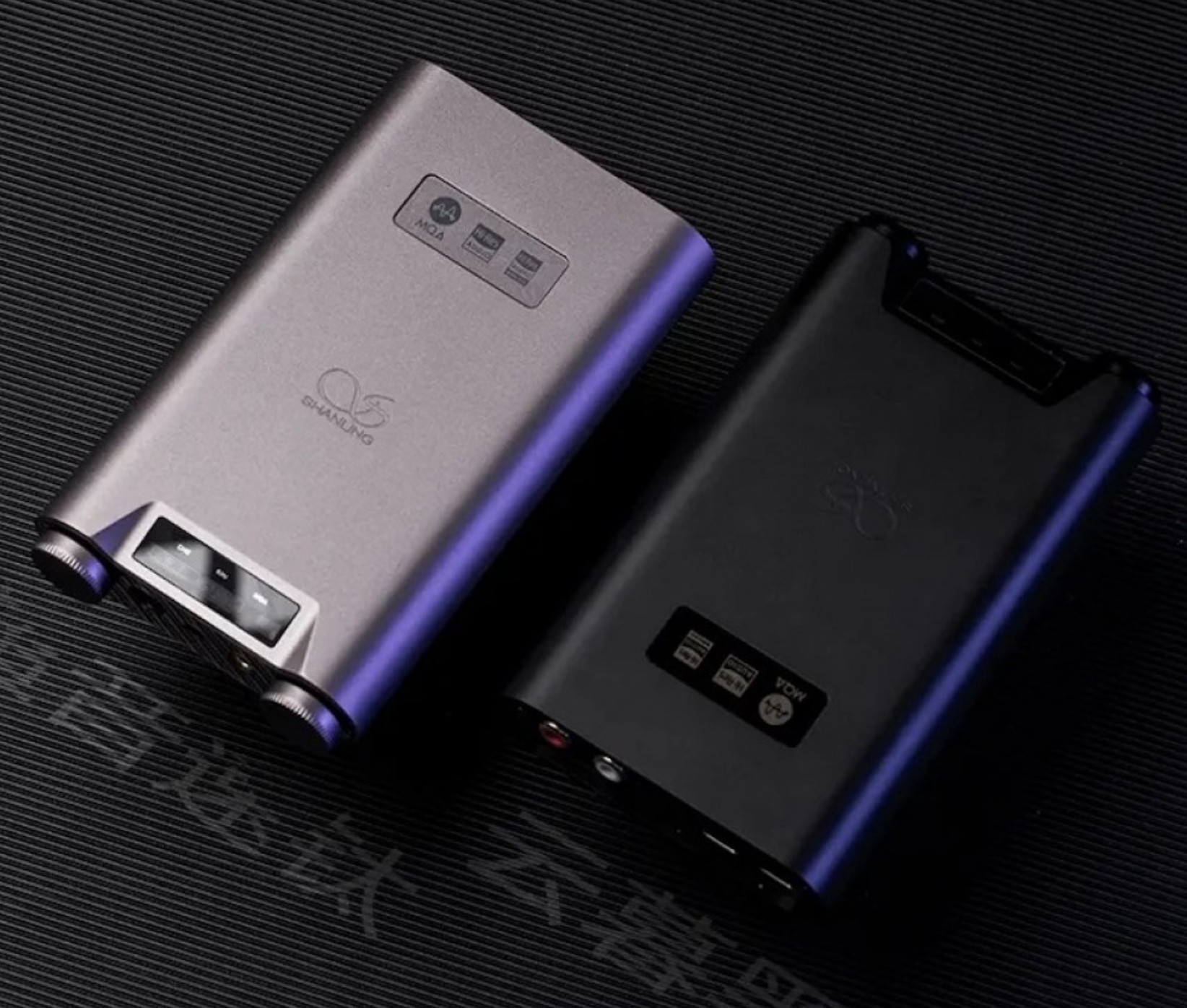
The Shanling H7 occupies an interesting space in the personal-audio market. It is not simply a small USB dongle, and it is not a conventional desktop DAC/amplifier either. Instead, it combines a substantial battery-powered form factor with a wide range of digital inputs, headphone outputs and system options. For listeners who move between a computer, a phone, a microSD music library, game consoles and a home audio setup, that kind of flexibility is the product’s central appeal.
A compact component with a serious feature set
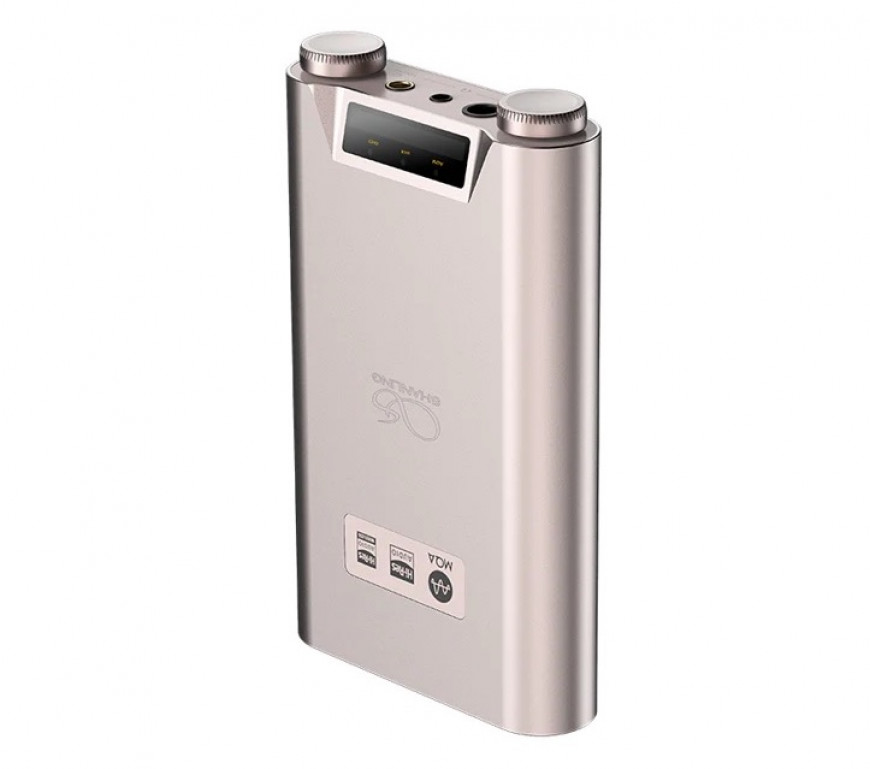
At 142 x 85 x 25 mm and 352 grams, the Shanling H7 is portable, but it is clearly built more like a transportable hi-fi device than an ultra-minimal pocket accessory. The aluminum case, rotary volume control and physical gain switching give it a more component-like approach to daily use. Those choices matter because a DAC/headphone amplifier often becomes a hands-on product: owners adjust volume frequently, switch between headphones, and may use it in different places throughout the day.
The inclusion of three gain levels is particularly useful for a product intended to serve more than one type of headphone or earphone. Sensitive in-ear monitors and more demanding full-size headphones do not need the same amount of amplifier gain. Having gain adjustment on the unit allows the user to better match the output behavior to the connected headphone, rather than relying only on software volume controls from a computer or phone.
The H7 also includes a 1.44-inch OLED screen. On a device that supports several input methods and file types, a display is more than decoration. It can make operation clearer, especially when the unit is used away from a computer screen or when switching between local playback, USB input and wireless listening.
AKM-based digital conversion and high-resolution USB support
The H7 is built around AK4191EQ and AK4499EX digital-to-analog conversion hardware. Shanling’s use of this AKM chipset places the product in a modern high-resolution DAC category, and it helps define the H7 as more than a basic portable amplifier with a USB input. For prospective owners, the significance is not just the chip names themselves, but the fact that the device has been specified to handle demanding digital formats.
Through its USB-C input, incoming audio is processed by an XMOS XU316 receiver. The H7 supports PCM streams up to 32-bit/768 kHz and native DSD512, and it fully decodes MQA files. Not every listener owns files at these limits, but broad format support can be valuable over the life of a product. It reduces the chance that a high-resolution library, specialist downloads or particular playback software will require a different DAC later.
The USB-C connection also reflects how many listeners now use a DAC/amp. A single product may be connected to a laptop during work, a phone or tablet during travel, and a game console in the evening. The H7’s documented support for PS5 and Nintendo Switch strengthens that multi-use angle, making it relevant not only for music playback but also for users who want to route console audio through a dedicated headphone amplifier.
Wired headphones are given several connection options
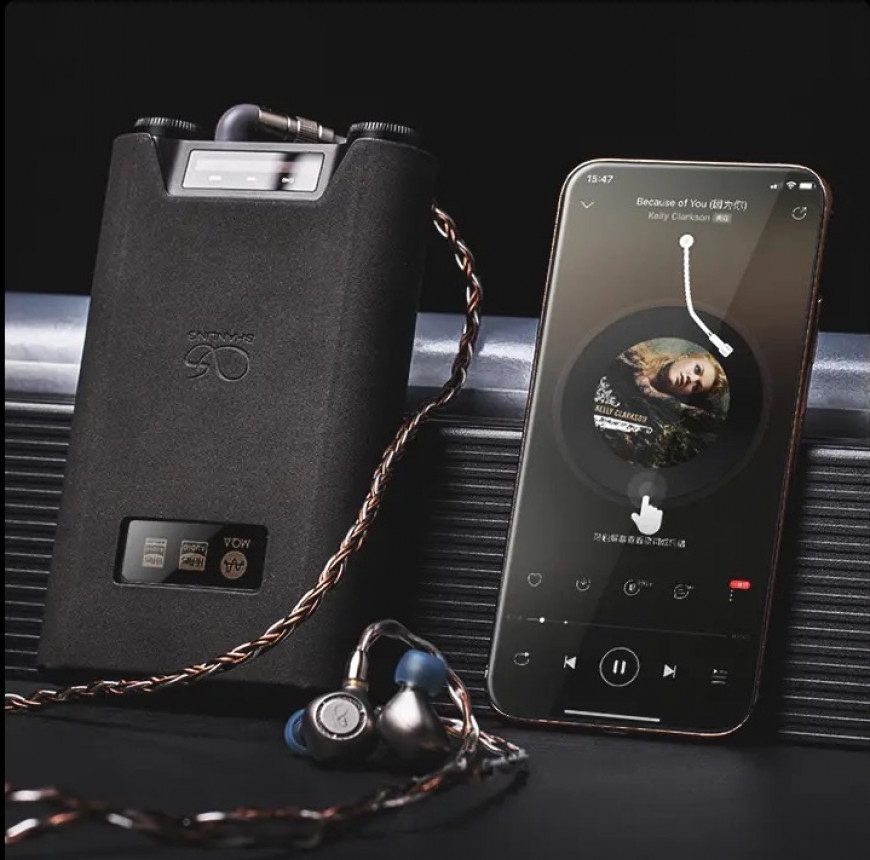
The H7 provides three headphone outputs: 3.5 mm, 4.4 mm and 6.35 mm, with the 6.35 mm socket specified as manufactured by Neutrik. This set of outputs is one of the product’s most practical strengths. The 3.5 mm jack covers many portable headphones and earphones, the 4.4 mm output supports balanced headphone cables, and the 6.35 mm output accommodates the larger plugs commonly found on home and studio-oriented headphones.
The maximum balanced output power is listed as 1300 mW into 32 ohms. That figure is important because it indicates that Shanling designed the H7 with more than very easy-to-drive earphones in mind. While headphone matching always depends on impedance, sensitivity and the user’s listening requirements, the presence of a balanced output and substantial stated output power gives the unit a wider potential role than a simple phone accessory.
For owners with multiple headphones, the combination of output formats and gain settings can reduce friction. A portable in-ear monitor, a balanced cable and a full-size headphone with a 6.35 mm plug can all be connected without immediately requiring adapters. That is a small usability detail on paper, but it can make the product easier to integrate into a real collection of headphones.
Bluetooth LDAC adds convenience without removing wired options
The H7 supports Bluetooth connectivity with the LDAC codec. This gives the unit an additional role for users who do not always want to attach a cable from a source device. For example, a phone can send audio wirelessly while the H7 remains connected to wired headphones. That arrangement can be useful when the source device needs to stay mobile or when USB cabling is inconvenient.
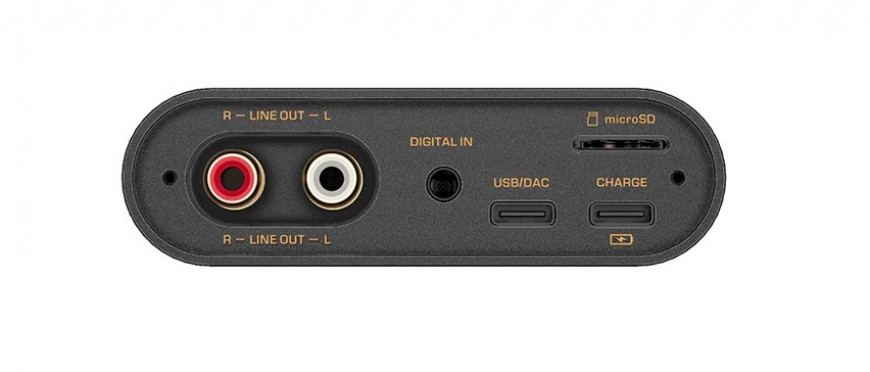
The important point is that Bluetooth is not the only path into the H7. It sits alongside USB-C, a digital signal input through a 3.5 mm jack on the bottom panel, and local playback from microSD. That breadth makes the H7 more adaptable than products designed around a single source type. A listener can use wired USB for a computer, Bluetooth for convenience, and local storage when they want to keep playback independent of a phone or laptop.
LDAC support is also meaningful because it is one of the higher-capability Bluetooth codecs commonly used in audio-focused products. It does not turn Bluetooth into the same operating mode as native high-resolution USB or local file playback, but it does make the wireless input more relevant for listeners who care about audio quality while still valuing convenience.
MicroSD playback and desktop DAC use broaden its role
A notable feature of the H7 is its microSD card slot, which supports cards up to 2 TB. This opens up a different usage pattern from the usual phone-tethered DAC/amp. A large music library can be stored locally, allowing the H7 to function with less dependence on a streaming device or computer. For users who maintain high-resolution files, downloaded albums or carefully organized offline libraries, the microSD option is a strong practical advantage.
The H7 can also work as a desktop DAC, with line output provided on RCA connectors. This is an important design choice because it lets the device move beyond headphone-only use. In a small system, the H7 can feed an amplifier or powered speaker setup as a DAC. In a headphone-focused workspace, it can serve as the central digital audio interface while still being portable enough to move elsewhere.
This dual identity is one of the H7’s most distinctive documented qualities. It is battery-powered, compact and headphone-oriented, yet it includes the kind of RCA line output associated with traditional hi-fi integration. That makes it attractive for listeners who do not want to buy separate DACs for a desk, a headphone station and a portable setup.
Battery power and physical design support mobile use
The H7 includes a built-in 6800 mAh battery. Battery operation is essential to the product’s appeal because it allows the DAC and amplifier section to be used independently of the source device’s power in many scenarios. It also makes the H7 more suitable for portable and transportable use than a USB-powered desktop unit.
The aluminum enclosure contributes to the sense that the H7 is designed as a durable, self-contained audio component. Its 352-gram weight means it is not an invisible add-on to a smartphone, but that mass is consistent with a product carrying a large battery, multiple outputs, physical controls and desktop connectivity. Prospective buyers should see it as a compact hi-fi device that can travel, rather than a featherweight accessory intended only for a pocket.
The rotary volume control is another important usability element. Many users prefer a dedicated physical volume interface on a headphone amplifier, particularly when connected to full-size headphones or when switching between source devices. Combined with the OLED display and gain switches, the H7 gives users direct control without forcing every adjustment through a phone, computer or app interface.
Who the Shanling H7 is most suitable for
The Shanling H7 is best suited to listeners who want one DAC/headphone amplifier to cover several roles. It makes sense for someone who uses wired headphones at a desk, carries a high-resolution music library, wants Bluetooth available when convenient, and may also want to feed a home audio system through RCA line outputs. Its documented support for USB high-resolution playback, native DSD512, MQA decoding, LDAC Bluetooth, microSD storage and console compatibility gives it a broad operating range.
It is also well aligned with headphone owners who have more than one cable or connector format. The presence of 3.5 mm, 4.4 mm and 6.35 mm outputs means the H7 is not locked to a single headphone ecosystem. The three gain levels add another layer of flexibility for matching different earphones and headphones.
However, it may be more device than a listener needs if the goal is only a tiny travel DAC for casual phone use. Its size, weight and $829 online selling price point to a more committed personal-audio audience. The H7 is most compelling for users who will actually take advantage of its multiple inputs, output formats, local storage, battery operation and desktop DAC capability.
Conclusion
The Shanling H7 stands out for its combination of modern AKM-based conversion, XMOS USB handling, broad high-resolution format support, full MQA decoding, LDAC Bluetooth, microSD storage up to 2 TB, multiple headphone outputs and RCA line output. Its aluminum case, OLED display, rotary volume control, three gain levels and 6800 mAh battery reinforce its role as a flexible transportable DAC and headphone amplifier rather than a simple add-on accessory. For listeners who want a single device to serve phones, computers, game consoles, wired headphones and a compact hi-fi system, the H7’s strongest documented quality is its unusually wide practical versatility.