



The Pro-Ject Speaker Box 5 E Carbon is a compact passive loudspeaker built around a familiar hi-fi idea: keep the enclosure manageable, use a two-way driver layout, and pay careful attention to cabinet and cone materials. Rather than presenting itself as a large floorstanding solution or a wireless all-in-one product, it is a conventional stereo loudspeaker intended to be partnered with an external amplifier. That makes its design choices especially relevant for listeners assembling a compact hi-fi system, upgrading a small-room setup, or looking for passive speakers that can sit on stands, furniture, or potentially be wall-mounted with the optional bracket.
A material upgrade at the heart of the design
The central change in the Speaker Box 5 E Carbon is its woofer. Pro-Ject has taken the existing Speaker Box 5 E concept and fitted it with a custom 5-inch glass-fiber carbon-composite bass/midrange driver. In a two-way speaker of this size, the woofer is responsible for a large portion of the audible spectrum, not just bass. It must handle lower frequencies while also covering much of the midrange before handing over to the tweeter. That makes cone construction an important part of the speaker’s overall engineering story.
A carbon-composite cone is typically chosen for the way it can combine low mass with stiffness. In practical terms, the attraction is control: a cone needs to move quickly, stop cleanly, and resist unwanted flexing as it reproduces music. Pro-Ject’s use of a glass-fiber carbon-composite driver gives this model a distinctive technical identity within the brand’s compact speaker range. It is not merely a cosmetic update; it changes one of the key moving elements of the loudspeaker.
Two-way simplicity with a silk dome tweeter
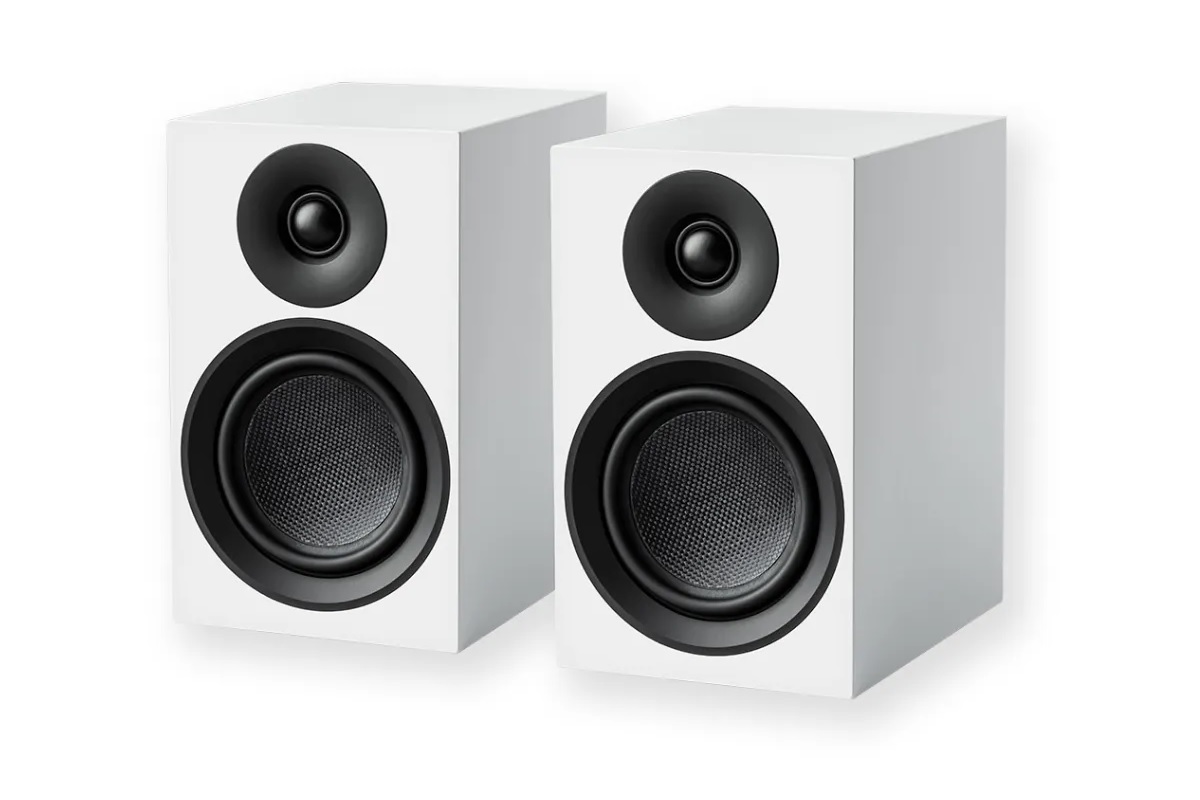
The Speaker Box 5 E Carbon uses a classic two-way configuration, pairing the 5-inch composite woofer with a 1-inch silk dome tweeter. This is a deliberately straightforward architecture. Instead of adding more drivers and a more complex cabinet, the design relies on two drive units dividing the frequency range between them. For many compact hi-fi systems, that simplicity is part of the appeal: fewer drivers can mean a cleaner physical layout and a design that is easier to place in a room.
The silk dome tweeter is another notable choice. Silk domes are widely used in hi-fi loudspeakers because they can be integrated into compact cabinets and are suited to the upper-frequency duties required in a two-way design. In this speaker, the tweeter completes a claimed frequency response from 65 Hz to 20 kHz. That documented range underlines the product’s intended role as a compact full-range stereo speaker for music systems, while also making clear that this is not a large-box design aimed at the deepest bass extension on its own.
A rigid MDF cabinet for a compact passive speaker
Pro-Ject mounts the drivers in an ultra-rigid, non-resonant MDF cabinet. That cabinet construction matters because a loudspeaker enclosure is not just a box that holds the drivers; it is part of the acoustic system. Unwanted cabinet vibration can add coloration or blur the output of the drive units. By specifying a rigid MDF enclosure, Pro-Ject is emphasizing mechanical stability and resonance control as part of the Speaker Box 5 E Carbon’s design priorities.
For a compact speaker, cabinet quality is especially important because the enclosure has limited internal volume. The designer must balance size, stiffness, bass tuning, and driver behavior within a relatively small footprint. MDF remains a common material in loudspeaker construction because it can be formed accurately and can provide consistent density. In this model, the cabinet is presented as a functional element rather than simply a surface to carry the finish.
Rear bass reflex tuning and placement considerations
The Speaker Box 5 E Carbon uses a bass reflex port on the rear. A reflex port is used to support low-frequency output from a compact cabinet by tuning the movement of air within the enclosure. This is a common approach in standmount and bookshelf loudspeakers, and it helps explain how a speaker of this type can be specified down to 65 Hz while remaining relatively compact.
The rear-facing port is also a practical detail for owners to consider. Speakers with rear ports can respond to nearby wall boundaries, so placement will matter. Some listeners may prefer them on stands with some space behind the cabinet, while others may use them on furniture or closer to a wall depending on room layout and available space. The optional wall bracket adds another possible installation route, but prospective owners should remember that wall proximity is part of the acoustic environment for any rear-ported loudspeaker.
Amplifier matching and system flexibility
The Speaker Box 5 E Carbon is a passive loudspeaker with a specified 4-ohm impedance and 86 dB sensitivity at 1 watt/1 meter. Pro-Ject recommends amplifier power between 10 watts and 150 watts. These figures are useful because they help define the kind of electronics the speaker is intended to work with. A 4-ohm speaker can place different demands on an amplifier than an 8-ohm design, so buyers should check that their amplifier is comfortable driving 4-ohm loads.
The recommended power range is broad enough to support several system types, from modest integrated amplifiers to more capable hi-fi amplifiers. The lower end of the range suggests that the speaker is not limited only to high-power systems, while the upper recommendation gives headroom for owners using more substantial amplification within the manufacturer’s guidance. For anyone building a stereo system around a turntable, streamer, CD player, or DAC, the passive format provides freedom to choose the amplifier and source components separately.
Finish options that support different rooms
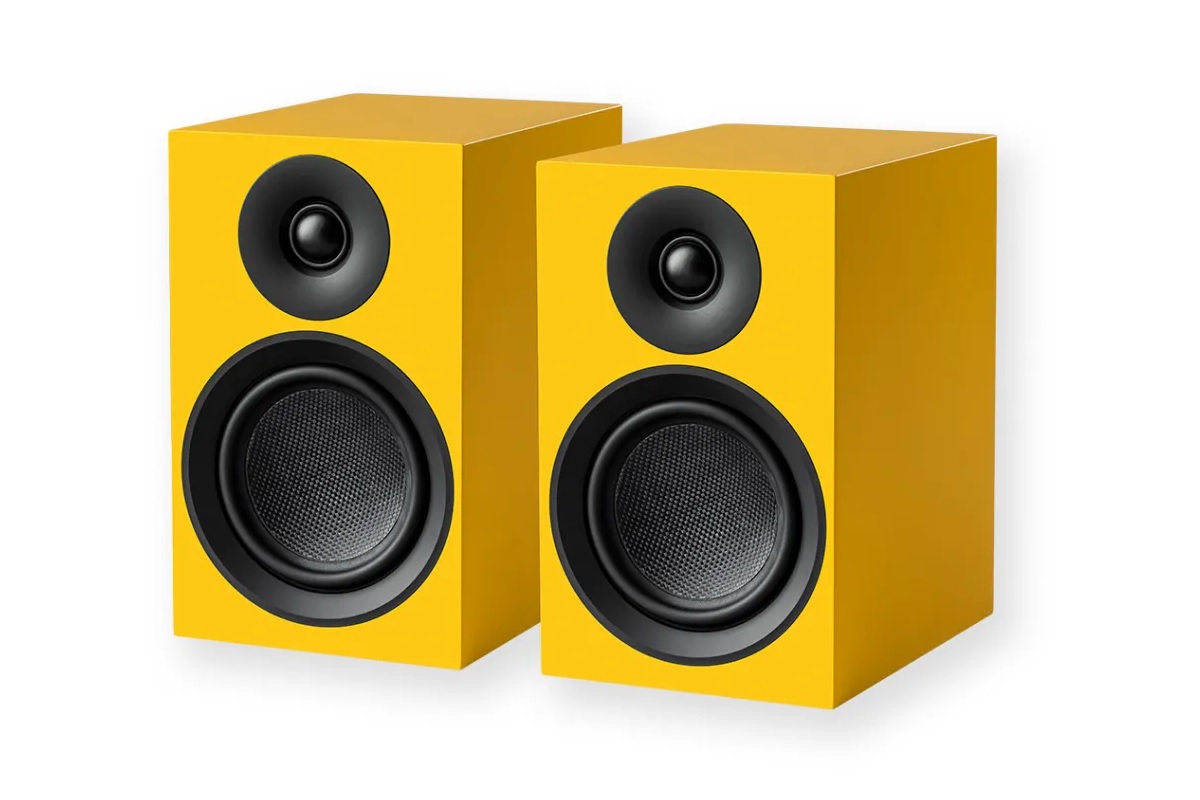
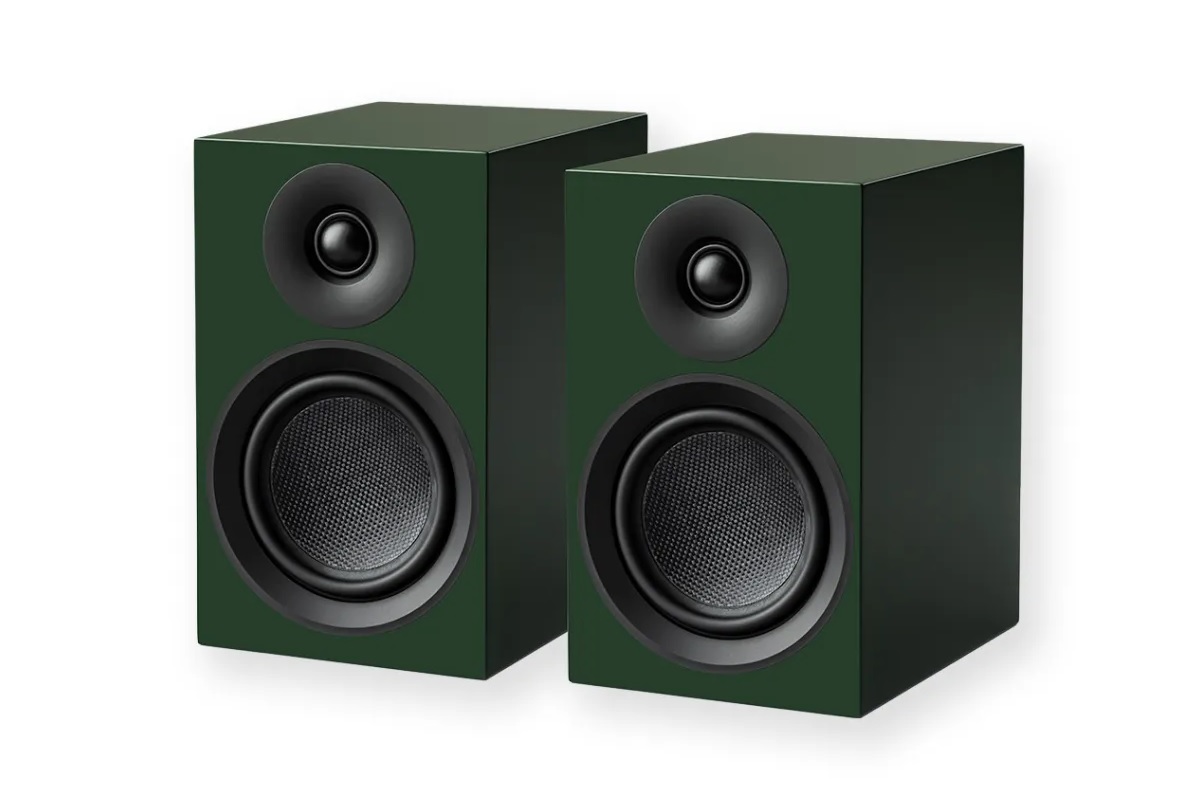
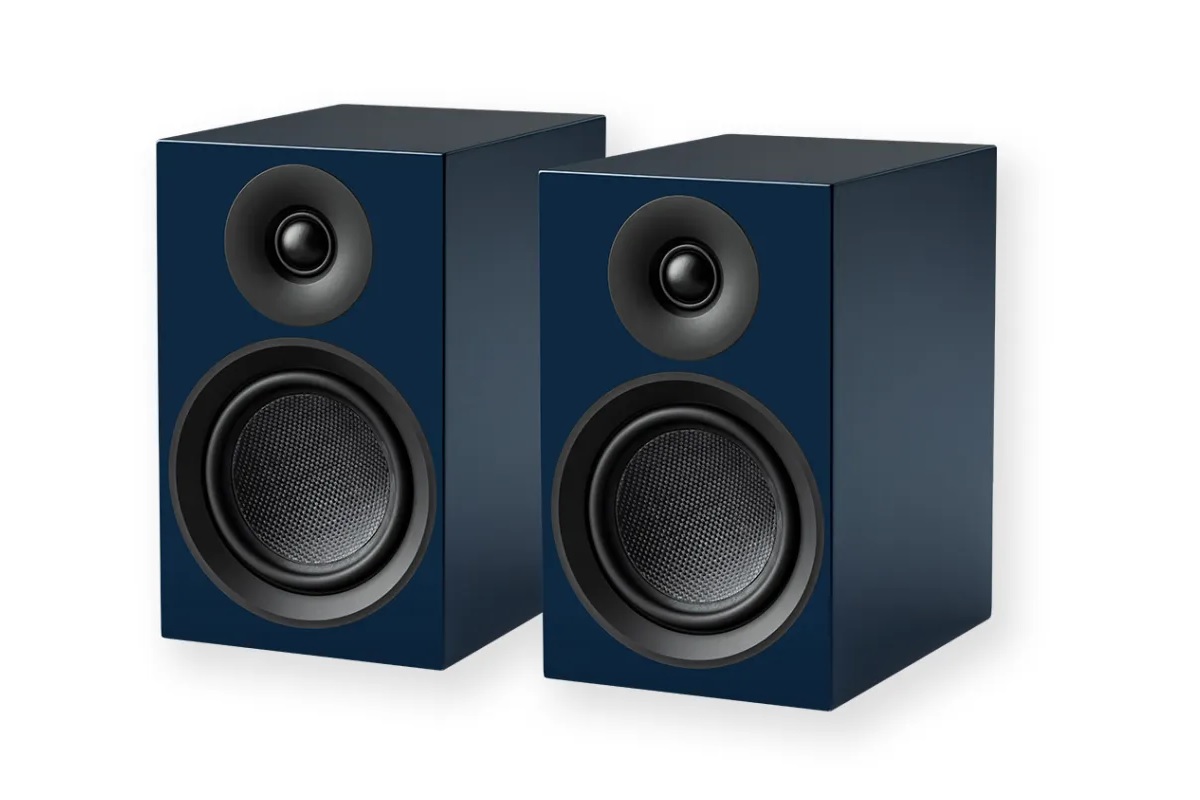
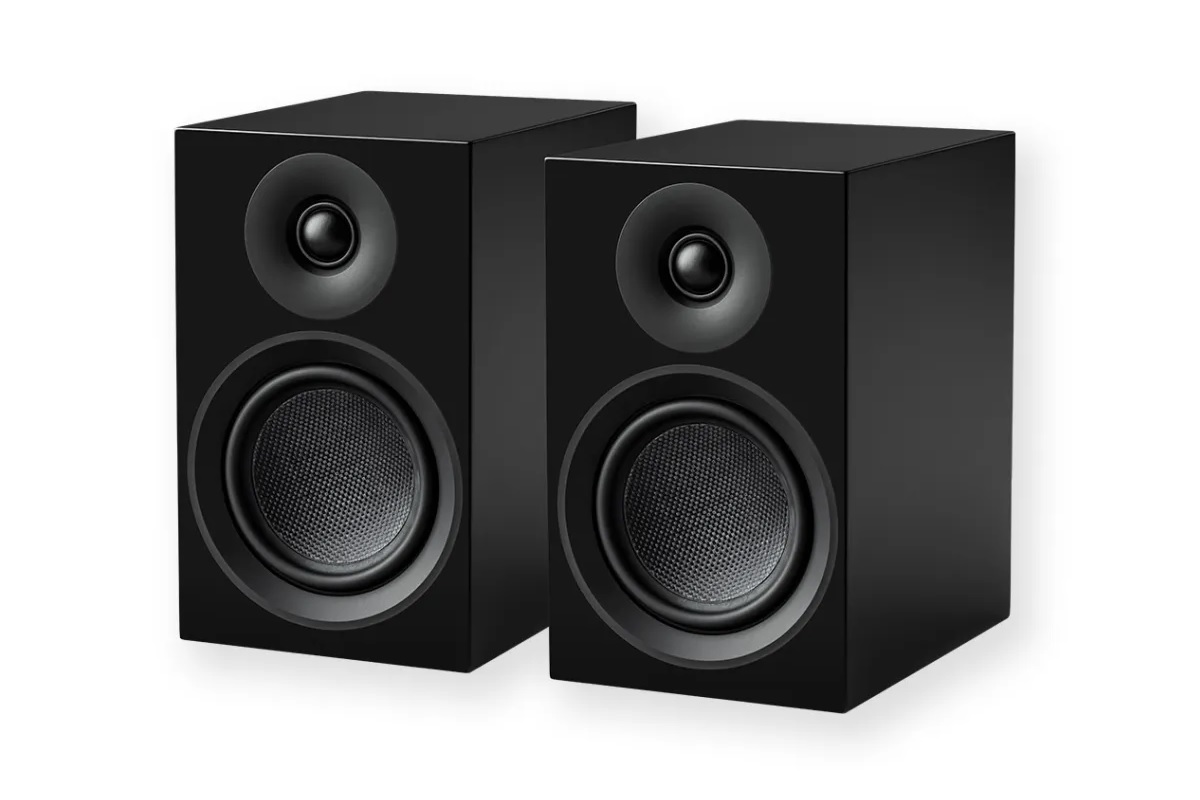
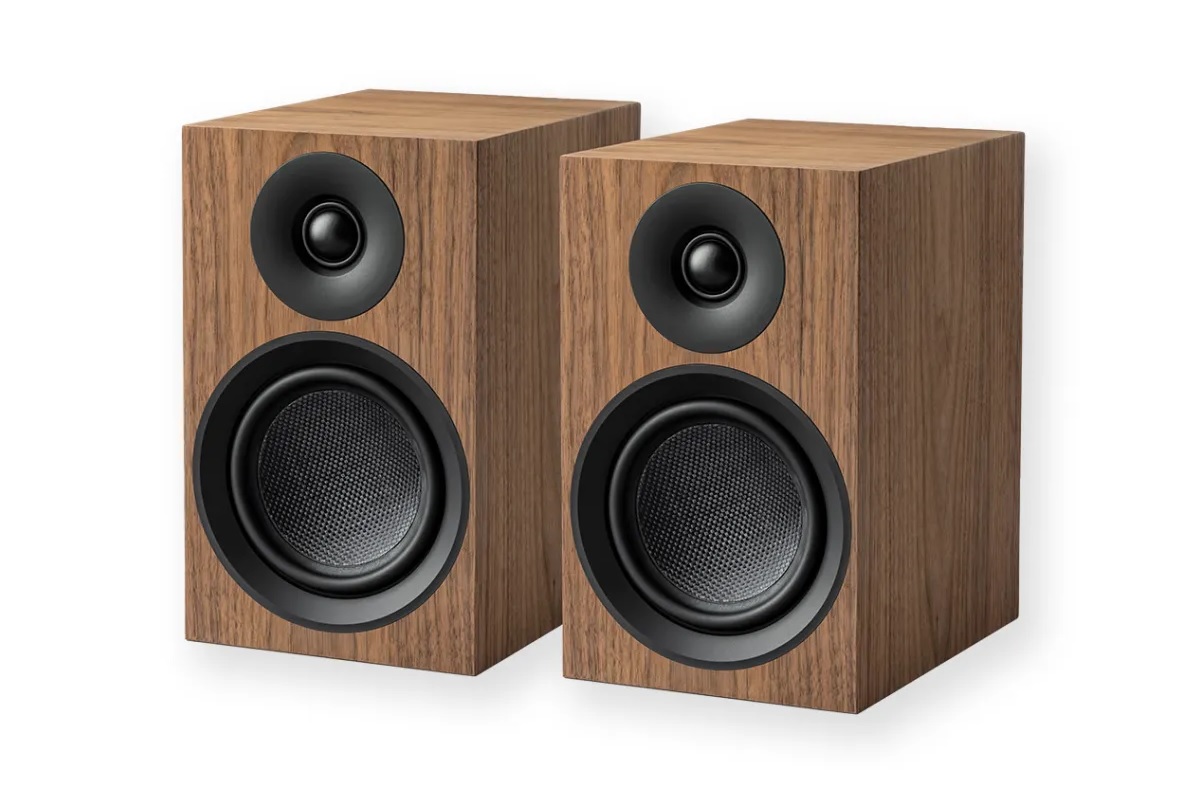
One of the more user-friendly aspects of the Speaker Box 5 E Carbon is the finish selection. Pro-Ject offers five painted finishes: yellow, white, black, navy, and navy green. There is also a walnut wood veneer version. That breadth of choice is meaningful for a compact speaker, because products in this category are often used in visible living spaces, on shelves, desktops, or stands rather than hidden away in a dedicated listening room.
The color range gives the speaker a more design-conscious character. Black and white suit conventional hi-fi installations, while yellow, navy, and navy green give owners more opportunity to match or contrast with interiors. The walnut veneer option addresses listeners who prefer a warmer, furniture-like appearance. Black grilles are included, which adds another layer of visual flexibility: owners can choose the cleaner look of exposed drivers or a more discreet front profile with the grilles fitted.
Where the Speaker Box 5 E Carbon fits
The documented specification positions the Speaker Box 5 E Carbon as a compact, traditional hi-fi loudspeaker rather than a powered lifestyle speaker. It is for listeners who already own, or plan to choose, a separate amplifier. It should appeal to those who value passive-speaker flexibility, material engineering, and a cabinet small enough for rooms where floorstanders would be impractical.
It is also well suited to systems where visual integration matters. The selection of finishes makes it easier to place the speakers in a living room, office, bedroom, or compact listening space without defaulting to a single utilitarian color. The optional wall bracket may interest owners who need to free up shelf or stand space, although the rear bass reflex design means installation should still be considered carefully.
Conclusion
The Pro-Ject Speaker Box 5 E Carbon stands out for its focused combination of a custom 5-inch glass-fiber carbon-composite woofer, 1-inch silk dome tweeter, rigid MDF cabinet, rear bass reflex tuning, and unusually broad finish choice for a compact passive speaker. Its 4-ohm impedance, 86 dB sensitivity, and recommended 10- to 150-watt amplifier range make amplifier matching an important but manageable part of system planning. This is most suitable for listeners building a compact stereo system who want a conventional passive loudspeaker with thoughtful materials, flexible styling, included grilles, and the option of wall mounting where appropriate.



Join the discussion
Share your thoughts, listening impressions or product experience.