McIntosh MI502: A Two-Channel Amplifier Built for Serious System Integration
The McIntosh MI502 combines two-channel Class D amplification, rack-friendly installation, balanced and unbalanced inputs, and unmistakable McIntosh visual identity in a compact 2U chassis.
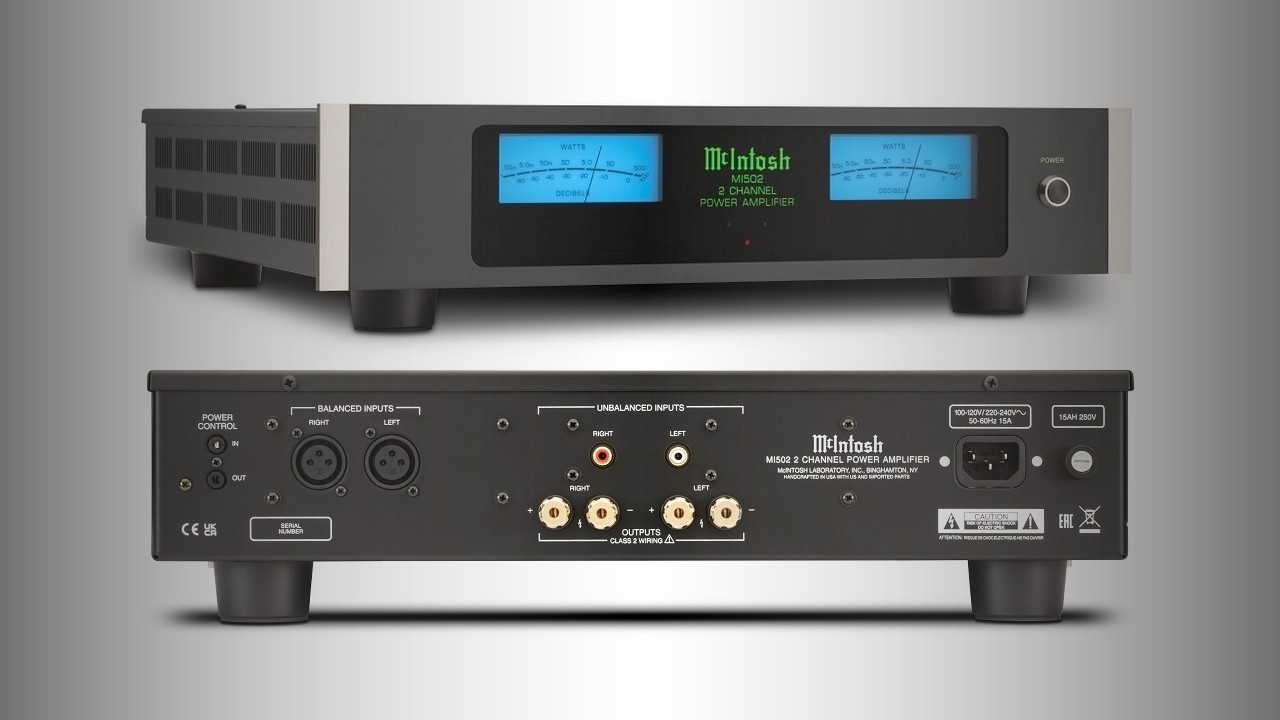
The McIntosh MI502 is a two-channel amplifier aimed at systems where high output, installation flexibility, and brand-consistent design all matter. Rather than being presented as a conventional stereo integrated component, it is clearly intended for use in home theater, custom audio, distributed music systems, and installations where multiple amplifier channels may need to be deployed cleanly and reliably. Its appeal lies in the combination of 500 watts of Class D power, closed-loop digital switching technology, fault-tolerant power supplies, rack-mountable construction, fanless operation, and the familiar McIntosh front-panel presentation with blue wattmeters and a black glass fascia.
A compact two-channel amplifier with installation in mind
The MI502’s basic proposition is straightforward: it is a two-channel power amplifier designed to deliver substantial Class D output in a chassis that can be integrated into more than one kind of system. McIntosh identifies it as suitable for a home theater or audio system, which immediately suggests a broader role than a traditional two-channel living-room amplifier. It can be assigned to front left and right speakers in a theater, used for two in-wall subwoofers, or combined with another MI502 for more expansive channel coverage.
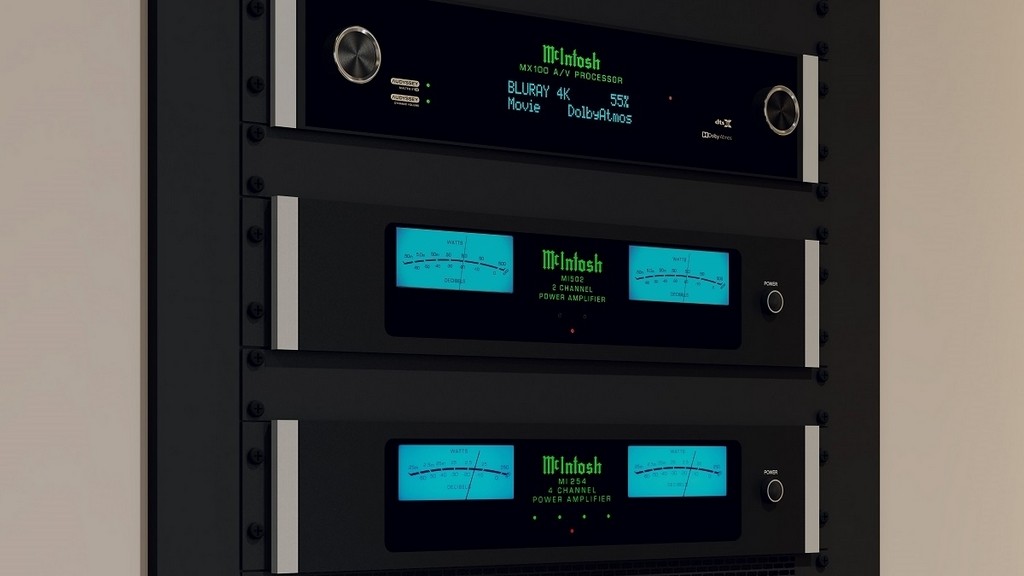
Its 2U rack-mountable height is one of the most important practical details. In custom installation, equipment often has to live in a rack rather than on open furniture, and vertical space becomes a real design constraint. A 2U form factor allows the MI502 to occupy a defined, manageable amount of rack space, making it easier to plan around processors, source components, network hardware, control systems, and additional amplifiers. For owners building a serious theater or whole-home audio system, this kind of physical discipline can be as valuable as the power rating itself.

Class D power with closed-loop digital switching
The MI502 uses Class D amplification, a topology valued in many modern installations because it can deliver high power from a relatively compact platform. The source material specifies 500 watts of Class D power, positioning the amplifier for demanding speaker or subwoofer assignments without requiring the large chassis size often associated with traditional high-power amplifiers.
McIntosh also notes the use of closed-loop digital switching technology. In broad terms, closed-loop approaches are used to monitor and regulate amplifier behavior as part of the circuit design. For a prospective owner, the significance is not merely that the amplifier is Class D, but that McIntosh has specified a controlled implementation rather than treating compact switching amplification as a generic solution. In a multichannel or rack-based system, where components may be asked to operate consistently over long sessions, that engineering emphasis is relevant.
The mention of fault-tolerant power supplies is similarly important. While the source does not provide detailed specifications, the phrase indicates that power-supply resilience is part of the product’s design brief. In systems where an amplifier may be built into cabinetry or a dedicated rack and expected to support theater use, subwoofer duty, or distributed audio zones, robustness and operational continuity are meaningful considerations.
Flexible roles in home theater and subwoofer systems
One of the MI502’s most distinctive strengths is how explicitly it can be configured for different channel duties. McIntosh describes it as suitable for powering the front left and right speakers in a home theater system. This is a logical assignment for a two-channel amplifier because the main front channels carry a large portion of a movie soundtrack and often need dedicated amplification in systems built around an AV processor or separate preamp/processor.
The amplifier can also be used to power two in-wall subwoofers. That is a useful distinction because in-wall subwoofers are often part of more discreet home theater or media-room designs, where performance has to be balanced against interior design constraints. An amplifier that can be assigned directly to a pair of these subwoofers gives installers and system owners another way to keep amplification centralized while keeping the room visually clean.
McIntosh also notes that a pair of MI502 amplifiers can drive a home theater’s three front channels plus one subwoofer. This example reveals a great deal about the product’s intended flexibility. Rather than forcing each amplifier into a single fixed role, the MI502 can be multiplied and allocated according to the system plan. In a theater rack, that could mean one amplifier for left and right, another for center and subwoofer, or other channel allocations depending on the installation’s needs and compatible system design.
Useful connectivity for preamp-based systems
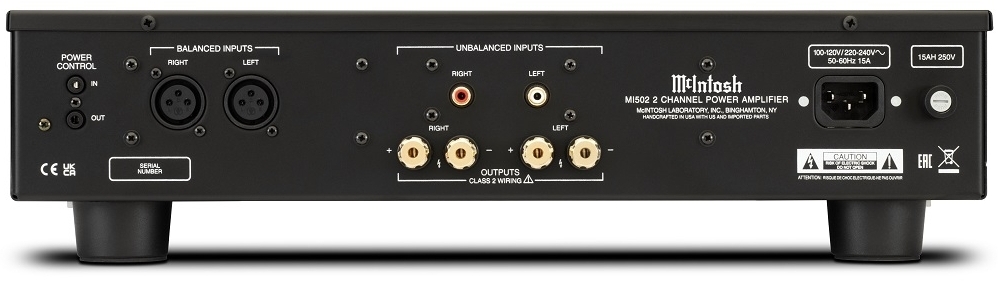
The MI502’s rear panel includes both balanced and unbalanced inputs for connection to preamplifiers. This is a practical feature set because it supports integration with a wider range of control electronics. Balanced connections are commonly favored in more complex or longer-cable installations, while unbalanced inputs maintain compatibility with many conventional preamps and processors.
This dual input approach matters because the MI502 is not an all-in-one component; it is a power amplifier that depends on upstream control. Owners may connect it to a stereo preamp, a surround processor, or another compatible preamplification stage. By offering both input types, McIntosh gives the amplifier more latitude across traditional hi-fi systems, theater processors, and professionally installed environments.
Speaker or load connections are handled through a pair of standard McIntosh five-pin terminals. The source does not expand on their wiring scheme, but their presence underlines that this is a purpose-built McIntosh installation component rather than a generic amplifier module placed in a plain chassis. For buyers already familiar with McIntosh hardware, standard connection conventions can simplify planning and maintain consistency across a system.
Rack-friendly and fanless for distributed audio
Multiple MI502 amplifiers can be used in a distributed home audio system. That statement is significant because distributed audio places different demands on an amplifier than a simple two-channel setup. The equipment may need to serve several rooms, be installed away from the listening space, and operate in a rack alongside other electronics. Expandability and physical manageability become central to the ownership experience.
The MI502 does not require noisy cooling fans, according to the supplied information. In home installations, fan noise can be a serious annoyance, especially when equipment is located near a listening room, theater, office, or shared living area. A fanless design can help keep the mechanical noise profile lower, provided the installation follows appropriate ventilation practices. For rack-based systems, the absence of built-in fan noise also supports cleaner room design, since the amplifier is less likely to call attention to itself acoustically.
The 12-volt McIntosh Power Control starting system is another integration-friendly feature. In practice, 12-volt trigger or control systems are used to coordinate power-up and shutdown among compatible components. For an owner, that can mean the amplifier behaves as part of a system rather than as a separate box that must be switched manually. In theaters and distributed systems, this kind of coordinated operation is often essential to making a complex setup feel simple day to day.
Classic McIntosh identity in an installation component
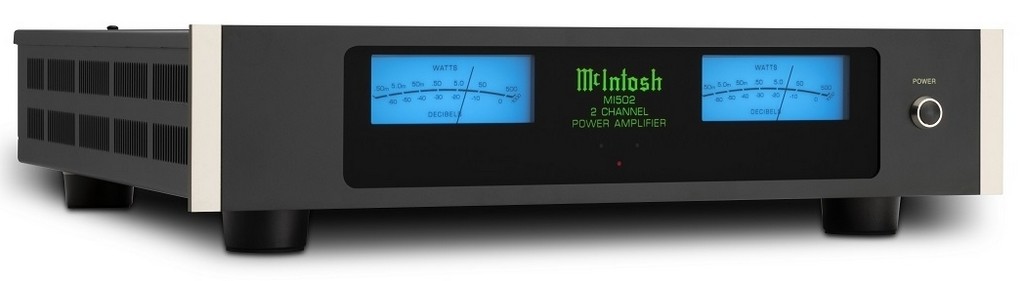
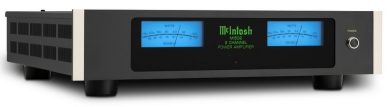
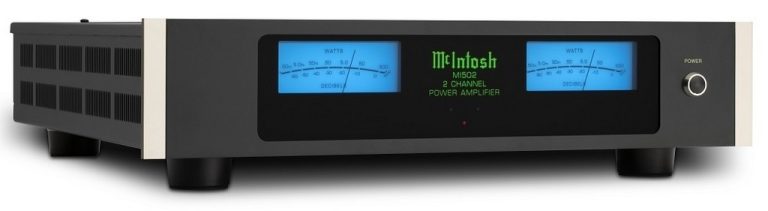
Although the MI502 is clearly designed for serious integration work, it still carries recognizable McIntosh styling. The front panel includes two blue wattmeters displaying the power output of each channel, multi-color LED indicators showing channel status, a black glass front panel, a backlit McIntosh logo, and silver trim in a familiar McIntosh form factor.
That visual identity may matter more than it first appears. Many installation amplifiers are visually anonymous because they are intended to disappear into racks or closets. The MI502, by contrast, maintains the brand’s traditional front-panel language. If it is installed in a visible equipment rack or displayed alongside other McIntosh components, it can look consistent with the rest of the system rather than like a utility amplifier hidden behind the scenes.
The meters and LED indicators are also functional, not merely decorative. The wattmeters provide a visual indication of channel output, while the multi-color LEDs communicate channel status. In a system with multiple amplifiers, quick visual confirmation can be helpful during setup, troubleshooting, or everyday use. It gives the owner or installer a simple way to see that the amplifier is active and how each channel is behaving at a glance.
Who the McIntosh MI502 is most suitable for
The MI502 is best suited to owners and installers building systems around separate components, especially where amplification must be assigned flexibly. It makes particular sense for a home theater using a separate processor and external amplification, a room with in-wall subwoofers, or a distributed audio installation where multiple compact amplifiers may be deployed in a rack.
It is also a natural fit for buyers who value McIntosh’s visual design but need an amplifier that can live in a more installation-oriented environment. The combination of rack mounting, fanless operation, 12-volt Power Control, and both balanced and unbalanced inputs makes it relevant to systems that must be easy to operate after installation, not just impressive on a specification sheet.
It may be less relevant for someone seeking a simple standalone stereo solution with source switching, volume control, or streaming built in. The MI502 is a power amplifier, so it belongs in a system with appropriate upstream components. Its strengths are most apparent when it is part of a planned architecture rather than purchased as a self-contained audio hub.
Conclusion
The McIntosh MI502 stands out as a compact, two-channel Class D amplifier designed for practical system building. Its documented strengths include 500 watts of power, closed-loop digital switching technology, fault-tolerant power supplies, balanced and unbalanced inputs, rack-mountable 2U construction, fanless operation, 12-volt Power Control, and unmistakable McIntosh styling with blue wattmeters and status LEDs. Its ideal audience is the owner or installer planning a serious home theater, in-wall subwoofer setup, distributed audio system, or McIntosh-based separates system where power, flexibility, clean integration, and visual consistency all matter.