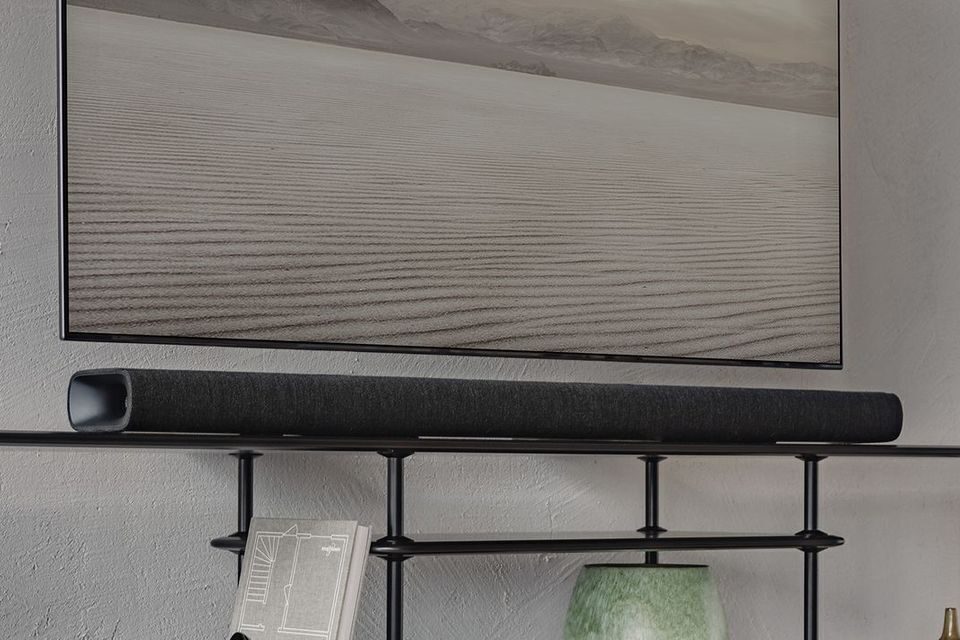
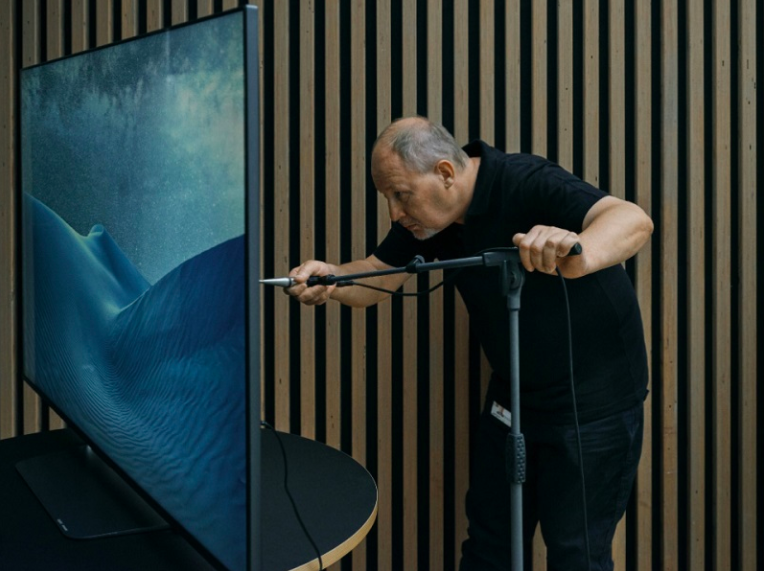
The Oppo 65S1 is notable because it approaches the modern television as more than a display. It combines a 65-inch QLED 4K panel, high-brightness local dimming, broad HDR compatibility, gaming-oriented connectivity and a substantial integrated speaker system with Dynaudio involvement. For a company better known internationally for consumer electronics and Blu-ray heritage, this TV is positioned as a technically ambitious smart screen for users who want strong built-in functionality rather than a minimalist panel that relies heavily on external boxes, streamers and sound systems.
A 65-inch QLED platform with 120Hz motion capability
At the center of the Oppo 65S1 is a 65-inch QLED panel with 4K resolution and a 120Hz refresh rate. Those three facts define much of the product’s appeal. The 65-inch size is large enough for a living room cinema-style setup without entering the very large-format territory that can dominate a space. The 4K panel keeps it aligned with current streaming, disc and console sources, while the 120Hz refresh rate is particularly relevant for fast-moving content and modern gaming use.
QLED technology is used here as the foundation for a bright, color-capable display system. The source information also documents a dynamic 210-zone backlight and a peak brightness figure of 1500 nits. Local dimming zones matter because they allow the backlight to be managed in different areas of the screen rather than treating the whole image as one uniform lighting field. In practical terms, that kind of architecture is intended to improve control over bright highlights and darker image areas, especially with HDR material. The 1500-nit brightness specification is also significant for HDR presentation, where high peak brightness can help reproduce specular highlights with greater impact when the content and picture processing support it.
Broad HDR support for varied content sources
The 65S1 is specified with support for Dolby Vision, HDR10, HDR10+ and HLG. That range is important because HDR is not a single universal format in everyday use. Streaming services, UHD Blu-ray releases, broadcast environments and playback devices can rely on different HDR standards. A TV that supports multiple formats reduces the chance that a user will miss out on the intended HDR layer of a film, series, live program or game.
Dolby Vision and HDR10+ are dynamic metadata formats, while HDR10 remains the baseline HDR format for a large amount of content. HLG is especially relevant to broadcast-oriented HDR workflows. By covering all of these, the Oppo 65S1 is designed to sit comfortably among several types of source material rather than being optimized for only one ecosystem. For households that mix streaming, external media playback and gaming, that flexibility is one of the more useful documented aspects of the product.
Image processing as a design priority
Oppo says the audio and video team associated with its Blu-ray products spent 478 days developing the TV, with attention given to sharpness, contrast and source optimization. The company also states that 50 algorithms were developed to increase image quality. Those claims should not be read as independent performance results, but they do indicate where the design effort was placed: not only on panel hardware, but also on processing.
Processing matters because a television rarely shows only pristine 4K HDR demo material. Real users feed a TV many kinds of signals: compressed streaming video, lower-resolution broadcasts, games, USB media and external players. Source optimization, sharpness management and contrast handling can therefore be just as important to day-to-day usability as the panel specification. The Oppo 65S1’s documented processing emphasis suggests that the product was conceived as a complete video platform rather than simply a QLED screen with a smart interface attached.
Dynaudio-curated 5.1.2-channel sound from 18 speakers
One of the most distinctive features of the Oppo 65S1 is its integrated sound system. The TV is specified with a 5.1.2-channel Dolby Atmos configuration using 18 speakers and a total output of 85W. The speaker arrangement includes top speakers, front channels, a center channel and a rear-positioned subwoofer. Its sound is described as curated by Dynaudio, bringing a recognized audio brand into the design of the television’s built-in system.
For prospective owners, the key attraction is not that a TV can replace every dedicated home cinema system, but that the 65S1 appears designed to offer a more developed audio platform than the thin speaker arrays typically associated with slim televisions. A center channel is useful for dialogue anchoring, while a 5.1.2-channel Dolby Atmos layout indicates support for height information as part of immersive soundtracks. The inclusion of a subwoofer is also relevant because low-frequency support is often where conventional TV audio is most limited. For users who want a cleaner installation with fewer external components, this documented audio package is a major part of the product’s identity.
Gaming and external-device connectivity
The Oppo 65S1 includes three HDMI ports, two of which are HDMI 2.1. The documented HDMI 2.1 features include support for 8K at 30fps, eARC and 48Gbps HDMI interfaces. The TV also supports VRR, or variable refresh rate, which is a useful feature for gaming because it is intended to help the display adapt to changing frame rates from compatible consoles or PCs.
Even though the panel itself is described as 4K, HDMI 2.1 connectivity still matters for current-generation game consoles and advanced source devices. The combination of 120Hz panel capability, VRR and HDMI 2.1 gives the 65S1 a gaming-oriented hardware foundation. eARC is also valuable for system building, because it can pass higher-quality audio formats from the TV to a compatible soundbar or AV receiver through a single HDMI connection. That means the TV’s own Dynaudio-curated speaker system is not the only audio path available; owners who later expand into an external system have a documented route for doing so.
Three USB 3.0 ports are included for recordings and media player use. That reinforces the TV’s role as a central entertainment hub, particularly for users who keep local media on drives or want recording capability where supported by the TV’s software and regional services.
Smart features, camera functions and wireless convenience
The 65S1 runs Oppo ColorOS TV and is equipped with a MediaTek MT9950 processor, 8.5GB of RAM and 128GB of storage. Those are unusually specific internal details for a television and point to a smart TV platform intended to manage more than basic app launching. The generous storage figure is especially notable for users who expect to install apps, manage media and use the TV as a connected household screen.
Wireless connectivity includes Wi-Fi 6 and Bluetooth. Wi-Fi 6 support is relevant in homes with modern routers and multiple connected devices, while Bluetooth can simplify pairing with compatible peripherals and audio devices. The TV also includes NFC for direct mobile connection and wireless transfer of content from device to device. That could make phone-to-TV sharing more convenient for users already living with smartphone-centric media habits.
A 1080p pop-up camera is included for video calls, and the TV can present four images or windows at once. These features position the 65S1 as a social and multitasking display, not only a movie or gaming screen. A large TV with a built-in camera can serve family calls, remote meetings or casual video communication from the living room, while multi-window presentation may appeal to users who want to monitor several sources or activities without switching constantly between inputs.

Comfort and everyday viewing considerations
The Oppo 65S1 is also documented as having a wide viewing angle and TÜV Rheinland blue-light certification for eye protection. A wide viewing angle is useful in real living rooms where not every seat is directly in front of the screen. Families, shared apartments and open-plan spaces all benefit when the TV is designed to remain watchable from off-center positions.
Blue-light certification should not be interpreted as a guarantee of fatigue-free viewing, but it is a meaningful design consideration for a screen that may be used for long sessions. Between streaming, gaming, video calls and multi-window use, a smart TV can remain on for many hours a day. Documented attention to blue-light performance therefore fits the 65S1’s broader role as an all-purpose household display.
Conclusion
The Oppo 65S1 is most suitable for users who want a technically well-equipped 65-inch smart TV with strong integrated functionality. Its documented strengths are the 120Hz 4K QLED panel, 210-zone dynamic backlight, broad HDR support, HDMI 2.1 and VRR gaming features, Wi-Fi 6, NFC sharing, multi-window capability and 1080p pop-up camera. Its most distinctive element is the 5.1.2-channel, 18-speaker Dolby Atmos sound system curated by Dynaudio, which gives the TV a clearer audio identity than many display-first designs. It will make the most sense for buyers seeking a single-screen entertainment hub for films, games, streaming, calls and everyday connected use, especially if they value substantial built-in audio and flexible connectivity without immediately committing to a separate home cinema system.