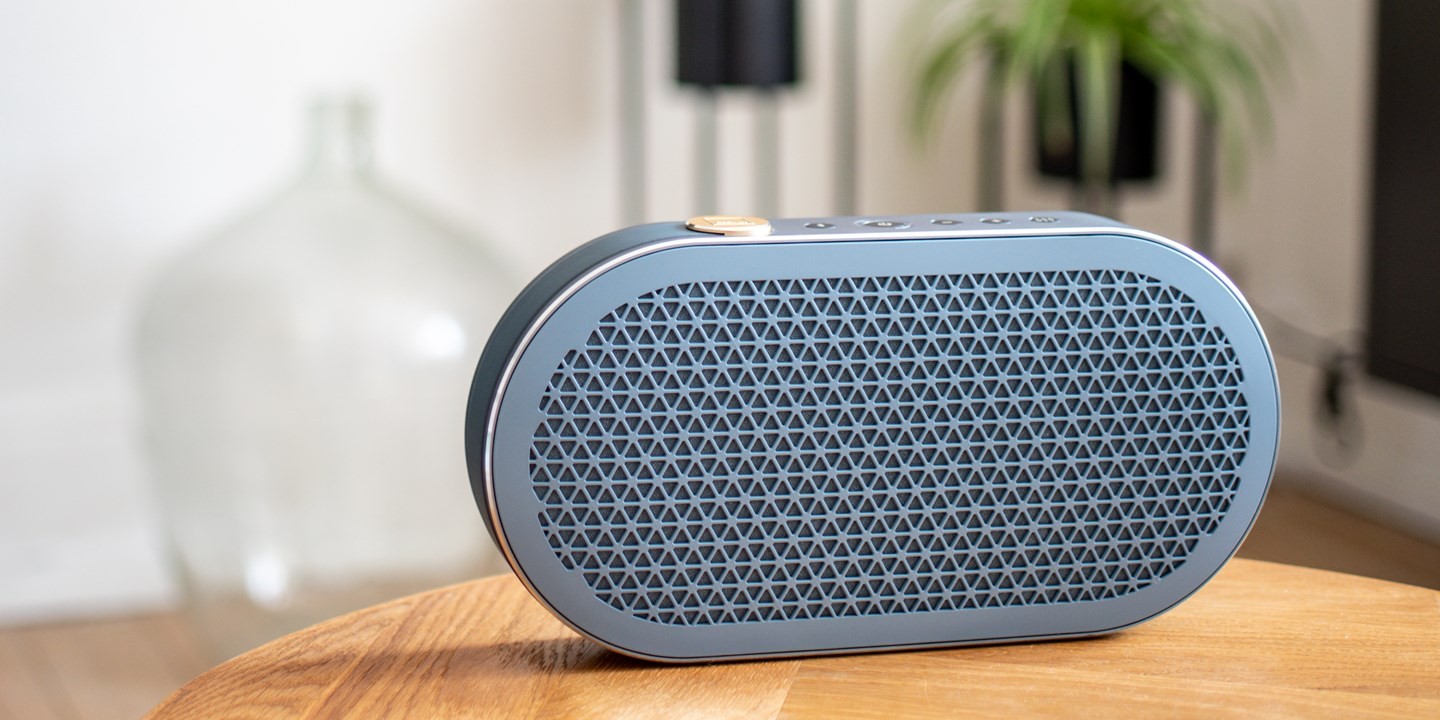
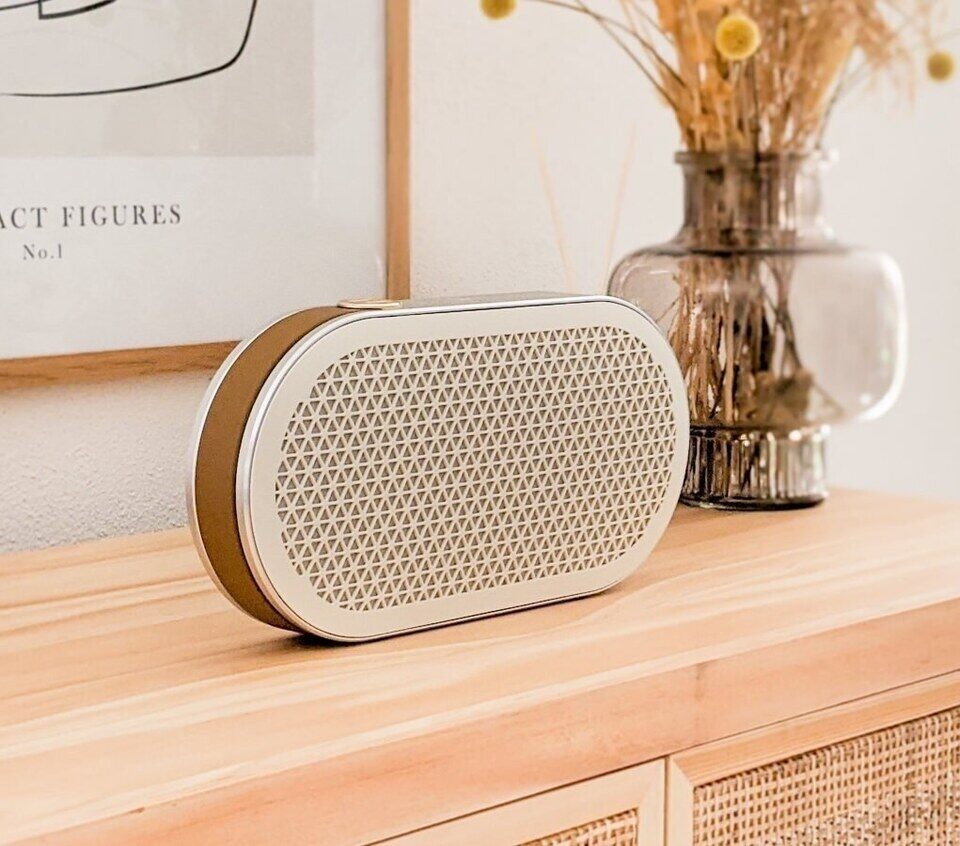
DALI’s Katch G2 is an updated version of the Danish company’s portable Bluetooth speaker, arriving five years after the original Katch. Rather than changing direction, the G2 appears to refine the concept that made the first model notable: a slim aluminum-bodied Bluetooth speaker with a two-way, two-channel architecture, a distinctive axisymmetric driver layout, and a focus on portable stereo playback. The changes are practical as much as technical, with longer battery life, updated wireless support, revised charging, and a new internal division of the cabinet intended to improve stereo performance.
A familiar portable concept, sharpened for the second generation
The Katch G2 is significant because it does not treat portability as a reason to abandon hi-fi priorities altogether. DALI is best known for loudspeakers, and the Katch line carries some of that thinking into a compact Bluetooth format. The original model was successful enough to inform the development of the Katch One soundbar, which suggests the basic platform had value beyond casual portable use.
For the G2, DALI has retained the core idea of a two-way, two-channel speaker in a slim aluminum enclosure. That matters because many compact wireless speakers prioritize convenience over stereo structure. By maintaining a dedicated stereo-oriented design, the Katch G2 is aimed at listeners who want a portable product that still takes channel separation and driver arrangement seriously within the limits of its form factor.
Two-way, two-channel design in an aluminum body
One of the defining aspects of the Katch concept is its two-way, two-channel system with an axisymmetric layout. The source material notes that this arrangement was associated with the strong performance of the first generation, and the G2 is designed to improve upon it rather than replace it. A two-way design typically allows different driver elements to handle different frequency ranges, which can be useful in a compact speaker where space is limited and driver behavior is especially important.
The use of an aluminum case is another meaningful design choice. In portable speakers, the enclosure has to be sturdy enough for daily handling while also serving the acoustic design. Aluminum gives the Katch G2 a more robust and premium physical foundation than a purely plastic shell would suggest, while also helping preserve the slim, distinctive appearance that has been part of the Katch identity.
Revised internal volume for a stronger stereo impression
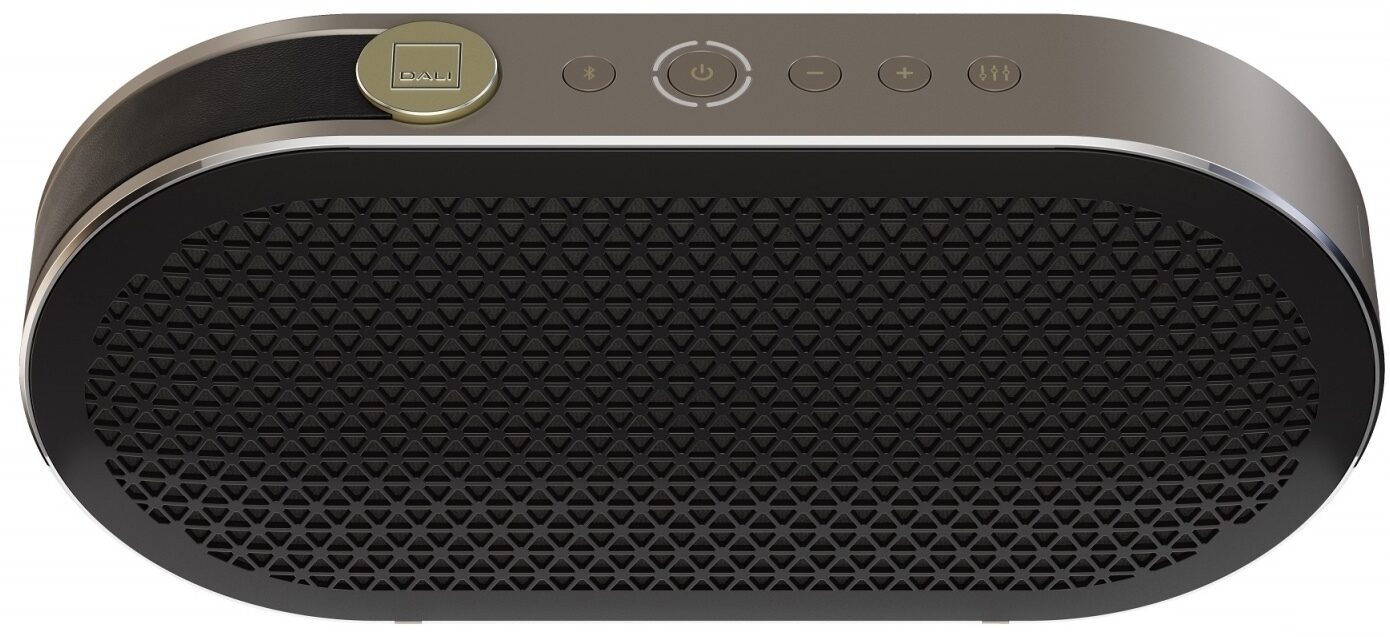
A key change in the Katch G2 is that the internal volume of the aluminum cabinet is now split into two sections. This is described as being intended to improve the stereo effect. In a one-piece portable speaker, stereo presentation is inherently challenging because the left and right channels are physically close together. Separating internal volumes is a logical design step because it gives each channel its own acoustic space inside the enclosure.
For a prospective owner, this matters most when the speaker is used nearby: on a desk, bedside table, kitchen counter, or small outdoor setting. A portable Bluetooth speaker will not replace the physical spread of a conventional pair of loudspeakers, but attention to internal channel separation can help the product make more coherent use of its stereo architecture. The G2’s revised cabinet layout therefore supports one of the central promises of the Katch design: compact convenience without ignoring stereo behavior.
Longer battery life for everyday portability
Battery life is one of the most practical improvements in the Katch G2. At medium volume, the speaker is specified to operate for up to 30 hours, which is six hours more than the original version. For a portable product, that increase is not a small convenience. It can mean fewer charging cycles during a work week, more confidence when carrying the speaker between rooms, or enough endurance for extended outdoor use without immediately searching for power.
The stated output is 2 x 25 W RMS maximum. The combination of a defined stereo power figure and long battery runtime helps position the Katch G2 as more than a small background speaker. The documented specification suggests a product intended for meaningful everyday use, whether as a primary casual listening speaker in smaller spaces or as a portable extension of a larger home audio setup.
USB charging and protected wired input
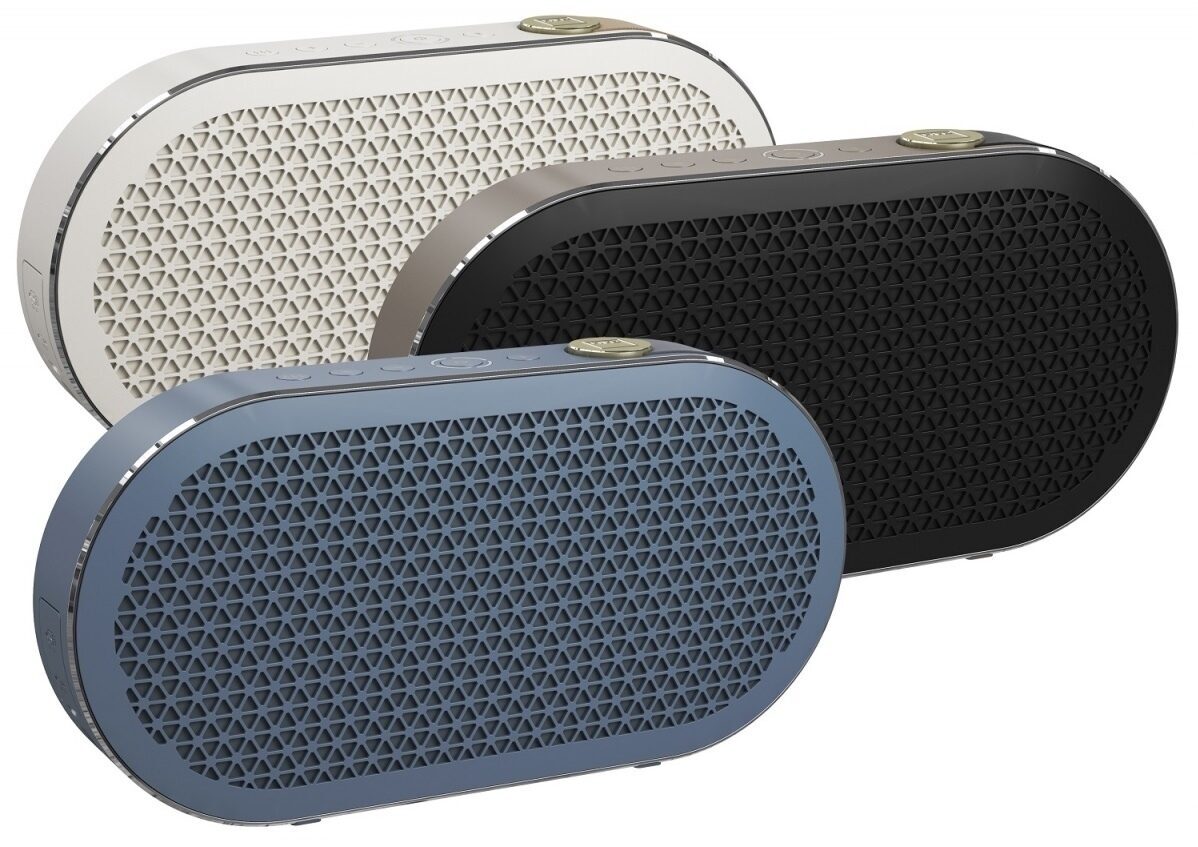
The G2 also modernizes the way the speaker is charged. Instead of the coaxial connector used by the earlier version, the new model uses a two-way USB connection. That change is useful because USB charging is more familiar, more convenient, and easier to integrate into the charging habits most people already have for phones, tablets, headphones, and other portable electronics.
Alongside wireless connectivity, the Katch G2 includes a 3.5mm AUX input. This is a valuable inclusion for users who still want a simple wired connection from a portable player, laptop, DAC, or other analog source. The USB connection and AUX input are protected by a rubber cover, a practical detail that helps preserve the clean exterior design while keeping the connection area shielded during travel or regular use.
Modern Bluetooth support with aptX HD, AAC, and NFC
Wireless connectivity is one of the clearest areas where the Katch G2 has been updated. Its Bluetooth module supports aptX HD, aptX, and AAC codecs. That range is useful because it covers common device ecosystems more thoughtfully than basic Bluetooth alone. AAC support is relevant for many Apple-device users, while aptX and aptX HD are widely associated with compatible Android phones and other Bluetooth transmitters.
The inclusion of aptX HD is especially notable for owners who use compatible source devices and want a Bluetooth link that supports higher-quality transmission than baseline codecs. It does not remove the limitations of Bluetooth, and compatibility always depends on the source device, but it gives the Katch G2 a more capable wireless feature set for listeners who care about connection quality.
NFC support adds another layer of convenience. For compatible devices, NFC can simplify pairing by reducing the steps needed to establish a Bluetooth connection. That kind of usability detail matters in a portable speaker because it encourages spontaneous listening rather than setup friction.
True Wireless Stereo pairing for a larger setup
The Katch G2 can also be used in TWS, or True Wireless Stereo, mode. In this configuration, two Katch G2 speakers can be paired to create a more substantial stereo system. This is one of the most important flexibility features in the product, because it gives owners a growth path: one speaker can serve as a compact all-in-one solution, while a second unit can be added for wider stereo playback.
This option is particularly useful for listeners who like the Katch G2’s form factor but want a more conventional left-right arrangement when space allows. Two separate speakers can be positioned farther apart than the drivers in a single cabinet, which can make stereo listening more physically convincing. The appeal is not just higher output; it is also the ability to adapt the system to the room, the occasion, or the listening position.
Conclusion
The DALI Katch G2 is most attractive to listeners who want a refined portable Bluetooth speaker with thoughtful stereo-oriented design rather than a purely convenience-driven wireless box. Its documented strengths include a two-way, two-channel architecture, an aluminum enclosure with divided internal volume, up to 30 hours of battery life at medium volume, USB charging, AUX input, aptX HD, AAC, NFC, and True Wireless Stereo pairing. It is especially well suited to owners who value portability, flexible placement, and modern Bluetooth codec support, while those seeking Wi-Fi streaming, app-based multiroom features, or voice control should note that those functions are not part of the design.