

Best Overall is Fyne Audio’s Cubitt 5 because it combines active amplification, useful modern connections, phono capability and a stated $649 price in one compact system.
It is not the automatic choice for a buyer seeking a large passive floorstander or a traditional separates system: AVID’s Evo Two is the more purpose-built high-end floorstanding option where its scale, 3.5-way layout and 42kg construction suit the room and budget.
Best Overall: Fyne Audio Cubitt 5. In a comparison spanning expensive passive floorstanders, specialist hybrid designs and a compact active system, the Cubitt 5 earns the top position not because it is claimed to surpass every other product in absolute acoustic terms, but because its proposition is the most complete and least dependent on unanswered questions. Fyne specifies a compact active platform with up to 240W of integrated power, 24-bit/96kHz support, Bluetooth aptX HD and AAC, analogue and optical inputs, a phono stage, HDMI eARC, subwoofer output, remote control and a stated $649 price. For many music listeners, that is a more immediately usable route to high-fidelity playback than a passive speaker requiring carefully chosen partnering equipment.
That verdict needs qualification. The Cubitt 5 is not a substitute for the AVID Evo Two if the listener is deliberately building a premium passive system around large floorstanding loudspeakers. Nor is it the natural choice for someone drawn to the Node Atom 650’s patented Helical Transmission Line and monocoque cabinet treatment, the Airtech ATS01’s hybrid driver arrangement and aluminum frame, or the Lorenzo LM3’s high-sensitivity large-woofer concept. These are products for different systems, rooms and priorities.
The ranking therefore rewards completeness of documented ownership proposition as well as engineering ambition. Fyne provides the broadest connection and system functionality at a published price, while AVID provides the most fully specified high-end passive floorstanding package. Node, Airtech and Lorenzo remain compelling specialist alternatives, but each asks the prospective owner to accept more unknowns, whether price, availability, full specifications or system matching.
Why this comparison matters
These five products do not merely offer different takes on the same brief. They represent fundamentally different routes to a stereo system. The Fyne Cubitt 5 is a compact active pair that incorporates amplification, DSP, wireless connection and television-friendly HDMI eARC. The AVID Evo Two, Node Atom 650, Airtech ATS01 and Lorenzo Audio Labs LM3 are passive loudspeakers intended to be partnered with external electronics, but their driver layouts, enclosures and stated sensitivities point to very different ownership priorities.
The consequential choice is therefore not simply which speaker has the most exotic construction. It is whether the buyer needs an uncomplicated, connected system; a large conventional floorstander with explicitly specified premium engineering; a compact-monitor alternative with an advanced cabinet and transmission-line concept; a visually austere aluminum-framed hybrid design; or a high-sensitivity two-way built around a large AlNiCo woofer and AMT treble unit. Room space, willingness to assemble a separate system, expected sources and availability all matter more here than a simplistic one-size-fits-all ranking.
Five products at a glance
One distinction should be made before comparing positions. The Cubitt 5 is an active wireless speaker system, while the AVID Evo Two, Node Atom 650, Airtech ATS01 and Lorenzo LM3 are presented as passive loudspeakers. A passive speaker’s eventual performance and convenience will partly depend on amplification, sources, cables and setup that are outside the supplied descriptions. The Fyne incorporates much of that chain itself. Ranking it above the passive products is consequently a judgment about overall ownership fit and documented capability, not a claim that a compact active pair is inherently superior to every large passive loudspeaker.
Among the passive designs, AVID is the most conventionally specified: a 3.5-way floorstander with named driver sizes, crossover components, cabinet-control technology, substantial mass, finishes, launch timing and price. Node takes a more structurally distinctive route through its patented transmission line and additive-manufactured Monocell damping, but has not announced price, delivery or further technical details. Airtech details its materials, hybrid driver arrangement, electrical load and dimensions, but likewise leaves price and availability open. Lorenzo’s LM3 has a particularly clear high-sensitivity two-way identity, although the source provides only a narrower set of ownership details.
| Rank | Product | Best for | Verdict |
|---|---|---|---|
| 1 | Fyne Audio Cubitt 5 | A compact, connected all-in-one system for music, vinyl and TV audio | Best Overall: the broadest documented functionality, integrated electronics and a published $649 price. |
| 2 | AVID Evo Two | A premium passive separates system centered on a substantial 3.5-way floorstander | The most fully specified conventional high-end floorstander in this group. |
| 3 | Node Audio Atom 650 | Buyers drawn to patented transmission-line and monocoque cabinet engineering | Technically distinctive, but key pricing, delivery and specification details remain pending. |
| 4 | Airtech ATS01 | A specialist buyer wanting an aluminum-framed hybrid floorstander | A compellingly individual design with published electrical figures but no price or availability. |
| 5 | Lorenzo Audio Labs LM3 | High-sensitivity two-way enthusiasts seeking a 12-inch AlNiCo woofer and AMT treble | The most specialized system match, with limited commercial and practical information published. |
How we compared them
This comparison synthesizes the supplied Stereoindex source coverage rather than reporting a simultaneous head-to-head audition, laboratory test or new hands-on evaluation. Rankings reflect what those sources document: stated system architecture, connection options, published technical details, physical format, availability information and the clarity of each product proposition.
Claims about sound are kept to the manufacturers’ stated design intentions where applicable. The supplied material does not provide directly comparable measurements, consistent listening notes or complete pricing for every model, so it cannot establish an absolute acoustic winner or a universal value hierarchy. In particular, several products have no published price or delivery information in the source material, and the Cubitt 5’s stated availability is June 2026.
The Cubitt 5 is Best Overall because it presents the most complete and clearly documented ownership proposition. It integrates amplification, crossover and DSP; supports Bluetooth aptX HD and AAC, analogue, optical, phono and HDMI eARC connections; offers a subwoofer output; and has a stated $649 price. Those features make it adaptable to music streaming, turntables, older equipment and television audio without requiring separate amplification. This is a verdict about breadth, practicality and evidence, not an assertion that it will outperform every larger passive loudspeaker. Buyers pursuing a premium passive system should look closely at the AVID Evo Two, while those seeking specialized transmission-line, hybrid or high-sensitivity designs may reasonably prefer Node, Airtech or Lorenzo.
The Cubitt 5 is the only product in the supplied sources with a modest published price of $649 alongside integrated amplification, DSP, Bluetooth, phono input, HDMI eARC, wired inputs and a subwoofer output. Because prices are absent for Node, Airtech and Lorenzo, and AVID occupies a dramatically higher published price tier, only Fyne supports a grounded Best Value award.
The Cubitt 5 has the most extensive documented feature set: integrated amplification, crossover and DSP; up to 240W output; 24-bit/96kHz support; Bluetooth 5.0 with aptX HD and AAC; phono, analogue and optical inputs; HDMI eARC; subwoofer output; and a remote control.
What separates these five products?
The clearest divide is active versus passive. Fyne’s Cubitt 5 arrives with the functional core of a system already inside: integrated amplification, crossover and DSP, Bluetooth, phono capability, optical input, analogue input, HDMI eARC and subwoofer output. None of the other four can perform those roles without external equipment. It is also the only product with a source-stated price that is remotely comparable as a complete-system starting point. That is why it is Best Overall for broad real-world use, despite being physically smaller and conceptually less extravagant than the floorstanders.
AVID’s Evo Two is the best answer to a different question: which product is the most fully described premium passive floorstander? Its 3.5-way architecture, driver sizes, 42kg mass, tuned-mass cabinet treatment, ClarityCap crossover parts, finishes, launch timing and €34,995 / $38,995 price create a notably complete picture. It is the appropriate step up in system ambition for a buyer who already accepts the cost and complexity of external electronics.
Node’s Atom 650 is more radical in enclosure and bass-loading language than AVID. The HTL system, Monocell damping and monocoque structure are its central case, while AVID’s account is built around a conventional multi-driver layout and cabinet-energy control. Node may ultimately be the more intriguing choice for an enthusiast fascinated by patented acoustic structures, but the lack of price, delivery date, sensitivity and impedance prevents a more confident overall recommendation.
Airtech and Lorenzo are both specialist passive options, but their routes are different. Airtech combines a magnetoplanar tweeter, dipolar midrange and 165mm bass-reflex woofer inside a very large, 52kg aluminum-framed structure; it publishes 87dB sensitivity and 4-ohm impedance. Lorenzo uses a 12-inch AlNiCo woofer and AMT tweeter in a high-sensitivity, nominally 8-ohm two-way. The LM3 is therefore the more clearly relevant option for buyers who prioritize those stated electrical characteristics and a large AlNiCo woofer, while the ATS01 is the fit for buyers attracted to a more complex hybrid driver arrangement and its materials-led construction.
No supplied source establishes direct sonic supremacy among these products. The sensible conclusion is to choose the system concept first, then the individual loudspeaker: Fyne for convenience and connectivity, AVID for a premium conventional passive floorstander, Node for advanced transmission-line cabinet thinking, Airtech for hybrid-driver physical drama, and Lorenzo for high-sensitivity two-way priorities.
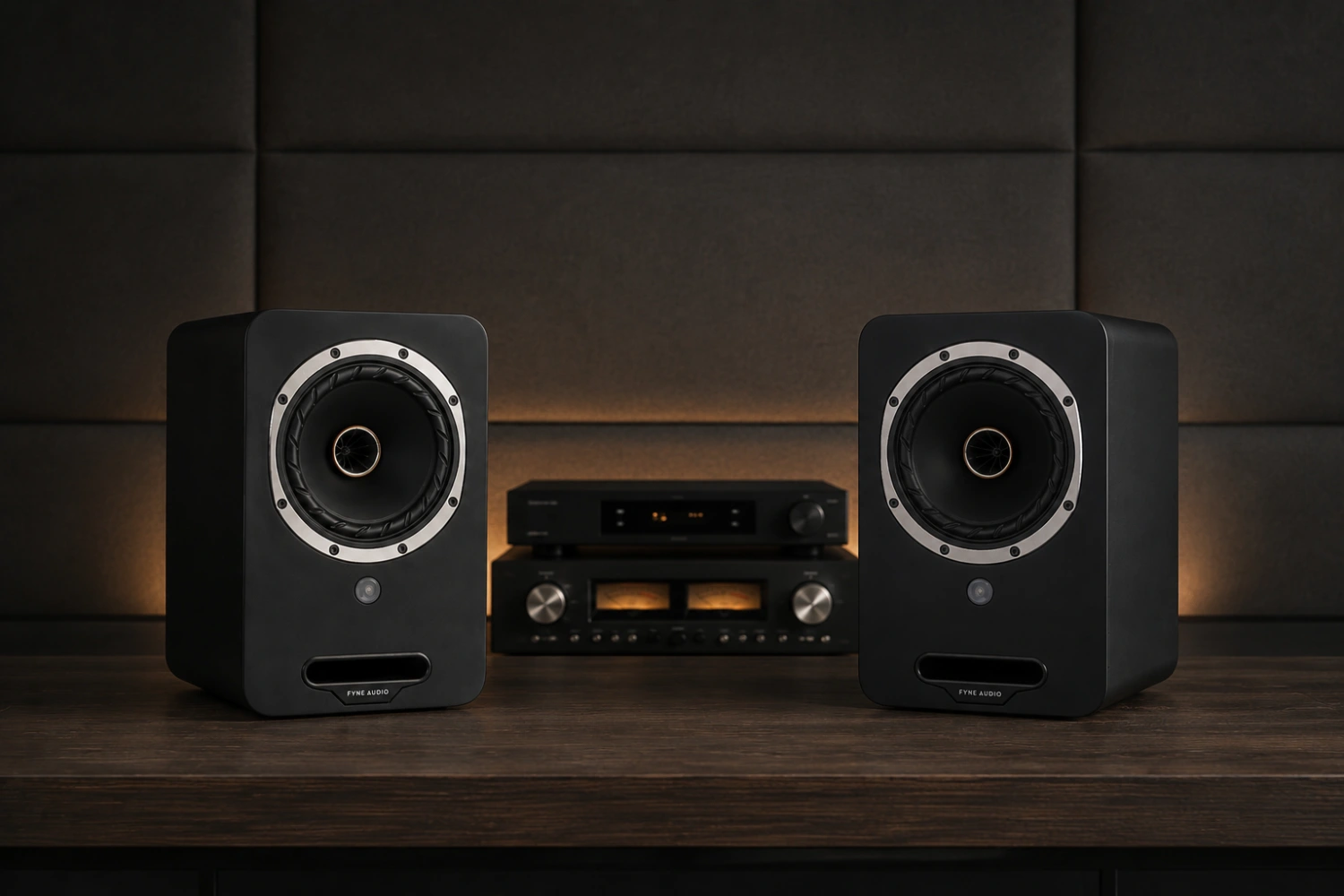
1. Fyne Audio Cubitt 5
The Cubitt 5 is the outlier in this group, and that is precisely why it takes Best Overall. Rather than asking the owner to assemble a passive system around it, Fyne makes the Cubitt 5 a compact, fully active speaker system. Amplification, crossover and DSP are integrated, with stated power of up to 240W and support for 24-bit/96kHz audio. The result, on paper, is a system designed to remove the separate amplifier and much of the associated connection complexity.
Its usefulness extends well beyond wireless playback. Bluetooth 5.0 supports aptX HD and AAC, while wired provision includes a built-in phono amplifier, analogue input, optical digital input and HDMI eARC for television audio. A subwoofer output is included for users who want additional low-frequency reinforcement. The supplied remote can attach discreetly to the rear of one speaker. That is a materially broader domestic role than any of the passive speakers can offer on their own.
Acoustically, Fyne bases the system around its latest 125mm IsoFlare point-source driver. The company describes this approach as supporting precise stereo imaging and a cohesive listening experience, with FyneFlute surround technology intended to reduce unwanted coloration. Those are design claims, not independently verified listening conclusions, but the single-point driver concept is a meaningful contrast with the multi-driver layouts of the AVID, Node and Airtech. The Cubitt 5 is also physically a compact monitor system, not a large floorstander, so its placement and room ambitions should be considered accordingly.
Its limitation is equally clear: buyers who specifically want a large passive loudspeaker, freedom to choose their own amplification, or the scale implied by the bigger cabinets in this comparison may find it too self-contained. It is also stated to be expected from June 2026, so it is not presented by the source as immediately available. Still, it is the only model here with a published $649 price and such a comprehensive set of source, TV and vinyl facilities. For a listener starting from a phone, turntable, television or mixed-source household, it is the most coherent all-in-one choice.
Best for: Listeners who want a compact, connected stereo system with integrated amplification, TV connection and vinyl support rather than a passive-speaker separates project.
- Fully active system with integrated amplification, crossover and DSP
- Bluetooth 5.0 with aptX HD and AAC, plus analogue, optical and HDMI eARC inputs
- Built-in phono stage, subwoofer output and stated support for 24-bit/96kHz audio
- Published price of $649 and five stated finish options
- Expected availability is June 2026
- Compact monitor format may not suit buyers specifically seeking large floorstanding speakers
- Integrated architecture offers a different upgrade path from passive speakers with separate amplification
Our verdict: The best all-round ownership proposition in the supplied material. It wins on integration, connections and documented price, not on an unsupported claim of outright sonic superiority over the larger passive designs.
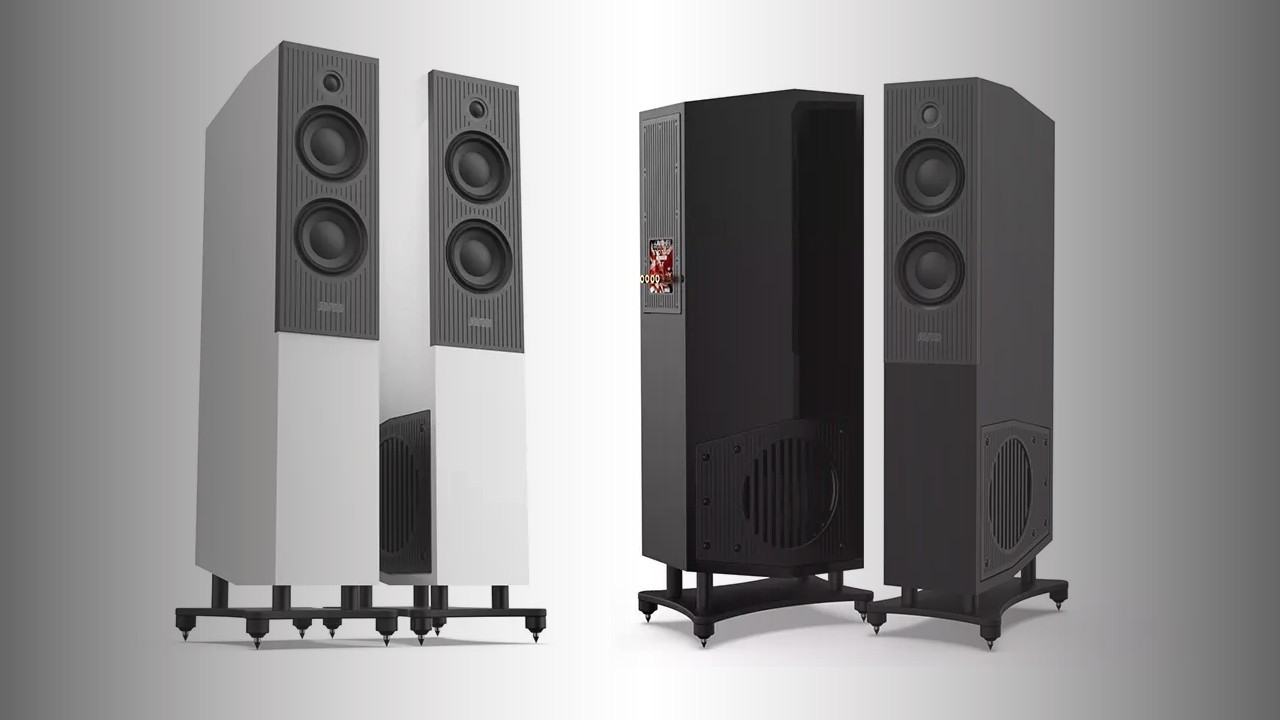
2. AVID Evo Two
The AVID Evo Two is the strongest alternative for the buyer whose priorities are decisively different from those served by the Cubitt 5. It is a substantial passive floorstanding loudspeaker designed as a 3.5-way system, and AVID presents it as an advancement over the Evo Three. Its stated aim is better bass response, broader dynamic range and a more expansive soundstage than that earlier model. This is not evidence of comparative performance against the other speakers in this article, but it clearly defines AVID’s design brief.
The driver array is unusually well documented in the supplied coverage. A 28mm soft-dome Acuflex tweeter handles high frequencies; two 16cm drivers with 75mm titanium coils cover midrange duties; and a 25cm woofer handles bass. The crossover uses ClarityCap capacitors, which AVID says lower resistance in the signal path and reduce distortion at the edges of the circuit. Cabinet behavior is addressed through the company’s Tuned Mass Technology, intended to absorb driver-generated energy before it reaches the enclosure.
At 42kg per speaker, mounted on a sturdy anodized-aluminum panel, the Evo Two is plainly a committed physical installation rather than an easy, compact solution. It is offered in black or white piano lacquer and is stated to launch in September 2025 at €34,995 / $38,995. That price puts it in a fundamentally different market from Fyne’s Cubitt 5, so this rank does not imply a simple value comparison. It does mean that AVID offers the most complete published account of a premium conventional floorstander among the passive options here.
Compared with Node’s Atom 650, AVID supplies more conventional driver and crossover detail, a price and a launch timetable; Node instead foregrounds patented cabinet and transmission-line concepts. Compared with Airtech’s ATS01, AVID uses a more conventional multi-way arrangement rather than a magnetoplanar/dipolar hybrid. Compared with the 94dB, 8-ohm Lorenzo LM3, AVID’s source description does not state sensitivity or impedance, so no direct amplifier-demand conclusion can responsibly be made. The Evo Two is for the serious passive-system buyer who wants a fully articulated high-end floorstanding design and can accommodate its cost and mass.
Best for: Buyers assembling a premium passive hi-fi system who want a large, thoroughly specified 3.5-way floorstander with published pricing and launch information.
- 3.5-way layout with a 28mm tweeter, dual 16cm midrange drivers and 25cm woofer
- 42kg construction with anodized-aluminum panel
- Tuned Mass Technology addresses cabinet vibration
- Published €34,995 / $38,995 price, September 2025 launch and two lacquer finishes
- Far costlier than the Cubitt 5 on the published figures
- Requires external amplification and associated system components
- Large, heavy floorstanding format demands a committed installation
Our verdict: The leading passive-floorstander choice on documented specification and conventional system ambition. It is the smarter selection than the Cubitt 5 for a buyer intentionally investing in high-end separates, not for someone seeking simplicity.
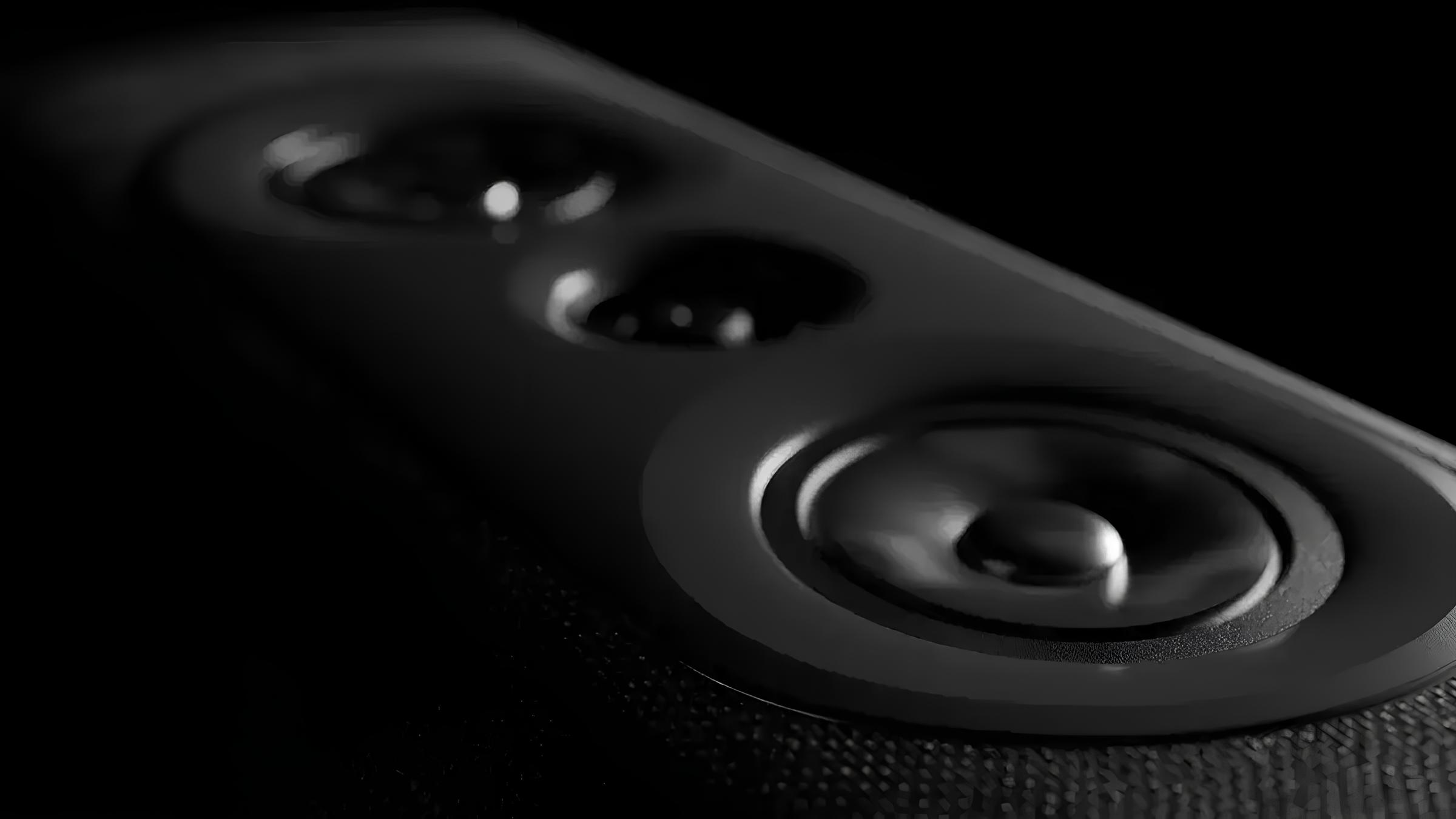
3. Node Audio Atom 650
The Atom 650 is Node Audio’s three-way floorstanding entry in the new Atom line, designed and manufactured in Cambridge, UK. Its most important differentiator is not a published list of conventional driver specifications, but the company’s patented Helical Transmission Line system. Node says the system directs sound from a long-throw woofer into a central chamber and along a spiral path, with the intention of extending bass response and projecting low frequencies with authority and control. That makes it an interesting alternative to AVID’s 25cm-woofer 3.5-way format and Airtech’s bass-reflex Morel woofer arrangement.
The Atom range also uses patented Monocell damping, enabled by additive manufacturing. Node describes this rigid grid as a replacement for traditional fibre damping that also supplies extensive internal bracing within an ultra-rigid monocoque enclosure. The cabinet is clad in a custom multi-layer acoustic material, while structural elements are precision-machined from solid aluminum. Its sculpted form is said to avoid sharp edges and flat surfaces that could disrupt stereo imaging. Node also highlights close alignment of the tweeter and two midrange drivers to support coherence in both horizontal and vertical planes, alongside midrange drivers designed without a conventional spider.
At 970 x 285 x 380mm, the Atom 650 is a relatively tall but narrow floorstander. It is smaller in stated height than the 143cm Airtech ATS01, but it is not a compact product in the sense of the Fyne Cubitt 5 or Node’s own Atom 525 monitor. The supplied coverage gives no weight, sensitivity, impedance, finish list, price, delivery timing or fuller technical specification. Those absences matter: they make it impossible to judge amplifier matching, financial position or availability against AVID, Fyne or Lorenzo with confidence.
Third place recognizes a compelling and unusually developed acoustic-enclosure proposition, not a claim that it is proven better sounding than the AVID. It is more forward-looking in cabinet architecture than the available descriptions of AVID and Lorenzo, but it is also the least settled purchase proposition among the higher-ranked products because key ownership details are pending. It will appeal to a buyer who values engineering distinctiveness and is willing to wait for the missing practical information.
Best for: Passive-system buyers intrigued by transmission-line bass loading, additive-manufactured internal damping and sculpted cabinet engineering, and willing to wait for full commercial details.
- Patented Helical Transmission Line bass system
- Patented Monocell damping and monocoque enclosure concept
- Three-way floorstanding design with closely aligned tweeter and two midrange drivers
- Designed and manufactured in Cambridge, UK
- Price, delivery information and further technical details had not been announced
- No stated sensitivity or impedance in the supplied source
- Requires external amplification unlike the Fyne Cubitt 5
Our verdict: A highly interesting specialist floorstander whose cabinet and bass-loading approach differentiates it sharply from the field. It ranks below AVID because the practical specification, price and availability picture remains incomplete.

4. Airtech ATS01
Airtech’s ATS01 is a strikingly different passive floorstander, built around a hybrid driver scheme and an ascetic physical design. Its structural frame is machined from a single piece of aluminum, with bolts specified as 100% Marina stainless steel. The cabinet for the PO is MDF, while the crossover housing, like the frame, is solid aluminum. This material mix makes the ATS01 a distinctly engineered object rather than a conventional wood-veneer box, even though the supplied source does not provide comparative vibration measurements or listening results.
The driver complement is also unconventional within this five-way comparison. Airtech uses a magnetoplanar tweeter, a dipolar midrange driver and a 165mm Morel bass-reflex woofer, with the woofer crossover frequency stated as 250Hz. In other words, it does not follow AVID’s 3.5-way soft-dome/dual-midrange/large-woofer formula, Node’s transmission-line three-way approach, Lorenzo’s two-way AlNiCo-and-AMT arrangement or Fyne’s point-source active monitor system. That individuality may be exactly its appeal for a listener pursuing a particular engineering and visual identity.
The ATS01 is also physically imposing: 44 x 31.3 x 143cm and 52kg. It is the heaviest loudspeaker in this comparison on the figures supplied, exceeding AVID’s 42kg figure, although the sources do not establish whether weight is quoted per speaker in both cases. Its 87dB sensitivity, 4-ohm impedance and power rating of more than 200W are published. These electrical figures make amplifier selection a relevant conversation, but they do not alone prove how easy or difficult the speaker will be to drive in practice.
The rank reflects incomplete commercial information and a narrower stated feature set, rather than a dismissal of the ATS01’s engineering. Airtech has not announced price or availability. It also offers none of Fyne’s integrated functionality, and AVID supplies a fuller account of crossover and cabinet-control strategy alongside a price. The ATS01 nevertheless remains the more appropriate choice for someone specifically drawn to its magnetoplanar, dipolar and bass-reflex hybrid architecture and substantial aluminum-framed build.
Best for: Experienced passive-system buyers who want a very large aluminum-framed hybrid floorstander and are prepared to investigate amplifier partnering, price and availability directly.
- Single-piece aluminum structural frame and solid-aluminum crossover housing
- Hybrid arrangement of magnetoplanar tweeter, dipolar midrange and 165mm Morel bass-reflex woofer
- Published 87dB sensitivity, 4-ohm impedance and more-than-200W power rating
- Very substantial 52kg, 143cm-tall floorstanding form
- No published price or availability in the supplied source
- Needs external amplification and careful system planning
- No integrated connectivity, phono stage or television connection
Our verdict: The right specialist choice for its materials-led, hybrid-driver identity, not the most straightforward recommendation. It trails Node and AVID because the source leaves more commercial and broader system questions unanswered.

5. Lorenzo Audio Labs LM3
The Lorenzo Audio Labs LM3 takes the final rank, but it should not be treated as a lesser version of the other passive floorstanders. It follows a deliberately different, comparatively simple two-way concept. Low frequencies are handled by a 12-inch driver using an AlNiCo magnetic system, cellulose cone and fabric suspension. It is loaded by a dual bass-reflex port brought to the bottom panel. Treble comes from an AMT ribbon emitter with a substantial waveguide. This large-woofer-and-AMT formula is far removed from Fyne’s active IsoFlare point-source driver, AVID’s 3.5-way array, Node’s three-way transmission-line design and Airtech’s magnetoplanar/dipolar hybrid.
The LM3’s most practically notable published figure is its sensitivity of 94dB / 1m, paired with a nominal 8-ohm impedance. Those specifications distinguish it from Airtech’s stated 87dB, 4-ohm ATS01. They may make the LM3 especially interesting to buyers who prioritize high sensitivity and a nominally 8-ohm load, though no conclusion about compatibility with every amplifier can be made from these two figures alone. The crossover uses components from Mundorf, Jantzen and Pathaudio and is surface mounted.
Construction is substantial. The cabinet walls are stated to be 41mm-thick plywood with natural wood veneer and selected grain patterns. Ironwood stands are supplied and are described as creating a barrier to vibration. Each speaker is given as 45kg. The source quotes dimensions as 117 x 41.5 x 51.5mm; that unit is reproduced here as supplied, but it is not clarified in the source and should be confirmed with the manufacturer or dealer before making placement plans.
Why place this distinctive speaker fifth? The coverage gives no price, availability, finish range beyond natural wood veneer, frequency specification or broader system information. Its appeal is more specific than Fyne’s feature-rich active package, AVID’s comprehensively described premium floorstander, Node’s patented enclosure proposition or Airtech’s detailed hybrid construction. For the right buyer, however, the LM3 could be the better fit than all four: someone who specifically wants a high-sensitivity, 8-ohm nominal two-way with a 12-inch AlNiCo woofer and AMT treble.
Best for: Listeners who specifically seek a high-sensitivity, nominally 8-ohm passive two-way with a 12-inch AlNiCo woofer, AMT treble and supplied stands.
- 94dB / 1m sensitivity and nominal 8-ohm impedance
- 12-inch AlNiCo woofer with cellulose cone and dual bottom-mounted bass-reflex ports
- AMT ribbon tweeter with waveguide
- 41mm plywood cabinet walls, natural veneer and supplied ironwood stands
- No price or availability information in the supplied source
- Requires external amplification and sources
- Published dimensions use an unclear unit and should be verified before purchase
Our verdict: A niche but potentially excellent-match design for the high-sensitivity two-way buyer. Its lower overall rank reflects limited published ownership information, not a judgment that its architecture is intrinsically inferior to multi-way or active alternatives.
Which one should you choose?
Choose the Fyne Audio Cubitt 5 if you want the shortest route to a complete modern stereo setup. It is the clear fit for listeners who need Bluetooth, wired digital and analogue inputs, a phono stage, HDMI eARC for television use and the option to add a subwoofer, without buying a separate amplifier.
Choose the AVID Evo Two if the goal is a serious passive floorstanding speaker within a premium separates system and the published €34,995 / $38,995 price is acceptable. Its 3.5-way driver complement, 42kg weight, tuned-mass cabinet treatment and explicitly stated emphasis on bass, dynamics and soundstage make it the most fully described conventional flagship-style floorstander here.
Choose the Node Audio Atom 650 if a three-way transmission-line floorstander with an unusually engineered enclosure is more appealing than conventional box-speaker practice. It suits buyers prepared to wait for price, full technical and delivery details, and who value its HTL and Monocell construction approach.
Choose the Airtech ATS01 if the attraction is a very tall, heavy hybrid floorstander with a solid-aluminum frame, magnetoplanar tweeter, dipolar midrange and 165mm Morel bass-reflex woofer. Its published 87dB sensitivity and 4-ohm impedance are practical points to discuss with the amplifier supplier.
Choose the Lorenzo Audio Labs LM3 if high sensitivity and a relatively simple two-way architecture are priorities. Its 94dB / 1m sensitivity, 8-ohm nominal impedance, 12-inch AlNiCo woofer and AMT tweeter distinguish it from the other passive designs, though the supplied source gives neither price nor availability.
Which one is best?
Fyne Audio Cubitt 5 is our Best Overall choice.
The Cubitt 5 is Best Overall because it presents the most complete and clearly documented ownership proposition. It integrates amplification, crossover and DSP; supports Bluetooth aptX HD and AAC, analogue, optical, phono and HDMI eARC connections; offers a subwoofer output; and has a stated $649 price. Those features make it adaptable to music streaming, turntables, older equipment and television audio without requiring separate amplification.
This is a verdict about breadth, practicality and evidence, not an assertion that it will outperform every larger passive loudspeaker. Buyers pursuing a premium passive system should look closely at the AVID Evo Two, while those seeking specialized transmission-line, hybrid or high-sensitivity designs may reasonably prefer Node, Airtech or Lorenzo.
Frequently asked questions
Which speaker is Best Overall?
The Fyne Audio Cubitt 5 is Best Overall.
It is the most complete system solution described in the supplied coverage, combining active amplification and DSP with Bluetooth, phono, analogue, optical, HDMI eARC and subwoofer connections.
Its stated $649 price also makes its ownership proposition unusually clear in this group.
It is expected to be available from June 2026.
Which is best if I want a traditional high-end passive floorstander?
The AVID Evo Two is the strongest recommendation on the published information.
It is a 42kg 3.5-way floorstander with a 28mm soft-dome tweeter, two 16cm midrange drivers and a 25cm woofer.
AVID also documents its Tuned Mass Technology, ClarityCap crossover capacitors, finishes, September 2025 launch and €34,995 / $38,995 price.
It requires external amplification and associated system components.
Can the Fyne Cubitt 5 connect to a turntable and television?
Yes, according to the supplied source.
The Cubitt 5 includes a built-in phono amplifier for vinyl playback and HDMI eARC for television audio.
It also has analogue and optical digital inputs, Bluetooth 5.0 with aptX HD and AAC, and a subwoofer output.
Which model has the highest stated sensitivity?
The Lorenzo Audio Labs LM3 has the highest sensitivity stated in the supplied material, at 94dB / 1m.
It also has a nominal impedance of 8 ohms.
The Airtech ATS01 is stated at 87dB and 4 ohms.
The supplied coverage does not state sensitivity or impedance for the Fyne Cubitt 5, AVID Evo Two or Node Atom 650.

Join the discussion
Share your thoughts, listening impressions or product experience.