

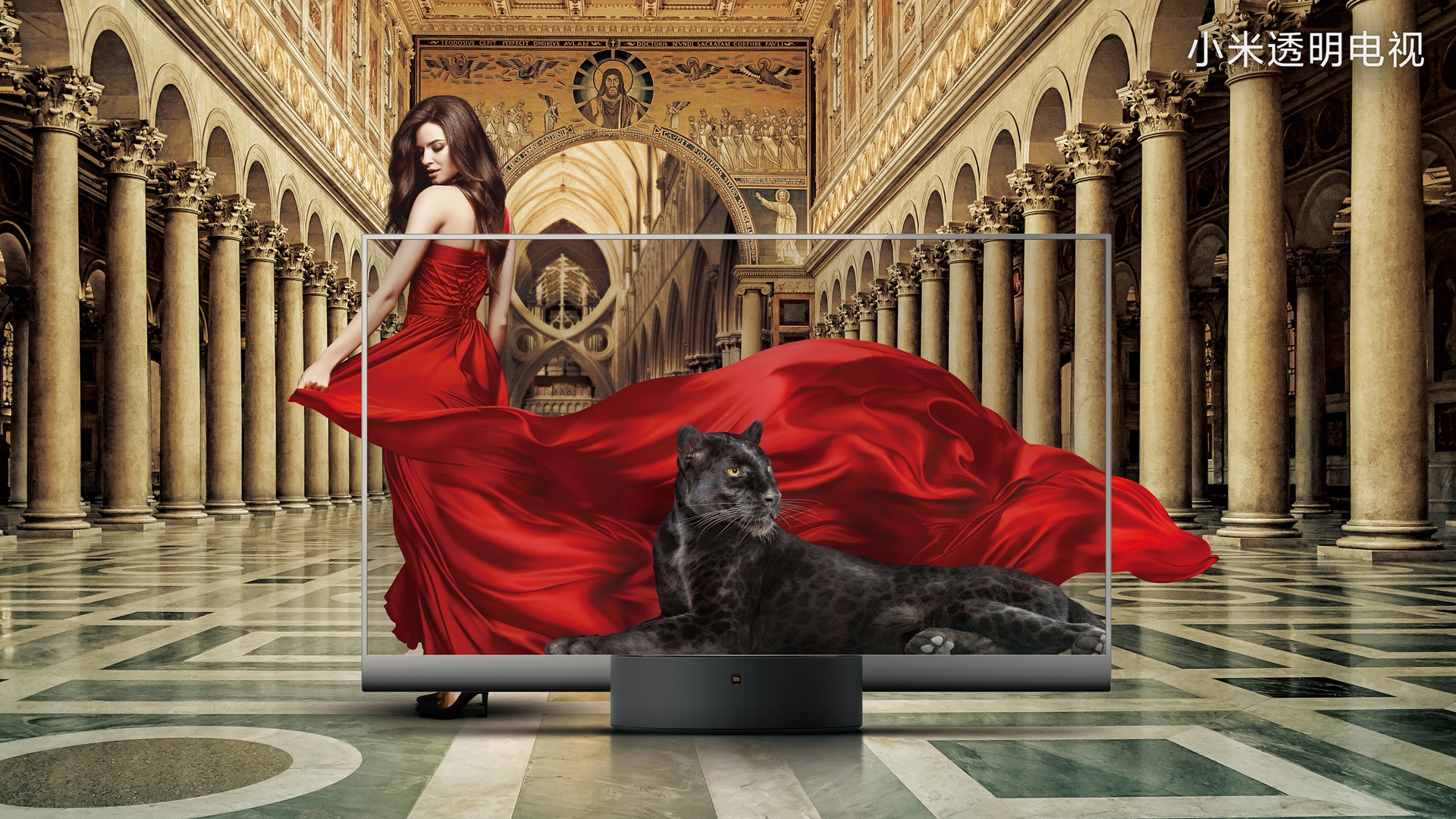
The Xiaomi Mi TV LUX OLED Transparent Edition is one of those products that changes the conversation around what a television is supposed to look like when it is not being watched. Rather than presenting a familiar black rectangle on a stand or wall, it uses a transparent OLED panel that allows viewers to see through the screen itself. That single design decision reshapes the product’s purpose: it is not only a display for moving images, but also an object intended to interact with the room around it. For hi-fi and home entertainment enthusiasts, the appeal is not simply novelty. The Mi TV LUX OLED Transparent Edition combines a 55-inch OLED panel, support for 10-bit color, frame rates up to 120 fps, onboard image processing, and a distinctive base that houses the functional hardware while leaving the panel visually clean. It is a television with obvious decorative ambitions, and its most interesting qualities emerge when viewed as a hybrid of display, installation piece, and living-room technology.
A transparent OLED concept with practical design consequences
The defining feature of the Mi TV LUX OLED Transparent Edition is its transparent OLED screen. Unlike a standard television, which becomes an opaque visual block even when turned off, this panel is designed to let the background remain visible through the display. That gives the product a very different physical character in a room. It can be placed in front of a wall, a view, a display area, or a carefully arranged interior without completely concealing what sits behind it.
This matters because many large televisions create a design compromise. A screen big enough to be immersive often dominates the space around it. Xiaomi’s transparent approach addresses that tension by making the display less visually heavy. The product still has a 55-inch screen, so it is not small, but the transparency changes how it occupies a room. For owners who care about interior architecture, visual openness, or a gallery-like presentation, that may be more meaningful than simply choosing another conventional panel.
The transparent format also suggests uses beyond ordinary TV viewing. Xiaomi positions the product as something closer to an art object than a traditional television, and that framing makes sense. A transparent display can show digital artwork, photography, video loops, or ambient visuals while allowing the real environment to remain part of the composition. The result is a display that can become part of a space rather than merely being mounted in it.
OLED strengths in an unusual form factor
The Mi TV LUX OLED Transparent Edition uses OLED technology, which is central to why a transparent screen can work in this kind of product. OLED panels generate light at the pixel level rather than relying on a conventional backlight behind the image. That architecture is what makes deep blacks and strong contrast possible in OLED designs, and it also supports the physical thinness that Xiaomi emphasizes here.
According to Xiaomi, the display is capable of very high contrast and deep black levels. The panel also supports 10-bit color, a feature that may matter for owners who want smoother tonal gradations in compatible video and image material. In art-display scenarios, subtle color transitions and gradients can be especially important, because still images give the eye time to notice banding or coarse transitions. A 10-bit-capable panel is therefore a relevant specification for a product that may often be used to show photography, graphics, or curated visual content.
The screen also supports video frame rates up to 120 fps. That gives the display a technical foundation for smooth motion with suitable content. Xiaomi has not presented this product as a conventional gaming monitor or sports-focused TV in the material provided, so it would be wrong to overstate that angle. Still, 120 fps support is a useful capability in a modern display, particularly for fast-moving video or interface motion where a higher frame rate can contribute to a more fluid presentation.
A 5.7 mm panel supported by a functional base
One of the most striking design choices is the separation between the nearly vanishing screen and the base that supports it. Xiaomi states that the OLED panel itself is only 5.7 millimeters thick. That slimness is essential to the product’s visual identity: the screen is intended to appear light, open, and almost pane-like rather than like a box of electronics.
To preserve that effect, Xiaomi places the electronics, power supply, and speakers inside a round base. This is more than a styling detail. Transparent displays are unforgiving from a design standpoint because anything placed behind or attached to the rear of the panel would compromise the see-through effect. By relocating the necessary hardware into the base, Xiaomi keeps the back of the screen clean and transparent.
The circular base also gives the product a furniture-like presence. It acts as a stabilizing platform, a technology enclosure, and a visual counterweight to the thin vertical panel. For prospective owners, that means the Mi TV LUX OLED Transparent Edition is not just a panel to hide on a wall; it is a freestanding object whose base is part of the design. That may suit open-plan interiors, display environments, showrooms, galleries, and rooms where a conventional wall-mounted TV would feel too static or intrusive.
Processing and smart image handling
Image processing in the Mi TV LUX OLED Transparent Edition is handled by a MediaTek 9650 processor, paired with Xiaomi’s AI Master Smart Engine. The published information does not provide a detailed breakdown of every processing function, so it is best to understand this as Xiaomi’s integrated platform for managing video processing and display behavior rather than as a list of unverified performance claims.
The inclusion of a dedicated processor and Xiaomi’s own smart engine is still important. A transparent OLED display is not a simple novelty panel; it must handle conventional video signals, color information, motion, and image enhancement while also working within the visual constraints of transparency. Processing quality can influence how content is adapted to the screen and how effectively different material is displayed. For users planning to show art, branded visuals, photographs, or high-frame-rate video, the presence of an onboard processing platform is part of what makes the product a complete display rather than a bare concept screen.
Why transparency changes the viewing context
A transparent television naturally raises the question: what is it for? The answer is not necessarily the same as it would be for a standard living-room screen. Traditional TVs are built around the assumption that the viewer wants the screen to dominate attention and block out the surroundings. A transparent OLED display creates a layered image, where the content and the background can coexist. That makes it especially interesting for visual installations, decorative media, and spaces where the display should not fully interrupt the architecture.
In a home, the concept could be attractive to someone who wants digital art or photography in the living room without committing to a conventional black panel. In a gallery or museum setting, the display could become part of an exhibit, allowing digital imagery to be placed in conversation with objects, textures, lighting, or views behind it. In a design-led commercial space, it could function as a presentation screen that feels less like signage and more like a transparent visual surface.
This does not mean transparency is an advantage in every situation. Viewers who primarily want a familiar cinema-like experience, with the screen isolated from its surroundings, may prefer a conventional OLED television. Background objects, room lighting, and placement will likely matter more with a transparent display than with an opaque one. The Mi TV LUX OLED Transparent Edition is most compelling when the environment behind and around it is part of the intended effect.
Who the Mi TV LUX OLED Transparent Edition is most suitable for
The Mi TV LUX OLED Transparent Edition is best suited to buyers who value design integration as much as conventional television functionality. Its strengths are most obvious for interior-focused homes, galleries, museums, showrooms, hospitality spaces, and technology-forward environments where the screen itself is intended to make a visual statement. The combination of a 55-inch transparent OLED panel, 10-bit color support, 120 fps capability, slim construction, and integrated base makes it a highly distinctive display object.
It is less obviously suited to someone seeking a straightforward living-room replacement for a standard television. The transparent concept changes the relationship between screen, room, and viewer, and that is the point of the product. Owners who want the display to disappear into a wall when not in use may not be the target audience; owners who want the display to become part of the room’s design language are much closer to it.
Availability is also part of the practical picture. The Mi TV LUX OLED Transparent Edition was announced for the Chinese market initially, so prospective buyers outside that region would need to consider whether it is officially offered where they live. No USD pricing has been provided in the available product information.
Conclusion
The Xiaomi Mi TV LUX OLED Transparent Edition is distinctive because it treats the television as both a display and a designed object. Its 55-inch transparent OLED panel, 10-bit color support, frame-rate capability up to 120 fps, MediaTek-based processing, and 5.7 mm-thick screen are all important, but the strongest idea is how those elements are arranged: the panel remains visually clean while the round base contains the electronics, power supply, and speakers. This product is most attractive for users who want a display that can show video, art, or photography while preserving a sense of openness in the room. It is not aimed only at conventional TV viewing; it is better understood as a transparent OLED installation for design-conscious homes, galleries, museums, and spaces where technology is meant to be seen without visually closing off its surroundings.
