
Digital-to-analog conversion now covers a much wider field than the traditional standalone hi-fi box.
The products gathered here range from network-capable R2R converters and flagship balanced DACs to desktop headphone hubs, portable dongles, and even a professional digital-to-digital converter designed to cleanly move signals between formats before they ever reach a DAC.
That variety matters because the right choice depends less on abstract hierarchy and more on system role. A Mac mini desk setup, a balanced flagship rack, a portable wired-headphone rig, and a studio-style digital chain each ask different things from a converter. Connectivity, power management, clocking, format support, and physical integration can be just as important as the converter topology itself. These editorial favorites are based only on the supplied source material, so the emphasis is on clearly supported strengths rather than speculative sound descriptions. The aim is to help narrow the field by use case: streaming convenience, desktop flexibility, portable performance, classic hi-fi presentation, or ambitious no-compromise design.

1. Mutec MC1.2+: Bidirectional digital to digital converter
Mutec MC1.2+ is designed to sit between digital sources and downstream audio equipment, converting and regenerating PCM streams across multiple digital interfaces.
The Mutec MC1.2+ is not a DAC in the usual sense, but it belongs in a serious digital-audio conversation because it handles conversion between digital formats before the signal reaches downstream equipment.
It can convert PCM streams across USB, AES/EBU, AES3/EBUid and S/PDIF, with simultaneous operation in both directions, including via USB.
The source positions it as especially useful in professional recording studios, while also noting that its USB isolation and signal regeneration could appeal to streaming enthusiasts looking to reduce PC-related noise before a DAC.
Best for: Digital systems needing format conversion and USB isolation
- Bidirectional digital format conversion
- USB, AES/EBU, AES3/EBUid and S/PDIF support
- Simultaneous in and out operation
- USB signal regeneration and voltage isolation
Verdict: Choose the MC1.2+ when the weak point is digital interfacing rather than analog conversion.

2. Gustard R26 II: High-End R2R DAC with Built-In Streamer
Gustard R26 II pairs a discrete R2R conversion stage with an integrated streaming platform for modern network-based listening.
The Gustard R26 II combines a redesigned 26-bit fully discrete R2R ladder DAC with modern streaming support, making it one of the more complete source components in this selection.
Its R2R architecture is derived from the flagship Gustard R30, and the unit also supports native 1-bit DSD playback.
The built-in network bridge, developed with CelAudio and running on a custom-optimized Linux system, supports Roon Bridge, AirPlay, UPnP, Spotify and NAA over RJ45 Ethernet, so it is aimed at listeners who want a DAC that can also anchor a network-audio setup.
Best for: Listeners who want R2R conversion and integrated streaming
- 26-bit fully discrete R2R ladder DAC
- Built-in network bridge
- Roon Bridge, AirPlay, UPnP, Spotify and NAA support
- RJ45 Ethernet for stable streaming
Verdict: The R26 II stands out as a DAC for systems where network playback is central rather than an afterthought.

3. FiiO K19: Powerful and Flexible Desktop Headphone Amplifier/DAC
FiiO K19 is built as a desktop DAC and headphone amplifier with a broad range of digital inputs for computer-centered systems.
The FiiO K19 is framed as a desktop headphone amplifier and DAC, but the source presents it more broadly as a central hub for desktop audio systems.
Its connection set includes optical and coaxial S/PDIF, USB-C for PCs and Macs, support for USB-C storage devices, and HDMI.
On the output side, the supplied material identifies two pairs of RCA sockets for analog output, giving it practical system flexibility beyond headphone use.
Best for: Desktop users needing a flexible DAC and headphone hub
- Optical and coaxial S/PDIF inputs
- USB-C connection for PCs and Macs
- USB-C storage-device support
- HDMI included among the connectivity options
Verdict: The K19 is the practical choice here for a desk-based system with multiple digital sources.
4. MSB Technology Sentinel: The World’s Most Advanced Digital-to-Analog Converter
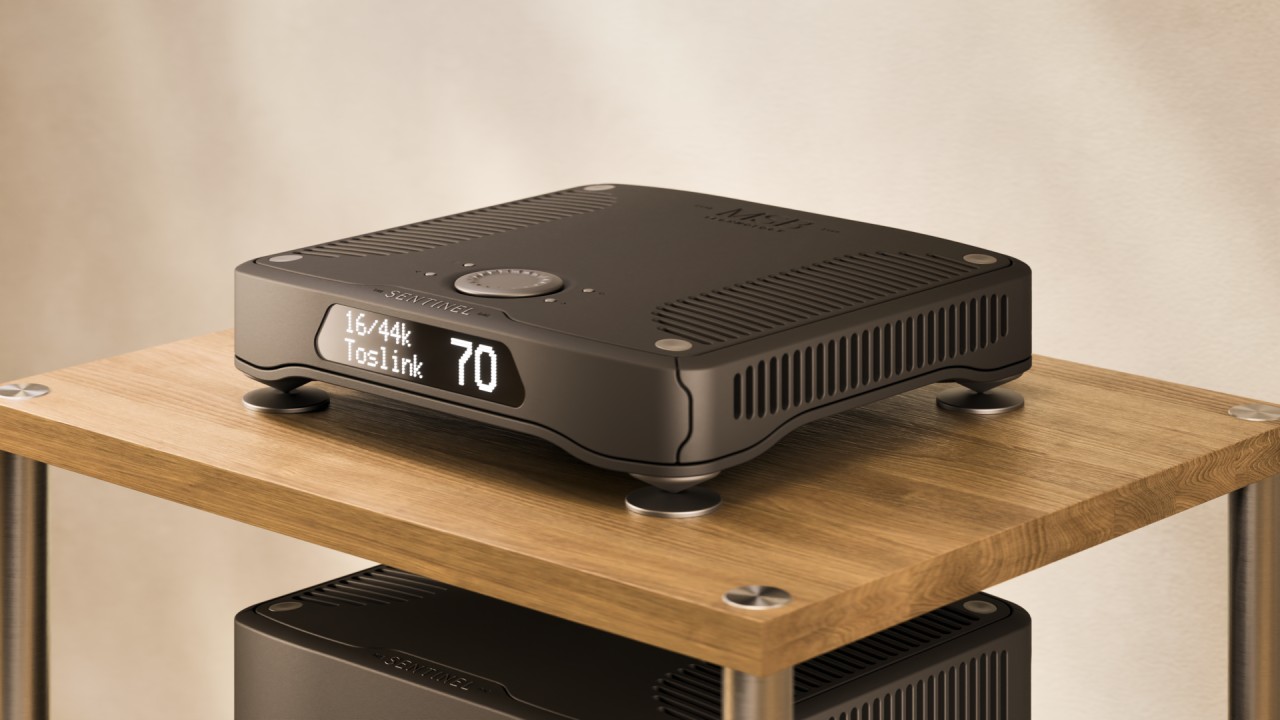
MSB Technology Sentinel is described as a three-body digital-to-analog converter system with a streamlined exterior concealing complex internal layouts.
The MSB Technology Sentinel is presented as an extreme digital-to-analog converter system built without ordinary constraints.
The source describes a three-body architecture developed around the manufacturer’s performance-first brief, with hidden and complex 3D layouts intended to reduce system clutter while improving electronic interactions.
Specific pricing and delivery details were not supplied, and the article itself notes that the system is likely to sit beyond the reach of most enthusiasts.
Best for: Statement-level systems where cost and scale are secondary concerns
- Three-body DAC system architecture
- Performance-first design brief
- Hidden internal layouts to reduce system clutter
- Smooth matte exterior design
Verdict: The Sentinel is the aspirational entry: intriguing for its architecture, but not described with enough practical detail to suit ordinary buying comparisons.

5. SMSL DAC MINI: Mac Mini-Optimized DAC, Balanced Headphone Amp & USB Hub
SMSL DAC MINI is shaped to stack beneath a Mac mini while adding DAC, headphone-amplifier and USB-hub functionality.
The SMSL DAC MINI is unusually specific in its intended environment: it is designed to sit beneath a Mac mini and mirror its footprint.
The CNC-milled aluminum enclosure is described as rigid, resonance-reducing and useful for passive heat dissipation.
Its most distinctive usability touch is a mechanical front power button that wakes the Mac mini without software workarounds, while the internal DAC stage is built around the ESS ES9039Q2M chip. The title also identifies it as a balanced headphone amplifier and USB hub, reinforcing its role as a compact desktop companion.
Best for: Mac mini desktop systems needing an integrated audio module
- Mac mini-matching footprint
- CNC-milled aluminum enclosure
- Mechanical power-on control for Mac mini
- ESS ES9039Q2M DAC chip
Verdict: The DAC MINI is the most purpose-built choice here for Mac mini users who want cleaner desk integration.

6. Portable DACs: Pocket Hi-Fi Done Right
Portable DACs and dongle DACs are designed to connect wired headphones to modern phones, laptops and desktops in a compact form.
This source article is a category guide rather than a single-product announcement, but it makes a clear case for portable DACs as more than simple headphone-jack replacements.
It frames modern dongle DACs and compact headphone amplifiers as tools for listeners who want wired headphone quality from phones, laptops or desktops without carrying a full digital audio player.
The excerpt specifically mentions the FiiO KA11 as an entry-point example and emphasizes the broader appeal of small USB DACs as both adapters and sonic upgrades.
Best for: Mobile listeners keeping wired headphones in daily use
- Pocketable wired-headphone solution
- Works as an adapter and DAC upgrade
- Useful with phones, laptops and desktops
- Avoids carrying a full digital audio player
Verdict: Portable DACs are the right category when convenience, size and wired-headphone support matter more than rack-style integration.

7. Leema Constellation Libra: Fully balanced flagship DAC
Leema Constellation Libra is a full-size flagship DAC with fully balanced dual-mono conversion and system-control integration.
The Leema Constellation Libra is a full-size flagship DAC designed to sit within Leema’s Constellation ecosystem.
Its proprietary Quattro Infinity DAC unit is fully balanced and arranged as a dual-mono circuit, and the source notes that it can be replaced by a more advanced version when available.
Connectivity is unusually broad for specialist systems, including two non-certified I2S interfaces on RJ45 connectors, one fully configurable, along with asynchronous USB support for PCM up to 24-bit/384 kHz, DXD, DSD64 and DSD128. LIPS control and monitoring also make it a natural match for other components in the same series.
Best for: Advanced hi-fi systems built around balanced architecture and Leema integration
- Fully balanced dual-mono DAC architecture
- Replaceable Quattro Infinity DAC unit
- Two I2S interfaces on RJ45 connectors
- Asynchronous USB with PCM, DXD and DSD support
Verdict: The Libra is a strong fit for owners who value upgradeable DAC architecture and tight system control within the Constellation range.

8. Marantz HD-DAC1: Modern DAC in a classic suit
Marantz HD-DAC1 combines DAC and headphone-amplifier functions with a metal-and-wood chassis and familiar Marantz styling cues.
The Marantz HD-DAC1 blends a traditional Marantz visual language with modern DAC and headphone-amplifier functions.
The source highlights Advanced AL32 signal processing and 32-bit/192 kHz digital-to-analog conversion technologies related to Marantz’s upper-level CD/SACD players.
The design also receives real attention: a metal case, thick aluminum front panel, natural-wood side walls, anti-resonance supports, a round display and two rotary controls for source selection and volume.
Best for: Listeners wanting a compact DAC/headphone amp with classic Marantz styling
- Advanced AL32 signal processing
- 32-bit/192 kHz digital-to-analog conversion
- Built-in headphone amplifier
- Metal chassis with wood side panels and anti-resonance supports
Verdict: The HD-DAC1 is the characterful option for those who want desktop DAC utility wrapped in traditional hi-fi presentation.

9. iBasso D16 Taipan: Portable and discrete DAC
iBasso D16 Taipan uses FPGA-Master 2.0 and a discrete PWM DAC structure in a portable DAC and amplifier format.
The iBasso D16 Taipan is a portable DAC built around iBasso’s FPGA-Master 2.0 and a discrete 1-bit DAC arrangement using 16 sets of cascaded 8E PWM DACs, for a total of 128 PWM DACs.
The source states a measured THD+N ratio of 0.0001% and describes the amplifier section as a super Class A transistor amplifier similar to the DX320MAX amplifier.
Its hardware analog FIR filter approach uses precisely controlled independent PWM DACs operating in parallel delay mode to minimize distortion and increase detail and density, according to the supplied material.
Best for: Portable-audio enthusiasts interested in discrete DAC architecture
- Portable discrete 1-bit DAC design
- FPGA-Master 2.0 signal processing
- 128 PWM DACs in total
- Super Class A transistor amplifier section
Verdict: The D16 Taipan is the most technically distinctive portable entry in this group, centered on FPGA control and discrete PWM conversion.

10. Shanling Launches UA6 Portable DAC with Advanced Features and Enhanced Sound Quality
Shanling UA6 is a portable DAC with four CS43131 chips, selectable DAC modes and a hybrid power approach for mobile use.
The Shanling UA6 is a portable DAC built around four CS43131 chips and aimed at listeners who want advanced control in a small device.
It supports hardware decoding of PCM up to 768 kHz/32-bit and DSD512, and it can switch between dual and quad DAC modes for different sound profiles.
The source also highlights ultra-variable frequency technology for temperature control and low power consumption, plus a 220 mAh lithium battery and hybrid power system intended to reduce reliance on unstable phone power.
Best for: Portable users wanting mode flexibility and phone-friendly power management
- Four CS43131 chips
- Dual and quad DAC mode switching
- PCM up to 768 kHz/32-bit and DSD512 support
- 220 mAh battery with hybrid power system
Verdict: The UA6 is the compact pick for listeners who want a portable DAC with selectable DAC operation and dedicated power support.
Quick comparison
The products below are not direct equivalents.
Some are standalone DACs, some are DAC/headphone amplifiers, one is a digital-to-digital converter, and one entry represents the portable DAC category.
The most useful comparison is therefore by role rather than by a single specification.
| Product | Best for | Verdict |
|---|---|---|
| Mutec MC1.2+ | Digital format conversion, studio-style routing and USB isolation | A specialist DDC for improving digital interfacing before a DAC. |
| Gustard R26 II | Networked systems wanting R2R conversion | A full-featured DAC with integrated streaming support. |
| FiiO K19 | Multi-source desktop headphone and DAC setups | A connectivity-focused desktop hub for computers and digital sources. |
| MSB Technology Sentinel | Statement-level digital systems | An ambitious three-body DAC system with limited practical buying detail in the source. |
| SMSL DAC MINI | Mac mini-based desktop systems | A physically integrated DAC, headphone amp and USB hub designed around the Mac mini. |
| Portable DACs: Pocket Hi-Fi Done Right | Phones, laptops and compact wired-headphone use | A category choice for listeners who want small USB DACs instead of wireless-only listening. |
| Leema Constellation Libra | Balanced flagship hi-fi systems and Leema Constellation setups | An upgradeable, fully balanced DAC with advanced system integration. |
| Marantz HD-DAC1 | Classic-style compact DAC and headphone-amplifier systems | A modern DAC/headphone amp presented in traditional Marantz form. |
| iBasso D16 Taipan | Portable users interested in discrete DAC design | A technically focused portable DAC using FPGA control and discrete PWM conversion. |
| Shanling UA6 | Portable listening with selectable DAC modes and battery assistance | A compact DAC with four CS43131 chips, high format support and hybrid power management. |
Frequently asked questions
Should I choose a desktop DAC or a portable DAC?
Choose a desktop DAC when the unit will stay in one system and needs multiple inputs, analog outputs or integration with other hi-fi components.
Choose a portable DAC when the priority is wired-headphone use from a phone, laptop or small travel setup, as shown by the portable-focused iBasso, Shanling and pocket-DAC category entries.
Is a built-in streamer important in a DAC?
It is important if network playback is your main source.
The Gustard R26 II is the clearest example here because it combines DAC duties with a network bridge supporting Roon Bridge, AirPlay, UPnP, Spotify and NAA over Ethernet.
If you already have a separate streamer or mainly use USB, an integrated streamer may be less central.
What is the difference between a DAC and a digital-to-digital converter?
A DAC converts digital audio into an analog signal.
A digital-to-digital converter, such as the Mutec MC1.2+, converts between digital interfaces such as USB, AES/EBU and S/PDIF, while also addressing issues such as signal regeneration and USB isolation before the signal reaches a DAC or other digital equipment.
Which features matter most when comparing DACs?
Start with system fit: input types, output needs, headphone use, streaming requirements and physical placement.
The SMSL DAC MINI is tailored to a Mac mini, the Leema Libra emphasizes balanced flagship integration, the FiiO K19 focuses on desktop connectivity, and the Shanling UA6 and iBasso D16 prioritize portable use.
How to Choose the Right DAC for Your System
A DAC should solve a specific system problem.
If the problem is network playback, the Gustard R26 II is the most directly relevant model in this group because its streaming platform is part of the design rather than an add-on.
If the system is a desktop with multiple digital sources and headphones, the FiiO K19 offers the clearest hub-style approach, while the SMSL DAC MINI is more specialized for Mac mini owners who value physical integration as much as audio functionality. For conventional hi-fi systems, the Leema Constellation Libra and Marantz HD-DAC1 point in different directions. The Leema is the more advanced system component, with fully balanced dual-mono architecture, upgradeable DAC hardware and Constellation ecosystem control. The Marantz is the more compact and traditional option, pairing DAC and headphone-amplifier functions with familiar styling and Advanced AL32 processing. Portable listeners should separate convenience from architecture. The Shanling UA6 emphasizes compact flexibility, selectable dual or quad DAC operation and hybrid power management, while the iBasso D16 Taipan is the more elaborate technical proposition with FPGA-Master 2.0 and a discrete PWM DAC design. The broader portable DAC category remains compelling when wired headphones need to work cleanly with modern phones and laptops. The Mutec MC1.2+ sits apart from all of these because it is a digital-to-digital converter rather than a DAC. It makes sense when the digital chain itself needs format conversion, bidirectional routing or USB isolation. The MSB Technology Sentinel, meanwhile, is best viewed as a statement concept within this list: fascinating in its three-body architecture, but less practical to compare because the supplied material does not provide ordinary purchase details. In short, choose by role first, topology second, and specifications only after the unit clearly fits the way the system will actually be used.