
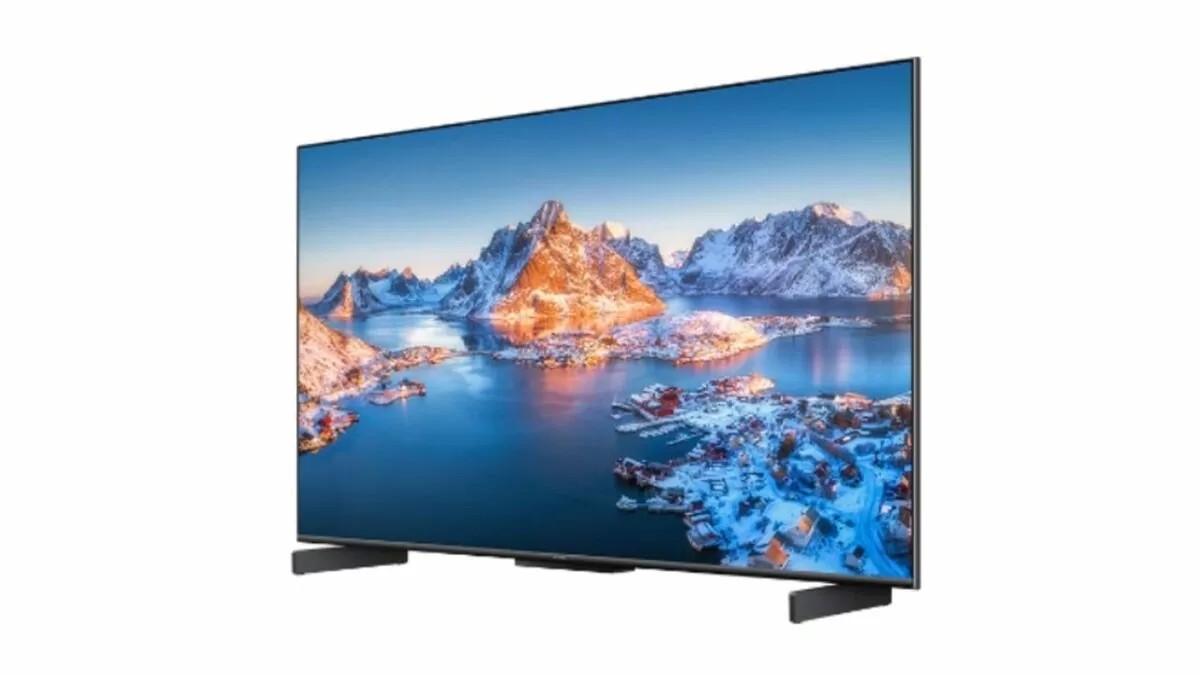
The Huawei Smart Screen S75 sits in an increasingly important category: the large smart television designed not only to display films, games, and streaming services, but also to operate as a connected hub in the home. Its documented specification is not built around extravagant claims; instead, it presents a practical mix of 4K LCD picture capability, a 60 Hz panel, wide color coverage, integrated audio, local app storage, NFC, wired and wireless networking, and conventional AV connectivity. For prospective owners, the appeal is less about any single headline feature and more about how these choices combine into a television intended to serve as a central screen for everyday entertainment and household control.
A Second-Generation Smart Screen With a Clear Everyday Brief
Huawei identifies the Smart Screen S75 as a second-generation model, which positions it as part of an evolving smart TV family rather than a one-off display. That matters because televisions in this class are expected to do more than accept a signal from a set-top box. They need to run apps, connect to networks, recognize external devices, and interact smoothly with other hardware in the home.
The S75’s feature list reflects that broader role. It includes internal memory for applications, multiple connection options, NFC, an updated Wi-Fi adapter, Ethernet, and the ability to function as a control center for smart-home devices. Those details suggest a product intended for people who want the main living-room screen to be part of a connected environment, not simply a passive monitor.
4K LCD Panel and Wide Color Support
At the center of the Smart Screen S75 is a liquid crystal display panel with a resolution of 3840 x 2160 pixels, corresponding to 4K Ultra HD. For modern streaming services, disc playback, gaming consoles, and high-resolution media libraries, 4K remains the key baseline format. It allows fine image detail when the source material supports it and gives the television enough resolution to handle contemporary video standards without needing to rely solely on scaling from lower-resolution content.
The panel’s documented refresh rate is 60 Hz. That is a familiar specification for mainstream television viewing, streaming, film playback, general console use, and everyday household content. It is not presented as a high-refresh gaming display, and buyers focused specifically on very high frame-rate gaming would want to take that into account. For many living-room scenarios, however, a 60 Hz 4K panel remains a practical foundation.
Color reproduction is another notable part of the S75’s specification. Huawei states that the screen can display 1.07 billion colors and cover 92% of the DCI-P3 color gamut. DCI-P3 coverage is relevant because wide-color video material has become more common across streaming and UHD sources. A broader gamut can give compatible content more room for saturated colors and smoother gradations, depending on the source and picture processing. The 1.07-billion-color figure also points to an emphasis on tonal range, which may help reduce visible banding when properly supported by content and processing.
Integrated Four-Speaker Audio for a Self-Contained Setup
The Smart Screen S75 includes four speakers rated at 10 W each. That gives the television a documented total of four built-in drivers rather than a minimal two-speaker arrangement. For buyers who want a clean installation without immediately adding a soundbar or separate audio system, integrated audio remains important. A television may have excellent video features, but if it requires external speakers from day one, the total system becomes more complicated and more expensive.
The presence of four 10 W speakers does not tell us everything about the final sonic character, and it would be inappropriate to infer listening performance without hands-on evaluation. Still, the configuration is useful to note because it indicates that Huawei has allocated space and amplification to onboard sound. In a family room, bedroom, or multipurpose space, that can make the S75 more self-contained for news, casual viewing, video calls if supported by external devices, and app-based entertainment.
Memory and Storage That Support the Smart TV Role
Huawei equips the Smart Screen S75 with 3 GB of RAM and 32 GB of built-in storage for installing applications. In a smart television, these figures matter because the screen’s usefulness depends partly on how comfortably it can run its interface and how much room it provides for apps. Streaming platforms, media tools, smart-home utilities, and system updates all need storage. A 32 GB capacity gives the TV an internal space allocation aimed at more than the bare minimum.
The 3 GB RAM figure also supports the idea of the S75 as a connected smart screen rather than a display limited to external inputs. While actual responsiveness depends on software optimization as well as hardware, memory is an important part of multitasking, app switching, and interface fluidity. For a household where several people use different apps and services, onboard storage and RAM can help the television remain a practical central device.
Connectivity for Modern and Legacy Sources
The Smart Screen S75’s connection panel includes two HDMI ports, one USB 2.0 port, RJ-45 Ethernet, and AV input. That is a useful mix for a main television, especially in homes with a combination of current and older hardware. HDMI is the essential interface for media streamers, game consoles, Blu-ray players, satellite or cable boxes, and AV receivers. Two HDMI inputs provide basic flexibility, though users with several HDMI sources may still need an external switch or receiver.
USB 2.0 allows local media playback or peripheral connection where supported by the TV’s software. RJ-45 Ethernet is also significant. While Wi-Fi is convenient, a wired network connection can be valuable for people who prefer a stable connection for streaming or who have a router near the television. The inclusion of AV input is increasingly uncommon but still practical for legacy devices, older media players, or regional set-top boxes that do not use HDMI.
Wireless connectivity is also part of the package, with Huawei noting an updated Wi-Fi adapter. The exact wireless standard is not specified, so it is best not to assume a particular generation. Even so, updated Wi-Fi is relevant for a smart television because streaming, app updates, casting-style functions, and smart-home integration all depend on reliable network behavior.
NFC and Smart-Home Control Add to the Product’s Distinctive Role
NFC is one of the more distinctive documented features of the Huawei Smart Screen S75. In a television context, NFC can be used to simplify certain device interactions where supported, reducing the friction of pairing or connecting compatible devices. The exact NFC functions available on this model are not detailed here, but its inclusion underlines the S75’s emphasis on quick interaction with other technology rather than conventional remote-only operation.
The television can also be used as a control center for smart-home devices. This may be one of its most important practical roles for users already invested in connected lighting, appliances, sensors, or other home systems. A large central screen can make device status and control more visible than a phone app, especially in shared spaces. For families, that can turn the TV into a household interface as well as an entertainment display.
This smart-home angle is also where Huawei’s positioning becomes clearer. The S75 is not merely a panel with streaming functions; it is designed to sit inside a connected ecosystem. Prospective owners should consider compatibility with their existing devices, because the value of any smart-home control feature depends heavily on what products and services are supported in their region.
Who the Huawei Smart Screen S75 Is Most Suitable For
The Smart Screen S75 appears best suited to buyers who want a large 4K smart television with a broad set of everyday functions: streaming apps, internal storage, integrated speakers, wired and wireless networking, and smart-home control. It is especially relevant for users who prefer an all-in-one television that can manage entertainment and connected-home tasks without requiring multiple separate boxes.
It may also appeal to households that still need a mix of modern and older connections. HDMI handles current sources, Ethernet supports stable networking, USB adds local-device flexibility, and AV input keeps the door open for legacy equipment. That combination is practical for real-world systems, where not every device is replaced at the same time.
The S75 is less clearly targeted at buyers whose priorities are specialized gaming specifications, an extensive HDMI count, or a fully documented premium home-cinema feature set. The 60 Hz panel and two HDMI ports are perfectly understandable choices for mainstream use, but they are worth noting for users with several consoles, high-frame-rate gaming ambitions, or complex AV systems. Availability is another consideration: documented sales have begun in China at $850, with no confirmed information here about release outside China.
Conclusion
The Huawei Smart Screen S75’s strongest documented qualities are its 4K LCD panel, 1.07-billion-color capability, 92% DCI-P3 coverage, four-speaker integrated audio system, 3 GB of RAM, 32 GB of app storage, NFC, updated Wi-Fi, Ethernet, HDMI, USB, AV connectivity, and smart-home control function. Rather than presenting itself as a specialist display for one narrow use, it is shaped as a central household screen for entertainment, applications, connected devices, and everyday media sources. It is likely to be most attractive to prospective owners who want a practical large smart TV with broad connectivity and ecosystem features, while buyers with highly specific gaming or advanced home-theater requirements should weigh the 60 Hz panel and input selection against their system needs.