
Smartwatches now cover a wide range of priorities: app support, sports training, battery life, durability, classic styling, and health-monitoring convenience.
The most useful choice is rarely the one with the longest feature list; it is the one whose compromises match how the watch will actually be worn.
This guide draws only from the supplied product reports, so the emphasis is on clearly supported distinctions. Some models are built around Wear OS and third-party apps, others focus on long battery life, rugged sports use, hybrid watch design, or a more fashion-led case. Several entries were announced with very different levels of detail, so the recommendations reflect that. Where a source gives extensive training, display, sensor, or battery information, the editorial view is more specific; where the source is narrower or promotional in tone, the guidance is deliberately more restrained.
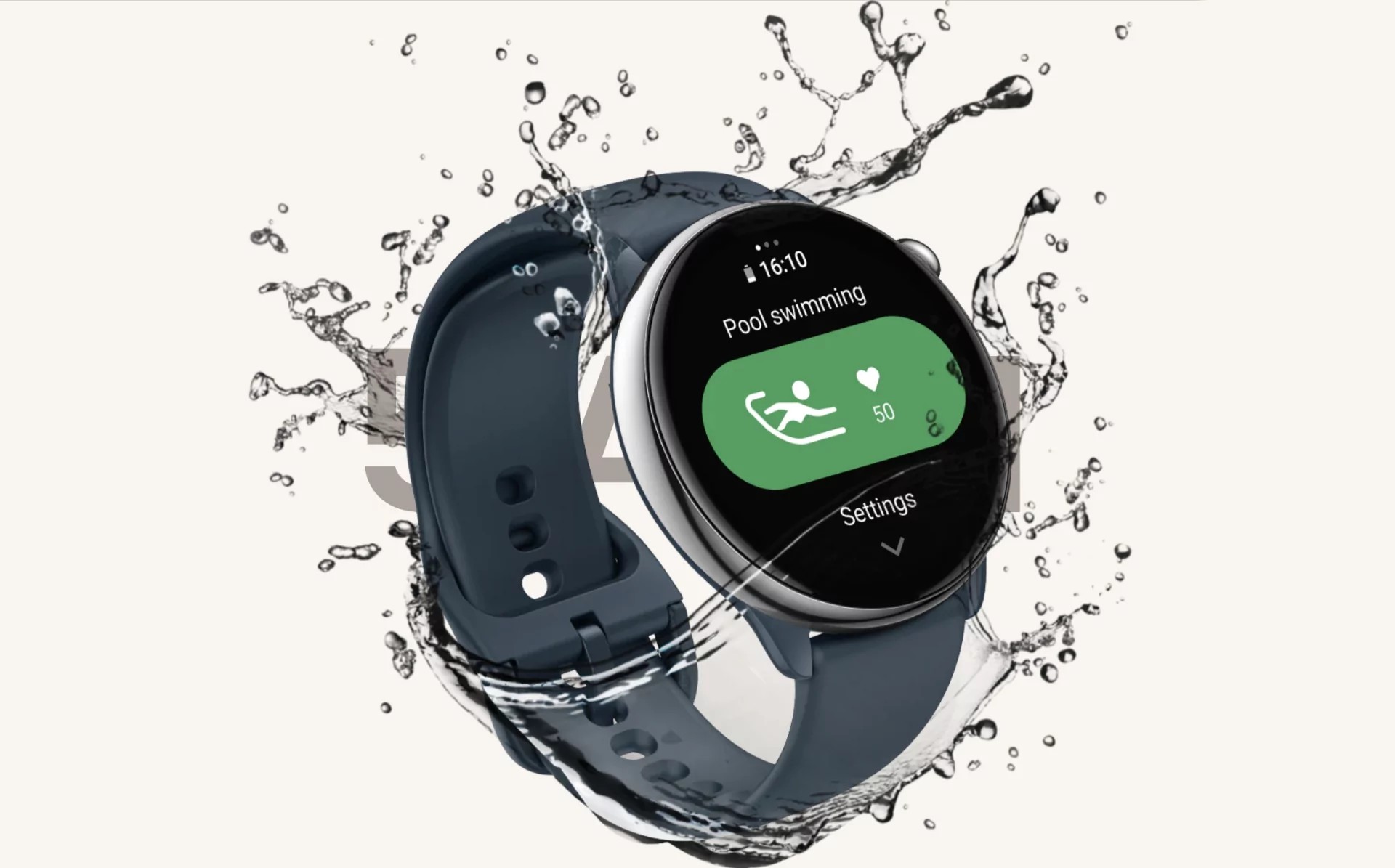
1. Amazfit GTR Mini
Amazfit GTR Mini shown as a compact round smartwatch with Always-On display support and built-in tracking features.
The Amazfit GTR Mini stands out as a compact smartwatch that still includes core features often associated with larger models.
Its 42.83 × 42.83 × 9.25 mm case and 24.6-gram weight make it one of the lighter options here, yet the source notes a 1.28-inch round display with Always-On support, GPS, a BioTracker PPG biometric sensor, 126 workout types, and 5ATM water protection.
Battery claims are also a central part of its appeal, with quoted figures ranging from extended clock and energy-saving modes to heavy use and active GPS use.
Best for: Small-watch buyers who still want GPS and broad workout tracking
- Compact 24.6-gram body
- Always-On round display
- GPS and continuous health monitoring
- 5ATM water protection
Verdict: A strong compact choice if you want a lighter smartwatch without giving up Always-On display support, GPS, and everyday health metrics.
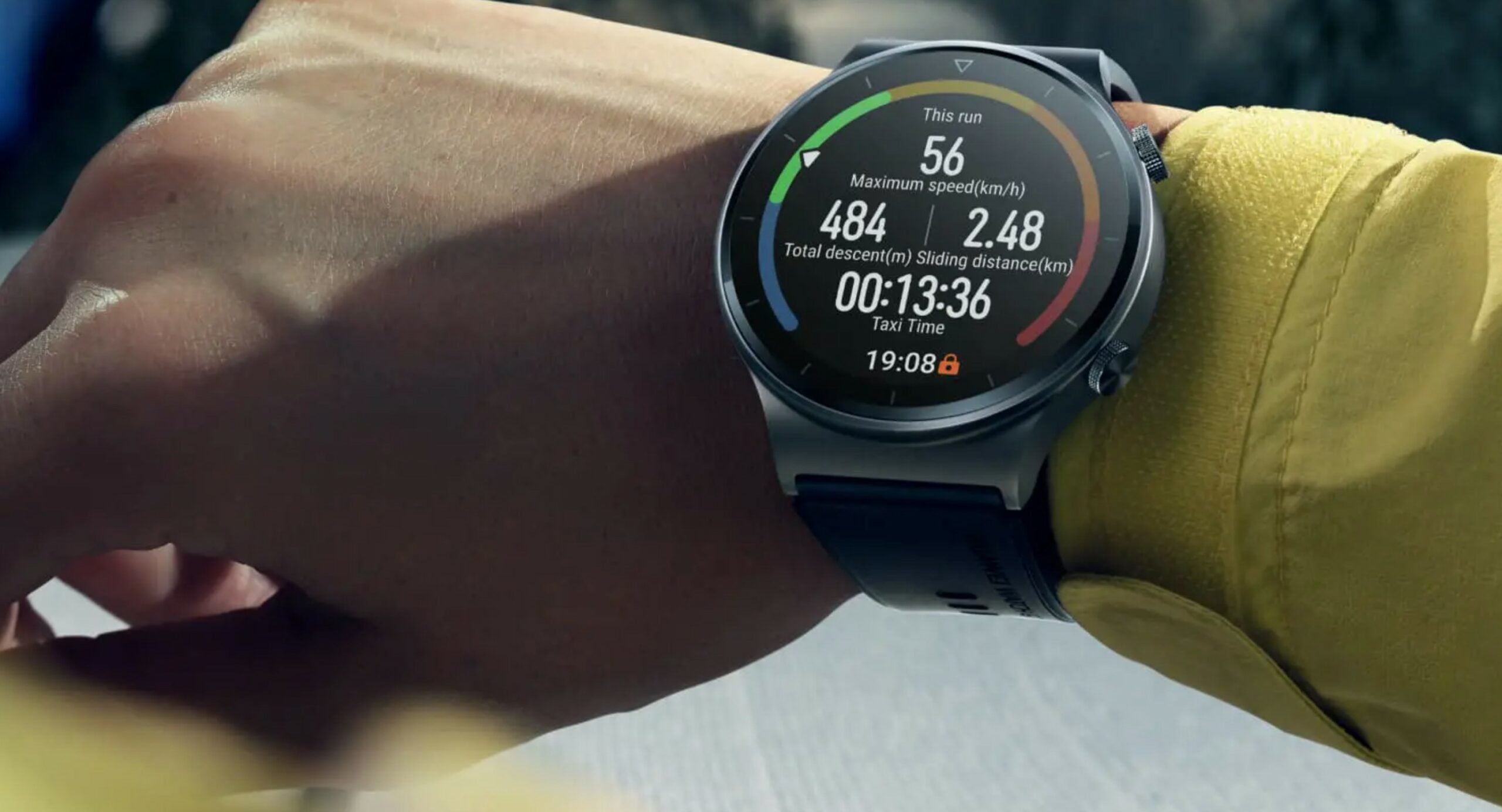
2. Huawei Watch GT 2 Pro
Huawei Watch GT 2 Pro receiving a software update that adds Petal Maps and sleep-monitoring improvements.
The Huawei Watch GT 2 Pro entry is different from most items in this list because the source focuses on a system update rather than a new hardware launch.
The update adds the Petal Maps navigation app, improves sleep monitoring, and includes work on performance and autonomy.
It also brings low heart-rate reminders during sleep and reminders for regular measurements, though the source specifies that these features apply only to models with an ECG sensor.
Best for: Existing Huawei Watch GT 2 Pro users considering the value of updated software
- Petal Maps added by update
- Improved sleep monitoring
- Performance and autonomy work noted
- ECG-model reminders for selected features
Verdict: The update makes the Huawei Watch GT 2 Pro more useful for navigation and sleep tracking, especially for owners of ECG-equipped versions.
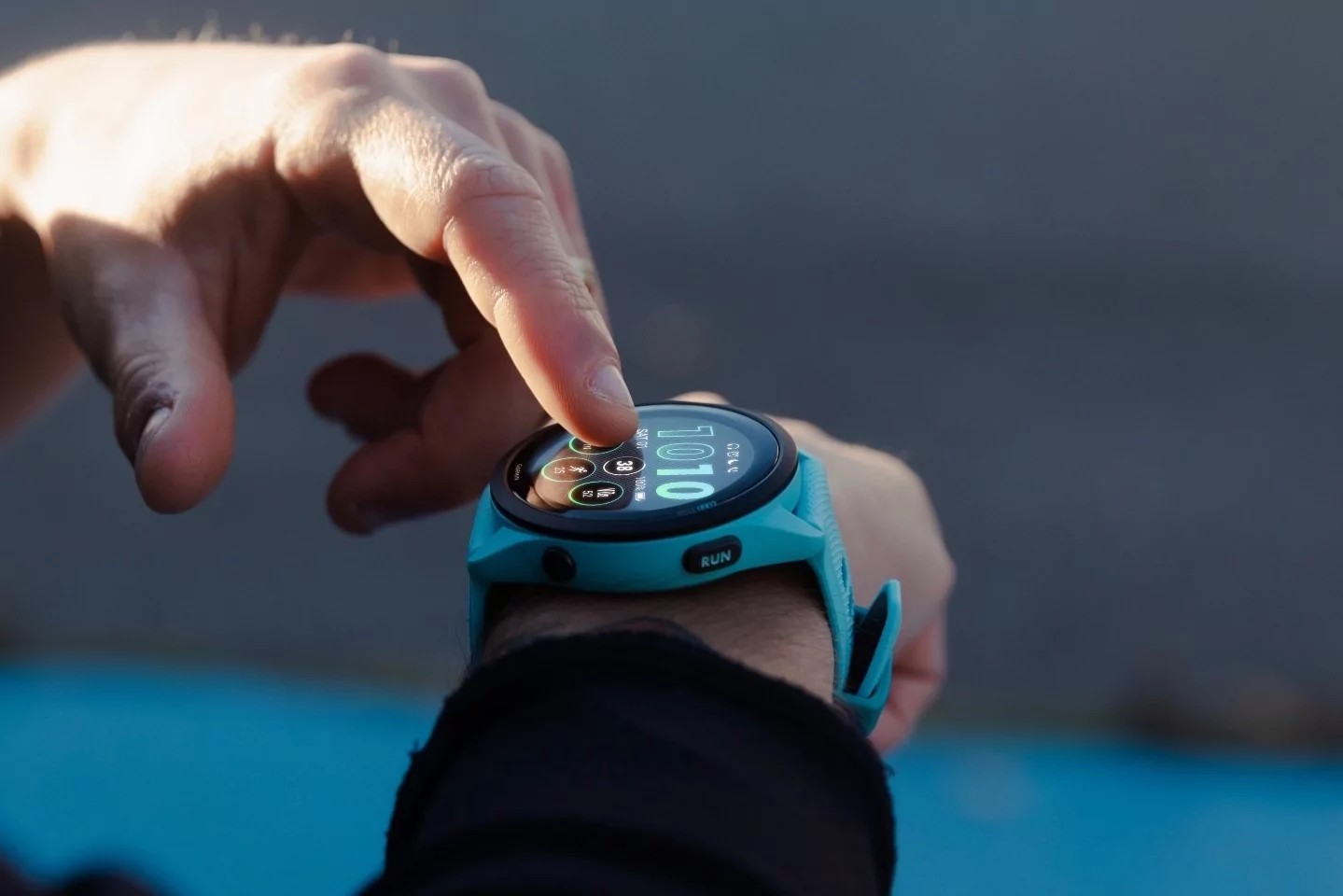
3. Garmin Forerunner 965
Garmin Forerunner 965 with AMOLED display, titanium frame, and sports-focused training tools.
The Garmin Forerunner 965 is the most athlete-focused model in the supplied material.
It has a 1.4-inch 454 x 454 AMOLED display with Always-On Display, a titanium frame, Gorilla Glass DX protection, and a 53-gram weight.
Garmin positions it around training guidance, recovery information, workout tips, daily personalized recommendations, run-completion predictions, adaptive scheduled workouts, and profiles for triathlon, duathlon, swimming, and more. The source also notes SatIQ positioning, ClimbPro for real-time distance and climb information, and 31 hours of battery life with GPS on.
Best for: Dedicated runners, triathletes, and performance-focused athletes
- Bright AMOLED training display
- Advanced training and recovery metrics
- Triathlon, duathlon and swimming profiles
- SatIQ positioning and ClimbPro
Verdict: For athletes who want detailed training guidance rather than just basic activity logs, the Forerunner 965 is the clearest specialist pick in this group.
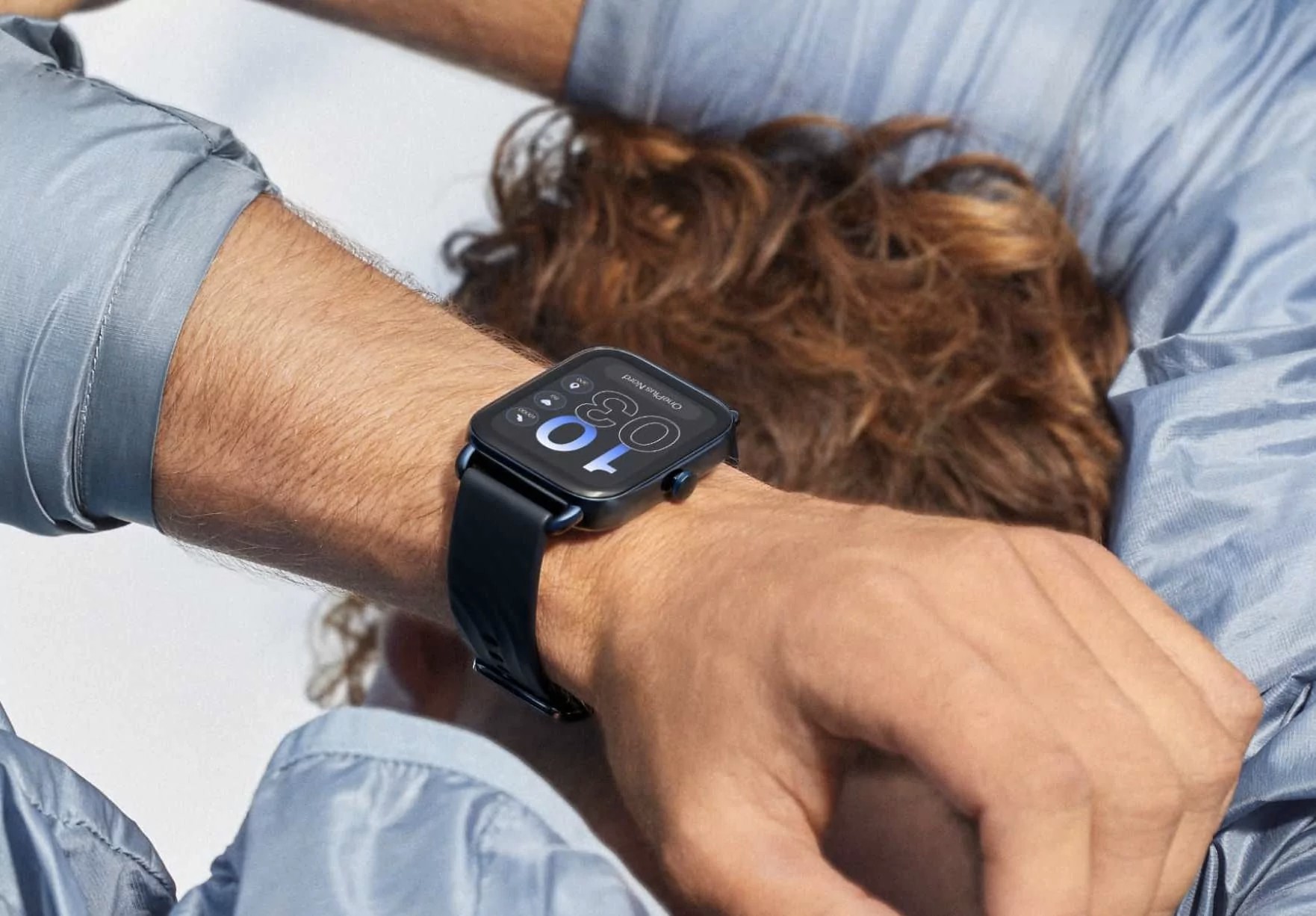
4. OnePlus Nord Watch
OnePlus Nord Watch with rectangular AMOLED screen, activity tracking, and IP68-rated protection.
The OnePlus Nord Watch is a rectangular AMOLED smartwatch with a large feature spread for activity and health tracking.
It uses a 1.78-inch 368 x 448 AMOLED display with a 60Hz refresh rate, offers 100 watch faces, and is protected against water and dust to IP68.
The source highlights 105 activity types, automatic detection for some activities such as walking and running, real-time heart rate, blood oxygen and stress measurements, menstrual cycle tracking, and up to 10 days of active-use battery life. Its main limitation is location tracking: it does not have built-in GPS and instead receives location data from a smartphone over Bluetooth 5.2.
Best for: Everyday users who want a large display and broad activity tracking without built-in GPS
- Large rectangular AMOLED display
- 105 activity types
- IP68 water and dust protection
- Up to 10 days in active use
Verdict: The Nord Watch is appealing as a practical activity tracker with a bright rectangular screen, provided phone-assisted location tracking is acceptable.
5. Xiaomi Watch 2 Pro
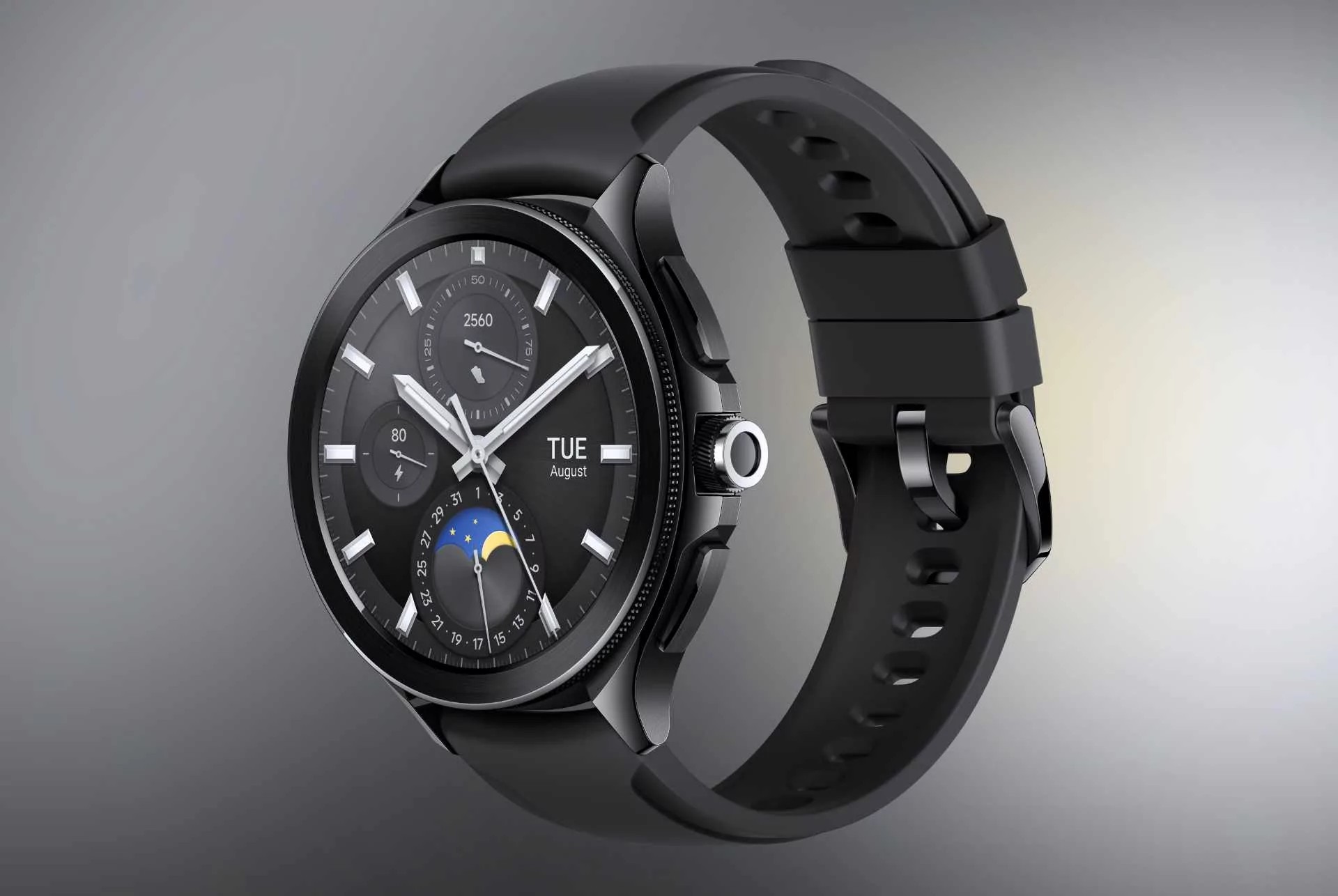
Xiaomi Watch 2 Pro shown as a Wear OS smartwatch with AMOLED display, optional LTE, and health sensors.
The Xiaomi Watch 2 Pro is presented as a full Wear OS smartwatch, which is its defining advantage in this selection.
Wear OS allows third-party application installation, and the watch is offered in Bluetooth and LTE versions; the LTE version can receive and make calls, send text messages, and stay connected without a smartphone.
The hardware details are substantial: a 1.43-inch 466 x 466 AMOLED display with 600-nit peak brightness, Always On Display, Qualcomm Snapdragon W5 + Gen 1 platform, 2 GB of RAM, 32 GB of storage, dual-band GNSS, Wi-Fi, Bluetooth 5.2, NFC, 5ATM water resistance, and a 54.5-gram weight without strap. Health and fitness features include continuous heart-rate and blood-oxygen tracking, sleep and stress monitoring, more than 150 sports modes, and a bioelectrical impedance sensor for body-composition analysis.
Best for: Users who want a full app-capable smartwatch with optional LTE
- Wear OS with third-party apps
- Bluetooth and LTE versions
- Dual-band GNSS, NFC and Wi-Fi
- Body-composition sensor
Verdict: The Xiaomi Watch 2 Pro is the strongest all-round smart platform option here for buyers who value Wear OS, connectivity, and extensive health tracking.
6. KIESLECT Lora 2 Smartwatch
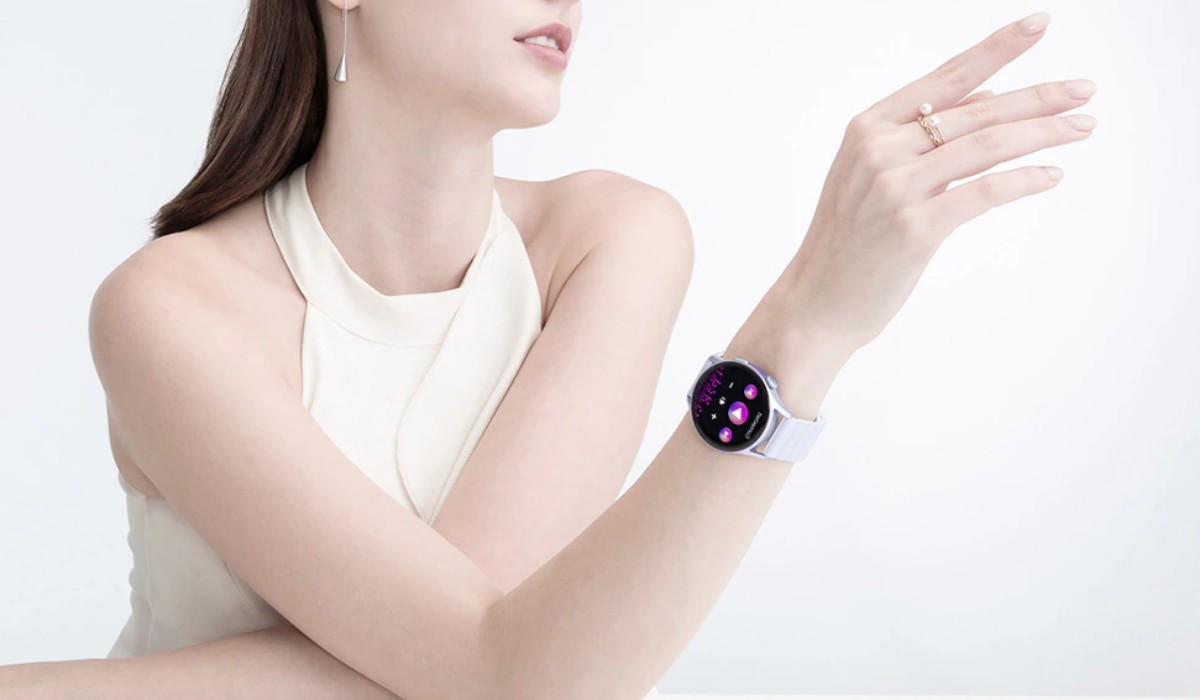
KIESLECT Lora 2 Smartwatch with slim styling, aluminum alloy frame, and health-management features.
The KIESLECT Lora 2 Smartwatch is positioned around style, lightness, and accessible health management.
The source describes an aluminum alloy frame with a smooth glossy finish, a slim construction, and a 43-gram weight.
Health features include blood oxygen, heart-rate and sleep monitoring, along with menstrual cycle tracking. Because the source is strongly promotional, the safest editorial reading is that this model is best considered by shoppers who prioritize appearance, comfort, and basic wellness features rather than advanced sports metrics or a full app platform.
Best for: Style-conscious buyers who want a light watch with basic health features
- 43-gram weight
- Aluminum alloy frame
- Blood oxygen, heart-rate and sleep monitoring
- Menstrual cycle tracking
Verdict: The Lora 2 is most convincing as a lightweight fashion-oriented smartwatch with core wellness tracking.
7. Fossil Gen 6 Hybrid Wellness Edition
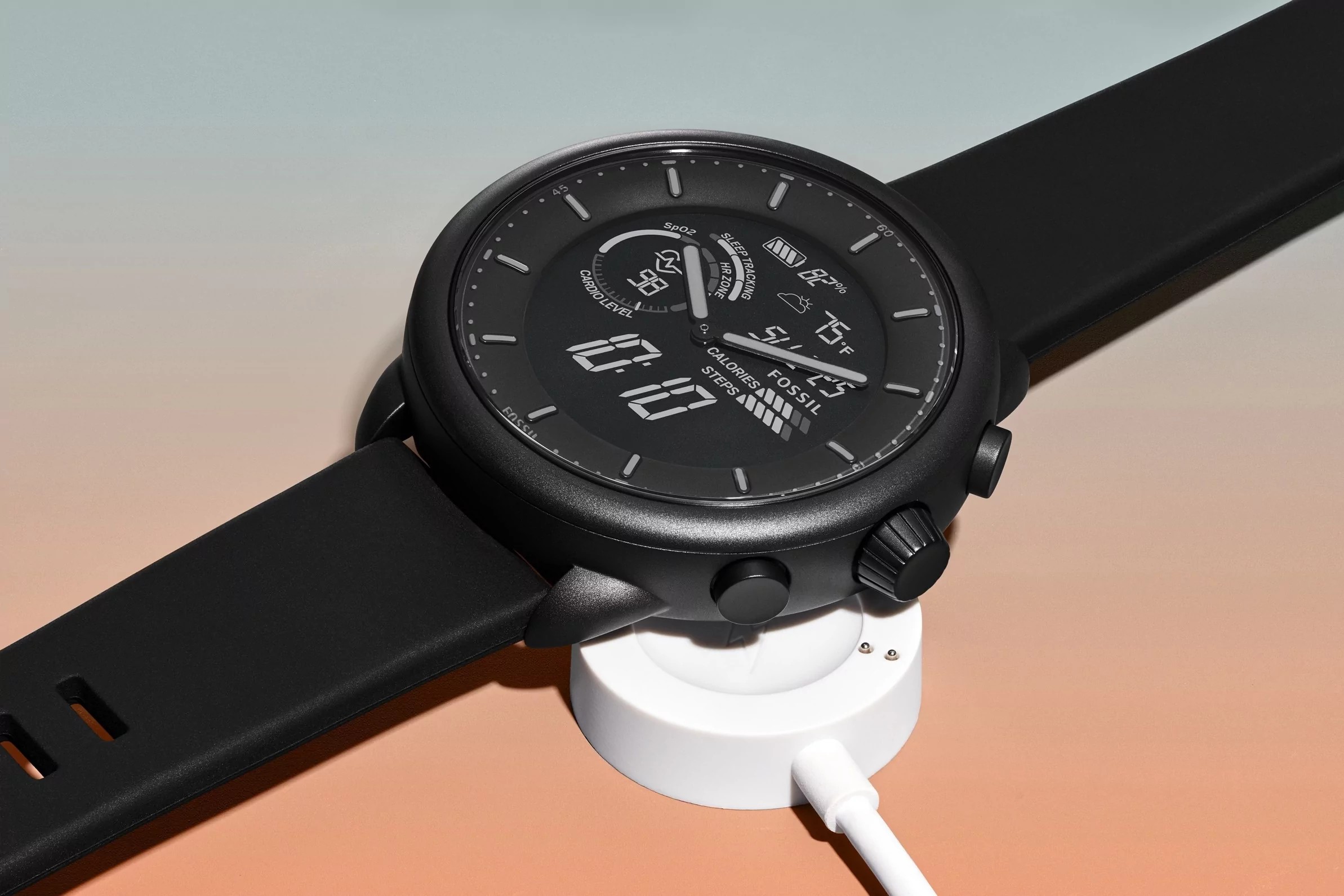
Fossil Gen 6 Hybrid Wellness Edition combining a classic analog face with a backlit E Ink information display.
The Fossil Gen 6 Hybrid Wellness Edition takes a different route from touchscreen-heavy smartwatches.
It is a hybrid model with a classic watch face and a 1.1-inch backlit E Ink display that can show time, date, weather, battery level, heart rate, steps, calories, sleep, and blood oxygen information.
The stainless-steel case has 3ATM water resistance, a 44 mm diameter, and support for standard 20 mm straps. The source also notes a microphone for calls and Alexa, along with Wi-Fi, a heart-rate monitor, and an SpO2 sensor. It is not a Wear OS watch, which helps define its more restrained, watch-like character.
Best for: Traditional-watch fans who want selective smart features
- Hybrid classic watch design
- Backlit E Ink display
- Standard 20 mm strap compatibility
- Calls and Alexa via microphone
Verdict: The Fossil Gen 6 Hybrid Wellness Edition is the natural pick for a more classic look with glanceable wellness and notification-style data.

8. Mobvoi TicWatch E3
Mobvoi TicWatch E3 with AMOLED display, Snapdragon Wear platform, GPS, NFC, and Wear OS features.
The Mobvoi TicWatch E3 is a Wear OS model built around the Qualcomm Snapdragon Wear 4100 platform, 1 GB of RAM, and 8 GB of internal memory.
It includes Wi-Fi 4, Bluetooth 5.0, GPS, NFC with Google Pay support, a microphone, and a speaker.
The watch has a 1.3-inch 360 x 360 AMOLED display, weighs 32 grams, and carries IP68 moisture protection. Health and fitness features include around-the-clock heart-rate and blood-oxygen measurements, stress and sleep-quality monitoring, and more than 20 sports modes. The source quotes two days of battery life from a 380 mAh battery, with a power-saving mode available.
Best for: Wear OS buyers who want a lighter watch with payments and built-in GPS
- Wear OS with Google Assistant
- GPS and NFC with Google Pay support
- 32-gram weight
- Heart-rate, SpO2, stress and sleep tracking
Verdict: The TicWatch E3 is a practical Wear OS option when low weight, Google services, GPS, and NFC matter more than extreme battery life.
9. Amazfit T-Rex Pro
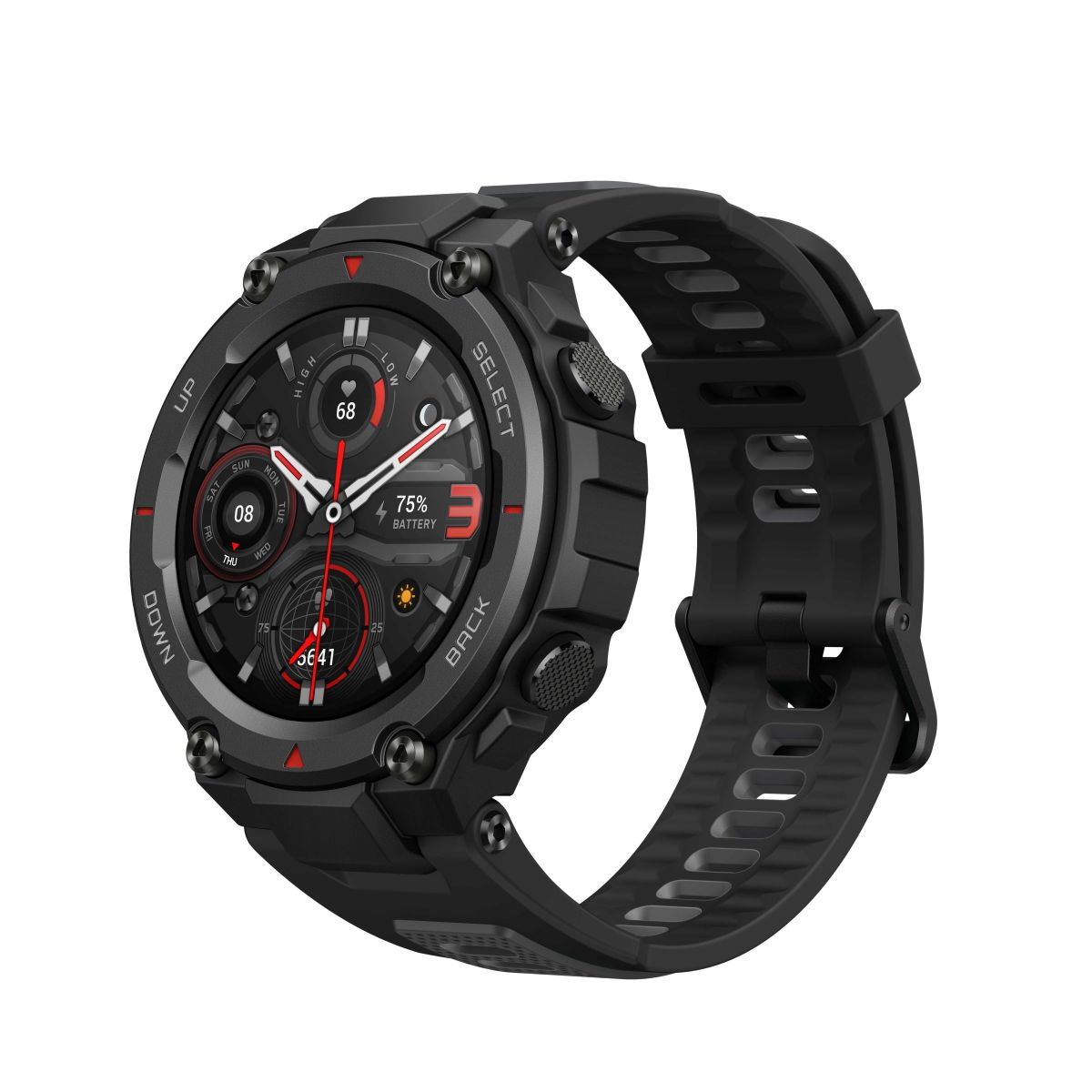
Amazfit T-Rex Pro presented as a rugged sports smartwatch with AMOLED display and outdoor-focused tools.
The Amazfit T-Rex Pro is the rugged sports option in the selection.
The source says it passed 15 military-grade tests and is designed for reliable operation under extreme conditions.
Its feature set includes 10ATM water resistance, blood-oxygen measurement, four global navigation satellite systems, a barometric altimeter, and more than 100 sports modes. It also uses a 1.3-inch AMOLED display and includes outdoor-oriented information such as weather forecast, sunrise and sunset times, and current moon phase. Sleep monitoring through Amazfit SomnusCare is also described, including tracking of multiple sleep phases.
Best for: Outdoor and rugged-sports users who need stronger water resistance and navigation tools
- 15 military-grade tests noted
- 10ATM water resistance
- Four global navigation satellite systems
- Barometric altimeter and over 100 sports modes
Verdict: The T-Rex Pro is the most ruggedly framed recommendation here, with water resistance, navigation support, and outdoor data at its core.
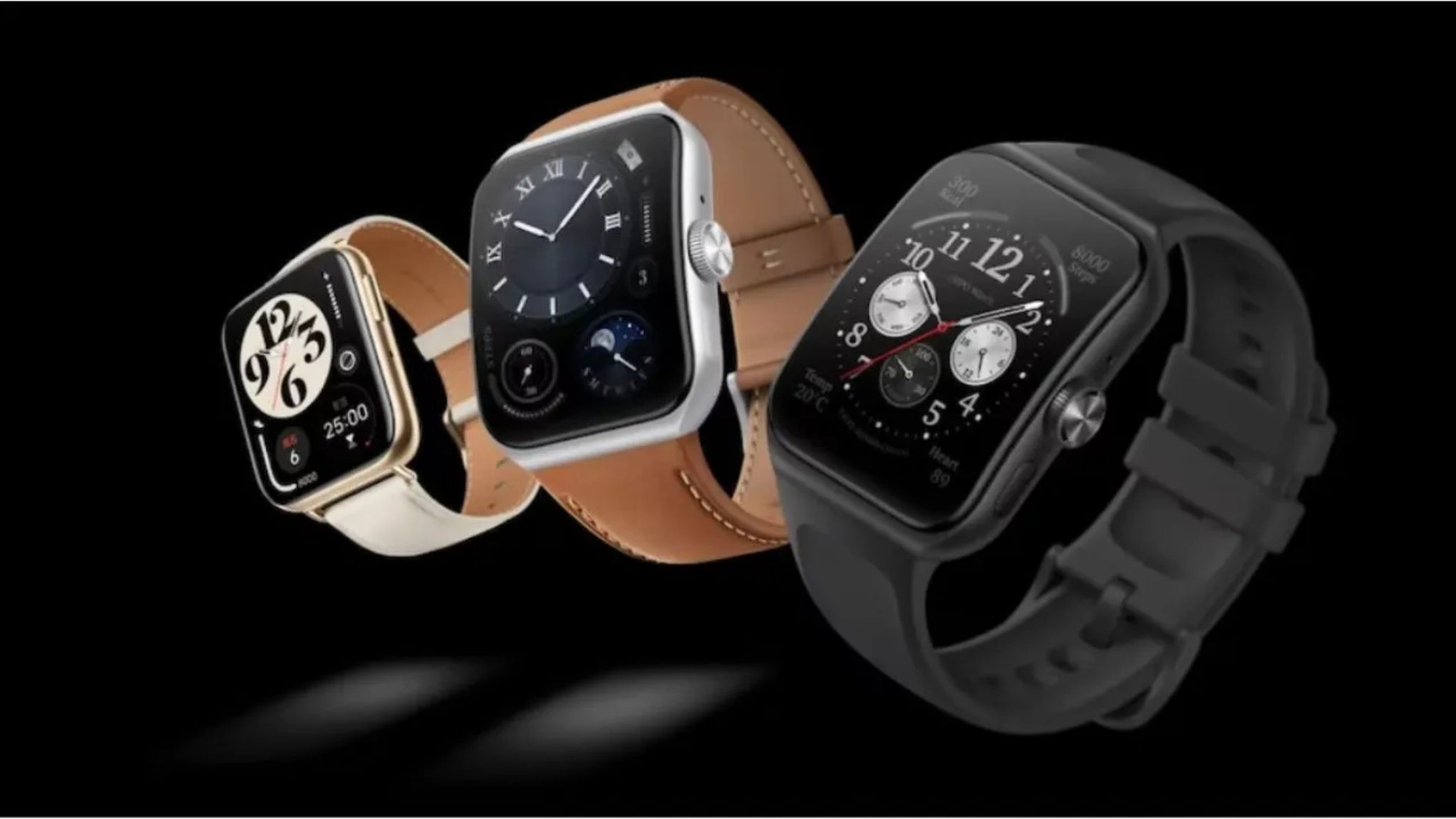
10. Oppo Watch 4 Pro
Oppo Watch 4 Pro with curved AMOLED display, stainless-steel structure, and 5ATM resistance.
The Oppo Watch 4 Pro is described as a high-end smartwatch with a premium design direction.
The source highlights a central stainless-steel structure, 5ATM resistance, and strap options in black silicone or brown leather.
Its most distinctive visible feature is a 1.74-inch curved AMOLED display with a 378 x 496 resolution, an update that the source presents as a notable change from the previous generation. Availability in the supplied report is framed around China rather than a confirmed wider release, so this is best treated as an interesting premium design entry rather than a broadly available default recommendation.
Best for: Buyers interested in a premium curved-display smartwatch design
- Curved 1.74-inch AMOLED display
- Stainless-steel structure
- 5ATM resistance
- Silicone or leather strap options
Verdict: The Oppo Watch 4 Pro is notable for its curved AMOLED screen and premium materials, though the supplied source limits practical buying guidance on wider availability.
Quick comparison
The models divide into clear groups: full smartwatches with app platforms, sports watches with training tools, battery-conscious trackers, hybrid designs, and rugged or style-led options.
The most important differences are not abstract specifications, but whether the watch has its own app ecosystem, built-in positioning, higher water resistance, a classic or touchscreen design, and the level of training detail supplied.
| Product | Best for | Verdict |
|---|---|---|
| Amazfit GTR Mini | Compact smartwatch users who want GPS, Always-On display support, and broad workout tracking | Small and light, yet comparatively well equipped for health, GPS, workouts, and battery-focused use. |
| Huawei Watch GT 2 Pro | Owners who value software additions such as Petal Maps and improved sleep monitoring | Most relevant as an updated existing platform rather than a newly specified buying option. |
| Garmin Forerunner 965 | Runners, triathletes, and athletes who want detailed training feedback | The clearest performance-training specialist, with adaptive workouts, recovery data, SatIQ, and ClimbPro. |
| OnePlus Nord Watch | Everyday activity tracking with a large rectangular AMOLED display | A broad tracker with good display and activity coverage, but it relies on a phone for location data. |
| Xiaomi Watch 2 Pro | Wear OS users who want third-party apps, optional LTE, GNSS, NFC, and body-composition analysis | The strongest app-platform choice in the supplied material, especially for those considering the LTE version. |
| KIESLECT Lora 2 Smartwatch | Style-led buyers who want a light watch with basic wellness tracking | Best viewed as a fashion-oriented wellness watch rather than an advanced sports or app-platform device. |
| Fossil Gen 6 Hybrid Wellness Edition | Traditional-watch wearers who want an analog-style face with smart information | The hybrid pick for those who prefer E Ink glanceability and classic styling over a full touchscreen interface. |
| Mobvoi TicWatch E3 | Wear OS basics with GPS, NFC payments, Google Assistant, and a lightweight case | A lighter Wear OS route with useful connectivity and health tracking, balanced by modest quoted battery life. |
| Amazfit T-Rex Pro | Outdoor training, water activities, and rugged use cases | The rugged option, with 10ATM resistance, navigation satellite support, a barometric altimeter, and many sports modes. |
| Oppo Watch 4 Pro | Premium-design shoppers interested in a curved AMOLED smartwatch | Design and display are the headline strengths, while broader buying guidance is limited by the supplied availability details. |
Frequently asked questions
Should I choose Wear OS or a more focused smartwatch platform?
Choose Wear OS if third-party apps and wider smartwatch functions are central to your needs.
In the supplied material, the Xiaomi Watch 2 Pro and Mobvoi TicWatch E3 are the clearest Wear OS examples.
More focused platforms, such as those used by Amazfit, Garmin, OnePlus, Fossil, Huawei, KIESLECT, and Oppo in these reports, may make more sense when your priorities are battery life, sports tools, hybrid design, ruggedness, or simpler health tracking.
How important is built-in GPS?
Built-in GPS matters if you want outdoor route or pace data without depending on a phone.
The Amazfit GTR Mini, Garmin Forerunner 965, Xiaomi Watch 2 Pro, Mobvoi TicWatch E3, and Amazfit T-Rex Pro all include positioning features in the supplied material, though the exact systems differ.
The OnePlus Nord Watch is specifically described as lacking built-in GPS and using a smartphone for location data via Bluetooth.
What water-resistance rating should I look for?
Match the rating to your activity.
The OnePlus Nord Watch and TicWatch E3 are listed with IP68 protection, while the Fossil Gen 6 Hybrid Wellness Edition has 3ATM resistance.
The Amazfit GTR Mini, Xiaomi Watch 2 Pro, and Oppo Watch 4 Pro are listed at 5ATM, and the Amazfit T-Rex Pro is listed at 10ATM, making it the strongest water-resistance entry among the supplied models.
Which model is most suitable for serious training?
The Garmin Forerunner 965 is the most clearly training-focused option in the supplied material, with advanced metrics, recovery information, adaptive workouts, sport profiles, SatIQ, and ClimbPro.
The Amazfit T-Rex Pro is better framed for rugged outdoor and water-oriented use, while the Amazfit GTR Mini, OnePlus Nord Watch, Xiaomi Watch 2 Pro, and TicWatch E3 cover broader fitness tracking rather than the same depth of athlete guidance described for the Garmin.
How to Choose the Right Smartwatch from This Shortlist
Start with the operating style.
If you want third-party apps, smartwatch extensions, and services such as Google Assistant or payments, the Wear OS models deserve first attention: Xiaomi Watch 2 Pro for the more fully specified platform and connectivity package, or Mobvoi TicWatch E3 for a lighter Wear OS option with GPS and NFC.
For training, separate general activity tracking from athlete-focused guidance. The Garmin Forerunner 965 is the most complete sports-training entry in the supplied material, with recovery data, adaptive recommendations, sport profiles, SatIQ, and ClimbPro. If durability and outdoor conditions matter more than coaching depth, the Amazfit T-Rex Pro is the better fit thanks to 10ATM resistance, rugged-test claims, satellite navigation support, and a barometric altimeter. For everyday practicality, the Amazfit GTR Mini is attractive because it combines a compact, light body with GPS, Always-On display support, broad workout coverage, and strong quoted battery figures. The OnePlus Nord Watch offers a larger rectangular AMOLED screen and many activity modes, but the lack of built-in GPS means it is best for users who usually carry a phone. Design-led buyers have distinct options. The Fossil Gen 6 Hybrid Wellness Edition suits anyone who wants a classic face and E Ink information rather than a conventional full-screen smartwatch. The KIESLECT Lora 2 Smartwatch is better framed as a light, fashion-oriented wellness watch. The Oppo Watch 4 Pro is the premium curved-display design entry, though the supplied report gives limited practical guidance outside its China-focused availability context. The safest buying approach is to rank your needs before comparing specifications: app ecosystem, battery expectations, GPS independence, water resistance, health tracking, training depth, and design. Once those priorities are clear, the differences between these models become much more useful than a simple feature count.