

The Nagra Reference MC occupies a distinctive place in the Swiss brand’s catalog: it is the first turntable cartridge in Nagra’s history, developed as part of the wider Reference Anniversary analog project. Rather than treating the cartridge as an accessory, Nagra has approached it as a precision mechanical component, with attention paid to the generator, body material, stylus assembly, resonance behavior, and compatibility with the company’s Reference Anniversary turntable. At $18,500 in the US, it is positioned for highly committed vinyl systems, but the design details are useful to understand beyond the price. The Reference MC is an example of a modern moving-coil cartridge where metallurgy, micro-mechanics, and system matching are all central to the product’s identity.
A cartridge conceived for Nagra’s Reference analog platform
The Reference MC was conceived as a component for the Nagra Reference Anniversary turntable, a model introduced to mark the company’s 70th anniversary. That context matters because it explains the cartridge’s role: it is not a generic add-on released in isolation, but part of a larger analog architecture. Nagra’s decision to create its own cartridge allows the brand to extend its design language into one of the most sensitive parts of vinyl replay, where tiny mechanical movements are converted into an electrical signal.
Even so, the Reference MC is not described as being exclusive to the Anniversary turntable. With a mass of 14.3 g, it can also be installed on some other turntables, provided the associated tonearm and phono setup are suitable. For prospective owners, that gives the cartridge relevance beyond a single Nagra deck, while still making clear that it belongs in carefully configured, high-end analog systems.
Two versions for different moving-coil system requirements
Nagra offers the Reference MC in 4-ohm and 6-ohm versions. The difference refers to the resistance of the cartridge’s ultra-pure silver wire, which is wound in two layers rather than the more usual single-layer approach described in the source information. The two versions also differ in signal output. At 5 cm/s, the 4-ohm version produces 0.30 mV, while the 6-ohm version produces one and a half times more output.
That choice may be useful for system matching. Moving-coil cartridges with low output require careful attention to the gain and loading capabilities of the phono stage or step-up arrangement. A user with a very quiet, high-gain phono stage may prefer one configuration, while another system may benefit from the additional output of the 6-ohm version. Nagra’s decision to offer two variants gives dealers and owners a way to align the cartridge more closely with the electronics that follow it, instead of forcing every system into a single electrical configuration.
Silver coils and a focus on the generator
The use of ultra-pure silver wire is one of the Reference MC’s defining construction choices. In a moving-coil cartridge, the coil assembly is fundamental: it is part of the moving system and is responsible for generating the tiny signal that a phono stage must amplify. Any design decision in this area involves a balance among electrical behavior, mechanical mass, output level, and manufacturing precision.
The two-layer winding described for the Reference MC underlines that Nagra is treating the generator as a core element of the design rather than a standardized internal part. The published specifications do not invite broad claims about performance, but they do show a product built around unusually exacting choices for a cartridge. For a prospective owner, this matters because the generator determines how the cartridge interfaces with the rest of the analog chain, especially in systems where the phono stage, cabling, gain structure, and loading are already carefully selected.
Titanium, diamond-like carbon, and resonance control
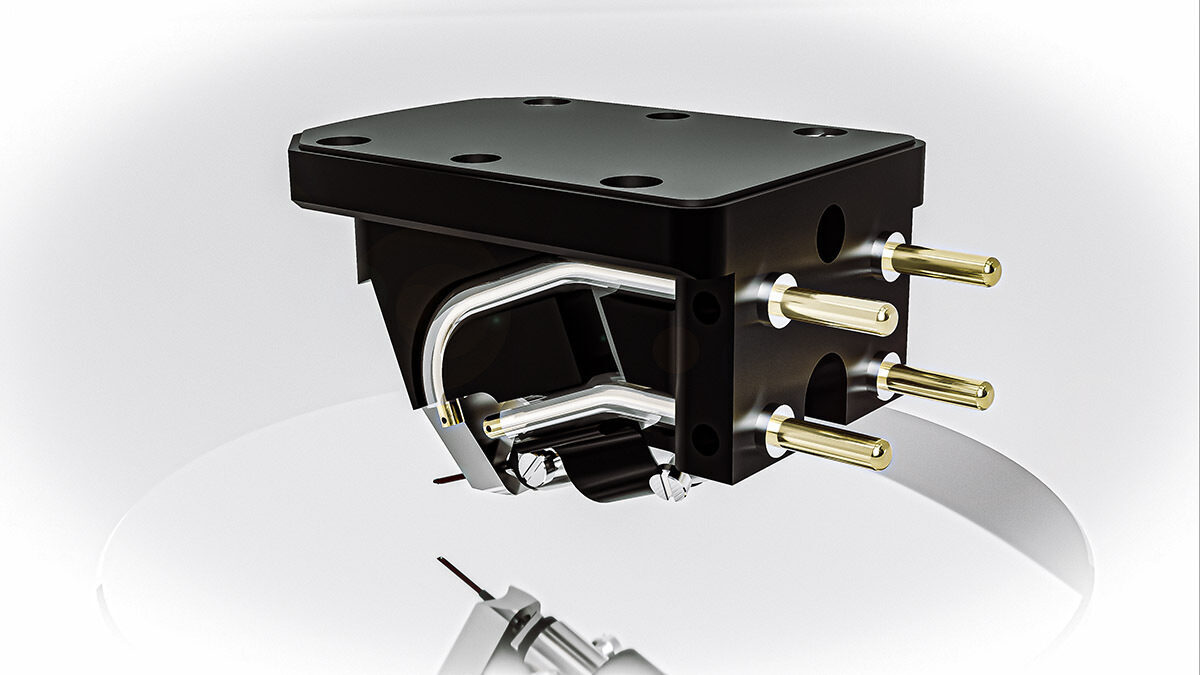
Nagra states that the internal mechanics of the cartridge are made from titanium coated with diamond-like carbon. The purpose of this construction is to address traditional resonances found in many analog designs. Resonance control is particularly important in a cartridge because the device is asked to trace a record groove with extreme precision while resisting unwanted vibration from the stylus assembly, body, tonearm, and record surface.
The choice of titanium suggests a focus on stiffness and controlled mass, while the diamond-like carbon coating points to a surface treatment intended to improve mechanical behavior. The important point is not that a single material guarantees a particular sonic result, but that the Reference MC’s architecture shows a deliberate attempt to manage energy within the cartridge. In a vinyl system, unwanted mechanical energy can complicate tracking and signal generation, so a body and internal structure designed around damping and rigidity can be highly relevant.
Ruby cantilever and Fritz Gyger S stylus profile
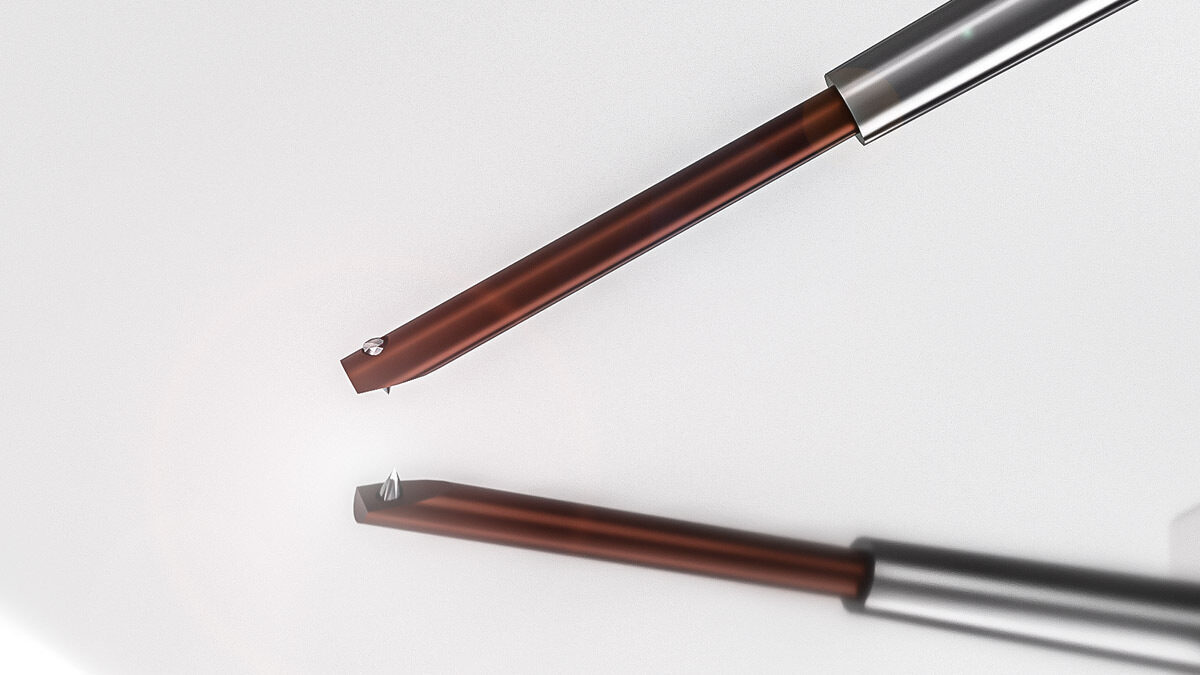
At the record interface, the Reference MC uses a ruby needle holder, or cantilever, ending in a diamond-ground stylus with a Fritz Gyger S profile. This is a notable combination because the cantilever and stylus shape are among the most important determinants of how the cartridge physically follows the groove. The stylus profile defines the contact geometry with the record, while the cantilever transmits motion to the generator assembly.
Nagra explains the selection as a combination intended to deliver high detail and a musical sound. Without adding listening claims, it is fair to say that the Fritz Gyger S profile is a sophisticated choice for a cartridge at this level, and one that places importance on precise groove contact. Such profiles also make setup accuracy important: alignment, vertical tracking force, azimuth, and tonearm geometry all become meaningful factors if the owner wants the stylus to operate as intended. The Reference MC is therefore best understood as a precision component that rewards careful installation.
Exium AM: an unusual body material with a technical background
One of the most distinctive aspects of the Reference MC is its body material. Nagra emphasizes the use of Exium AM, a high-damping non-ferrous metal alloy developed in France. The same alloy is partially used in the platter of the Nagra 70th Anniversary Reference turntable, reinforcing the cartridge’s connection to the wider Anniversary platform.
The origin of Exium AM is unusually interesting for a hi-fi component. Its formulation resulted from collaboration among CNES, the French space agency, Ecole de Mines de Paris, and LBI Foundries. It was initially developed for seismographs intended for Martian missions. In the context of a cartridge, that background is relevant because seismographs and phono cartridges both deal with minute mechanical motion, even though their purposes are very different. Nagra’s use of the alloy points to a design priority around damping and mechanical stability rather than appearance alone.
The body of a cartridge is not passive decoration. It provides the mounting interface to the tonearm, holds the internal generator and mechanical assembly, and participates in the way vibrational energy is stored or dissipated. By choosing Exium AM, Nagra gives the Reference MC a material identity that is closely tied to its functional goals.
Published setup figures and what they imply
Nagra specifies channel discrepancy of no worse than 0.5 dB and crosstalk of more than 30 dB, with a recommended downforce between 2 and 2.2 g. These figures speak to manufacturing precision and practical setup expectations. A narrow channel discrepancy figure is important because a stereo cartridge must maintain left/right balance as accurately as possible at the generator level. Crosstalk, meanwhile, relates to how well the two stereo channels remain separated.
The tracking force range is also useful information for installers and owners. A window of 2 to 2.2 g is not especially broad, so careful setup is part of the ownership proposition. This is not a cartridge likely to be chosen for casual plug-and-play use. Its strengths are tied to precision: matching it with an appropriate tonearm, setting the downforce correctly, aligning the stylus accurately, and ensuring the phono electronics are suitable for the chosen 4-ohm or 6-ohm version.
Conclusion
The Nagra Reference MC is most suitable for vinyl listeners building a very serious analog front end, especially those using or considering Nagra’s Reference Anniversary platform, and for owners of compatible high-end turntables who value precision materials and careful system matching. Its strongest documented qualities are its two moving-coil versions, ultra-pure silver two-layer coil winding, titanium and diamond-like-carbon internal construction, ruby cantilever, Fritz Gyger S stylus, Exium AM body, and published attention to channel balance, crosstalk, and tracking force. It is not aimed at casual vinyl playback; it is a specialized cartridge for systems where setup, phono-stage compatibility, and mechanical control are treated as central parts of the analog experience.