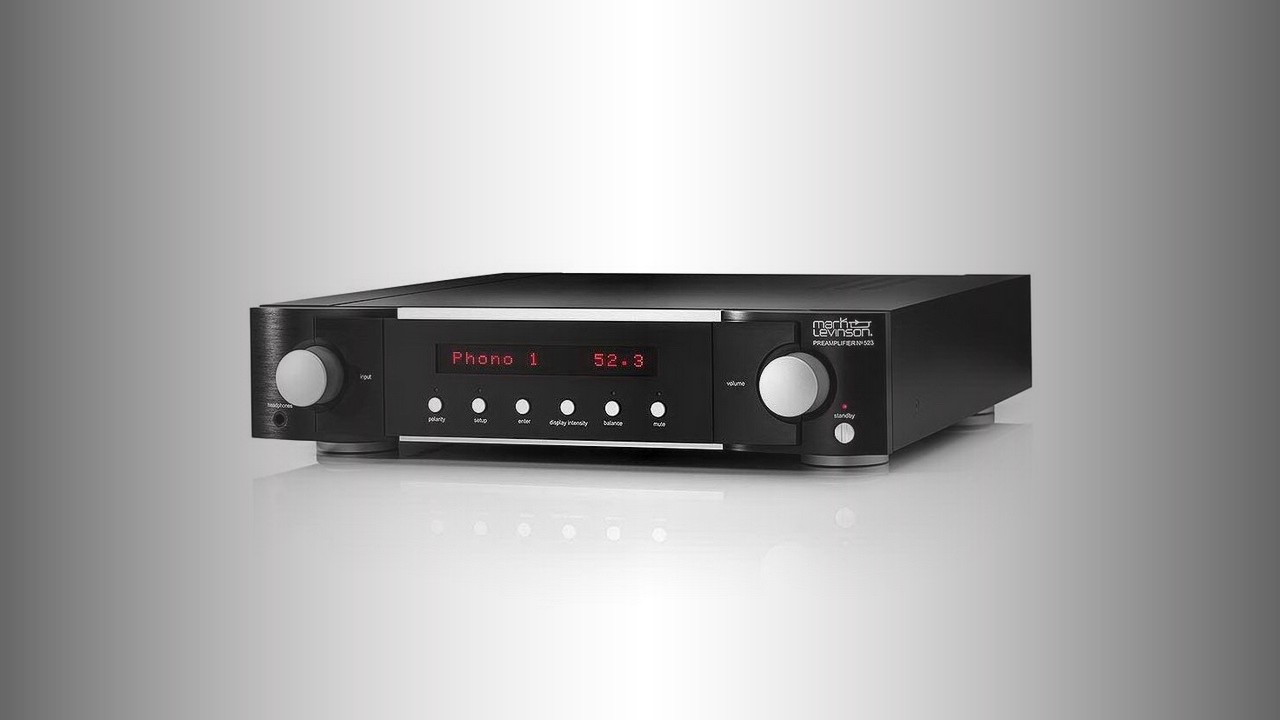

Choosing an AV receiver is less about buying the most complicated box and more about matching the receiver to the speaker layout, video sources and setup style you intend to use.
The strongest options in this source set range from compact 5.2-channel home-theater models to more ambitious nine-channel designs with 8K video support and expanded immersive-audio layouts.
This guide keeps the distinctions practical. The Pioneer VSX-535 is positioned as a value-minded 5.2-channel receiver with Dolby processing and auto-calibration. The Onkyo TX-NR6100 and Marantz SR5015 step into seven-channel territory with broader HDMI and surround-format support, while the Denon AVC-X3700H is the most expandable AV receiver in the supplied material, thanks to its 9.2-channel platform and support for larger Atmos configurations. Several supplied articles are not AV receivers at all: they cover subwoofers, a turntable, a stereo network receiver, a soundbar and an industry-news piece. Rather than pretending they belong in the same category, this buying guide clearly labels them as related home-theater or hi-fi components so you can separate true receiver choices from possible system partners.

1. Pioneer VSX-535: Powerful AV receiver that won’t break the bank
Pioneer VSX-535 AV receiver with a lower-profile chassis for easier placement in a home-theater rack.
The Pioneer VSX-535 is the most compact, value-oriented AV receiver choice in the supplied set.
Its 5.2-channel configuration suits a straightforward surround system, while Dolby Atmos and Dolby Surround decoding add flexibility through a 3.2.1 arrangement or Dolby Atmos Height Virtualizer in a 5.1 setup.
The metal chassis, lower profile and user-friendly brand-style design also make it a sensible pick where placement and ease of use matter. MCACC auto-calibration helps adapt the sound to the speaker type and layout, which is especially useful for buyers setting up a receiver without extensive manual tuning.
Best for: Affordable, compact 5.2-channel home theater
- 5.2-channel AV receiver layout
- Dolby Atmos and Dolby Surround decoding
- MCACC auto-calibration system
- Lower-profile metal chassis
Verdict: The Pioneer VSX-535 is the most approachable true AV receiver here for buyers who want surround sound features without moving into a larger multi-channel platform.

2. Onkyo TX-NR6100: Fully equipped AV receiver at a reasonable price
Onkyo TX-NR6100 AV receiver, a seven-channel model with broad HDMI and immersive-audio support.
The Onkyo TX-NR6100 moves up to a seven-channel configuration and is presented as a well-equipped AV receiver for both film soundtracks and music.
Its output stages use discrete elements and are described as capable of significant current delivery, with compatibility for 4-ohm speakers.
For immersive audio, it supports Dolby Atmos and DTS:X in a 5.2.2 configuration, while Dolby Height Virtualizer and DTS Virtual:X offer virtual 3D sound options where dedicated height speakers are not used. Video connectivity is a major part of its appeal, with seven HDMI inputs, two outputs and support for 8K video transmission, Dolby Vision and HDR10.
Best for: Feature-rich seven-channel AV systems
- Seven-channel configuration
- Dolby Atmos and DTS:X support
- Seven HDMI inputs and two outputs
- 8K, Dolby Vision and HDR10 support
Verdict: The Onkyo TX-NR6100 is a strong middle-ground AV receiver for buyers who want modern HDMI features, 5.2.2 immersive audio and speaker-drive flexibility.

3. The Future of the Audio Industry According to Harman Luxury Audio
Harman Luxury Audio coverage including JBL Synthesis, JBL, Arcam and Revel home-theater developments.
This article is not a single AV receiver review, but it does provide useful context for home-theater buyers watching the Harman Luxury Audio ecosystem.
The source describes new products from JBL Synthesis, JBL, Arcam and Revel, including built-in architectural speakers, all-weather JBL Stage XD speakers and new HDMI 2.1 AV receivers and Arcam processors.
It also notes Arcam AVR11 and AVR21 amplifier receivers among the new Arcam developments. Treat this entry as industry background rather than a direct buying recommendation for one specific receiver model.
Best for: Home-theater ecosystem research, not a single receiver purchase
- Covers JBL Synthesis, JBL, Arcam and Revel developments
- Mentions new HDMI 2.1 AV receivers and Arcam processors
- Includes Arcam AVR11 and AVR21 receiver developments
- Useful context for custom home-theater systems
Verdict: This is useful for understanding where Harman’s home-theater portfolio is heading, but it should not be read as a direct product-by-product AV receiver recommendation.
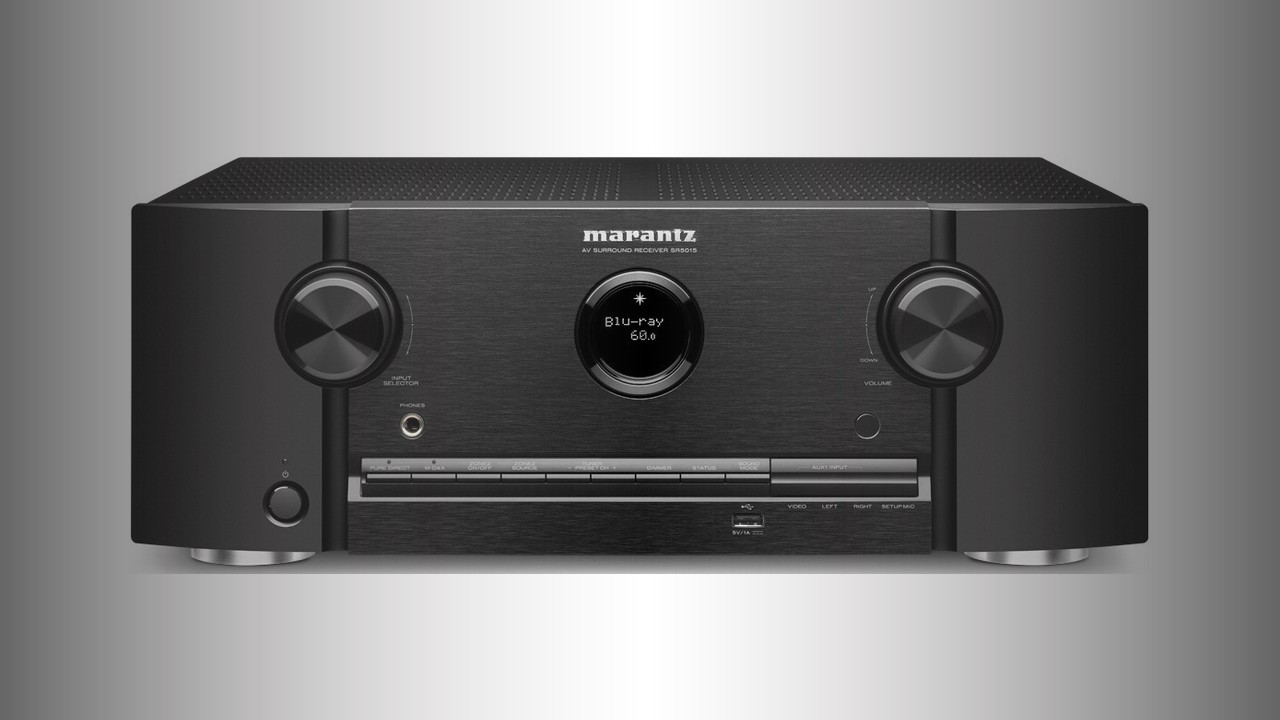
4. Marantz SR5015: Upgraded 8K AV Receiver
Marantz SR5015 AV receiver with minimalist styling and 8K-capable HDMI connectivity.
The Marantz SR5015 is a 7.2-channel AV receiver described as the entry point to the company’s classic AV receiver series.
It keeps the recognizable minimalist Marantz front-panel design while adding 8K capability through HDMI.
The receiver includes six HDMI inputs and two outputs with support for 8K, HDR10, Dolby Vision, eARC and HDCP 2.3 certification. On the audio side, it uses proprietary HDAM amplifier modules, 32-bit AK4458 DACs, Dolby Atmos and DTS:X decoding, virtual surround for systems without height speakers, and Audyssey MultEQ XT auto-calibration. The inclusion of an MM phono input and USB also gives it useful source flexibility beyond movies.
Best for: Apartment-friendly 7.2-channel home theater with broad source support
- 7.2-channel AV receiver configuration
- 8K, HDR10 and Dolby Vision HDMI support
- Dolby Atmos and DTS:X decoding
- Audyssey MultEQ XT auto-calibration
Verdict: The Marantz SR5015 is the more refined seven-channel option here for buyers who want 8K-ready HDMI, room correction and both movie and music connectivity.

5. DALI Fazon SUB 1: Premium subwoofer from Denmark
DALI Fazon SUB 1 compact subwoofer with a closed cabinet and down-firing bass driver.
The DALI Fazon SUB 1 is not an AV receiver, but it can be relevant when building a compact home-theater or music system around one.
The source describes a small subwoofer with lively, fast bass, a closed cabinet and a down-firing 165 mm driver.
Its design makes placement near walls and corners less problematic, and it is said to integrate well at both low and higher filter-frequency settings. The important caveat is that it may not have enough gain when paired with highly sensitive speakers, so it is best treated as a partner for mini-monitors or DALI Fazon designer satellites rather than a universal home-theater subwoofer.
Best for: Compact speaker systems needing controlled bass
- Compact subwoofer design
- Fast bass from a closed cabinet
- Down-firing 165 mm low-frequency driver
- Works well near walls and corners
Verdict: The DALI Fazon SUB 1 is a system partner rather than a receiver, best suited to smaller speakers where speed and placement flexibility matter more than sheer output.

6. Pioneer PL-30: Fully automatic vinyl record player
Pioneer PL-30 fully automatic turntable for vinyl playback in a hi-fi or home-theater system.
The Pioneer PL-30 is a vinyl source component, not an AV receiver.
It is included here only as a possible source for a broader hi-fi or home-theater system.
The fully automatic operation places and lowers the tonearm at the press of a button, then returns it at the end of a record side. A built-in equalizer-corrector can be switched on for amplifiers without a phono stage or bypassed when using an external phono equalizer. The source also notes a die-cast aluminum platter, tonearm, detachable head and MM pickup, making this an ease-of-use turntable rather than a surround-sound control hub.
Best for: Adding vinyl playback to a receiver-based system
- Fully automatic playback operation
- Built-in switchable phono equalizer
- Die-cast aluminum platter
- MM pickup with detachable head
Verdict: The Pioneer PL-30 is useful if vinyl is part of the system plan, but it is a source component and should not be compared with AV receivers.

7. Yamaha R-N1000A: Build a modern music system with this stereo receiver
Yamaha R-N1000A network stereo receiver with HDMI ARC and MusicCast support for modern two-channel systems.
The Yamaha R-N1000A is a stereo network receiver rather than an AV receiver, so it is aimed at two-channel music systems instead of surround home theater.
It combines an integrated amplifier on discrete elements, an FM tuner and a multimedia network player with Yamaha MusicCast support.
Its HDMI input with ARC allows connection to a TV for improved playback of film and TV soundtracks, but the supplied material does not describe multi-channel decoding or surround-speaker layouts. Buyers focused on music, streaming and TV audio through two speakers may find it relevant; buyers needing Dolby Atmos speaker layouts should look to the true AV receivers in this guide.
Best for: Two-channel music systems with TV audio support
- Integrated amplifier, FM tuner and network player in one chassis
- MusicCast multi-room support
- HDMI input with ARC
- Digital and optical inputs
Verdict: The Yamaha R-N1000A is a sophisticated stereo receiver for music-first systems, not a substitute for a multi-channel AV receiver.

8. Denon DHT-S516H: Powerful 2.1 soundbar with a wireless subwoofer
Denon DHT-S516H 2.1 soundbar system with a wireless subwoofer for simplified TV sound.
The Denon DHT-S516H is a 2.1 soundbar system, not an AV receiver.
Its appeal lies in simplifying TV audio with a low-profile bar and wireless subwoofer rather than managing separate surround speakers through a receiver.
The source notes HDMI input and output with Audio Return Channel, plus optical, analog and USB connections. Its low height helps it sit in front of many TVs without blocking IR sensors, and an IR command repeater is included if that becomes an issue. This is the simpler route for TV sound, but it is not the right product type for users planning a receiver-led speaker system.
Best for: Simple TV audio without separate AV receiver setup
- 2.1 soundbar with wireless subwoofer
- Low-profile TV-friendly design
- HDMI with Audio Return Channel
- Optical, analog and USB connections
Verdict: The Denon DHT-S516H is for buyers who want a compact soundbar solution, not for those building a component home theater around an AV receiver.

9. Denon AVC-X3700H: Designed to take your home theater experience to the next level
Denon AVC-X3700H 9.2-channel AV receiver for expanded immersive-audio and 8K-capable home-theater systems.
The Denon AVC-X3700H is the most ambitious AV receiver in the supplied set.
It is a 9.2-channel model with nine discrete amplifiers and decoding for DTS:X and Dolby Atmos.
It can be configured up to 7.2.2 channels on its own, or expanded to 7.2.4 channels with an external stereo power amplifier. It also supports DTS Virtual:X and Dolby Atmos Height Virtualization for systems without dedicated ceiling speakers, plus IMAX Enhanced compatibility. On the video side, the receiver includes seven HDMI inputs, one of which is dedicated for 8K, and two HDMI outputs capable of 8K output. It also supports 8K at 60 Hz, 4K at 120 Hz, upscaling to 8K from HDMI sources, HDR10+ and Dynamic HDR.
Best for: Larger immersive home-theater systems
- 9.2-channel AV receiver platform
- Dolby Atmos and DTS:X decoding
- Expandable to 7.2.4 with an external stereo power amplifier
- 8K, 4K/120 Hz, HDR10+ and Dynamic HDR support
Verdict: The Denon AVC-X3700H is the strongest fit here for buyers planning a more advanced Atmos system with room to expand beyond a basic seven-channel layout.

10. JBL Studio 140p: Not your ordinary subwoofer
JBL Studio 140p active subwoofer with a down-firing driver and built-in amplification.
The JBL Studio 140p is an active subwoofer, not an AV receiver, and is described as being designed for JBL Studio and ES line models.
It uses a 200 mm down-firing low-frequency driver with a bass reflex design and a 150 W amplifier.
Practical controls include volume adjustment, automatic turn-on when a signal is received and a phase switch. The unusual cabinet shape is also noted in the source, but its role in this guide is straightforward: it is a bass component that could support a home-theater speaker package, not the central electronics that decode, switch and power a surround system.
Best for: Adding bass to compatible JBL speaker systems
- Active subwoofer design
- 200 mm down-firing low-frequency driver
- 150 W amplifier
- Volume control, auto-on and phase switch
Verdict: The JBL Studio 140p is relevant as a subwoofer for a home-theater package, but it belongs beside an AV receiver rather than in place of one.
Quick comparison
The comparison below separates true AV receivers from related home-theater components.
For a receiver purchase, focus on channel count, immersive-audio support, HDMI capabilities and room-calibration features; for the non-receiver entries, consider whether they fill a supporting role in the wider system.
| Product | Best for | Verdict |
|---|---|---|
| Pioneer VSX-535: Powerful AV receiver that won’t break the bank | Affordable 5.2-channel surround setup | A compact, user-friendly AV receiver with Dolby processing and MCACC calibration for simpler home-theater systems. |
| Onkyo TX-NR6100: Fully equipped AV receiver at a reasonable price | Seven-channel systems with modern HDMI needs | A well-equipped AV receiver with 5.2.2 immersive-audio support, seven HDMI inputs and 8K video transmission. |
| The Future of the Audio Industry According to Harman Luxury Audio | Researching Harman, JBL Synthesis and Arcam home-theater direction | Useful industry context, but not a direct review of one specific AV receiver. |
| Marantz SR5015: Upgraded 8K AV Receiver | 7.2-channel home theater with room correction and flexible sources | A 7.2-channel Marantz receiver with 8K HDMI support, Dolby Atmos, DTS:X, Audyssey MultEQ XT and MM phono input. |
| DALI Fazon SUB 1: Premium subwoofer from Denmark | Compact systems needing fast, controlled bass | A compact subwoofer partner for smaller speakers, not an AV receiver. |
| Pioneer PL-30: Fully automatic vinyl record player | Adding easy vinyl playback to a system | A fully automatic turntable with switchable phono equalization, useful as a source component only. |
| Yamaha R-N1000A: Build a modern music system with this stereo receiver | Music-first two-channel systems | A network stereo receiver with MusicCast and HDMI ARC, but without the surround role of an AV receiver. |
| Denon DHT-S516H: Powerful 2.1 soundbar with a wireless subwoofer | Simplified TV sound | A soundbar and wireless subwoofer package for users who do not want a separate receiver and speaker system. |
| Denon AVC-X3700H: Designed to take your home theater experience to the next level | Advanced immersive home theater | A 9.2-channel AV receiver with Dolby Atmos, DTS:X, IMAX Enhanced, 8K video support and 7.2.4 expansion via external amplification. |
| JBL Studio 140p: Not your ordinary subwoofer | Bass reinforcement for compatible JBL systems | An active subwoofer with a down-firing 200 mm driver and 150 W amplifier, intended as a supporting component rather than a receiver. |
Frequently asked questions
Which entries are actually AV receivers?
The true AV receiver choices in this source set are the Pioneer VSX-535, Onkyo TX-NR6100, Marantz SR5015 and Denon AVC-X3700H.
The Yamaha R-N1000A is a stereo network receiver, while the DALI, JBL, Pioneer PL-30 and Denon DHT-S516H entries are other system components rather than AV receivers.
How many channels should I choose?
For a simpler surround system, the 5.2-channel Pioneer VSX-535 is the most straightforward option.
For a wider speaker layout and height-channel support, the seven-channel Onkyo TX-NR6100 and Marantz SR5015 are more suitable.
For a larger immersive setup, the Denon AVC-X3700H offers a 9.2-channel platform and can expand to 7.2.4 with an external stereo power amplifier.
Do I need height speakers for Dolby Atmos or DTS:X?
Dedicated height speakers are ideal when you want a full immersive layout, but several receivers here include virtual height options.
The Pioneer VSX-535 offers Dolby Atmos Height Virtualizer, the Onkyo TX-NR6100 includes Dolby Height Virtualizer and DTS Virtual:X, the Marantz SR5015 has virtual surround for systems without height speakers, and the Denon AVC-X3700H supports DTS Virtual:X and Dolby Atmos Height Virtualization.
How important is 8K HDMI support in this group?
It matters if your sources and display make use of newer video formats.
The Onkyo TX-NR6100, Marantz SR5015 and Denon AVC-X3700H all include 8K-related HDMI support in the supplied material.
The Pioneer VSX-535 source focuses more on audio features, compact design and calibration rather than 8K video capability.
Final buying advice
Start by deciding whether you need a true AV receiver or simply better TV sound.
If you want one box to decode surround formats, switch HDMI sources and power multiple speakers, stay with the Pioneer VSX-535, Onkyo TX-NR6100, Marantz SR5015 or Denon AVC-X3700H.
If you want a soundbar, subwoofer, turntable or stereo music hub, the other entries may be useful, but they solve different problems. For smaller rooms and a simple 5.1-style system, the Pioneer VSX-535 is the cleanest match because it focuses on 5.2-channel surround, Dolby processing and MCACC calibration in a lower-profile chassis. If you want a more capable seven-channel receiver with strong video connectivity, the Onkyo TX-NR6100 stands out for its seven HDMI inputs, two HDMI outputs, 8K video transmission and 5.2.2 Dolby Atmos/DTS:X support. The Marantz SR5015 is the alternative seven-channel route, adding Marantz’s HDAM-based audio section, Audyssey MultEQ XT, 8K HDMI support and useful source options such as MM phono and USB. Choose the Denon AVC-X3700H if the system plan is more ambitious. Its 9.2-channel design, nine discrete amplifiers, Dolby Atmos and DTS:X decoding, IMAX Enhanced compatibility and 7.2.4 expansion with an external stereo power amplifier make it the most flexible home-theater receiver in the supplied material. The related components can then be judged around that receiver choice: a compact DALI or JBL subwoofer for bass, a Pioneer turntable for vinyl, a Yamaha stereo receiver for a separate two-channel system, or a Denon soundbar when simplicity is more important than component-based surround sound.