

Choosing amplification begins with the system you intend to build.
A conventional integrated amplifier combines source selection, volume control, and speaker drive, while a power amplifier requires a separate preamplifier.
Monoblocks serve one channel each, multichannel models suit home cinema, and installation amplifiers prioritize control, stability, and compact deployment. This selection covers those distinct roles rather than treating every product as interchangeable. It includes stereo, mono, and multichannel amplifiers, along with a preamplifier and two amplified speaker products that illustrate complete-system alternatives. Pay close attention to input requirements, channel count, speaker impedance, subwoofer integration, and whether a separate control stage is needed. The recommendations below are grounded in the supplied product information. Where performance figures or sonic descriptions originate with a manufacturer, they are presented as such rather than as independent test findings.

1. Devialet Dione: A new expensive soundbar from France
The aluminum Devialet Dione combines ADH amplification, multiple directional drivers, and a central ORB module in one soundbar.
Devialet Dione is an amplified soundbar rather than a conventional component amplifier, but it offers a self-contained alternative for listeners who do not want separate electronics, speakers, and a subwoofer.
Its aluminum enclosure houses eight long-throw oval bass drivers, side assemblies containing forward-, upward-, and sideways-directed SHP speakers, and a central spherical ORB module.
Devialet combines 950 watts of ADH amplification with its SAM speaker-management technology and claims bass extension to 24 Hz. AirPlay 2, UPnP, and Bluetooth provide several routes into the system.
Best for: A self-contained soundbar system
- Integrated 950-watt ADH amplification
- Eight long-throw bass drivers
- AirPlay 2, UPnP, and Bluetooth
- Designed to work without a separate subwoofer
Verdict: Dione is the outlier here, but its integrated amplification and extensive driver array make it relevant to buyers seeking a single-enclosure alternative to separate hi-fi components.

2. Perlisten Audio makes its debut with two floorstanding models, a center channel speaker and three subwoofers
Perlisten Audio's debut lineup includes the flagship four-way S7t Tower, a center-channel speaker, and three subwoofers.
Perlisten Audio's debut range is not amplification, so it should be considered as a potential speaker load and system-planning reference rather than an amplifier recommendation.
The flagship S7t Tower is a four-way floorstander with THX Certified Dominus status.
Perlisten says it can serve rooms up to 184 cubic meters with listening distances up to six meters while meeting THX reference sound-pressure targets. Its high-frequency section uses three 28 mm beryllium tweeters in a patented Directivity Pattern Control waveguide, while the seven-inch bass drivers employ TeXtreme carbon-fiber diaphragms.
Best for: Planning a high-output large-room system
- THX Certified Dominus
- Four-way floorstanding design
- Three beryllium tweeters in a DPC waveguide
- TeXtreme carbon-fiber bass diaphragms
Verdict: Although it is a speaker range rather than an amplifier, the Perlisten lineup highlights the importance of choosing amplification around room size, listening distance, and speaker demands.
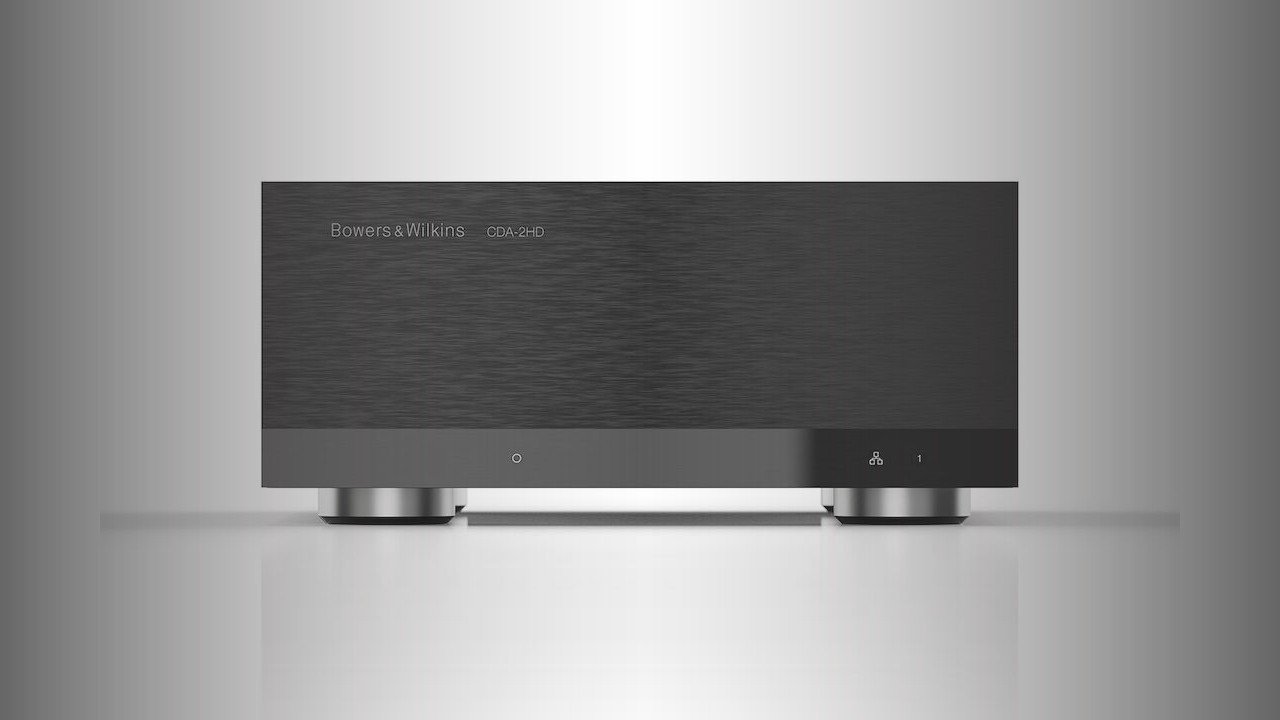
3. Bowers & Wilkins CDA-2HD: Powerful and compact 2-channel amplifier
The compact black Bowers & Wilkins CDA-2HD is designed for rack-based, multi-zone, and custom-installation systems.
The CDA-2HD is a compact two-channel Class D power amplifier developed for custom installations and multi-zone systems.
Its ICEpower design delivers 250 watts per channel, rising to 500 watts per channel into four ohms.
It can drive a stereo speaker pair, power two passive subwoofers, or operate in bridged mode at up to 1,000 watts. A web interface provides DSP configuration, while dedicated settings for Bowers & Wilkins subwoofers, Dynamic EQ, and limiters support tailored installation. Low heat generation and reduced energy consumption are practical advantages where equipment must fit into an installation rack or confined space.
Best for: Custom installations and passive subwoofers
- 250 watts per channel
- Up to 1,000 watts in bridged mode
- Web-configurable DSP
- Low-heat Class D construction
Verdict: The CDA-2HD is a flexible, installation-oriented power amplifier for systems requiring substantial output, DSP control, and compact Class D operation.

4. Aiyima A70 MONO: Class D Monophonic amplifier
The Aiyima A70 Mono is a compact TPA3255-based monoblock with front-panel controls and balanced or RCA input options.
Aiyima's A70 Mono is a single-channel Class D amplifier based on the TPA3255 amplifier chip and an NE5532 op-amp.
Its claimed output reaches 300 watts into four ohms, while post-filter feedback is used to reduce noise and distortion.
Connection options include an unbalanced mono RCA input and a balanced XLR and 6.35 mm combination input. The speaker output can feed a passive speaker or passive subwoofer, and an additional output is provided for an active subwoofer. A 12-volt trigger assists system integration, while controls cover gain and the choice between subwoofer and full-frequency operation.
Best for: Compact monoblock and subwoofer systems
- Up to 300 watts into four ohms
- Balanced and unbalanced inputs
- Subwoofer and full-frequency modes
- 12-volt trigger input
Verdict: The A70 Mono combines substantial claimed output with useful input, trigger, and operating-mode options for a focused single-channel installation.
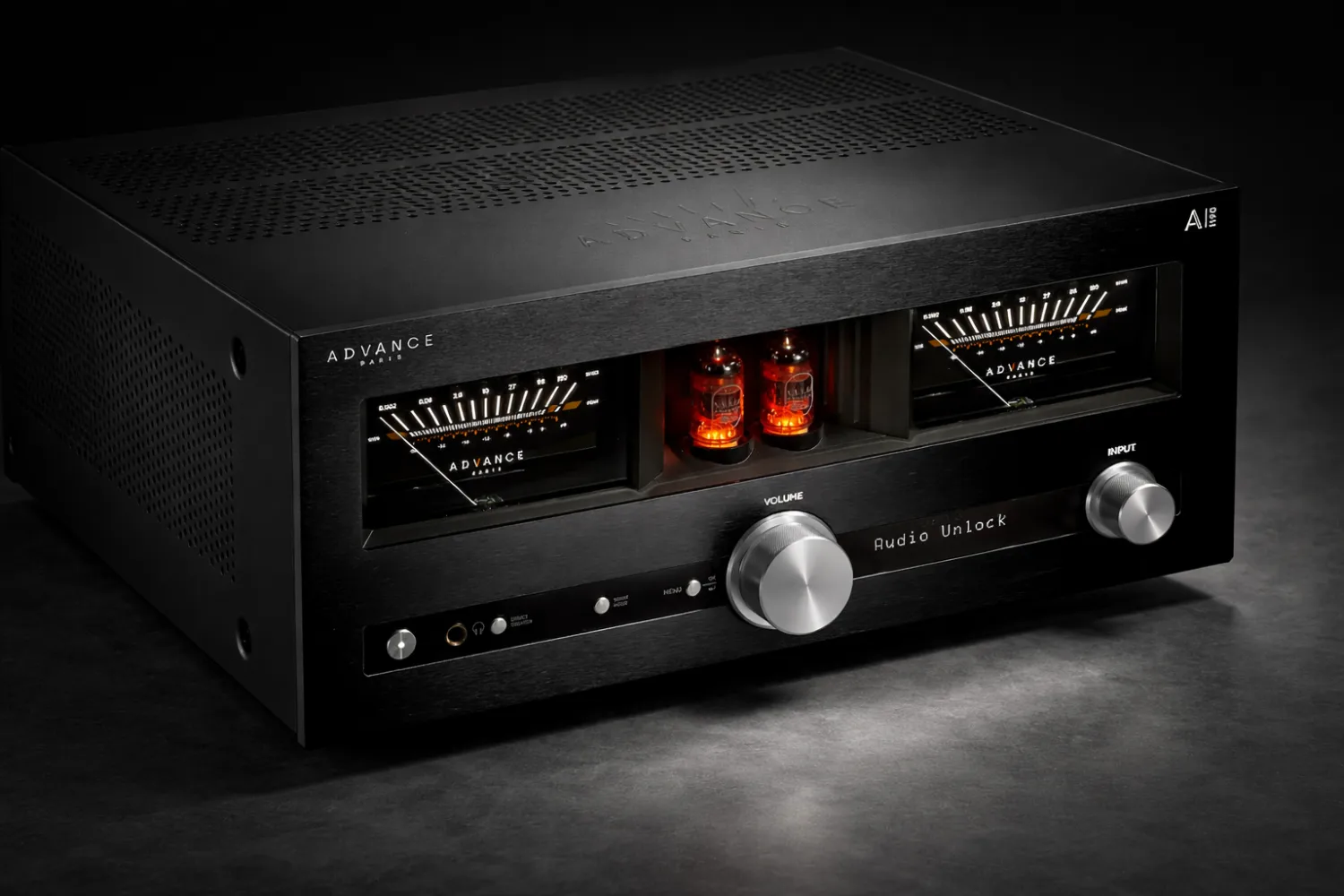
5. Advance Paris NOVA: The hybrid amplifier that does almost everything
The Advance Paris Nova range integrates hybrid amplification, digital conversion, DSP, and control for 2.1 or 2.2 speaker systems.
The Advance Paris Nova range centers on the A-i130 and A-i190 integrated amplifiers, both conceived as complete-system control hubs.
Each combines an ECC81 tube preamplifier with a Class AB output stage, an ESS9017 DAC operating in Quad mode, and four-channel DSP.
Room correction and equalization cover the left and right speakers plus as many as two subwoofers. Support for 2.1 and 2.2 layouts includes crossover filtering and independent subwoofer control, while optional modules provide a route for later expansion. This broad integration is the range's clearest distinction.
Best for: Hybrid integrated systems with subwoofers
- ECC81 tube preamplifier and Class AB output stage
- Integrated ESS9017 DAC
- Four-channel DSP with room correction
- Independent control for up to two subwoofers
Verdict: Nova's combination of hybrid amplification, digital conversion, DSP, and serious subwoofer management suits buyers who want one component to coordinate a complex stereo system.

6. Mark Levinson No. 5802: Preamp, power amplifier, and built-in D/A converter
The Mark Levinson No. 5802 combines digital source handling, discrete preamplification, Class AB speaker drive, and a front headphone output.
The Mark Levinson No.
5802 is an integrated amplifier built exclusively for digital sources.
It omits analog inputs and a phono stage, instead providing AES/EBU, optical, USB, and coaxial connections. Its PureDirect architecture employs a fully discrete preamplifier followed by direct connections to the left and right power-amplifier channels, with volume adjusted through a digitally controlled resistor. The discrete Class AB output channels use separate transformer windings, while the front-panel headphone output is driven by a dedicated Class A preamplifier stage. It is a specialized choice whose digital-only design must fit the source system.
Best for: Digital-only integrated hi-fi systems
- Multiple digital input formats
- Fully discrete preamplifier architecture
- Discrete Class AB power channels
- Dedicated Class A headphone stage
Verdict: The No. 5802 offers an unusually focused digital-source architecture, provided the absence of analog and phono inputs is compatible with the rest of the system.

7. Magnat RV 4: Not your ordinary tube amplifier
Magnat's RV 4 places selected E88CC SQ tubes in the input stage and uses a transistor-based power section.
Magnat's RV 4 uses selected low-noise E88CC SQ tubes in its input stage, with each pair matched after an extended warm-up process.
Gold-plated tube-socket contacts, reed relays, WIMA capacitors, and a high-precision ALPS volume potentiometer reflect the attention paid to signal handling.
The power stage uses Sanken transistors and Vishay capacitors, supplied by a large toroidal transformer mounted on a vibration-decoupled chassis. A substantial metal enclosure contributes both mechanical damping and natural heat dissipation, making the RV 4 a hybrid proposition rather than a traditional all-tube amplifier.
Best for: Listeners seeking a carefully engineered hybrid amplifier
- Matched low-noise E88CC SQ input tubes
- Sanken transistor power stage
- High-precision ALPS volume control
- Vibration-decoupled toroidal transformer
Verdict: The RV 4 combines selected tube input components with transistor power amplification and substantial mechanical construction.
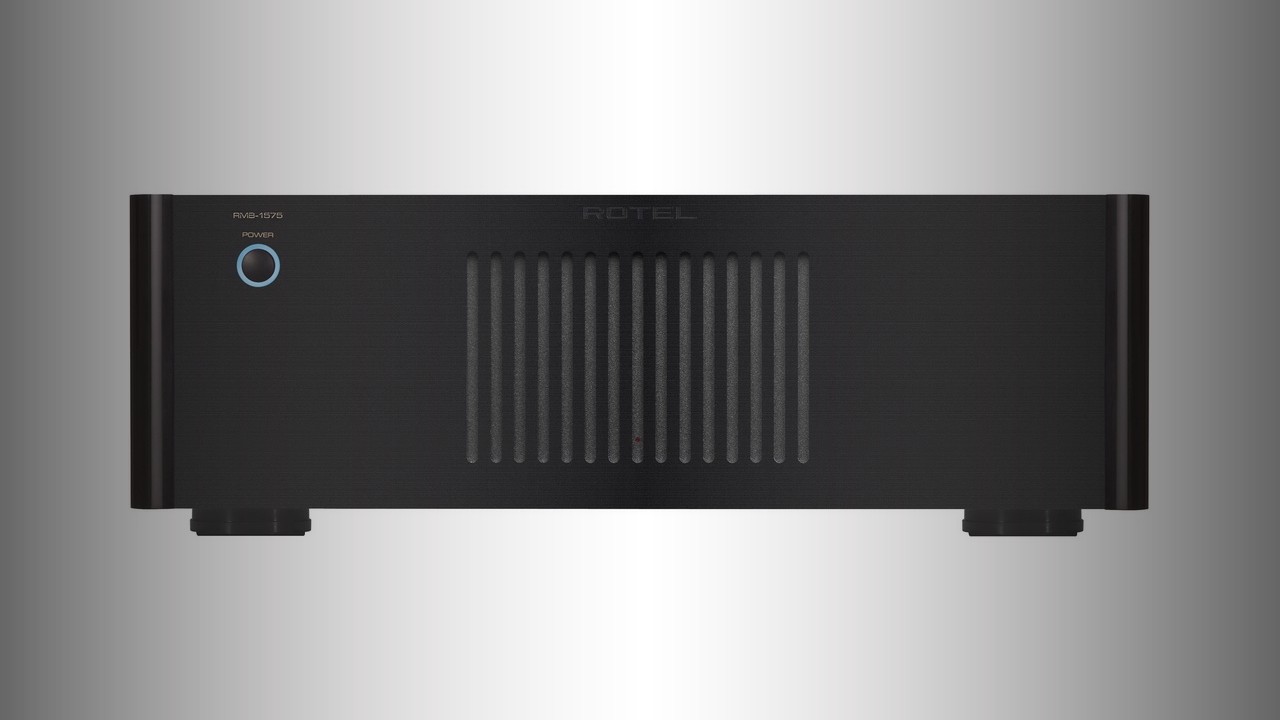
8. Rotel RMB 1575: Impressive five-channel power amplifier
The five-channel Rotel RMB-1575 uses Class D amplification, RCA inputs, WBT speaker terminals, and fanless cooling.
The Rotel RMB-1575 is a five-channel Class D power amplifier intended for large-room and home-cinema systems.
It is rated at 250 watts per channel into eight ohms with all five channels operating, and the supplied material states that output doubles into four-ohm speakers.
Class D operation limits power consumption and heat relative to the output available, allowing Rotel to avoid cooling fans. Five RCA inputs, five pairs of WBT speaker terminals, and a remote trigger connection provide straightforward system integration. As a power amplifier, it requires an external surround processor or preamplifier for source selection and volume control.
Best for: High-output five-channel systems
- Five channels rated at 250 watts each into eight ohms
- Designed to support four-ohm speakers
- Fanless Class D operation
- Remote trigger connection
Verdict: The RMB-1575 is a purpose-built multichannel power stage for systems that need five strong channels without fan noise or the bulk of conventional Class AB cooling hardware.

9. Vincent SP-332: Impressive hybrid power amplifier
Vincent's SP-332 hybrid power amplifier features prominent VU meters, selectable illumination, and a tube-and-FET circuit.
The Vincent SP-332 is a stereo hybrid power amplifier designed as a close partner for the SA-32 hybrid preamplifier.
One 6N16 tube per channel handles the input stage, while eight FET transistors form the output section.
Rated output is 150 watts per channel into eight ohms. Power comes from a 500-watt toroidal transformer buffered by 80,000 microfarads of Epcos capacitance, and a 6N15 tube is used for voltage stabilization. Both conventional and balanced preamplifier connections are supported. Front-panel VU meters and selectable illumination give the amplifier a distinctive visual identity.
Best for: A separate hybrid preamplifier and power-amplifier system
- 150 watts per channel into eight ohms
- Tube input stage with FET output section
- Balanced and conventional connections
- Large toroidal transformer
Verdict: The SP-332 combines tube-based input and stabilization stages with a high-output FET section in a dedicated stereo power amplifier.
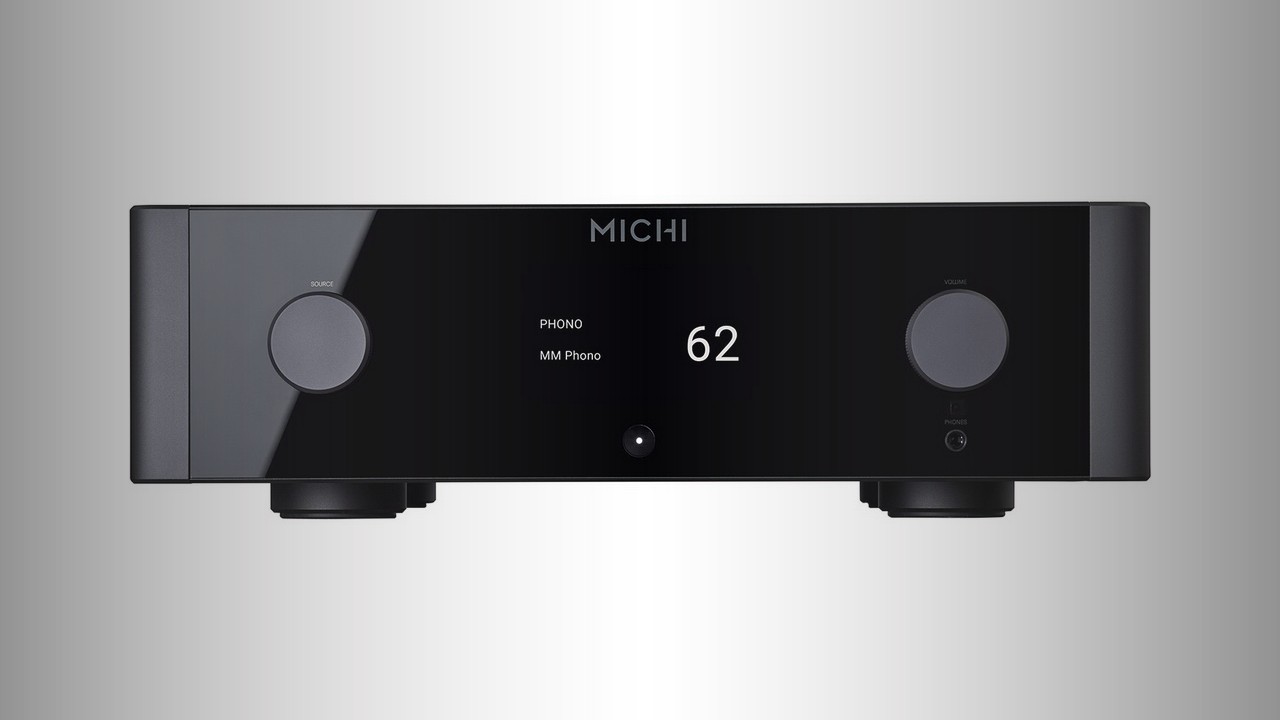
10. Michi P5: Reference-grade preamplifier
The Michi P5 preamplifier combines understated flagship-series styling with analog, digital, phono, and system-control connectivity.
The Michi P5 is a preamplifier rather than a speaker-driving amplifier, so it must be partnered with a stereo or mono power stage.
It provides a broad selection of analog and digital inputs, includes an onboard phono preamplifier, and supports MQA.
RS232 and Ethernet interfaces allow integration with automation and control systems. Rotel states that the design was developed with attention to signal integrity and the reduction of unwanted noise and distortion. For buyers assembling a system from separate components, the P5 offers source control across digital, line-level analog, and vinyl playback.
Best for: Separate systems with varied source types
- Analog and digital source connectivity
- Built-in phono preamplifier
- MQA support
- RS232 and Ethernet control interfaces
Verdict: The Michi P5 is a versatile control center for listeners who want one preamplifier to handle digital, analog, and phono sources before a separate power stage.
Frequently asked questions
Should I choose an integrated amplifier or separate preamplifier and power amplifier?
Choose an integrated amplifier when you want source control, volume adjustment, and speaker drive in one enclosure.
Separates make more sense when you need specialized connectivity, greater installation flexibility, or the option to change the control and power stages independently.
How many amplifier channels does my system need?
A conventional stereo pair needs two channels, while a monoblock provides one channel and must be paired for stereo.
Home-cinema systems may require five or more channels, and passive subwoofers need their own suitable amplifier channels.
Why do speaker impedance and amplifier power matter?
The amplifier must remain stable with the speaker's impedance and provide enough output for the room, listening distance, and desired volume.
Do not compare wattage alone: confirm the rating at the relevant impedance and check that both products are electrically compatible.
Which connections should I check before buying?
Start with source inputs and preamplifier requirements.
Confirm whether you need analog, phono, USB, optical, coaxial, AES/EBU, balanced XLR, or RCA connections, then check for practical features such as trigger control, subwoofer outputs, DSP, and network-based configuration.
How to choose the right amplifier architecture
Begin by defining the amplifier's job.
A digital-only integrated model such as the Mark Levinson No.
5802 can simplify a system built entirely around digital sources, but it is unsuitable if you need a direct analog or phono input. The Advance Paris Nova range takes a broader all-in-one approach by combining hybrid amplification, conversion, DSP, and subwoofer management. The Magnat RV 4 provides another form of hybrid design, pairing a tube input stage with transistor power amplification. For separate systems, distinguish carefully between preamplifiers and power amplifiers. The Michi P5 handles sources and volume but cannot drive passive speakers by itself. The Vincent SP-332 is the reverse: it supplies speaker power but needs a preamplifier. The Bowers & Wilkins CDA-2HD prioritizes custom installation and DSP flexibility, while the Aiyima A70 Mono serves one channel and may therefore require a pair for stereo use. Channel count is equally important. Rotel's RMB-1575 is intended for five-channel applications, whereas a stereo amplifier cannot replace it without additional hardware. Complete amplified products such as the Devialet Dione may eliminate several separate components, but they also offer a different upgrade path from a conventional component system. The Perlisten range is not amplification at all; it belongs on the speaker side of the matching decision. Before settling on any model, list every source, speaker, subwoofer, and control requirement. Verify impedance compatibility, required channel count, input formats, and whether volume control is included. Features such as balanced inputs, trigger connections, DSP, room correction, and subwoofer crossovers are valuable only when they solve a requirement in the actual system.

Join the discussion
Share your thoughts, listening impressions or product experience.