

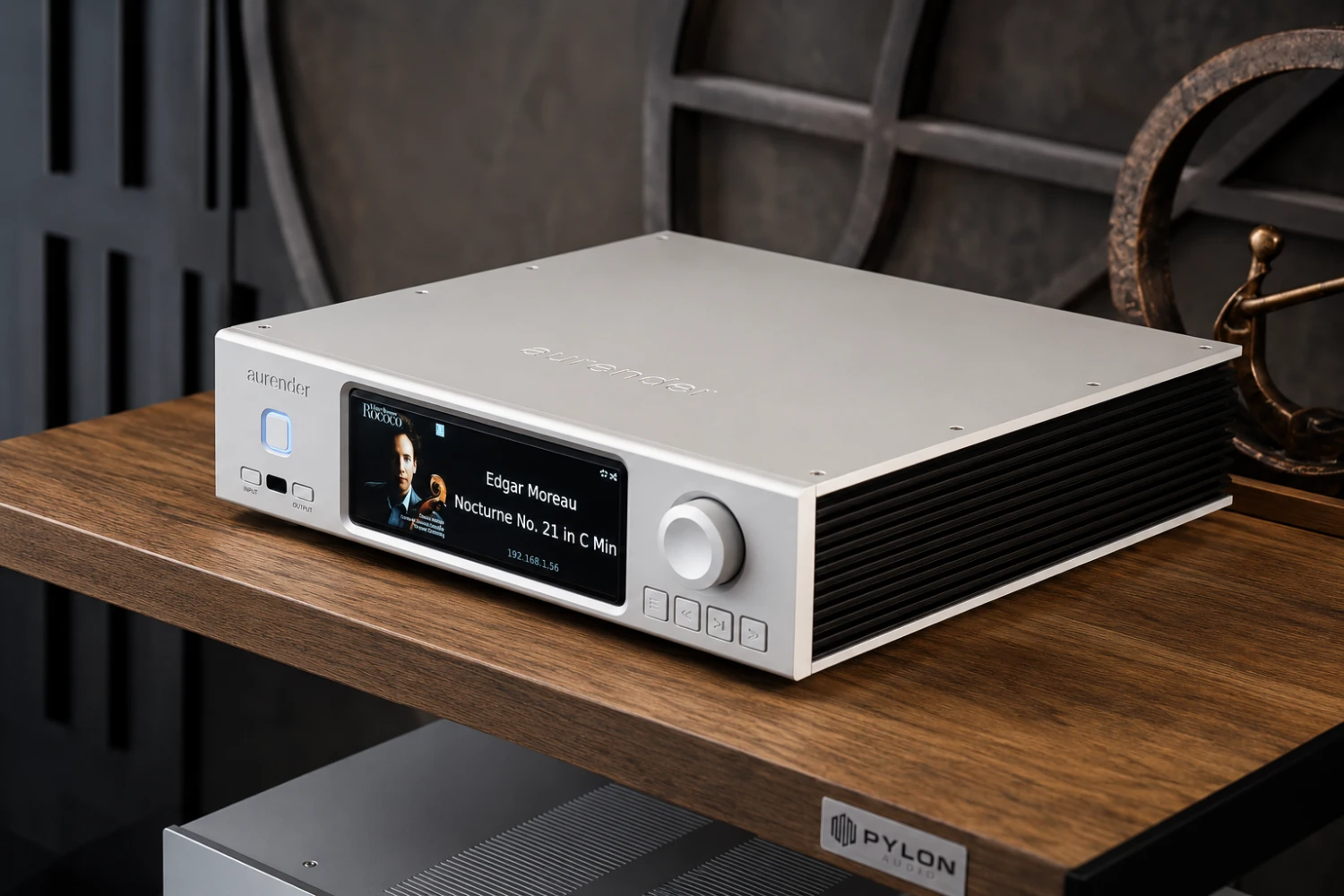
The Aurender A1000 marks a notable shift for a company best known for purpose-built digital transports and music servers. On the supplied information, this is not merely another network player, but a consolidated digital component designed to handle storage, streaming, conversion and external digital sources from a single chassis.
Design & Build Quality
Aurender has not abandoned its established visual language for the A1000, and that is largely a strength. The unit follows the brand’s familiar minimalist approach: clean aluminum panels, deep engraved branding and a dense, monolithic appearance intended to sit comfortably in a serious hi-fi rack without drawing unnecessary attention.
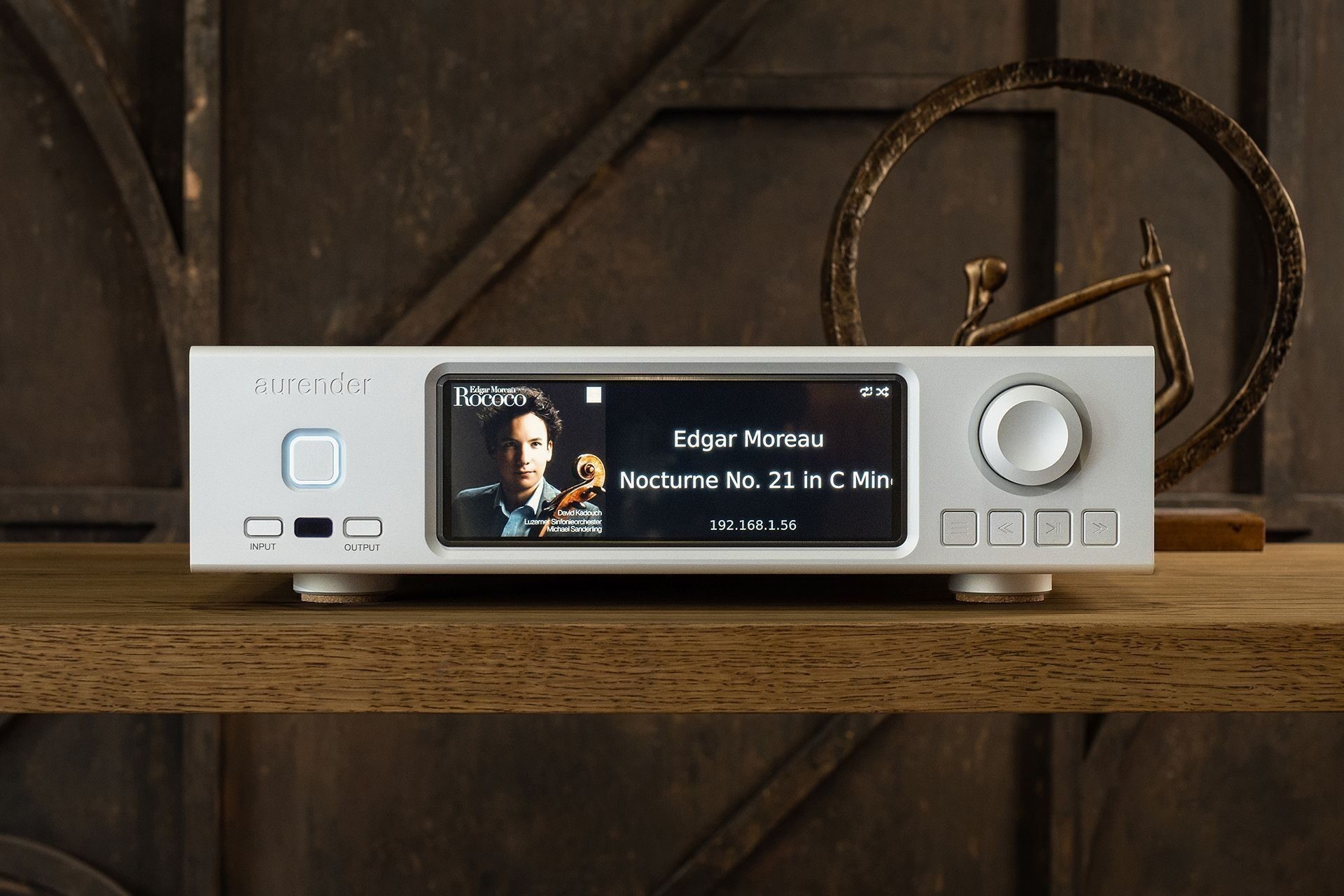
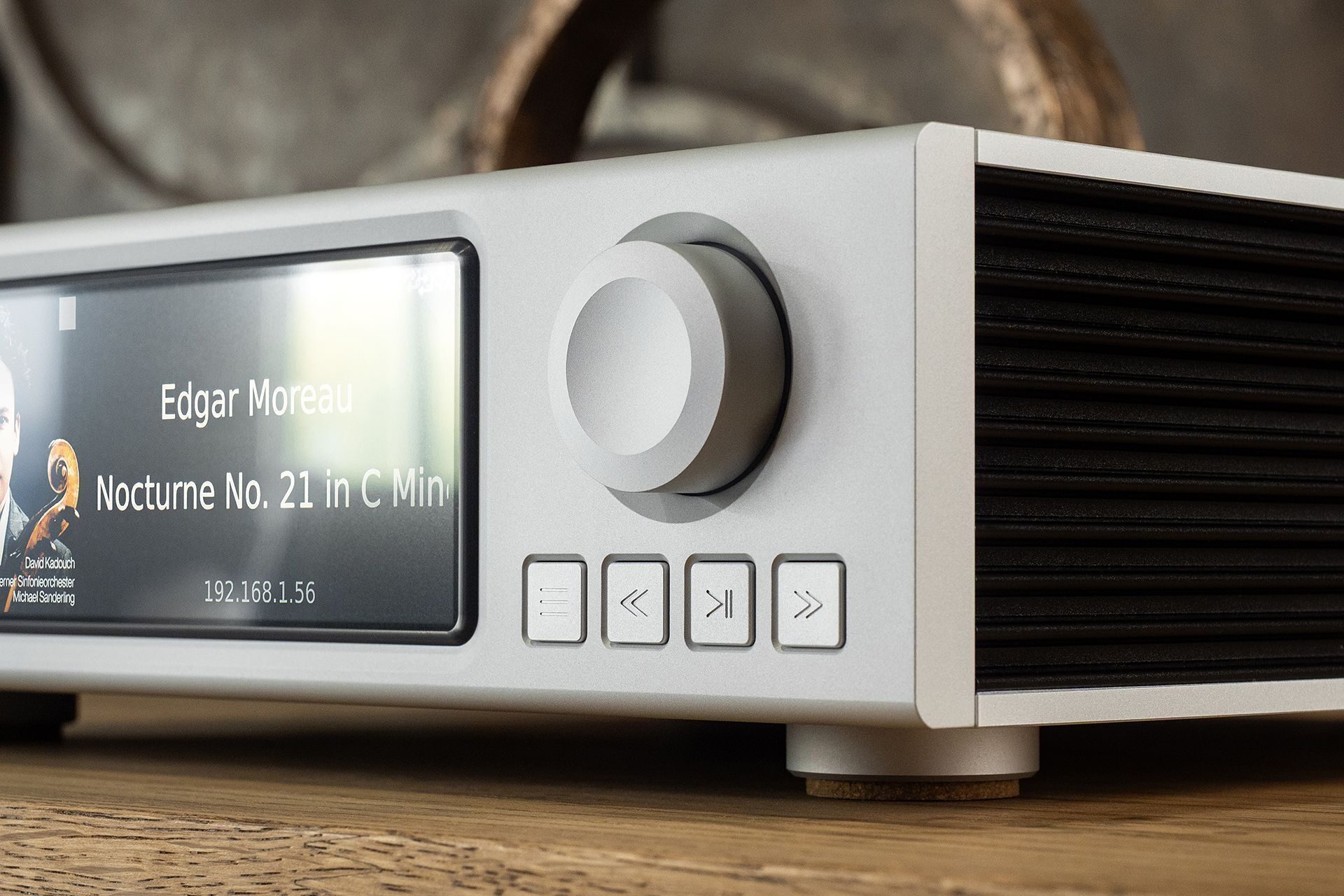
The front panel is dominated by a color display measuring almost 7 inches. It is not described as a touchscreen, which feels conservative for such a multifunctional device, but the surrounding physical controls are extensive. The front includes the illuminated power button, an IR receiver window, input and output selection, volume control, playback buttons and access to the on-screen menu.
The chassis design also includes functional details. The side panels serve as heatsinks, while the underside uses four cork feet intended to help isolate the component from vibration. As an industrial object, the A1000 appears to retain the premium Aurender identity even while moving toward a more integrated and relatively more attainable concept.
Platform & Internal Architecture
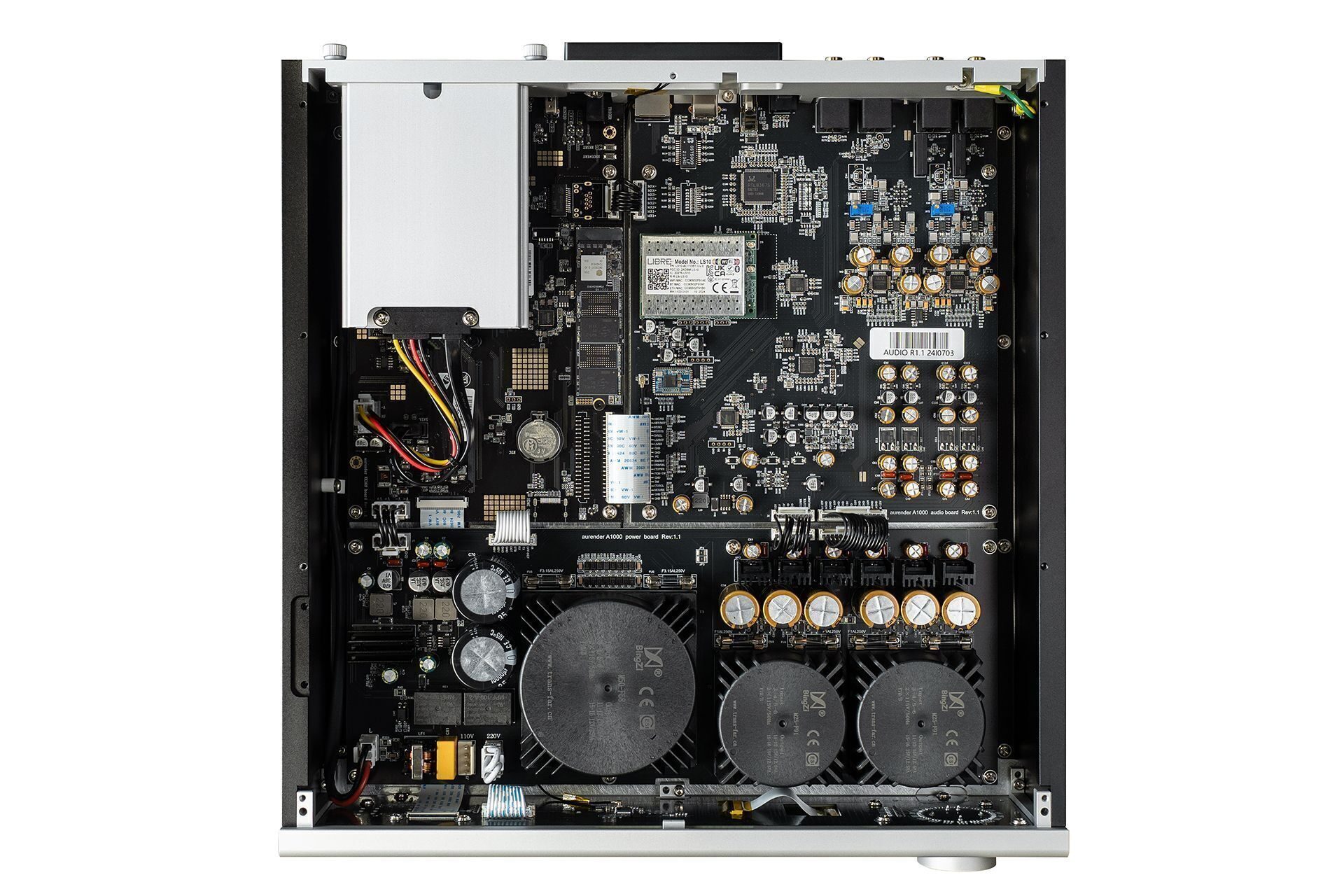
The most important change is inside. Aurender has moved this model to an ARM-based platform rather than the previous Intel Low Power Quad Core architecture used in earlier designs. The A1000 is specified with a quad-core ARM Cortex-A55 processor running at 2.0GHz and 4GB of RAM. According to the supplied material, the new platform allows lower power consumption, a reduction in cost and additional functional flexibility.
Storage is split by purpose. A 32GB SSD is used for the operating system, while a separate 120GB SSD is assigned to Aurender’s content pre-caching function. That caching arrangement is central to Aurender’s server philosophy, because it allows the player to prepare data before playback rather than relying only on real-time access from a network or removable drive.
Digital-to-analog conversion is handled by two AKM 4490REQ DAC chips operating in a dual-mono configuration. File support is specified up to 32-bit/768kHz PCM and native DSD512. The A1000 also uses separate power supplies for the control and conversion sections, with individual toroidal transformers for those areas and a third toroidal transformer for ancillary circuitry.
Connectivity & System Integration
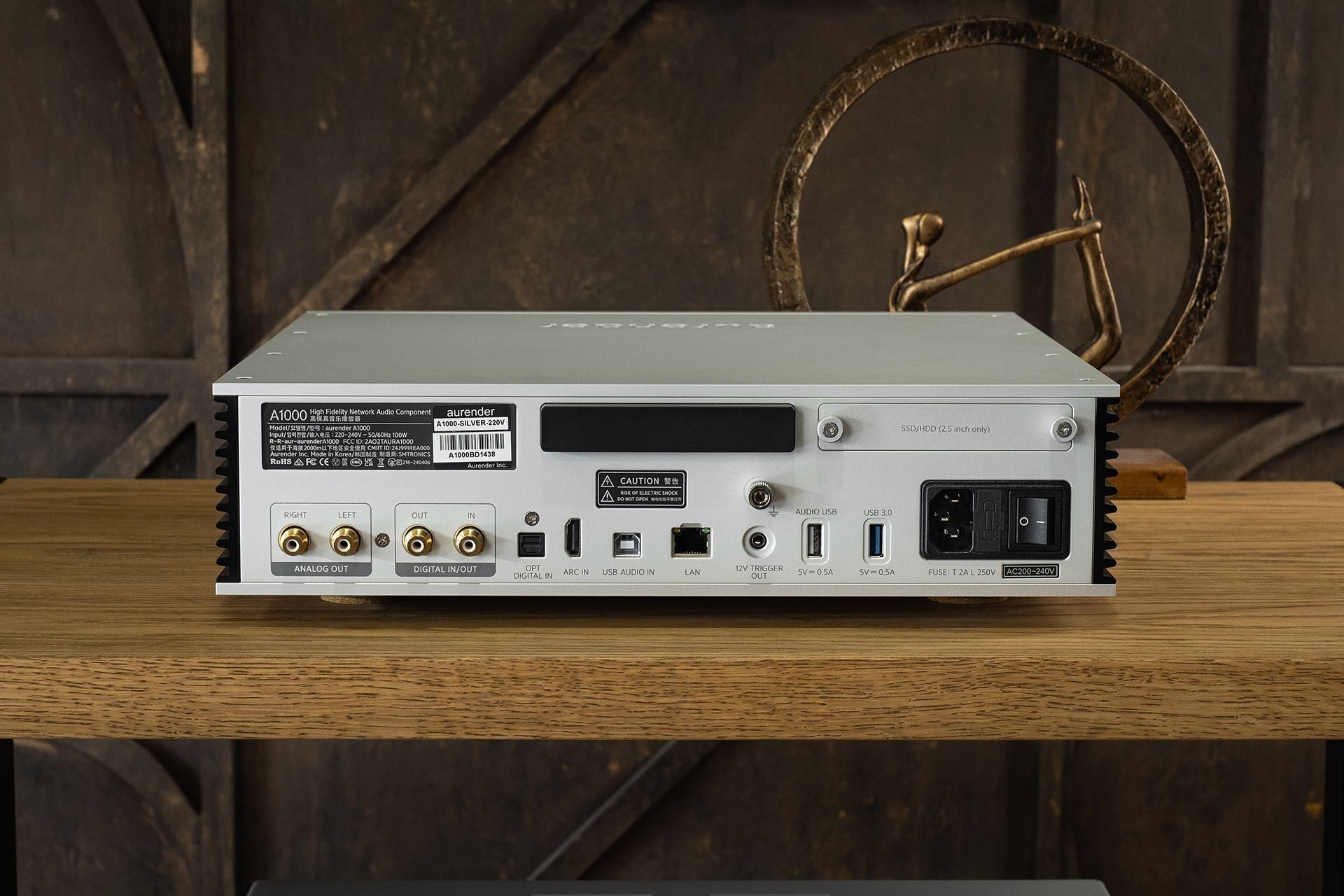
The rear panel is where the A1000 most clearly separates itself from a conventional network player. It accepts digital signals via coaxial, optical, HDMI, USB-B, USB-A and LAN, and it also includes Bluetooth. The presence of Bluetooth is especially significant in Aurender terms, because it broadens the unit’s role beyond traditional audiophile file and network playback into more casual and household-friendly use cases.
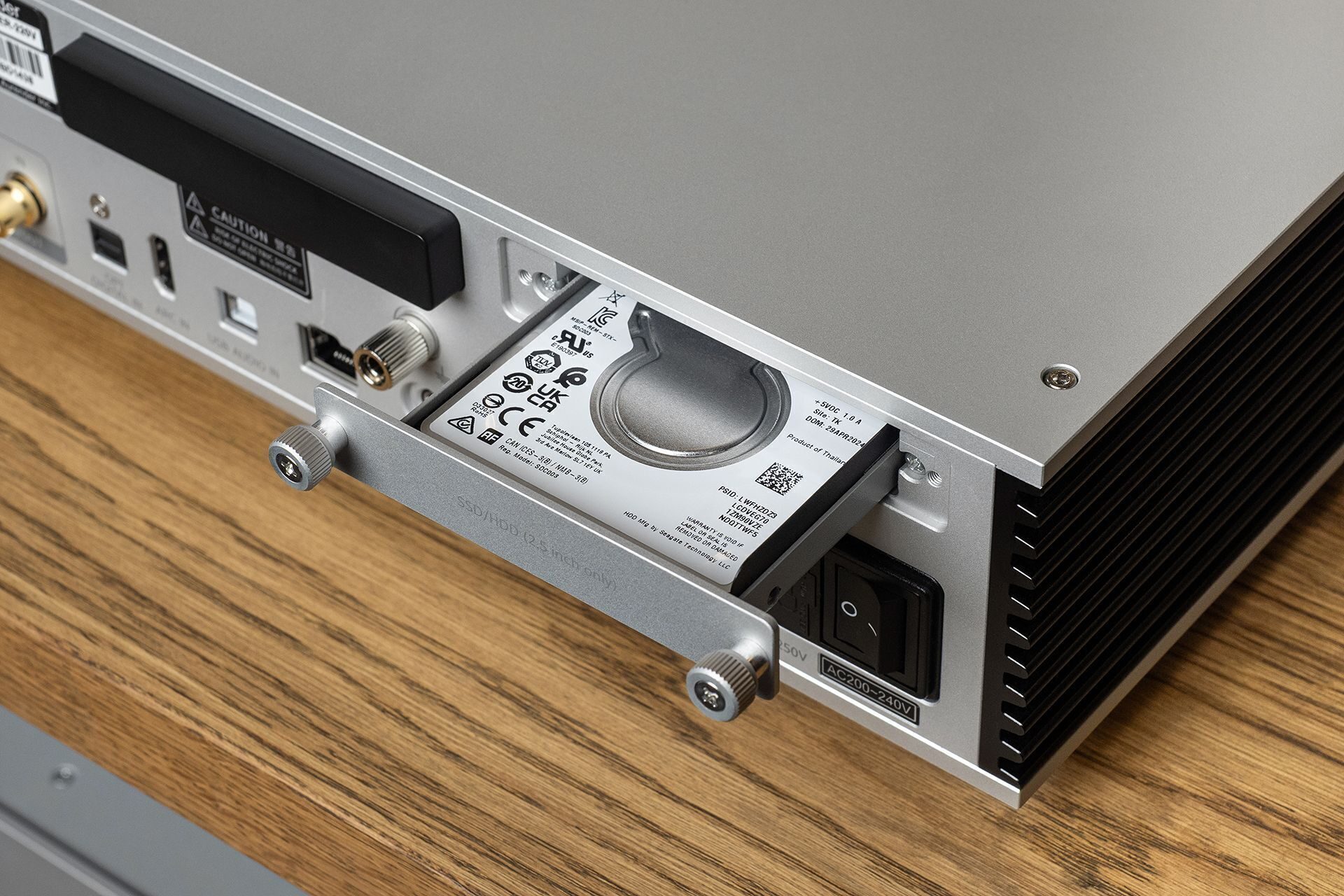
Local storage is supported through an HDD/SSD slot with capacity up to 8TB. The unit can also work with USB file storage, with the supplied material describing immediate access to the available contents. In addition, the A1000 can be configured for direct access to a home NAS server, so it is not limited to its own internal drive bay.
Analog output is provided on RCA, and system integration is supported by a 2.5mm trigger and a ground terminal. The overall connection set means the A1000 can operate as a network player, a server, a DAC for external digital transports, a digital transport in its own right, or even a broader multimedia hub for sources such as a television, console or projector.
Software, Control & Usability
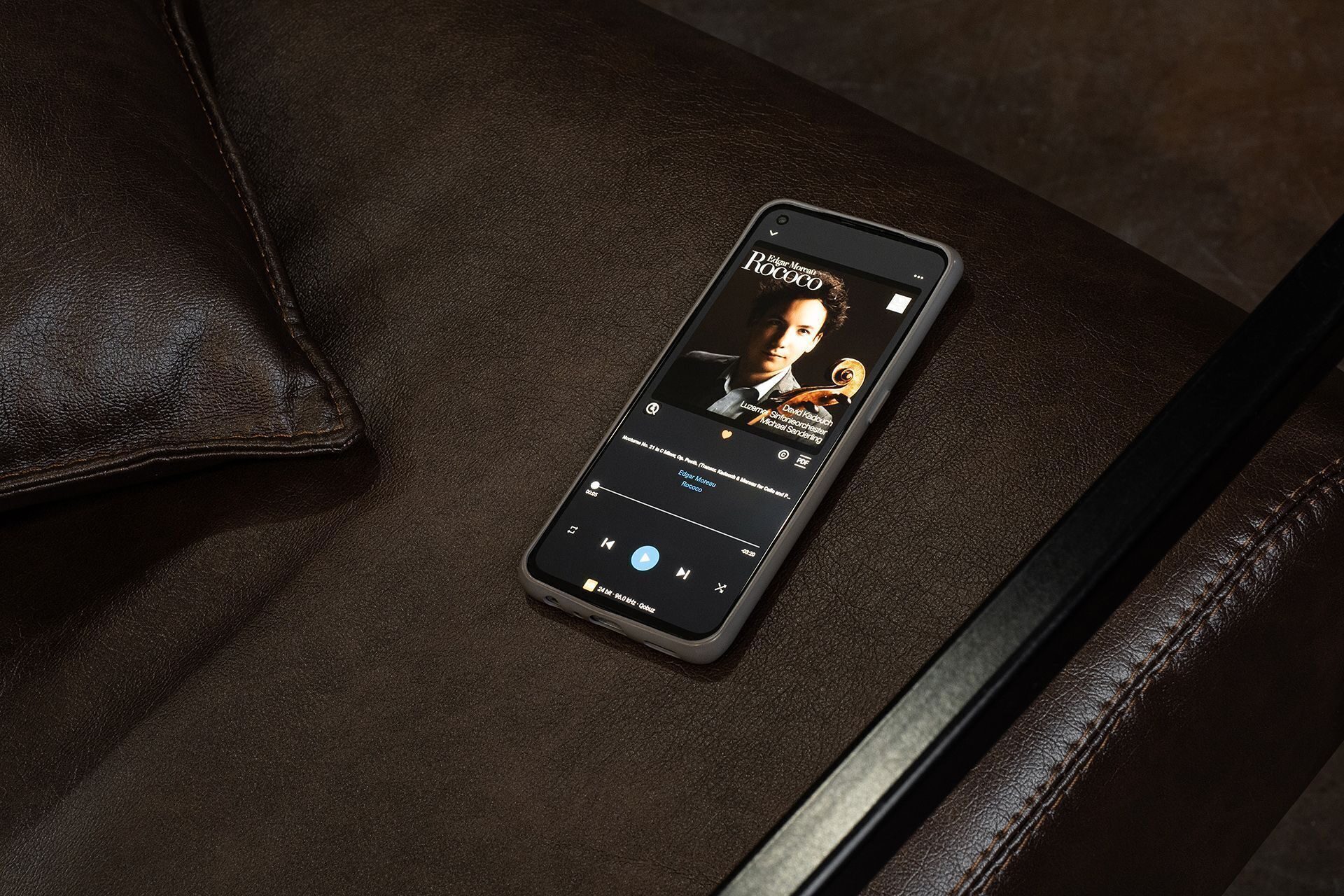
Aurender’s Conductor application remains central to setup and operation. The supplied information presents it as a mature control environment with extensive functionality, while the A1000 is also Roon Ready. That dual approach is important: users are not forced into a single playback ecosystem once the unit is configured, although Aurender’s own app remains necessary for deeper setup.
The available settings go well beyond basic library navigation. Users can adjust DAC digital filters, enable a critical listening mode that leaves only necessary circuit sections active, configure display brightness, switch the display off during playback and disable the front-panel buttons. There are also controls for native DSD behavior, bitrate-related settings, direct modes and preamplifier activation or deactivation.
Content options include Tidal, Qobuz, AirPlay, internet radio and supported Connect-style streaming routes including Google Cast. The software concept is not just about choosing one service at a time; the A1000 is intended to gather tracks from different locations and services into playlists, whether the content is stored locally, on removable media, on a NAS or accessed through supported streaming platforms.
Performance Potential
Because this is an editorial assessment based on supplied specifications, performance can only be considered through the engineering choices and intended use. The A1000’s performance promise rests on several documented decisions: a dedicated audio-optimized computing platform, pre-caching storage, dual-mono DAC architecture, high-resolution PCM and DSD support, and separated power supply sections.
The move to ARM processing is not merely a cost decision. Lower power requirements can be advantageous in a compact digital audio platform, particularly when the same chassis contains server, streamer and DAC functions. The use of three toroidal transformers also indicates an effort to keep control, conversion and auxiliary circuits from sharing the same supply path unnecessarily.
The dual AKM DAC arrangement is another meaningful design choice. A dual-mono implementation can support improved channel separation in principle, while the stated format support gives the A1000 headroom for very large high-resolution libraries. The 120GB cache drive further reinforces Aurender’s strategy of treating file delivery and playback stability as part of the audio design rather than as generic computer tasks.
Value for Money
No USD price is provided in the supplied material, so the A1000 cannot be assessed against a specific numerical figure here. What can be said is that it is positioned as Aurender’s least costly full-cycle player-streamer-server-DAC, and that makes its feature density central to its appeal.
The value case is strongest for buyers who would otherwise need multiple boxes: a network transport, a music server, a standalone DAC and possibly a digital input hub for non-hi-fi sources. The A1000 folds those roles into one component while still retaining Aurender’s storage, caching and app ecosystem.
There are omissions. The A1000 does not include Wi-Fi, which remains absent from Aurender devices according to the supplied material. It also lacks the supercapacitor backup system described for other designs, and it offers a single internal storage slot rather than a second SSD bay. Even so, those compromises appear aligned with the product’s purpose: broader functionality and lower positioning within the brand’s range.
Pros
- Combines streamer, server, DAC, digital transport and hub functions in one chassis
- ARM-based platform with 4GB RAM, dedicated OS SSD and 120GB cache drive
- Dual-mono AKM 4490REQ DAC architecture with PCM up to 32-bit/768kHz and native DSD512 support
- Broad digital input set including HDMI, USB-B, USB-A, coaxial, optical, LAN and Bluetooth
- Roon Ready status alongside Aurender Conductor control
Cons
- No Wi-Fi support is specified
- Front display is not described as a touchscreen
- No supercapacitor backup shutdown system is included
- Only one internal HDD/SSD slot is specified
Verdict
The Aurender A1000 is a strategically important all-in-one digital source, offering unusually broad functionality while preserving the brand’s server-first approach to digital audio.
Conclusion
The Aurender A1000 looks like a turning point product: not because it abandons Aurender’s established priorities, but because it compresses more of them into one more flexible component. Its strongest assets are clear from the specification sheet: ARM-based processing, dedicated operating and cache storage, dual-mono AKM conversion, extensive digital inputs, internal storage up to 8TB, Roon Ready status and the mature Conductor control environment. It is also more adaptable than a traditional audiophile streamer, with HDMI, Bluetooth and USB-B making it easier to integrate with modern household sources. The limitations are equally clear. There is no Wi-Fi, the front display is not specified as touch-capable, and some higher-end internal refinements are absent. Still, those omissions seem consistent with the product’s role as Aurender’s more accessible full-cycle digital player. The ideal buyer is someone who wants a serious network source but would rather avoid stacking separate server, DAC and transport components. Based on the documented design, the A1000 earns a strong recommendation as a highly capable digital centerpiece.

Join the discussion
Share your thoughts, listening impressions or product experience.