

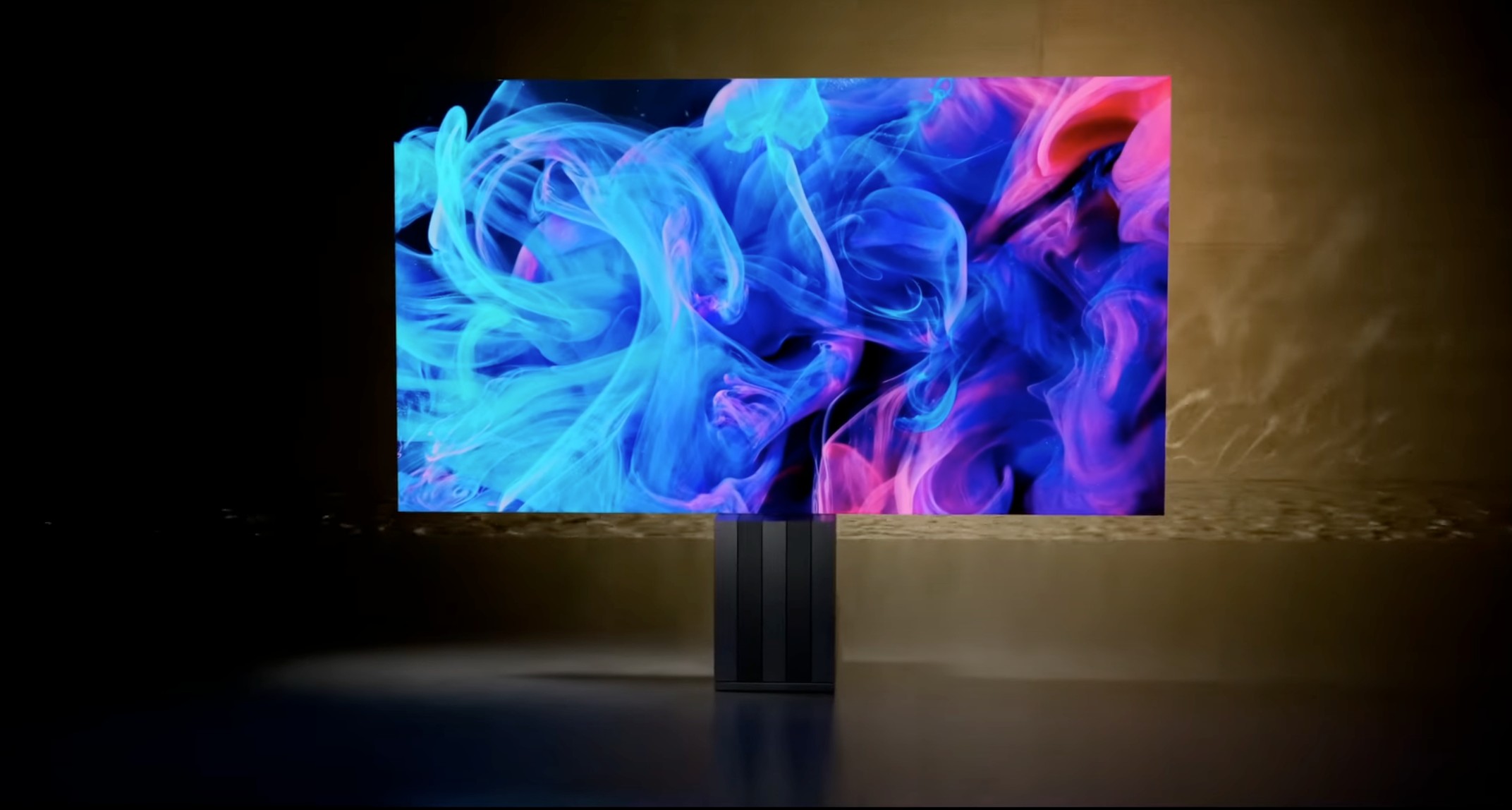
Large televisions often compete on size, resolution, and brightness, but the C Seed N1 takes a more architectural route. It is a folding MicroLED television built not only to deliver a very large image, but also to change what a large display looks like when it is switched off. Available in 103-, 137-, and 165-inch sizes, the N1 is designed for interiors where a conventional black rectangle would dominate the room. Its defining feature is a motorized folding mechanism that allows the screen to deploy from, and disappear back into, an abstract aluminum structure. In other words, this is not simply a big TV; it is a made-to-order display system intended to behave like a piece of modern interior design when it is not in use.
A large-screen TV that does not always look like one
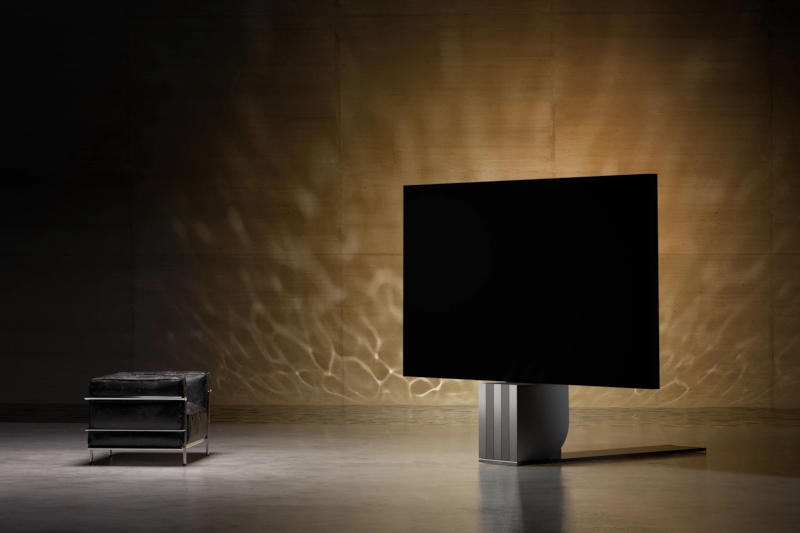
The most distinctive quality of the C Seed N1 is its ability to hide in plain sight. When folded, the television becomes an abstract aluminum object rather than a visible screen. That matters because very large displays can be visually intrusive, especially in carefully designed living rooms, galleries, penthouses, dedicated entertainment spaces, and other interiors where furniture, lighting, and sightlines are treated as part of the architecture.
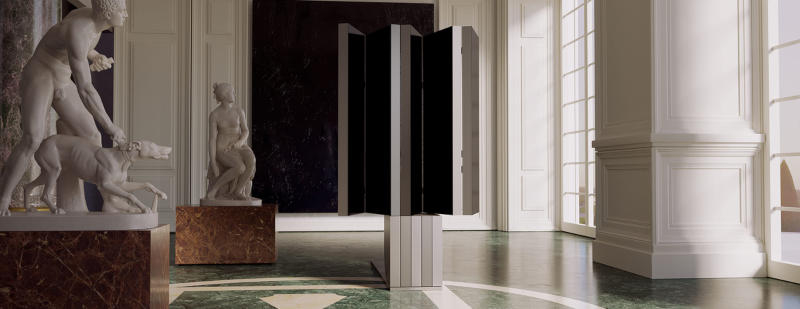
Instead of requiring the owner to accept a permanent 103-, 137-, or 165-inch black surface, the N1 offers a different compromise: the screen is present only when needed. At the touch of a button, the panels unfold into viewing position; when viewing is finished, they fold away into the sculptural housing. The source material notes that this process takes about two and a half minutes, which suggests the N1 is intended for deliberate viewing sessions rather than casual channel-hopping in the background.
This approach makes the product as much about spatial design as display technology. A television of this scale is rarely invisible, but C Seed’s concept reduces the visual burden when the screen is not being used. For owners who want a cinema-sized image without allowing the display to define the room at all times, that is the central attraction.
MicroLED technology for a premium display platform
The N1 uses a MicroLED panel with 4K resolution, high contrast, 16-bit color, and a quoted peak brightness of 1000 cd/m². Those specifications place the emphasis on modern large-format display engineering rather than projection. For a prospective owner, the appeal is straightforward: the C Seed N1 is designed as a self-contained emissive display rather than a projector-and-screen system, while still reaching screen sizes normally associated with dedicated cinema rooms.
MicroLED is especially relevant in this kind of product because it is associated with modular large-screen construction. The N1’s folding design depends on the screen separating into smaller panels as part of its deployment and storage process. The product’s technical identity and mechanical identity therefore appear closely linked: it is not just a large flat panel placed on a stand, but a display assembled around movement, segmentation, and architectural integration.
The 4K resolution is also significant because the N1 is offered in unusually large sizes. At 103 inches, 137 inches, and 165 inches, the display is intended for rooms where viewers can sit far enough away to appreciate scale without treating the screen like a desktop monitor. The combination of large diagonal sizes and 4K resolution positions it for cinematic presentation, sports, events, media rooms, and statement installations where image size is a key part of the experience.
The folding mechanism is the product’s design signature
The mechanical transformation is what separates the N1 from more conventional large televisions. The screen folds out into smaller panels and then retracts into a compact aluminum structure. This movement is not merely a novelty; it solves a genuine design problem created by very large screens. A 165-inch display is physically and visually dominant. Giving it a way to disappear changes how it can be placed in a room.
The two-and-a-half-minute deployment time also frames how the product is meant to be used. This is not a small living-room television that disappears instantly behind a cabinet door. It is a performance in itself: a large engineered object that opens before viewing and closes afterward. For some owners, that ritual may be part of the appeal, particularly in homes or venues where the media system is meant to impress guests as well as serve everyday entertainment.
Because the folded form is described as an abstract aluminum structure, the N1 does not rely on camouflage. It does not pretend to be a bookshelf or a wall panel. Instead, it becomes a visible object with its own design language. That is a useful distinction: the product is made for interiors where a sculptural presence may be welcome, but a permanently exposed giant screen may not be.
Size choices and finish options support interior matching
C Seed offers the N1 in three indoor sizes: 103 inches, 137 inches, and 165 inches. These are not minor variations; each size implies a different room, viewing distance, installation plan, and visual impact. The 103-inch version is still extremely large by normal television standards, while the 165-inch model is a room-defining display. The 137-inch option sits between them for spaces that can support a major screen without going to the largest available format.
The N1 is offered in silver and gold finishes. That may sound like a simple cosmetic choice, but for a product designed to remain visible as an aluminum object, finish matters. A folded N1 in silver may suit cooler, more minimalist interiors, while gold can complement warmer or more decorative settings. Since the TV’s folded state is part of its design proposition, the exterior finish is not an afterthought; it affects how the product reads as furniture or sculpture when the screen is hidden.
There is also an outdoor-related reference in C Seed’s range: a 144-inch model for outdoor installation priced at $240,000. The N1 itself, as described in the supplied information, is presented in the 103-, 137-, and 165-inch sizes, with its sculptural folding design as the headline indoor concept.
Made-to-order positioning and pricing
The C Seed N1 is not a mass-market television. Each unit is made to order, with an approximate six-month period from order placement to delivery. That lead time reinforces the product’s role as a custom installation piece rather than a standard consumer electronics purchase. It is the kind of product likely to involve planning around space, placement, power, access, interior layout, and possibly broader home entertainment design.
The documented pricing reflects that positioning. The 103-inch C Seed N1 is priced at $100,000, the 137-inch version at $200,000, and the 165-inch version at $300,000. These figures place the N1 in a rarefied category where the cost is tied not only to screen size, but also to mechanical engineering, limited production, and the design objective of making a huge display disappear into an art-like structure.
The company’s production history also underlines its niche status. According to the supplied material, C Seed sold only 200 televisions over ten years. That figure suggests a manufacturer focused on highly specialized projects rather than volume. For buyers considering the N1, that exclusivity may be part of the appeal, but it also means the product should be viewed as a commissioned design object as much as an electronics component.
Why the N1 may matter in a high-end entertainment system
For Stereoindex readers, the N1 is interesting because it addresses a familiar challenge in high-end home entertainment: how to integrate serious audiovisual capability without compromising the room. Many enthusiasts accept large loudspeakers, equipment racks, acoustic treatments, and screens as part of a dedicated listening or cinema environment. But in shared living spaces, the visual footprint of AV equipment can become a major obstacle.
The N1’s contribution is to make the display conditional. When required, it provides a very large MicroLED 4K screen. When not required, it becomes a sculptural object. That flexibility could be valuable in rooms used for entertaining, architecture-led residences, or multipurpose spaces where a conventional fixed screen would feel too dominant. It gives the owner a way to prioritize both media performance and visual restraint, at least in terms of the display’s presence.
Its scale also means it is better understood as the visual centerpiece of a serious system rather than as a simple television purchase. A screen of this size would naturally invite careful thought about seating, source components, control systems, and audio integration. The supplied material does not document the N1’s audio system or connectivity, so those areas should not be assumed. What can be said is that the display’s size and installation character make it a natural candidate for planned, high-end environments rather than casual placement.
Who the C Seed N1 is most suitable for
The C Seed N1 is most suitable for buyers who want an exceptionally large display but do not want that display to define the room when it is off. It is aimed at owners who value interior design, architectural integration, mechanical ingenuity, and exclusivity alongside image size. The made-to-order process, the long lead time, and the pricing all point toward custom homes, luxury media spaces, private screening rooms, and statement installations.
It is less suitable for buyers who want a conventional plug-and-play television, rapid availability, or the lowest cost per inch. The folding mechanism and sculptural enclosure are central to the product, so anyone who simply wants a large screen on a wall may find the concept unnecessarily elaborate. The deployment time also means it is best matched to intentional viewing rather than constant casual use.
For the right owner, however, those same traits are the point. The N1 is designed for people who see the television as part of the room’s design language, not merely as an appliance. Its attraction lies in the way it combines scale, concealment, and presentation into a single object.
Conclusion
The C Seed N1’s strongest documented qualities are its folding MicroLED construction, its ability to transform from a 4K large-screen display into an abstract aluminum structure, its choice of 103-, 137-, and 165-inch sizes, and its made-to-order positioning. It is not a conventional television for ordinary rooms or ordinary budgets. It is best suited to owners planning a high-end visual centerpiece who want cinema-scale viewing while preserving the look and atmosphere of a carefully designed interior when the screen is not in use.
