10 Amplifier Picks for Systems of Every Shape and Scale
Ten distinct approaches to amplification, from connection-rich integrated models and compact Class D designs to multichannel power amplifiers, monoblocks and a dedicated headphone amplifier.

Amplifiers are not interchangeable boxes.
The right choice depends on the speakers being driven, the sources that need connecting and whether the system is built around a single listening room, a television, headphones or a multichannel installation.
This selection reflects that variety, covering integrated amplifiers, dedicated power amplifiers, monoblocks and compact headphone-focused designs. Some models emphasize straightforward stereo integration, while others provide digital conversion, phono connectivity, HDMI ARC, bridging or flexible channel allocation. The list also spans contrasting approaches to amplification, including Class A/B, Class D and proprietary circuit designs. Before choosing, identify the role the amplifier must perform. Check speaker impedance and power requirements, count the necessary analog and digital connections, and decide whether features such as a phono stage, subwoofer output, Bluetooth or headphone connections belong inside the amplifier or elsewhere in the system.

1. Heed Audio Revives Obelisk Integrated Amplifiers – Bigger, Modular and More Powerful
Heed Audio’s revived Obelisk integrated amplifiers adopt a full-width 43 cm enclosure to provide more room for components and optional modules.
Heed Audio’s revived Obelisk Integrated and Obelisk Super Integrated move from the company’s familiar compact format to a full-width 43 cm chassis.
The extra internal space accommodates larger components and gives the range greater flexibility, while both amplifiers retain Heed’s proprietary Transcap topology.
Buyers can approach the new Obelisk models as analog-focused integrated amplifiers or configure them with optional functionality, making the range relevant to systems that may need digital, streaming or Bluetooth facilities without abandoning an analog foundation.
Best for: Listeners seeking a modular integrated amplifier
- Full-width chassis allows larger components
- Modular configuration options
- Proprietary Transcap topology
- Available as an analog-focused amplifier
Verdict: The revived Obelisk range combines Heed’s established circuit approach with a more spacious and adaptable full-width design.
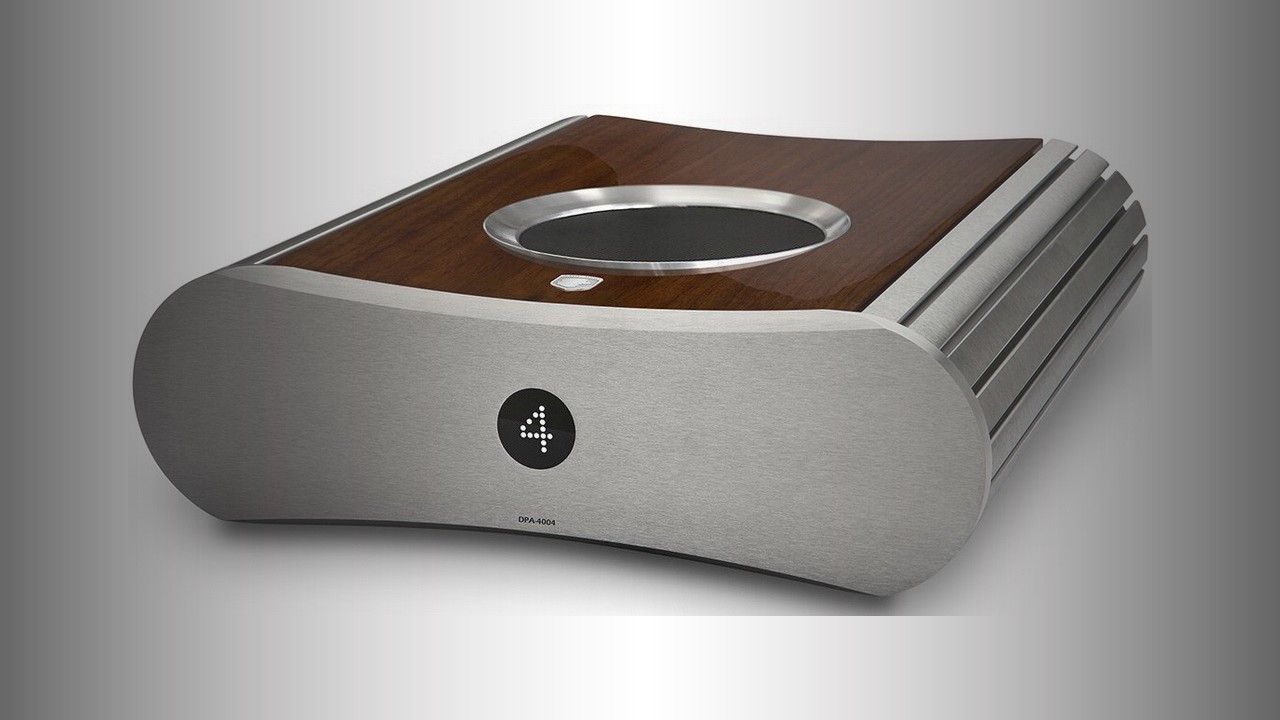
2. Gato Audio DPA-4004: Flexible four-channel amplifier
The compact Gato Audio DPA-4004 houses four Class D channels that can be used separately or bridged in pairs.
The Gato Audio DPA-4004 is a four-channel Class D power amplifier designed around flexible channel and power allocation.
It delivers at least 4 x 400 W into 8 ohms, with the stated channel power doubling into 4 ohms.
Each channel pair can also be bridged, opening up configurations for multichannel use, bi-amping or systems that need different power arrangements. Its intended partners include Gato Audio’s PRD-3 preamplifier/DAC and DIA-250/400 integrated amplifiers, while Home Theater mode supports integration with surround-oriented systems.
Best for: Flexible multichannel and bi-amping installations
- Four independently useful amplification channels
- Each channel pair can be bridged
- At least 4 x 400 W into 8 ohms
- Suitable for multichannel or bi-amped systems
Verdict: The DPA-4004 stands out when channel flexibility and substantial stated output matter more than an all-in-one feature set.
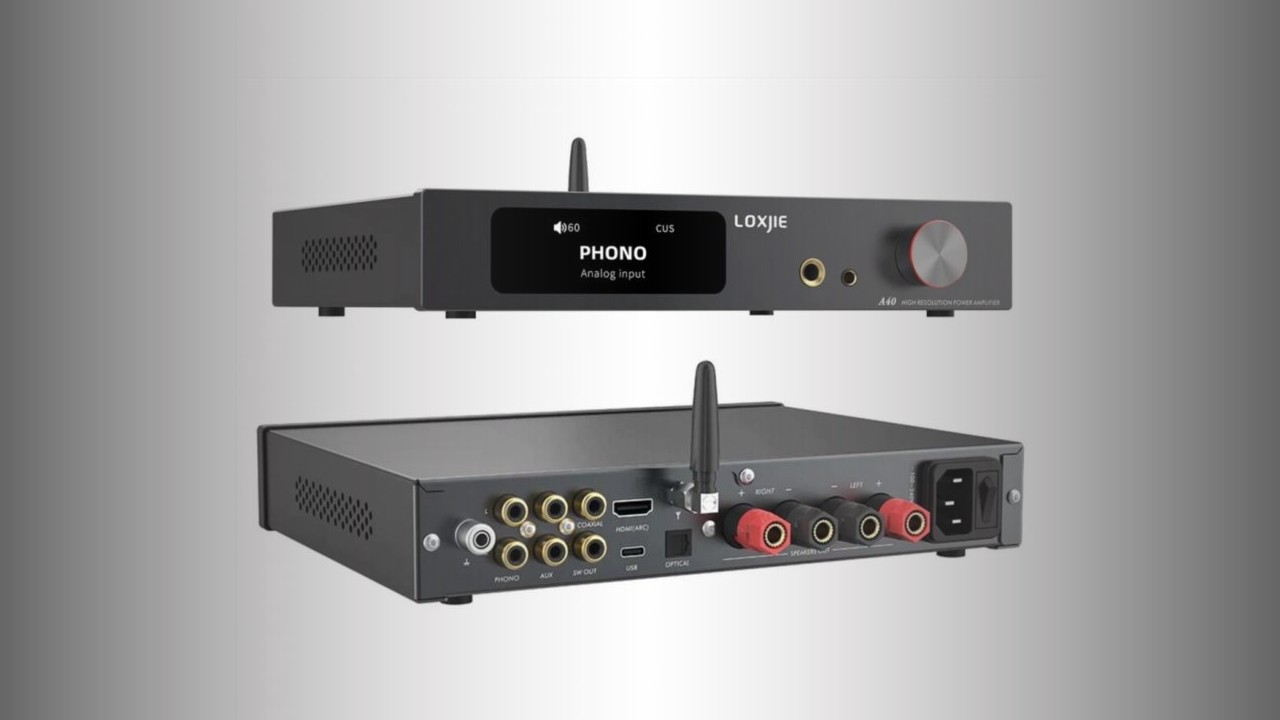
3. Loxjie A40: Powerful and versatile class D amplifier
The Loxjie A40 combines Class D speaker amplification with HDMI ARC, phono, Bluetooth, subwoofer and dual headphone connectivity.
The Loxjie A40 brings a broad range of sources into one Class D integrated amplifier.
Its stated output reaches 2 x 165 W into 4 ohms, while Bluetooth 5.1, a phono input, HDMI ARC and a subwoofer output support systems built around music, vinyl and television sound.
Headphone listeners receive both 6.35 mm and balanced 4.4 mm outputs, with independent volume settings for the headphone and speaker sections. USB conversion is handled through an XMOS XU316 interface, and the digital section supports PCM up to 32-bit/768 kHz, DSD256 and MQA according to the supplied material.
Best for: Compact music, television and headphone systems
- HDMI ARC and subwoofer output
- Built-in phono input
- Bluetooth 5.1 connectivity
- 6.35 mm and balanced 4.4 mm headphone outputs
Verdict: The A40 is a connection-rich choice for listeners who want vinyl, television, digital audio and headphones handled by one compact amplifier.
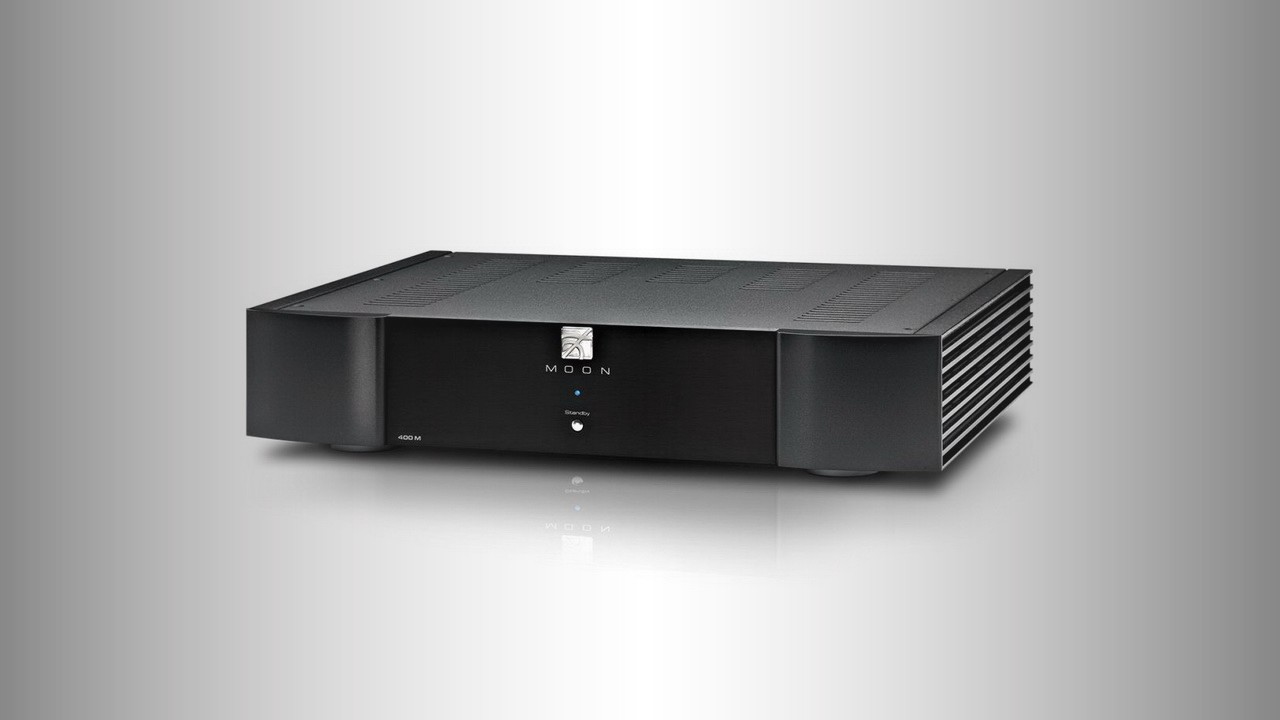
4. SimAudio Moon Neo 400M: Powerful monoblock amplifier
The SimAudio Moon Neo 400M is a single-channel power amplifier with RCA and balanced XLR input options.
The SimAudio Moon Neo 400M is a dedicated monoblock intended for systems that prioritize separate amplification for each channel.
Its internal design includes a large toroidal transformer, power-supply capacitance approaching 100,000 μF and geometry intended to control operating temperature.
Balanced XLR and unbalanced RCA inputs make it compatible with different preamplifier arrangements. As a monoblock, a stereo setup requires one unit per channel, so it is most relevant to listeners deliberately building a separates-based system.
Best for: High-output stereo systems built around monoblocks
- Dedicated monoblock configuration
- Balanced XLR and unbalanced RCA inputs
- Large toroidal power transformer
- Design addresses thermal management
Verdict: The Moon Neo 400M is a focused option for separates-based systems requiring one substantial power amplifier per speaker channel.

5. Arcam SA10: Class A/B integrated amplifier
The Arcam SA10 combines 50 W-per-channel Class A/B amplification with an ESS-based digital input section.
The Arcam SA10 is a Class A/B integrated amplifier rated at 2 x 50 W into 8 ohms.
An ESS9016K2M DAC allows digital sources to connect directly, while control options include the supplied infrared remote, IP control, the MusicLife app and RS232.
Arcam uses a toroidal transformer and separates the power circuits serving different sections, while the circuit-board layout is designed to shorten signal paths and limit crosstalk. It is a comparatively traditional stereo amplifier with useful digital and system-control facilities already onboard.
Best for: Conventional stereo systems with digital sources
- Class A/B amplification
- ESS9016K2M digital-to-analog converter
- Rated at 2 x 50 W into 8 ohms
- Remote, IP, app and RS232 control options
Verdict: The SA10 suits listeners who want a straightforward Class A/B integrated amplifier with onboard digital conversion and several control methods.
6. McIntosh MC312: A stereo amp that can handle even the most complex sound systems
The McIntosh MC312 uses output autotransformers and separate terminals for 2-, 4- and 8-ohm speaker connections.
The McIntosh MC312 is a stereo power amplifier built around a push-pull output stage using complementary pairs of high-current transistors.
Its output autotransformers provide equal stated power when connected to 2-, 4- or 8-ohm speakers through the corresponding terminals, which is useful when matching the amplifier to different nominal impedances.
Relative to the preceding MC302, revised filtering increases the stated dynamic headroom from 1.8 dB to 2.3 dB. Thermal Track monitoring is included to manage operating conditions, while the illuminated front panel follows the brand’s established visual language.
Best for: Systems with demanding or varied speaker impedances
- Dedicated terminals for 2-, 4- and 8-ohm speakers
- Output autotransformer design
- Thermal Track monitoring
- Increased dynamic headroom over the MC302
Verdict: The MC312 is distinguished by its impedance-specific output connections, substantial traditional construction and monitored thermal behavior.
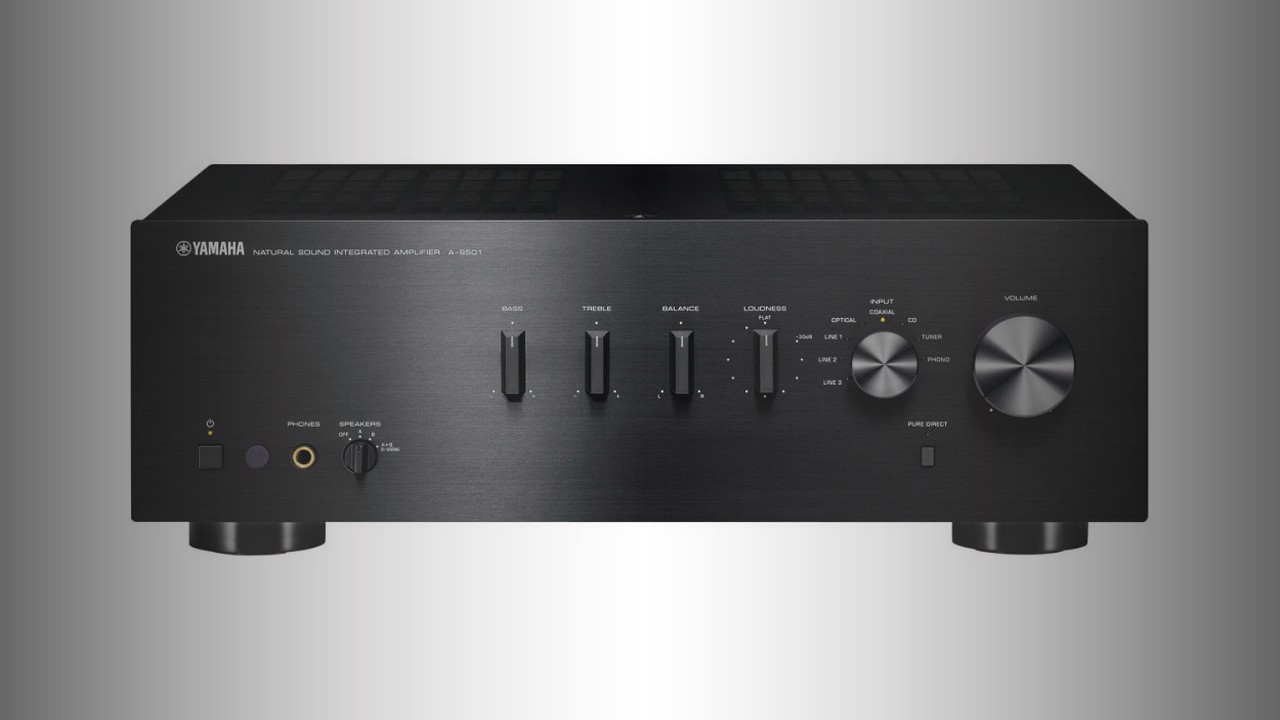
7. Yamaha A-S501: Integrated amplifier boasting a wide range of functionality
The full-size Yamaha A-S501 provides front-panel controls alongside phono, analog, optical, coaxial and subwoofer connections.
The Yamaha A-S501 is a full-size integrated amplifier with six analog inputs, including a phono connection, plus optical and coaxial digital inputs.
A subwoofer output and recording output extend its usefulness in a conventional stereo system.
Internally, Yamaha’s ToP-ART approach uses symmetrical circuit topology, while the ART chassis is intended to limit vibration and resonance. Discrete output stages, large aluminum heat sinks and a screened custom transformer complete a design aimed at listeners who value physical controls and broad source compatibility.
Best for: Source-rich, full-size stereo systems
- Six analog inputs including phono
- Optical and coaxial digital inputs
- Dedicated subwoofer output
- Discrete output-stage construction
Verdict: The A-S501 is a practical integrated amplifier for systems that combine a turntable, digital sources and an optional subwoofer.

8. Choosing the Best High-End Stereo Power Amplifier
The high-end power-amplifier guide includes the McIntosh MC462, specified to deliver equal output into 2-, 4- and 8-ohm loads.
This source is a broader collection rather than a review of one amplifier, covering eight high-end and ultra-high-end stereo power amplifiers.
One featured example is the McIntosh MC462, which uses the company’s quad-balanced circuit and is specified at 2 x 450 W across 2-, 4- or 8-ohm loads.
The source also states a signal-to-noise ratio of 122 dB and total harmonic distortion of 0.005 percent for that model. This entry is therefore most useful as a starting point for comparing heavyweight power-amplifier architectures rather than as a recommendation of a single universally suitable component.
Best for: Researching high-end stereo power amplifiers
- Compares eight stereo power amplifiers
- Covers high-end and ultra-high-end options
- Includes detailed McIntosh MC462 specifications
Verdict: This wider survey helps establish a shortlist, but each included amplifier still requires separate checks for system compatibility.

9. Dense Home Smart Audio Amplifier: Compact D-Class Integrated Amplifier with Corian Finish
Dense Home Smart Audio pairs a compact aluminum body with a Corian top panel offered in light or dark finishes.
Dense Home Smart Audio is a compact Class D integrated amplifier designed to occupy less space than an A4 sheet.
Its ESS-based DAC accepts signals through two USB-C connections, and USB-to-HDMI conversion is intended to support television use.
Bluetooth and analog RCA input are also provided, alongside balanced XLR and unbalanced RCA outputs. The amplifier is rated at 35 W per stereo channel or 70 W in bridged mode, with StereoConnect allowing two units to form a higher-power stereo arrangement. It can also serve as a headphone amplifier, while the aluminum enclosure is topped with Corian in Limestone White or Rock Black.
Best for: Space-conscious desktop or television systems
- Smaller footprint than an A4 sheet
- Stereo or 70 W bridged operation
- Bluetooth, USB-C and analog RCA input
- Headphone-amplifier functionality
Verdict: Dense Home Smart Audio offers an unusually compact combination of speaker, headphone, digital and bridged-amplifier functions.
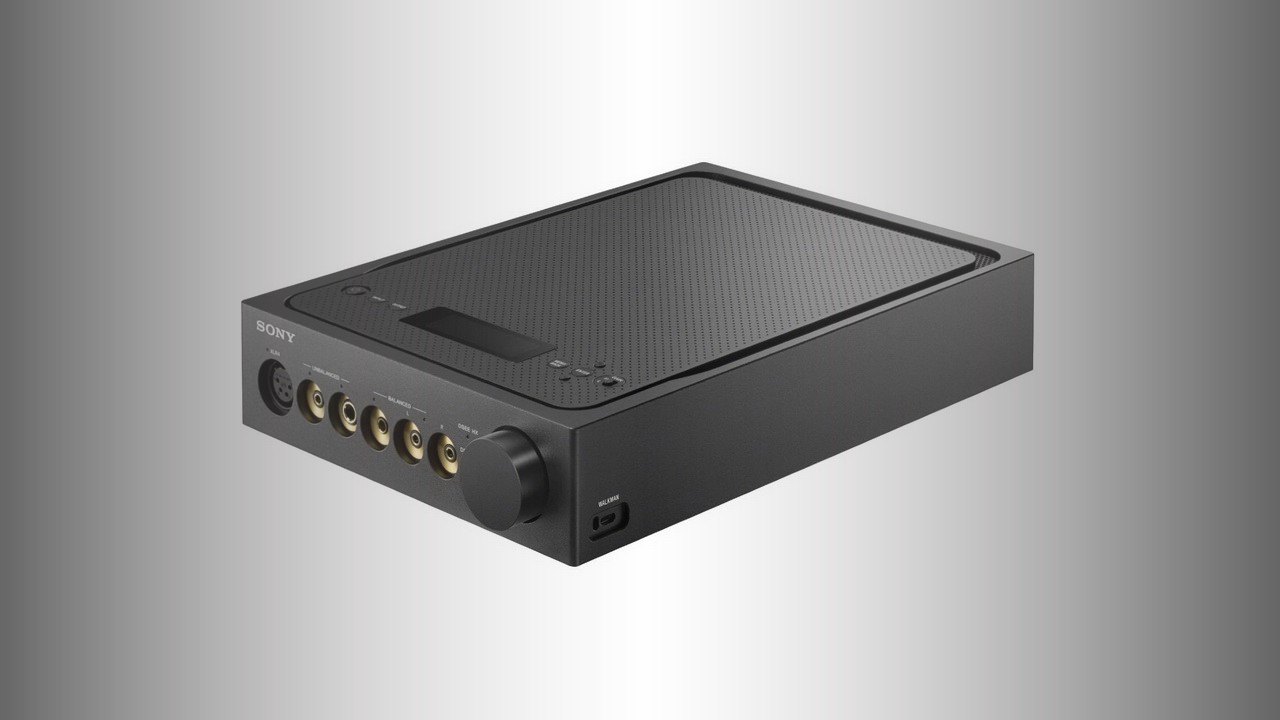
10. Sony TA-ZH1ES: Compact headphone amplifier
The Sony TA-ZH1ES uses a thick aluminum chassis, layered metal base and restrained Signature Series styling.
The Sony TA-ZH1ES is a compact headphone amplifier from the Signature Series, housed in a heavily constructed metal chassis.
Thick aluminum is used to damp vibration, while a double-layer metal base lowers the center of gravity and improves stability.
The steel-and-aluminum cover is also designed to limit resonance. Controls are divided between the top panel and a large front-mounted volume knob, leaving the front and rear areas available for the model’s numerous inputs and outputs. It is a specialized choice for listeners whose primary system is built around headphones rather than passive loudspeakers.
Best for: Dedicated high-end headphone systems
- Compact headphone-focused format
- Thick aluminum vibration-damping chassis
- Double-layer metal base
- Numerous input and output connections
Verdict: The TA-ZH1ES prioritizes extensive connectivity and substantial mechanical construction in a compact headphone-amplifier format.
Frequently asked questions
Should I choose an integrated amplifier or a power amplifier?
Choose an integrated amplifier when you want source selection and volume control in the same component.
A power amplifier such as the Gato DPA-4004, Moon Neo 400M, McIntosh MC312 or models in the high-end survey requires a suitable preamplifier or another source with controlled output.
How should amplifier power be matched to speakers?
Check the speaker manufacturer’s recommended amplification range, nominal impedance and minimum impedance, then compare those requirements with the amplifier’s ratings.
Power alone does not establish compatibility; the amplifier must also remain suitable for the speaker’s electrical load.
Which connections should I prioritize?
Start with the sources you already use.
A turntable may require a phono input, a television can benefit from HDMI ARC, digital sources need compatible optical, coaxial or USB inputs, and a 2.1 system requires a subwoofer output.
Balanced XLR connections are relevant only when the partnering equipment supports them.
When is a multichannel or bridgeable amplifier useful?
Multiple channels can support surround systems or bi-amping, while bridging can combine channels when the amplifier and speaker load permit it.
The Gato DPA-4004 allows each channel pair to be bridged, and Dense Home Smart Audio can operate in a 70 W bridged configuration.
How to choose the right amplifier
Begin with system architecture rather than headline power.
If you need one component to manage sources and speakers, an integrated model such as the Arcam SA10, Yamaha A-S501, Loxjie A40 or Heed Obelisk will usually be the more direct route.
The Loxjie is especially connection-rich for television, vinyl, subwoofer and headphone use, while the Yamaha provides a broad mix of conventional analog and digital inputs. The Arcam follows a more traditional Class A/B path with onboard digital conversion, and the Heed range introduces modularity within a full-width format. Dedicated power amplifiers make sense when a preamplifier is already in place or when the system demands a specific channel arrangement. The four-channel Gato is particularly adaptable for multichannel use and bi-amping, whereas the Moon Neo 400M takes the single-channel monoblock approach. McIntosh’s MC312 addresses different nominal speaker impedances through dedicated output terminals, and the separate high-end survey can help identify further candidates for a more ambitious separates system. Space and listening format also matter. Dense Home Smart Audio offers speaker and headphone functions in a very small enclosure, while the Sony TA-ZH1ES is the specialist option for a headphone-centered setup. Whichever route you take, verify speaker compatibility, required connections, physical dimensions, ventilation needs and whether volume control is included. Those checks are more useful than choosing solely by power rating, amplifier class or the length of the feature list.