

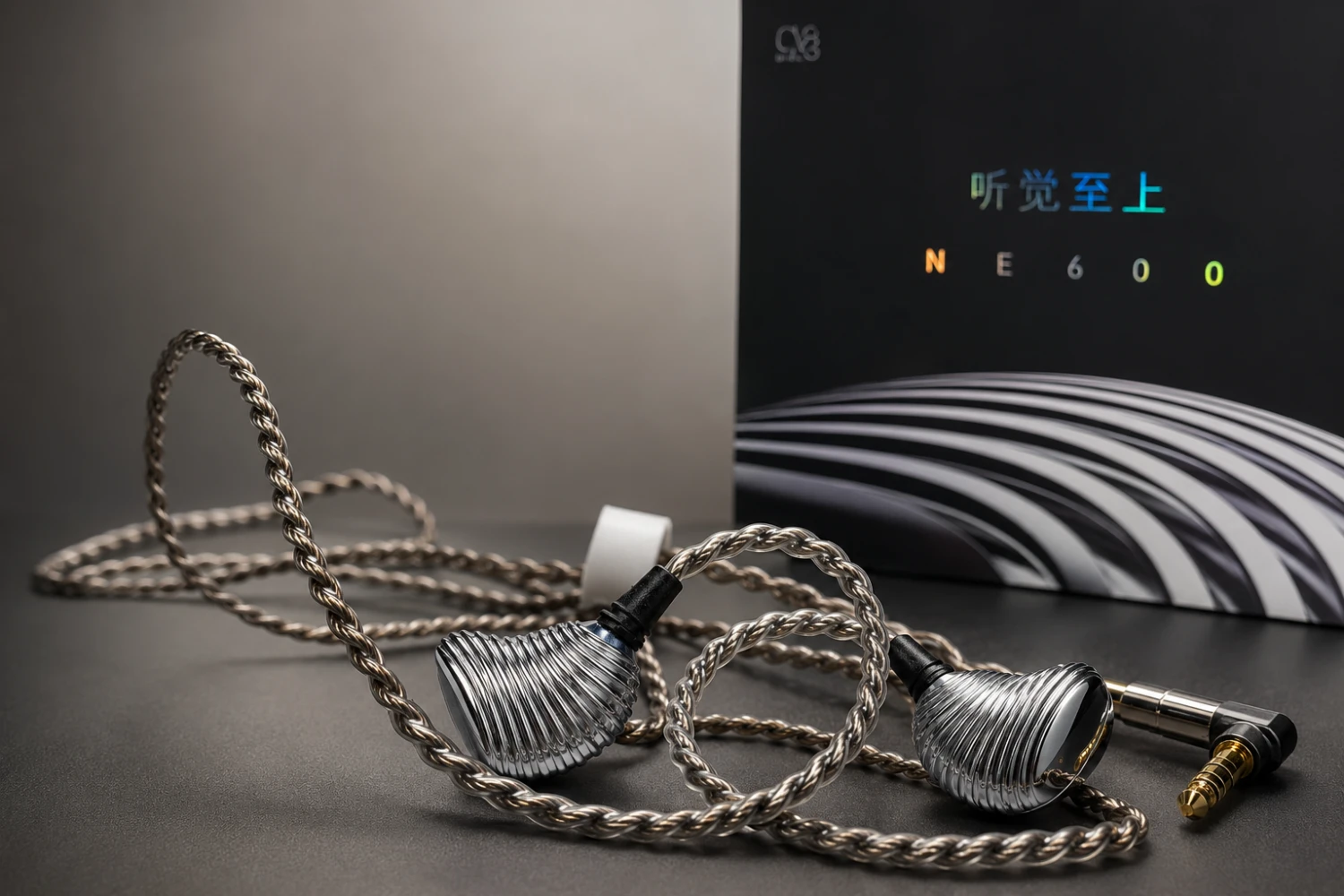
The Shanling ME600 is positioned as a customizable wired in-ear monitor for listeners who want more control over fit, connection type and tonal direction than a basic IEM usually provides. This editorial assessment is based on the documented design, specifications and supplied feature set rather than a hands-on listening test by Stereoindex.
Design & Build Quality
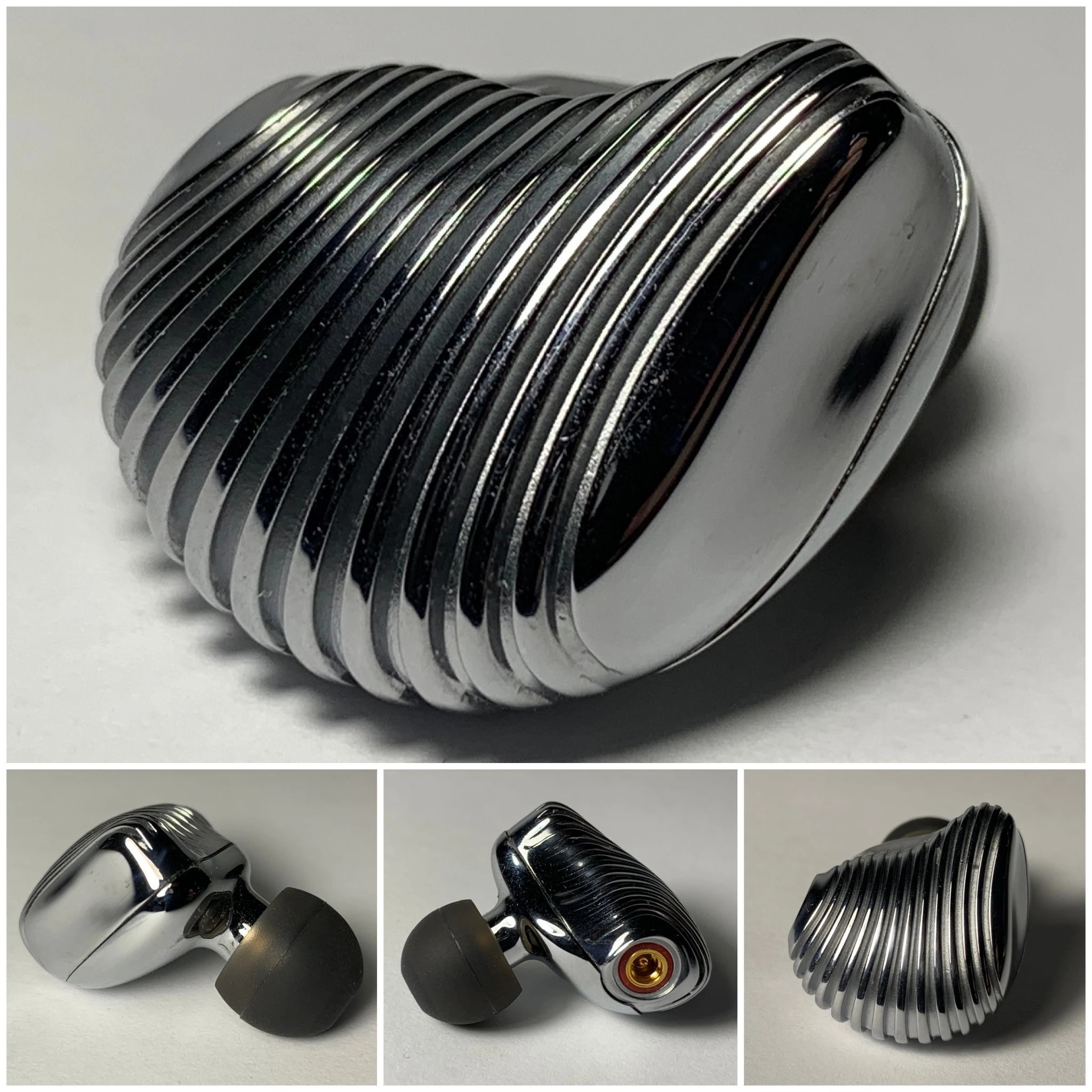
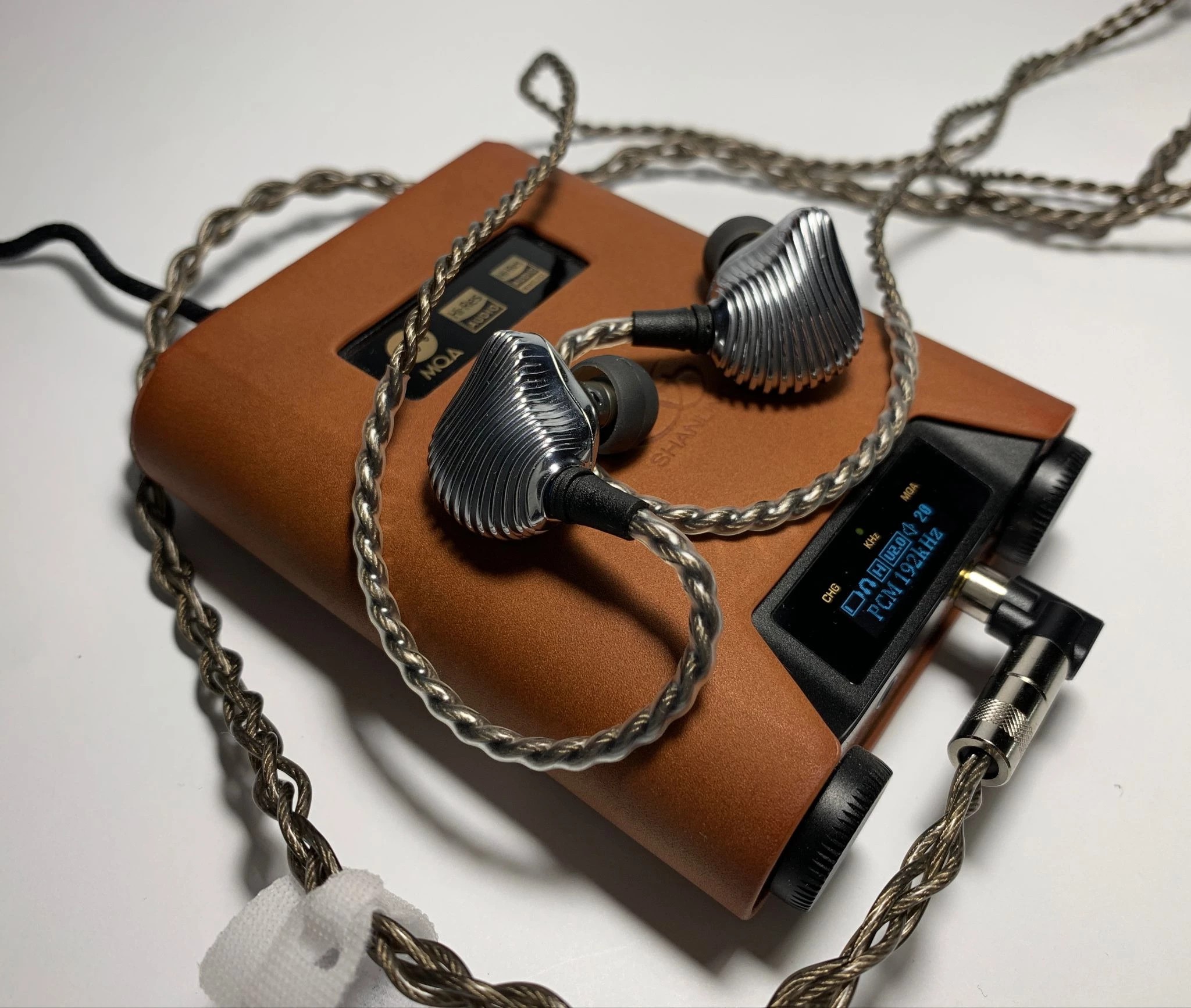
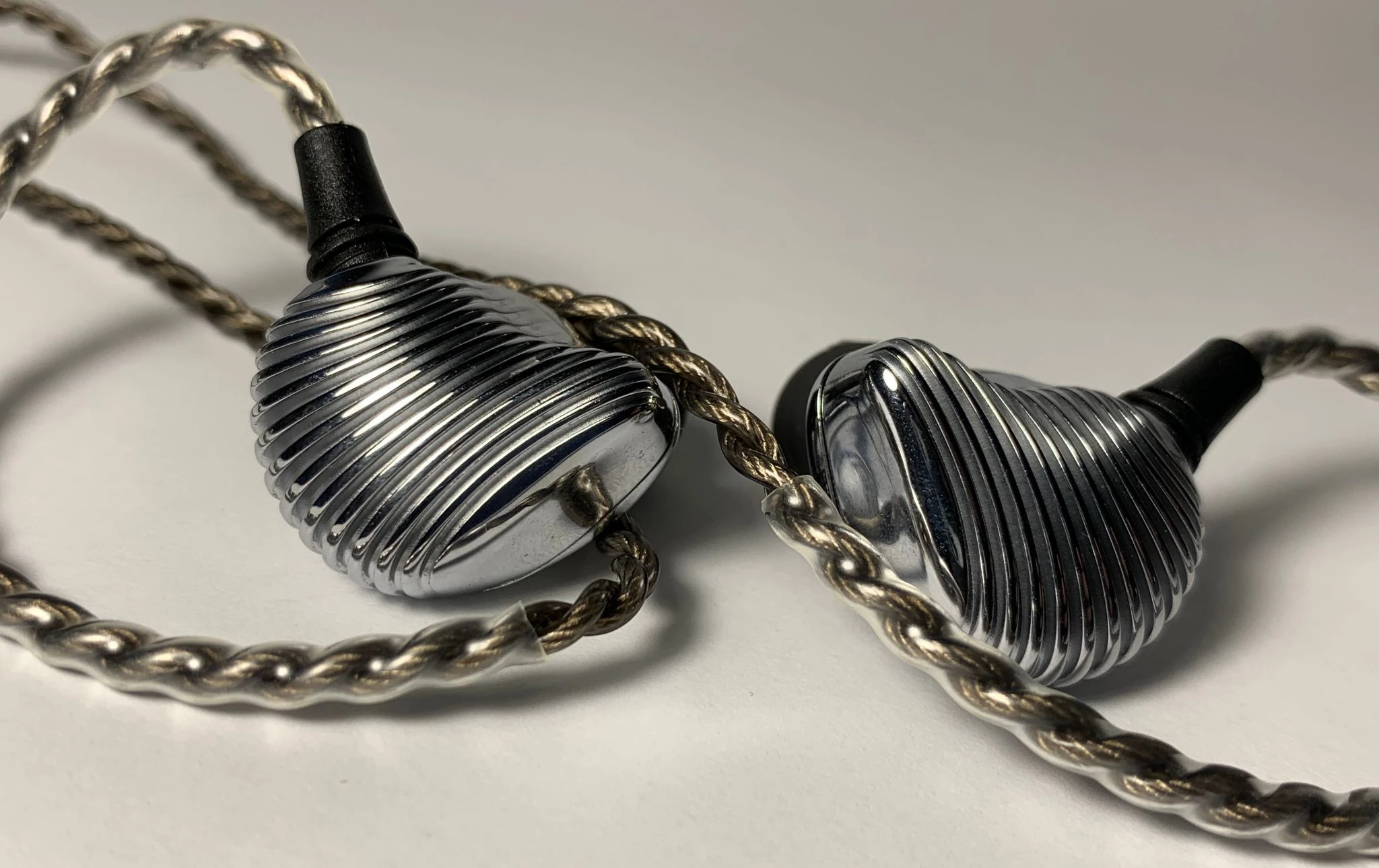
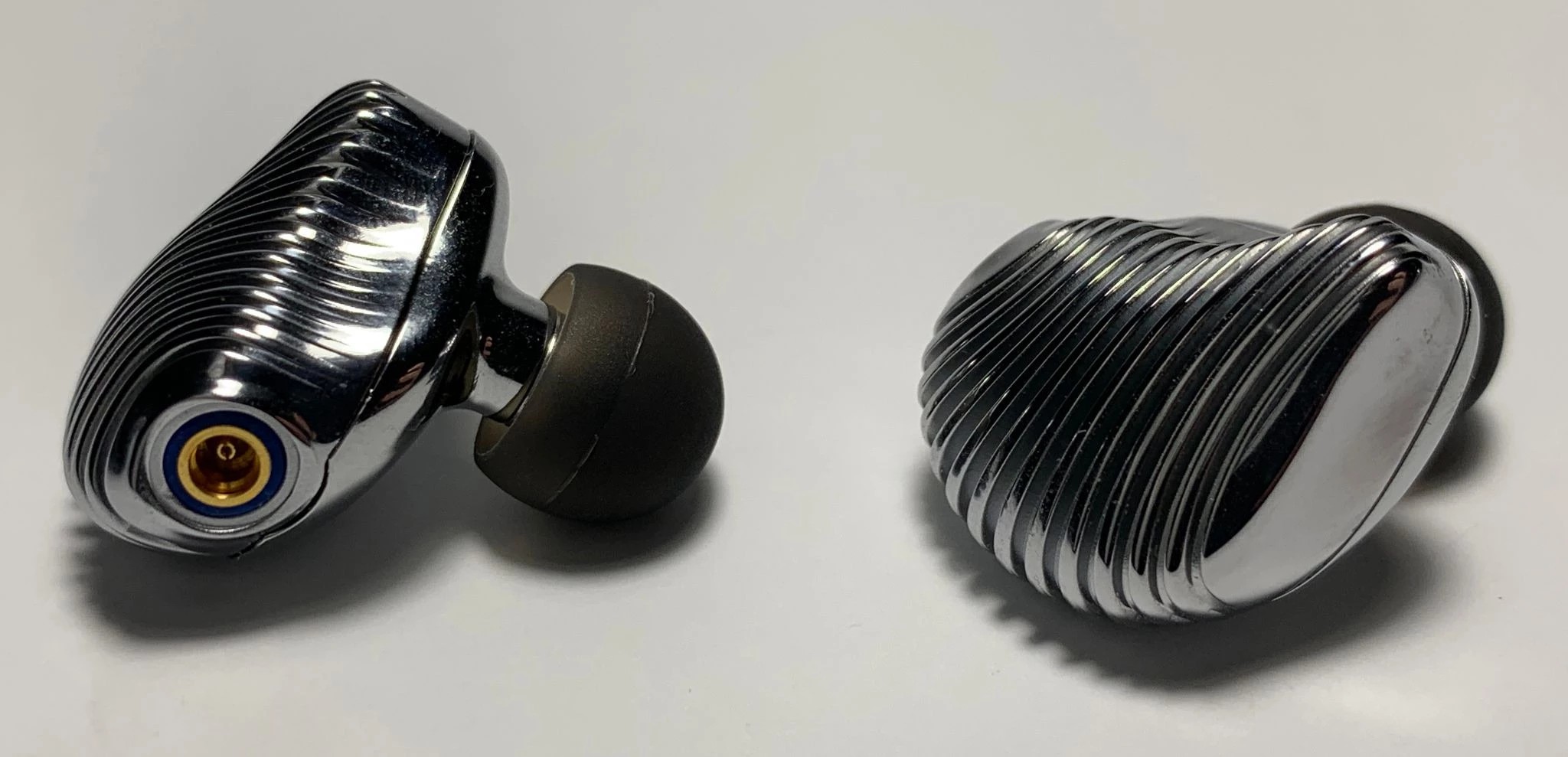
The ME600 uses a hybrid metal housing with 6XXX-series anodized aluminum faceplates and a stainless-steel inner shell. The faceplate design is highly distinctive, with a ribbed, shell-like relief that gives the earpieces a recognizable visual identity. Two finishes are documented: a silver version and a more restrained black version, the latter using a matte black faceplate while retaining the silver-toned inner shell.
At 12.5 grams per earpiece, the ME600 is not among the lightest wired IEMs. That weight is a direct consequence of the metal construction, and buyers who prioritize barely-there shells should take note. The shells are described as slightly larger than average, though with moderate thickness, which should help prevent them from protruding excessively during normal wear.
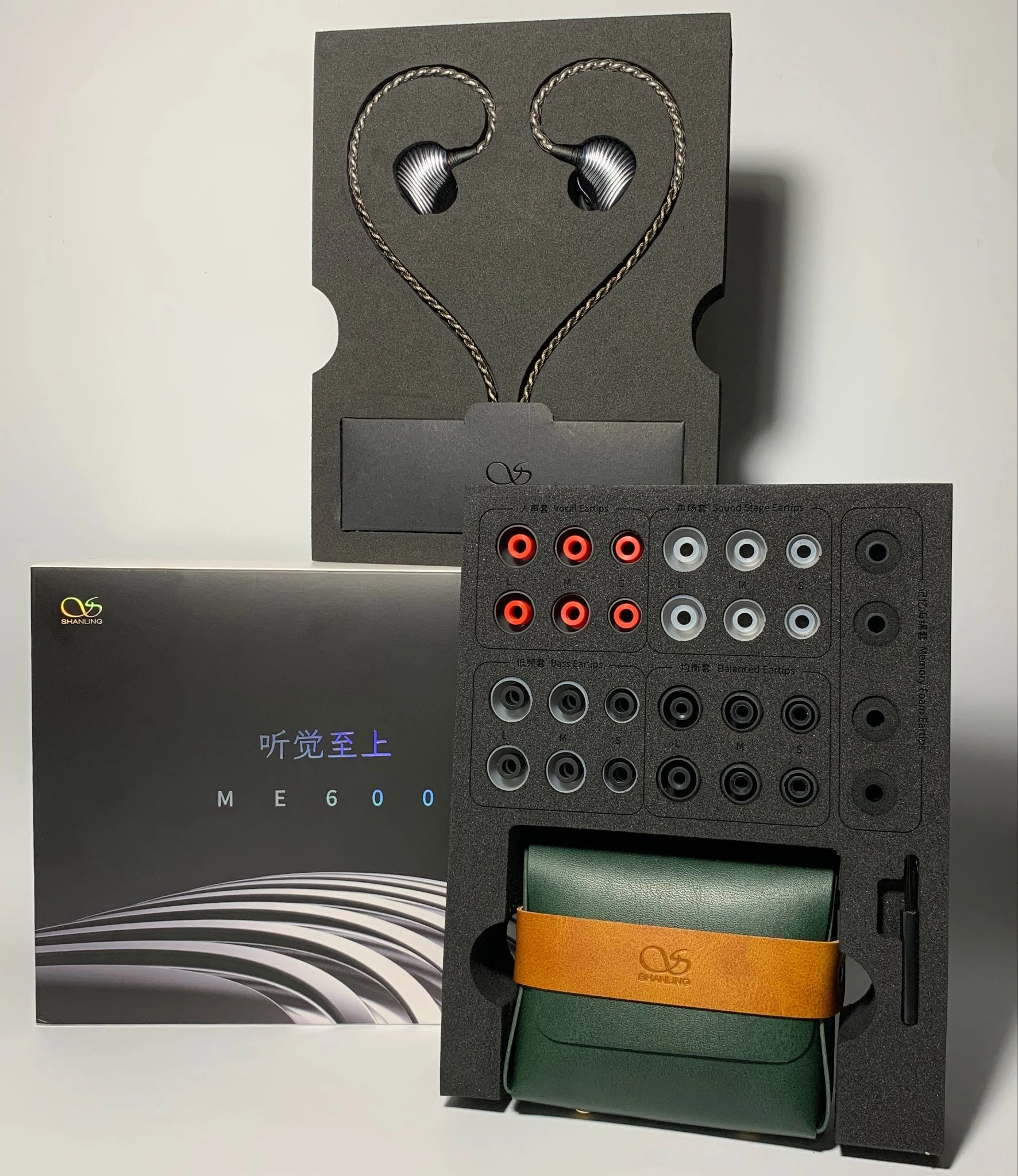
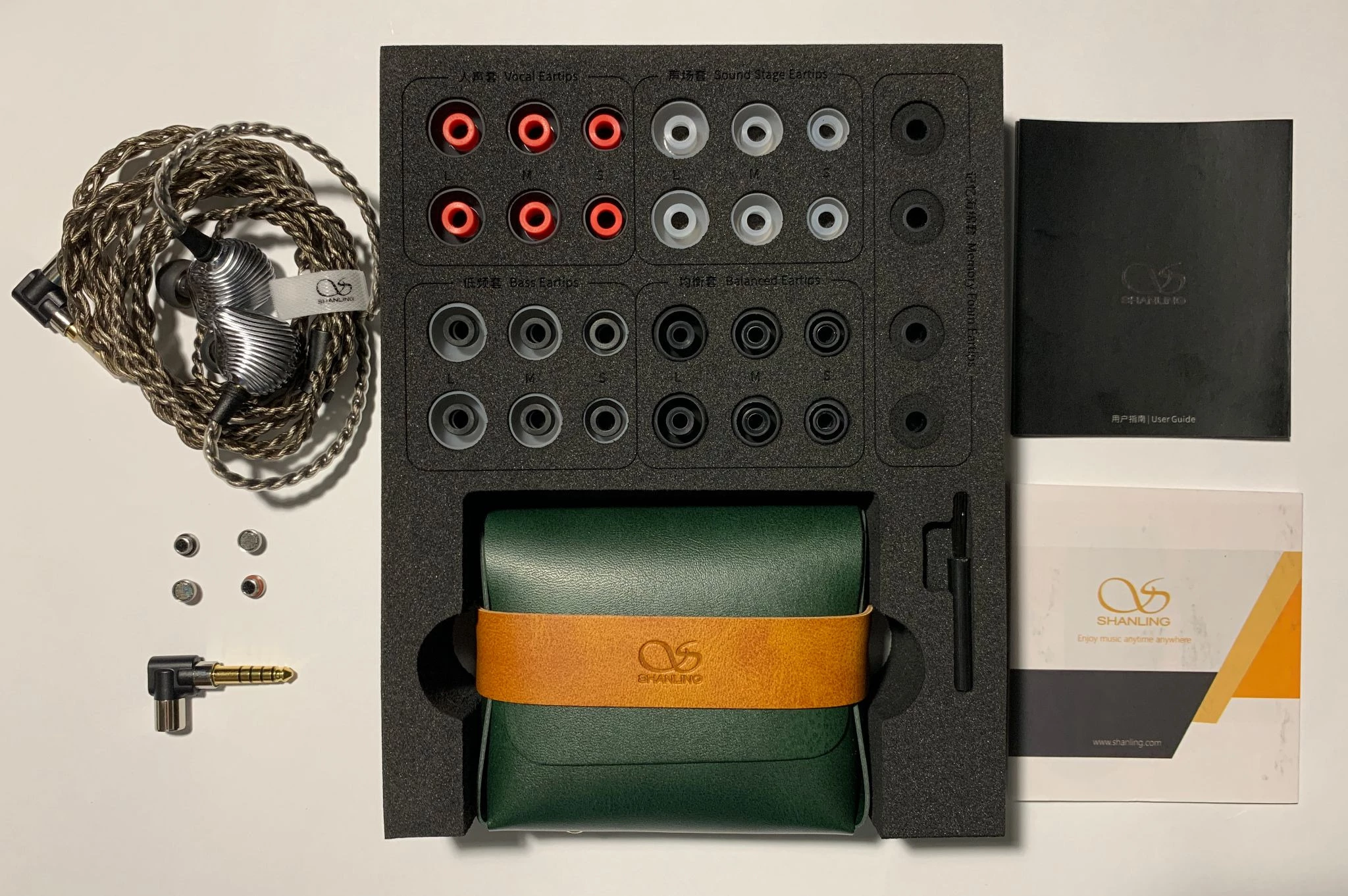
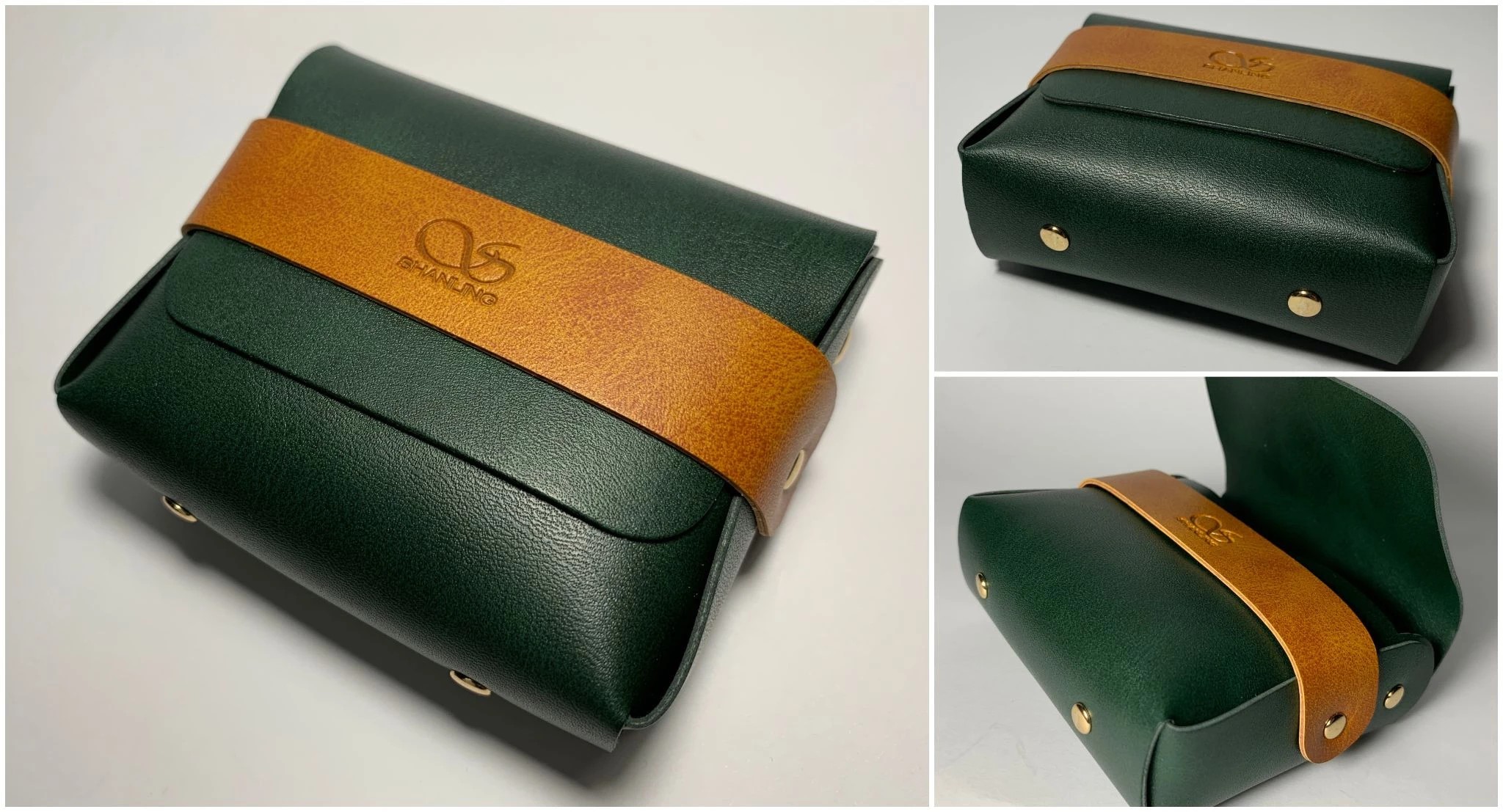
The package also includes a leather transport case, an accessory that strengthens the premium impression of the overall presentation. Shanling’s attention to the accessory ecosystem is a major part of the ME600 proposition: this is not just a pair of earphones and a cable, but a complete fit-and-tuning kit.
Driver Architecture & Acoustic Engineering
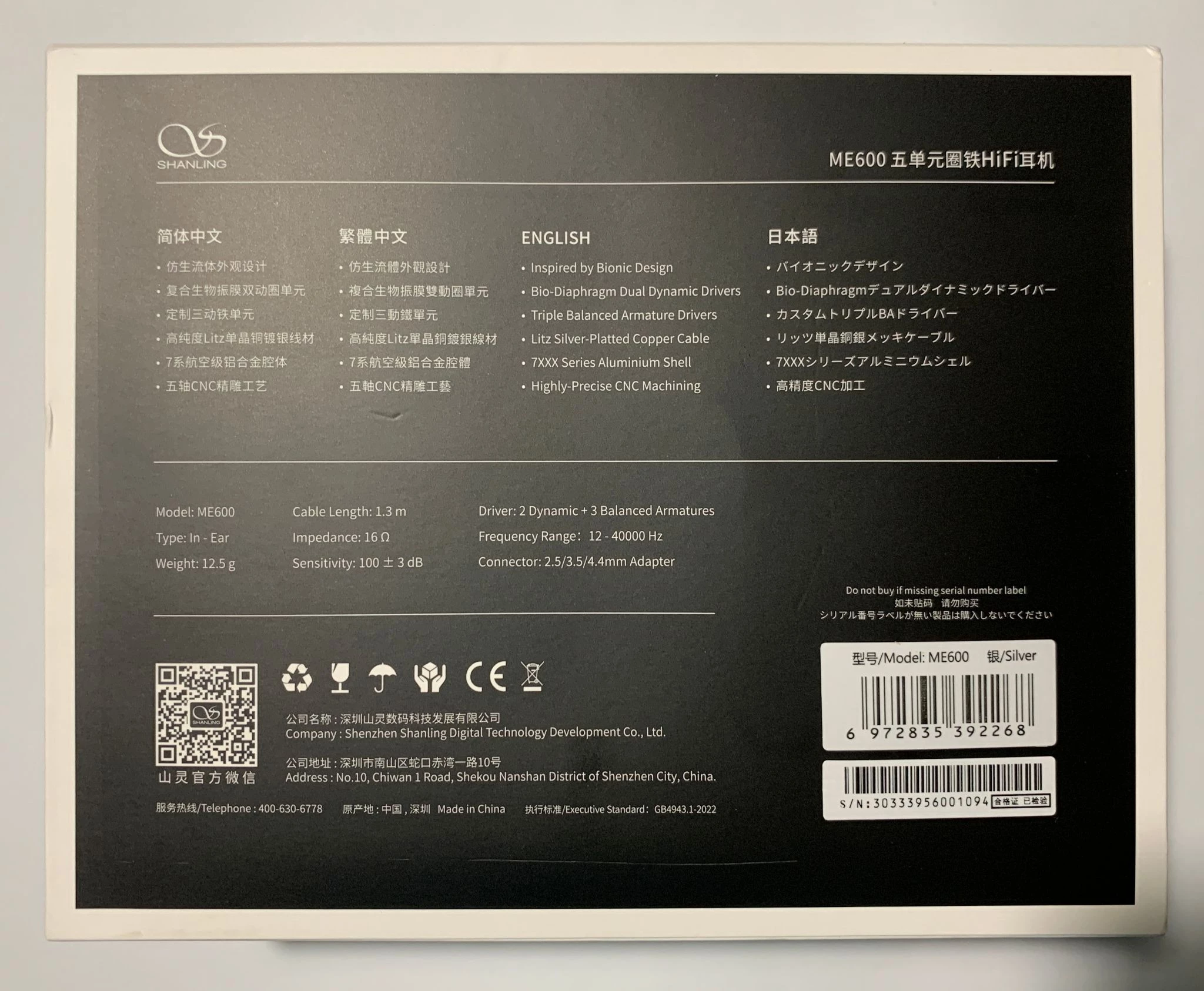
Each Shanling ME600 earpiece uses a five-driver hybrid configuration: two 6mm dynamic drivers and three custom balanced-armature drivers. The documented driver allocation places the dynamic drivers on low-frequency duties, with two balanced armatures assigned to the midrange and one balanced armature for high frequencies.
The acoustic system includes bio-diaphragms, N48 neodymium magnets, copper voice coils and dual Helmholtz resonators intended to support deeper and more controlled bass behavior. Shanling also specifies a tubeless internal design and a PCB crossover, the latter intended to manage filtering and phase alignment between the driver groups.
Key specifications include 16-ohm impedance, 100 dB sensitivity and a stated frequency range of 12 Hz to 40 kHz. The ME600 also carries Japan Audio Society Hi-Res Audio certification. As always, such figures should be treated as engineering context rather than a substitute for independent measurement, but they do indicate an IEM designed for easy portable drive and extended claimed bandwidth.
Tuning System & Ear Tip Selection
Customization is central to the ME600. Shanling supplies three interchangeable sound nozzles, identified by color-coded seals. The red “Full Sound” nozzle is described as emphasizing bass with softer treble; the white “Clear” nozzle is intended for increased clarity and a more energetic presentation; and the black “Balanced” nozzle is specified as the neutral, all-round profile.
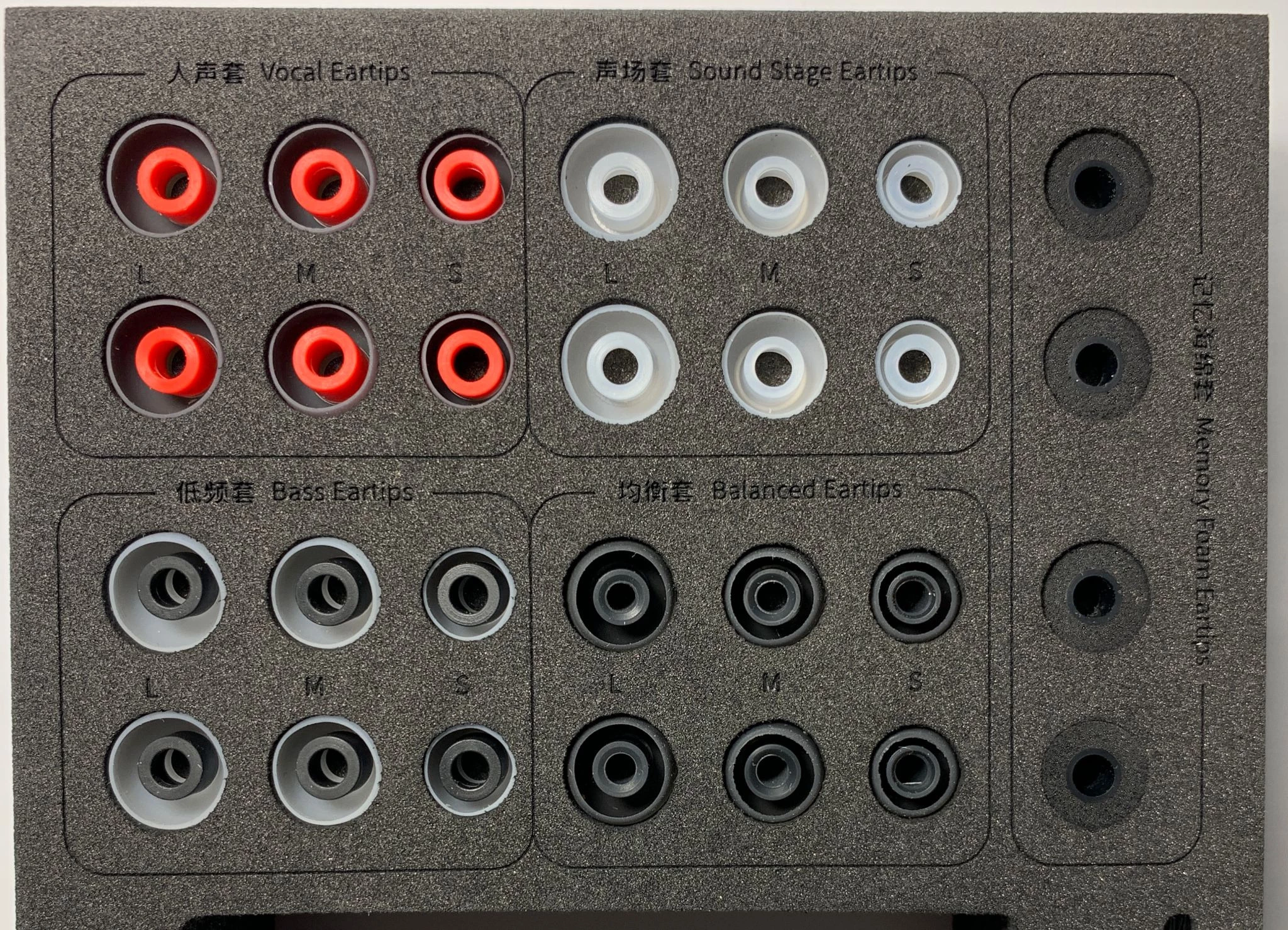
The ear-tip selection is unusually broad. The package includes multiple silicone tip types in small, medium and large sizes, plus foam tips. The documented silicone options are intended for different tonal and fit effects, including vocal focus, expanded spatial presentation, bass emphasis and balanced frequency behavior. Foam tips are included for users who prefer a more adaptive seal and stronger passive isolation.
This level of included tuning hardware makes the ME600 especially relevant for enthusiasts who understand that IEM performance depends heavily on seal, insertion depth and nozzle/tip interaction. It also means the final result may vary substantially from one user to another, which is both a strength and a complication.
Cable, Connectivity & Usability
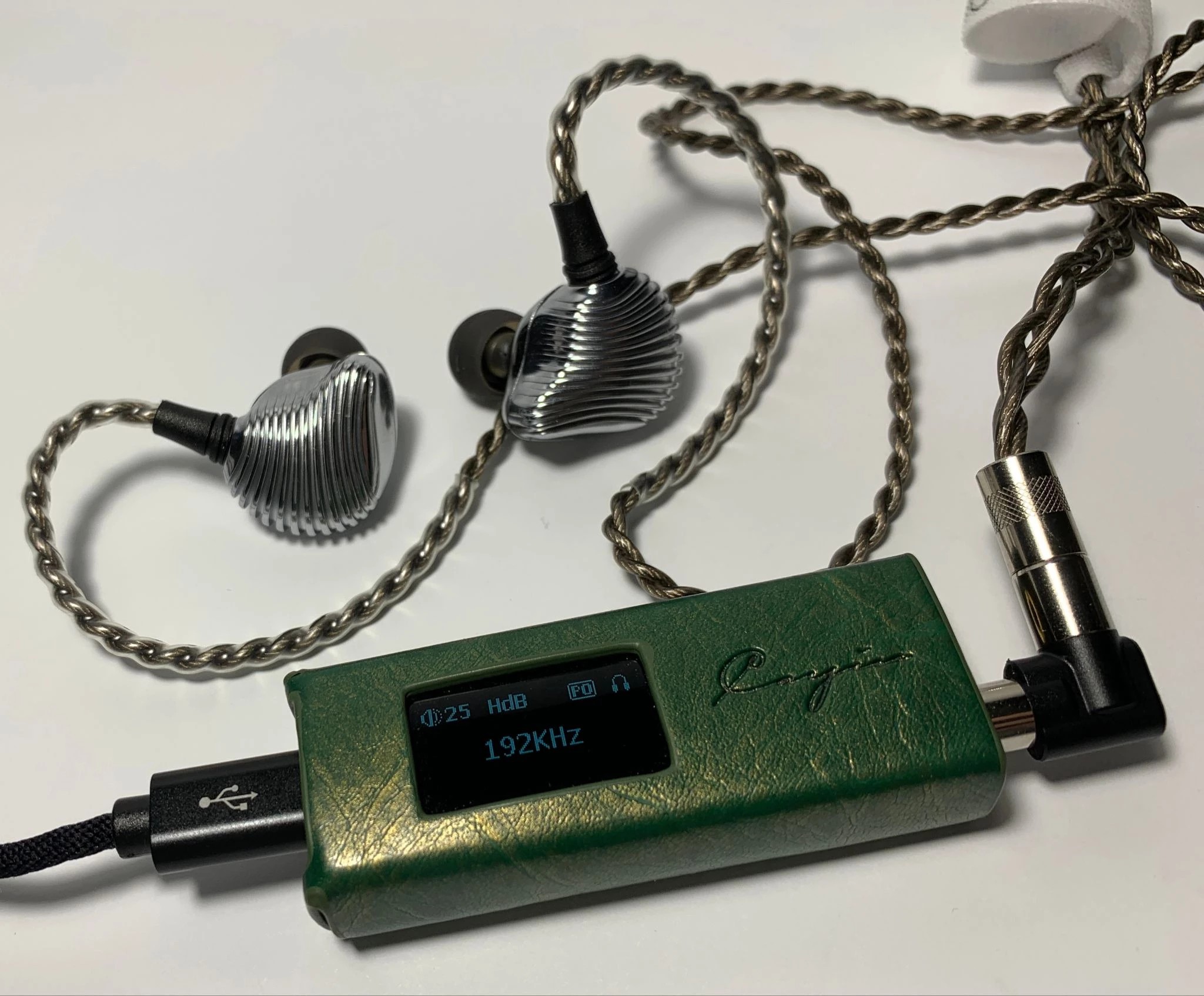
The supplied cable is a four-core silver-plated copper design with MMCX connectors at the earpiece end. Its modular termination system includes both 3.5mm single-ended and 4.4mm balanced plugs, using angled plug housings. This is a practical inclusion because it allows the ME600 to work with common portable players, dongle DACs and headphone outputs without requiring a separate cable purchase.
The cable is specified at 1.3 meters and uses a braided construction. Metal hardware is used for the splitter and adjustment ring. The use of MMCX connectors gives the ME600 cable-replacement flexibility, though MMCX is generally less convenient for frequent swapping than a simple plug-and-pull user experience might suggest. It is best viewed as a serviceability and upgrade path rather than an invitation to detach the cable constantly.
The accessory set also includes a cleaning brush for the nozzles, user documentation, warranty material and the transport case. The only obvious omission in such a generous package is a second complete cable, although the modular plug system already covers the two most important wired output standards.
Performance Potential
Without claiming listening impressions, the ME600’s engineering points toward a design aimed at adaptable full-range performance from portable sources. The low 16-ohm impedance and 100 dB sensitivity suggest that it should not require a powerful desktop amplifier to reach usable levels, while the 4.4mm balanced plug option makes it compatible with many modern portable audio players and DAC/amps.
The dual-dynamic-driver bass section, dual Helmholtz resonators and separate balanced-armature mid/high drivers indicate a product built to combine dynamic-driver low-frequency behavior with the speed and packaging advantages commonly associated with armature drivers. The PCB crossover and tubeless acoustic layout are important because multi-driver IEMs depend heavily on integration; poor alignment can undermine coherence, while careful filtering can help the system behave as a more unified whole.
The ME600’s performance identity is also deliberately user-adjustable. Rather than offering a single fixed voicing, Shanling provides three nozzle profiles and a large tip set. That makes the earphone more versatile on paper, but it also asks the owner to experiment. The ideal buyer is likely someone who enjoys refining fit and tuning rather than expecting a single locked-in setup out of the box.
Value for Money
At about $300, the Shanling ME600 sits in a competitive enthusiast segment, but its bill of materials and included accessories are strong on paper. The five-driver-per-side architecture, metal housings, modular cable, three nozzle profiles, extensive ear-tip selection and leather case together create a convincing package for the asking price.
The value argument is strongest for users who will actually use the customization options. If the buyer wants only a simple fixed-tuning IEM, some of the ME600’s appeal may be unnecessary. But for hobbyists who own sources with both 3.5mm and 4.4mm outputs, and who like adjusting tips and nozzles to suit preference, the ME600 offers a well-rounded specification set without requiring immediate add-on purchases.
Pros
- Five-driver hybrid design with 2 dynamic drivers and 3 balanced armatures per earpiece
- Three interchangeable tuning nozzles for Full Sound, Clear and Balanced profiles
- Generous ear-tip selection including multiple silicone types and foam tips
- Modular cable includes both 3.5mm and 4.4mm terminations
- Metal housing construction and leather transport case support a premium package
Cons
- 12.5 grams per earpiece makes it relatively heavy for an IEM
- MMCX connectors are not ideal for frequent cable swapping
- No spare second cable is included
- Customization options may feel excessive for users wanting a simple fixed setup
Verdict
The Shanling ME600 is a thoughtfully specified hybrid IEM for enthusiasts who value tuning flexibility, broad accessories and portable-source compatibility over minimalist simplicity.
Conclusion
The Shanling ME600 makes its case through engineering ambition and unusually deep customization. Its five-driver hybrid layout, metal construction, modular 3.5mm/4.4mm cable and three sound-nozzle profiles give it a feature set that looks strong at about $300. The extensive ear-tip package is not filler; it is central to the product’s purpose, allowing owners to adjust seal, comfort and tonal direction within the limits of the supplied hardware. The main reservations are practical rather than conceptual. The earpieces are relatively heavy, MMCX is not the most convenient connector format for constant swapping, and listeners who dislike trial-and-error setup may not benefit from the ME600’s flexibility. For the right buyer, however, those trade-offs are reasonable. This is best suited to a wired IEM enthusiast with a capable portable source, an interest in fit optimization and a desire to shape the final presentation without buying aftermarket accessories immediately. On the documented facts, the ME600 earns a clear recommendation as a feature-rich, tuning-oriented in-ear monitor rather than a plug-and-forget lifestyle earphone.

Join the discussion
Share your thoughts, listening impressions or product experience.