Buying my first integrated amplifier changed the way I look at loudspeakers. Until then, my reviews had almost exclusively revolved around active bookshelf models—compact, practical, and easy to live with. Passive speakers, while familiar in theory, had never truly entered my everyday listening space. Not because I doubted their potential, but because passive systems demand more: a suitable amplifier, careful matching, and an understanding of how each component shapes the final sound.
After spending over a month living with an amplifier and rediscovering my own speakers, it became clear that the passive market is not only deeper than expected—but also full of genuinely exciting options. The first to land in my listening room were the Q Acoustics Q 5020, a pair of British bookshelf speakers that sit right in the sweet spot between entry-level models and far more expensive high-end designs.
Positioned Between Affordable and Aspirational
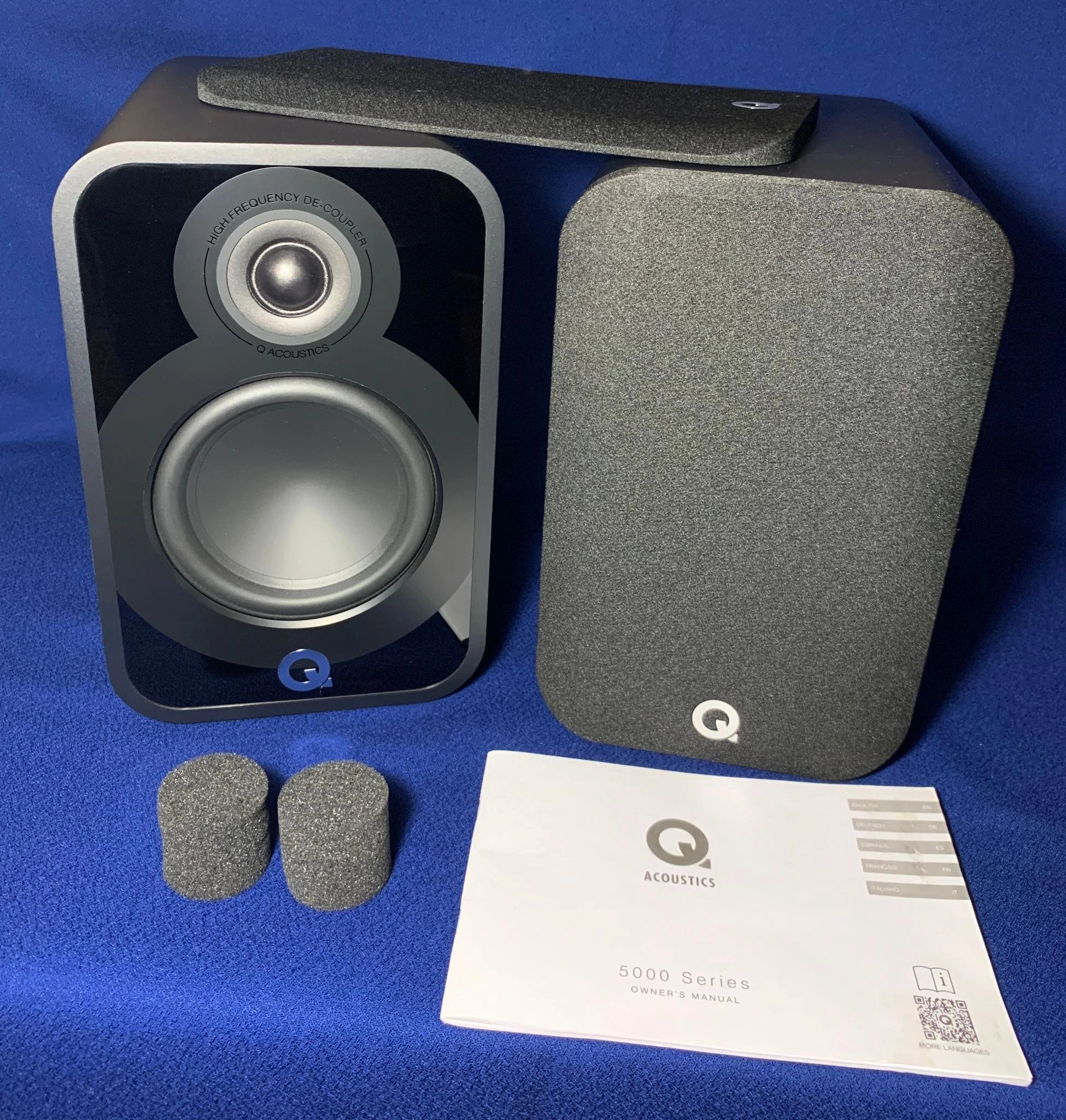
The Q 5020 is not a “small” bookshelf speaker in the traditional sense. It occupies a deliberate middle ground in Q Acoustics’ lineup—larger and more ambitious than the brand’s compact offerings, yet far more accessible than its statement models pushing well beyond the €5,000 mark.
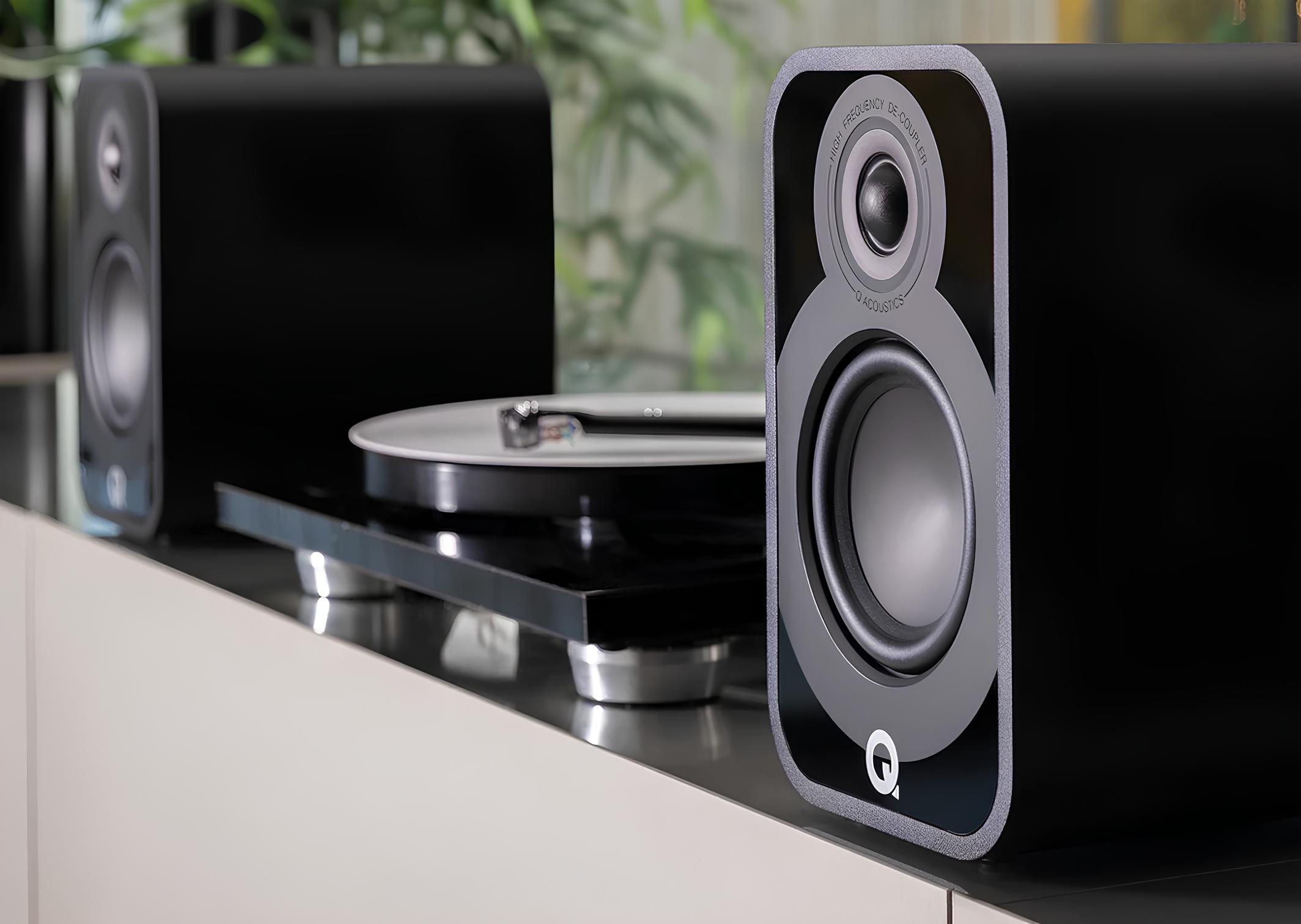
Visually, the Q 5020 is unmistakably Q Acoustics. Deep cabinets, softly rounded edges, and a design language that prioritizes both acoustics and aesthetics define the brand’s identity—and the 5020 fits that mold perfectly.
Unboxing and First Impressions
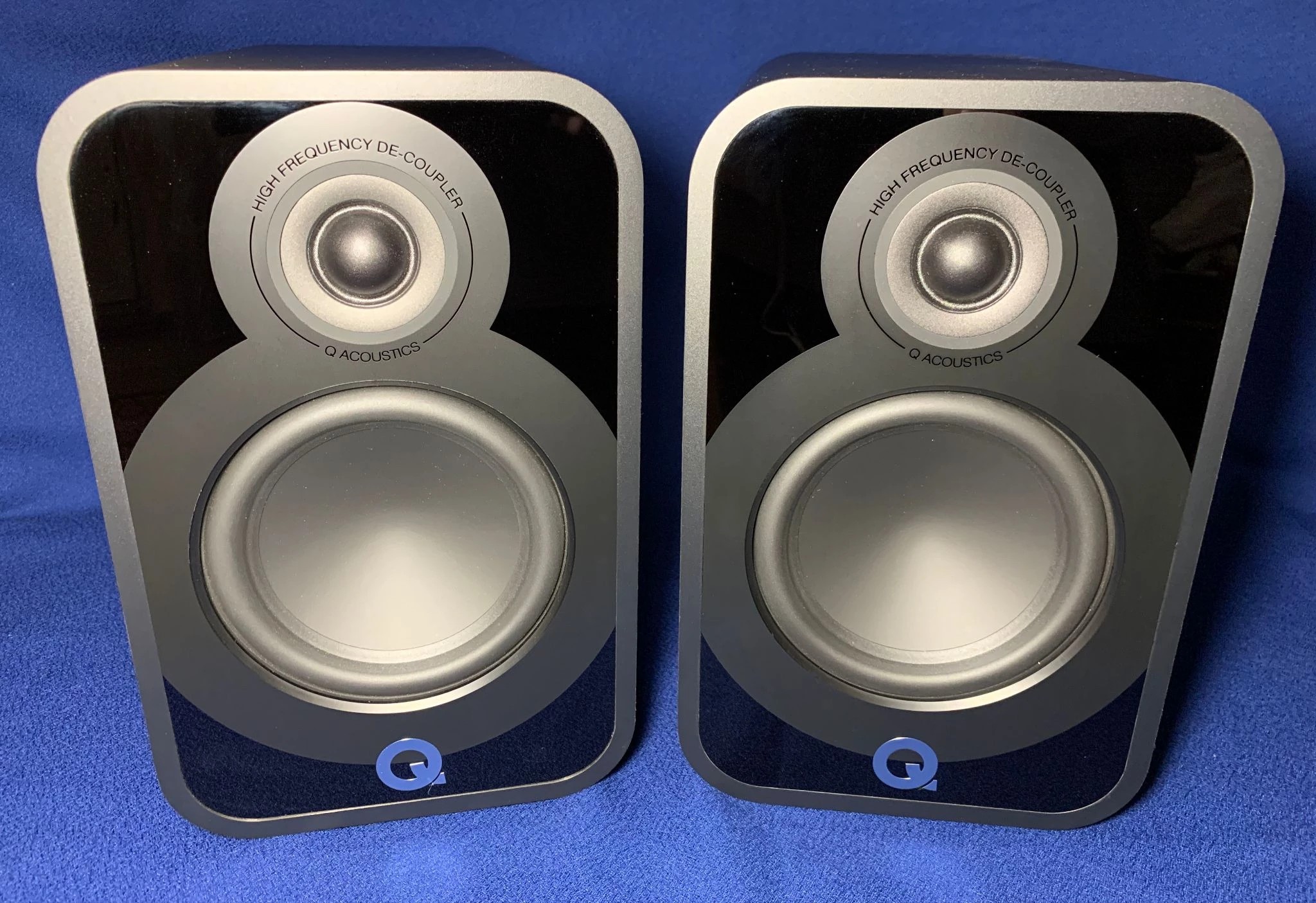
The speakers arrive in a large, sturdy cardboard box weighing around 16–17 kg. Inside, protection is excellent: rigid internal cardboard supports and layered foam wrapping ensure the speakers are well shielded during transport.
The packaging is minimalistic and tasteful, featuring only the Q Acoustics logo, a line drawing of the speakers, and a discreet British flag—an understated nod to the brand’s heritage. Assembly takes place in China, which is hardly surprising at this price point.
In the box you’ll find:
-
A pair of Q Acoustics Q 5020 speakers
-
Pre-mounted fabric grilles
-
Foam bass-reflex plugs
-
User manual
That’s it. No extras, no fluff. A cleaning cloth would have been welcome, as the matte surfaces and glossy front panel do tend to attract fingerprints during setup.
Technical Overview
Dimensions & Weight
-
Weight: 7 kg per speaker
-
Size: 284 × 180 × 293 mm
Acoustic Design
-
Configuration: 2-way bass reflex
-
Mid/bass driver: 125 mm (5″)
-
Tweeter: 25 mm (1″) silk dome
-
Frequency response: 53 Hz – 30 kHz
-
Sensitivity: 87.9 dB (2.83 V @ 1 kHz)
-
Nominal impedance: 6 ohms (min. 3.3 ohms)
-
Recommended amplifier power: 25–100 W
-
Crossover: 2.5 kHz
Design
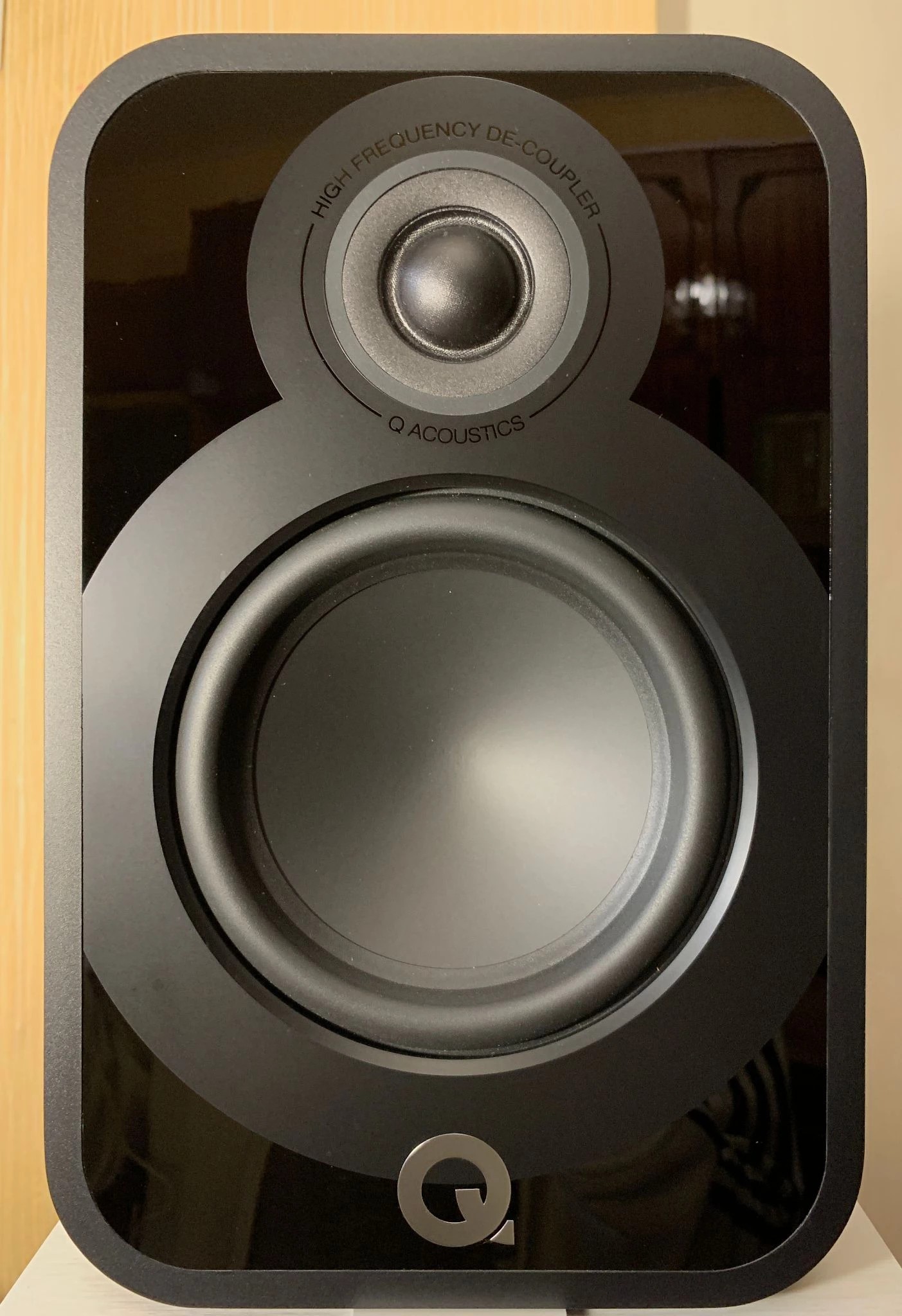
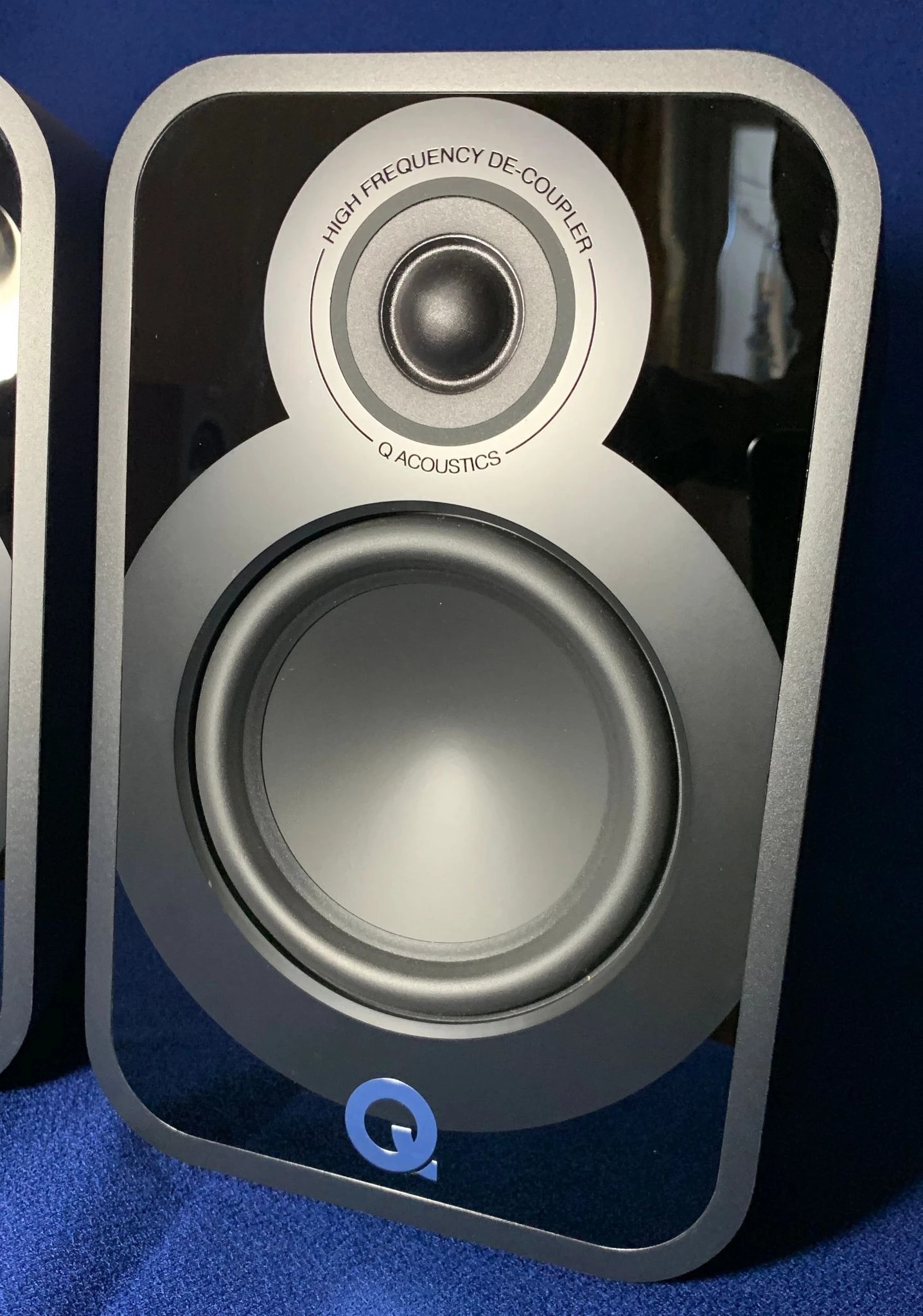
At first glance, the Q 5020 looks clean and modern—but spend a little time with it, and the design reveals a deeper level of thought. The front baffle combines a matte finish with a glossy black acrylic surface layered over butyl rubber. This isn’t just visual flair: the construction actively damps unwanted vibrations and contributes directly to sound clarity.
Yes, the glossy surface attracts fingerprints—but one quick wipe restores its pristine look. The discreet logo at the bottom completes a design that feels far more premium than the price suggests.
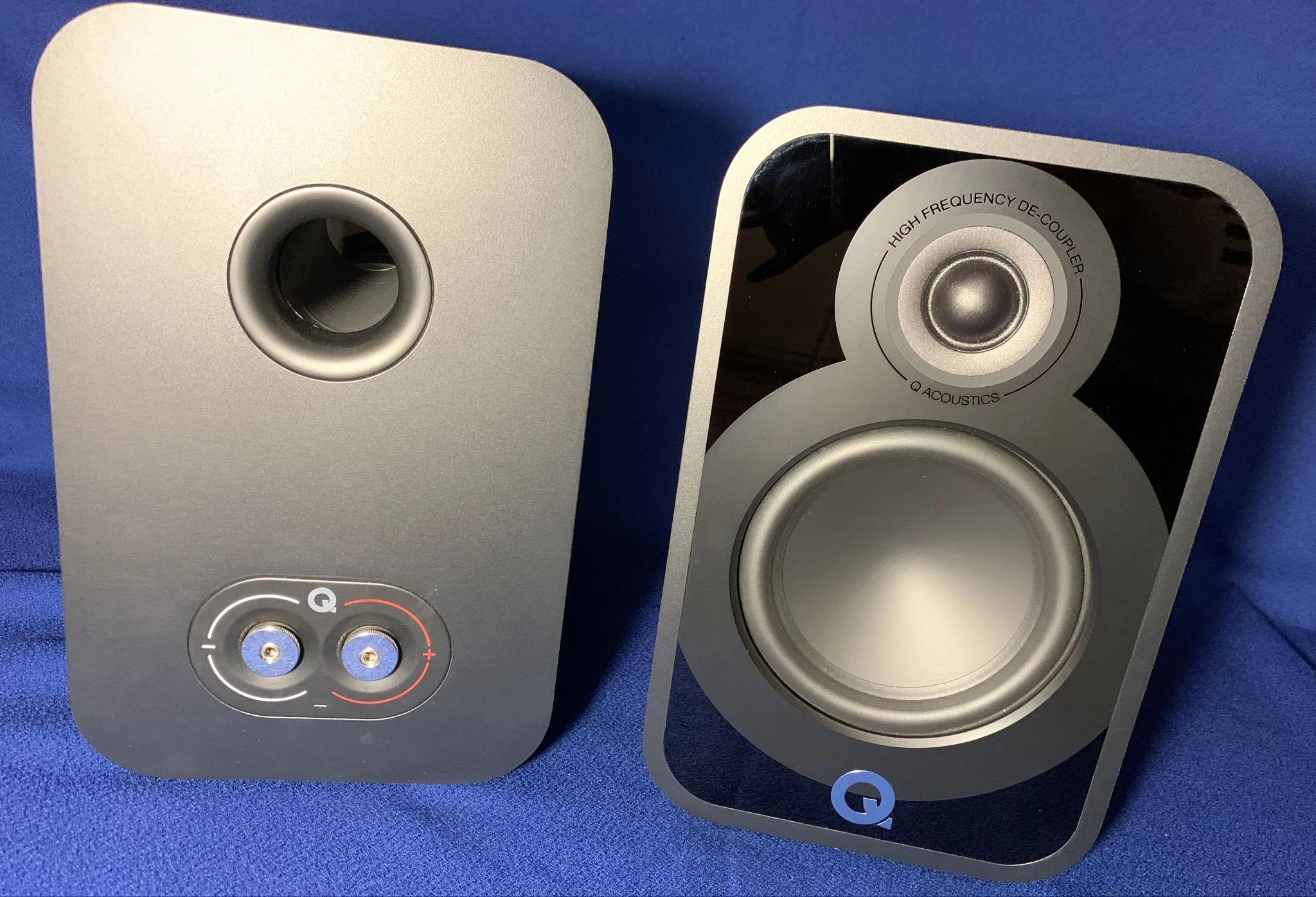
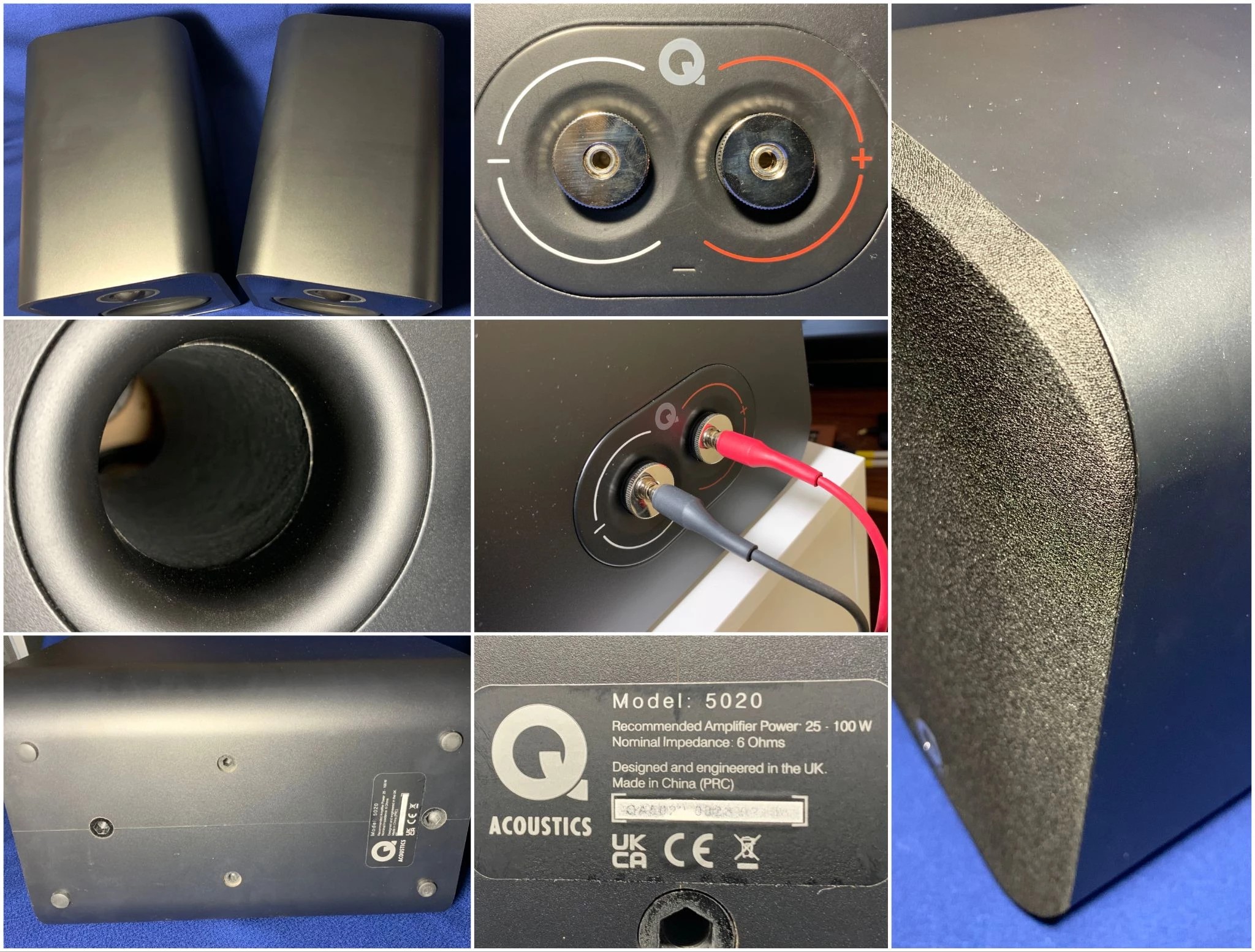
Around the back, you’ll find flush-mounted speaker terminals and a neatly flared bass-reflex port. Placement matters here: give the speakers at least 30–50 cm from the rear wall to avoid low-frequency congestion.
Finish options include Satin Black, Satin White, Pin Oak, and Claro Walnut, all applied with impressive precision. The vinyl wrap is thick, seamless, and carefully joined underneath the cabinet, giving the speakers a monolithic appearance.
Grilles, Size, and Practical Details
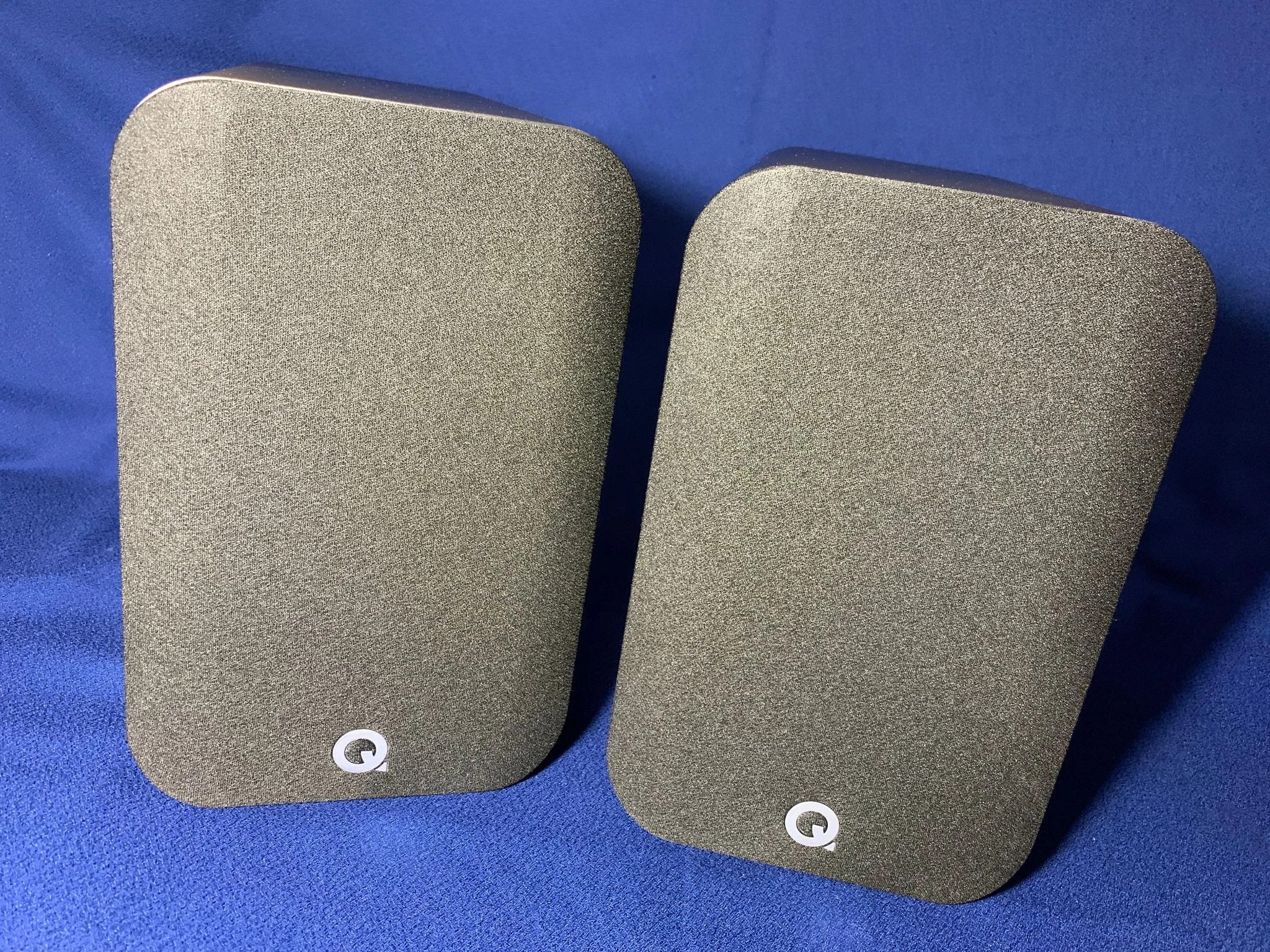
The included fabric grilles are acoustically transparent and magnetically attached. They cover the entire front panel, giving the speakers a more understated, furniture-friendly look without compromising sound.
In terms of size, the Q 5020 is undeniably deep for a bookshelf speaker—almost 28 cm. That’s only slightly shallower than some compact floorstanders, and it explains why these speakers are capable of such scale. Rubber feet are pre-installed, and there’s also a threaded insert underneath for stand mounting—a small but welcome detail.
Technology That Actually Matters
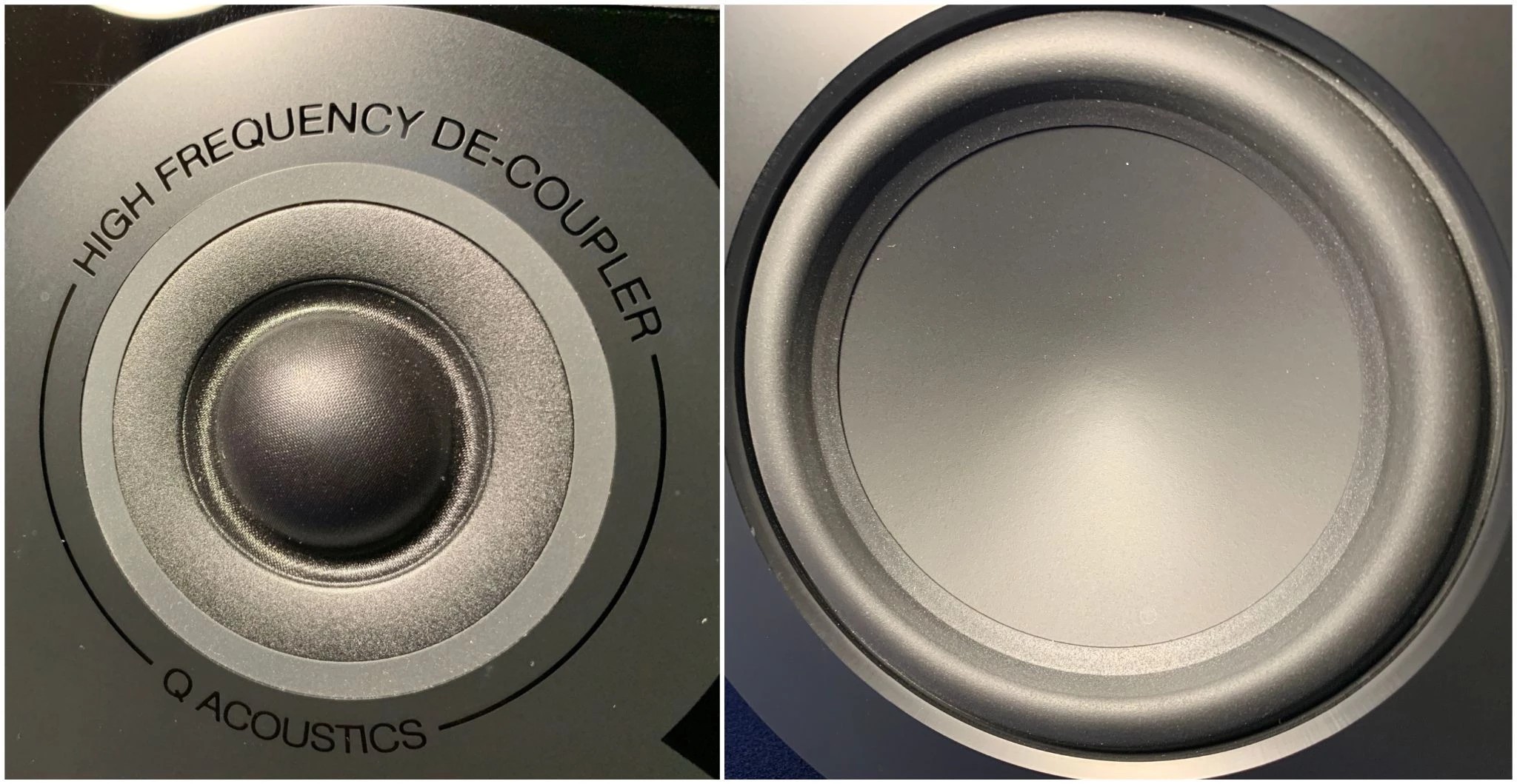
The star of the show is Q Acoustics’ C³ Continuous Curved Cone™ mid/bass driver. Its smooth, uninterrupted profile combines the control of a traditional cone with the dispersion benefits of a flared design. The result is cleaner mids, tighter bass, and a more seamless handover to the tweeter.
Inside the cabinet, Point-to-Point™ bracing increases rigidity and minimizes resonance, while pressure management techniques borrowed from higher models help keep internal reflections under control.
In short, the Q 5020 feels less like a scaled-down speaker and more like a carefully distilled version of Q Acoustics’ higher-end designs.
Listening Setup
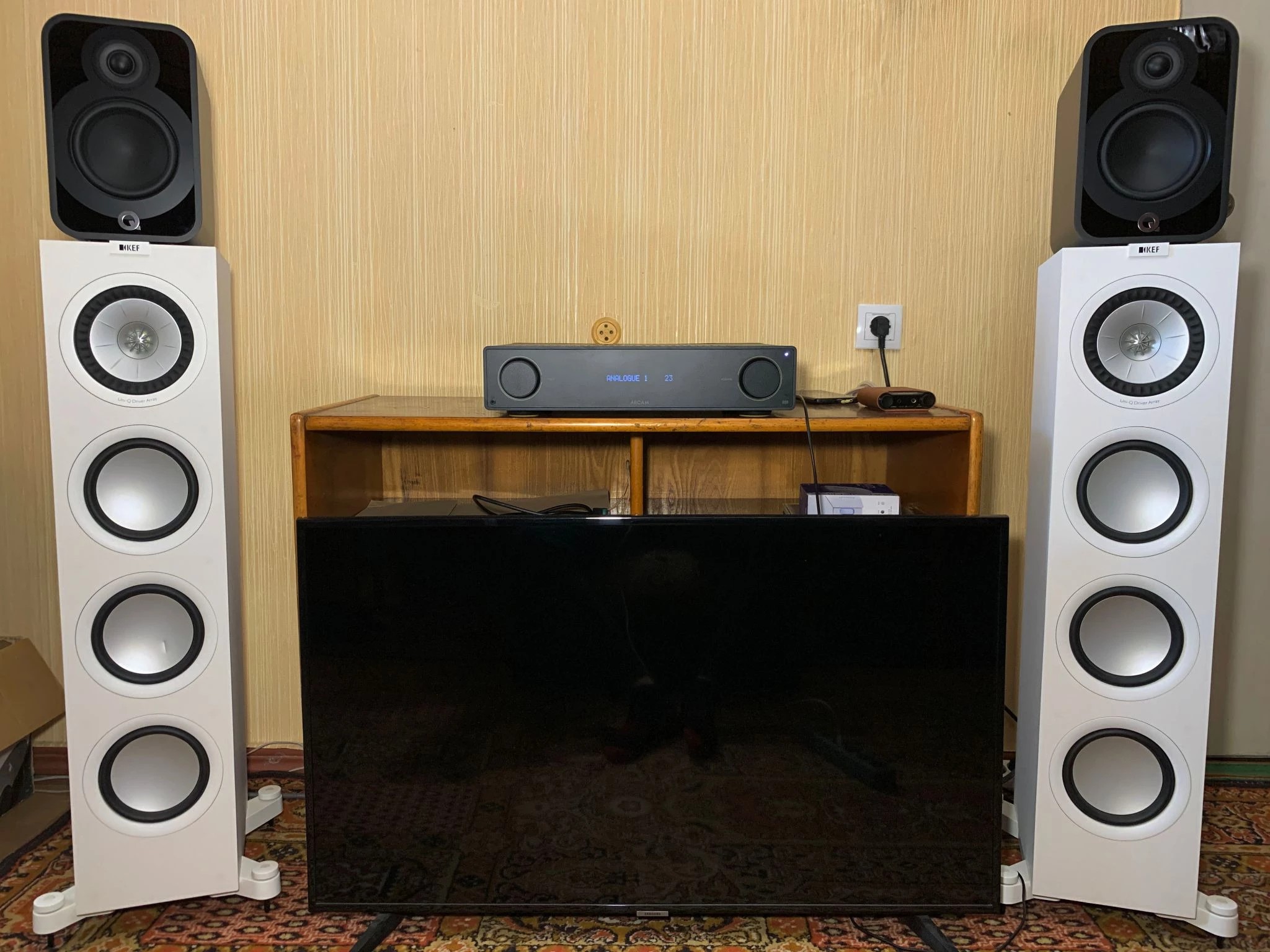
For this review, the speakers were paired with:
-
Amplifier: Arcam A15
-
Source: Samsung Galaxy S21 Ultra
-
DAC: Shanling H5
-
Cables: Cardas 101 (speaker), Fadel Art Okoshi (interconnects)
The listening room was optimized for wide soundstage and controlled bass, and placement adjustments played a major role in fine-tuning performance.
Sound Impressions
The Q Acoustics Q 5020 delivers a sound that’s immediately engaging. This is a speaker focused on speed, clarity, and spatial precision, rather than sheer low-end weight.
Bass
The bass is tight, fast, and exceptionally well controlled. What it lacks in sheer depth—especially at lower volumes—it makes up for in articulation. Foam plugs? Frankly, unnecessary. With them installed, bass energy drops off dramatically.
Midrange
Clean, open, and expressive. Vocals sound lively and natural, with excellent separation between instruments. The midrange is where the Q 5020 truly shines.
Treble
Detailed and airy without becoming aggressive. The silk-dome tweeter delivers excellent extension and helps create a wide, immersive soundstage that remains stable even off-axis.
Genre Matching and Character
The Q 5020 isn’t a universal genre monster. Rock and bass-heavy tracks may feel slightly restrained unless paired with a warmer, more muscular amplifier. Electronic music benefits from higher listening levels and careful placement closer to the wall.
Where these speakers truly excel is with jazz, blues, acoustic, instrumental, and classic rock—genres that reward speed, clarity, and spatial accuracy.
Conclusion
The Q Acoustics Q 5020 is not about brute force or room-shaking bass. It’s about precision, speed, and musical insight. With the right amplifier, a sufficiently large room (20 m² or more), and thoughtful placement, it delivers a level of refinement that’s rare in this class.
Pros
-
Modern, high-quality design
-
Advanced driver and cabinet technologies
-
Fast, detailed, and spacious sound
-
Acoustically transparent grilles
Cons
-
Bass depth can feel limited at low volumes
-
Demands careful system matching
Bottom line:
The Q 5020 is a speaker with character—one that prioritizes musical accuracy over spectacle. If you value detail, staging, and control, this British bookshelf might surprise you more than once.