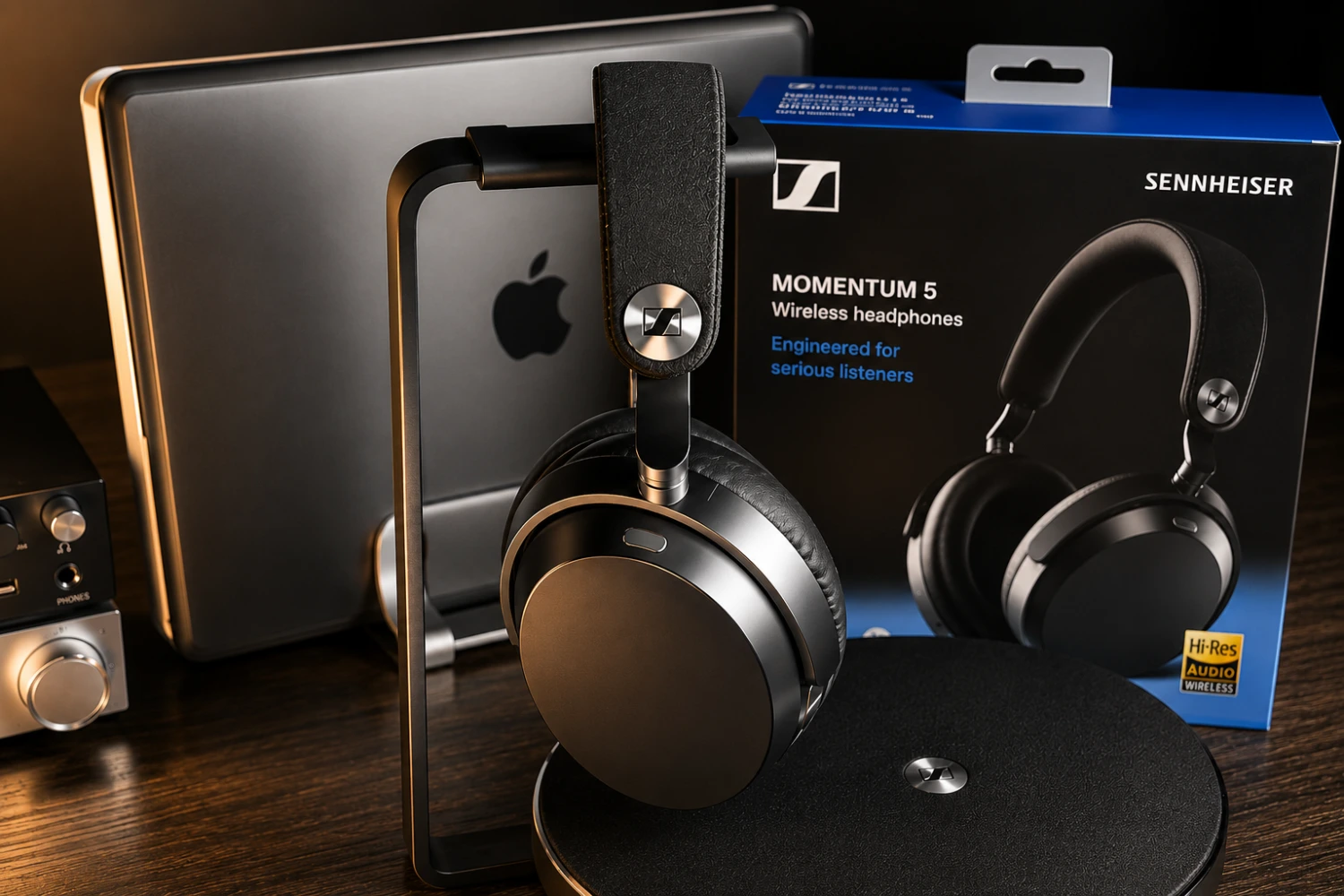

Sennheiser doesn’t launch a new flagship lightly. So when the HDB 630 landed on my desk, expectations were sky-high — and rightly so. This is the German brand’s most ambitious wireless headphone to date, bringing together years of acoustic know-how, DSP refinement, and software development. It’s also priced accordingly, landing around $600, well above the Momentum 4 and firmly in premium territory.
The question is simple: does it earn that status?
Short answer: yes — and then some.
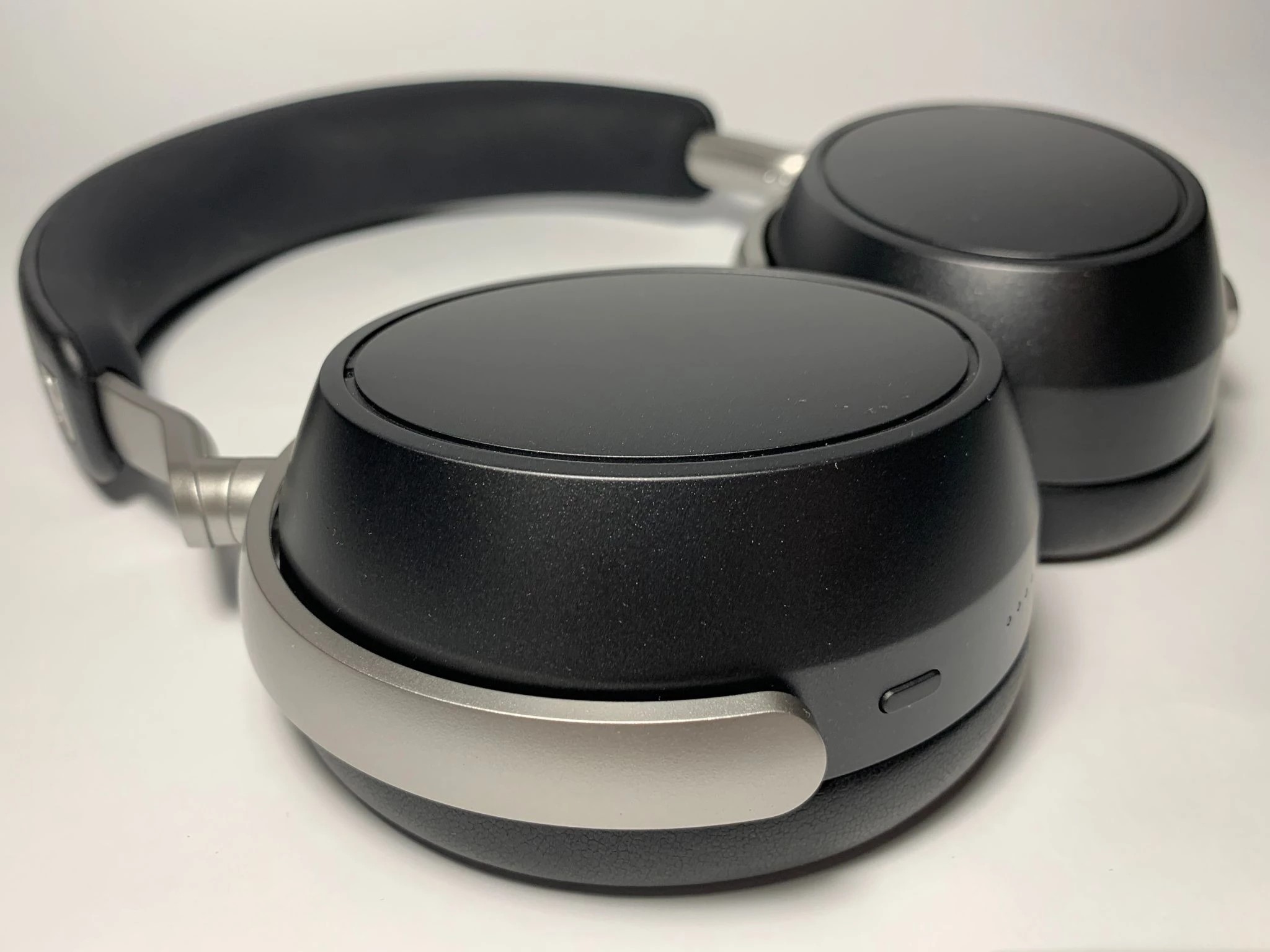
First Impressions
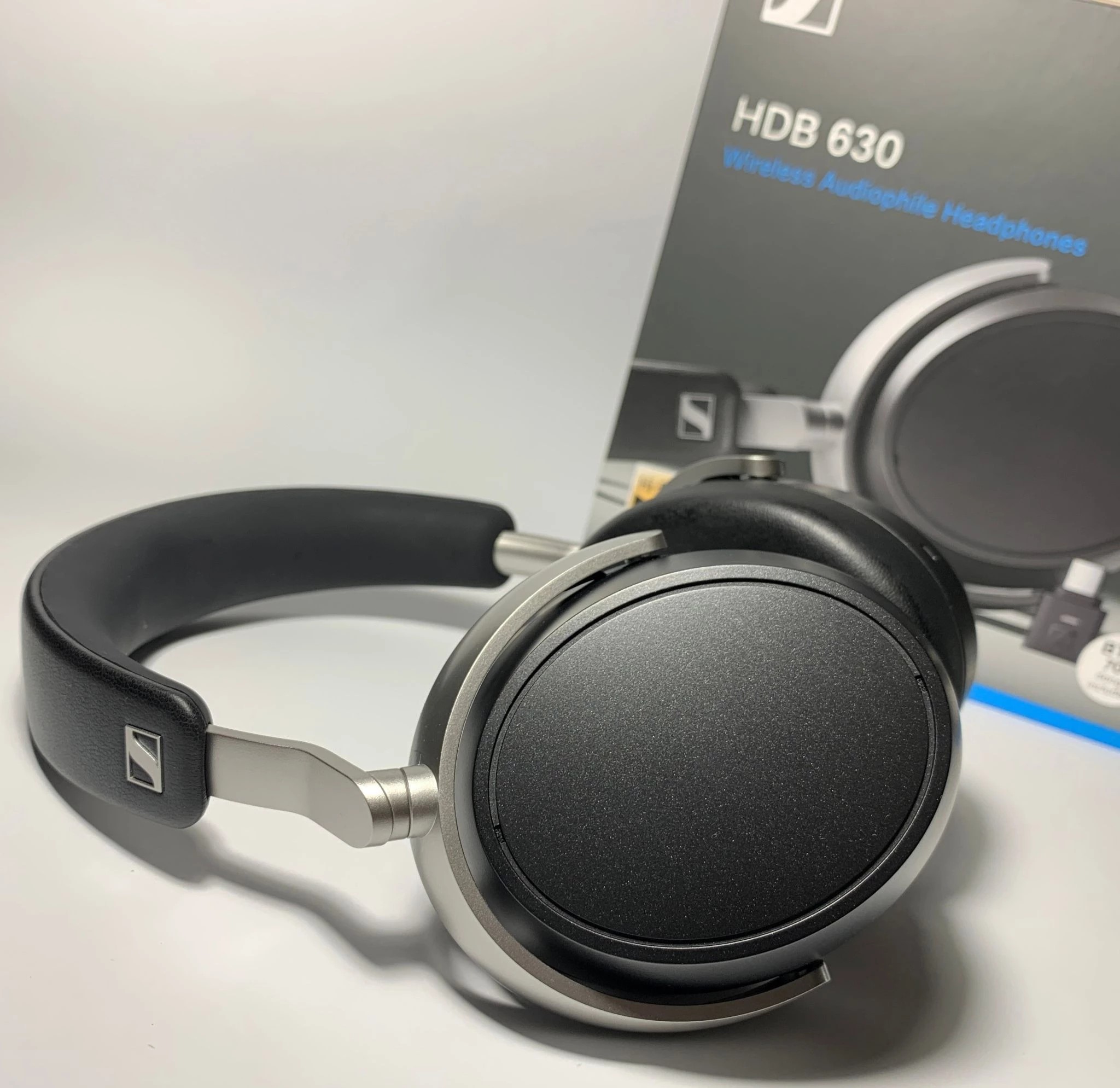
Unboxing the HDB 630 immediately signals that this is no ordinary wireless model. The large, sturdy box follows Sennheiser’s understated grey-and-blue design language and proudly labels the headphones as wireless audiophile.
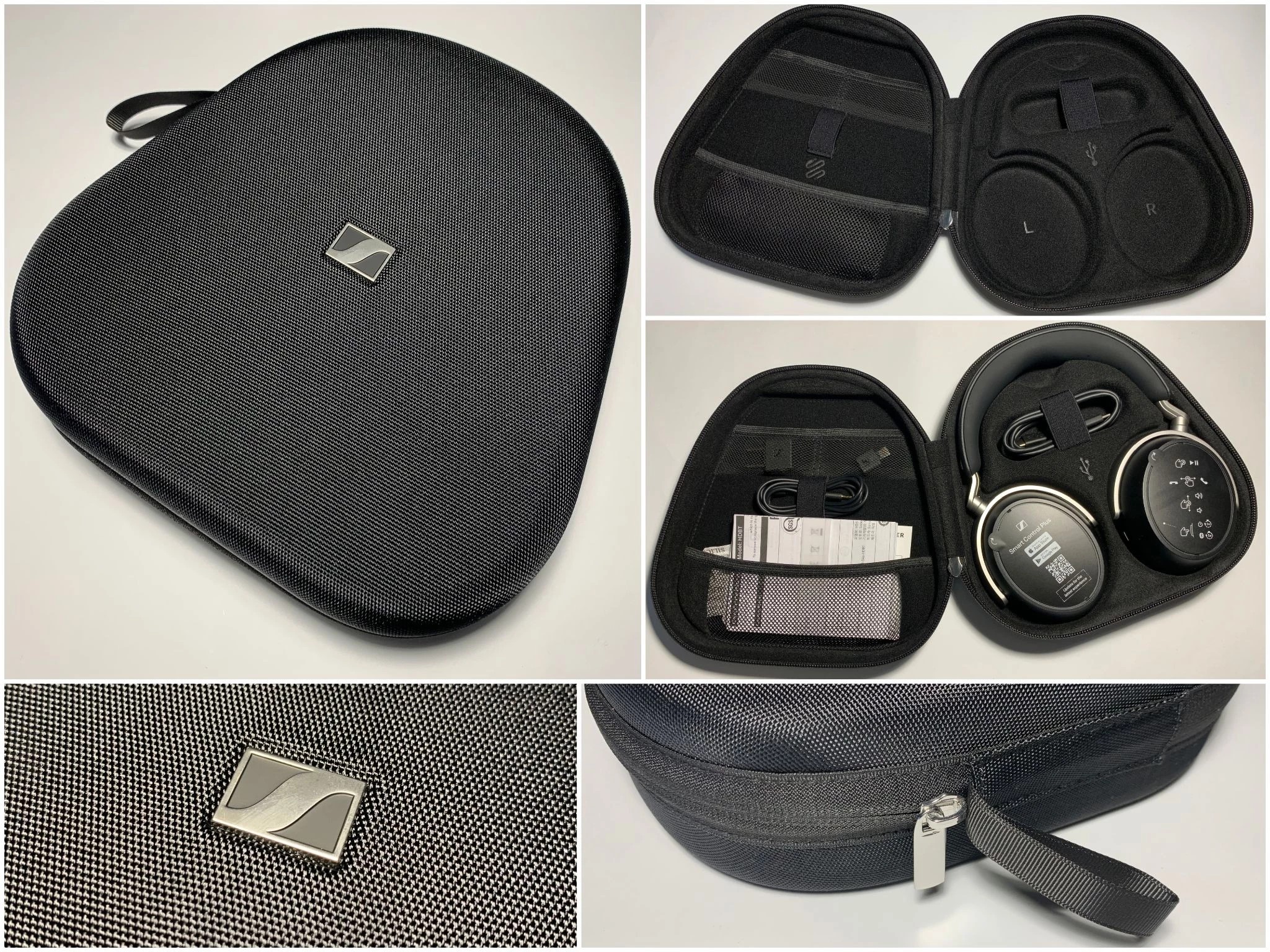
Inside, you’re greeted by a fabric-covered hard case — dense, durable, and clearly built for travel. The accessory lineup is refreshingly complete:
-
Sennheiser HDB 630 headphones
-
Premium hard transport case
-
3.5 mm → 2.5 mm analog cable (1.2 m)
-
BTD 700 USB-C wireless dongle
-
USB-C → USB-C charging cable
-
Airplane adapter
-
Documentation
This is a true flagship bundle. No penny-pinching, no missing essentials — everything you’d realistically need is already in the box.
Design
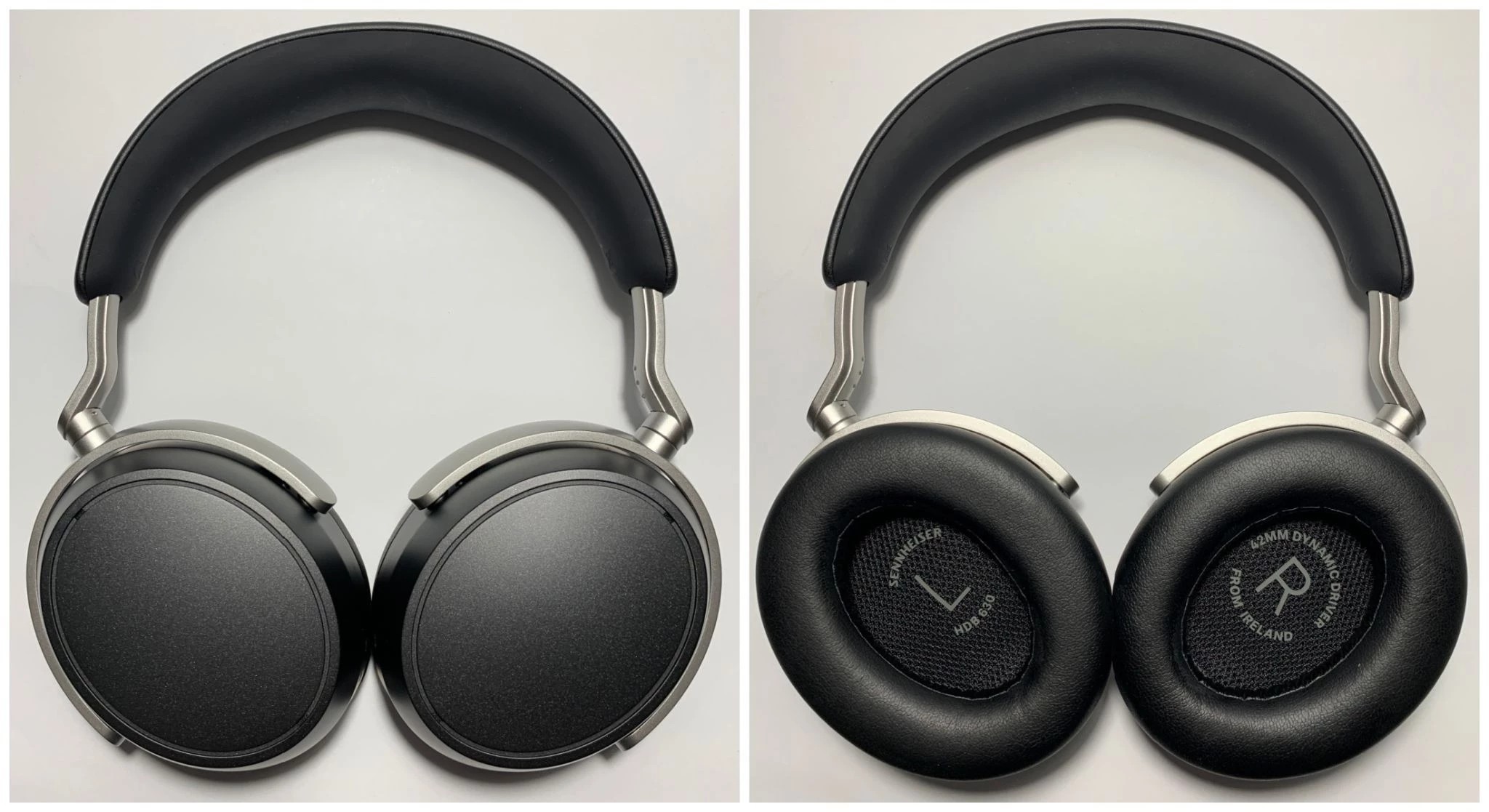
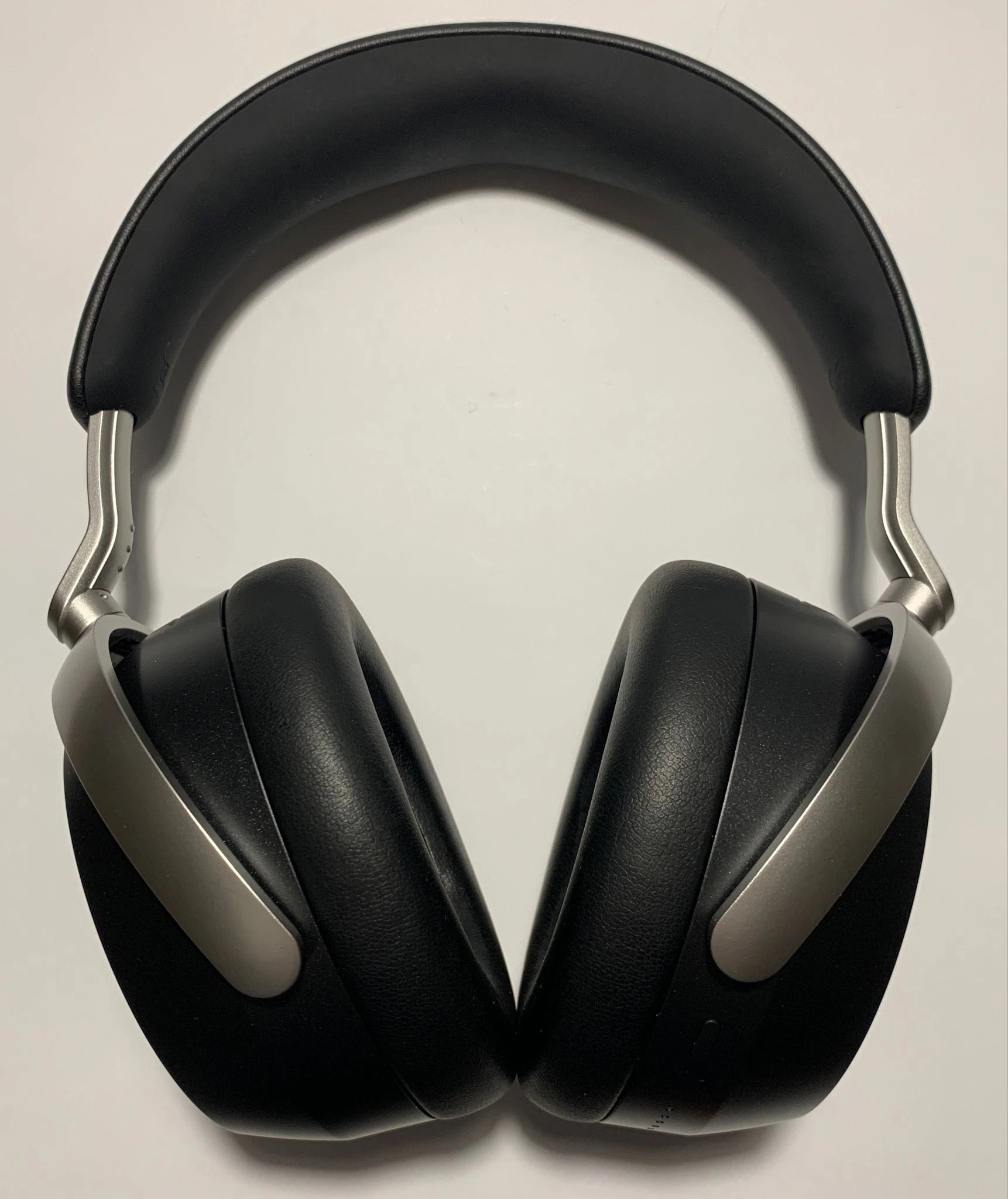
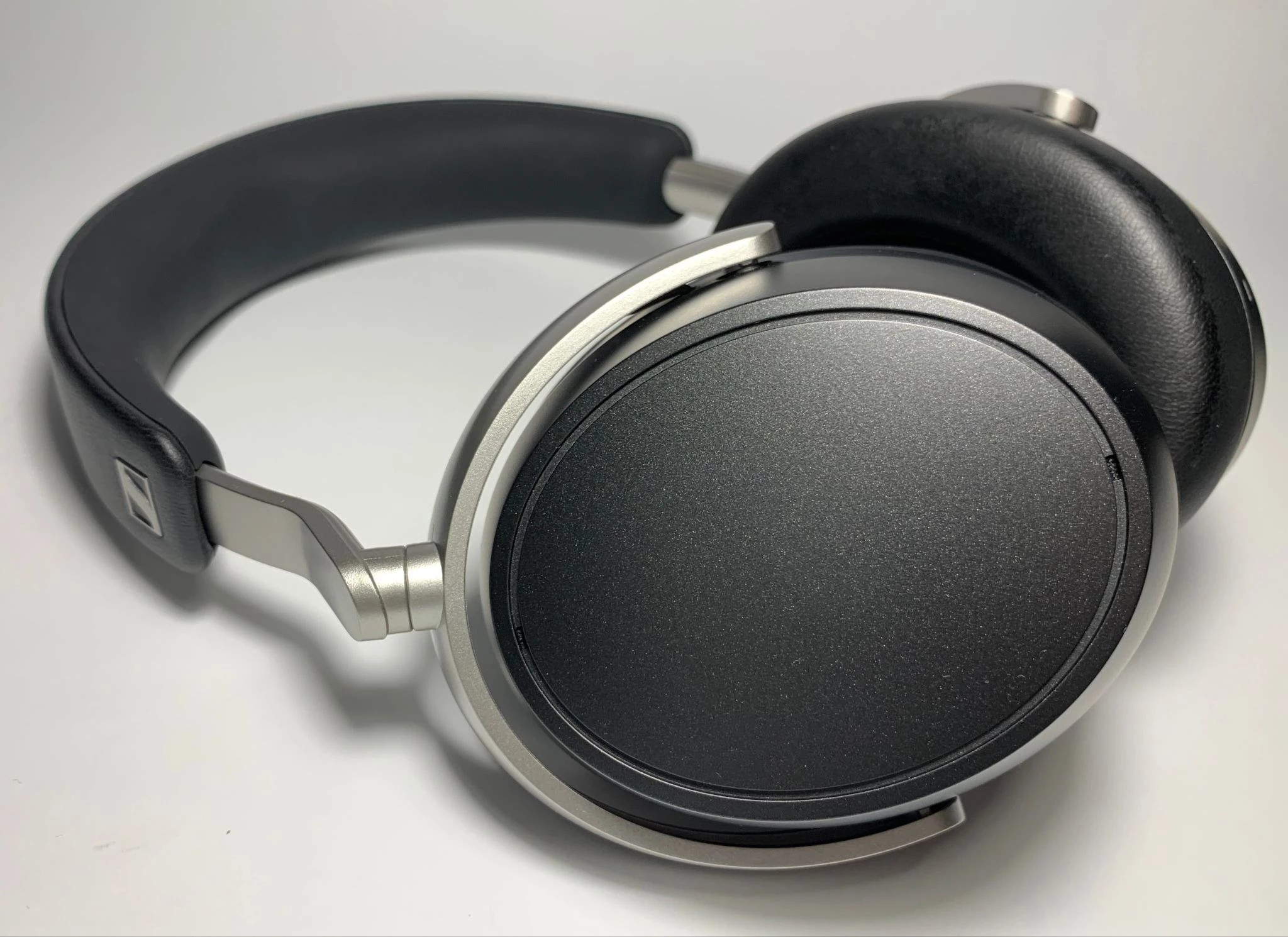
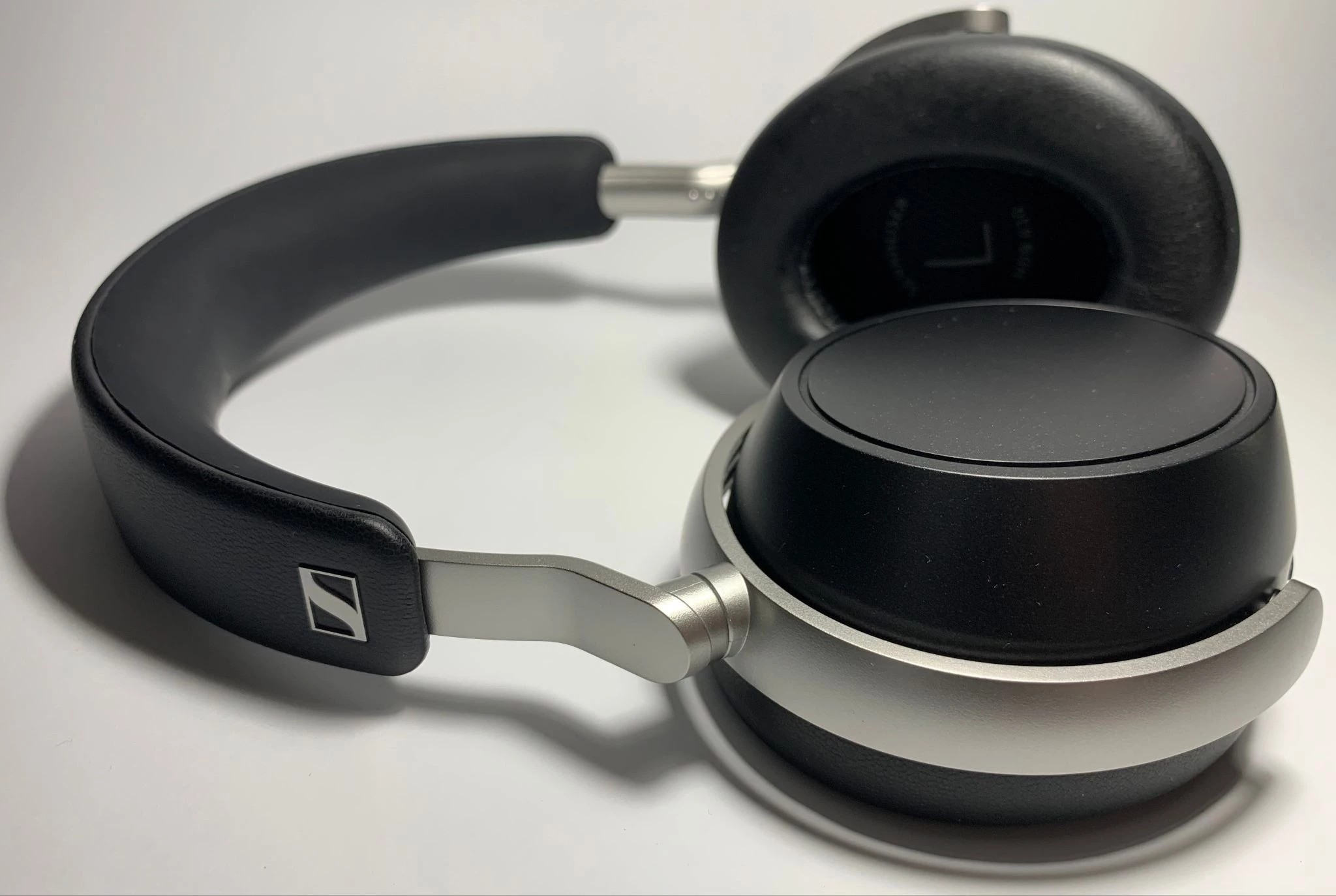
Design-wise, Sennheiser sticks to a familiar formula. The HDB 630 doesn’t scream for attention — and that’s intentional. The oval earcups, smooth contours, and restrained dark-grey finish give them a quietly expensive look rather than flashy luxury.
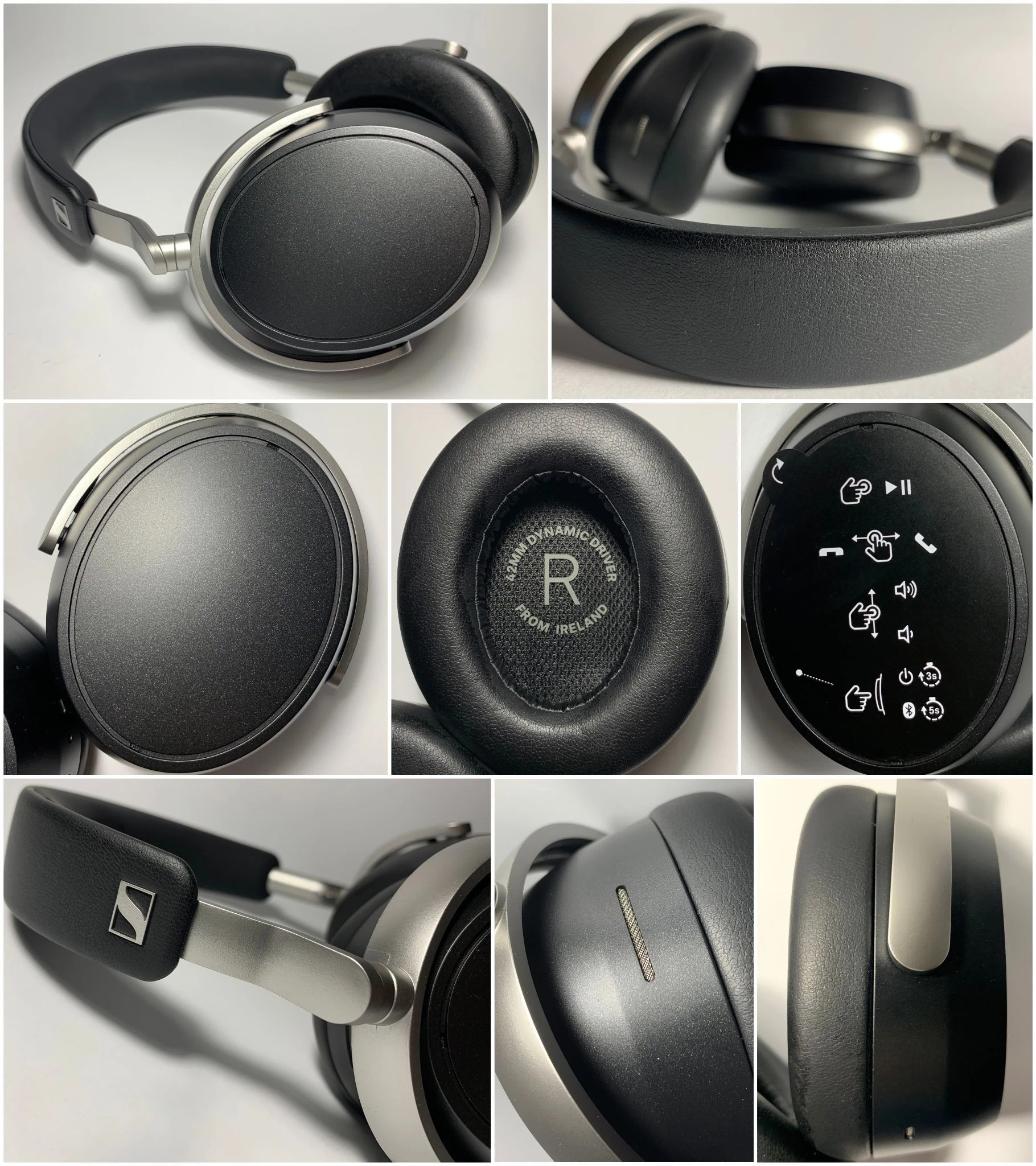
Materials are mostly high-grade plastics, paired with soft eco-leather ear pads and a smartly engineered headband that combines eco-leather, metal logos, and a silicone underside for comfort. It’s not extravagant, but it’s solid, precise, and clearly engineered to last.
Despite their size — the cups are thick and substantial — the headphones sit surprisingly neatly on the head. No awkward protrusion, no “satellite dish” look. Comfort is excellent, with moderate clamping force and a well-balanced 311-gram weight that disappears during long listening sessions.
Comfort
The earcups fully enclose the ears, providing strong passive isolation even before ANC kicks in. Padding is generous, pressure is evenly distributed, and the stepless headband adjustment allows fine tuning without removing the headphones.
Yes, eco-leather can get warm in summer — but that’s a universal reality for closed-back designs. The trade-off is excellent sealing and consistent sound performance.
Build quality is exactly where it should be at this price: no creaks, smooth cup rotation, and only minimal play at the hinges — nothing that affects comfort or durability.
Controls
All controls live on the right earcup. The left is almost completely clean, aside from microphones.
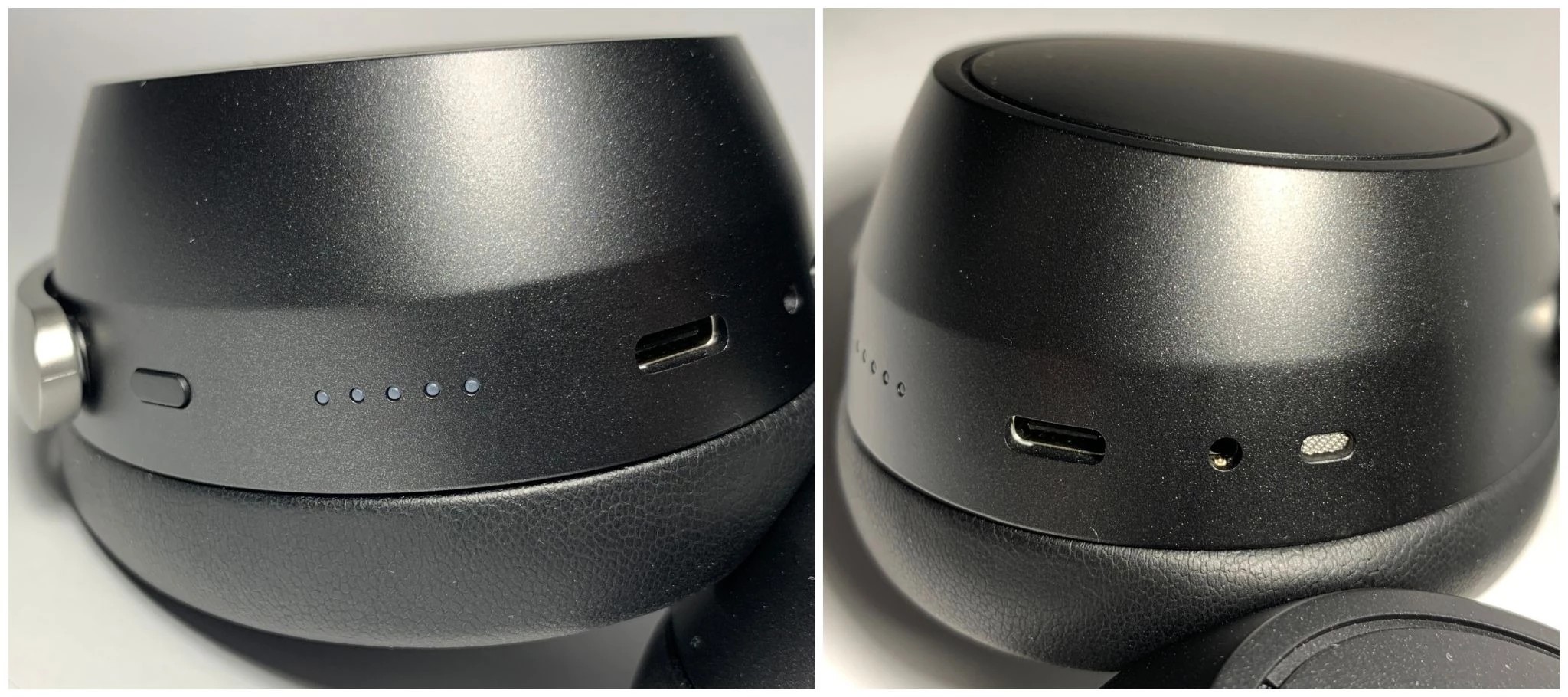
You get:
-
One physical power/Bluetooth button
-
Five LED indicators (20% battery steps)
-
USB-C port
-
2.5 mm analog input
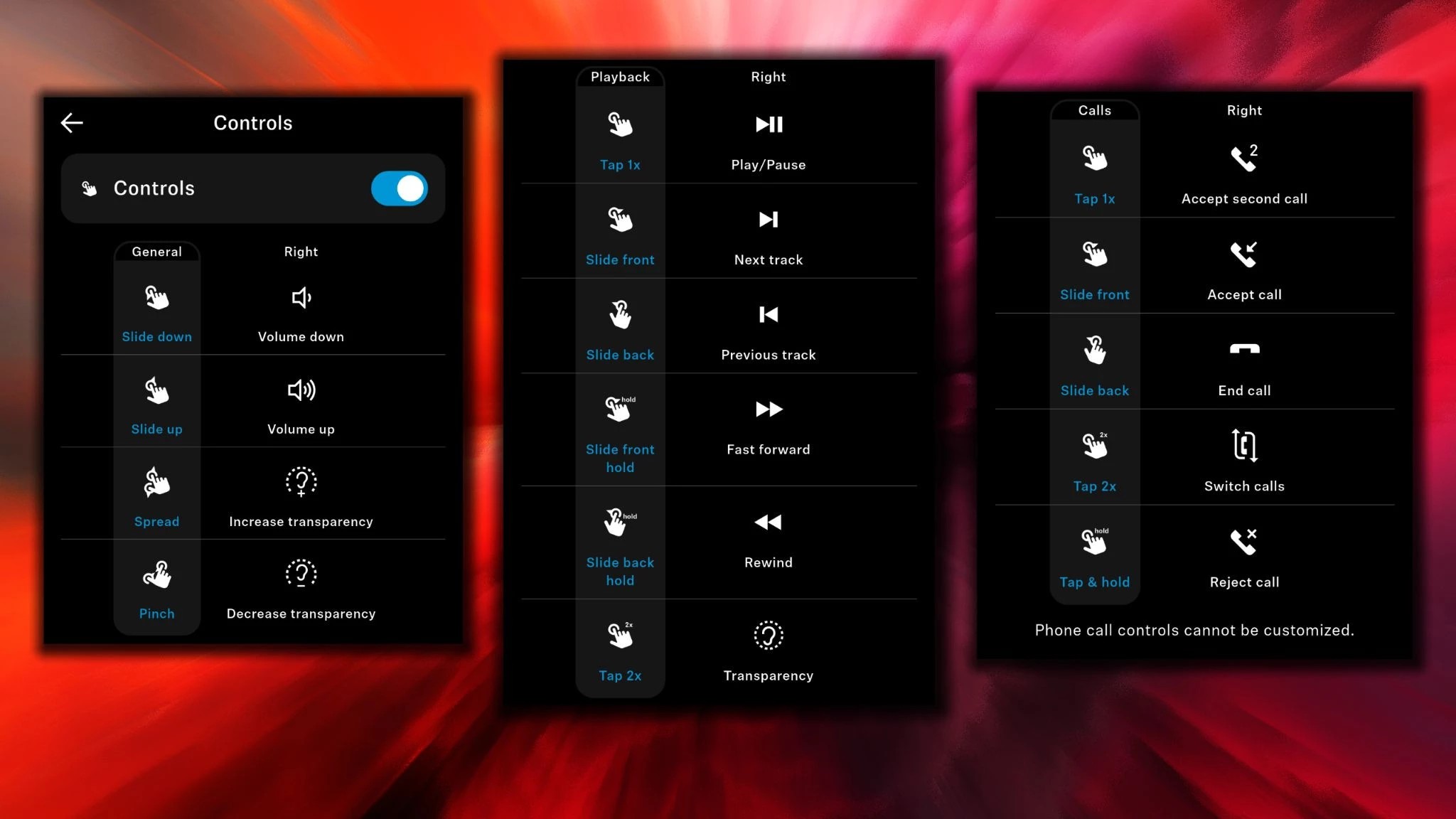
Everything else is handled via a large, responsive touch surface. Swipes, taps, pinches, and holds control volume, playback, calls, ANC, and transparency. It’s powerful — but it does take a few days to fully memorize.
The real surprise, though, is the BTD 700 dongle. Plug it into a laptop or PC, and the HDB 630 transforms into a low-latency, high-resolution wireless headset. Music, games, calls — all with noticeably better clarity than standard Bluetooth. No fake surround gimmicks, just clean, detailed sound.
ANC, Transparency & Microphones
Noise cancellation is excellent — genuinely among the best in the class. It’s strong, even, and doesn’t damage the sound signature. Combined with solid passive isolation, it makes busy environments fade away effortlessly.
Transparency mode is equally impressive: natural, clear, and largely free of digital artifacts. There’s a slight reduction in low-frequency depth, but voices and surroundings remain convincing and useful.
Microphone quality is very good. Voices come through clean and intelligible, without distortion or harsh processing. It won’t replace a studio mic, but for calls, meetings, and gaming chats, it’s more than sufficient.
Infrared wear sensors round things off nicely, pausing music instantly when you take the headphones off and resuming playback the moment you put them back on.
Sennheiser Connect+
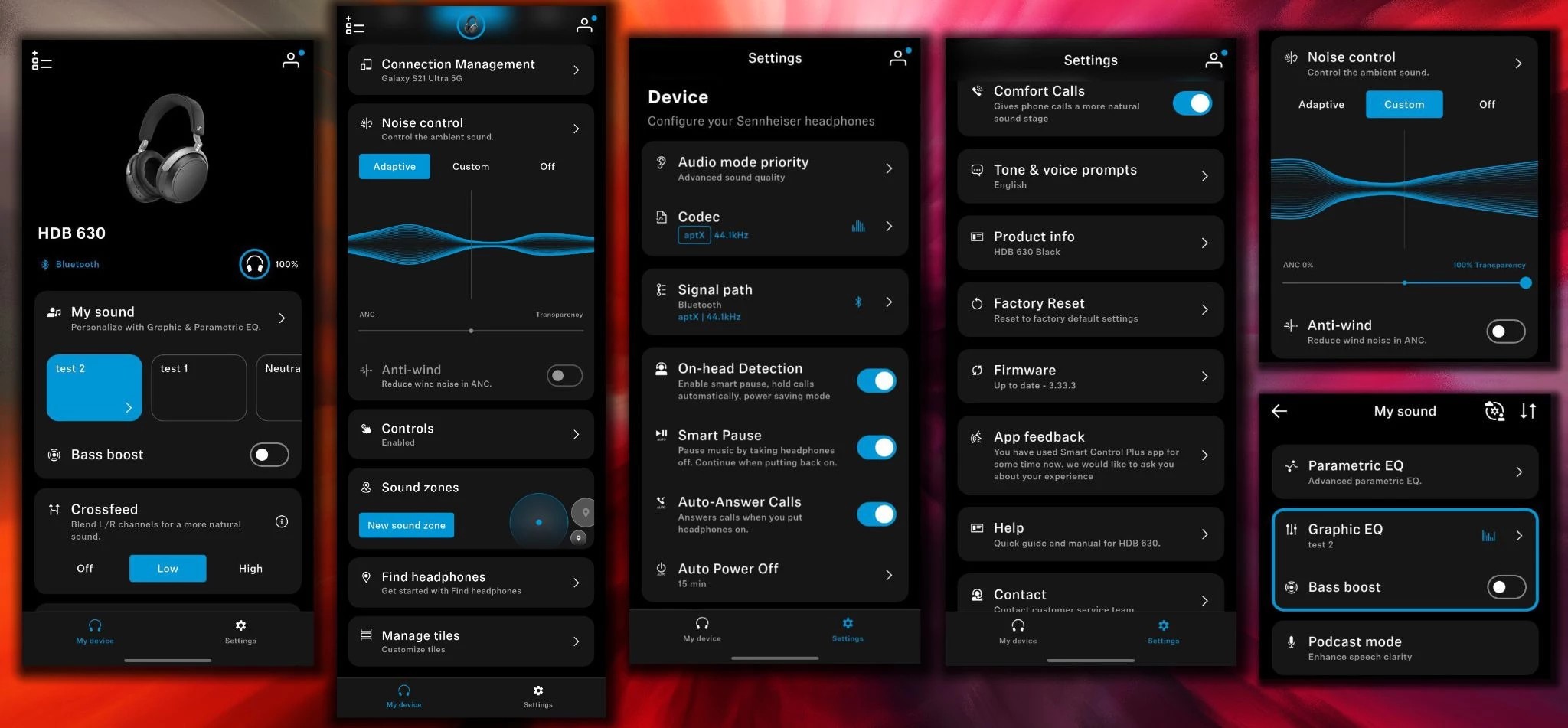
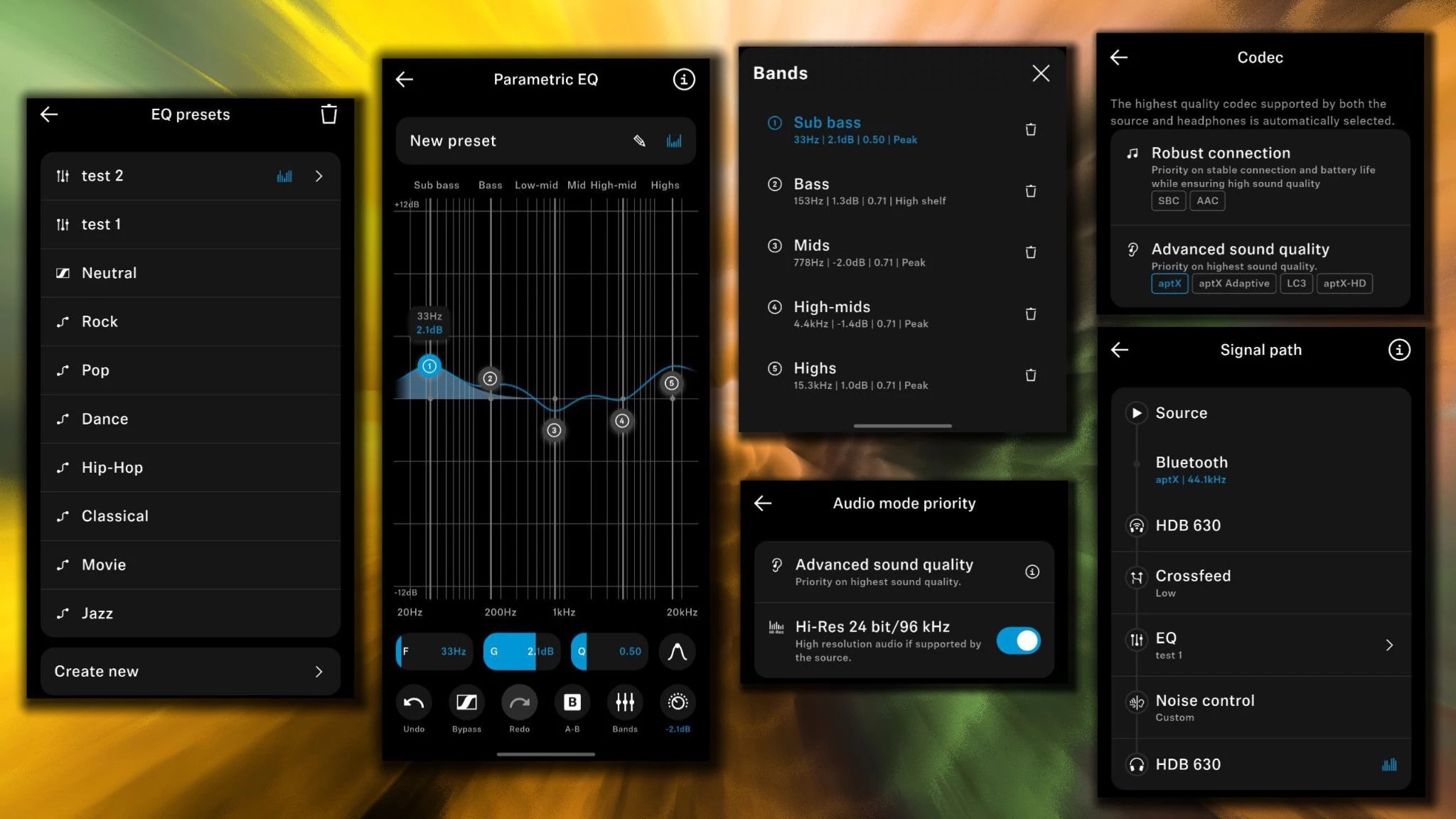
The Sennheiser Connect+ app is one of the most advanced control platforms currently available for wireless headphones. It’s fast, logical, and — most importantly — incredibly deep.
Key features include:
-
Adaptive ANC and transparency control
-
Crossfeed with adjustable intensity
-
Codec prioritization (quality vs stability)
-
Full signal-path visualization
-
Location-based sound profiles
-
Gesture control management
But the real star is the equalization system.
Equalization
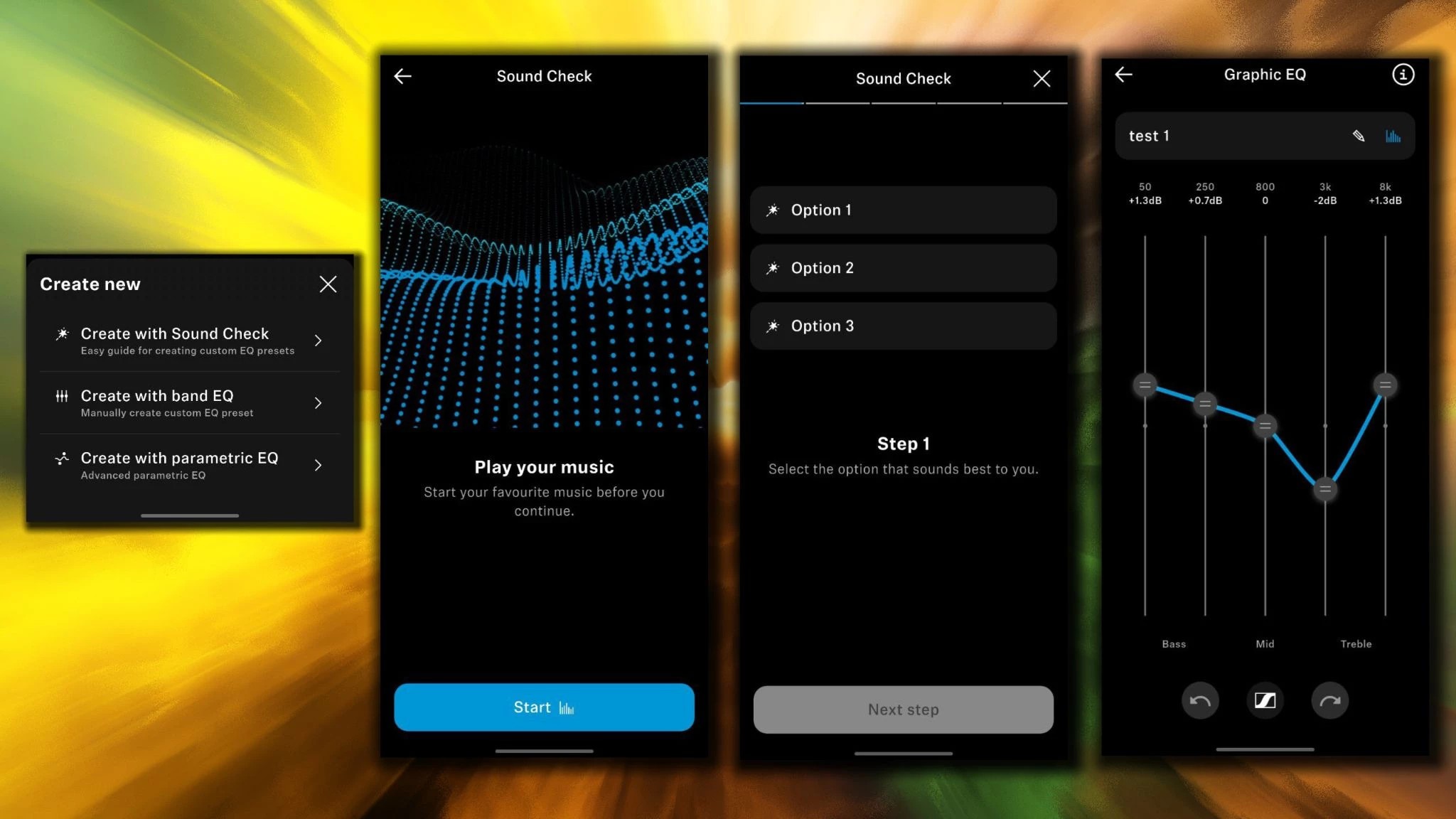
You get three different EQ approaches, depending on how deep you want to go:
-
Interactive Sound Test
Choose between sound variations while listening to your own music. The system builds a personalized EQ curve automatically. -
Manual Graphic EQ
Traditional control with multiple presets as a starting point. -
Full Parametric EQ
Five adjustable bands, frequency control, Q-factor adjustment — the kind of precision usually reserved for studio tools.
This is audiophile-grade sound shaping, and it’s a huge part of why the HDB 630 stands out in the wireless world.
Battery Life
Sennheiser claims up to 60 hours without ANC, and in real use that figure holds up. Over a full week of mixed listening, the headphones needed just one recharge.
Not record-breaking, but consistent, dependable, and more than enough for everyday use.
Sound Quality
The HDB 630 sounds clean, balanced, and confident. It leans toward neutrality, with a subtle V-shaped lift at the frequency extremes that keeps things engaging without turning artificial.
This is not a bass-heavy crowd-pleaser like the Momentum 4. Instead, it’s tuned for clarity, separation, and realism — and then handed over to the user for fine-tuning.
Bass
Deep, controlled, and remarkably clean. When a track has bass, you’ll feel it — but it never bleeds into the midrange or overwhelms the mix.
Midrange
Transparent and slightly forward, with excellent vocal separation. Clear rather than thick, detailed without sounding clinical.
Treble
Open, airy, and well integrated. Enough brightness to add sparkle, never enough to cause fatigue.
High-quality sources really shine here. The difference between Spotify and FLAC is immediately obvious — and that’s both a compliment and a warning.
Conclusion
The Sennheiser HDB 630 is one of the most complete wireless headphones available today. It’s not chasing fashion or gimmicks — it’s chasing performance.
Yes, the design is understated. Yes, some materials could feel more luxurious. But when it comes to sound quality, customization, connectivity, and real-world usability, this headphone plays at the very top of the segment.
If you want wireless convenience without sacrificing serious audio quality — and you’re ready to pay for it — this is one of the easiest recommendations I can make.
Pros
-
Outstanding sound quality for wireless headphones
-
Class-leading EQ and app functionality
-
Excellent ANC and transparency
-
BTD 700 dongle included
-
Strong battery life
-
Versatile: music, work, gaming
Cons
-
Conservative design
-
Case materials could feel more premium