
Schiit Buf: $99 Tube Buffer Adds Warm Analog Sound to Any HiFi System
Schiit Buf is a compact $99 tube buffer designed to add warmth and harmonic richness to clean solid state systems, featuring 100V tube stage, RCA in and out, and tube rolling support.
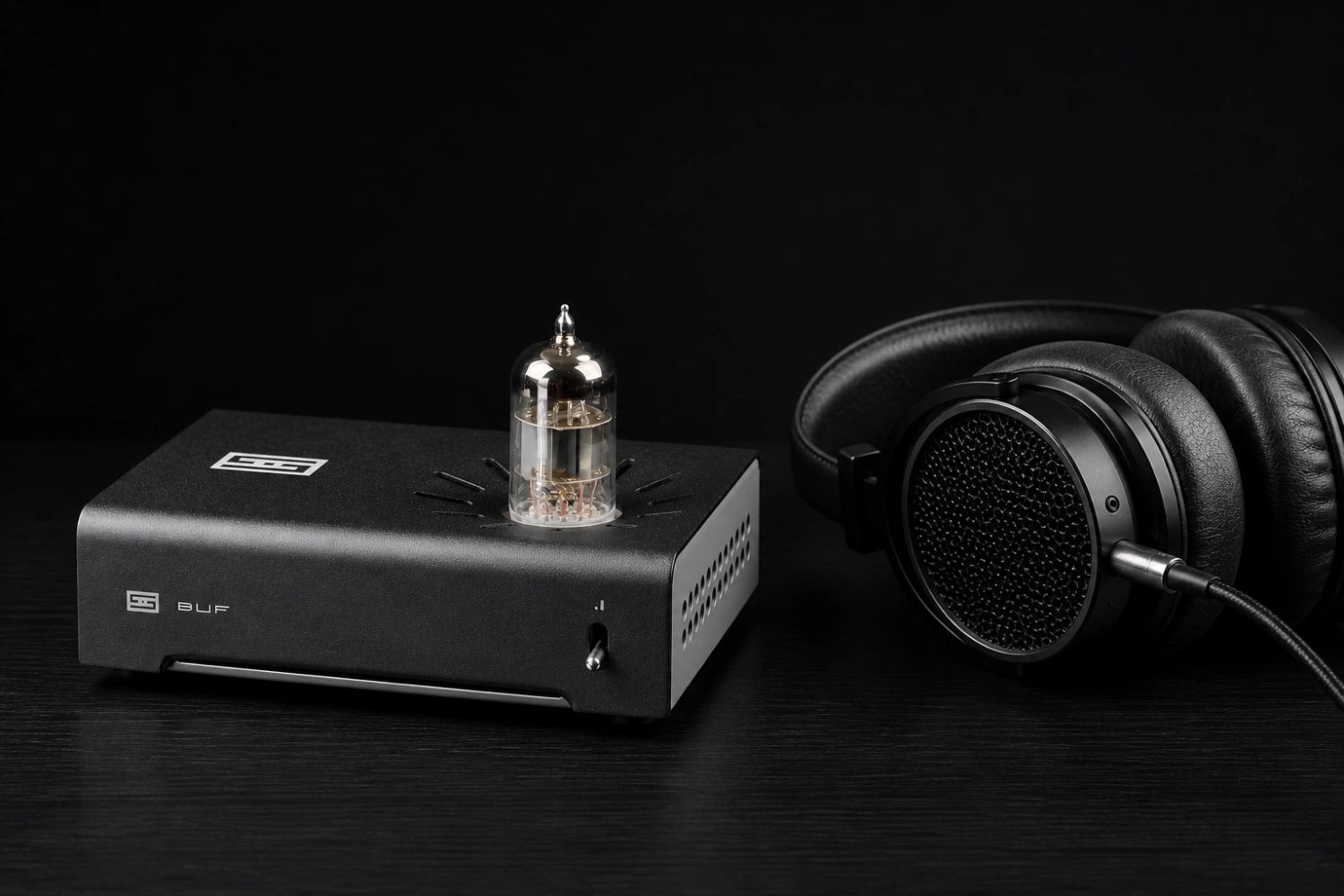
Schiit Audio has never been shy about challenging hi-fi conventions, and with the new Schiit Buf, the company leans fully into that philosophy. This is not a DAC, not a preamp, and not a traditional upgrade path. Instead, Buf is a deliberately colored tube buffer, designed to reshape the character of an existing system without replacing any of its core components.
A minimalist signal shaper, not another box of features
At first glance, the Schiit Buf strips things back to the bare essentials. There is no volume control, no digital stage, no remote, and no system management. It exists purely in the analog domain, sitting inline between components, quietly altering the signal before it reaches your amplifier or active speakers.
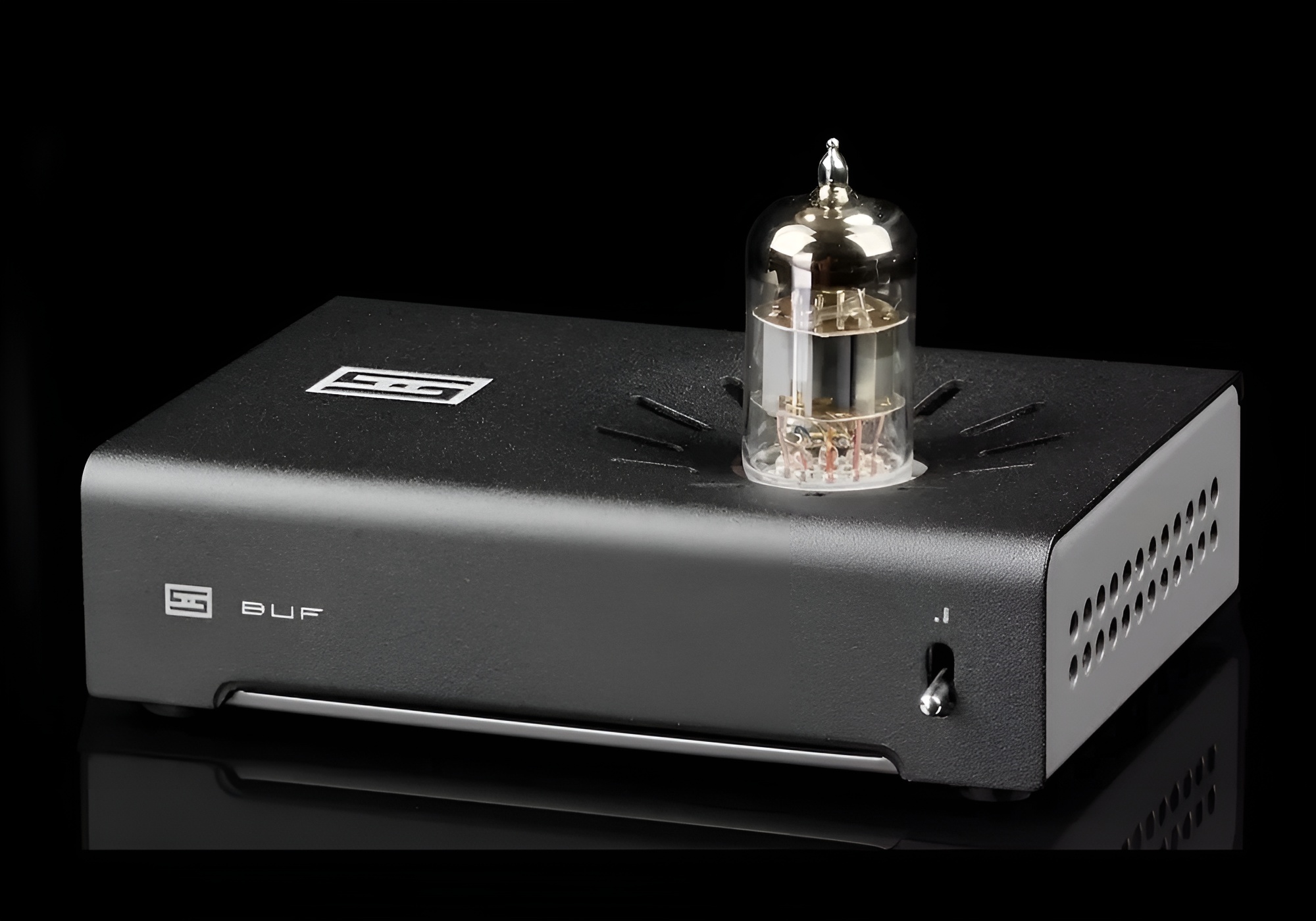
Typical use cases are straightforward: insert it between a DAC and amplifier, a streamer and active speakers, or within a pre/power setup to influence the entire system. A bypass mode allows the signal to pass through untouched, effectively turning the Buf into a neutral relay when coloration is not desired.
Engineering warmth, not chasing neutrality
Where most modern audio gear aims for absolute transparency, Schiit takes the opposite route here. The Buf is intentionally tuned to introduce low-order harmonic distortion, the kind traditionally associated with tube amplification. The goal is not accuracy in a laboratory sense, but musicality, body, and a softer presentation.
This makes the Buf particularly relevant for systems that lean toward a clinical or forward sound signature, often the case with highly resolving solid-state gear. Instead of swapping amplifiers or speakers, the Buf offers a far simpler way to rebalance tonal character.
Real tube design at an entry-level price
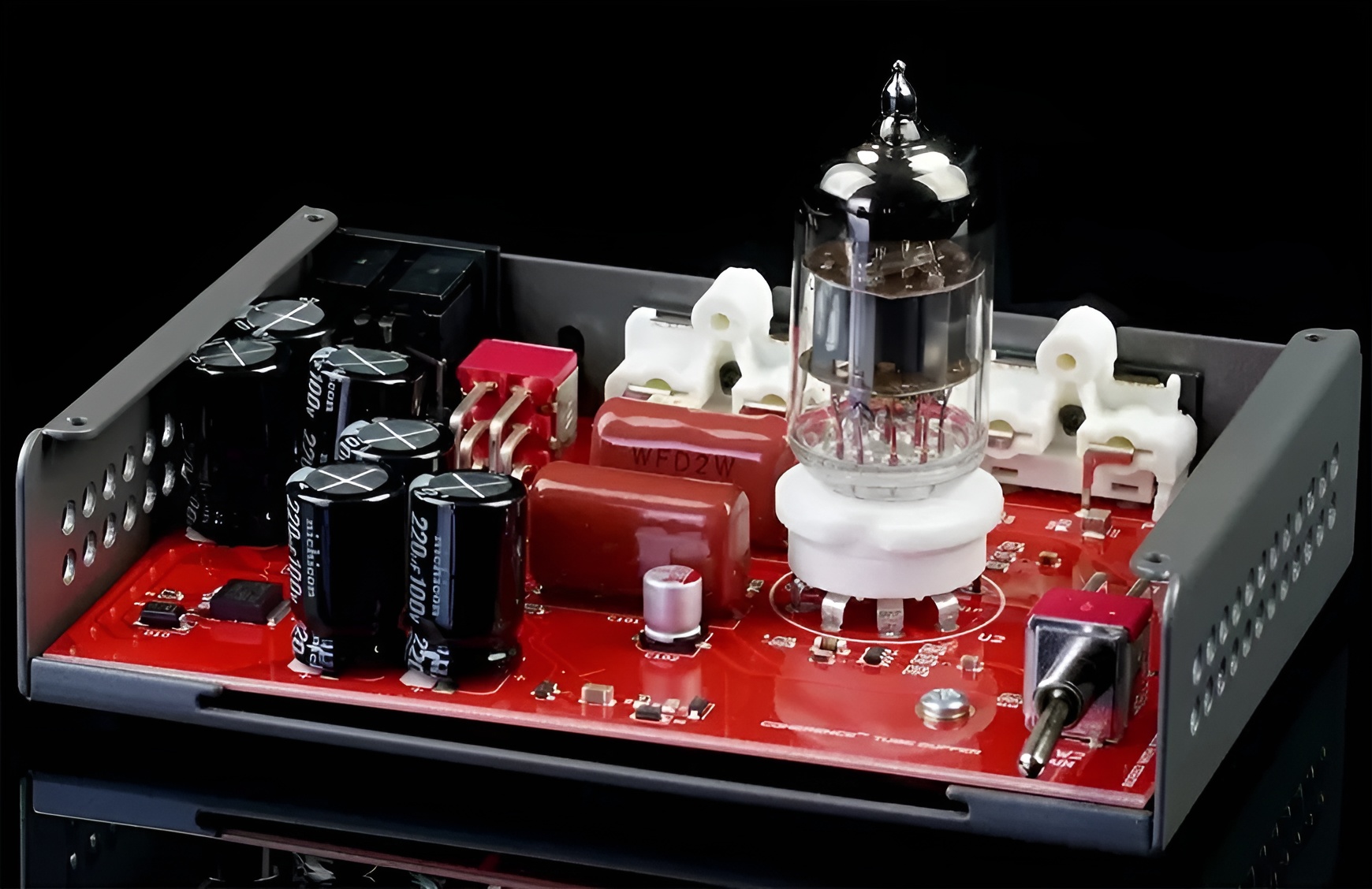
Despite its modest $99 price tag, the internal design is far from trivial. The tube stage operates at a full 100V anode voltage, avoiding the compromises often found in low-voltage “tube effect” designs. A linear power supply underpins the circuit, paired with Panasonic film capacitors and Schiit’s proprietary Coherence topology.
On the front panel, users can select between 0dB and 12dB gain, allowing the Buf to function either as a subtle tonal enhancer or a more pronounced signal driver. Importantly, the design maintains absolute phase integrity, ensuring that the signal remains coherent even as its harmonic structure is altered.
Simple connectivity, flexible placement
Connectivity is intentionally limited to a single pair of RCA inputs and outputs. This simplicity is part of the concept, the Buf is meant to integrate seamlessly into almost any analog chain without adding complexity.
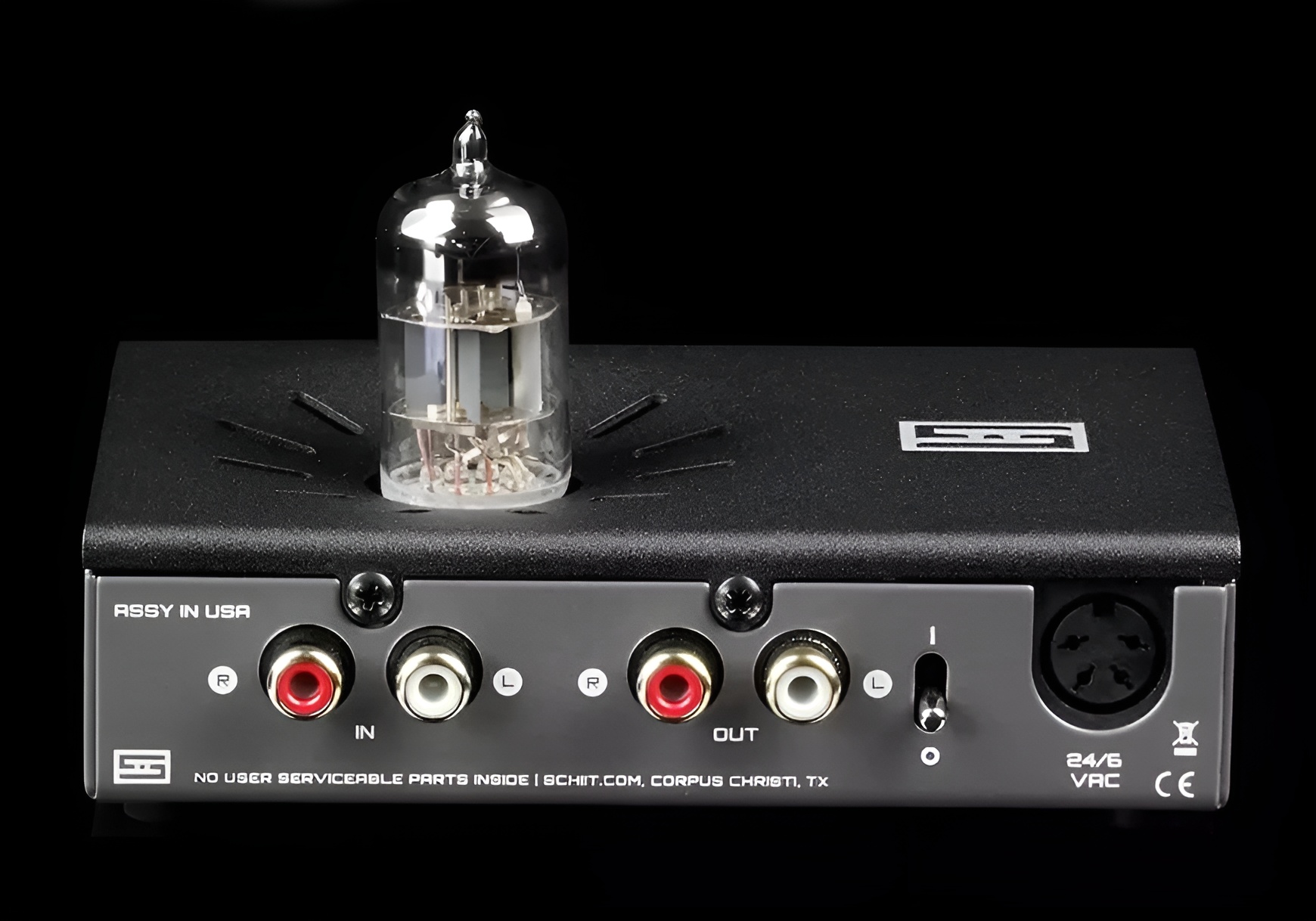
Because of its placement flexibility, it can either shape the sound of an entire system or target a single source. For example, placing it after a DAC will only affect digital playback, while inserting it between a preamp and power amp will influence all connected sources.
Tube rolling and long-term usability
The Buf supports a wide range of tubes with a standard 6922 pinout, including 6N1P, 6922, ECC88, and 6DJ8. This opens the door to tube rolling, allowing users to fine-tune the sound further depending on preference.
Schiit rates tube lifespan at approximately 5,000 hours, which is in line with typical small-signal tubes. The unit itself is assembled in the USA, with final assembly in Texas and chassis manufacturing in California. Warranty coverage includes three years for the device and 90 days for the included tube.
Technical snapshot
From a technical standpoint, the Buf maintains a high input impedance of 470 kOhms and a low output impedance of 75 ohms, ensuring compatibility with a wide range of downstream equipment. Maximum output is rated at 8.2V RMS, giving it ample headroom in most systems, while the compact chassis keeps weight to around 0.45 kg.
A different kind of upgrade
The Schiit Buf is not about adding features or chasing higher resolution numbers. It is about shaping the listening experience in a more subjective, musical way. For listeners who find their system technically impressive but emotionally distant, the Buf offers a refreshingly simple solution, one that embraces coloration as a tool rather than a flaw.
At $99, it also lowers the barrier to experimenting with tube sound, making it one of the more accessible entry points into analog signal shaping without committing to a full tube amplifier.



Comments 0
Share your experience, questions and perspective with other hi-fi enthusiasts.