Outstanding Portable Music Players That Deserve Serious Attention
A grounded buying guide to notable portable music players and related portable-audio hardware, focused on documented differences in DAC design, output options, software, battery life, and portability.

A dedicated portable music player still makes sense for listeners who want to keep their phone battery free, separate a growing music library from everyday apps, and use hardware designed around headphone listening rather than general-purpose convenience.
The strongest choices are not all aimed at the same buyer: some are pocketable Android players, some lean into balanced outputs and high-power amplification, and one source entry is better understood as a transportable desktop-style hub rather than a true pocket device.
This guide is grounded only in the supplied source material, so it focuses on the distinctions that are actually documented: DAC architecture, headphone output options, operating system, wireless support, battery claims, size, and intended use. It does not rank products by measured performance or listening impressions that are not present in the sources. For beginners, the most important lesson is to match the player to the way you listen. Streaming users should pay attention to Wi-Fi and Android support, local-file listeners should consider storage and file-format handling, and owners of demanding headphones should look closely at amplifier design, gain modes, and balanced-output support.
1. Choosing your first Hi-fi player: 10 useful tips for beginners
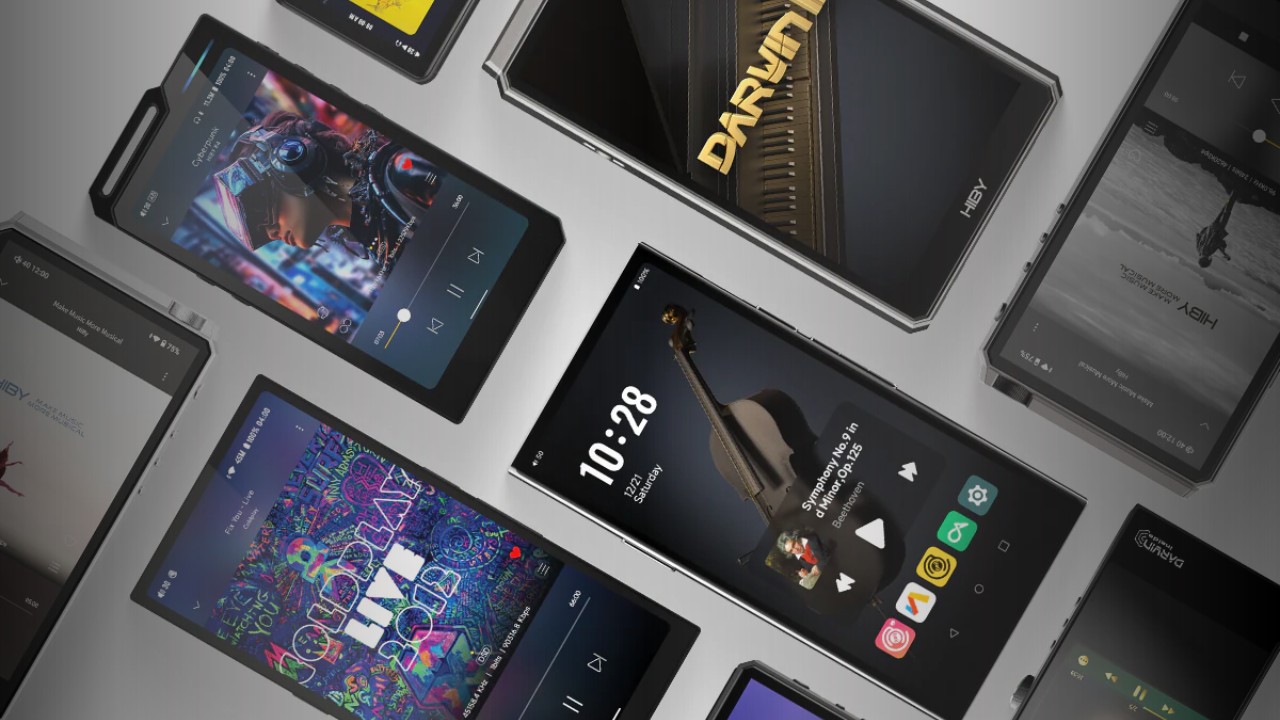
A beginner’s portable audio checklist, useful before comparing DACs, outputs, battery life, and operating systems.
This beginner-focused guide is the most useful starting point for anyone entering dedicated portable audio without a clear sense of what matters.
It explains why a separate Hi-Fi player can still be worthwhile even when a smartphone is available, citing benefits such as preserving phone battery life, keeping a music library separate, choosing a compact device for sports, and accessing higher-quality playback hardware.
Its value is not in promoting one model, but in helping new buyers understand the vocabulary, specifications, brands, and price spread before committing to a player.
Best for: First-time buyers who need orientation before choosing hardware
- Beginner-friendly explanation of Hi-Fi player basics
- Covers practical reasons to choose a separate player
- Avoids overly technical detail
- Useful before comparing specific models
Verdict: A sensible primer for reducing confusion before spending money on a dedicated music player.

2. Shanling M8: The company’s top player
Shanling M8 with a 5-inch Full HD display, open Android platform, and interchangeable headphone output system.
The Shanling M8 is presented as a high-end flagship portable player with a dual AK4499 DAC arrangement, an XMOS XU208 USB signal receiver, open Android OS, dual-band Wi-Fi, and support for SyncLink, DLNA, and AirPlay.
Its headphone section is notably flexible in the source material, with three gain modes, balanced output power quoted up to 840 mW at 32 ohms, single-ended output up to 260 mW at 32 ohms, and replaceable headphone output support for 3.5 mm single-ended, 4.4 mm balanced, 2.5 mm balanced, and 3.5 mm Pro connections.
A 5-inch Full HD display, Snapdragon 430 platform, 4 GB of RAM, 64 GB of storage, Bluetooth via Qualcomm CSR8675, and a 7000 mAh battery with up to 14 hours of operation complete the picture.
Best for: Listeners who want a flagship-style portable player with flexible headphone connectivity
- Dual AK4499 DAC chipset
- Replaceable headphone output options
- Balanced output rated up to 840 mW at 32 ohms
- Open Android OS with dual-band Wi-Fi
Verdict: The M8 stands out as a feature-rich high-end player for users who need strong output options and Android-based versatility.

3. Shanling M30 – New digital turntable and headphone amplifier
Shanling M30 configured as a transportable digital turntable and headphone amplifier with modular audio sections.
The Shanling M30 is described as portable, but the source makes clear that it is better treated as a hybrid between an all-in-one stationary system and a portable device.
At three kilograms and 260 x 210 x 50 mm, it is far from pocketable, yet it includes a very large 16,500 mAh battery and can also run from an external adapter.
Its modular construction is the defining point: the initial configuration includes an AKM4497 DAC, Korg 6P1 Nutube amplifier module, battery module, Bluetooth wireless module with SBC, aptX, aptX HD, LDAC, and LHDC, plus Wi-Fi. It also provides a broad selection of digital and analog inputs, Ethernet, and six headphone output types.
Best for: Transportable listening setups rather than true pocket use
- Modular architecture designed for future improvement
- Includes AKM4497 DAC and Korg Nutube amplification
- Large 16,500 mAh battery with external power option
- Extensive digital, analog, network, and headphone connectivity
Verdict: The M30 is compelling for listeners who want a battery-equipped desktop-style digital hub, not for anyone seeking a lightweight everyday player.

4. HiBy RS6: Digital player with R2R DAC
HiBy RS6 digital audio player with copper body, 5-inch IPS display, Android platform, and R2R DAC design.
The HiBy RS6 is a compact digital player built around an R2R DAC architecture, which is its clearest point of differentiation in the supplied material.
It runs Android 9 on a Snapdragon 660 processor with Adreno 512 graphics, uses a 5-inch IPS display with x 1080 resolution, and supports both 2.4 GHz and 5 GHz Wi-Fi.
The copper body, approximate 315 g weight, 130 x 73 x 15 mm dimensions, and 4500 mAh battery make it a substantial but still portable option for buyers specifically drawn to an R2R-based player.
Best for: Listeners specifically interested in an Android player with an R2R DAC
- R2R DAC architecture
- Snapdragon 660 processor with Android 9
- 5-inch x 1080 IPS display
- Dual-band Wi-Fi support
Verdict: The RS6 is the clearest source-backed pick here for buyers who want the character and concept of R2R conversion in a portable player.

5. FiiO M21: Portable Hi-Res Audio Player with Android 13 and LDAC
FiiO M21 with aluminum body, matte AG glass back, 4.7-inch display, and cassette-inspired protective case.
The FiiO M21 is positioned as a compact high-resolution player that combines modern Android functionality with a design nod to cassette-era portable audio.
The source highlights an aluminum chassis, matte AG glass back panel, 4.7-inch display with oleophobic coating, a protective case styled like an audio cassette, a retro user interface, and vintage sound effects.
On the audio side, it uses four Cirrus Logic CS43198 DAC chips in a fully differential eight-channel output arrangement and includes a dual-stage headphone amplifier providing both voltage and current amplification. Android 13 and LDAC support make it especially relevant for users who want a current streaming-friendly portable player with wireless codec support documented in the source.
Best for: Portable listeners who want Android streaming flexibility and a compact Hi-Res player
- Android 13 platform
- LDAC support
- Four Cirrus Logic CS43198 DAC chips
- Compact design with 4.7-inch display
Verdict: The M21 is one of the most accessible-looking choices in this set for buyers who want modern Android operation, LDAC, and a small carrying profile.

6. NiPO N2: A sophisticated approach to music playback
NiPO N2 compact digital audio player with discrete amplification, dual-band Wi-Fi, and fast startup behavior.
The NiPO N2 is presented as a compact digital audio player with emphasis on sound processing, amplifier architecture, internal layout, and fast operation.
The source cites SLEA, CMMT, and DRVC technologies for digital-to-analog conversion and amplification, a fully discrete amplifier architecture, and a 10-layer printed circuit board intended to reduce interference and support clean signal transmission.
It also uses an eight-core processor for responsive control and stable handling of large music collections, supports local high-resolution files and streaming services through dual-band Wi-Fi, powers on in under one second, and offers up to 13 hours of music playback from its built-in battery.
Best for: Users who value fast operation, local files, and streaming support in a compact player
- Fully discrete amplifier architecture
- 10-layer circuit board design to mitigate interference
- Dual-band Wi-Fi for streaming services
- Up to 13 hours of battery playback
Verdict: The N2 is a strong fit for listeners who want a compact player with documented attention to internal architecture and interface responsiveness.

7. Best Hi-Res Players: Choosing the right player for your favorite music
Shanling M0 Pro miniature Hi-Res player with 1.54-inch touch display, aluminum case, and balanced-output adapter.
This source article is a broader Hi-Res player roundup rather than a single product launch, and the supplied excerpt gives its most concrete detail to the Shanling M0 Pro.
That miniature player is described as an aluminum-bodied device measuring 43.8 x 45 x 13.8 mm and weighing 36.8 g, with a 1.54-inch color touch display, a 650 mAh battery rated for up to 14.5 hours, dual ESS Sabre ES9219 DACs, three amplifier gain levels, and output power quoted at 90 mW into 32 ohms unbalanced or 236 mW into 32 ohms balanced.
It also has a two-way Bluetooth adapter with LDAC and aptX support, a microSD card slot, and a 2.5 mm balanced jack with a 2.5 mm to 3.5 mm adapter in the kit.
Best for: Listeners who prioritize extreme portability and simple local-file carrying
- Very small 36.8 g aluminum body
- Up to 14.5 hours of battery life
- Dual ESS Sabre ES9219 DACs
- Two-way Bluetooth with LDAC and aptX support
Verdict: Based on the supplied excerpt, the Shanling M0 Pro is the standout miniature option for users who want a tiny player with balanced output and two-way Bluetooth.

8. Hiby WH2: TWS headphones with LDAC support and Bluetooth 5.22
HiBy WH2 true wireless earphones with LDAC support, app control, IPX4 splash protection, and charging case.
The HiBy WH2 is not a portable music player, but it is relevant as a wireless listening partner for players and phones that support suitable Bluetooth codecs.
The source describes it as a true wireless headphone model offered in two versions: one with a single dynamic driver and another with dual balanced armature drivers.
It supports LDAC, UAT TWS, AAC, and SBC transmission, can be controlled through the HiBy Blue app, offers an adjustable digital crossover, allows either earbud to be used separately, and carries an IPX4 splash-protection rating. Battery life is quoted at up to 6 hours without recharging and up to 30 hours with the charging case.
Best for: Buyers who need LDAC-capable true wireless headphones to pair with a player
- LDAC and UAT TWS codec support
- Two driver-configuration options
- HiBy Blue app control
- Up to 30 hours with charging case
Verdict: The WH2 should be considered an accessory rather than a player, but its codec support makes it relevant for wireless portable-audio setups.
9. Cayin N7+ Digital Audio Player: Audiophile Power in Your Pocket
Cayin N7+ digital audio player with 5-inch Full HD display, aluminum-magnesium housing, and balanced amplifier architecture.
The Cayin N7+ is a portable digital music player positioned as a more powerful development of the N7, with improved energy management and an upgraded power transistor according to the source.
Its audio architecture centers on a discrete digital-to-analog converter and a fully balanced headphone amplifier using bipolar transistors, with Class A or Class A/B operation.
The amplifier circuit is optimized for both balanced and unbalanced headphone outputs, and the internal approach is described as fully symmetrical in circuitry and printed circuit board layout. The player also features an aluminum-magnesium alloy housing with sandblasted titanium surface, a 5-inch Full HD TFT multi-touch display with gesture control and scratch-resistant glass, and extended battery life compared with its predecessor, though the excerpt does not provide a precise runtime.
Best for: Headphone users who want a high-end portable player with discrete and balanced circuitry
- Discrete DAC architecture
- Fully balanced headphone amplifier
- Class A or Class A/B operation
- 5-inch Full HD TFT multi-touch display
Verdict: The N7+ is aimed at serious portable listening where amplifier topology and balanced design are central priorities.

10. iBasso DX170: Player with the latest generation Dual DAC chipset
iBasso DX170 Android Hi-Res player with dual CS43131 DACs, FPGA Master architecture, and 5-inch display.
The iBasso DX170 is an Android Hi-Res player built around a dual Cirrus Logic CS43131 DAC chipset and iBasso’s FPGA Master audio architecture.
The source explains that the custom FPGA receives the audio signal from the SoC and feeds it directly to the DAC chips while acting as the master clock for the system, supported by two independent NDK femtosecond crystal oscillators.
File support is specified for 32-bit/384 kHz PCM, native DSD256, and full 8x MQA signals. The player also uses a Rockchip RK4566 four-core SoC for smooth operation and includes a 5-inch bright color display.
Best for: Hi-Res file listeners who want an Android player with detailed clocking architecture
- Dual Cirrus Logic CS43131 DAC chipset
- FPGA Master audio architecture
- Supports 32-bit/384 kHz PCM and native DSD256
- 5-inch color display
Verdict: The DX170 is a technically focused portable player for buyers who care about DAC implementation, clocking, and broad high-resolution file support.
Quick comparison
The strongest distinction between these entries is not a simple good-versus-better hierarchy.
Some are beginner resources, some are compact everyday players, some are high-output flagship-style devices, and one is a headphone accessory rather than a player.
The table below summarizes the most defensible differences from the supplied material.
| Product | Best for | Verdict |
|---|---|---|
| Choosing your first Hi-fi player: 10 useful tips for beginners | Understanding the basics before buying | A practical orientation guide rather than a product recommendation. |
| Shanling M8: The company’s top player | Flexible high-end portable playback | Flagship-style Android player with strong documented output and replaceable headphone connections. |
| Shanling M30 – New digital turntable and headphone amplifier | Transportable desktop-style use | Too large for normal pocket use, but rich in modularity, battery capacity, and connectivity. |
| HiBy RS6: Digital player with R2R DAC | R2R DAC enthusiasts | A copper-bodied Android player whose clearest distinction is its R2R conversion architecture. |
| FiiO M21: Portable Hi-Res Audio Player with Android 13 and LDAC | Compact Android streaming and wireless use | A modern portable option with LDAC, Android 13, four CS43198 DAC chips, and retro-inspired styling. |
| NiPO N2: A sophisticated approach to music playback | Fast compact playback with local files and streaming | Focuses on discrete amplification, internal interference control, quick startup, and dual-band Wi-Fi. |
| Best Hi-Res Players: Choosing the right player for your favorite music | Miniature player research, especially the Shanling M0 Pro excerpt | The supplied detail highlights the Shanling M0 Pro as an ultra-small player with dual DACs and two-way Bluetooth. |
| Hiby WH2: TWS headphones with LDAC support and Bluetooth 5.22 | Wireless headphones to pair with a portable player | Not a music player, but relevant as LDAC-capable true wireless listening hardware. |
| Cayin N7+ Digital Audio Player: Audiophile Power in Your Pocket | High-end balanced headphone listening | Emphasizes a discrete DAC, fully balanced amplifier, and Class A or Class A/B operating modes. |
| iBasso DX170: Player with the latest generation Dual DAC chipset | High-resolution local files and Android playback | A dual-CS43131 Android player with FPGA clocking architecture and broad Hi-Res format support. |
Frequently asked questions
Why buy a dedicated portable music player instead of using a smartphone?
The beginner source gives several practical reasons: preserving phone battery life, keeping a music library separate from everyday phone storage, choosing a compact device for activity, and using hardware designed specifically for higher-quality music playback.
Should I choose an Android-based music player?
Choose Android if you want app-based playback, streaming services, Wi-Fi features, or a more phone-like interface.
The Shanling M8, HiBy RS6, FiiO M21, and iBasso DX170 all include Android platforms in the supplied material, while the NiPO N2 is also described as supporting streaming through dual-band Wi-Fi.
Which specifications matter most when comparing portable players?
Start with the headphone outputs, amplifier design, battery life, size, weight, operating system, wireless support, and DAC architecture.
For example, the M8 emphasizes replaceable outputs and high quoted balanced power, the RS6 emphasizes R2R conversion, the M0 Pro emphasizes extreme compactness, and the DX170 emphasizes dual DACs plus FPGA clocking.
Is a larger transportable player worth considering?
Only if your listening habits suit it.
The Shanling M30 has a large battery, modular design, many inputs, Ethernet, and multiple headphone outputs, but the source also states that it weighs three kilograms, making it better for desk, room-to-room, or transportable use than everyday pocket listening.
How to Choose the Right Portable Music Player
Begin with your actual listening routine rather than the most elaborate specification sheet.
If you are new to the category, the beginner guide is the safest first stop because it explains why a separate player might be useful and helps decode the terminology before you compare models.
For pocket use, size and battery life matter immediately. The Shanling M0 Pro excerpt points to an exceptionally small 36.8 g player with up to 14.5 hours of battery life, while the NiPO N2 is positioned as compact, fast to start, and capable of up to 13 hours of playback. The FiiO M21 adds a compact Android 13 approach with LDAC support and a 4.7-inch display, making it a natural candidate for buyers who want a modern app-friendly player without moving into the largest devices in this set. For higher-end headphone use, study the amplification and output details. The Shanling M8 offers multiple replaceable headphone output options and three gain modes, the Cayin N7+ emphasizes a discrete DAC and fully balanced amplifier with Class A or Class A/B operation, and the iBasso DX170 focuses on dual CS43131 DACs with FPGA Master architecture. If R2R conversion is specifically attractive, the HiBy RS6 is the clearly documented option here. Finally, be honest about portability. The Shanling M30 may be called portable in the source, but its weight and size make it a transportable all-in-one digital turntable and headphone amplifier rather than a pocket player. The HiBy WH2, meanwhile, is not a player at all; it belongs in the conversation only as LDAC-capable true wireless headphones for someone building a wireless portable setup. The best choice is the one whose form, outputs, battery behavior, and software match the way you actually listen.