An AV receiver is rarely just another box in the rack.
At its best, it decides how confidently a home cinema handles amplification, surround decoding, video switching, room calibration, streaming and future expansion.
The most interesting models are not always the ones with the longest feature list; they are the ones whose role in a system is clear. The source material here spans true AV receivers, stereo receivers, integrated amplifiers, speakers, a turntable, custom-install amplification and a comparison piece that separates receivers from processors and speakers. That mix is useful, provided each product is judged for what it actually is rather than forced into the same category. For buyers focused on AV receivers, the Onkyo TX-NR5100, Yamaha RX-V6A, Yamaha RX-A6A and the comparison entry covering Denon, Arcam, Block and Marantz are the most directly relevant. The other products matter as supporting or alternative components: power-amplifier integration, stereo-first systems, active speakers, vinyl playback and zone expansion.

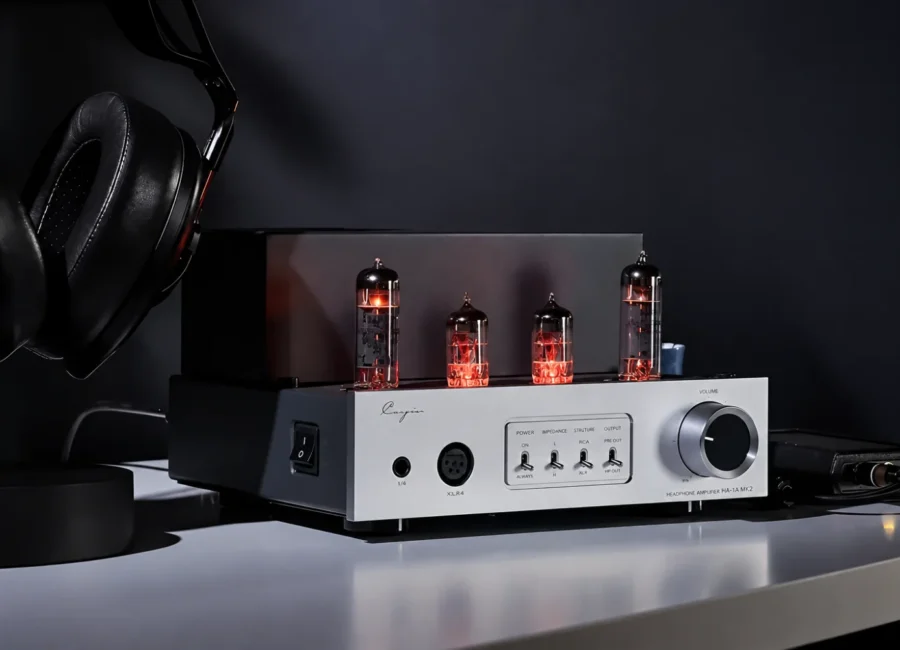
1. Vincent SV-228: Integrated amplifier with improved dynamics and resolution
Vincent SV-228 hybrid integrated amplifier with a vintage-style front panel and built-in VU meter.
The Vincent SV-228 is not an AV receiver, but it has a direct home-theater angle: its Main Input allows it to be used as a power amplifier when connected to an AV receiver.
The source describes it as a hybrid integrated amplifier in Vincent’s Power Line series, retaining the brand’s traditional warmth while improving dynamics and resolution over predecessors.
Bluetooth 5.0 broadens everyday streaming options, while the front-panel VU meter and switchable illumination keep the vintage-inspired presentation central to its appeal.
Best for: Adding a two-channel hybrid amplifier to an AV-based system
- Main Input for use with an AV receiver
- Bluetooth 5.0 wireless streaming
- Hybrid input stage with tubes
- Automatic shutdown when no signal is present
Verdict: Choose the Vincent SV-228 if the goal is to bring a warmer, stereo-focused amplifier into a home-theater setup rather than replace the AV receiver itself.

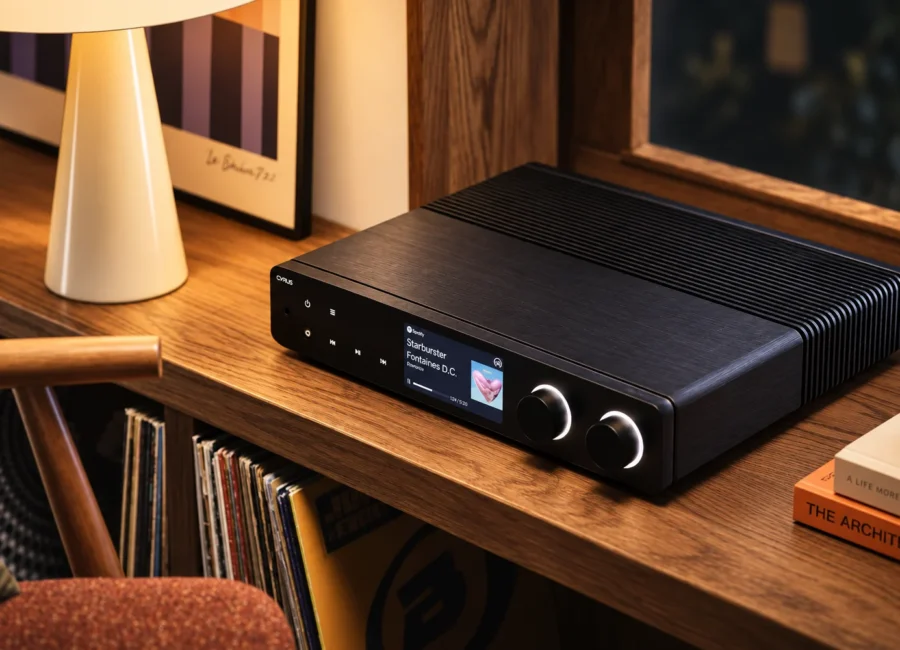
2. Pioneer P2-K: Impressive music center that packs a punch
Pioneer P2-K music system with separate source and stereo receiver units plus matching two-way speakers.
The Pioneer P2-K is a compact music center rather than an AV receiver.
Its relevance is strongest for listeners who want a self-contained stereo file-playback system with separate source and receiver units plus two-way speakers.
The system replaces a traditional CD player approach with a network file player that supports high-resolution streaming audio, while the 3.5-inch color LCD displays file information, album artwork and folder lists, albeit with limited on-screen navigation capacity for large libraries.
Best for: Compact stereo listening built around stored and streamed music files
- Network file player instead of a CD player
- Supports high-resolution streaming audio
- Separate source and stereo receiver units
- Color LCD shows file data and artwork
Verdict: The Pioneer P2-K is better viewed as a neat stereo music system than as a surround-sound hub.
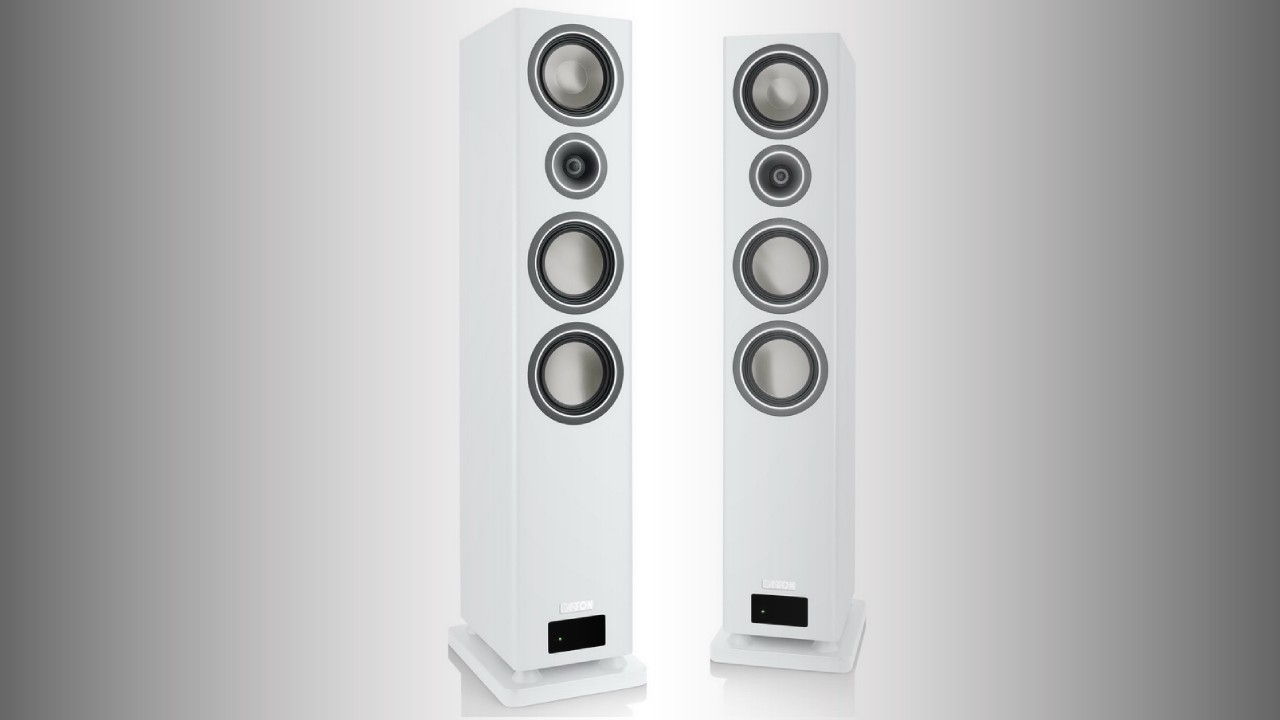
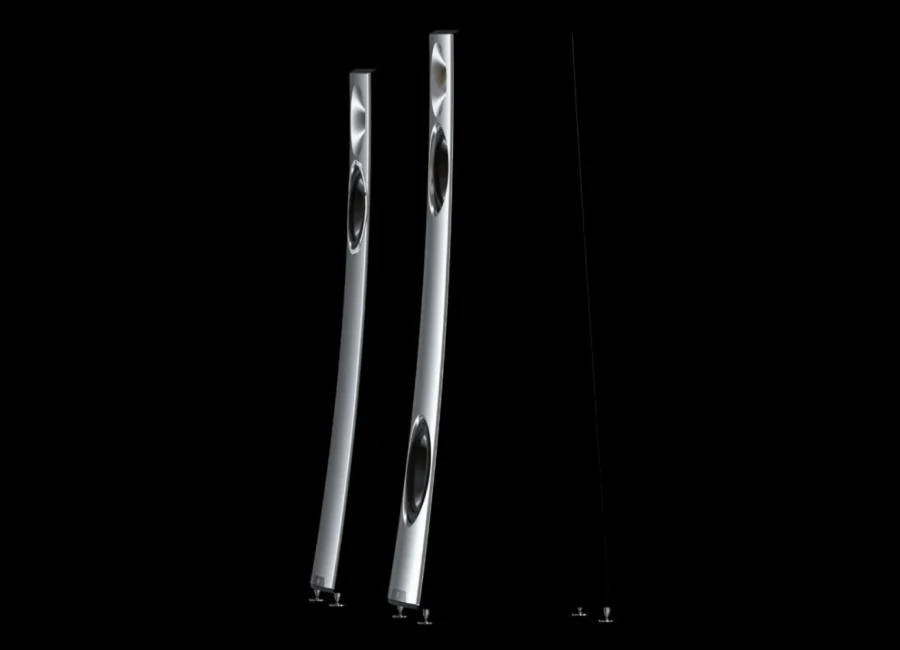
3. Canton Smart Townus 8: Classic speakers that can be used for anhything
Canton Smart Townus 8 active floorstanding speaker with rounded cabinet styling and multiple direct-input options.
The Canton Smart Townus 8 is an active speaker system, not an AV receiver, but it may appeal to buyers who want to connect sources directly without building a conventional receiver-led setup.
The source highlights reinforced three-way cabinets, quality crossover components, custom internal cabling, a 25 mm ceramic-dome tweeter and 174 mm titanium drivers with Wave suspensions.
Its input set is broad for a speaker system, covering balanced XLR, line RCA, USB with an XMOS driver, optical and coaxial digital inputs.
Best for: Source-direct active speaker systems
- Three-way active speaker design
- Balanced XLR and line RCA inputs
- USB input with XMOS driver
- Optical and coaxial inputs for TV or player connection
Verdict: The Canton Smart Townus 8 is a receiver alternative for listeners who want the speakers themselves to handle much of the system connectivity.

4. Onkyo TX-NR5100: Fully equipped AV receiver
Onkyo TX-NR5100 seven-channel AV receiver designed for 5.2.2 home-theater layouts.
The Onkyo TX-NR5100 is one of the most directly relevant AV receivers in the source set.
It uses a seven-channel configuration with discrete power amplifiers, supports 5.2.2 speaker layouts and decodes Dolby Atmos and DTS:X.
For rooms where ceiling speakers are impractical, Dolby Atmos Height Virtualizer and DTS Virtual:X provide height-effect simulation. AccuEQ handles automatic surround adjustment, while four HDMI inputs support 4K video, Dolby Vision and HDR10, with 1080p-to-4K upscaling also noted in the source.
Best for: A living-room 5.2.2 Dolby Atmos system
- Seven-channel AV receiver configuration
- Dolby Atmos and DTS:X decoding
- AccuEQ automatic surround adjustment
- 4K HDMI with Dolby Vision and HDR10
Verdict: The Onkyo TX-NR5100 is the clearest pick here for a straightforward seven-channel AV receiver with modern surround processing and practical room setup tools.

5. Yamaha RX-V6A: AV Receiver for a modern home theater
Yamaha RX-V6A AV receiver with seven HDMI inputs for modern home-theater source switching.
The Yamaha RX-V6A is presented as a 7.2-channel AV receiver for a modern home theater, with Dolby Atmos and DTS:X support as its key step up from smaller models in the range.
It has seven HDMI inputs and one output, supporting 4K Ultra HD with Dolby Vision and HLG, plus 8K support on three of the seven inputs.
The source also notes analog and digital inputs, discrete-element amplification, high output current, quality DACs and Yamaha’s YPAO auto-calibration for matching the system to the room and speakers.
Best for: A feature-rich Yamaha home-theater hub with broad HDMI connectivity
- 7.2-channel configuration
- Dolby Atmos and DTS:X support
- Seven HDMI inputs and one output
- YPAO room calibration
Verdict: The Yamaha RX-V6A suits buyers who want a surround receiver with extensive source connectivity and Yamaha’s own calibration system.

6. Audio-Technica AT-LPW40WN: A classic vinyl player at a reasonable price
Audio-Technica AT-LPW40WN manual belt-drive turntable with wood-veneer MDF chassis and carbon-fiber tonearm.
The Audio-Technica AT-LPW40WN is a fully manual belt-drive turntable, so it belongs upstream of an AV or stereo system rather than in the receiver category.
The source describes an MDF chassis with natural wood veneer, a balanced cast-aluminum platter, rubber mat damping and a low-noise motor with stabilized speed control for 33.3 and 45 rpm playback.
A carbon-fiber tonearm and pre-adjusted AT-VM95E moving-magnet cartridge complete the package.
Best for: Adding vinyl playback as a source component
- Fully manual belt-drive design
- MDF chassis with wood veneer finish
- Stabilized 33.3 and 45 rpm rotation
- Carbon-fiber tonearm with AT-VM95E cartridge
Verdict: The AT-LPW40WN is relevant to an AV receiver system only as a vinyl source, not as a control or amplification component.

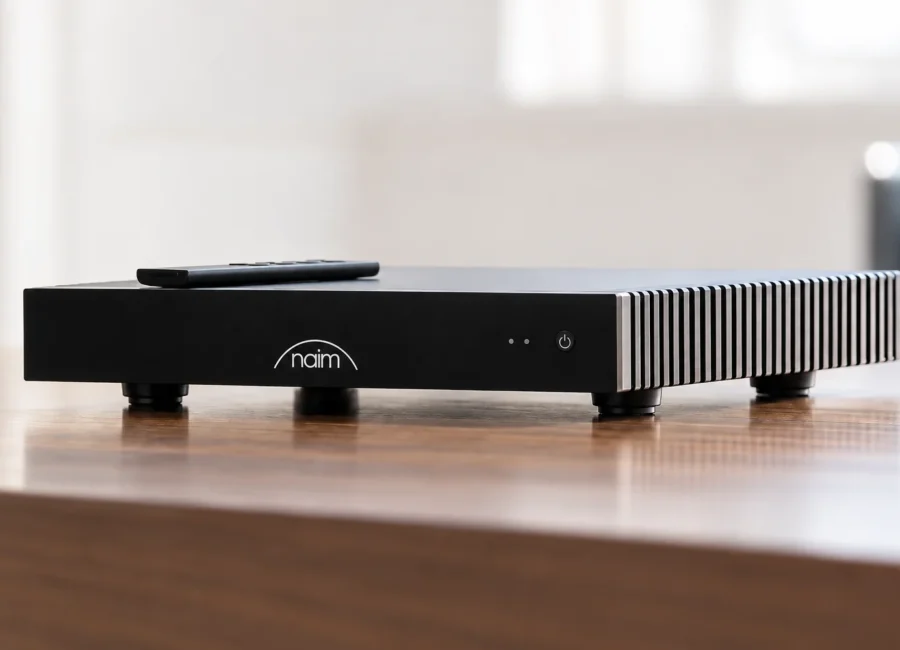
7. Onkyo TX-8390: State-of-the-art Stereo receiver
Onkyo TX-8390 stereo receiver with aluminum front panel and network audio capability.
The Onkyo TX-8390 is a two-channel stereo receiver, making it a strong alternative for music-first buyers who do not need surround decoding.
The source specifies a 5 mm extruded aluminum front panel, a massive high-current transformer, audio-specific capacitors, phase-shift-free amplifier circuitry and a discrete transistor output stage.
It also adapts AccuEQ acoustic calibration for stereo use and includes a high-grade AK4458 DAC, VLSC filtering, dual-band Wi-Fi, AirPlay, Bluetooth and network playback of supported high-resolution formats.
Best for: Stereo listeners who want receiver convenience without surround sound
- Two-channel receiver with 200 W per channel at 6 ohms
- AccuEQ calibration adapted for stereo
- AK4458 DAC with VLSC filtering
- Wi-Fi, AirPlay and Bluetooth support
Verdict: The Onkyo TX-8390 is the stereo-focused choice for those who value network features, calibration and power more than multichannel cinema.

8. Yamaha XDA-AMP5400RK: Amplifier with eight channels of audiophile-quality
Yamaha XDA-AMP5400RK rack-mount amplifier built for multi-zone custom audio expansion.
The Yamaha XDA-AMP5400RK is a custom-install power amplifier, not an AV receiver.
Its AV relevance comes from expansion: it can work with Yamaha AV receivers equipped with zone pre-outs to add speaker coverage or output power in additional zones.
The source describes eight channels in a slim 1U chassis, four audio I/O buses for flexible zone configurations, included jumpers and cables, audio outputs for powered subwoofers or subwoofer amplifiers, and bridge mode for each of the four amplification zones.
Best for: Expanding custom multiroom or extra-zone speaker systems
- Eight amplification channels
- Slim 1U custom-install design
- Works with Yamaha AV receivers with zone pre-outs
- Bridge mode available for each amplification zone
Verdict: The Yamaha XDA-AMP5400RK is a specialist expansion amplifier for installed systems, not a replacement for an AV receiver.
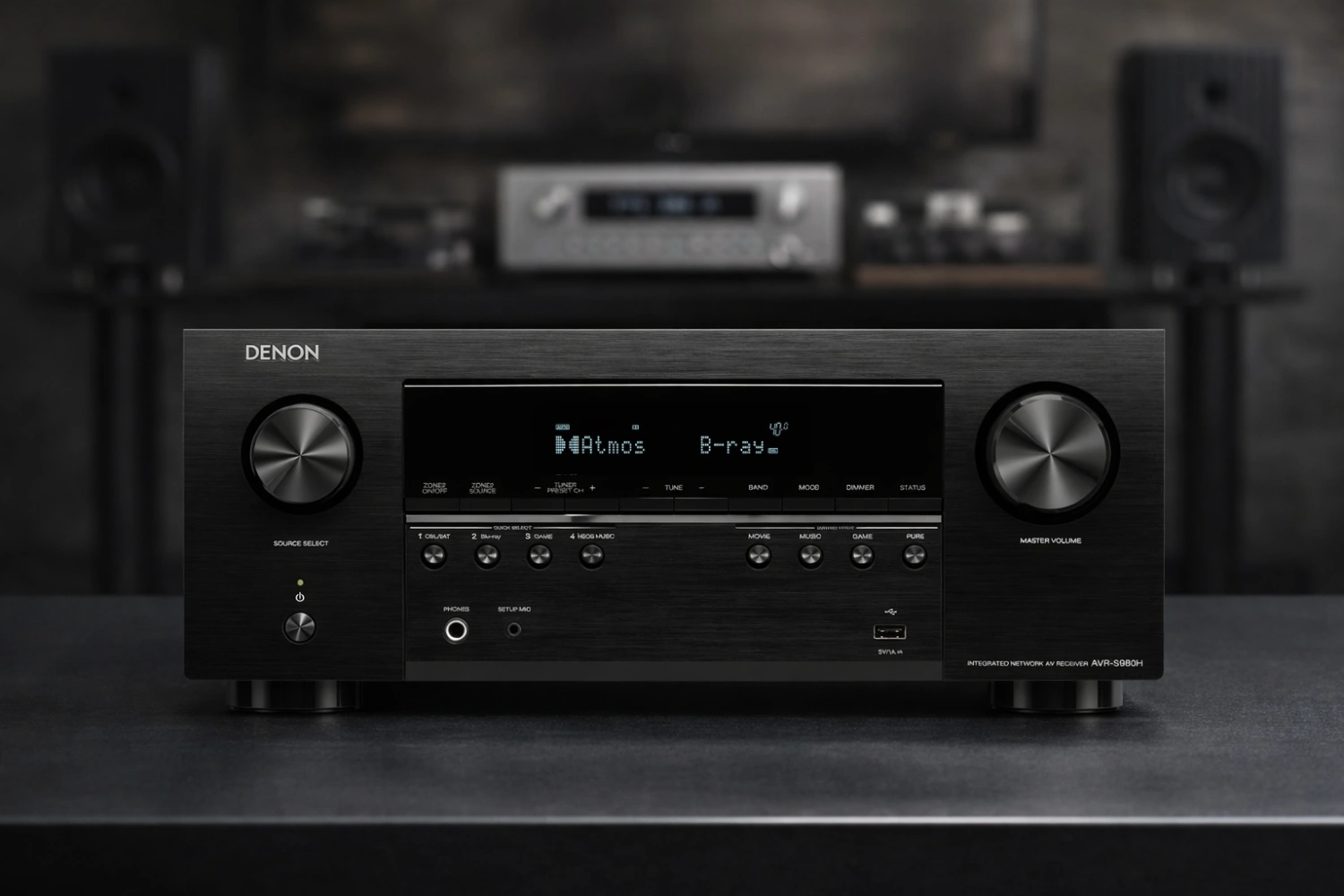
9. Best AV Receivers Compared: Denon, Arcam, Block and Marantz
Comparison context covering Denon, Arcam, Block and Marantz AV components alongside a passive Canton speaker option.
This comparison article is valuable because it distinguishes products that are often grouped together too loosely.
The Denon AVR-S980H, Arcam AVR31 and Block CVR-200 AV are integrated AV receivers, while the Marantz AV7706 is an AV processor requiring external amplification, and the Canton Ergo 690 is a passive floorstanding speaker rather than AV electronics.
Within that context, the source names the Denon as the most convincing all-round recommendation, the Arcam for advanced processing and installation flexibility, the Block for disc-based all-in-one use, and the Marantz for separates-based home cinema.
Best for: Cross-shopping AV receivers, processors and system-building paths
- Separates receivers, processors and speakers clearly
- Denon identified as the all-round recommendation
- Arcam highlighted for Dirac Live and 16-channel processing
- Marantz positioned for separates-based cinema
Verdict: The article is most useful as a reality check before buying, especially for avoiding confusion between an AV receiver and an AV processor.

10. Yamaha RX-A6A: AV Receiver with artificial intelligence
Yamaha RX-A6A AV receiver featuring SURROUND:AI processing and advanced digital audio architecture.
The Yamaha RX-A6A is the most advanced Yamaha AV receiver entry in the supplied material.
It supports Dolby Atmos and DTS:X and uses Yamaha’s SURROUND:AI technology to analyze entertainment content and optimize elements such as background music, dialogue and sound effects.
The source also highlights a 32-bit ESS SABER PRO Premier ES9026PRO DAC, Yamaha’s DOPG grounding concept, a Qualcomm QCS407 chipset and support for 8K to 4K resolution and higher refresh-rate HDMI integration.
Best for: A higher-spec Yamaha AV receiver with advanced surround optimization
- Dolby Atmos and DTS:X support
- SURROUND:AI content analysis
- ESS SABER PRO Premier DAC
- 8K and 4K HDMI ecosystem support
Verdict: The Yamaha RX-A6A is the Yamaha choice here for buyers who want more advanced processing and the brand’s SURROUND:AI approach.
How to choose from this AV receiver shortlist
Start by deciding whether you truly need an AV receiver.
If the system must power multiple speakers, decode Dolby Atmos or DTS:X, switch HDMI sources and calibrate a surround layout, focus on the dedicated AV receiver entries: the Onkyo TX-NR5100, Yamaha RX-V6A, Yamaha RX-A6A and the receiver comparison covering Denon, Arcam and Block.
The Onkyo TX-NR5100 is the most straightforward seven-channel choice in this set for a 5.2.2 living-room layout. The Yamaha RX-V6A adds broad HDMI connectivity and YPAO calibration in a 7.2-channel design. The Yamaha RX-A6A is the more ambitious Yamaha option, with SURROUND:AI and higher-end digital architecture described in the source. If music is the priority and surround sound is not required, a stereo receiver or integrated amplifier may be the better match. The Onkyo TX-8390 offers stereo receiver convenience with calibration, network features and substantial stated output. The Vincent SV-228 is not a receiver at all, but its Main Input makes it interesting beside an AV receiver when a separate two-channel amplification path is desired. Be especially careful with category labels. A processor such as the Marantz AV7706 needs external amplification. A custom-install amplifier such as the Yamaha XDA-AMP5400RK expands zones but does not perform the receiver’s core switching and decoding role. Active speakers such as the Canton Smart Townus 8 can reduce the need for a conventional receiver in some systems, while a turntable such as the Audio-Technica AT-LPW40WN is simply a source component. The right purchase is the one whose role is unambiguous in your room, with the right amplification, input structure, surround format support and expansion path for the system you are actually building.