

The Onkyo Muse Y-50 is the flagship of the series and a more serious option for users with demanding speaker systems or larger rooms. It features a fully digital signal path and an Axign Class-D amplifier stage with high-current MOSFET outputs, delivering 250 watts per channel at 4 ohms. This allows it to confidently compete with speaker systems where matching is not a primary concern.
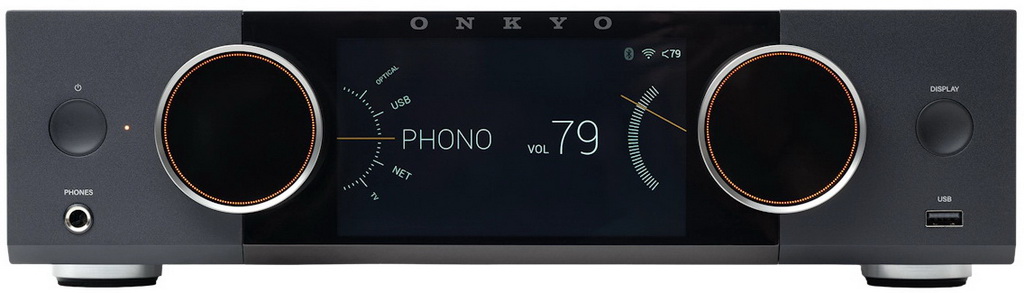
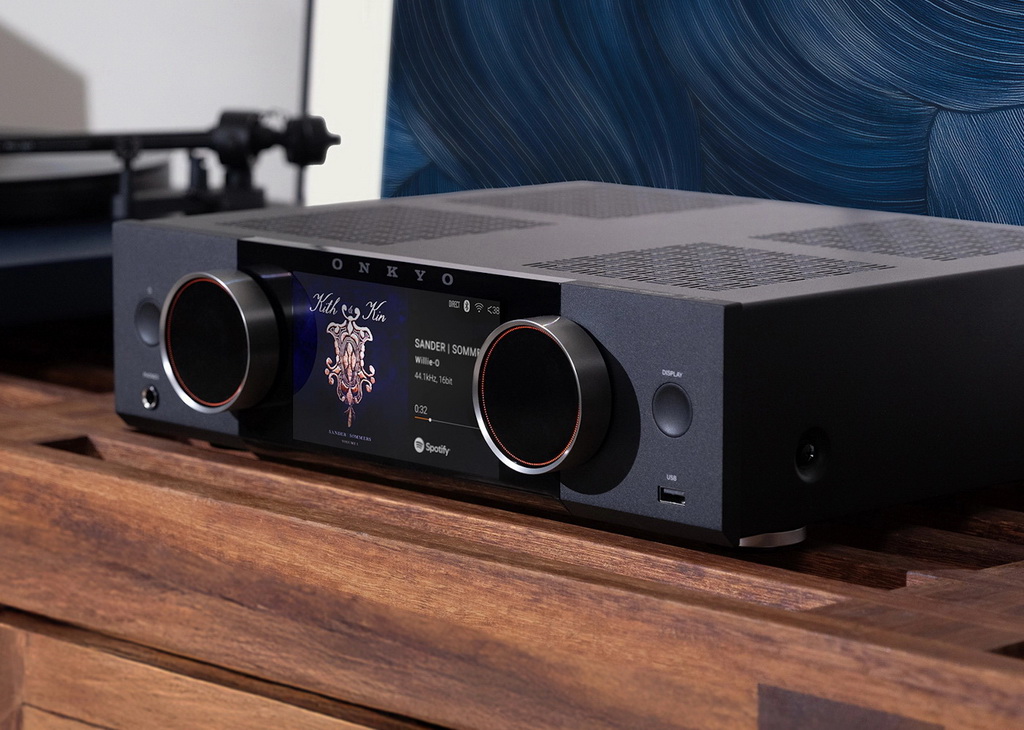
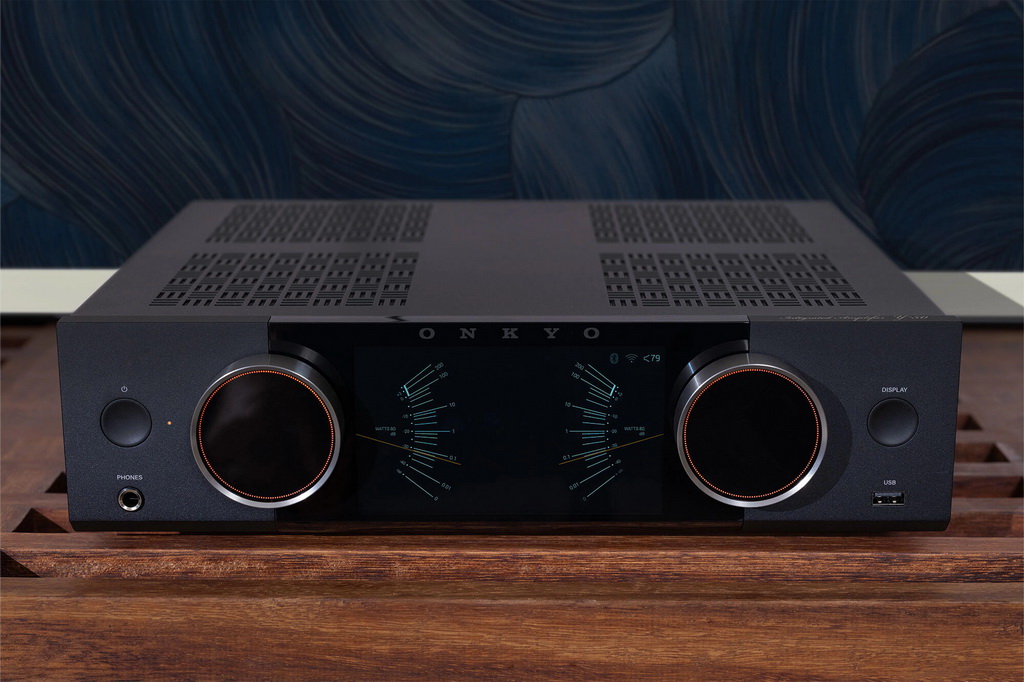
The front panel is dominated by a 5.46-inch color LCD display, which displays album art, track metadata, and an analog audio level meter. This isn't just a decorative element—it reduces dependence on a phone or tablet during playback, a challenge many streaming amplifiers still face.
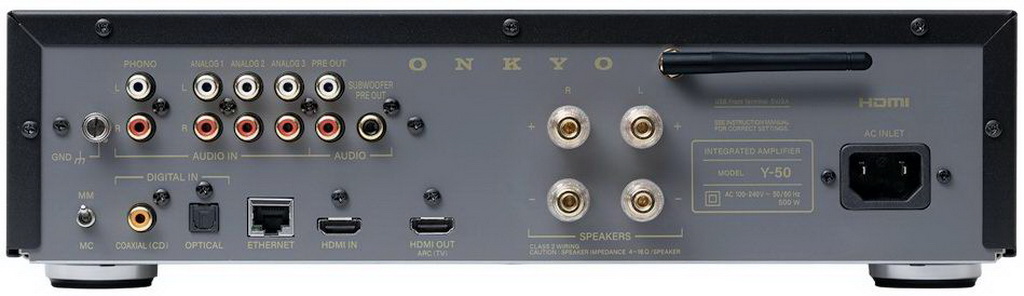
Connectivity options are extensive. The Onkyo Muse Y-50 includes three analog RCA inputs, a coaxial digital input, HDMI ARC for connecting to a TV and game audio, and a built-in MM/MC phono preamp. Ethernet and Wi-Fi are standard, as is support for Spotify Connect, TIDAL Connect, Qobuz Connect, Chromecast, and AirPlay 2. A subwoofer output and upgraded speaker terminals complete the rear panel.
Onkyo also includes Onkyo Room EQ, which allows for basic room calibration—an increasingly expected feature in this price segment that helps the Onkyo Muse Y-50 compete more directly with feature-rich rivals.
The Muse series includes two models—the Y-50 and Y-40—both versatile network integrated amplifiers built around fully digital signal paths and Axign Class-D amplifiers. The Onkyo Muse Y-50 delivers 250 watts per channel into 4 ohms, while the Onkyo Muse Y-40 delivers 150 watts per channel into the same load. Both models are compact, measuring just under four inches tall and designed to drive full speaker systems without the need for rack-mounted components.
Both Muse models have identical dimensions—3.9 x 13.8 x 12.6 inches (W x H x D)—and are available in black or silver. Visual details are understated: the oversized volume knob and air vents are adorned with a traditional Japanese San Kuzushi motif.


