Which DAC should you choose for your hi-fi system? That Stand Out
A system-focused DAC guide covering the Primare PRE35 DAC, Mytek Manhattan DAC II and Leema Constellation Libra, with advice based on architecture, connectivity and use case.

Choosing a DAC is not just a question of decoding formats.
The right choice depends on where the component will sit in the system: some DACs are designed to operate as digital hubs, some are built into full preamplifier platforms, and some are aimed at more specialised balanced or computer-audio installations.
The three models here take clearly different approaches. The Primare PRE35 DAC combines preamplifier duties with a DAC module and extensive system-control options. The Mytek Manhattan DAC II is presented as a technically advanced USB DAC with serious attention paid to conversion, clocking, power supply and headphone use. The Leema Constellation Libra is a full-size flagship DAC with a balanced dual-mono architecture and unusual interface flexibility. This guide focuses only on what is supported by the supplied product material: architecture, connectivity, control features, supported formats where stated, and likely system fit. It does not make claims about sound quality, value, measurements or ownership experience beyond the source information.
1. Primare PRE35 DAC: Preamplifier and DAC combined
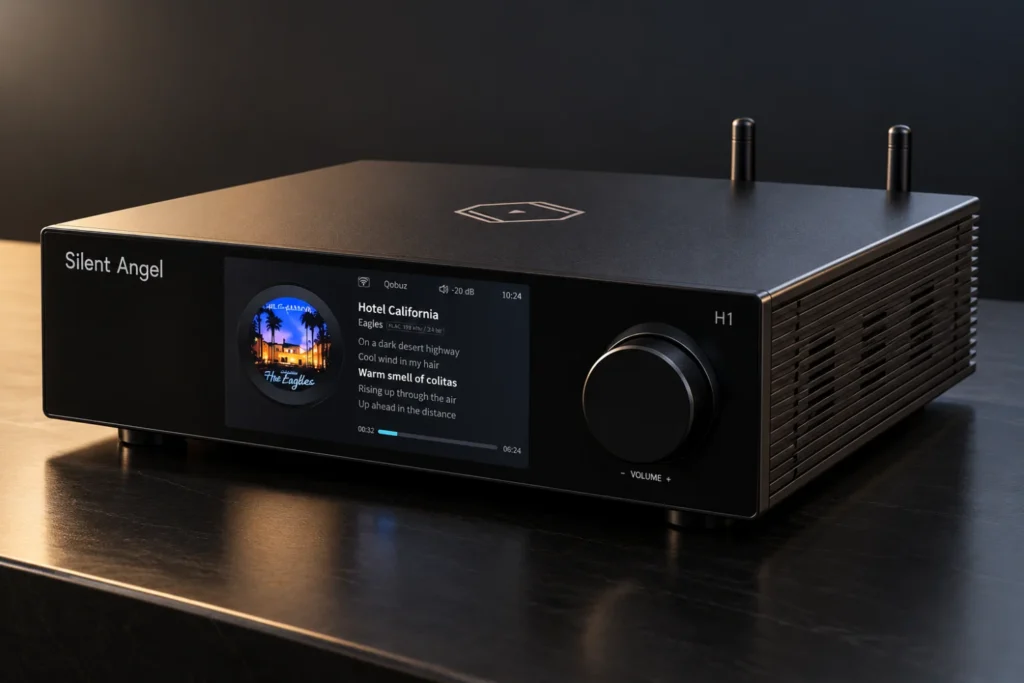
Primare PRE35 DAC with minimalist front-panel controls, volume knob, input selector and switchable OLED display.
The Primare PRE35 DAC is the most system-integrated choice in this selection.
Rather than being only a standalone digital converter, it combines preamplifier functions with a built-in media module using an AKM AK4497 DAC, specified for 32-bit/768 kHz PCM and DSD 256/11.2 MHz handling.
Its layout borrows from the Primare I35 amplifier, with a minimalist front panel, volume control, input selector, navigation keys and a switchable OLED display with large characters and adjustable brightness. Its appeal is strongest for listeners building a control centre around both analogue and digital sources. The rear panel includes two balanced inputs and one balanced output on XLR, four RCA inputs, two RCA outputs, a recorder output, and system-control connections including IR, trigger, RF and RS232. The setup menu also allows inputs to be renamed, disabled and level-adjusted. The source specifically notes that the PRE35 is advisable to use with Primare’s A35.2 power amplifier and CD35 CD player, connected through relay cables and trigger sockets to form a balanced High End system.
Best for: Primare-based systems needing a preamplifier and DAC in one chassis
- Combines preamplifier and DAC functions
- AKM AK4497 DAC module with stated 32-bit/768 kHz and DSD 256 support
- Balanced XLR and RCA connectivity
- Configurable inputs and adjustable OLED display
Verdict: Choose the Primare PRE35 DAC if the priority is a central preamplifier-DAC with flexible input management, balanced connections and close integration with matching Primare components.

2. Mytek Manhattan DAC II: Technically advanced USB DAC
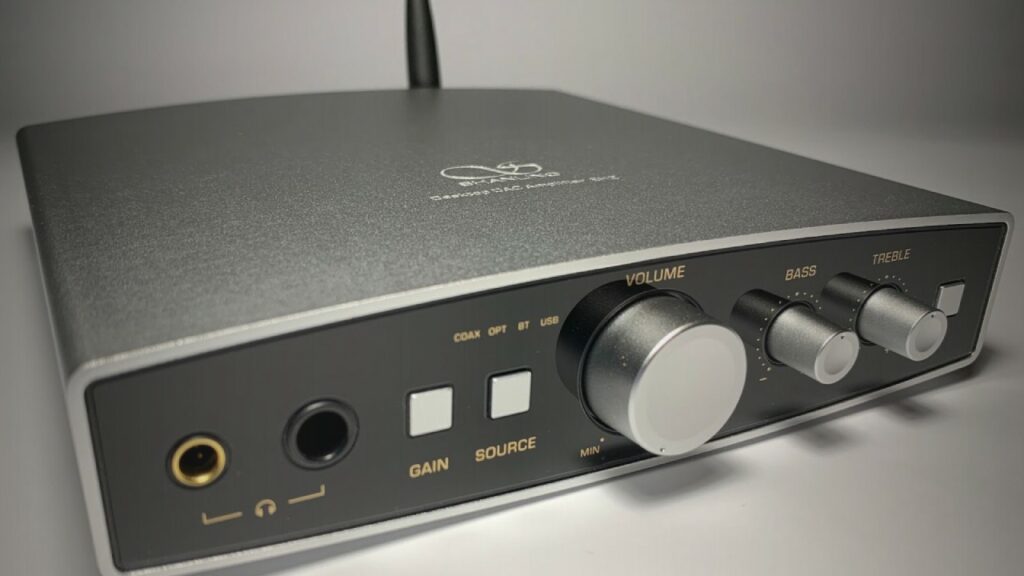
Mytek Manhattan DAC II with front-panel headphone outputs and a full-width chassis available in multiple finishes.
The Mytek Manhattan DAC II is described in the source as the manufacturer’s most expensive and technically advanced USB DAC.
It is built around the ESS Technologies ES9038 Pro flagship DAC chip, with Mytek adding its own linear power supply and Femto Clock generator to support the converter platform.
The article also notes substantial physical construction, with manufacturing in Poland and a case made in California, as well as black, gold and matte silver finish options. This model stands out for users who want a USB DAC with serious headphone provision. The front panel carries two headphone outputs, allowing connection of two pairs of regular headphones or, via an adapter to 4-pin XLR, demanding Hi-End models through a balanced connection. The source states a declared amplifier power of 6 W and impedance of 0 Ohm. An IR remote control is included, and the housing can be installed on rubber feet or on the supplied spikes.
Best for: Computer-audio and headphone-focused systems needing an advanced USB DAC
- Uses the ESS ES9038 Pro DAC chip
- Mytek linear power supply and Femto Clock generator
- Two front-panel headphone outputs
- Balanced headphone connection possible via adapter
Verdict: Choose the Mytek Manhattan DAC II if you want a technically ambitious USB DAC with dedicated attention to conversion, clocking, power supply and headphone use.

3. Leema Constellation Libra: Fully balanced flagship DAC
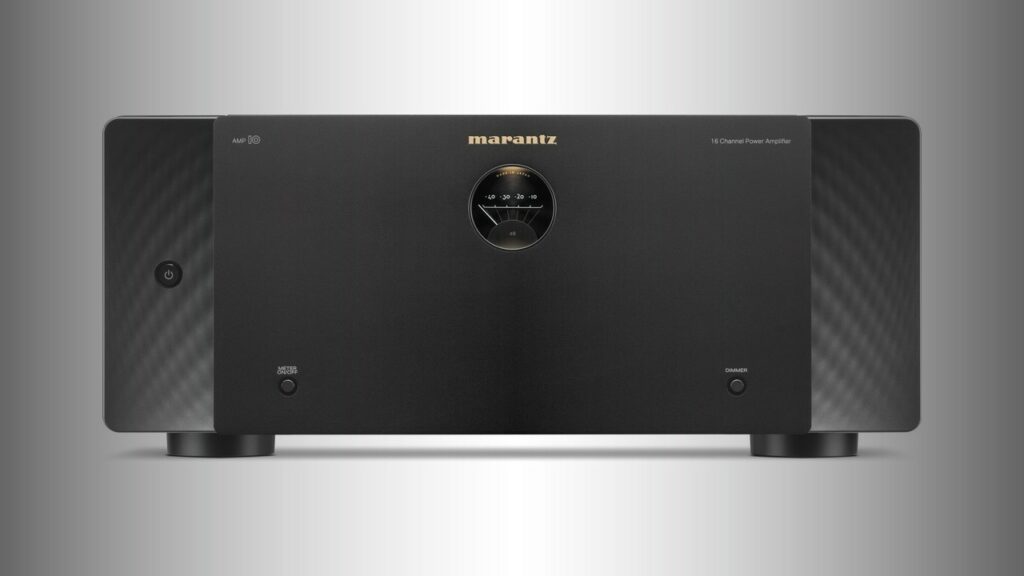
Leema Constellation Libra full-size DAC, designed to match other components in the Constellation range.
The Leema Constellation Libra is the specialist, architecture-led option here.
It belongs to Leema’s Constellation flagship line and uses the proprietary Quattro Infinity DAC unit, described as fully balanced and built according to a dual-mono circuit.
A notable design point is that the DAC unit can be replaced with a more advanced version when one becomes available, giving the component an upgrade path within Leema’s platform. System integration is also a major part of the Libra’s identity. It is compatible with Leema’s LIPS control and monitoring system, which can automatically place connected components into the relevant modes depending on the selected source. The unit also includes two non-certified I2S interfaces implemented on RJ45 connectors, one of them fully configurable. Supported stream formats are listed as PCM up to 24-bit/384 kHz, DXD, DSD64 and DSD128, with an asynchronous USB port supporting the same stated formats.
Best for: Balanced systems and advanced setups needing flexible digital interfaces
- Fully balanced dual-mono Quattro Infinity DAC unit
- Replaceable DAC module design
- Compatible with Leema LIPS control and monitoring
- I2S and asynchronous USB inputs with stated PCM, DXD and DSD support
Verdict: Choose the Leema Constellation Libra if you want a full-size flagship DAC with balanced dual-mono architecture, Leema system control and unusually flexible digital interface options.
How to choose between these DACs
Start with the role the DAC must play in the system.
If it needs to replace or centralise preamplifier duties as well as handle digital conversion, the Primare PRE35 DAC is the most complete control-centre option in this group.
Its analogue inputs and outputs, balanced connections, input naming and level configuration, trigger connections and adjustable display make it the strongest match for a system where daily usability and source management matter as much as digital conversion. If the main source is a computer or USB transport and headphone use is important, the Mytek Manhattan DAC II is the clearer fit. The source material places emphasis on its USB DAC status, ES9038 Pro chip, Mytek clocking and linear power supply, plus two front headphone outputs and the possibility of balanced headphone connection through an adapter. It is the choice here for a listener who wants the DAC to serve both a main system and demanding headphone sessions. If the system is built around balanced architecture, specialised digital interfaces or a wider Leema setup, the Constellation Libra is the most targeted option. Its fully balanced dual-mono Quattro Infinity DAC unit, replaceable module concept, LIPS compatibility, configurable I2S provision and stated high-resolution format support all point toward a more advanced installation rather than a simple plug-in converter. None of these models should be chosen on format numbers alone. The decisive question is system context: Primare for preamp-DAC integration, Mytek for an advanced USB DAC with headphone capability, and Leema for balanced flagship architecture with flexible digital interfacing. That distinction is more useful than treating all three as interchangeable DAC boxes.