
Hegel: The Scandinavian Design Philosophy Behind Pure, High-End Sound
Explore how Hegel embodies Scandinavian design—minimalist aesthetics, functional engineering, and pure sound. Discover the philosophy behind its iconic hi-fi systems.
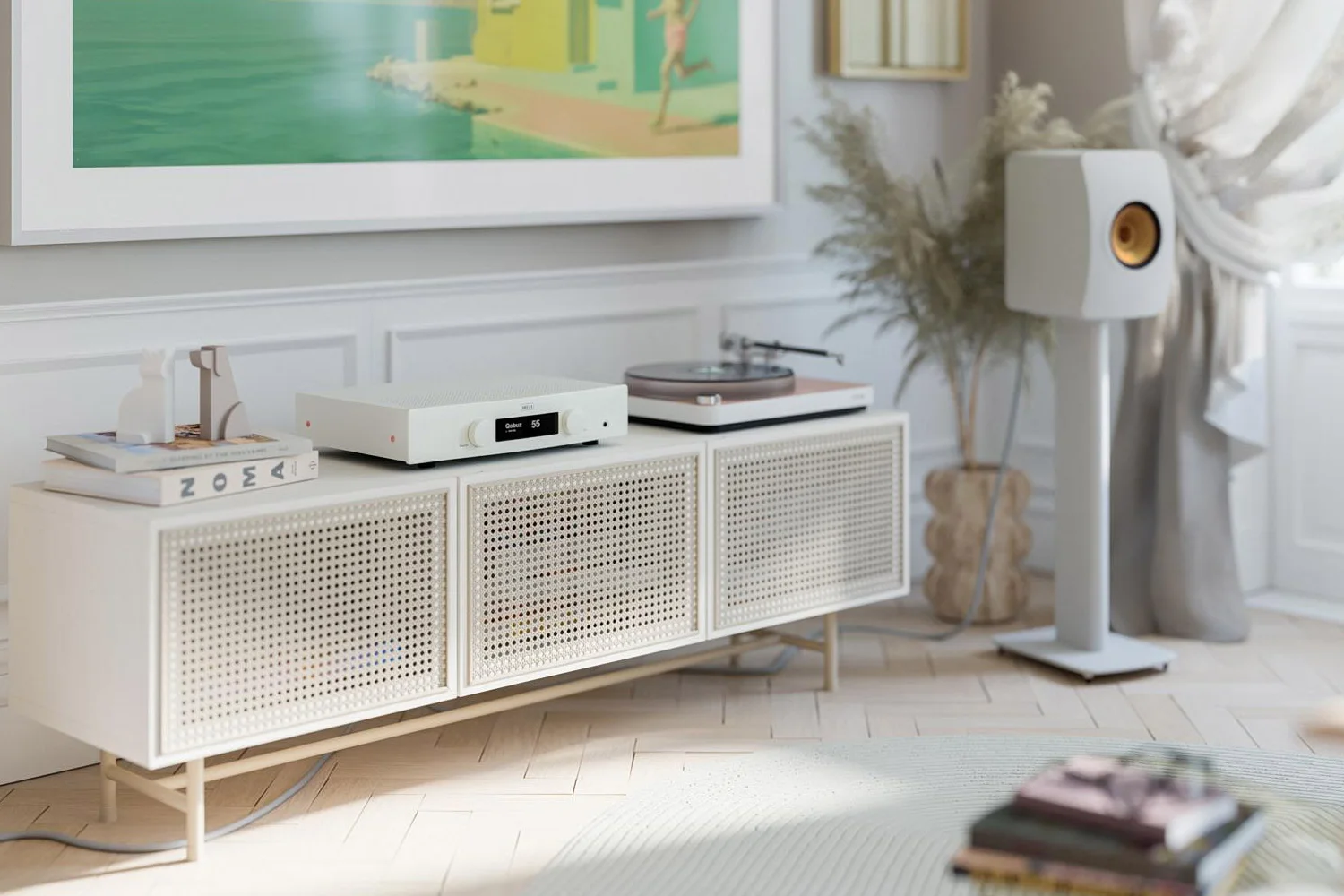
Hegel is one of those brands that immediately evokes Scandinavian style. Black or white bodies, two large handles, a discreet logo, and no flashy embellishments—this is how Hegel devices have looked for most of the company’s history. And it’s not just a matter of style. Hegel’s credo is entirely consistent with Scandinavian philosophy.
This method of organizing space didn’t emerge as a manifesto or a clear program. It slowly developed in everyday life, drawing on people’s experiences and their desire for comfortable homes. Today, it has become one of the most recognizable calling cards of Northern Europe. It’s an “export product”—a visual language that people from Tokyo to New York can instantly “read,” even if they’ve never been to Oslo, Stockholm, Copenhagen, or Helsinki. We see it in homes, offices, hotels, cars, and interior design catalogs. But we don’t realize how deeply it resonates with the history, climate, and social traditions of the region.
Why did this particular way of thinking about space and objects spread so easily? And what does it really say about the people who create in Scandinavia?
What we now call Scandinavian design didn’t begin as a clearly defined movement. No one announced its birth. No committee set out to compile a list of rules. It emerged gradually, as a response to the living conditions of northern Europe. Long winters, short days, and a harsh landscape meant that the home had to be a refuge, a place for work, rest, and socialization. The objects that filled it had to be durable, functional, and sensible. From this everyday necessity, not from a fashion for minimalism, emerged the qualities we now instinctively associate with Scandinavia: simplicity, order, ergonomics, a sense of calm control over one’s surroundings.

Ideas of egalitarianism, accessibility, and social responsibility were directly embodied in Scandinavian architecture, planning, and production culture. Design was not viewed as a “privilege for the elite.” A well-designed object or space was meant to be accessible to everyone. This perspective is one of the reasons why Scandinavian aesthetics has proven so resilient to the influence of fashion.
The Idea Lab – the birthplace of Scandinavian design
If today the north is associated with tranquility and a sense of order, it’s largely because the first testing ground for this perception was architecture, not interiors. In the Scandinavian countries, modernism couldn’t be seen as a purely ideological experiment, divorced from people’s way of life. Every mistake was immediately felt in the form of poorly lit apartments, awkward spaces, or buildings. For many years, the north stood somewhat apart from the grand debates unfolding in Berlin or Paris. This distance allowed it to observe modernity with dispassion and take from it only what truly made sense.
These reflections gave rise to the movement known as “Swedish Grace”—an elegant, minimalist version of classicism in which proportion and rhythm replaced ornate decoration. Stockholm City Hall (architect Ragnar Östberg) and the Stockholm Public Library (Gunnar Asplund) demonstrate how a public building can combine symbolism with utility and tranquil interiors. In both cases, the experience of the person using the building is paramount, not the architect’s grandiose gesture. An even more theatrical example of Swedish Grace is Tändstickspalatset (Matchstick Palace), built for Ivar Kreuger. Here, the works of leading masters of their time were subordinated to the idea of restrained luxury. All these projects are united by an obsession with the quality of space, rather than the building’s external silhouette. This concern would later become one of the fundamental features of the Scandinavian approach.

Oslo City Hall is unmistakable. Two massive red brick towers, each just over 60 meters tall, rise from the waterfront like stern sentinels guarding the city’s entrance from the fjord. Its simple form and warm brick hue have earned it a playful nickname among locals: “two pieces of brunost” (Norwegian brown cheese). However, up close, this seemingly austere building is replete with detail. Sculptures, bas-reliefs, and an astronomical clock tell stories of Norse mythology and everyday city life. The Nobel Peace Prize ceremony is held in the main hall, underscoring the building’s status as one of Scandinavia’s most important landmarks.
Home and Everyday Life as a Manifesto – Carl and Karin Larsson
The Scandinavian way of life was shaped by its everyday setting—the home. When Carl and Karin Larsson designed the interiors of the Lilla Hyttnäs building in Sundborn at the end of the 19th century, they consciously rejected the then-common bourgeois notion of an “ideal space”—one crammed with heavy furniture, colorful fabrics, and a strict division between formal and service areas. Instead, they proposed a bright, open home that was comfortable for everyday family life. The furniture was light and comfortable. The textiles were simple. The color palette focused on natural light. The home was created to serve everyone who lived there, including children.
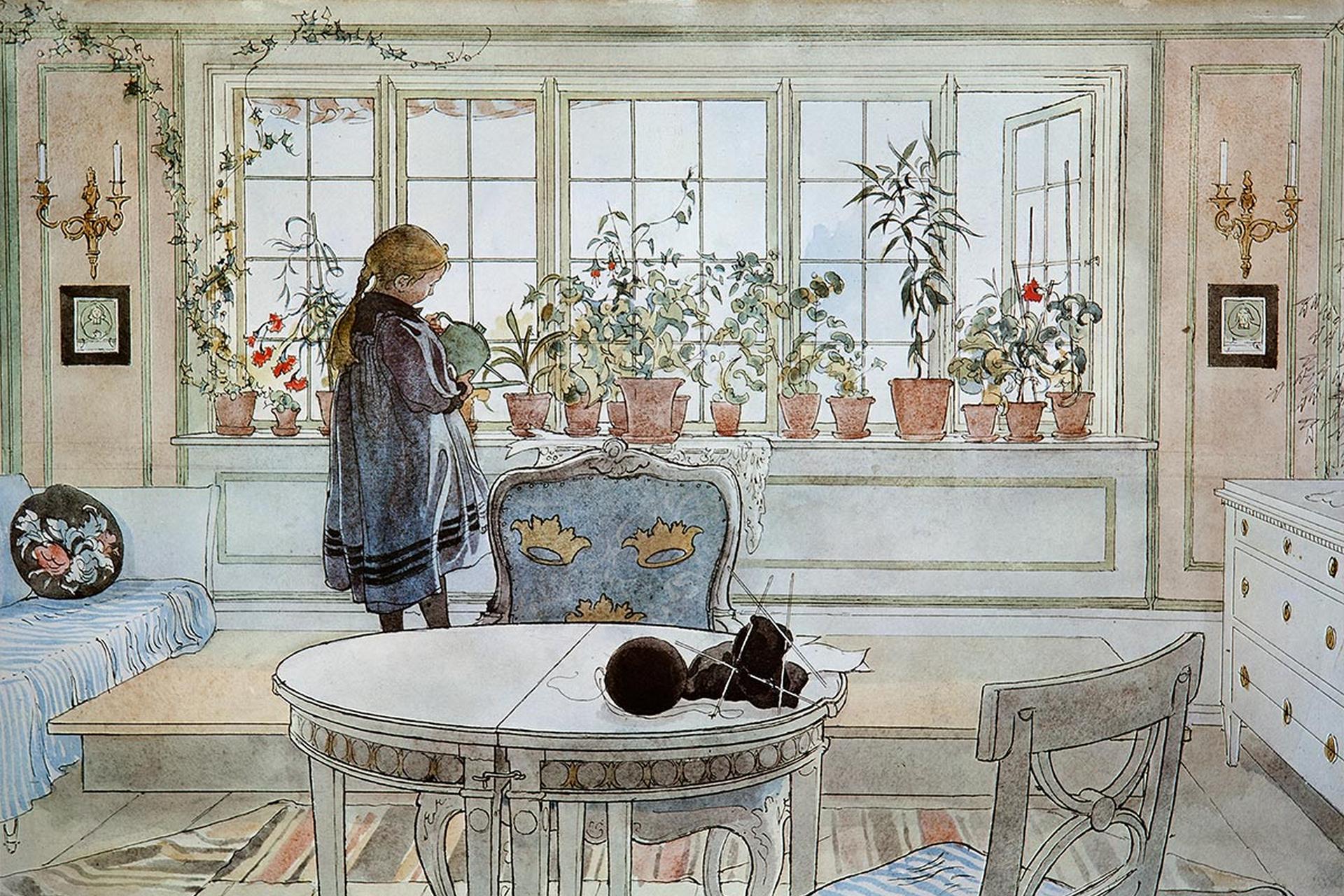
Carl Larsson captured this vision in a series of watercolors that quickly gained popularity in Sweden and Germany. These images became the template for what we now consider a Scandinavian interior: wooden floors, open windows, freedom of movement, and a lack of sharp distinction between everyday life and holidays.
Karin Larsson played a decisive role. She designed layouts and textiles that subtly subverted the established conventions of the time. Radically for the era, she also rejected the traditional division between living room and kitchen. The kitchen, dining room, and living room merged into a single space. The interior ceased to be a decoration for displaying social status and became the center of everyday life. This seemingly local story had a profound influence on later ideas about homes and interiors throughout Sweden.
Humanistic Modernism in Practice – Alvar Aalto
If the Larssons gave the Scandinavian style a human face, Alvar Aalto transformed it into a coherent language of architecture and industrial craftsmanship. The Finnish architect emerged in an era when modernism often took the form of rigid doctrines built on abstract rules. Aalto embraced modern technology, industry, and functionalist thinking, but rejected impersonality and rigid formalism. Above all, he was interested in the experiences of the people using these spaces.

The Paimio Sanatorium building, completed in 1933, was conceived as a therapeutic instrument, not a landscape feature. The solar orientation, ventilation, acoustics, wall color, and even the furniture’s shape were all designed as a unified whole. The famous Paimio chair was designed to facilitate breathing for patients in a position intermediate between sitting and lying down. Its lightweight, curved plywood structure directly meets medical and ergonomic requirements.
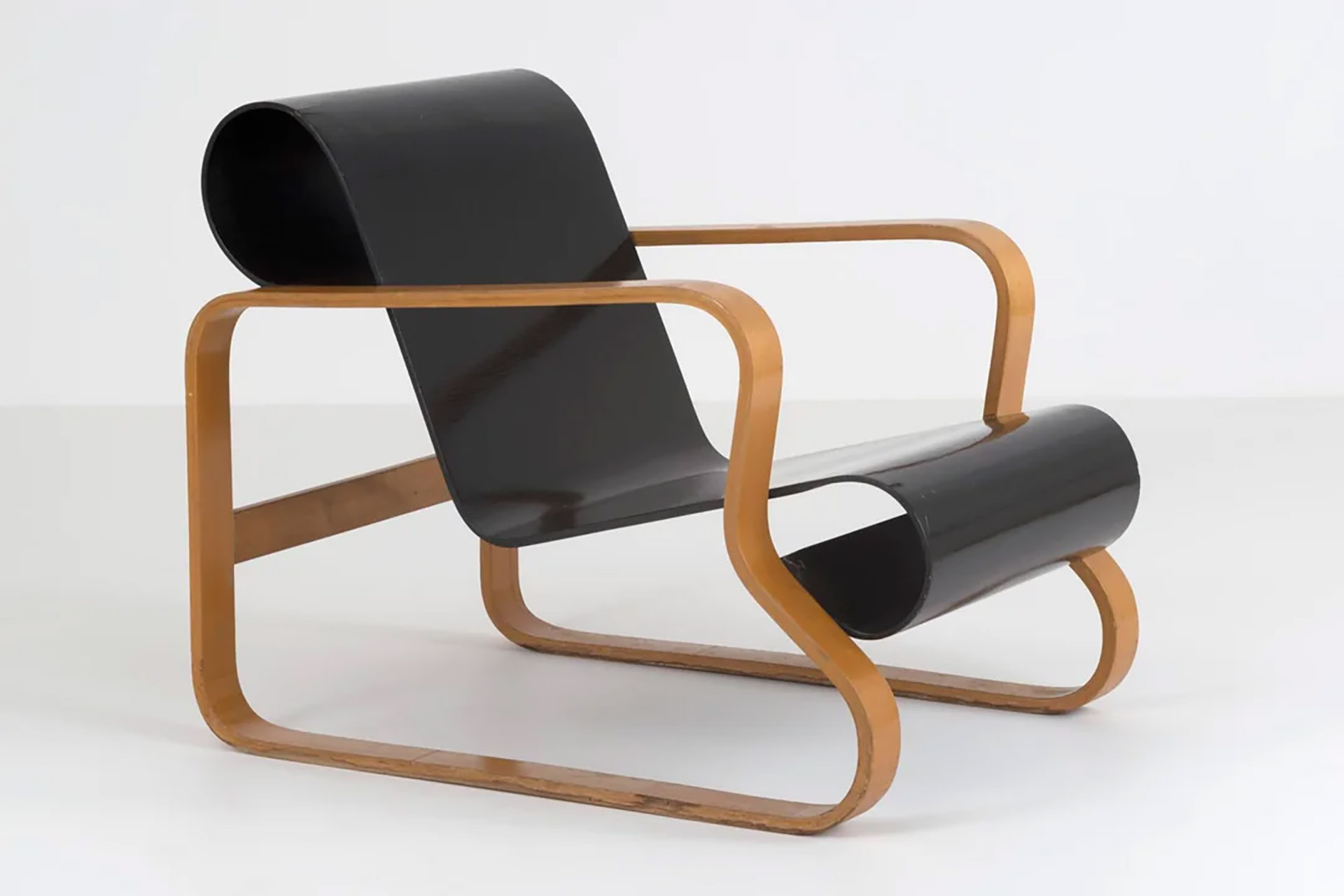
At the same time, Aalto developed methods for processing wood and plywood. This led, among other things, to the creation of the Stool 60 – a simple stackable stool, originally intended for mass production. Aalto refused to draw a line between building, interior, and furniture. He created holistic spaces from natural materials. His works most clearly demonstrate the idea that the shaping of space and objects in the North is perceived not as a fashionable trend, but as a responsibility to the surrounding environment.
Products for everyone
The next logical step was the transition from buildings to everyday objects. In the 1940s and 1950s, designers in Scandinavia created furniture we now see in museums. But initially, it was intended simply for use in homes, offices, and public buildings. Hans Wegner, a Danish cabinetmaker, devoted his career to perfecting the idea of the chair. The 1949 Wishbone Chair, with its Y-shaped back and wicker seat, combines lightness, strength, and expressiveness. From the outset, it was intended for mass production.
Arne Jacobsen developed similar ideas, albeit in a more restrained modernist form. The Ant and Series 7 plywood chairs are simple, comfortable, and able to withstand heavy use. Designed for the SAS Royal Hotel in Copenhagen, they helped create interiors that blend harmoniously with the architectural design.
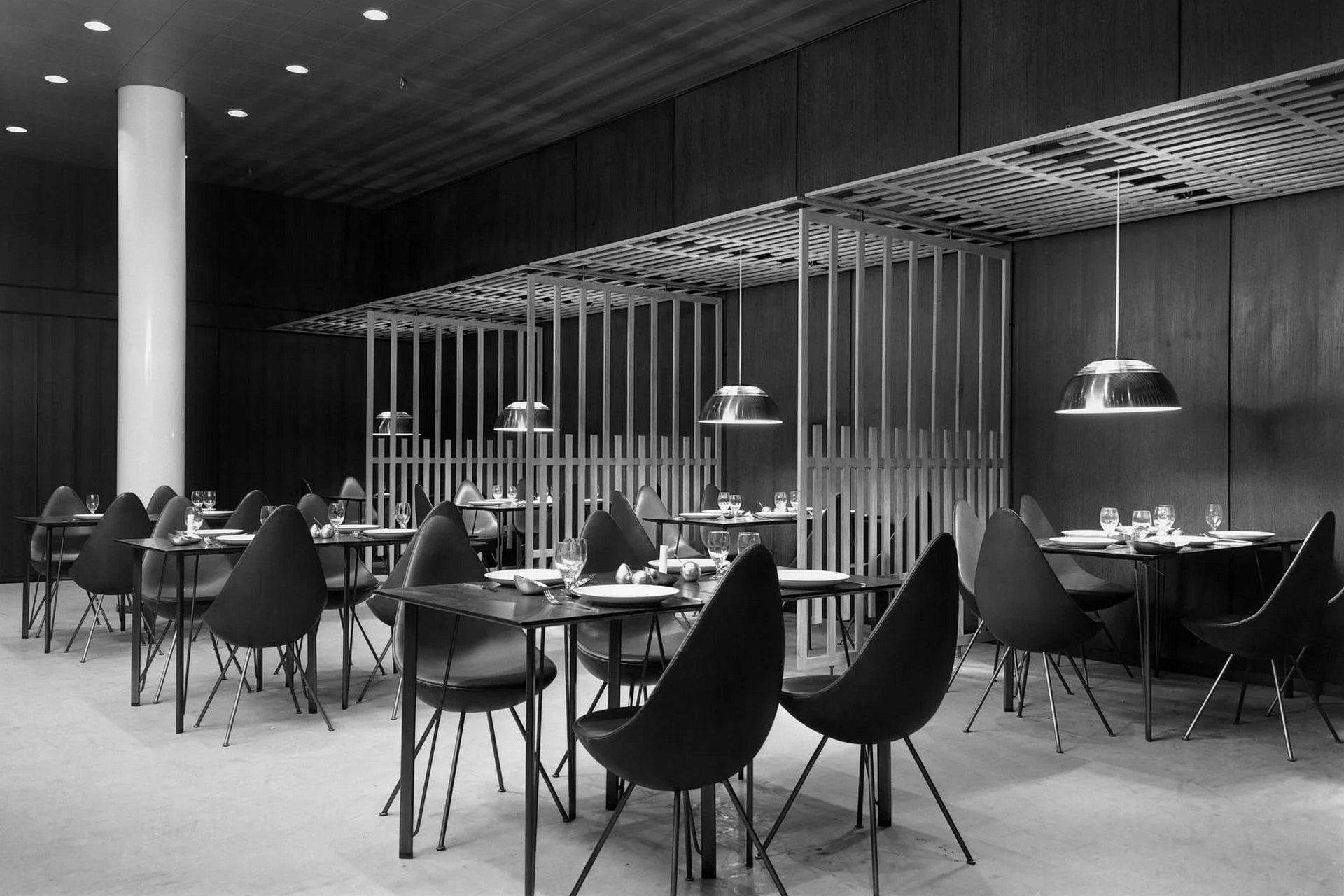
In Sweden, Bruno Mathsson was obsessed with the physiology of sitting. His lightweight lounge chairs and stools, made of bent wood and straps, sagged slightly under the weight of the sitter and adapted to the human body.
All these projects are united by a fundamental honesty toward material and people. Wood doesn’t pretend to be metal. Construction isn’t hidden behind decoration. The goal is user comfort, not a flashy magazine photo.
When Local Philosophy Becomes a Global Language
Until the mid-20th century, this process developed primarily within the Scandinavian region. A turning point came in the 1950s, when post-war Europe and America began searching for a new image of modernity—one more humane and less burdened by ideology. Interior design and decor from Denmark, Sweden, and Finland proved to be a near-perfect answer. They were modern without being aggressive, functional without being alienating, rational yet warm.
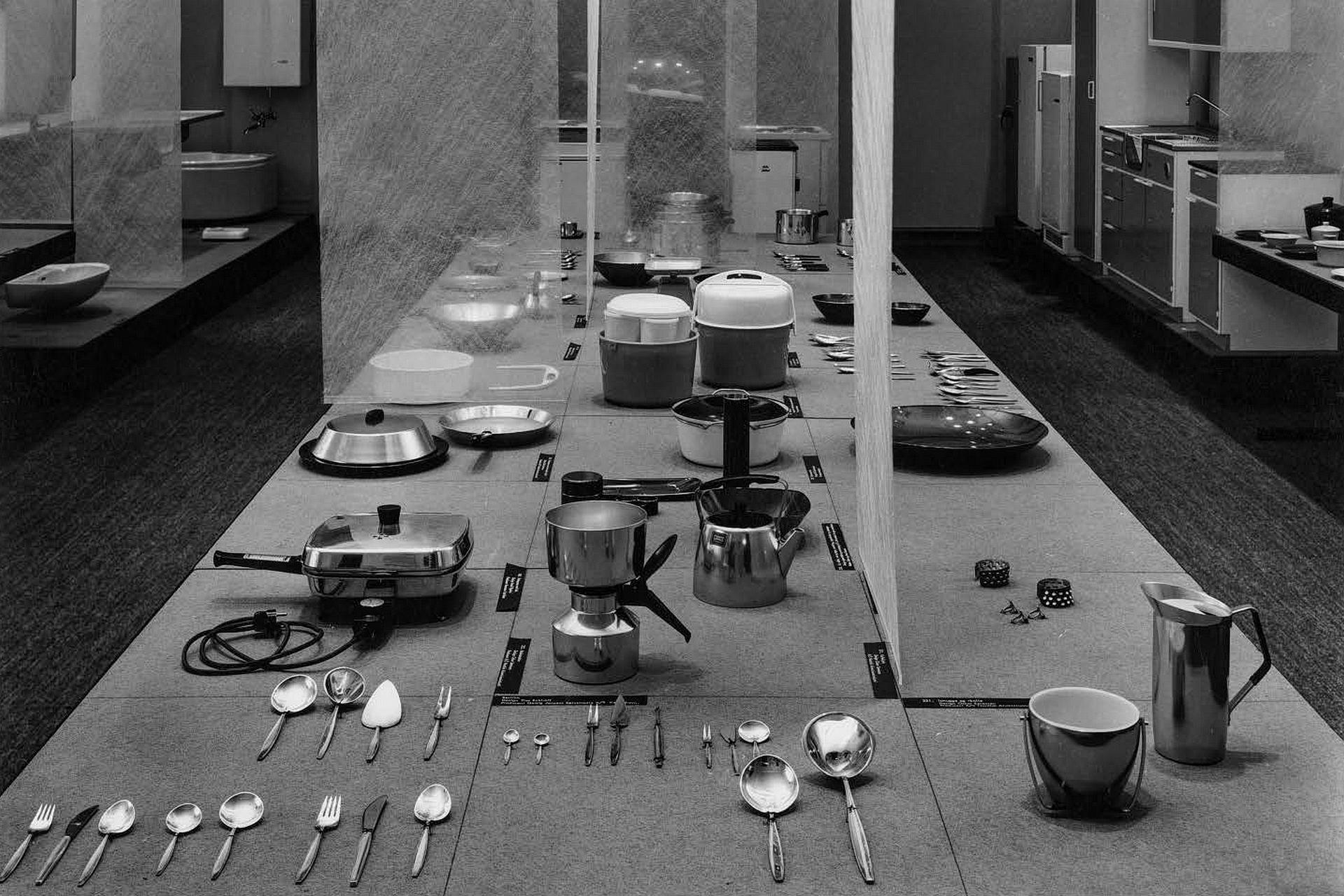
A key role was played by the traveling exhibition “Design in Scandinavia,” which traveled through the United States and Canada from 1954 to 1957. Furniture, glass, ceramics, and textiles created a coherent narrative of everyday life. The American public saw the Scandinavian approach as a model for the “good life”—orderly but not prudish. Institutions such as MoMA in New York promoted the idea of high-quality everyday objects and regularly showcased works from Scandinavia. Arne Jacobsen’s “Ant” chair and many other pieces represented textbook examples of best practice.
The Lunning Design Prize, established in 1951, also contributed to the trend’s growth. Winners included Hans Wegner, Arne Jacobsen, and Tapio Wirkkala. The message was clear: the North had developed its own design language for objects and spaces. It could adapt to local values almost anywhere.
Scandinavian designs in the era of mass production
The Scandinavian approach to creating everyday objects clashed early on with the realities of mass production. The Danish company Fritz Hansen, thanks to its close collaboration with Arne Jacobsen, became a key producer of modern furniture in the 1950s. The Ant chair, developed in 1952, was originally designed for the Novo Nordisk factory cafeteria. Only later did it become an icon and symbol of a new approach to office and home furniture. The history of the 7 series followed a similar path, becoming one of the company’s most successful products. Its popularity was based on a combination of ergonomics, clean lines, and molded plywood technology, which allowed for mass production without sacrificing quality.
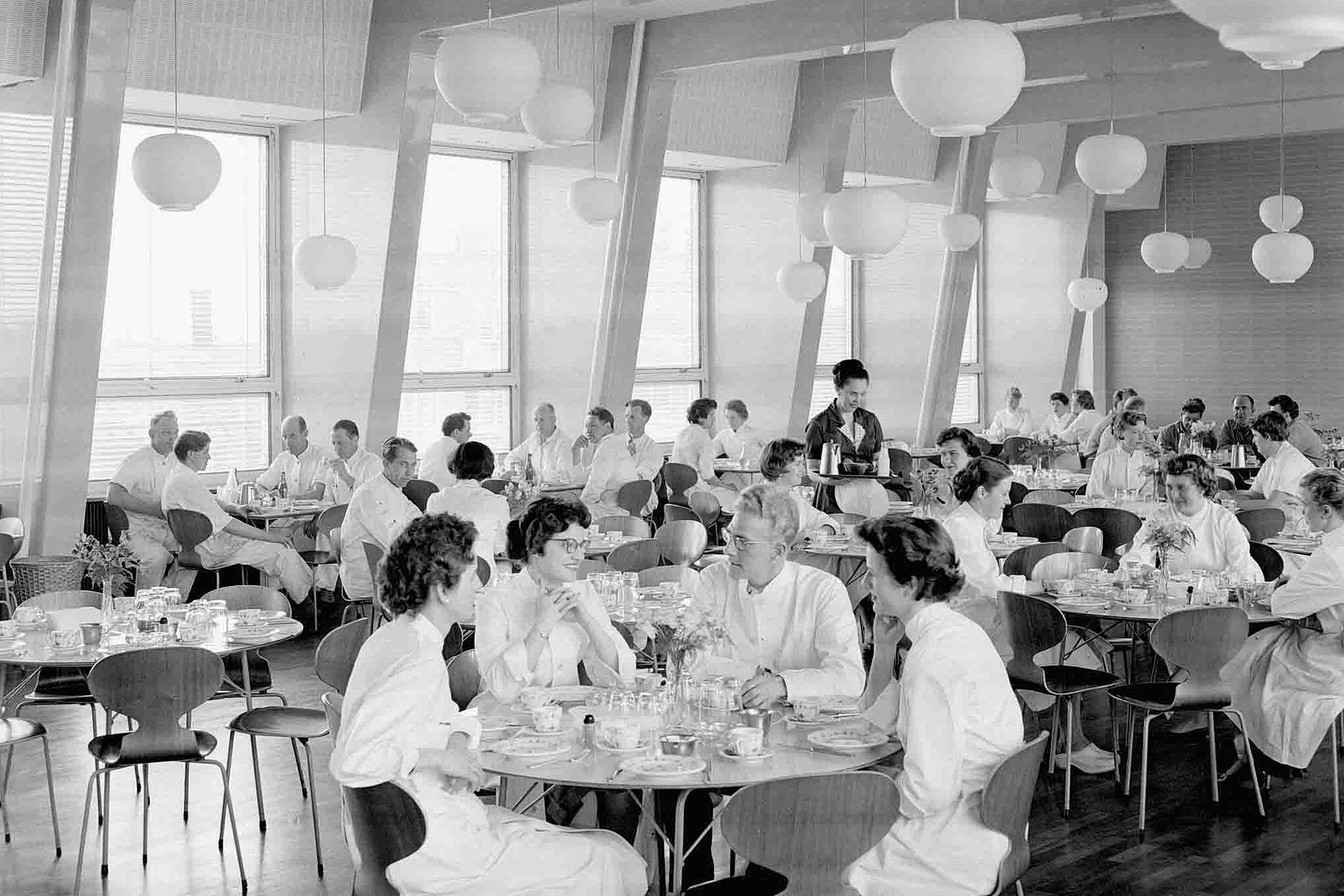
In the north, a distinct, mature language of designing objects and spaces emerged, a language that could spread without sacrificing local values.
In Sweden, the department store Nordiska Kompaniet and glass manufacturers Orrefors played a similar role. Designers Tapio Wirkkala and Stig Lindberg seamlessly transitioned from limited editions to mass production. Wirkkala designed hand-blown art glass and plastic bottles for Finnair, while Lindberg created patterns that found their way into middle-class homes.
The creators didn’t draw a line between art and craft. It was important that the object be convenient, easy to use, and durable, regardless of whether it was intended for a gallery or a supermarket.
One of the most striking examples of Scandinavian design is the Tripp Trapp children’s chair. Designed in 1972 by Norwegian designer Peter Opsvik for Stokke, it began with a simple observation: Peter’s young son didn’t have a comfortable seat at the family table. Instead of creating yet another piece of “children’s furniture,” Opsvik devised a chair that grows with the child, thanks to adjustable seat and footrest platforms. This allows the child to sit at the table at eye level with adults, but with the “right” footrest. Crafted from solid beech and distinguished by a simple, almost sketchy silhouette, the Tripp Trapp chair has become one of Stokke’s best-selling products and a permanent fixture in the designer collections of institutions such as MoMA in New York and the Victoria and Albert Museum in London.
The same philosophy gave birth to items that may seem almost bland today, yet have nonetheless become classics. Fiskars scissors with orange handles, introduced in the 1960s, were created based on ergonomic research. The color was chosen simply because the pigment was available at the factory. The design proved highly successful: a pair of scissors were included in the MoMA collection as a testament to engineering excellence. Thor Björklund’s cheese slicer, a metal spatula with a sharp edge, has become a standard in Norwegian kitchens.
None of these products were intended as works of art. But they ended up in design museums because they solve everyday problems in exemplary ways.
Four pillars of Scandinavian style
Northern European style is based on a few simple principles.

- The first is simplicity. Scandinavians avoid unnecessary embellishments and prefer clean lines and calm forms. The goal isn’t asceticism for its own sake, but a kind of quiet timelessness. Objects don’t become outdated overnight when fashion trends change. As Hans Wegner once said, good design has no expiration date. This is why Scandinavian elements fit seamlessly into both a 1970s apartment and a modern interior.
- The second pillar is functionality. Form follows directly from use. Wegner and Jacobsen’s chairs were designed with the human body in mind. Alvar Aalto’s Paimio chair helped patients breathe easier. Poul Henningsen’s lamps provide comfortable lighting. The design of objects is, first and foremost, intended to make life easier.
- The third aspect is naturalness. Designers in the north have long used metal, wood, glass, cotton, and linen, emphasizing their texture rather than concealing it. The materials should age well, rather than deteriorate after one or two seasons. This harmoniously complements a concern for durability and environmental friendliness.
- Fourth, humanism and a sense of comfort. Scandinavian interiors are bright and open. They are filled with soft textiles and wood, without ostentatious luxury. Instead of the detachment that minimalism sometimes brings, there is “hygge” – a feeling of homely comfort.
The objects are simple, comfortable, and thoughtfully designed. They don’t overwhelm. They invite you to use them. That’s why this aesthetic is equally suited to a small studio apartment and a large family home.
The city’s appearance is modern Scandinavian architecture
Over time, Scandinavian thought expanded beyond the scale of individual buildings. It began to shape urban spaces.
Copenhagen has become one of the most interesting laboratories of contemporary urbanism. The city has consciously prioritized pedestrians and cyclists. The VM Houses and 8 House projects demonstrate how a residential building can function almost as a self-sufficient neighborhood. Instead of a closed-off neighborhood, pedestrian paths, terraces, and “meeting places” are incorporated. CopenHill, a waste incineration plant with a ski slope and climbing wall on the roof, is a manifesto of sorts. This communal building offers the city a new public recreational space.
Oslo is the stage where the history of modern Norway unfolds. The National Opera’s roof, jutting out into the fjord, is open to visitors. The building was designed by Snøhetta, whose first major success was winning the competition to design the new Library of Alexandria in Egypt. This is the realization of an approach to architecture as an extension of the landscape. For example, the Calgary Central Library appears as a block carved from ice. But inside, it is warm and cozy. The harsh Scandinavian landscape has taught architects restraint. Modern Scandinavian buildings do not seek to dominate their surroundings; they complement them.

The new Munch Museum is just a short walk away. Its slanted silhouette has quickly become one of the capital’s symbols. The Deichman Bjørvika Library, with its glass facades and spaces surrounding a bright atrium, demonstrates how a public institution can become a city’s “living room.” The Barcode complex, with its characteristic rhythm of tall, narrow buildings, marks the transformation of the old harbor into a modern business district. The Aker Brygge and Tjuvholmen waterfronts, culminating in the Astrup Fearnley Museum, are examples of post-industrial regeneration. They combine former docklands with residential buildings, offices, a marina, and public promenades. At Fornebu, on the site of the old airport, stands the Equinor headquarters. Rather than towering over the surrounding area, the large corporation’s building hovers above the park. The monumental Oslo City Hall completes the picture. Everything reminds us that today’s modernity has its roots in post-war foundations, and does not arise out of nowhere.
Both Stockholm and Helsinki follow this logic. Historic townhouses and classical public buildings sit alongside radical contemporary designs. Together, they form a coherent whole. Eero Saarinen’s modernist churches and more recent works by studios like Snøhetta reflect a typically Scandinavian preoccupation with simple volumes, natural light, and close contact with the landscape.
Wood is playing an increasingly prominent role. Some of the world’s tallest wooden towers are in Norway and Sweden. Wood is making a comeback as the technologically advanced material of the future.
The Snøhetta (Tverrfjellhytta) viewing platform is located high in the mountains on the edge of Dovrefjell-Sunndalsfjella National Park. It is a small rectangular pavilion with an organic wooden interior, although one wall is made entirely of glass. Wild reindeer are easily spotted in the surrounding landscape. The designers aimed to allow people to experience the beauty of the mountains and observe the animals in their natural habitat.
The design that surrounds us
Today, the Scandinavian approach to design is evident in every aspect of everyday life. It’s evident in the layout of neighborhoods and the handle of a bread knife, in the TV remote control and in a car parked on the street. It’s often easiest to spot where it’s least obvious—not in glossy books about design icons, but in an ordinary apartment. Here, the lamp over the table doesn’t dazzle, the chair remains comfortable throughout the evening, and the handle of the coffee pot rests securely in your hand.
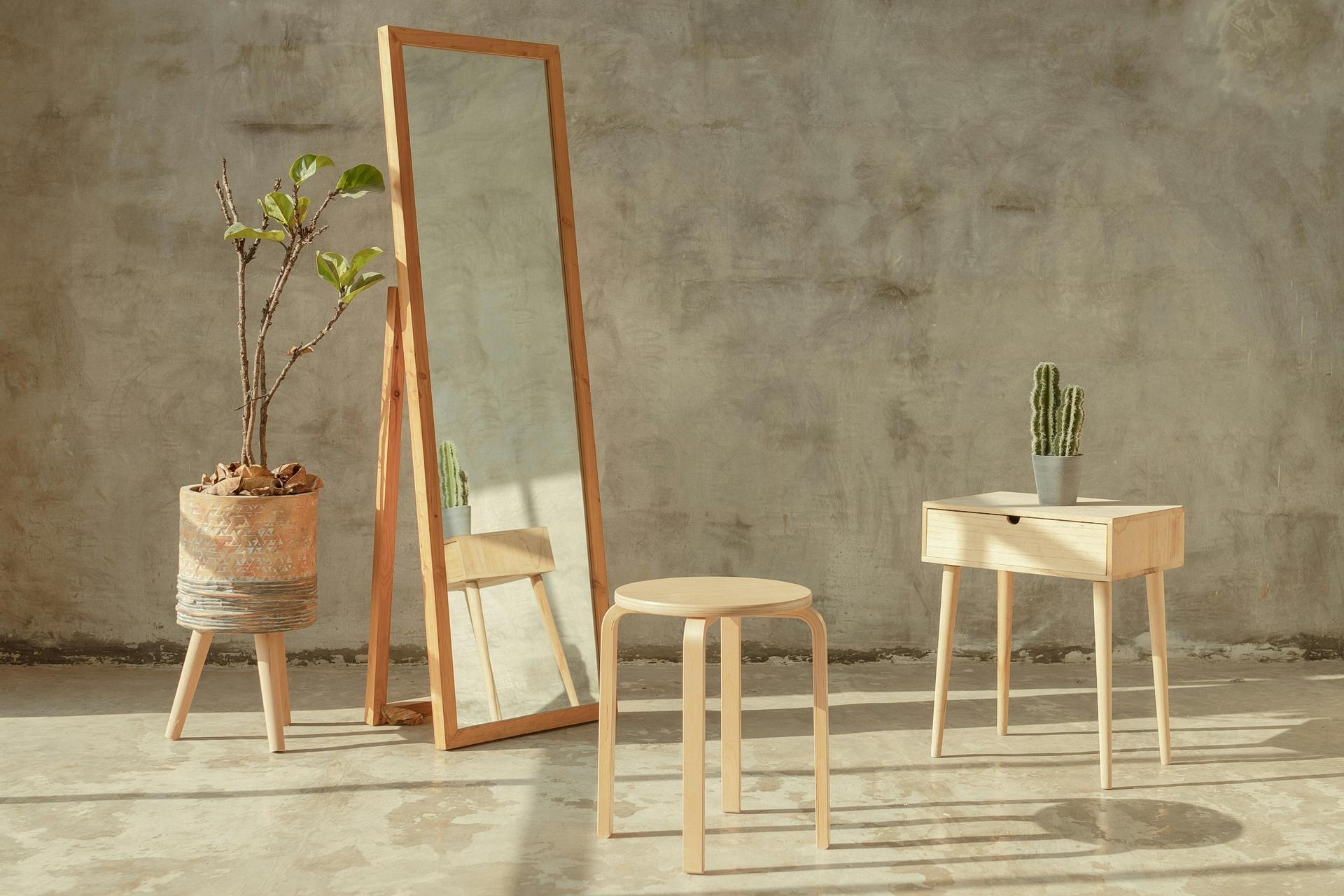
The same principle can be found in electronics. It easily permeates the world of hi-fi, where products are expected not only to sound good but also to fit comfortably into a living space.
Scandinavian design in Hegel music systems
Compared to competitors trying to attract attention with gold-plated controls, glowing indicators, and galaxies of LEDs, Hegel devices may seem overly modest. However, upon closer inspection, it quickly becomes clear that it’s not just a matter of style. The build quality of the products, their functionality, and even their approach to pricing are completely in line with Scandinavian philosophy. Hegel doesn’t just produce equipment that looks Scandinavian. The company operates like a Scandinavian design studio.
Hegel didn’t emerge from a carefully crafted business plan or a neat presentation. It grew organically out of a practical need. The brand’s founder, Bent Holter, studied at NTNU in Trondheim and played in a rock band in his spare time. He needed a decent-sounding system. And he encountered the same problems as everyone else at the time. Conventional amplifiers had obvious limitations, and distortion remained one of the main enemies of good sound. Bent perceived this as an engineering challenge and set out to find a way to significantly reduce distortion.
This obsession gave birth to the technology that became the foundation of the company: SoundEngine, a circuit that eliminates distortion in real time. The goal was both simple and complex: to transmit the signal as accurately as possible, without adding anything of its own.
After Bent equipped his band with amplifiers, other musicians began asking if he could build amplifiers for them, too. Thus began the Hegel story. It’s a story with distinctly Scandinavian roots. There was no major investment followed by an attempt to push products no one wanted. Instead, we see a gradual evolution driven by the desire to solve a specific technical problem.
Over time, this engineering idea evolved into a broader philosophy. The motto became: “Nothing added, nothing taken out – no artificial ingredients.” Or, slightly less formally, Hegel products should be “caviar at the price of sausage.” This may seem like a joke, but the meaning behind it is serious. From the very beginning, Hegel has offered products that surpass the competition in sound quality. But without the “additives” that customers usually pay for.
Don’t waste money on embellishments. Don’t add rows of ports no one will ever use. Don’t cram features in just because they look impressive in a brochure. Focus resources on areas that truly impact sound quality, usability, and reliability. At this point, you’re no longer dealing with a marketing slogan, but with a thoughtful approach to product development.
The front panel is the most obvious embodiment of this idea. Modern Hegel amplifiers look as if they were drawn with a single, continuous line. A thick aluminum plate forms a robust, almost architectural façade. Two large knobs are located on the sides. Between them is a small, high-contrast display, which serves only the essential function of displaying the active input and volume level. Some models feature a discreet headphone jack. The power button is hidden under the lower edge of the front panel.
Most Hegel devices are available in only one color—black—which helps keep the cost down. Some models are also available in white. And that’s it. No glossy finishes, no trendy seasonal shades, no limited editions in shiny copper. The changes in appearance are evolutionary rather than revolutionary.
It’s the same logic as classic Scandinavian lamps or cheese slicers. If the design works, there’s no point in reinventing it every year.
Whether you’re looking at an integrated amplifier, a power amp, a preamp, or a turntable, it’s immediately clear that these products belong to the same family. The front panels and layout of components appear familiar. The interface operates predictably. Even if a particular model has more buttons or a more complex menu, the design remains consistent.
The product line is structured. Model names are based on numbers rather than complex designations. New devices aren’t released every season; they replace their predecessors after many years on the market. These replacements aren’t due to a new feature or input, but rather to a significant improvement in sound quality.
The Scandinavian approach equally extends to the functionality of the devices. For Hegel, this is most clearly evident in the user interface. Today, an amplifier is expected to be easy to use, not a chore of menu navigation. Many Hegel devices offer automatic detection of the active input or volume control via a TV remote. Inputs are clearly labeled. Switching between sources is quick. The menus are devoid of exotic options, but these are rarely needed in real life. The goal is to avoid making customers feel like they’ve bought a computer.
The device should do its job, leaving the focus on the “listening ritual.” This is largely in line with the Scandinavian approach to technology.
The company’s philosophy becomes even more intriguing when looking at its technical solutions. At one point, Hegel decisively shifted to using external converters, and then to streaming audio. Digital streaming modules eventually migrated inside integrated amplifiers. While most manufacturers began experimenting with digital inputs, offering amplifiers with a single USB port, Hegel’s popular models offered a wide range of digital connectivity options and solutions like the DAC Loop.
Today, the company remains at the forefront of audio technology advancements. Hegel’s arsenal includes Apple AirPlay, Google Cast, Roon, Spotify Connect, Tidal Connect, Qobuz Connect, and the Hegel Control app.
However, every new buzzword isn’t perceived as a mandatory requirement. For example, Wi-Fi connectivity is deliberately omitted. From the outside, this might seem like a reluctance to embrace new ideas. But it’s a “very Scandinavian” form of pragmatism. After all, Wi-Fi adds noise, while a cable connection doesn’t. And if a solution doesn’t meet Hegel standards, it won’t be implemented simply because it’s trendy. Equipment should behave more like a good piece of furniture—something you buy once and use for years.
This mindset is closely tied to questions of price and value. Hegel strives to avoid expenses that don’t bring real benefit to the user. Resources are focused on high-quality power supplies, carefully tuned output stages, reliable mechanics, and durable cases.
Against this background, Hegel’s sound can also be seen as part of his aesthetics.
It’s not just that the company’s products win awards for sound quality. Even more important are the reviews from people who use Hegel equipment. They demonstrate that the brand’s designers think about music and sound in the same way as thousands of listeners around the world. For many years, the company’s engineers have strived for neutrality. Hegel’s goal is to remain as true to music as possible.
The company’s products can be combined with speakers that sound bright, dark, powerful and rich, or tight and controlled. And Hegel components will allow these qualities to shine through, rather than smooth them over. This, too, is a form of functionality. The user is free to shape the system’s sound by choosing speakers and sources with a suitable character, and is not tied to a single predetermined sonic aesthetic.
In the world of Scandinavian design, there’s often talk of democracy and openness. For Hegel, this idea manifests itself in equipment that doesn’t restrict the listener, but rather gives them the opportunity to explore different paths.
Put it all together – the company’s ‘hands-on’ roots, its engineering approach, its refusal to waste resources on the nonessential, its carefully crafted cabinets, its comprehensive range, its sonic neutrality, its competitive pricing, and the built-in durability that naturally flows from minimalism and environmental responsibility – and you have a clear example of Scandinavian thinking brought to life in the world of Hi-Fi!
According to Hegel, hi-fi devices should behave like a comfortable chair or a good lamp. They’re designed to sit discreetly in the living room, not to tire the owner, and not to look outdated after a couple of seasons. They’re meant to bring pleasure to those who use them. They do their job and allow you to focus on what’s truly important—the music.













 VS
VS VS
VS VS
VS VS
VS VS
VS VS
VS


Comments 0
Share your experience, questions and perspective with other hi-fi enthusiasts.