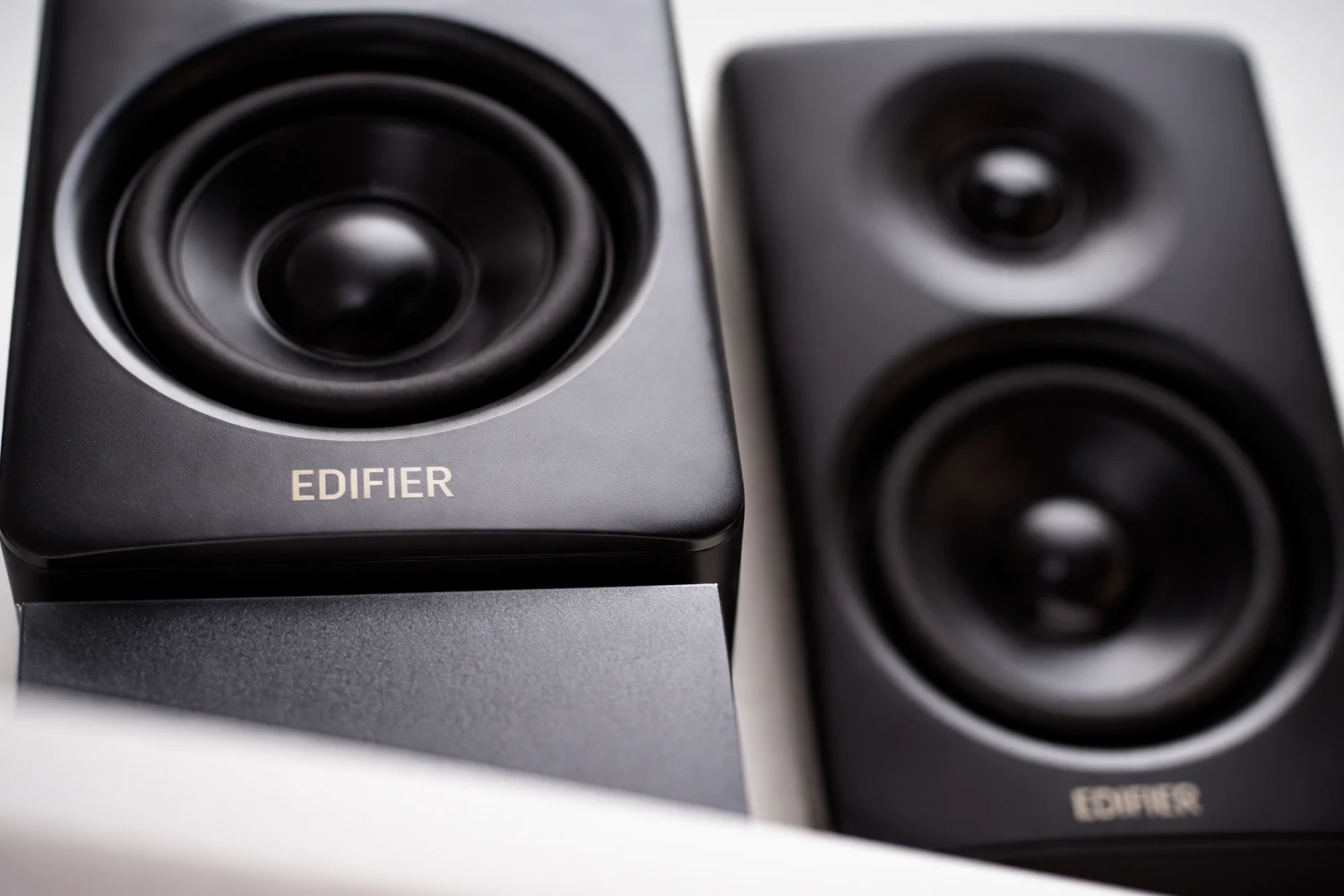
Some reviews are written out of duty. Others are written because the product genuinely surprises you. This one falls firmly into the second category.
The Edifier M60 managed to do something that’s becoming increasingly rare: it impressed me right away—and kept doing so the longer I listened. Considering their size and price, these speakers punch far above their weight, and in 2026, as Edifier approaches its 30th anniversary, the M60 feels like a clear statement of how far the brand has come.
Edifier built its reputation on offering solid sound at accessible prices, and in many markets it has long dominated the budget segment. While the company has flirted with higher-end ambitions through sub-brands like Airpulse, its real strength has always been affordable, practical audio that delivers more than expected. The M60 might just be the clearest example of that philosophy to date.
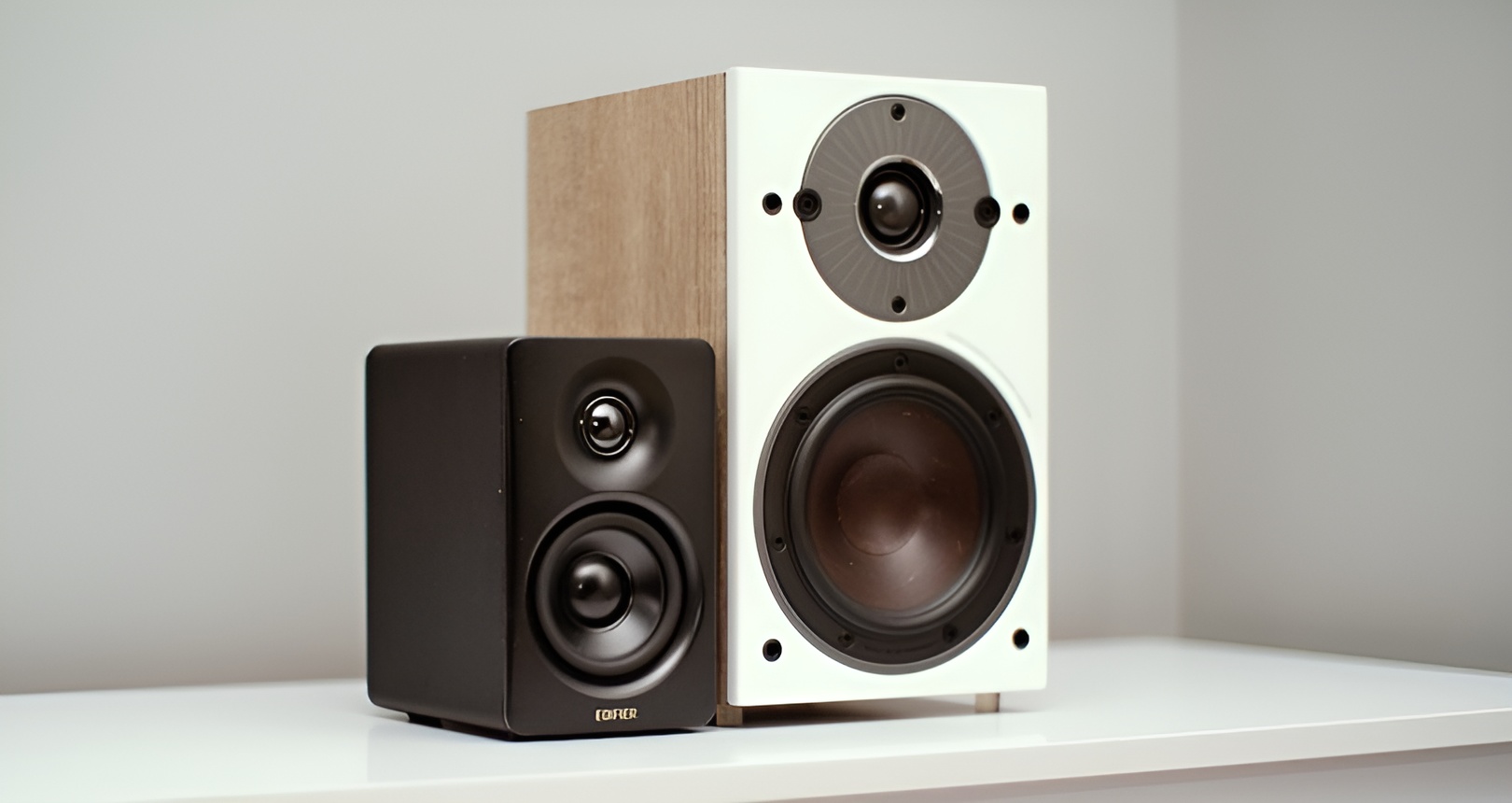
What’s in the box?
Edifier keeps things generous and practical. Alongside the speakers, you get:
-
Power cable
-
USB-C to USB-C cable
-
Speaker interconnect cable
-
3.5 mm to RCA cable
-
Dual 3.5 mm cable
-
Documentation
-
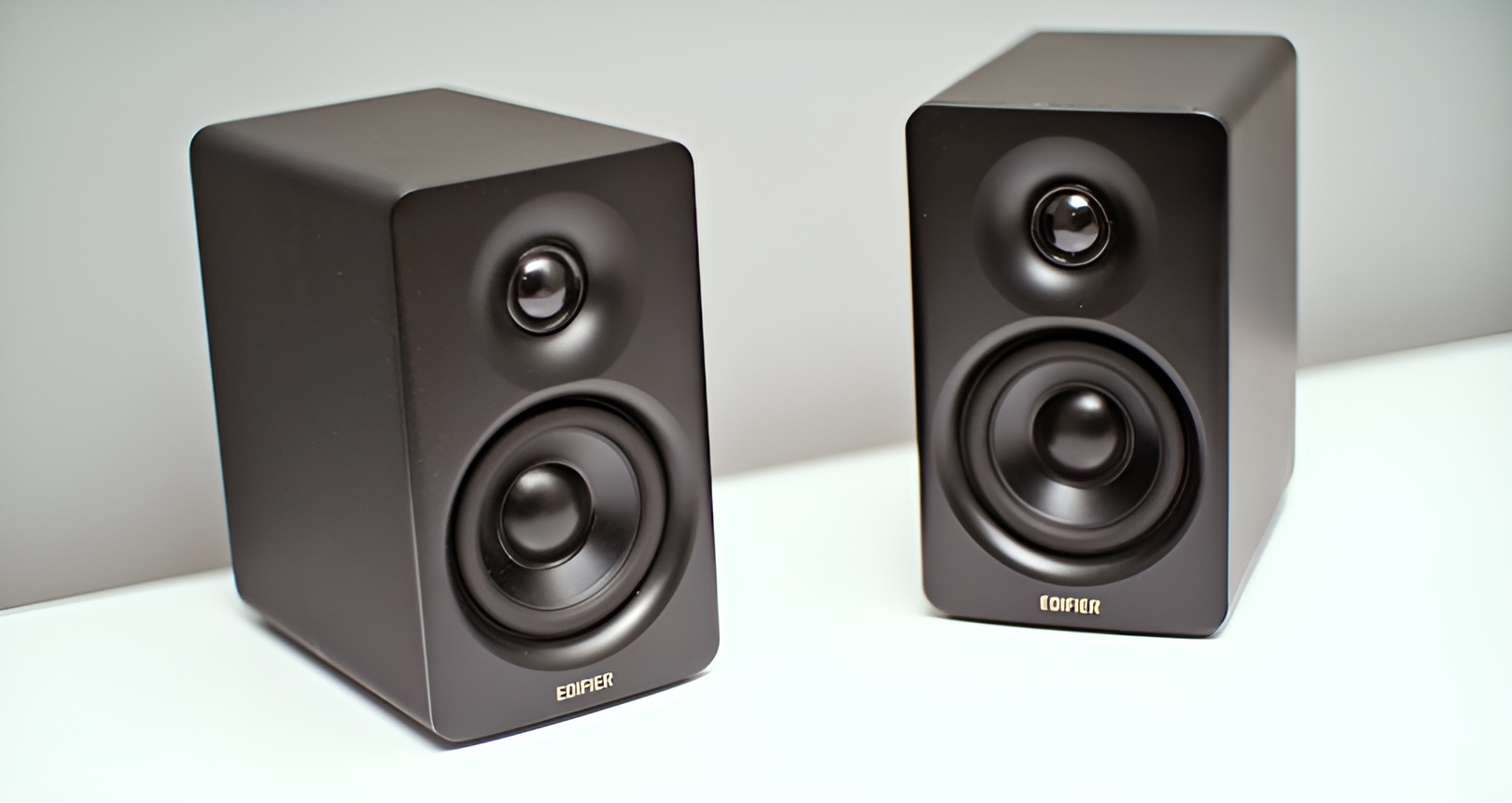
Two excellent aluminum stands, angled at 15 degrees
Those stands deserve special mention—they’re solid, well-finished, and genuinely useful, not just box-fillers.
Design
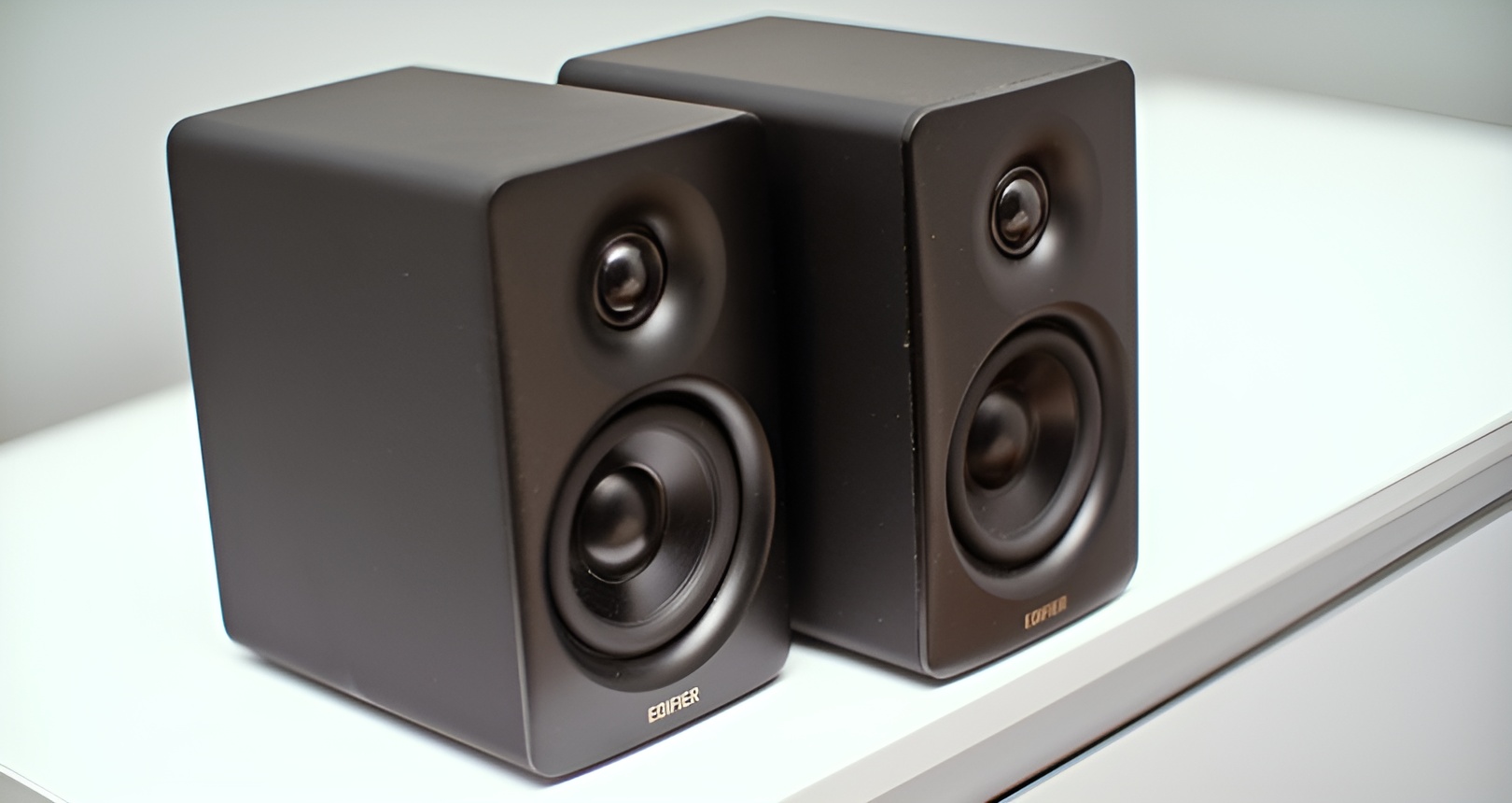
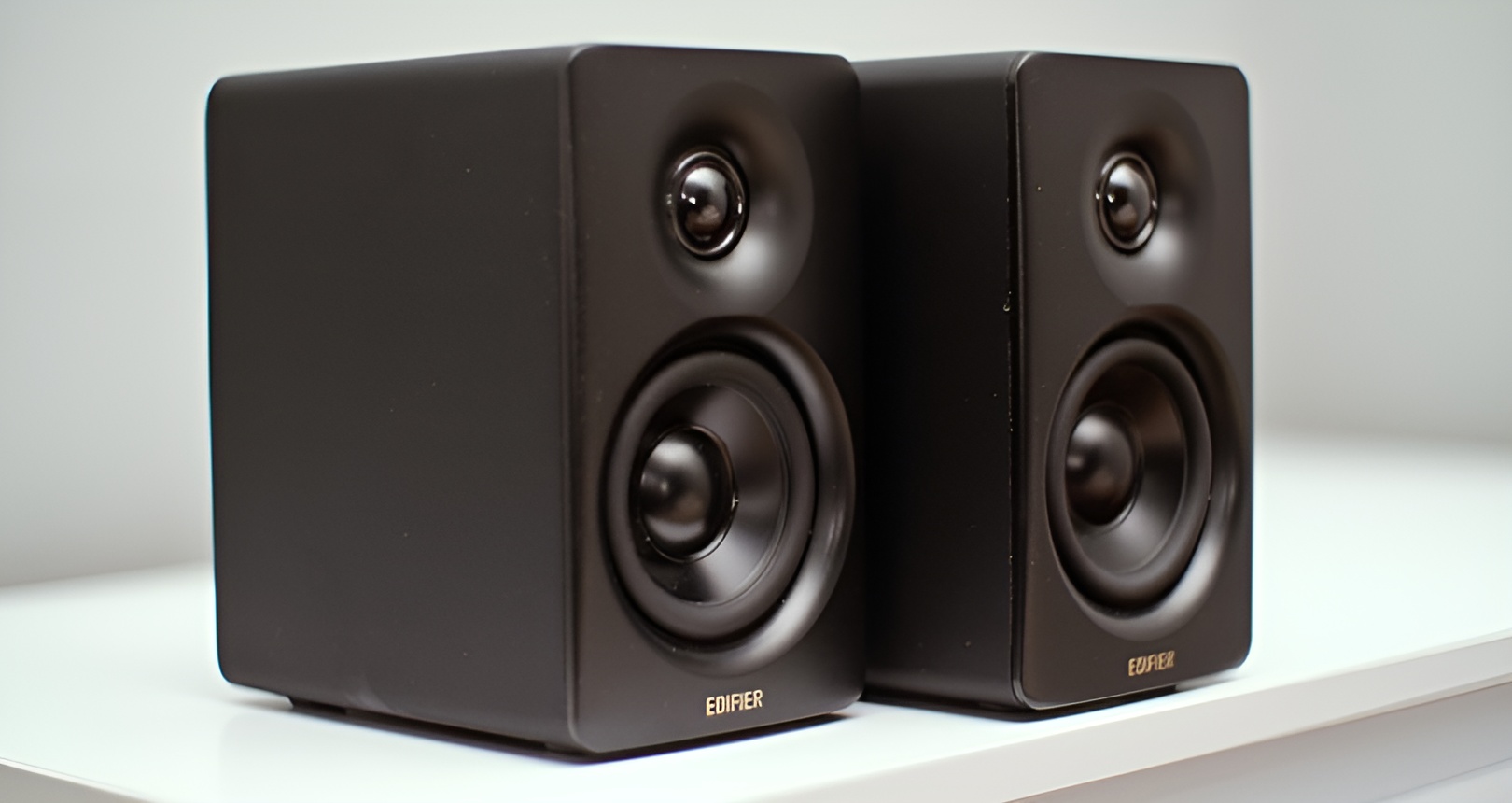
The first thing you notice about the M60 is just how small they are. Each speaker is roughly the size of an Xbox controller—seriously. For perspective, they’re about half the size of compact bookshelf speakers like the DALI Oberon 1.
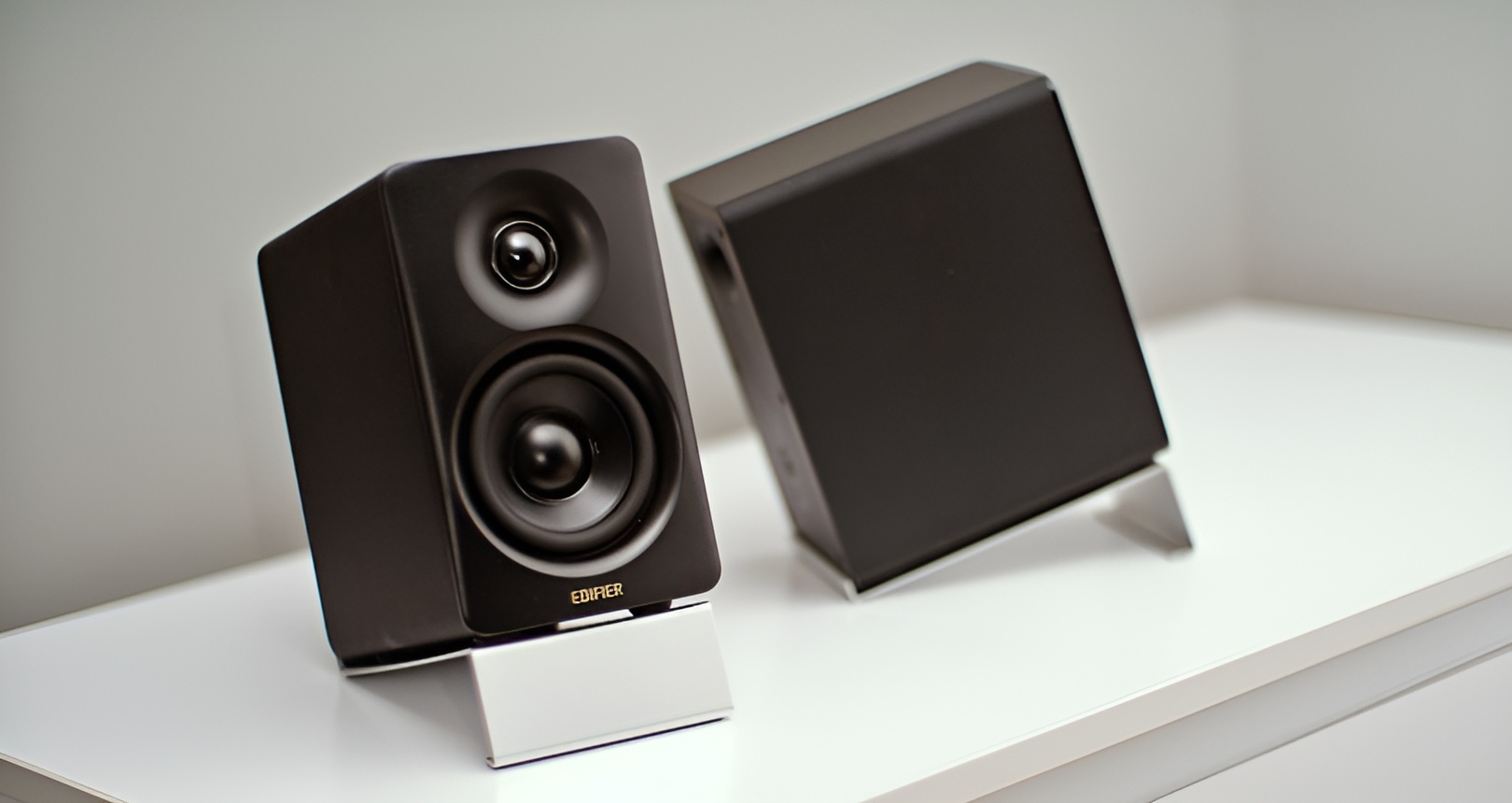
The cabinet is wrapped in a soft-touch material that looks and feels great. It’s one of those details you don’t expect at this price, but once you’ve touched it, you notice the difference immediately. Build quality is excellent, with no obvious cost-cutting.
Color options include white, black, oak, and purple, and all four look more stylish than “computer speakers” usually do.
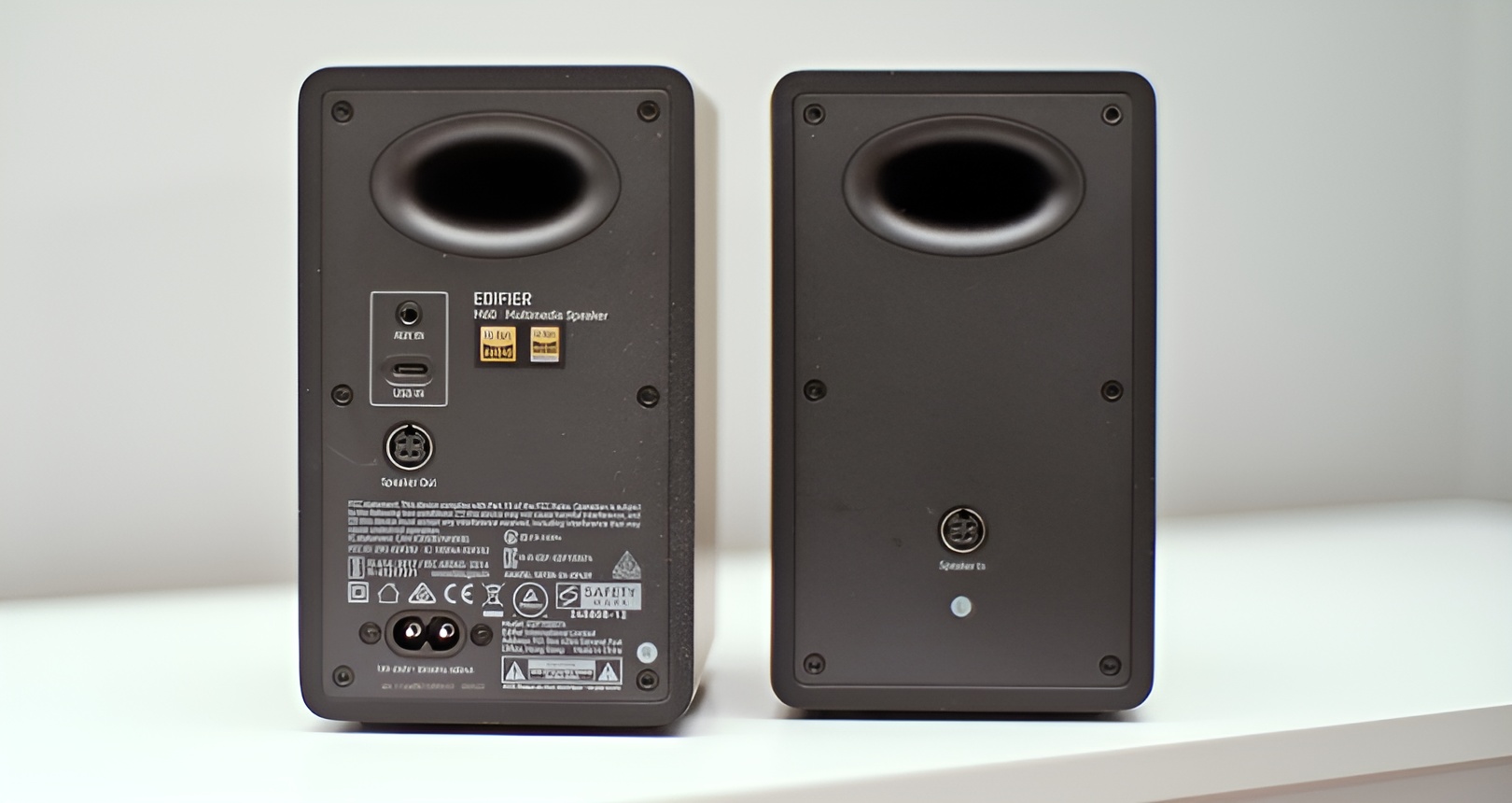
Inside, each speaker houses a 3-inch mid-bass driver rated at 18 W and a 15 W tweeter. Controls are handled via a touch-sensitive panel on the top of the right speaker, while all inputs sit neatly on the rear. Power is internal, drawing from a standard wall outlet.
Connectivity and features
The M60 supports three connection types:
-
USB
-
Bluetooth
-
Analog (3.5 mm)
What’s impressive is how consistent the sound is across all three. USB, Bluetooth, and analog all deliver roughly the same sonic character, which isn’t always a given at this price.
USB connectivity is particularly convenient. Plug the speakers directly into a computer or TV, and they just work—no optical cables or HDMI required. (You may need a USB-C to USB-A adapter depending on your TV.)
The speakers are compatible with the EDIFIER Connex app (iOS and Android), which allows basic EQ adjustments and sound mode selection. Personally, I preferred the default Music mode—it strikes the best balance without overprocessing.
The touch controls deserve praise. When your hand approaches, the controls light up automatically. Volume, power, and input switching are all responsive, accurate, and free of the missed inputs that plague many touch-based systems.
Sound
Let’s be clear: the M60 does not sound like a “small” speaker.
Edifier claims bass extension down to 58 Hz, and in practice the speakers reach close to 50 Hz with authority. That’s an impressive feat for a 3-inch driver, and while DSP is clearly doing some heavy lifting here, the results are convincing.
The tonal balance is slightly warm, with a gentle emphasis on mid-bass. There’s a mild dip in the midrange and a bit of energy around 70–90 Hz, but nothing that feels unnatural or fatiguing.
Music
For music listening, the M60 is genuinely enjoyable. The sound is full, weighty, and surprisingly spacious. Some recordings even hint at a holographic presentation, which is not something you expect from speakers of this size.
They excel with minimalist music, vocals, electronic genres, and anything that benefits from warmth and body. Bass-heavy tracks are handled confidently, and at no point did I feel the need for a subwoofer—which explains why Edifier didn’t bother including a sub-out.
Highly detailed, bright recordings—classic rock in particular—are not the M60’s strongest suit. These speakers favor musicality over analysis. If you want razor-sharp detail and lots of air, this isn’t the ideal match. But if you value warmth, coherence, and easy listening, the M60 delivers.
Movies and TV
Connected to a TV via USB or Bluetooth, the M60 performs extremely well. Dialogue is clear, voices sound natural, and the overall presentation feels far more substantial than most soundbars under $300.
There’s no artificial “wide” effect, but also no sense of compression. In a room of around 20 square meters, the speakers have more than enough power. Up to around 60–70% volume, they play clean and full before DSP starts reigning things in.
Gaming
Gaming is where the M60 shows its limitations. Fine details can get lost, and ultra-low bass below 50 Hz is naturally missing. For competitive or immersive gaming, headphones remain the better choice.
Comparisons
In this size and price category, competition is surprisingly thin.
Some AIYIMA models offer good value, but they’re larger, less efficient, and sonically less refined. Within Edifier’s own lineup, models like the R1380DB feel outdated by comparison—bigger, less powerful, and less engaging.
At the moment, the M60 stands largely alone as a compact, modern, high-performance desktop speaker.
Conclusion
The Edifier M60 is one of those rare products that forces you to reset your expectations. It may be marketed as a pair of “computer speakers,” but in practice it behaves like a compact, modern hi-fi system that just happens to fit on a desk.
What makes the M60 special isn’t any single feature—it’s the balance. Size, power, tonal character, design, and price all line up in a way that feels unusually well thought out. Thanks to efficient Class D amplification and smart DSP tuning, Edifier delivers a level of fullness, bass depth, and musicality that would have seemed unrealistic in this form factor only a few years ago.
For less than $200, you get speakers small enough to disappear visually, yet capable of filling a real living space with confident, engaging sound. In many ways, the M60 does what older, bulkier, and far more expensive hi-fi systems were once praised for—only with fewer compromises and far more convenience.
The Edifier M60 doesn’t just offer great value. It quietly exposes how much the audio landscape has changed, and how difficult it’s becoming to justify traditional mid-priced systems. Highly recommended.