

It’s easy to underestimate the FiiO R7 at first glance. It looks compact, neat, almost restrained. But spend a little time with it, and it becomes clear that this is not simply another desktop DAC or headphone amplifier. The R7 is designed to sit at the very center of a modern hi-fi system—one that blurs the boundaries between headphones and speakers, local files and streaming, desktop and living room.
Rather than specializing in a single role, the R7 aims to do almost everything. And unusually for an all-in-one device, it does so with real confidence.
Built for the desk, made for serious use
Physically, the R7 feels more substantial than its size suggests. The anodized aluminum chassis is solid and well damped, giving the impression of a serious piece of hi-fi rather than a smart device dressed up as one. It’s clearly meant for stationary use, and once it’s placed on a desk—preferably on the angled rubber stand included in the box—it feels right at home.
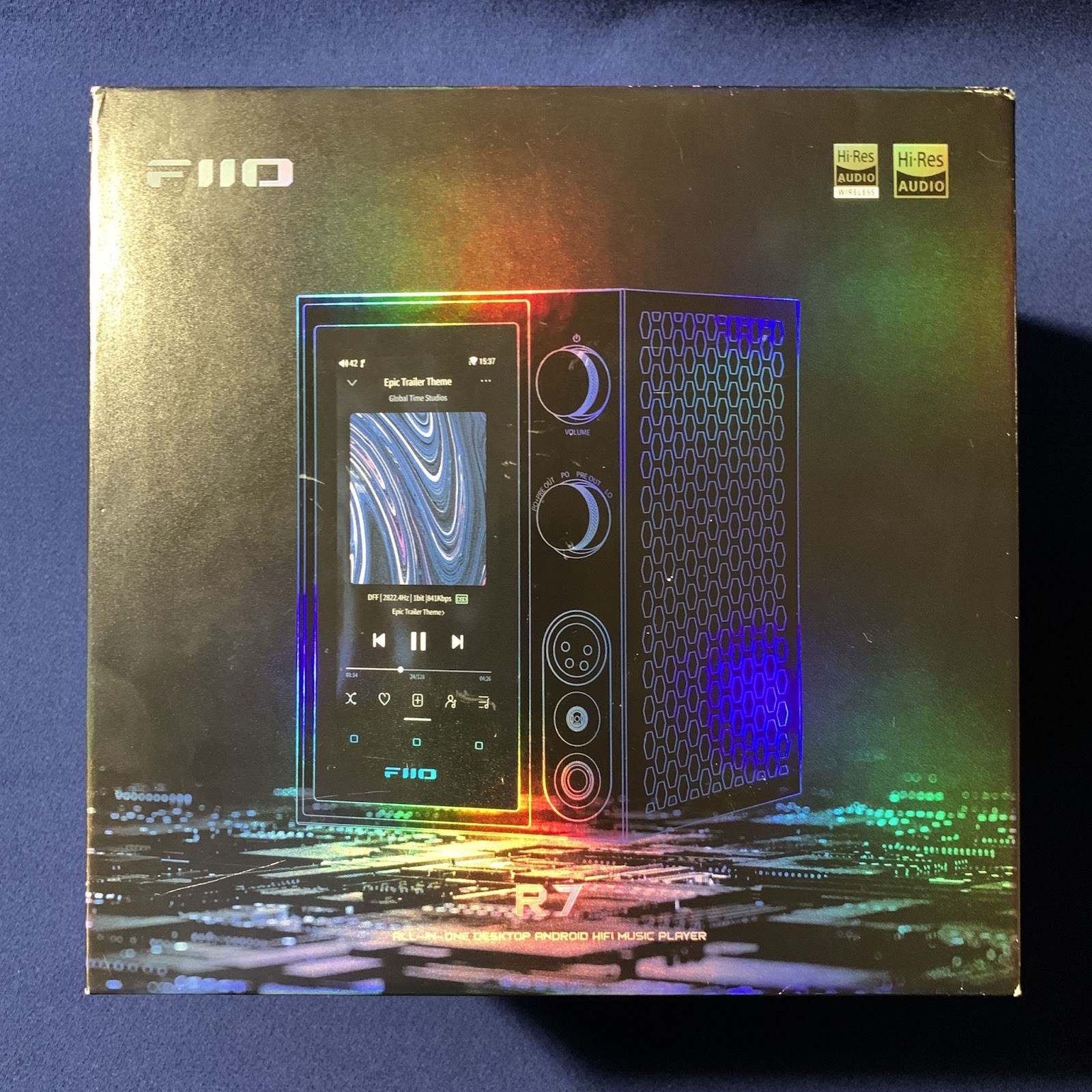
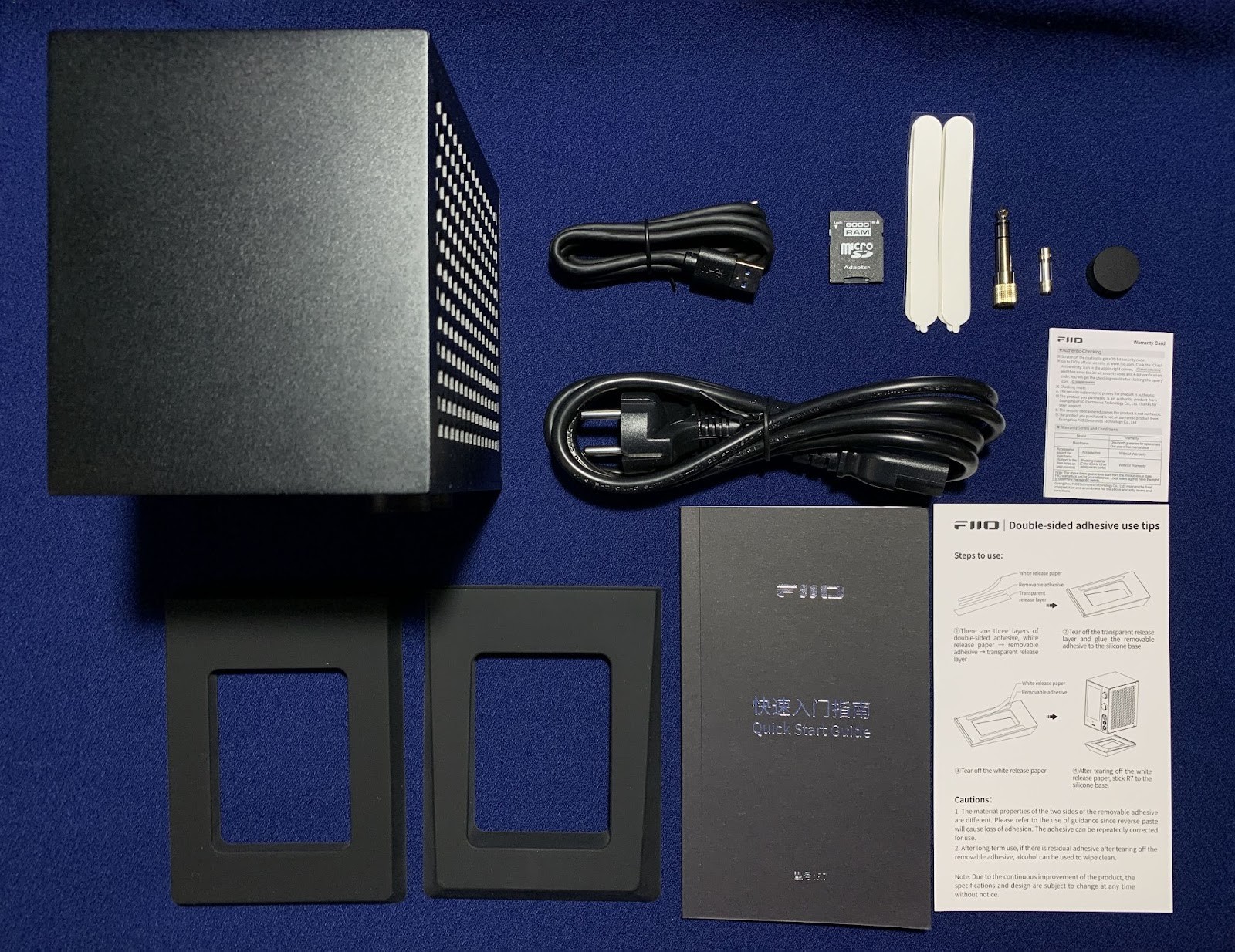
The front panel is clean and functional. A 5-inch IPS touchscreen dominates the layout, flanked by two physical control wheels that quickly become second nature in daily use. One handles power and volume, the other switches between output modes, allowing you to move seamlessly from headphones to speakers without digging through menus. Below the screen sit three headphone outputs, including balanced XLR and 4.4 mm Pentaconn, making it immediately clear that this device takes headphone listening seriously.
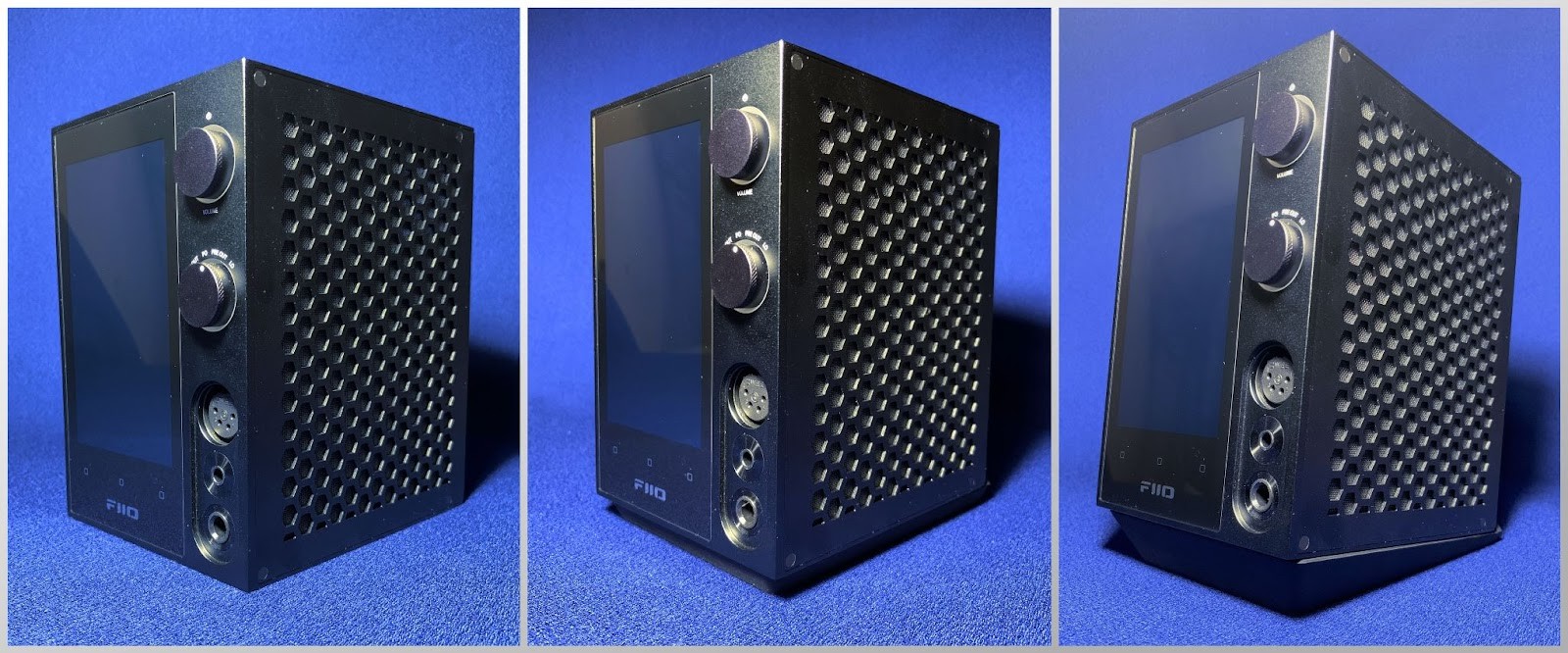
Despite its power, the R7 relies entirely on passive cooling. In practice, it stays only mildly warm and remains essentially silent—exactly what you want from a device designed to sit within arm’s reach.
Connectivity without compromise
Where the R7 really starts to separate itself from typical desktop DACs is around the back. Connections are plentiful, logical, and clearly intended for real systems rather than theoretical use cases. Balanced XLR and RCA outputs allow the R7 to function as a preamp for active speakers or power amplifiers, while optical and coaxial inputs and outputs let it integrate into more complex digital setups.
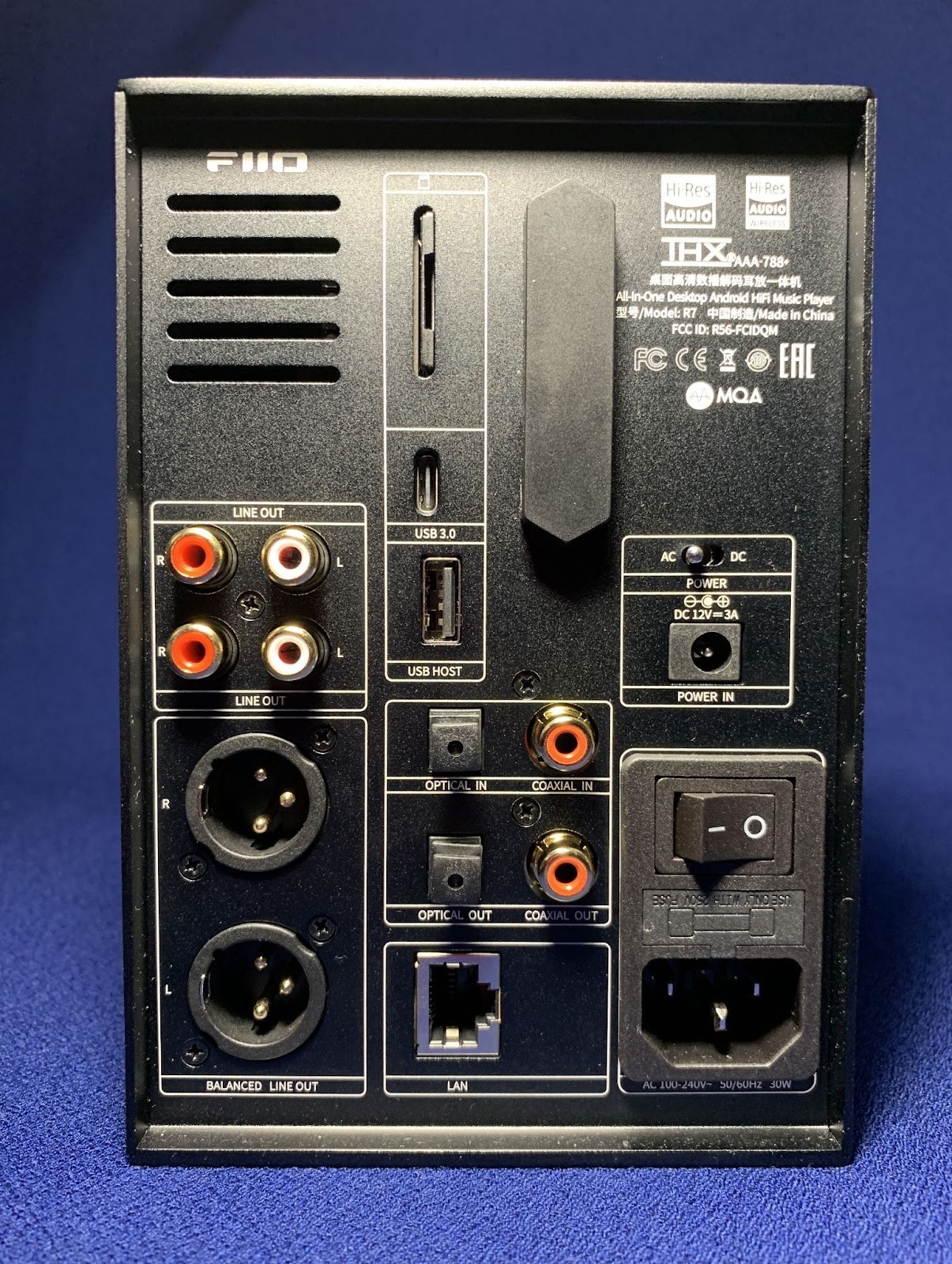
Add USB-C DAC functionality, USB-A for external storage, Ethernet for stable network streaming, Bluetooth with LDAC support, and an SD card slot capable of handling up to 2 TB, and the picture becomes clear: the R7 isn’t just flexible—it’s borderline overqualified for a desktop device.
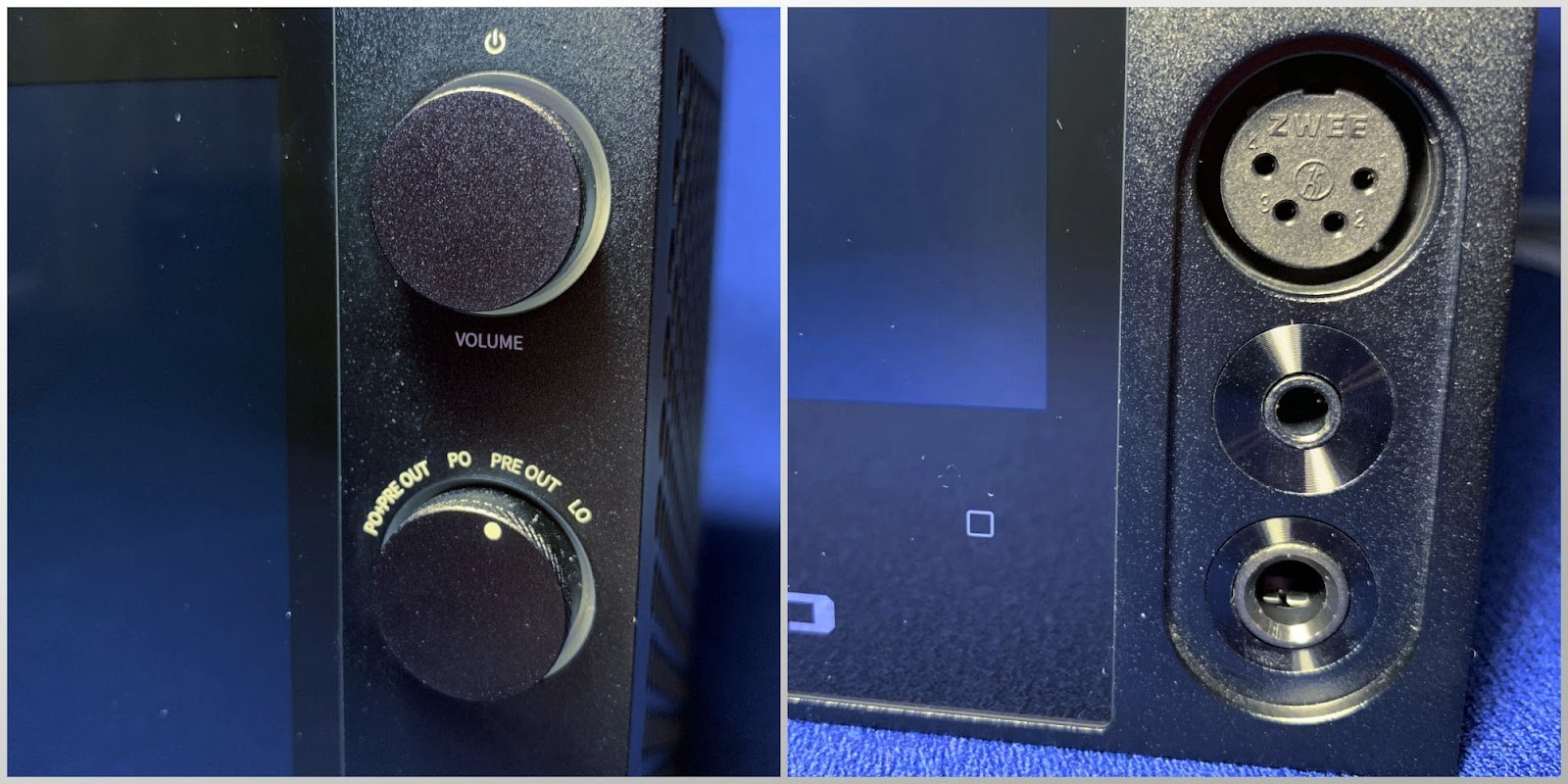
PO+PRE OUT – simultaneously active headphone outputs and rear speaker outputs. This allows you to listen to music simultaneously through both connections.
PO – only headphone outputs are active.
PRE OUT – only the speaker outputs are active.
LO – only the speaker outputs are active, but with maximum volume (adjustment is possible only through the speakers). In some cases, this option is more convenient.
Power can be supplied either via the internal AC supply or an external 12 V DC source, which will appeal to users who like to experiment with power solutions.
Android 10
Running Android 10 on a Snapdragon 660 platform with 4 GB of RAM, the R7 behaves more like a dedicated audio appliance than a repurposed smartphone. Navigation is smooth, apps launch quickly, and the system remains stable even with multiple streaming services installed.
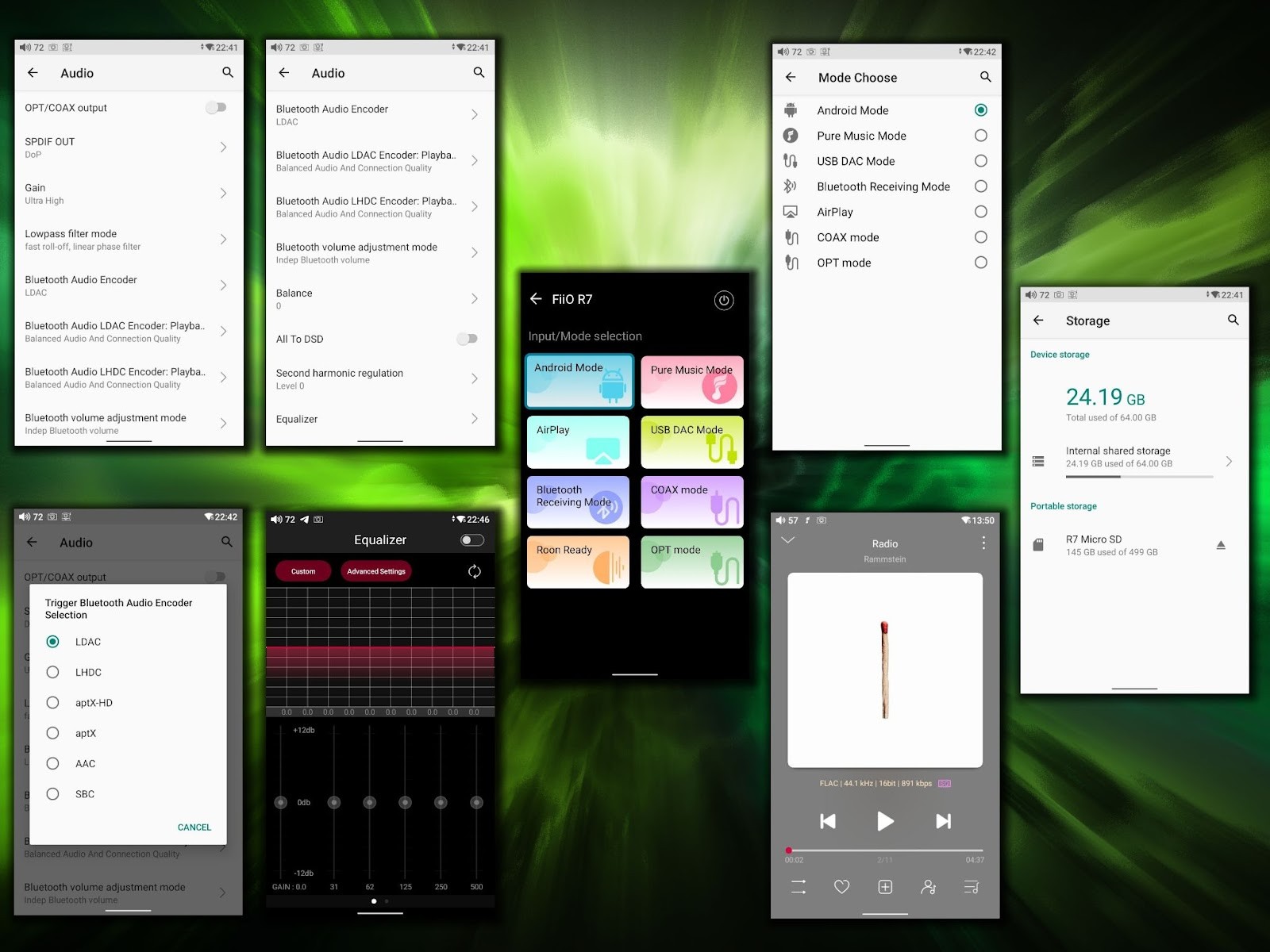
Full access to the Google Play Store means you can install whatever software suits your habits, whether that’s Spotify for convenience, Qobuz or Tidal for lossless streaming, or more advanced players like Neutron for deep sound customization. FiiO’s system-wide equalizer works across all apps, which is particularly useful if you want subtle tuning without relying on individual player settings.
Roon Ready support, AirPlay, DLNA, and network playback complete the picture, making the R7 feel equally comfortable as a local music server or a streaming endpoint.
Sound character – clarity first
The sound of the FiiO R7 is unmistakably clean and analytical. This is a device that prioritizes resolution, separation, and transparency over warmth or romantic coloration. The presentation is open and airy, with a wide soundstage and excellent placement of instruments.
Bass is controlled and well textured rather than heavy or exaggerated. It doesn’t overwhelm, but it remains articulate and natural, especially when paired with headphones or speakers that bring a little weight of their own. The midrange is clear and well defined, free from congestion, which gives vocals and acoustic instruments a convincing sense of presence. High frequencies are extended and detailed, sitting close to the line between crisp and bright, depending on the rest of the system.
This tuning makes the R7 particularly good at revealing nuance. Subtle details in recordings—room ambience, reverb tails, low-level textures—are easy to follow, and well-recorded live music sounds especially convincing.
With headphones and speakers
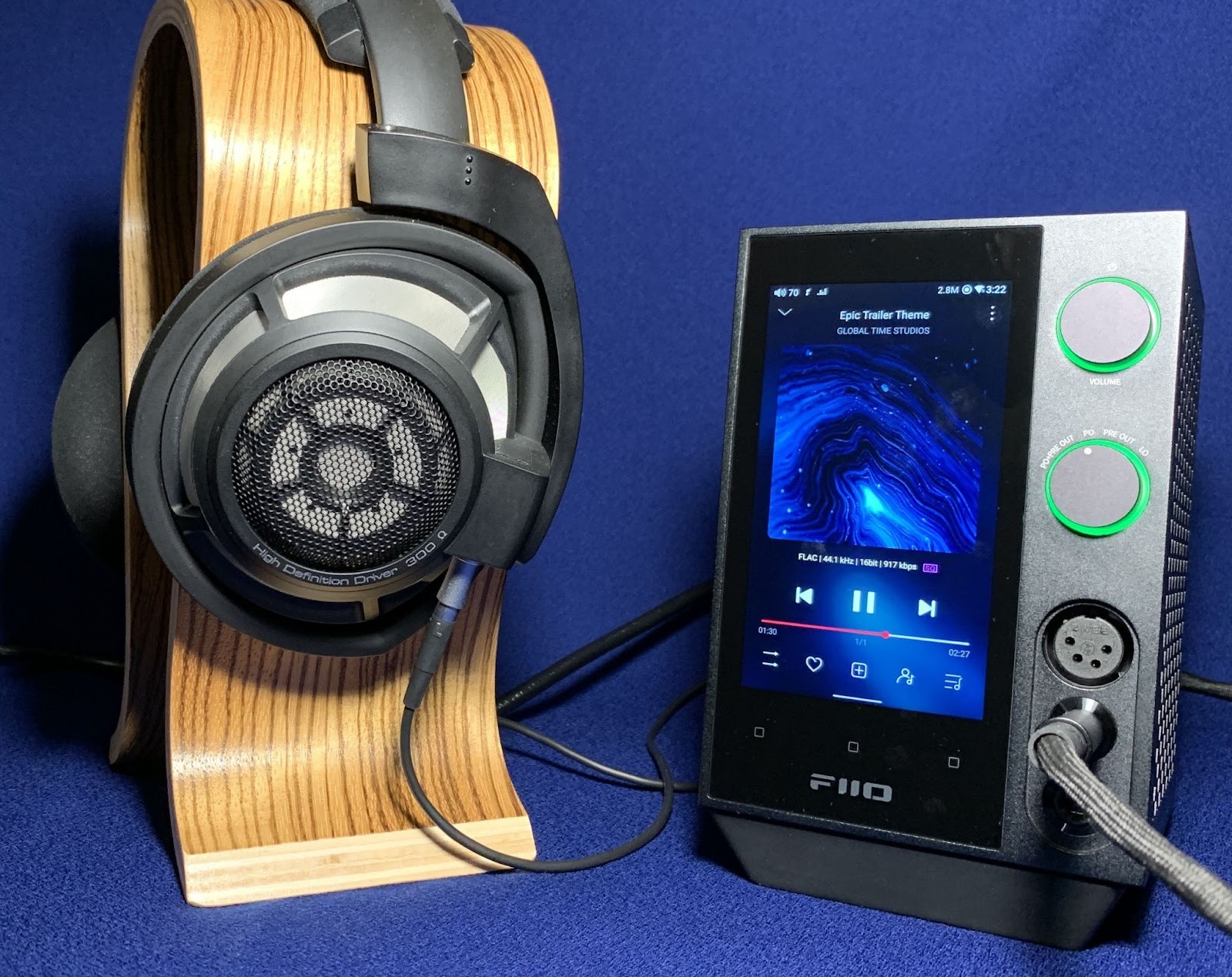
Paired with revealing headphones such as the Sennheiser HD 800S, the R7 has no trouble delivering sufficient power and control. The soundstage becomes expansive and highly precise, with excellent microdetail. That said, this combination leans clearly toward the bright and analytical side, making it better suited for jazz, acoustic recordings, and live performances than bass-heavy electronic music—unless you’re willing to apply a little EQ.
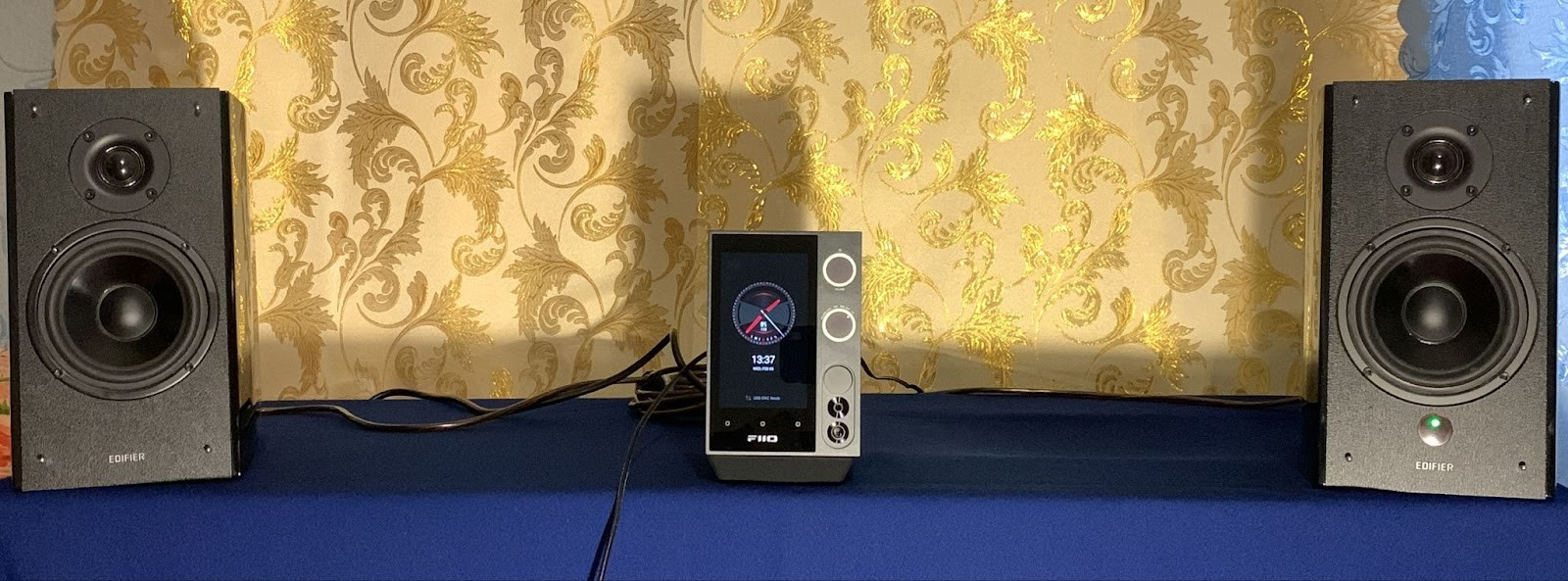
With FiiO R7, the presentation reached a qualitatively new level, approaching the Hi-Fi segment
Used as a source for active speakers like the Edifier R2000DB, the R7 proves just how much influence a high-quality DAC and preamp stage can have. The speakers gain clarity, separation, and a noticeable improvement in overall refinement. It doesn’t magically transform them into high-end monitors, but it allows them to perform at their absolute best.
Conclusion
The FiiO R7 is not a minimalist device, nor is it trying to be. It’s designed for listeners who want one component to handle streaming, local playback, headphones, and speakers without constant compromises. Its sound signature will appeal most to those who value clarity and detail over warmth, and its feature set is deep enough to satisfy even experienced enthusiasts.
As a modern desktop hi-fi hub, the R7 feels less like a niche product and more like a glimpse of where integrated audio systems are heading—flexible, powerful, and unapologetically ambitious.




Sound Off
0Join the discussion if you have something to add.