These Standout Amplifiers Reveal the Many Routes to Serious Hi-Fi
A practical Stereoindex guide to standout amplification approaches, including integrated amplifiers, dedicated power amps, a multifunction preamp, and one loudspeaker entry that clarifies amplifier matching.

Amplifiers are not a single, interchangeable category.
The source material here ranges from integrated amplifiers with built-in digital sections to dedicated power amplifiers, preamplifier-centered systems, compact desktop designs, and even a loudspeaker entry that is most useful for understanding amplifier matching.
Taken together, they show how different amplification choices serve very different systems.

1. Arcam SA30: Flagship integrated amplifier
Arcam SA30 integrated amplifier with G-class circuitry, built-in DAC, and network-ready features.
The Arcam SA30 is a feature-rich integrated amplifier from the company’s HDA series, built around Arcam’s experience with G-class circuitry.
The design combines Class A operation for the first 20 watts with additional power delivery for higher-amplitude signals, and the quoted output is 120 watts per channel into 8 ohms and 220 watts into 4 ohms.
Its specification also includes a 32-bit ESS Sabre ESS9038 DAC, selected transistor pairs in the output stage, a high-power toroidal transformer, and chassis damping intended to reduce the effect of mechanical vibration. Wireless and network support is also part of the package, with AirPlay 2, UPnP streamer mode, Chromecast compatibility, and HDMI connectivity noted in the source.
Best for: Modern integrated systems with digital and network sources
- G-class integrated amplifier design
- First 20 watts operate in Class A
- 32-bit ESS Sabre ESS9038 DAC
- AirPlay 2, UPnP, and Chromecast support
Verdict: The Arcam SA30 is the most broadly equipped integrated amplifier here, combining substantial quoted power, onboard conversion, and modern streaming support in one chassis.

2. Constellation Audio Performance 2: New 600W Stereo and 2000W Monoblock Amps Break Hi-Fi Limits
Constellation Audio Performance 2 series components, including preamplifier and high-power amplifier options.
Constellation Audio’s Performance 2 series is not a single amplifier but a high-end separates family comprising a preamplifier with an external power supply, a two-channel power amplifier, and a mono power amplifier.
The company presents the series as a step above its Reference Series, with claimed advances in power delivery and circuitry, and positions it between the Inspiration 2 and Statement lines.
The source emphasizes demanding loudspeaker drive, realistic sound as a design aim, and exemplary build quality, while noting that pricing had not been announced. This is therefore a system-level amplification platform rather than a compact all-in-one choice.
Best for: No-compromise separates systems
- Separate preamplifier and power-amplifier architecture
- External power supply for the preamplifier
- Designed for demanding loudspeakers
- Positioned between Inspiration 2 and Statement lines
Verdict: The Constellation Audio Performance 2 series is aimed at listeners building a serious two-channel separates system around high-power amplification and dedicated preamplification.

3. Von Schweikert Audio ULTRA 7: $180,000 floorstanders with ceramic cones
Von Schweikert Audio ULTRA 7 floorstanding loudspeaker, included here for amplifier-matching context rather than as an amplifier.
The Von Schweikert Audio ULTRA 7 is a loudspeaker rather than an amplifier, so it should not be treated as an amplification recommendation.
Its inclusion is still useful in an amplifier guide because the source gives practical matching context: the manufacturer specifies amplifier power starting at 60 watts per channel, while the loudspeaker claims 94 dB sensitivity at 1 watt/1 meter.
The design itself uses multiple ceramic-cone drivers, a beryllium tweeter, additional supertweeters, distributed crossover circuitry, individually shielded and damped internal wiring, and the VSA Room Adjustment Control Suite. For amplifier buyers, the key takeaway is that speaker sensitivity, impedance behavior, and manufacturer power guidance matter as much as amplifier headline output.
Best for: Understanding amplifier-to-speaker matching
- Manufacturer recommends amplification from 60 watts per channel
- Claimed 94 dB sensitivity
- Room Adjustment Control Suite noted
- Complex multi-driver flagship loudspeaker design
Verdict: The ULTRA 7 is not an amplifier, but it usefully illustrates why amplifier choice should be matched to the loudspeaker’s sensitivity and stated power requirements.

4. Accuphase A-48S: High-end stereo power amplifier made in Japan
Accuphase A-48S stereo power amplifier, a Class A design with improved output, noise, and damping specifications.
The Accuphase A-48S is a dedicated stereo power amplifier built around Class A operation.
It succeeds the A-48 while retaining core design elements such as current feedback, balanced signal detection, instrumentation-amplifier topology, MCS+ multiple summing circuitry, and MOS-FET relay-based protection.
The source highlights a power increase to 50 watts into 8 ohms, with the same doubling behavior into lower impedances and 400 watts into 2 ohms quoted. Other noted refinements include a 6 percent noise reduction, a damping factor increased to 1000, ultra-short signal paths, Balance Remote Sensing, and an increase in weight without a change in external dimensions.
Best for: Systems needing a refined dedicated Class A power amplifier
- Class A stereo power amplifier
- 50 watts into 8 ohms quoted
- 400 watts into 2 ohms quoted
- Damping factor increased to 1000
Verdict: The Accuphase A-48S is a focused high-end power amplifier for listeners who already have source and preamplifier duties covered and want a Class A output stage.
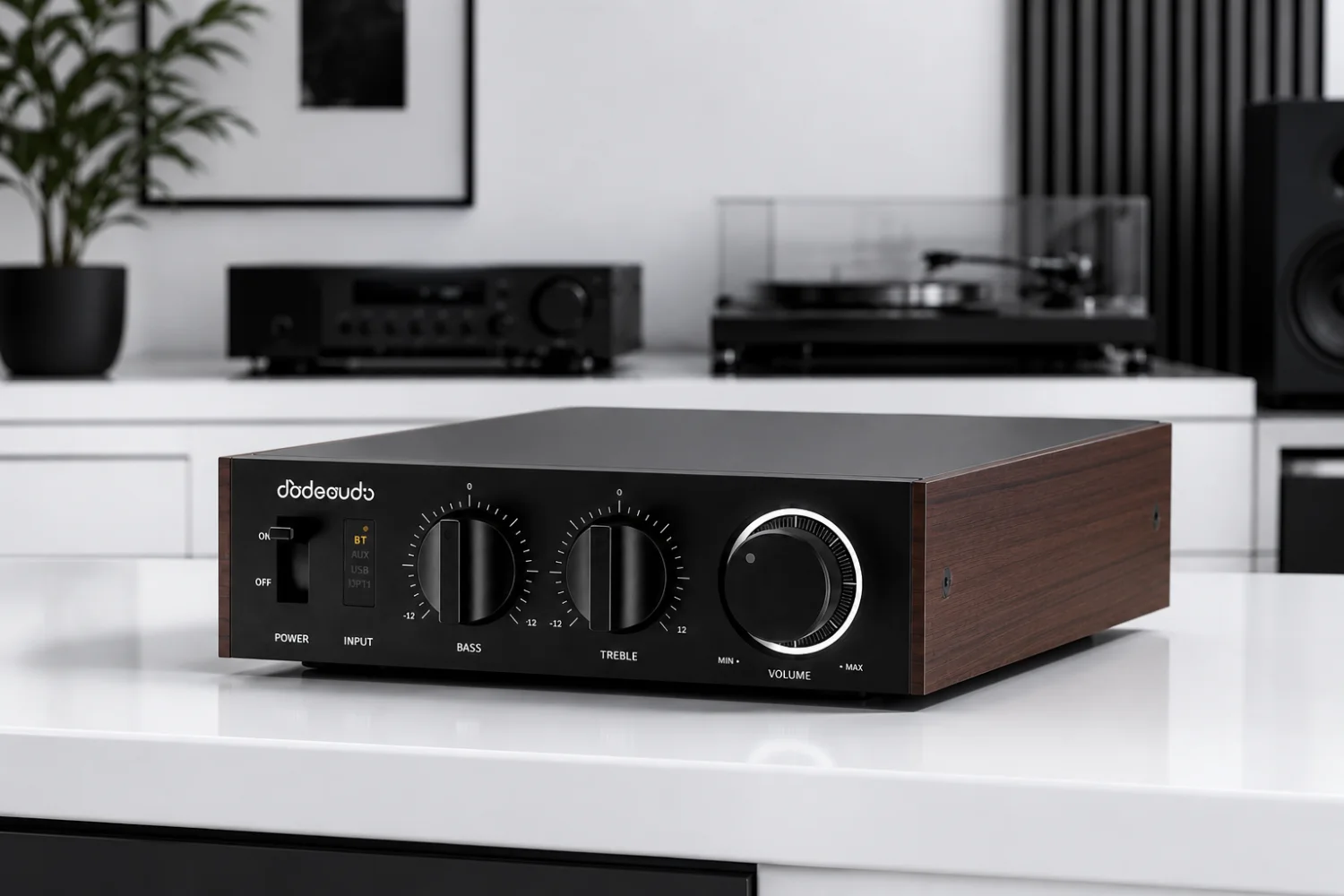
5. FiiO’s LEVEL 1 Is a Desktop Powerhouse Disguised as a Budget Amp
FiiO Jade Audio LEVEL 1 compact integrated amplifier for desktop speaker systems.
The FiiO Jade Audio LEVEL 1 is a compact integrated amplifier designed for desktop and space-constrained speaker systems.
It is built around the Texas Instruments TPA3255 Class D platform and uses a six-layer PCB with thick copper traces and gold plating, with supporting components from WIMA, Nichicon, and ELNA.
The source notes an on-paper maximum of up to 600 watts into 4 ohms, or 300 watts per channel, while also stressing that real-world output depends on the fine print. Its strongest appeal is therefore not just the headline power figure, but the combination of small footprint, efficient Class D amplification, and attention to board layout and component selection.
Best for: Desktop speaker systems where space is limited
- Compact desktop-friendly integrated design
- Texas Instruments TPA3255 Class D platform
- Six-layer PCB with thick copper traces
- WIMA, Nichicon, and ELNA components noted
Verdict: The FiiO Jade Audio LEVEL 1 is a practical compact amplifier for modern desktop setups, with its source article wisely cautioning readers to look beyond headline wattage alone.
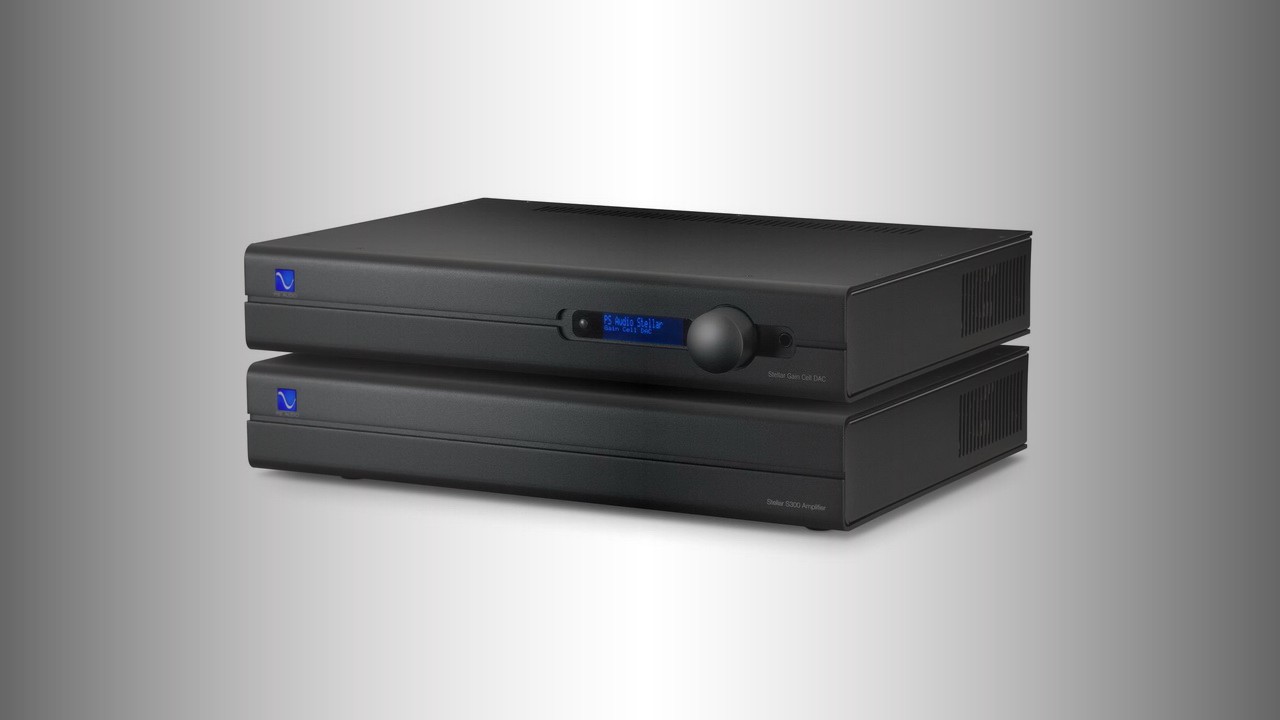
6. PS Audio Stellar S300: The ultimate stereo power amplifier
PS Audio Stellar S300 stereo power amplifier with Analog Cell-based hybrid circuitry.
The PS Audio Stellar S300 is a stereo power amplifier from the company’s Stellar series, using a hybrid topology based around the Analog Cell circuit.
According to the source, its input section is Class A, balanced, and MOSFET-based, while the output stage uses high-current Class D technology.
The article frames this combination as an effort to blend the detail and warmth associated with Class A operation with the efficiency, dynamics, low distortion, and punch associated with Class D. It is housed in a neat low-profile case and is presented as part of PS Audio’s broader engineering lineage that also includes BHK Signature, DirectStream, Gain Cell, and Analog Cell work.
Best for: Stereo systems needing a dedicated power amp with hybrid topology
- Hybrid Class A and Class D topology
- Analog Cell-based circuit design
- Balanced MOSFET input section
- Low-profile chassis
Verdict: The PS Audio Stellar S300 stands out as a dedicated power amplifier that deliberately combines a Class A input stage with a high-current Class D output stage.

7. Technics SU-C700: Integrated amplifier with an unusual design
Technics SU-C700 integrated amplifier with VU meters, Class D circuitry, and built-in digital conversion.
The Technics SU-C700 is an integrated amplifier with a distinctive compact format: at 34 cm wide, it sits between typical full-width and half-width components.
Its rigid aluminum body, silver-only finish, illuminated VU meters, and adjustable meter brightness give it a strong visual identity.
Technically, the amplifier uses Class D circuitry and includes Technics’ Load Adaptive Phase Calibration function, which sends a test signal to the connected speakers and adjusts output according to their electrical characteristics. The source also highlights the built-in DAC and unusually generous digital input provision for its class, alongside one line input and an MM phono input.
Best for: Compact integrated systems with digital sources
- Distinctive compact aluminum design
- Illuminated VU meters with adjustable brightness
- Load Adaptive Phase Calibration
- Built-in DAC with many digital inputs
Verdict: The Technics SU-C700 is a characterful integrated amplifier whose digital connectivity and speaker-calibration feature make it more than a design statement.

8. Yamaha A-S3000: A modern solid-state wonder with a hint of retro flair
Yamaha A-S3000 integrated amplifier, built around a rigid anti-vibration chassis and centrally mounted toroidal transformer.
The Yamaha A-S3000 is an integrated amplifier whose source article focuses heavily on mechanical construction and vibration control.
It uses a high-rigidity dual-structure design, with a base and shock absorbers intended to dissipate external vibration.
Circuit boards are supported by individual frames in a floating structure, while the power supply section, transformer, capacitors, amplifier boards, and heat sinks are physically arranged to reduce vibration interference and keep signal paths short. The large toroidal transformer is centrally positioned on an isolated three-dimensional inner frame with copper plating, a layout intended to support weight distribution, rigidity, and low-impedance signal transfer.
Best for: Listeners who value robust mechanical engineering in an integrated amplifier
- High-rigidity dual-structure chassis
- Floating circuit-board construction
- Centrally mounted large toroidal transformer
- Mechanical isolation between key sections
Verdict: The Yamaha A-S3000 is distinguished by its elaborate chassis, vibration-control strategy, and carefully arranged internal architecture rather than by feature-count alone.
9. hARt Lab Tune Two: Versatile hybrid preamplifier unveiled
hARt Lab Tune Two hybrid preamplifier with streaming, DAC, phono, headphone, and lighting features.
The hARt Lab Tune Two is a preamplifier rather than a power amplifier, but it belongs in the signal chain discussion because it combines several front-end functions.
The source lists a network streamer, DAC, phono preamplifier, and headphone amplifier, along with advanced volume control technology that the manufacturer says minimizes distortion.
Its circuit uses a Class A vacuum tube amplifier stage supported by a solid-state output stage. The design also includes adjustable front lighting, with 15 color choices, three brightness levels, and the option to switch the backlight off, plus a remote control.
Best for: Systems needing a multifunction preamplifier front end
- Network streamer, DAC, phono stage, and headphone amp included
- Class A vacuum tube stage
- Solid-state output stage
- Adjustable front lighting and remote control
Verdict: The hARt Lab Tune Two is not a speaker-driving amplifier, but it is a versatile preamplifier for systems that need source handling, volume control, and hybrid circuitry before the power amp.

10. Trettitre TrePower 2: Modern integrated amplifier
Trettitre TrePower 2 integrated amplifier with aluminum body, Class AB topology, and analog RCA inputs.
The Trettitre TrePower 2 is a Class AB integrated transistor amplifier with a modern industrial design, an extruded aluminum body, and CNC-machined controls.
Its source article specifies a 250-watt toroidal transformer, TOSHIBA A1941/C5198 transistors, and an 80 watt plus 80 watt output rating into 8 ohms.
Trettitre also describes an upgraded open-loop circuit intended to shorten the signal transmission process and reduce unwanted interference from back electromotive force. Other supported details include an Omron 16A current relay, three RCA input ports made of pure copper, gold-plated speaker terminals, and a Japanese LPS volume potentiometer.
Best for: Straightforward analog integrated amplifier setups
- Class AB integrated amplifier
- 250-watt toroidal transformer
- 80 watts plus 80 watts into 8 ohms
- Three RCA inputs and gold-plated speaker terminals
Verdict: The Trettitre TrePower 2 is a conventional but well-specified analog integrated amplifier built around Class AB operation, a toroidal transformer, and multiple RCA inputs.
Quick comparison
The clearest differences are not only power ratings, but also system role.
Some entries are full integrated amplifiers, some are dedicated power amplifiers, one is a preamplifier, and one is a loudspeaker included for matching context.
Use the table to separate all-in-one convenience, separates-system ambition, desktop practicality, and speaker-matching relevance.
| Product | Best for | Verdict |
|---|---|---|
| Arcam SA30 | Modern integrated systems with streaming and digital inputs | A strong all-rounder on the supplied evidence, combining G-class amplification, onboard DAC, network support, and substantial quoted power. |
| Constellation Audio Performance 2 series | Ambitious separates-based two-channel systems | A high-end component family rather than a single integrated amplifier, centered on dedicated preamplification and high-power stereo or mono amplification. |
| Von Schweikert Audio ULTRA 7 | Amplifier matching reference | Not an amplifier, but useful because the source gives sensitivity and minimum amplifier-power guidance for a demanding loudspeaker system. |
| Accuphase A-48S | Dedicated Class A power-amplifier systems | A stereo power amplifier focused on Class A operation, low noise, high damping factor, and strong quoted low-impedance output. |
| FiiO Jade Audio LEVEL 1 | Compact desktop speaker setups | A small Class D integrated amplifier built around the TPA3255 platform, with careful PCB and component choices emphasized in the source. |
| PS Audio Stellar S300 | Hybrid-topology stereo power amplification | A dedicated power amplifier using a Class A balanced MOSFET input section and Class D high-current output stage. |
| Technics SU-C700 | Compact integrated systems with digital sources | A visually distinctive Class D integrated amplifier with built-in DAC, multiple digital inputs, MM phono, and speaker-adaptive calibration. |
| Yamaha A-S3000 | Mechanically robust integrated amplifier systems | An integrated amplifier whose main distinction is its vibration-controlled chassis, floating board structure, and centrally mounted toroidal transformer. |
| hARt Lab Tune Two | Multifunction preamplifier duties | A hybrid preamplifier with streaming, DAC, phono, headphone amplification, tube gain stage, solid-state output stage, and user-adjustable lighting. |
| Trettitre TrePower 2 | Analog integrated amplifier setups | A Class AB integrated amplifier with an 80 watt plus 80 watt rating into 8 ohms, three RCA inputs, and a 250-watt toroidal transformer. |
Frequently asked questions
Should I choose an integrated amplifier, a power amplifier, or a preamplifier?
Choose an integrated amplifier when you want volume control and power amplification in one box, as with the Arcam SA30, Technics SU-C700, Yamaha A-S3000, FiiO Jade Audio LEVEL 1, or Trettitre TrePower 2.
Choose a power amplifier such as the Accuphase A-48S or PS Audio Stellar S300 when you already have a preamplifier or source with suitable control.
Choose a preamplifier such as the hARt Lab Tune Two when you need source switching, volume control, DAC, phono, streamer, or headphone functions before a separate power amp.
How much amplifier power do I need?
Start with the loudspeaker’s requirements, sensitivity, room size, and listening level rather than wattage alone.
The Von Schweikert Audio ULTRA 7 entry shows why: its manufacturer gives amplifier power guidance starting at 60 watts per channel and a claimed 94 dB sensitivity.
The Arcam SA30, Accuphase A-48S, and Trettitre TrePower 2 also show that output should be read together with the load impedance, because 8-ohm and lower-impedance figures can differ substantially.
Do amplifier classes matter in everyday buying?
They matter, but they do not tell the whole story.
The supplied amplifiers include G-class operation in the Arcam SA30, Class A in the Accuphase A-48S, Class D in the Technics SU-C700 and FiiO Jade Audio LEVEL 1, Class AB in the Trettitre TrePower 2, and hybrid Class A/Class D architecture in the PS Audio Stellar S300.
Treat the class as one clue about design priorities such as heat, efficiency, topology, and system role, then weigh it alongside connectivity, speaker matching, and construction.
When is a built-in DAC or streamer worth prioritizing?
Prioritize digital features if your main sources are network audio, computers, streamers, or TVs.
The Arcam SA30 includes a 32-bit ESS Sabre DAC plus AirPlay 2, UPnP, Chromecast support, and HDMI connectivity noted in the source, while the Technics SU-C700 is highlighted for its built-in DAC and many digital inputs.
The hARt Lab Tune Two goes further as a preamplifier with streamer, DAC, phono stage, and headphone amplifier functions, but it still needs a power amplifier to drive passive speakers.
How to choose from these amplifier approaches
Begin by deciding what job the component must do.
If you want a single-box hub, the Arcam SA30 is the most source-flexible integrated option in the supplied material, while the Technics SU-C700 adds compact styling, digital inputs, MM phono, and speaker-adaptive calibration.
The Yamaha A-S3000 is better understood as a mechanically elaborate integrated amplifier focused on chassis rigidity and vibration control, and the Trettitre TrePower 2 is the more straightforward analog Class AB integrated design with three RCA inputs and a stated 80 watt plus 80 watt output into 8 ohms. For smaller desktop systems, the FiiO Jade Audio LEVEL 1 is the compact Class D option, though its own source cautions that headline wattage requires careful reading. If your system is already built around separate components, the Accuphase A-48S and PS Audio Stellar S300 occupy different power-amplifier lanes. The Accuphase is a dedicated Class A stereo power amplifier with improved noise, damping, and low-impedance output figures over its predecessor, while the PS Audio uses a hybrid concept that pairs a Class A balanced MOSFET input section with a high-current Class D output stage. At the top end of separates thinking, Constellation Audio’s Performance 2 series is presented as a complete preamp-and-power-amp family for demanding loudspeakers rather than a single integrated solution. Two entries need special handling. The hARt Lab Tune Two is a preamplifier, not a speaker-driving amplifier, so it is relevant if you need streaming, DAC, phono, headphone, volume-control, and hybrid tube/solid-state preamp functions before a power amplifier. The Von Schweikert Audio ULTRA 7 is a loudspeaker, not an amplifier, but it usefully reinforces the most practical rule in amplifier shopping: match the amplifier to the loudspeaker’s stated needs, sensitivity, and impedance behavior before being swayed by design language or headline power figures.